
Meet The Marsupials
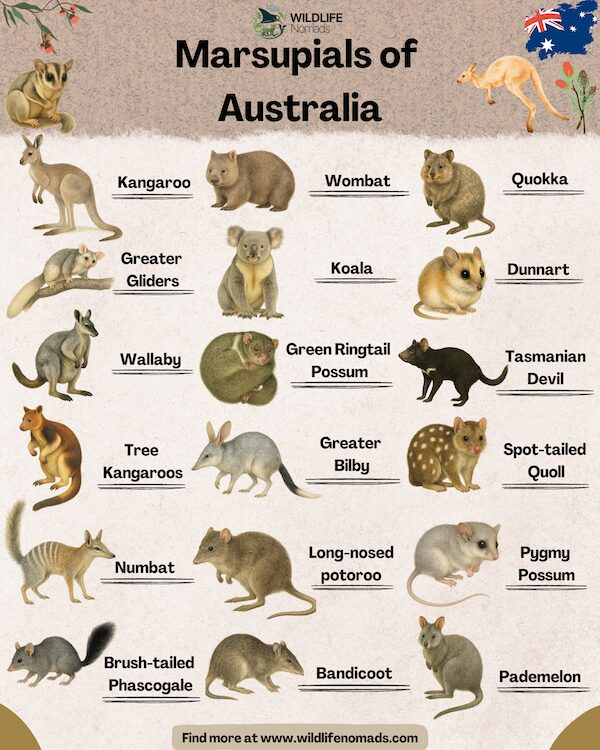
If you are not from Australia, and have never visited this amazing country, you may have seen photos of a wallaby thinking is a kangaroo, when actually, it was a wallaby. Australia and New Guinea are home to some of the most iconic wildlife, and at the heart of it are kangaroos and wallabies. These two animals belong to the same family -Macropodidae – meaning “big foot,” which perfectly describes their large, powerful hind legs.
At a glance, they look almost the same. Both are marsupials, carry their young in a mother’s pouch, and hop on strong legs. But there are important distinctions that help answer the question: “What is the difference between a kangaroo and a wallaby?”
Main Physical Characteristics
The clearest wallaby vs kangaroo difference comes down to size.
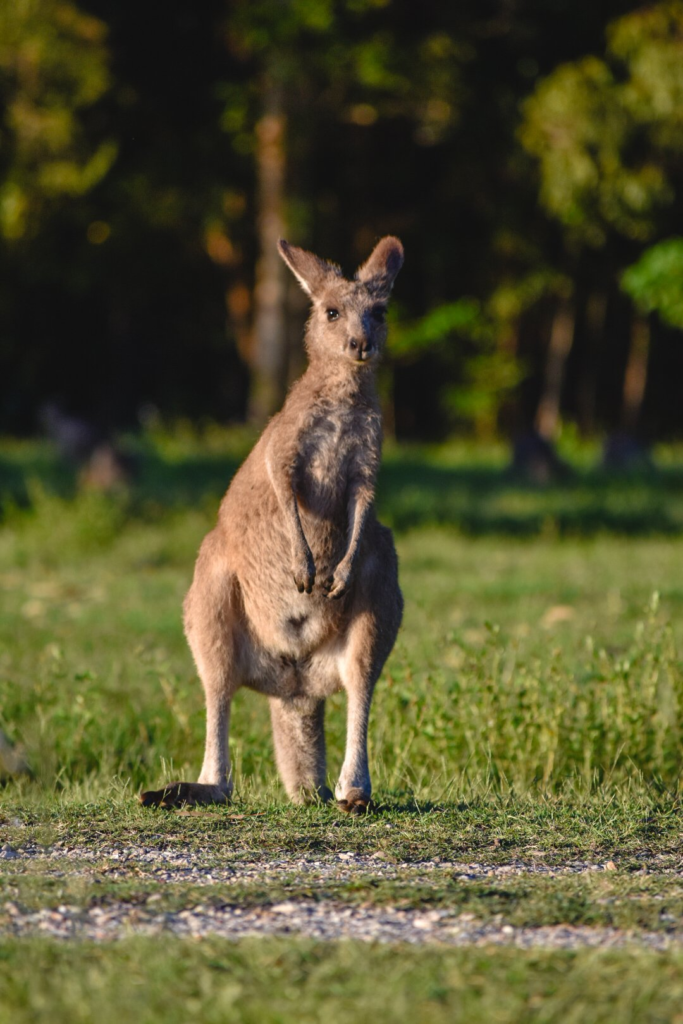
- Kangaroos are the giants of the group. Male red kangaroos can reach 2.4 m (8 ft) tall and weigh over 90 kg. Female red kangaroos are smaller, but still much larger than any wallaby.
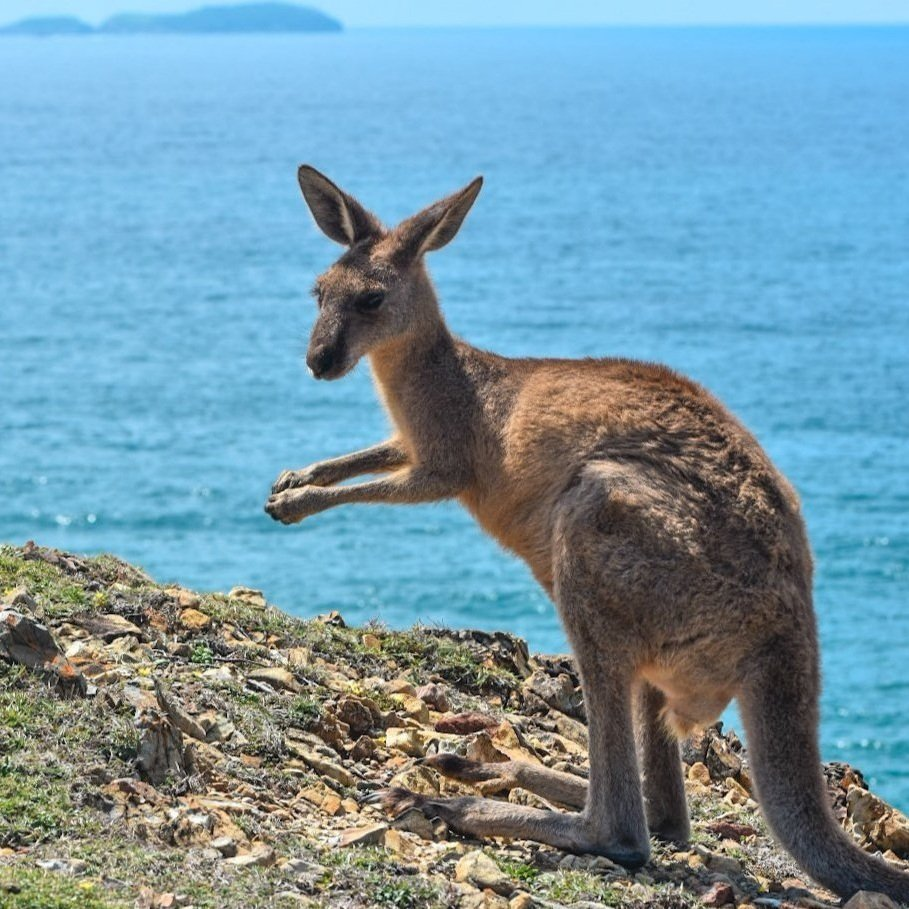
- Wallabies are far smaller, usually between 45 cm and 1.2 m (1.5–4 ft) tall, weighing under 20 kg. Their more compact legs are suited to agility in forests and rugged terrain.
Other distinctions include:
- Coat color: Kangaroos tend to be uniform grey or reddish-brown, while wallabies often have brighter, multi-colored fur.
- Teeth: Kangaroos have curved teeth for slicing grasses, while wallabies have flat teeth for grinding shrubs and leaves.
- Tail: Both use their tails for balance, but kangaroos have thicker tails to support their larger bodies.
Meet The Wallaby Species
There are around 30 wallaby species, grouped into several categories. Each has unique adaptations for its environment:
- Brush wallabies – widespread in forest areas and shrublands.
- Rock wallabies – adapted to cliffs and rugged terrain, with strong feet for gripping rocks.
- Hare wallabies – small, rabbit-like wallabies with quick movements.
- Nail-tail wallabies – a group with seven species, named for the “nail” at the tip of their tails.
- Red-necked wallabies – with distinctive reddish fur on the shoulders.
- Scrub wallabies – common across Australia’s scrublands.
- Short-tailed scrub wallaby – now extinct, once found in coastal regions.
- Tree kangaroos – technically part of the same genus, these unusual wallabies live in New Guinea’s rainforests and have limb proportions suited for climbing.
This incredible diversity shows why wallabies are considered one of the most varied groups of marsupials.

Wallaby Habitats – Where do They Live?
Wallabies occupy diverse habitats across Australia and New Guinea:
- Forest wallabies live in wooded regions, feeding on shrubs.
- Rock wallabies thrive in rocky cliffs and outcrops.
- Scrub wallabies inhabit drier, open areas.
- Tree kangaroos climb among rainforest canopies.
From swamps and forests to rugged terrain and coastal scrub, wallabies have adapted to nearly every type of landscape.

What About The Roos? – Kangaroo Habitats
By contrast, larger kangaroos are better suited for open environments.
- Red kangaroos dominate the open treeless areas and arid outback of Australia.
- Eastern grey kangaroos graze in grasslands and lightly wooded plains.
- Western grey kangaroos inhabit southern regions.
Because of their long legs, kangaroos cover vast distances in search of food and water, making them perfectly suited for Australia’s wide-open spaces.

Differences in Diet and Nutrition
Another key wallaby vs kangaroo size and diet difference lies in their teeth and food preferences.
- Wallabies: Eat a wider variety of plants, including leaves, shrubs, fruits, and grasses. Their flat teeth are designed for grinding.
- Kangaroos: Primarily grazers, feeding on grasses and herbs. Their curved teeth are specialized for slicing stalks.
Both are herbivores that play an important ecological role in seed dispersal and maintaining plant diversity.
What About Lifespan and Age?
- Wallabies live around 11–14 years in the wild, sometimes longer in captivity.
- Kangaroos can reach 20–25 years in good conditions, especially protected populations.
Both raise young called joeys, which stay in the pouch for several months before venturing out.
Wallaby vs Kangaroo Size
Here’s a quick comparison:
- Kangaroos: Up to 2.4 m tall (8 ft), 90 kg+, with long legs built for covering distance.
- Wallabies: 45 cm–1.2 m tall (1.5–4 ft), 20 kg or less, with compact frames for agility.
So when asked, “What’s the difference between a kangaroo and a wallaby?”, the answer is simple: larger kangaroos roam open plains, while smaller, more agile wallabies thrive in forests and rocky habitats.

Species Diversity and Classification
Both kangaroos and wallabies belong to the same family and genus, along with wallaroos.
- Scientists recognize two species of tree kangaroos in New Guinea, along with many wallaby subspecies.
- Some taxonomies highlight three wallabies (brush, rock, and hare) as representative of the group.
- Altogether, there are nine species of brush wallabies and seven species of nail-tail wallabies, illustrating how varied wallabies truly are.
This classification shows how closely related kangaroos and wallabies are, even though their size and habitats make them look very different.
Conservation – Kangaroos are Fine – Wallabies? Need Some Help
While kangaroos remain relatively abundant, some wallaby species face serious challenges.
- The short-tailed scrub wallaby is now extinct.
- Species like the bridled nail-tail wallaby survive only in small populations due to habitat loss and predators like dingoes.
- Red kangaroos remain common, but habitat clearing and hunting pressure affect their distribution.
Conservation programs across Australia and New Guinea focus on habitat preservation, predator control, and research to protect both wallabies and kangaroos.
Behavioral Differences and Social Structure
While size and habitat are the most obvious distinctions, kangaroos and wallabies also differ significantly in their social behaviors. Kangaroos are highly social animals that live in large groups called mobs, which can contain dozens of individuals. These mobs have complex hierarchies, with dominant males competing for mating rights through boxing matches and impressive displays of strength. The open grasslands where kangaroos live make group living advantageous for spotting predators and sharing resources.
Wallabies, by contrast, are generally more solitary or live in much smaller family groups. Their forest and rocky habitats provide natural cover and hiding spots, reducing the need for large group vigilance. Most wallaby species are also more nocturnal than kangaroos, emerging at dusk to feed when their smaller size makes them less vulnerable to predators.
Reproduction and Parenting Strategies
Both kangaroos and many wallabies can pause pregnancy via embryonic diapause, putting a tiny blastocyst “on hold” until conditions or lactation cues change. The tammar wallaby, biology’s textbook case, can combine seasonal and lactational diapause and delay reactivation for many months.
In open, boom-and-bust habitats, red kangaroos time births with rainfall pulses and can juggle three offspring at once, a dormant embryo, a pouch joey, and a young-at-foot, supported by different milk compositions from different teats.
How often diapause occurs isn’t “kangaroos vs wallabies” so much as species-by-species. Some macropods rarely (or don’t) use it (e.g., Western grey kangaroo; Lumholtz’s tree-kangaroo).
Pouch life also varies: eastern greys often nurse to ~18 months, red kangaroos about ~13 months, while tammar wallabies wean much earlier (roughly 7–9 months of pouch life).
Tree kangaroos are the extreme case of adaptation, arboreal specialists with powerful forelimbs and grasping claws for climbing; in Lumholtz’s tree-kangaroo, postpartum estrus and diapause haven’t been observed.

FAQ: Wallabies vs Kangaroos
Kangaroos are much larger, reaching 8 ft, while wallabies are smaller, under 4 ft. Their teeth also differ: kangaroos have curved teeth for grasses, wallabies have flat teeth for shrubs.
Kangaroos live in open treeless areas and grasslands, while wallabies adapt to forest areas, rugged terrain, and rocky cliffs.
Yes, both are marsupials, and young joeys develop inside the mother’s pouch.
The male red kangaroo is the largest marsupial in the world. Female red kangaroos are smaller but still much larger than wallabies.
Yes, the short-tailed scrub wallaby is extinct, and others exist only in small populations
Could You Recognise Them?
When comparing wallaby vs kangaroo, the biggest differences are size, teeth, and habitats. Kangaroos are tall, strong, and suited for open plains, while wallabies are smaller, agile, and thrive in forests and rocky regions.
Both belong to the same family and share many traits as marsupials, from carrying their young in a pouch to being key herbivores in their ecosystems.
Protecting wallabies, kangaroos, and their habitats is essential, not only for Australia and New Guinea’s biodiversity, but for the survival of some of the most iconic marsupials on Earth.