Australia is a land defined by its wild neighbors. From possums skittering across suburban roofs to the venomous snakes that command respect in the high grass or on a hike. the continent is a living gallery of the unique and the dangerous. You might find yourself marveling at a prehistoric platypuses and echidnas. But among all these icons, it is the smaller macropods that always steal a smile from anyone lucky enough to spot them. And no, I am not talking about the famous heavyweights, the kangaroos, but rather their smaller, more agile cousins: the wallabies.
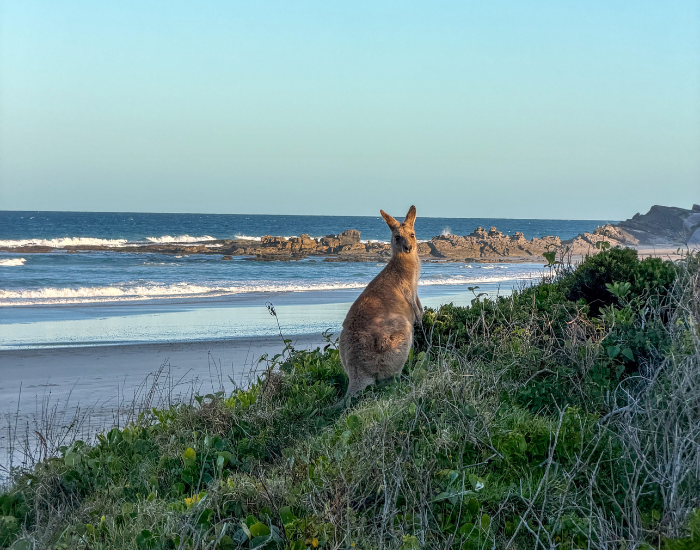
The first wallaby I ever saw up close was raiding a garden bed in suburban Sydney. I had just moved to Australia close to five years ago, and that morning I honestly thought a small kangaroo had wandered into the wrong neighbourhood.
These marsupials are everywhere here, hopping through backyards, grazing on sports fields, freezing in headlights on country roads at dusk. Yet most people outside Australia still have no idea what a wallaby actually is, or why this wallaby animal deserves far more attention than it gets. Here are 12 facts about wallabies that changed how I see them, and I think they will change how you see them too.

1. Wallabies Are Not Just Small Kangaroos
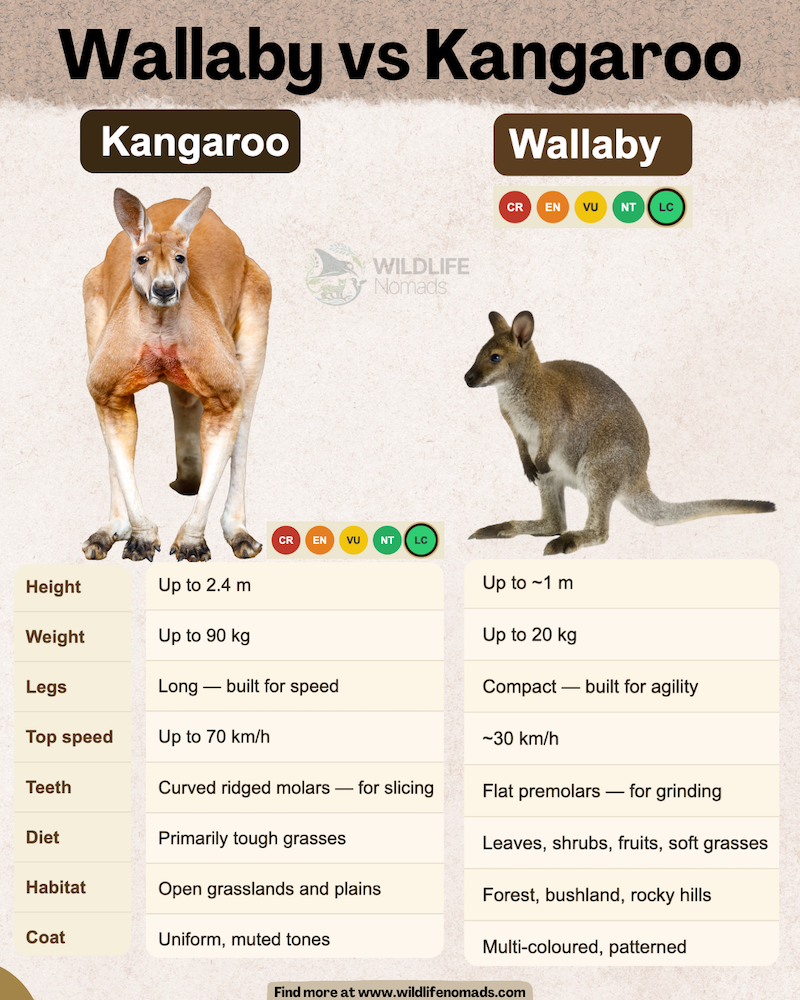
This is the single most common misconception I hear. Are wallaby and kangaroo the same? No. They belong to the same family — Macropodidae — and they are closely related, but that does not make them identical. Think of it like wolves and foxes: same family, very different animals. The larger macropods stand up to six feet tall and weigh over 200 pounds. Most wallaby species max out around three feet and 45 pounds.
The differences go deeper than size. Wallabies have compact legs built for agility in forests and rocky terrain, while kangaroos have elongated hind legs designed for speed across open plains. Their teeth differ too. Kangaroos have curved molars for slicing tough vegetation. Wallabies have flat molars for crushing a wider range of leaves and shoots.
2. Over 30 Species Call Themselves “Wallaby”
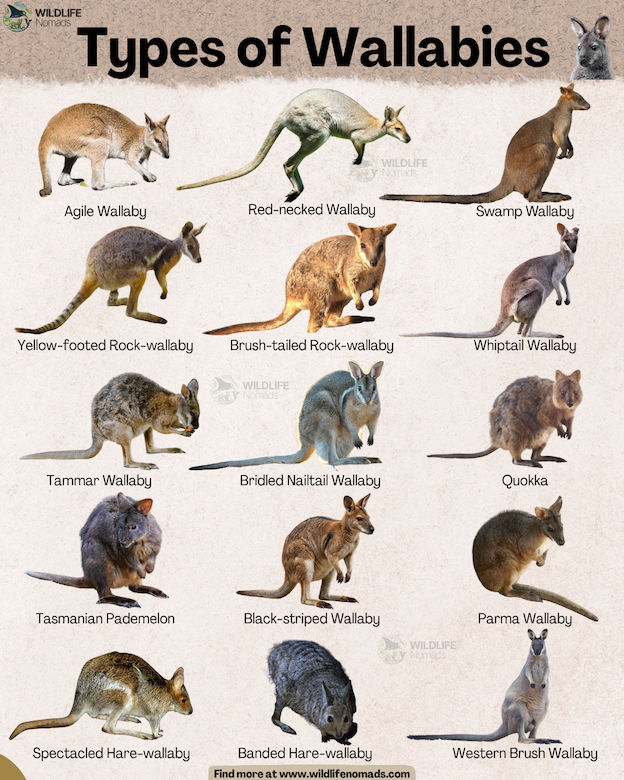
The word “wallaby” is not a precise scientific classification. It is an informal grouping that covers roughly 30 distinct species, grouped roughly by size and habitat rather than strict evolutionary lineage. The diversity is staggering once you start paying attention.
Rock wallabies, the largest genus with at least 19 species, are acrobats that navigate cliff faces and boulder fields with shocking precision. Brush wallabies include nine species that prefer dense forests and coastal scrubland across eastern Australia.
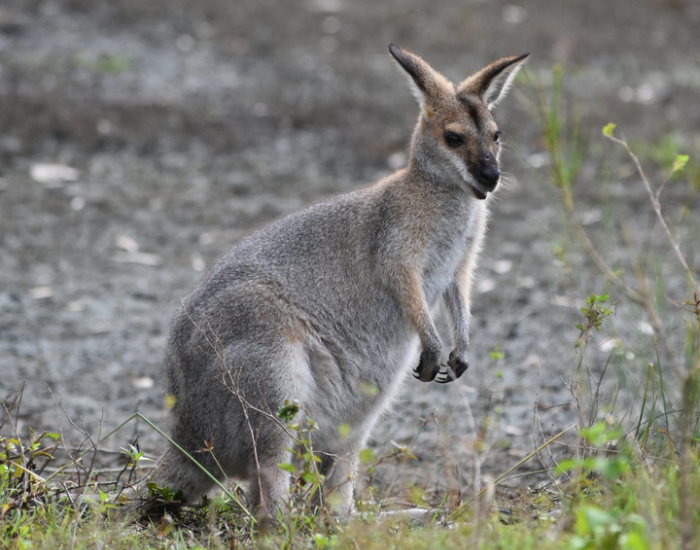
Shrub wallabies stick to thick undergrowth, and several shrub wallabies species remain poorly studied because their dense habitat makes observation difficult. Nail-tail wallabies carry a distinctive horny growth on the tail tip that scientists still do not fully understand. Then there is the red-necked wallaby, one of the most recognisable wallaby species, with its grey coat and reddish shoulders.
Each wallaby species has carved out its own niche across wildly different landscapes. That level of adaptation tells you something important about this family of marsupials.
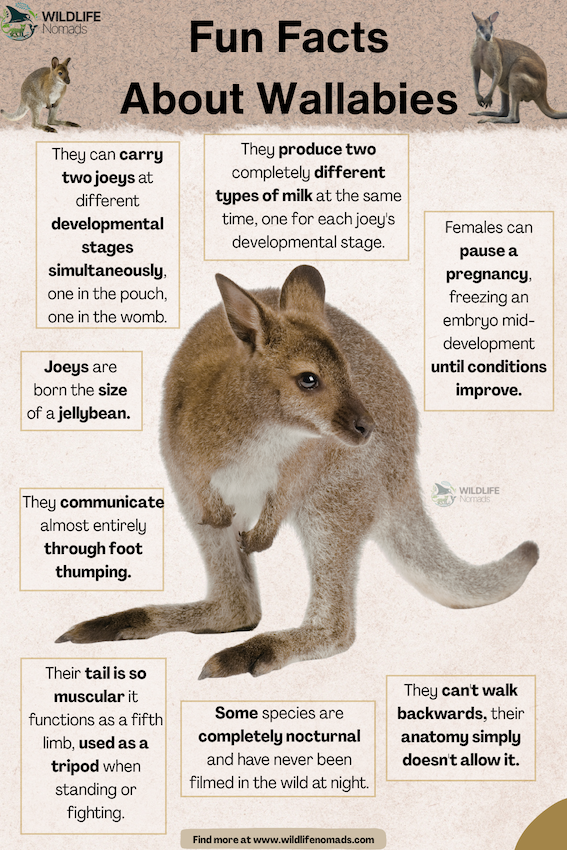
3. Their Tail Is Basically a Fifth Leg
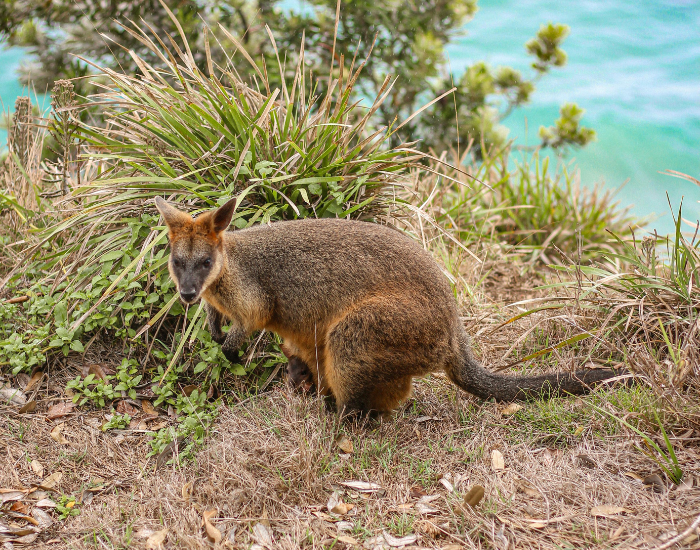
If I had to pick one wallaby fun fact that surprises people most, it is this: a wallaby’s tail generates more forward propulsive force than all four of its other limbs combined. That is not a metaphor. Researchers have documented this through biomechanical studies of macropod locomotion.
At slow speeds, wallabies use a unique “pentapedal” gait. They lean forward on their short forelimbs, plant their powerful tails on the ground, and hoist their entire body forward while swinging their hind legs ahead. Those powerful tails anchor the whole movement. The tail functions as a genuine fifth limb, muscular, precise, and load-bearing. At rest, wallabies use their tails as a tripod to prop themselves upright while feeding. Tails also provide critical balance during high-speed hopping and serve as fat storage reserves during lean seasons.
4. Wallabies Can Hit Highway Speeds
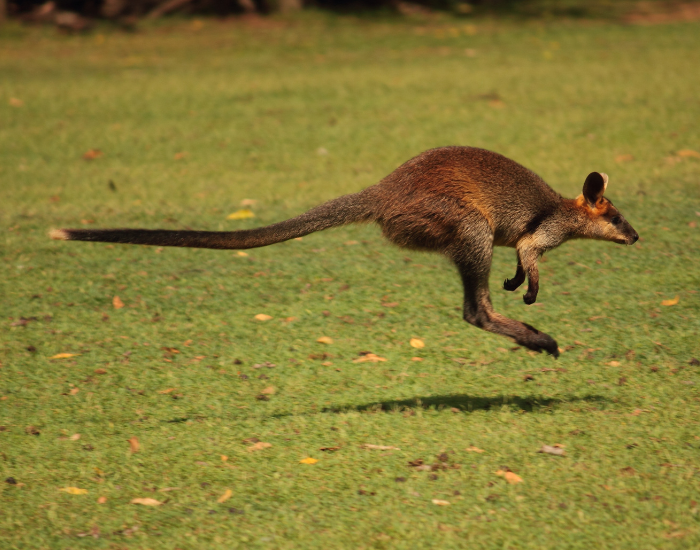
For an animal that looks this adorable, wallabies move shockingly fast. Most wallaby species cruise comfortably at around 25 kilometres per hour. Push them, say, with a pursuing wedge-tailed eagle or a feral fox, and they can reach high speeds of 48 kilometres per hour. At those high speeds, they outpace Usain Bolt’s top sprint.
The secret sits in their hind legs. Those powerful, elongated limbs contain massive Achilles tendons that function like biological springs. At speeds above 15 kilometres per hour, hopping becomes more energy-efficient than running on four legs. The faster a wallaby hops, the longer each bound becomes — they increase speed by stretching their stride rather than pumping their legs faster. I have seen wallabies cross open paddocks, covering great distances with an almost effortless rhythm, each hop spanning several metres. They can sustain this pace over great distances without tiring, a feat that still catches me off guard. Watching them move at full tilt remains one of the most beautiful sights in this country’s fauna.
5. A Newborn Joey Weighs Less Than a Gram
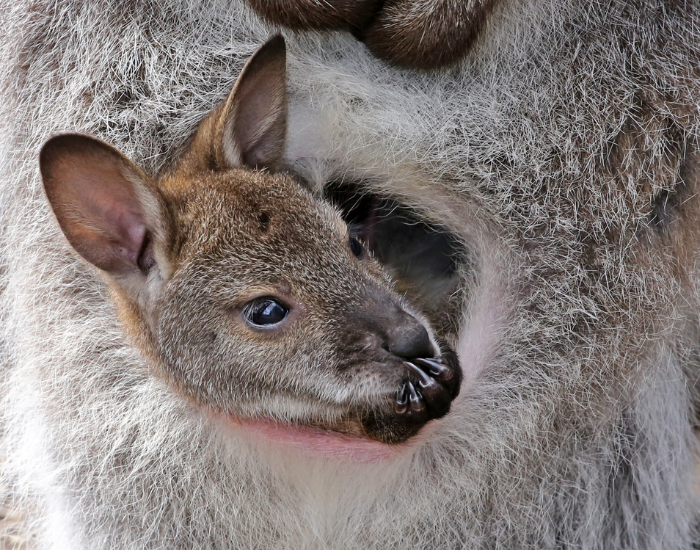
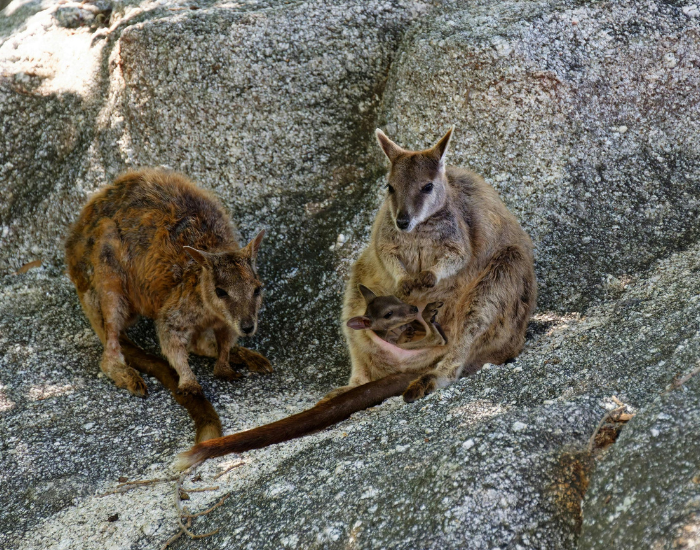
The life cycle of a wallaby starts with one of nature’s most extraordinary feats. After a gestation of just 25 to 30 days, far shorter than most placental mammals, a wallaby gives birth to a joey the size of a jellybean. Blind, hairless, and weighing under one gram, this tiny creature must climb unaided through its mother’s fur to reach the pouch using only its overdeveloped forelimbs.
Once inside the pouch, the joey latches onto a teat and stays there for months. Around five to six months, it begins poking its head out to observe the world. By seven months, young wallabies take short trips outside before scrambling back for safety and nursing. Full independence comes at eight to nine months. The entire journey from birth to independence happens in stages, each one a small miracle of marsupial biology. Females invest enormous energy in this process, and I have watched mother wallabies adjust their feeding patterns completely around their joey’s developmental stage.
6. Females Can Pause Their Own Pregnancies
This might be the most extraordinary biological feat in the marsupial world. Female wallabies possess a reproductive ability called embryonic diapause, where they can literally suspend a pregnancy mid-development. After mating, the embryo grows to a tiny ball of cells and then stops, entering a dormant state triggered by the suckling young already in the pouch.
However, the Swamp Wallaby takes this a step further: it is the only mammal known to science that can be pregnant with two different-aged embryos simultaneously in two separate uteri. They essentially conceive a new offspring before the previous one is even born. Once the older joey leaves the pouch, the suspended embryo resumes development. This overlapping cycle allows wallabies to breed with incredible efficiency, ensuring the population can recover quickly even after harsh seasons or predator pressure.
7. Wallabies Have Quietly Colonised Three Continents
Most people assume wallabies live exclusively in Australia. They are native to Australia and New Guinea, yes, but wild wallaby populations now exist on three continents and multiple island chains.
New Zealand hosts the most dramatic example. Escapees from private collections in New Zealand established breeding populations that have exploded to over one million wallabies, a large population that now causes significant ecological damage across both the North and South Islands of New Zealand. In Scotland, a small population of red-necked wallabies has lived on Inchconnachan Island in Loch Lomond since the 1920s, when Lady Colquhoun released them as ornamental wildlife. Hawaii’s Kalihi Valley supports self-sustaining brush-tailed rock wallabies. France and Ireland have confirmed feral populations too.
8. They Are Surprisingly Picky Eaters
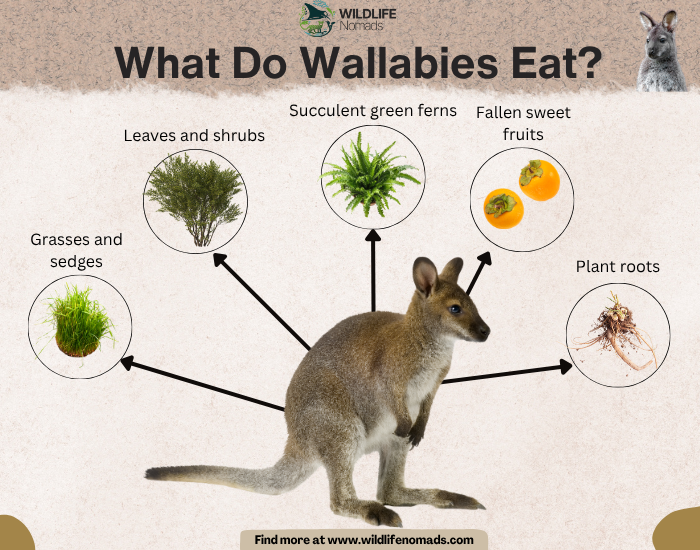
What do wallabies look like when eating? Patient. Deliberate. Selective. Despite their reputation as simple grazers, wallabies are sophisticated herbivores with refined dietary preferences. They do not just mow down whatever vegetation sits in front of them. Instead, they actively seek out the most nutritious plant parts — new growth tips, tender shoots, specific grasses, to maximise protein and moisture intake.
Their diet varies by species and season. Agile wallabies switch between grasses and legumes in the wet season and expand to fruit, flowers, leaf litter, and roots during drought. Swamp wallabies browse on local shrubs that other species ignore. Rock wallabies feed on whatever grows in their crevice-riddled habitat, including ferns and bark. All wallaby species share a specialised digestive system, a large, multi-chambered forestomach where microbes break down tough plant cellulose into usable energy.
Most wallabies feed at dawn and dusk, grazing through cooler hours to conserve energy. In agricultural areas, they sometimes raid crops, earning them a complicated reputation among Australian farmers. Eating habits shift with seasonal availability, and the plants they target depend on what their local area offers. That dietary flexibility is exactly what makes them successful across such varied habitats.
9. Several Wallaby Species Have Already Vanished Forever
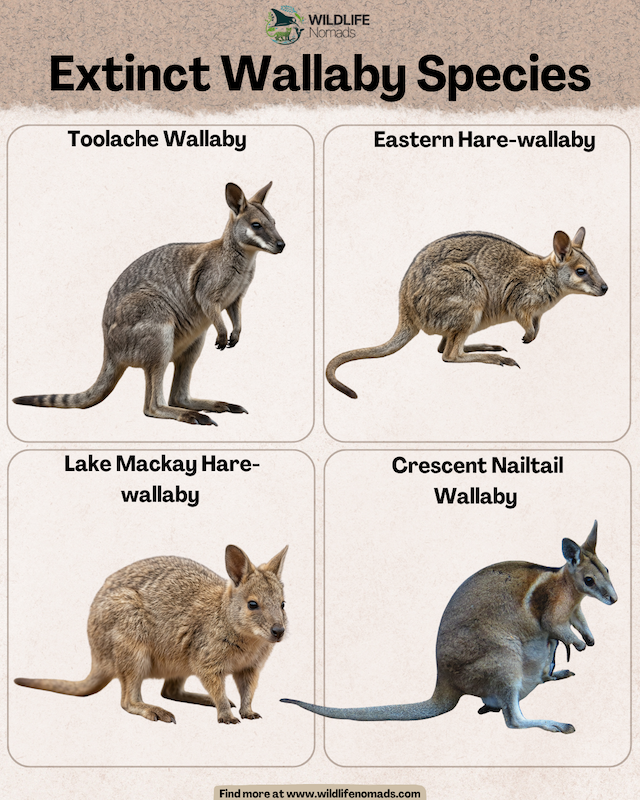
Here is where facts about wallabies take a darker turn. Since European settlement, at least four wallaby species have gone extinct. The eastern hare wallaby, the crescent nailtail wallaby, the toolache wallaby, and the central hare-wallaby, all extinct, erased permanently from the Australian landscape. Several more teeter on the edge. The Proserpine rock-wallaby is endangered. The black-flanked rock-wallaby is vulnerable. Multiple rock wallaby species face threatened status, with populations fragmenting year by year. Across New Zealand, by contrast, introduced wallaby populations cause major ecological damage, a grim irony that extinct and invasive can describe the same animal on different continents.
The threats are familiar but no less devastating for it. Feral predators, foxes, cats, and wild dogs — devastate wallaby populations that evolved without these hunters. Disease, particularly toxoplasmosis transmitted by feral cats, kills wallabies rapidly. Habitat loss through land clearing for agriculture continues to shrink available territory. Altered fire patterns destroy the undergrowth that many species depend on.
Conservation programs are fighting back. Captive breeding efforts at sanctuaries like Healesville have successfully bred and released rock wallabies back into natural habitats. Feral predator control programs protect vulnerable populations. However, without sustained funding and political will to protect habitat and control invasive species, more wallaby species will face extinction within our lifetimes. The creatures we lose are gone forever.
10. They Have Mastered Urban Living
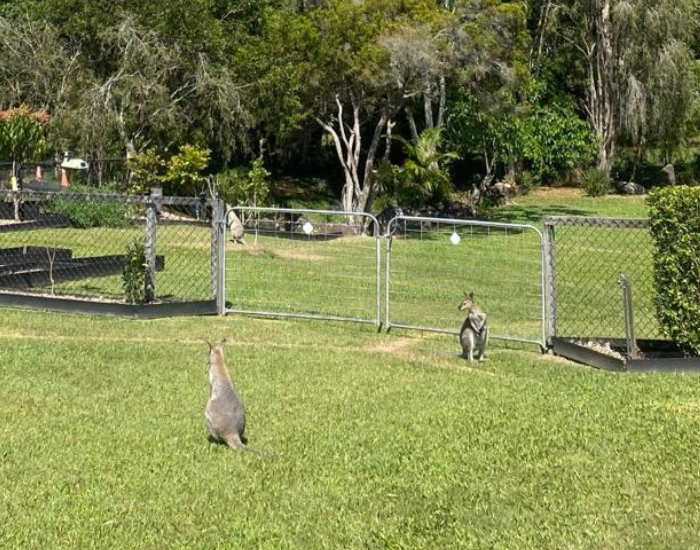
Here is something that amazed me when I first arrived in Australia. Wallabies do not just survive near people, they genuinely thrive in urban landscapes. In my neighbourhood on the outskirts of Sydney, swamp wallabies appear at dawn like clockwork, grazing on front lawns before retreating into nearby bushland patches. It reminded me of the coatis I encountered across the Americas, or the macaques in Southeast Asia, free-roaming animals that have seamlessly woven themselves into the rhythm of daily life.
Australians, for the most part, have merged their lives with wallabies remarkably well. These native animals graze on golf courses, hop through school grounds, and shelter in suburban nature reserves from Melbourne to Hobart. This wallaby species in particular has found success in the fragmented habitat patches surrounding major cities. Their solitary nature and broad diet suit smaller green spaces perfectly.
That said, this coexistence is not frictionless. Wallabies near roads face vehicle strikes, a serious and growing threat. Feeding wallabies near campgrounds draws them toward high-traffic areas and increases risk for both the animals and drivers. Some Australians consider them garden pests. But overall, the balance between wallabies and urban life in Australia stands as one of the more successful human-wildlife coexistence stories I have witnessed anywhere in the world.
11. Wallabies Are More Social Than You Would Think
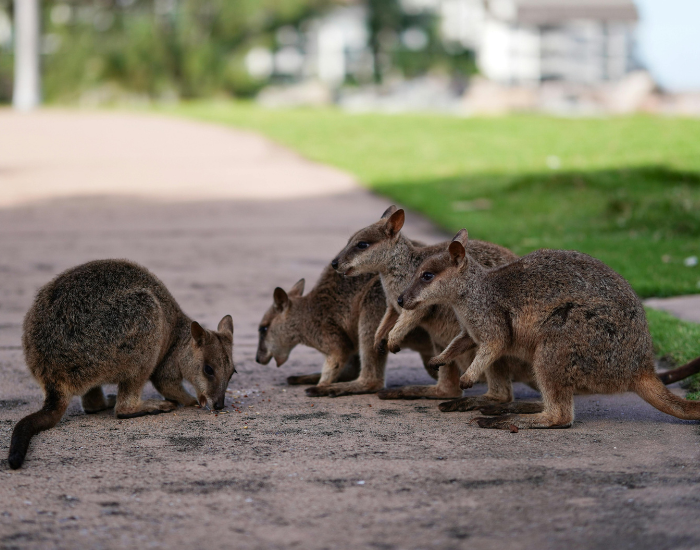
Most field guides describe wallabies as solitary animals. That is only partially true. While many wallaby species spend their days alone, they form flexible social associations that shift with conditions. Red-necked wallabies gather in groups of 10 to 30 when resources concentrate in one spot. Within these groups, researchers have documented structured relationships between specific individuals, females often remain in their mother’s home range, forming quiet matrilineal family bonds that persist across generations.
Males disperse from their natal range at around two years old, establishing independent territories. However, they still interact with other members of the local population during feeding and breeding. A 2014 study published in PLOS ONE even documented reconciliation behaviour in red-necked wallabies, the first evidence of deliberate peace-making in any marsupial species.
12. You Probably Should Not Keep One as a Pet
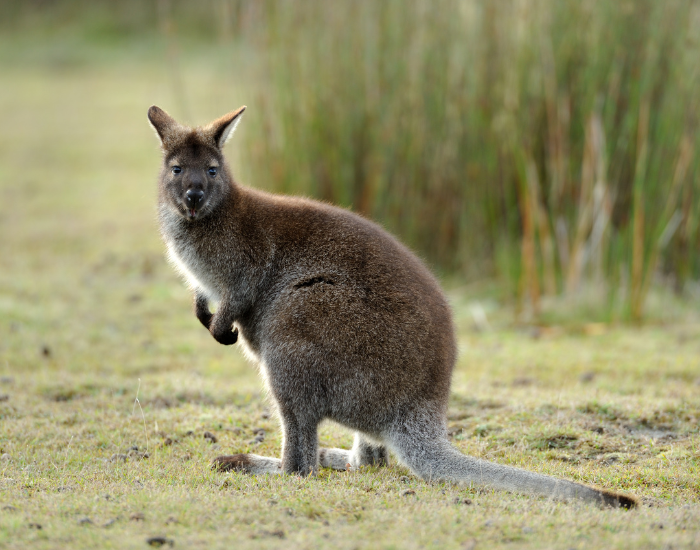
Can a wallaby be a house pet? Technically, in some jurisdictions, yes. Bennett’s wallabies breed readily in captivity, and captive-bred young sell for $1,000 to $4,000 in North America. Their body length tops out around 90 centimetres and they can weigh 14 to 18 kilograms — compact enough to seem manageable. They live 12 to 15 years in captivity.
But should you? Almost certainly not. Are wallaby dangerous? They can deliver powerful kicks with those muscular hind legs, and they bite when stressed. They need a minimum of 1,000 square feet of outdoor enclosure space per pair. Also, they require specialised diets that mimic their natural sources. They are crepuscular, most active at dawn and dusk — which clashes with most human schedules. Wallabies also carry stress poorly and can develop serious health issues in inadequate environments.
Frequently Asked Questions
No. Wallabies and kangaroos both belong to the family Macropodidae, so they are closely related. However, wallabies are significantly smaller — typically under three feet tall and 45 pounds — while kangaroos can reach eight feet and over 200 pounds. They also differ in leg structure, teeth shape, coat colour, and preferred habitat. Wallabies favour forests and rocky terrain, while their larger relatives prefer open grassland
Wallabies are small to mid-sized marsupials native to Australia and New Guinea. The term covers approximately 30 species spread across several genera, including rock wallabies, brush wallabies, swamp wallabies, and hare wallabies. Females carry and nurse their young in a pouch. Wallabies are herbivores that graze on plants, herbs, and leaves.
Wallabies in the wild are generally shy and will flee rather than confront people. In areas where they have habituated to human presence, tourist spots, campgrounds, suburban parks, they may tolerate close proximity and even accept food. However, feeding wallabies is discouraged because it alters their natural behaviour and draws them toward roads. A wallaby that feels cornered can kick hard enough to cause injury.
The Wallaby Deserves More Than a Second Glance
Five years of living alongside wallabies in Australia has taught me something that field guides never capture: these animals carry a quiet resilience that mirrors the landscapes they inhabit. From the rock wallabies scaling impossible cliff faces to the swamp wallabies reclaiming suburban bushland, every wallaby species tells a story of adaptation and survival. Some of those stories are triumphs. Others, like the four species lost since European settlement — are warnings.
If this article sparked your curiosity, go deeper. Next time you visit Australia, skip the tourist-trap wildlife parks and walk through a suburban nature reserve at dawn instead. The wallabies will be there.
References:
Cordoni, G., & Norscia, I. (2014). Peace-making in marsupials: The first study in the red-necked wallaby (Macropus rufogriseus). PLOS ONE, 9(1), e86859. https://doi.org/10.1371/journal.pone.0086859
Kachel, S. A., Leach, G., Allen, D. G., Waite, R. J., & Laurance, W. F. (2024). Toxoplasmosis epidemic in a population of urbanised allied rock-wallabies (Petrogale assimilis) on Magnetic Island, North Queensland. Australian Veterinary Journal, 102(5). https://doi.org/10.1111/avj.13319
Kalsia, S., Edwards, M., & Wilson, G. (2024). Parma wallabies: A history of translocations and reintroductions. Australian Zoologist. https://doi.org/10.7882/AZ.2024.046
Kleemann, S., Sandow, D., Stevens, M., Schultz, D. J., Taggart, D. A., & Croxford, A. (2022). Non-invasive monitoring and reintroduction biology of the brush-tailed rock-wallaby (Petrogale penicillata) in the Grampians National Park, Australia. Australian Journal of Zoology, 69(2). https://doi.org/10.1071/ZO21009
Menzies, B. R., Hildebrandt, T. B., & Renfree, M. B. (2020). Unique reproductive strategy in the swamp wallaby. Proceedings of the National Academy of Sciences of the United States of America, 117(11), 5938–5942. https://doi.org/10.1073/pnas.1922678117
Horsup, A., & Hughes, G. (2011). Genetic consequences of isolation: Island tammar wallaby (Macropus eugenii) populations and the conservation of threatened species. Conservation Genetics, 12, 385–398. https://doi.org/10.1007/s10592-011-0265-2
Zenger, K. R., Richardson, B. J., & Vachot-Griffin, A. M. (2003). Sex-linked and autosomal microsatellites provide new insights into island populations of the tammar wallaby. Heredity, 111, 261–268. https://doi.org/10.1038/hdy.2013.109