
Most people think of herons as these elusive, prehistoric figures standing stoically in the middle of a remote swamp. But here’s the thing: they are far more common than you’d expect. If there is a body of water nearby, be it a lake, a river, or even a drainage ditch, there is likely a heron bird nearby, patiently waiting for its next meal.
My fascination with these bird heron identification puzzles started back during my biology degree. My university had this incredible lake that acted as a microcosm of the wild. I’d spend hours between lectures watching kingfishers, ducks, and herons congregate. It was a whole little ecosystem; I watched them snatch up small fish, aquatic insects, and even small rodents with surgical precision.
One particular bird stole the show: the Snowy Egret (Egretta thula). I remember watching he, with her iconic “golden slippers” (bright yellow feet), moving through the shallow water to stir up prey.
Whether you call them herons and egrets or just wading birds, these members of the family Ardeidae are masters of their habitat. Here are 15 different types of heron birds you should know.
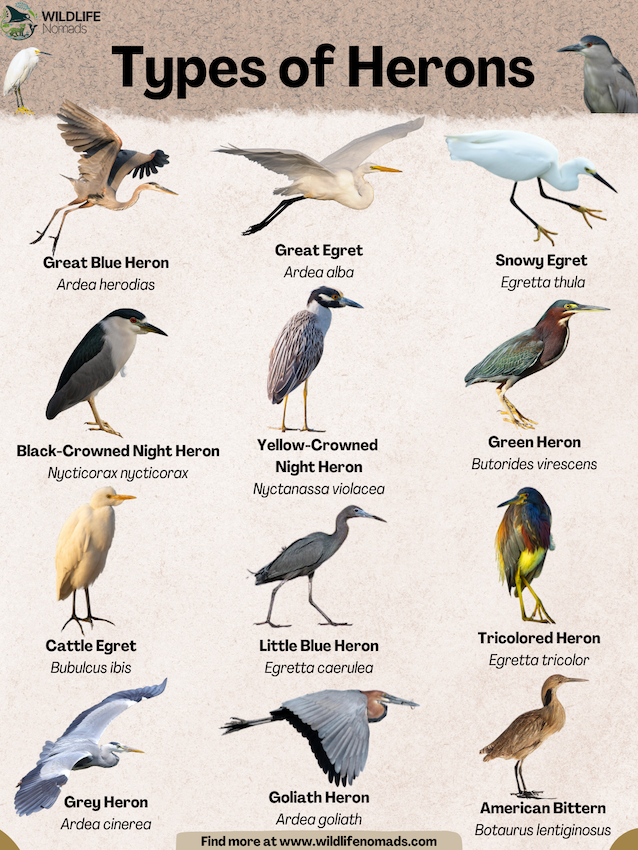
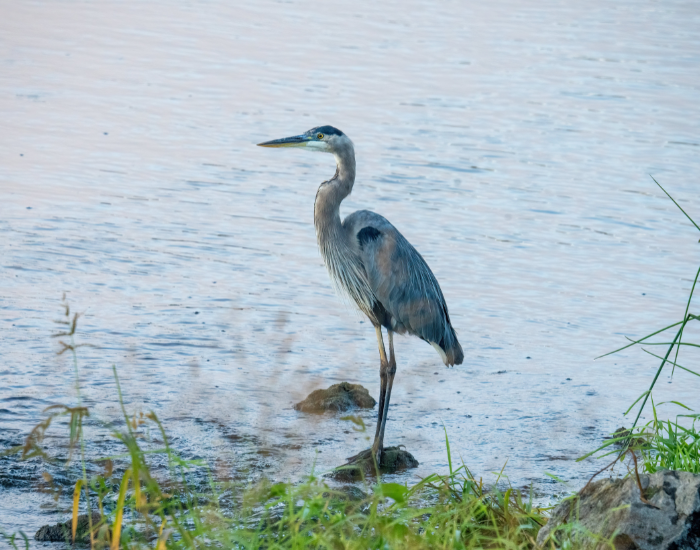
1. Great Blue Heron (Ardea herodias)
The Great Blue Heron is the undisputed heavyweight champion of North American wetlands. Standing nearly four feet tall with a massive wingspan, this is the heron bird most people recognize. They are very good at the “wait and see” hunting strategy, standing motionless for an eternity before striking a fish with their dagger-like bill.
Despite their name, their plumage is more of a subtle blue-gray, often accented by a black stripe over the eye. You’ll find them everywhere from freshwater marshes to saltwater shores across North and Central America. They are incredibly adaptable, which is why they remain one of the most successful bird species in the world.
2. Great Egret (Ardea alba)
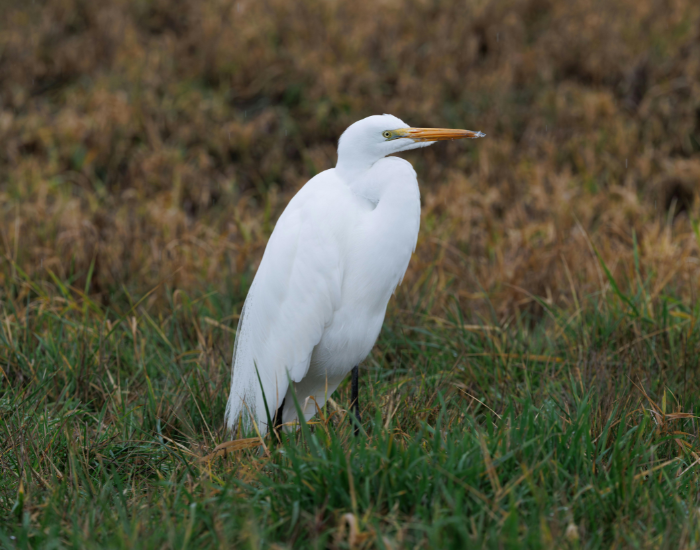
Is there a difference between a heron and an egret? Taxonomically, no. Egrets are herons. The Great Egret is a stunning example with its dazzling white feathers and black legs. During the breeding season, they grow long, delicate plumes called aigrettes, which nearly led to their extinction in the 19th century due to the hat trade.
These birds are found globally and are a testament to conservation success. When you see one hunting in marshes, notice the “S” curve of their long necks. This anatomical quirk allows them to strike with incredible force.
3. Snowy Egret (Egretta thula)
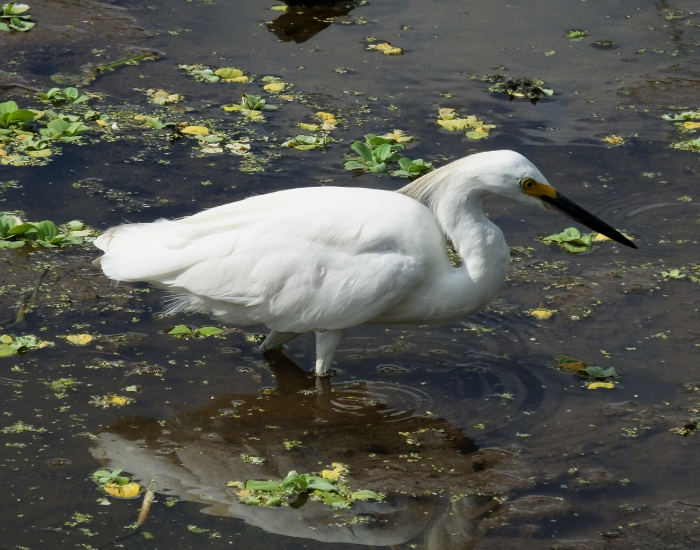
As I mentioned from my university days, the Snowy Egret is the “refined” cousin of the Great Egret. Snowy egrets are smaller and possess a very specific bird heron identification mark: bright yellow feet. They use these feet to “shimmy” in the mud, startling aquatic insects and small fish into the open.
They prefer wetlands and swamps along the coasts of the Americas. While they look delicate, they are aggressive hunters and often nest in mixed colonies with other wading birds.
4. Black-Crowned Night Heron (Nycticorax nycticorax)
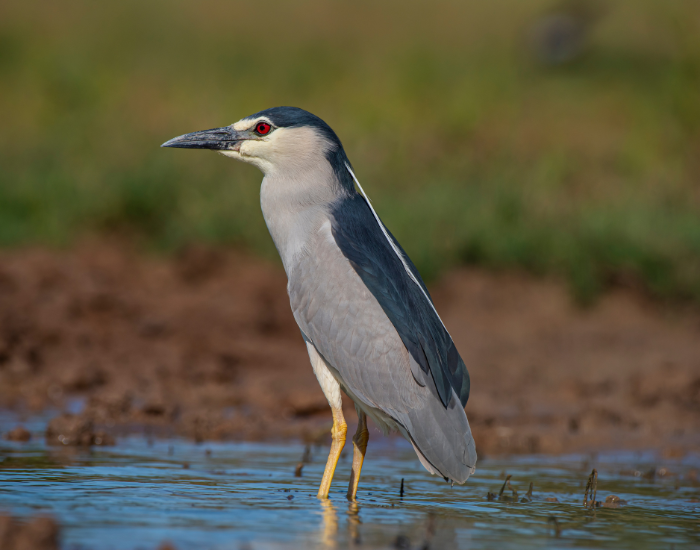
If you’re looking for a bird that breaks the “tall and lanky” stereotype, the Black-Crowned Night Heron is it. These are short, stocky types of heron birds with a “hunched” appearance. As their name suggests, they are primarily nocturnal, coming out at dusk to hunt while other herons are heading to roost.
They have a beautiful gray-and-white body with a distinct black cap. Interestingly, they are known to nest in trees within urban areas. If you hear a loud, guttural “kwark” over a pond at night, it’s likely one of these guys.
5. Yellow-Crowned Night Heron (Nyctanassa violacea)
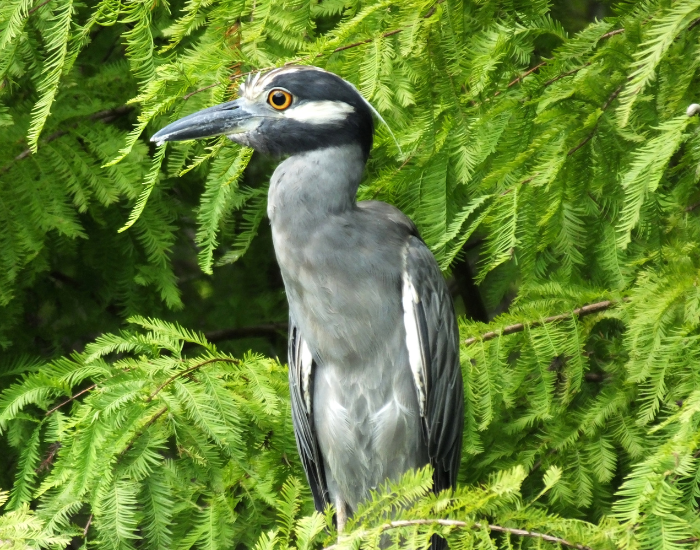
Closely related to the black-crowned variety, the Yellow-Crowned Night Heron is a specialist. While many herons eat anything that moves, this species is a crustacean connoisseur. They love crabs and crayfish, which is why you’ll often find them in coastal marshes and mangroves.
These herons have a more slender profile than the Black-Crowned and sport a distinct yellowish crest on their head. They are solitary nesters compared to some of their more social cousins, preferring a bit of privacy while they raise their young.
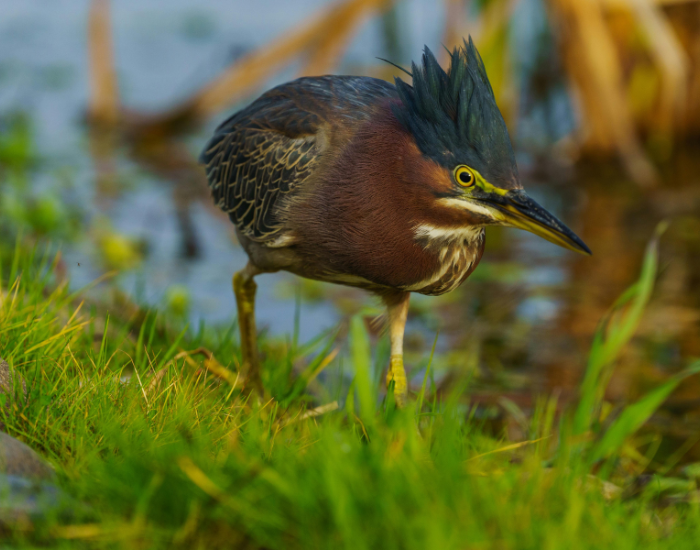
6. Green Heron (Butorides virescens)
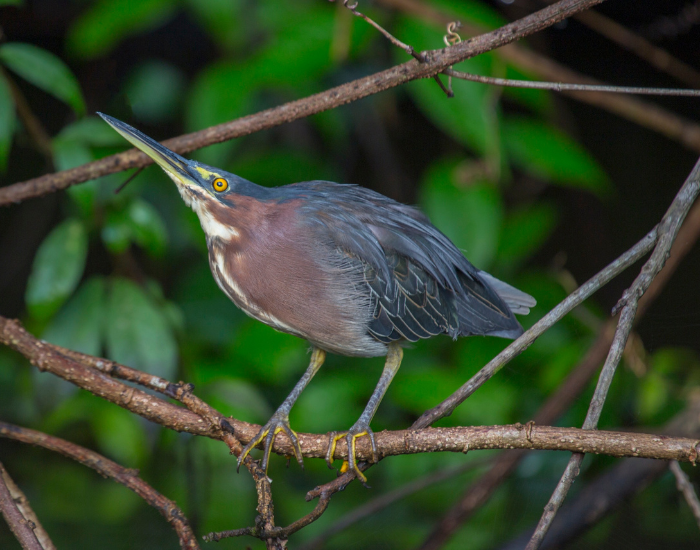
They are one of the few animals in the world known to use tools. Green herons employ various hunting techniques, including using tools like twigs as bait to catch fish. I’ve seen them drop feathers or small twigs onto the surface of the water to “bait” small fish. When the fish comes to investigate the lure—snap—the heron wins.
Green herons are distinguished by their small size, glossy greenish-black cap and back, yellow legs, and dark red neck. At a distance, they may appear as small, brown herons, but when the light hits them just right, they reveal a deep iridescent green on their backs. They are often found near ponds and lakes, hiding in dense vegetation, and inhabit wetlands such as marshes, swamps, and streamsides. Their range includes the eastern U.S. and western Oregon.
7. Cattle Egret (Bubulcus ibis)
Cattle egrets are the rebels of the heron family. Unlike other herons that prefer freshwater or marshes, cattle egrets are often found in dry fields. They are closely associated with livestock, frequently seen following cows, tractors, or even elephants (in Africa) to feed on insects disturbed by these large animals. Their unique foraging behavior allows them to thrive in both wetland and agricultural ecosystems. Cattle egrets are also known for their migratory patterns, moving seasonally to exploit new feeding opportunities.
They are smaller, white birds that develop beautiful orange-buff feathers on their heads and backs during the breeding season. Because they don’t rely on water for food, they have spread across the globe more rapidly than almost any other bird species.

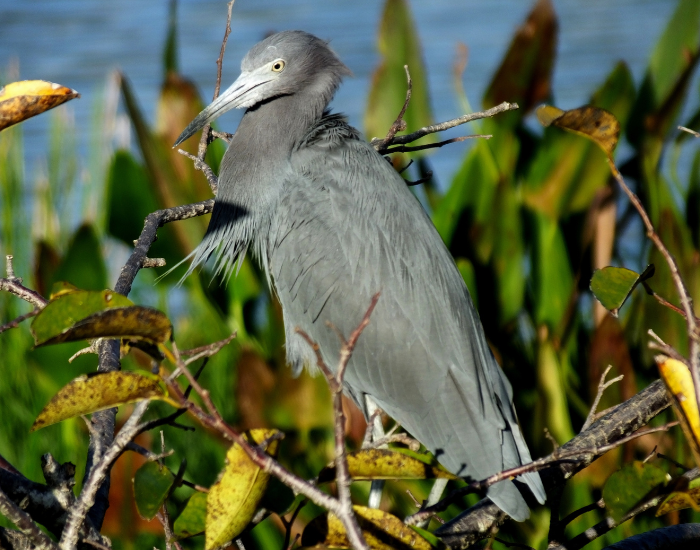
8. Little Blue Heron (Egretta caerulea)
The Little Blue Heron is a master of disguise—or at least, its kids are. Juveniles are completely white, often mistaken for egrets. As they mature, they transition into a moody, slate-blue plumage with a maroon neck.
This color change is thought to allow the young birds to blend in with snowy egrets, providing “safety in numbers” from predators. They are slow, methodical hunters, often seen to walk slowly through shallow water searching for amphibians like frogs and small reptiles like lizards.
9. Tricolored Heron (Egretta tricolor)
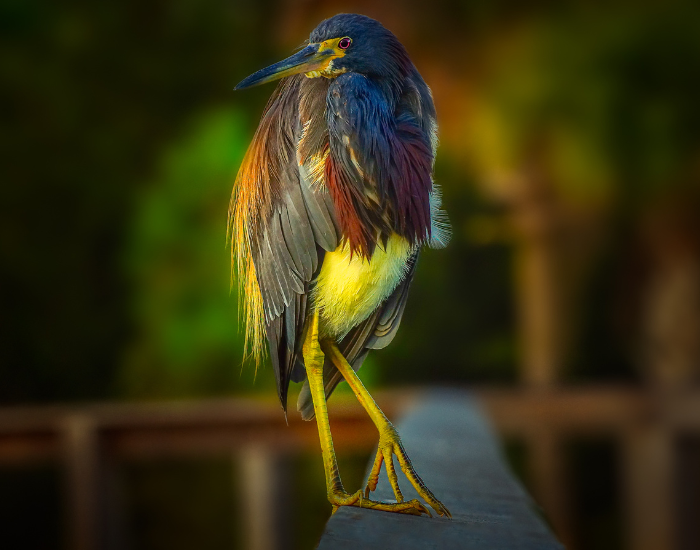
Formerly known as the Louisiana Heron, the Tricolored Heron is a slender, elegant bird often found in the southern areas of the US and down into South America. They are distinguished by their white bellies, which contrast sharply with their blue-gray backs.
They are incredibly active hunters. Unlike the stoic Great Blue Heron, the Tricolored will sprint through the water, wings flapping, to chase down prey. It’s a chaotic but effective strategy.
10. Grey Heron (Ardea cinerea)
The Grey Heron is the Old World’s answer to the Great Blue. Found across Europe, Asia, and parts of Africa, it is the most common heron bird in those regions. Grey herons are remarkably bold and are often seen in city parks or near garden ponds (much to the chagrin of koi owners).
They are closely related to the Great Blue and share many of the same behaviors. They are highly adaptable, living in everything from northern areas that freeze over to tropical wetlands.

11. Goliath Heron (Ardea goliath)
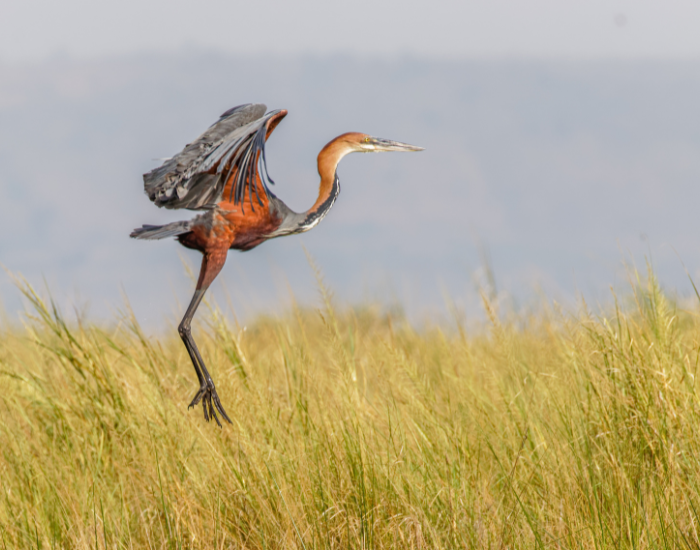
If the Great Blue is a heavyweight, the Goliath Heron is a giant. Standing up to 5 feet tall, it is the largest species of herons in the world. Found in sub-Saharan Africa, this bird is big enough to hunt exceptionally large fish and even small crocodiles.
Because of their size, they are quite territorial. They don’t typically hang out in colonies; they prefer to rule their stretch of the river or lake alone.
12. American Bittern (Botaurus lentiginosus)
The American Bittern is the ghost of the marsh. These brown herons are the ultimate camouflagers. When they feel threatened, they point their long necks toward the sky and sway back and forth to mimic the movement of the reeds.
They are more often heard than seen. Their call is a strange, booming “pump-er-lunk” that sounds more like a clogged pipe than a bird. They are a “specialist” species that requires pristine marshes to survive.
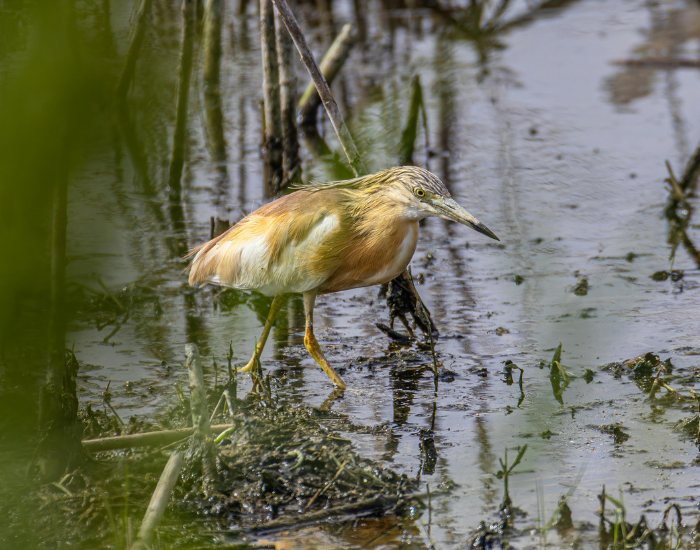
13. Least Bittern (Ixobrychus exilis)
As the name implies, the Least Bittern is the smallest member of the heron family in North America. They are about the size of a meadowlark but have all the predatory instincts of their larger cousins.
They are incredibly agile, capable of “clinging” to reed stalks like a parrot rather than wading in the water. Because they are so small and secretive, they are often overlooked during bird heron identification sessions.
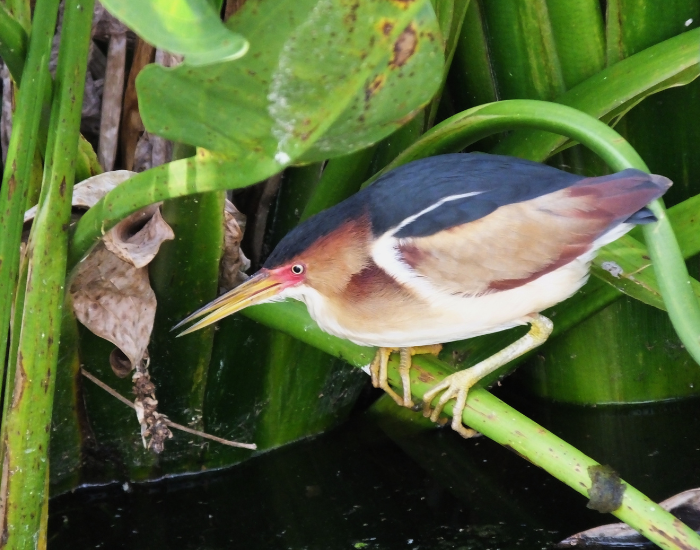
14. Black Heron (Egretta ardesiaca)
Also known as the “Umbrella Bird,” the Black Heron of Africa has one of the coolest hunting techniques in the animal phyla. It folds its wings over its head to create a canopy of shade.
This does two things: it reduces glare so the bird can see the fish, and it lures fish into the “shade” to hide, where the heron is waiting. This is a prime example of the critical thinking and evolutionary ingenuity found in the family Ardeidae.
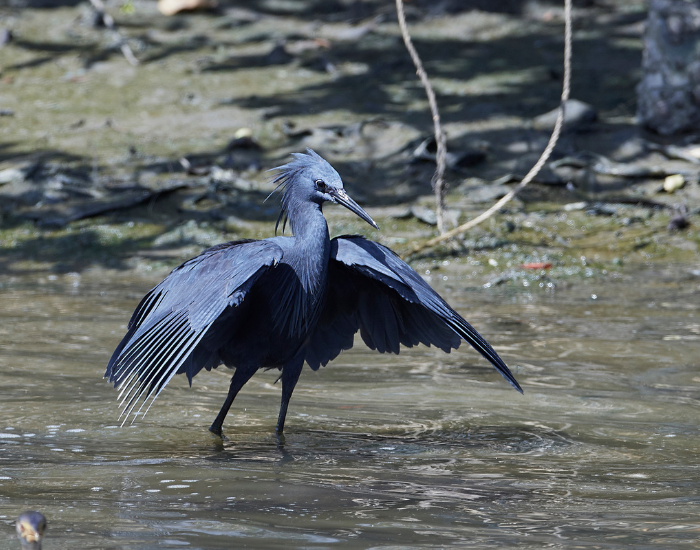
15. Agami Heron (Agamia agami)
Often called the “Forest Heron,” the Agami is perhaps the most beautiful and rarest type of heron you could hope to see. They live deep within the shadows of Central and South American rainforests.
The Agami heron have incredibly long necks, longer than their bodies, and a plumage of chestnut, green, and silver. They are extremely secretive, making them a “holy grail” for birders and biologists alike.
Heron Identification & FAQ
People often mistake Cranes or Storks for herons. The easiest way to tell the difference is by looking at them in flight. Herons fly with their necks tucked in an “S” shape, while cranes and storks fly with their necks stretched out straight.
As a biologist, I get this a lot! There is no scientific difference. “Egret” is simply the name given to several species of herons that are mostly white and grow decorative plumes during the breeding season.
The White-bellied Heron is currently considered one of the rarest. Found in the Himalayas, its population is critically endangered due to habitat loss.
In many cultures, a heron symbolizes stillness, patience, and luck. Because they are masters of the “wait,” they often represent the need to look beneath the surface before taking action.
The Big Picture: Why We Need Herons
Whenever I’m out in the field, I think of herons as the ultimate “sentinel species.” Because they sit at the top of the wetland food chain, their health is a direct reflection of the water they stand in. If a river gets hit by runoff or a swamp is drained for development, the herons are usually the first to vanish. They are the “canaries in the coal mine” for our global water systems.
What’s truly wild is how these birds manage to thrive in such a variety of ways. Whether they are migratory nomads or year-round residents, they are protected for a reason. They represent a massive biological effort, from nesting in massive, noisy colonies high in the trees to the delicate process of raising a clutch of eggs in a hidden reed bed.
They are also far more “hardcore” than their elegant plumage suggests. I’ve watched a Great Blue snatch up a small rodent or a snake and give it a violent shake before swallowing it whole. It’s a grisly reminder that these are essentially living dinosaurs. Their vision is so sharp that they can transition from hunting small fish in the midday sun to stalking crabs and frogs by moonlight without missing a beat.
Next time you find yourself near a pond or a quiet stretch of coast, don’t just walk past. Walk slowly. Scan the edges where the shallow water meets the grass. You might catch a glimpse of a Green Heron or a bittern playing a high-stakes game of hide-and-seek. They remind us that in a world that’s always moving, there is an immense power in simply standing still and waiting for the right moment.