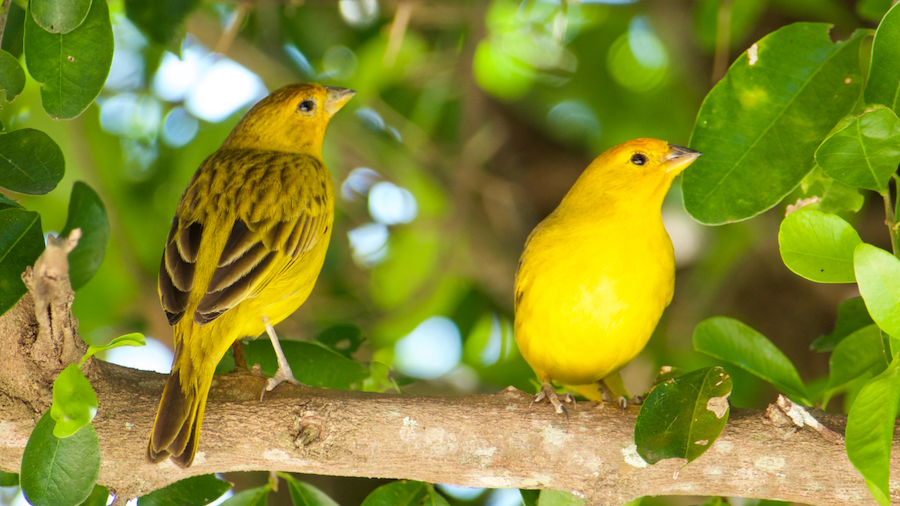
My uncle gave me two canaries when I was a kid in Mexico. One was a chalky blue-gray. The other was yellow and green with odd flecks on the wing. I whistled at them for hours. Both were dead inside a year.
Nobody told me where those birds came from. Looking back, it was a street market rather than a licensed breeder. Mexico has tightened that trade since, and for good reason. Birds from unofficial sources arrive stressed, crowded and often already carrying parasites.
One question stayed with me for years. Why did two canaries look nothing alike? Roughly four centuries of selective breeding explain it. Every pet canary descends from one drab island finch. Yet keepers have split the species into song specialists, color charts and show birds shaped like teaspoons.
Below are 15 types of canaries worth knowing, grouped the way canary breeders group them. You will learn what separates a Spanish Timbrado from a German Roller. I also cover why red factor birds need bell peppers, and which pet variety suits a beginner.
One Island Finch, Three Families of Canaries
Every pet canary traces back to Serinus canaria, the Atlantic canary. Wild canaries are streaky olive-and-yellow birds, far plainer than anything in a pet shop. They live on the Canary Islands off northwestern Africa, plus Madeira and the Azores. Genetic work confirms those islands hold the species’ largest habitat and deepest lineages.
Spanish sailors carried them to mainland Europe in the 1500s. Spain then guarded the trade by exporting males only, since males sing and females unlock breeding. That monopoly eventually leaked, and monks, miners and weavers began their own lines.
Today domestic canaries (Serinus canaria domesticus) fall into three groups: Song Canaries, Color Canaries and Type Canaries. Over 200 breeds and color variations now exist. All of them sit inside the finch family, Fringillidae, beside goldfinches and siskins.
Song Canaries: Bred for the Voice
Song canaries are judged on the structure of the song, not on looks. Male canaries are particularly accomplished singers compared with females, and males sing hardest once sexually mature. Researchers sequenced the canary genome partly to track that seasonal hormone switch.
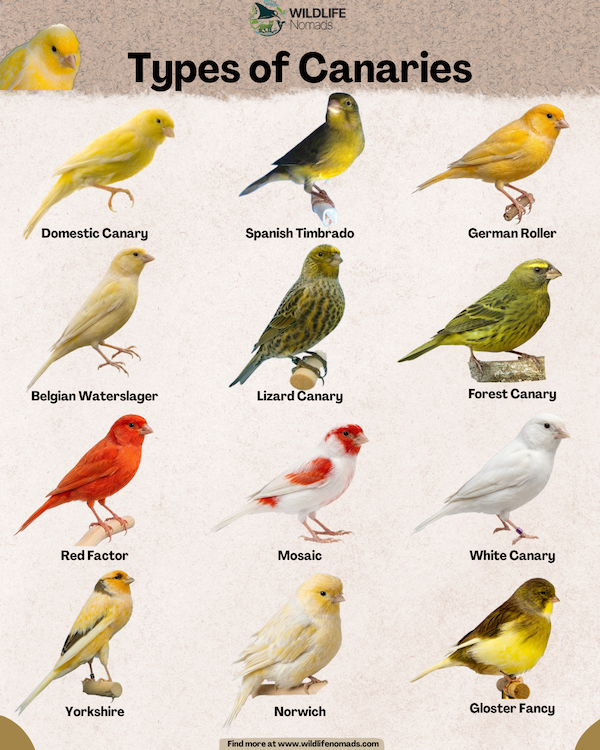
1. Spanish Timbrado
The Spanish Timbrado sits closest to the wild bird. Spanish breeders standardized it last century and named it for timbre, the metallic ring running through its song.
Judges score a dozen named figures, from rolled timbres to water notes. It stays small, near 13 cm, and often keeps green variegation instead of clear yellow. Want a canary that sounds wild rather than engineered? Start here.
2. German Roller (Harz Roller)
Harz Mountain miners developed this breed, and it sings with the beak almost closed. The result is a soft, muffled roll at far lower volume than a Timbrado.
Breeders judge Rollers inside darkened song boxes, which encourages that inward delivery. Old breeders talked about high frequency hearing loss from long hours in song rooms. I have found no formal study on it, though. The tone sits closer to a nightingale’s churring than to a finch’s chatter.
3. Belgian Waterslager
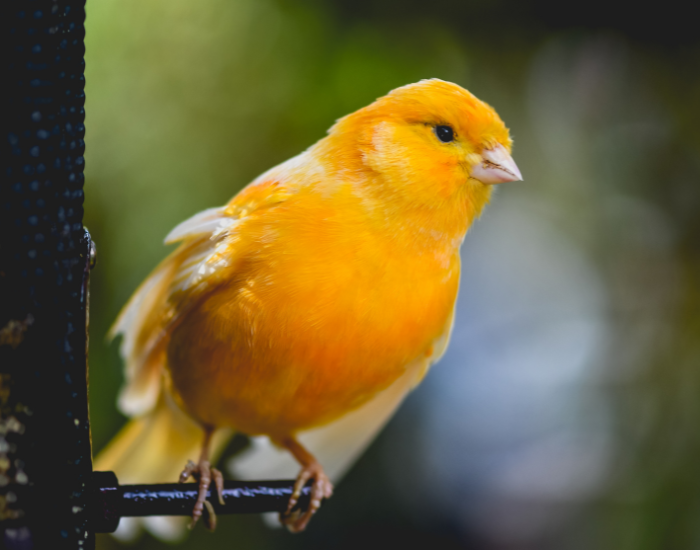
Breeders near Mechelen built this bird for “water tours”, bubbling notes that genuinely resemble a running tap. It is the most specialized voice in the hobby.
Now the fascinating part. Waterslagers inherit an inner-ear abnormality, and the breed shows measurable high frequency hearing loss compared with other canaries. Selecting hard for low, watery phrases dragged a hearing defect along with it. One trait rarely travels alone.
4. American Singer Canary
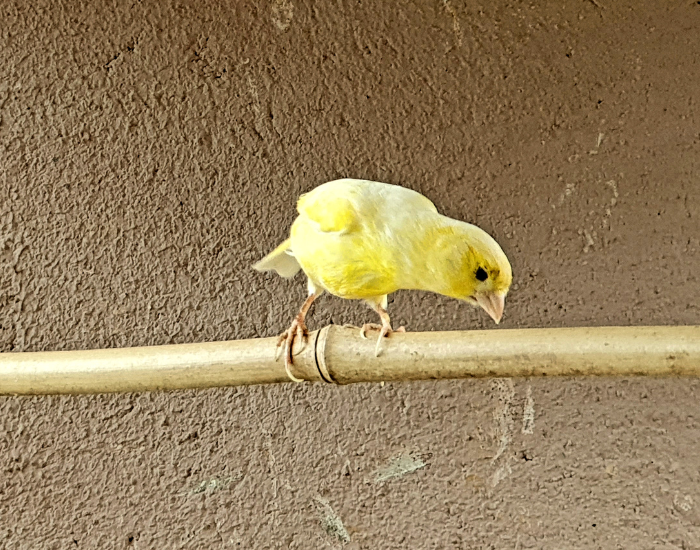
American breeders crossed Border Fancy stock with German Rollers in the 1930s. They fixed judging at roughly 70% song and 30% type, aiming for a pet rather than a specialist.
The result sings a loose mix of rolled and chopped notes at household volume. It is the breed I hand to nervous beginners. Availability outside North America is the catch.
Color-Bred Canaries: Living Pigment Experiments
Color bred canaries are selectively bred for plumage color rather than body shape or song. Canaries come in yellow, red and white, with melanin patterns layered over those grounds. This group also taught ornithology more than any other cage bird.
5. Clear Yellow Canary
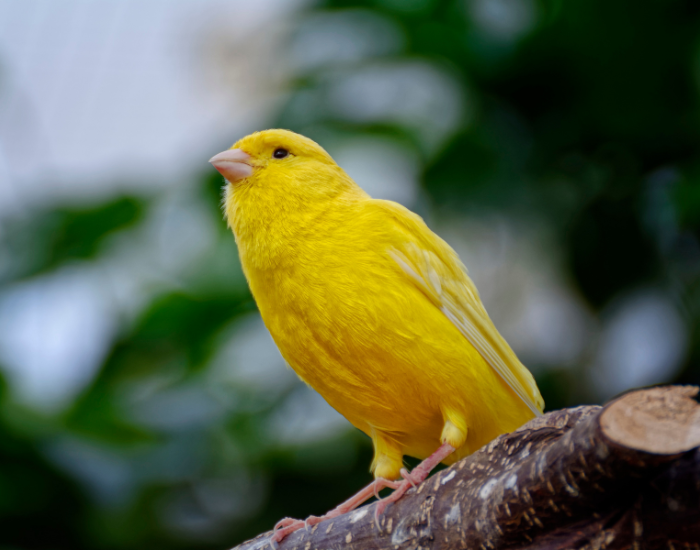
The yellow canary is what most people picture, and it appeared in captivity by the 1600s. A clear yellow bird carries carotenoid pigment with no melanin showing through.
Wild canaries never look like this. The mutation blocks melanin in the feathers and unmasks the diet-derived pigment underneath. Every yellow canary is a pigment accident that humans kept breeding.
6. Red Factor
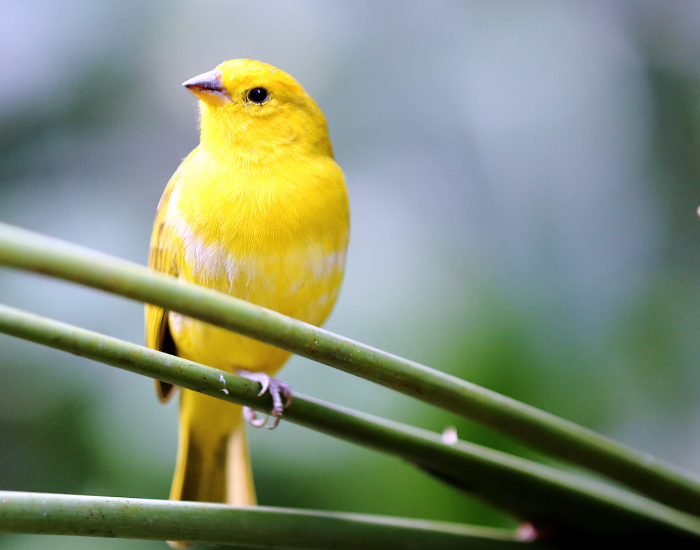
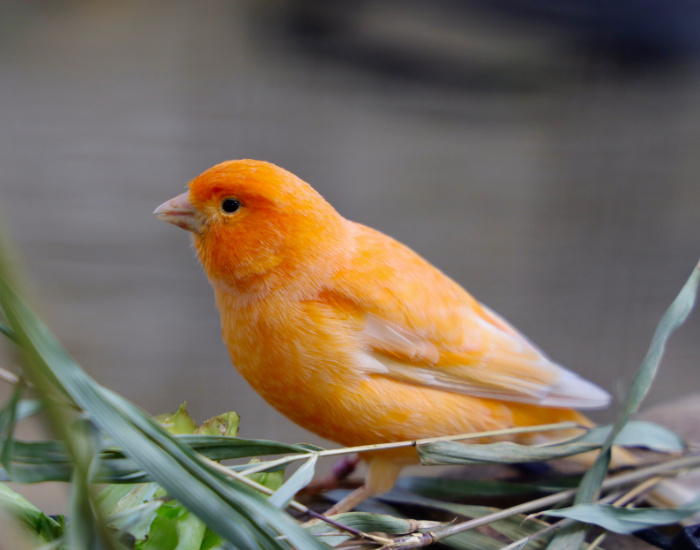
Red factor canaries do not come from canaries alone. German breeders hybridized them with the red siskin (Spinus cucullatus) in the 1920s. Genomic work pinned the borrowed trait to CYP2J19. That enzyme converts yellow dietary carotenoids into red ones.
Those birds therefore need beta carotene and related pigments in the food. Bell peppers, grated carrot and paprika-based supplements all work. Skip them and the bird fades to apricot, exactly as orange plumage in wild birds fades on a poor diet. Worth knowing: the pet trade helped push the red siskin toward extinction.
7. Mosaic
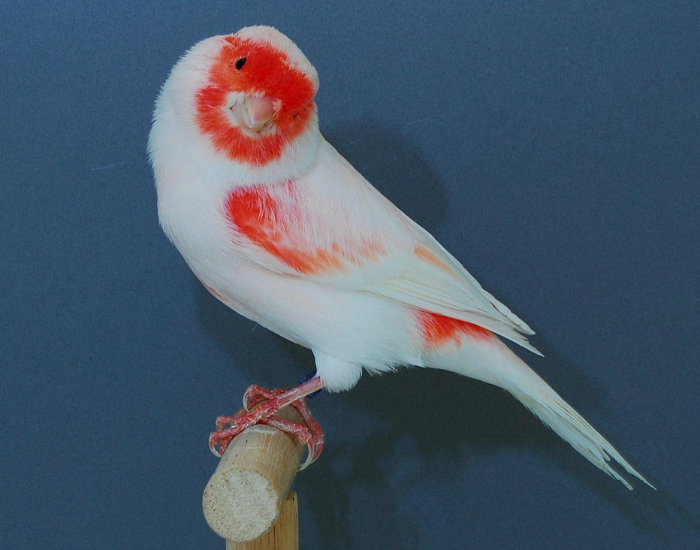
Mosaic canaries restrict pigment to defined points — face, shoulders, breast and rump — leaving the rest near-white. Males carry far more color than females, which is odd, because ordinary canaries barely differ by sex.
That difference has a named mechanism. A regulatory change in BCO2, again inherited from red siskin ancestry, makes pigment deposition sex-specific.
8. White Canary
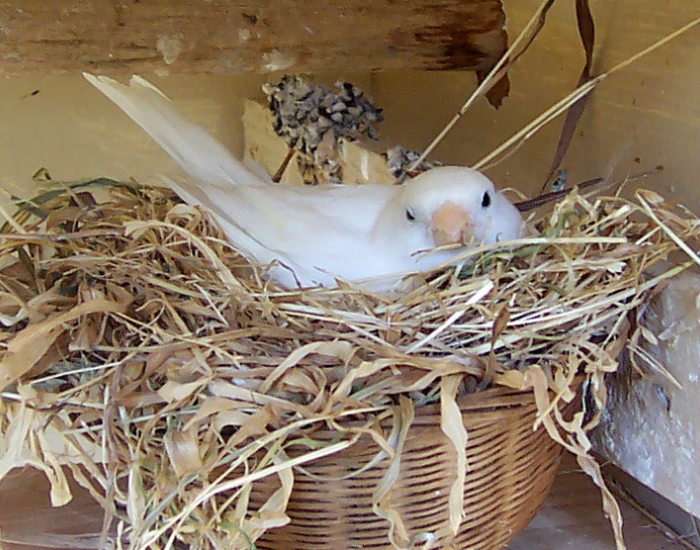
White canaries come in two forms, and the difference matters medically. Dominant whites cannot deposit carotenoids in feathers but absorb them normally. Recessive whites absorb them poorly, so they need dietary vitamin A support.
My childhood “blue” bird almost certainly belonged here, with a white ground and melanin showing through as slate gray. Breeders later produced the urucum mutation. There, BCO2 disruption reddens the beak and legs instead of the plumage .
Type Canaries: Bred for Shape and Posture
Type canaries are bred for physical traits such as size, stance and feather structure. Song barely counts here. Judges work from a written standard. It covers the curve of the back, the set of the legs and the line of the canary’s body.
9. Border Fancy
Nicknamed the “Wee Gem,” the Border came out of English–Scottish border country and dominated shows for most of last century. It is a neat, round, busy bird near 14 cm.
Borders are hardy and easy to breed, which is exactly why they fed into the American Singer.
10. Yorkshire
The Yorkshire stands tall and upright near 17 cm, with the posture old fanciers called a gentleman in evening dress.
You will read that a true Yorkshire should pass through a wedding ring. That belongs to the slimmer Victorian bird, and modern Yorkshires are far broader in the shoulder. Treat the line as history, not a standard.
11. Norwich
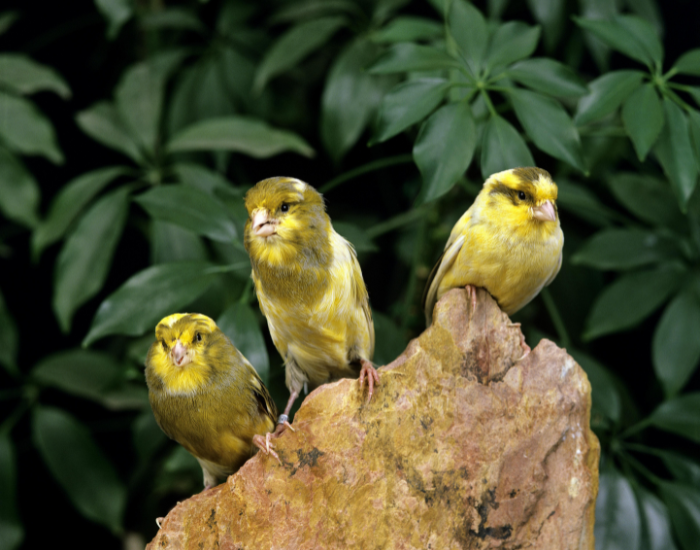
Flemish weavers brought canaries to Norwich in the 1500s, and the local breed became short, thick and deliberately cobby. Norwich birds look almost spherical beside a Yorkshire.
That build carries a real cost. Norwich canaries run to obesity and fatty tumors, so seed-heavy feeding hits them hardest. Give them a large cage and watch the treats.
12. Gloster Fancy
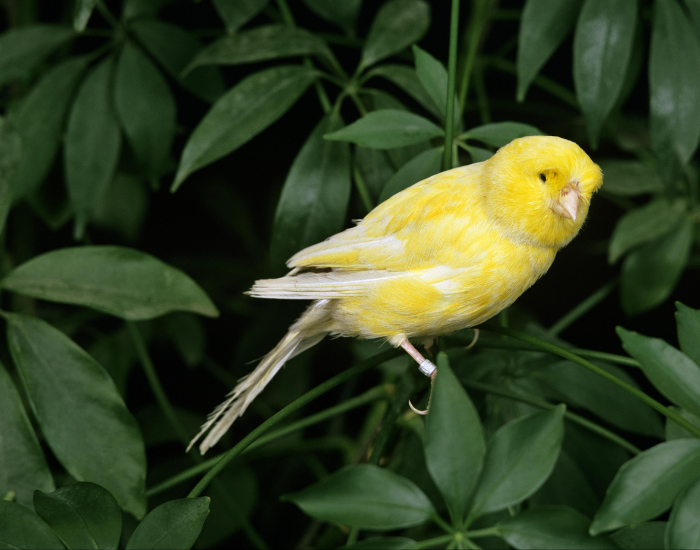
The Gloster is the smallest crested breed, and it comes in two forms. A Corona wears the crest; a Consort has a plain head. Crested canaries have feather styles resembling small toupees, which is exactly as ridiculous as it sounds.
Breeders always pair Corona with Consort, never crest to crest, because doubling the crest factor produces non-viable chicks. A charming mutation often sits one allele away from a lethal one.
13. Lizard Canary
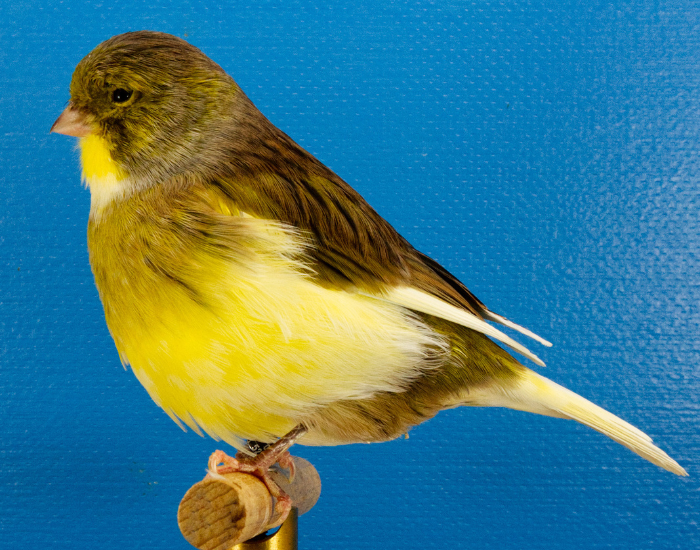
The Lizard is the oldest surviving canary breed, brought to England by Huguenot refugees in the 1700s. Its name comes from “spangling,” rows of crescent-shaped feather edges running down the back like scales.
Here is the frustrating part. Spangling peaks in young birds and degrades with every molt, so a Lizard’s show career is short.
14. Parisian Frill
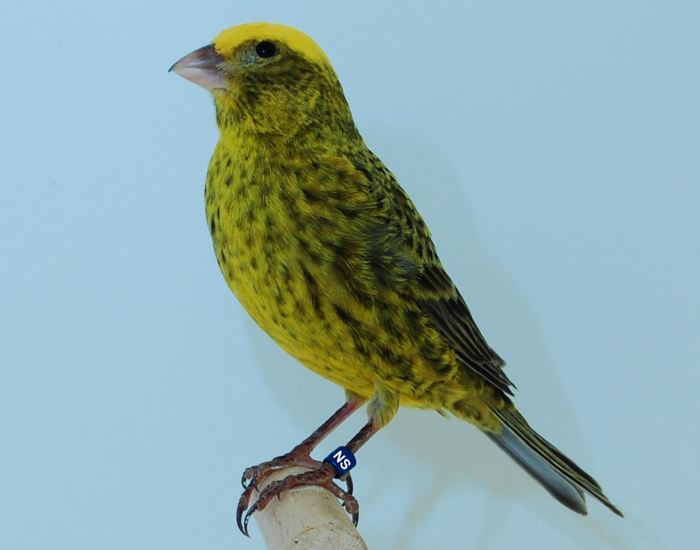
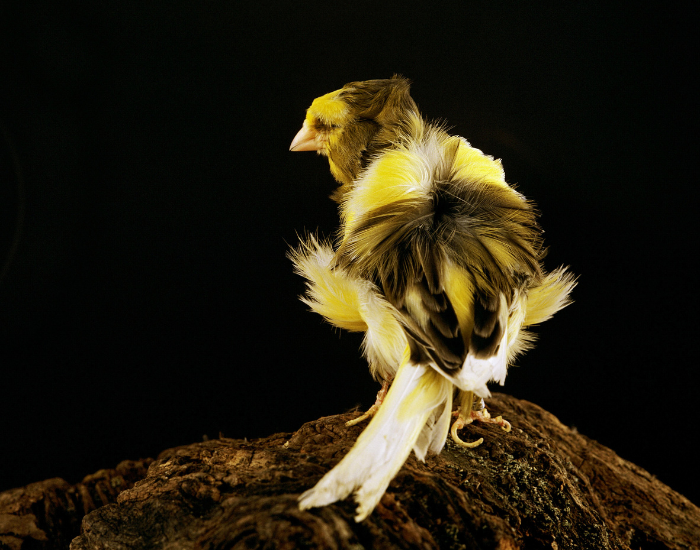
The Parisian Frill is the giant of the hobby at 19–22 cm. Its feathers curl in defined groups: the mantle over the back, fins along the flanks, a bouquet across the chest.
I will be blunt about this one. Heavily frilled birds can struggle to preen or bathe, so keepers must watch for feather abnormalities and skin trouble. Extreme feather structure impresses judges and burdens the bird.
Beyond these fifteen, the main breeds include the Lancashire, Belgian Bossu, Scotch Fancy and Gibber Italicus. Canary species diversity looks vast on a show bench, yet it is all one species underneath.
How to Keep Canaries Healthy and Happy
Keeping a canary happy comes down to space, air and light. Most pet owners buy a tall cage, which is the wrong shape. A canary’s cage must be wider than it is tall, because canaries fly horizontally instead of climbing like parrots. Aim for at least 18 inches long, 14 wide and 18 high, and go longer wherever you can.
Bar spacing should be ⅜ inch or smaller to prevent injury. Avoid cages made of galvanized metal, which can leach zinc. Fit bird perches of varying diameter in natural wood. Refresh the bird’s water daily, and line trays with paper or plain wood shavings.
Canaries thrive between 65°F and 80°F. They prefer natural or full-spectrum lighting that mimics real daylight cycles. However, direct sunlight through glass cooks a small bird fast. Offer a shallow dish of lukewarm water for bathing a few times each week.
Feeding a Canary Properly
What canaries eat matters more than any other decision you make. Most canary care sheets still push straight seed mixes, and that advice is outdated. A canary’s diet should run 60–70% high-quality pelleted food, with seeds as a supplement.
Chop fresh leafy greens and vegetables into small pieces. Never feed avocado, chocolate or caffeine. During the breeding season, canaries benefit from high-protein egg food, which supports laying hens and young birds. Compare that tray with what birds eat in the wild and the seed-only approach looks thin.
Behavior, Bonding and Common Health Issues
A canary is essentially a solitary bird that tolerates a mate. Housing several males together invites fighting, so keep one male or a true pair. Unlike many other birds sold as pets, canaries do not enjoy heavy handling.
None of that makes them unresponsive. Talking and whistling to your bird builds a real bond. Positive reinforcement training works too, and some keepers teach canaries to free-fly back to their habitat. Rotate simple toys and foraging items to prevent boredom.
Common health issues include respiratory infections, air-sac mites and scaly leg mites. Canaries react badly to aerosols and to overheated nonstick cookware, whose fumes kill small birds quickly. Feather plucking usually signals stress or poor nutrition. Healthy birds sing, so a suddenly silent male deserves attention.
Frequently Asked Questions
Most pet canaries live 7 to 10 years. With an excellent diet, clean air and veterinary care, canaries can live up to 15 years. Poor nutrition and chronic respiratory irritation cause most early deaths.
Yes, and the canary ranks among the easiest pet birds to keep well. It needs no constant interaction, chews no furniture and never screams. In exchange it wants a large cage, clean air and a stable daily light cycle.
Pick the Canary That Matches What You Want
Four centuries of selective breeding turned one streaky island finch into song machines, pigment experiments and show birds. The same process that borrowed the red factor’s enzyme also handed the Waterslager its deafness. So choose by what you actually want: a voice, a color, or a shape.
My two childhood birds taught me one thing above all. Ask where a bird came from before you fall in love with it. Buy only from keepers who show you their stock.
Which of these types of canaries would you keep? Tell me in the comments. New to songbirds? Start with my guide to types of finch birds. Then browse the best gifts for bird lovers, or find wild finches near you with birding for beginners. My roundup of reddish birds covers the same carotenoid story. The birds of Mexico guide revisits where my own canary story began.
Can You Name That Canary Breed?
A 10-photo identification challenge — test your ability to spot canary breeds by shape, color, and posture. Go back and change any answer before you score.
Which canary breed is this?
References:
Frankl-Vilches, C., Kuhl, H., Werber, M., Klages, S., Kerick, M., Bakker, A., de Oliveira, E. H. C., Reusch, C., Capuano, F., Vowinckel, J., Leitner, S., Ralser, M., Timmermann, B., & Gahr, M. (2015). Using the canary genome to decipher the evolution of hormone-sensitive gene regulation in seasonal singing birds. Genome Biology, 16(1), 19. https://doi.org/10.1186/s13059-014-0578-9
Gazda, M. A., Araújo, P. M., Lopes, R. J., Toomey, M. B., Andrade, P., Afonso, S., Marques, C., Nunes, L., Pereira, P., Trigo, S., Hill, G. E., Corbo, J. C., & Carneiro, M. (2020a). A genetic mechanism for sexual dichromatism in birds. Science, 368(6496), 1270–1274. https://doi.org/10.1126/science.aba0803
Gazda, M. A., Toomey, M. B., Araújo, P. M., Lopes, R. J., Afonso, S., Myers, C. A., Serres, K., Kiser, P. D., Hill, G. E., Corbo, J. C., & Carneiro, M. (2020b). Genetic basis of de novo appearance of carotenoid ornamentation in bare parts of canaries. Molecular Biology and Evolution, 37(5), 1317–1328. https://doi.org/10.1093/molbev/msaa006
Lopes, R. J., Johnson, J. D., Toomey, M. B., Ferreira, M. S., Araújo, P. M., Melo-Ferreira, J., Andersson, L., Hill, G. E., Corbo, J. C., & Carneiro, M. (2016). Genetic basis for red coloration in birds. Current Biology, 26(11), 1427–1434. https://doi.org/10.1016/j.cub.2016.03.076
Suthers, R. A., Vallet, E., & Kreutzer, M. (2012). Bilateral coordination and the motor basis of female preference for sexual signals in canary song. Journal of Experimental Biology, 215(17), 2950–2959. https://doi.org/10.1242/jeb.071944