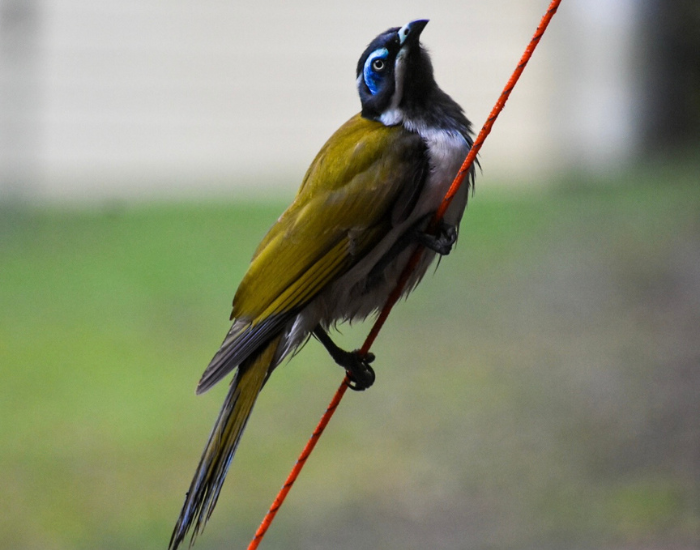
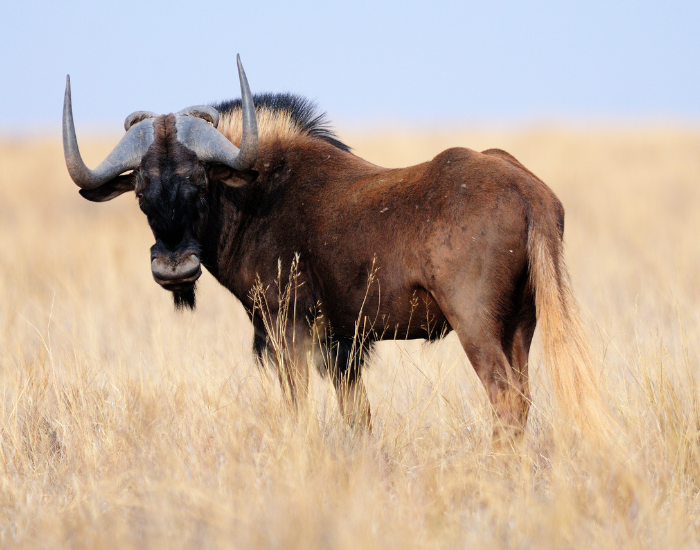
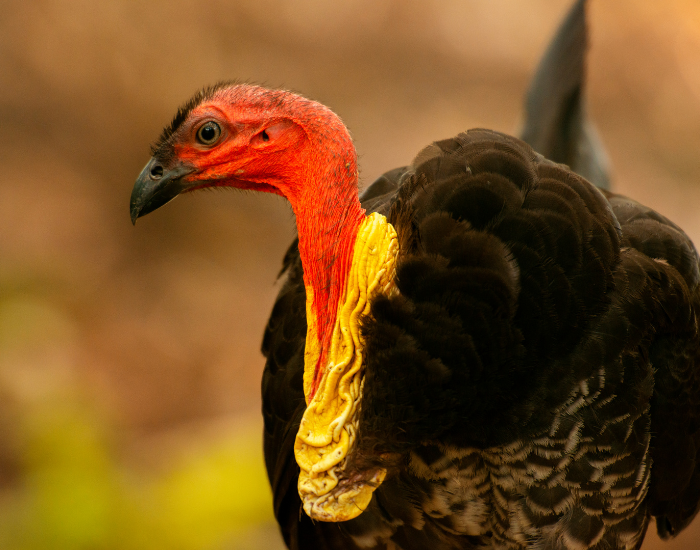
I was walking through a stretch of boreal forest in western Sweden with a group of biologist friends when we first heard it. We had already spotted wrens darting through the underbrush, a few starlings chattering overhead, crows, ravens, and a pair of magpies squabbling over territory. As we approached a lake, a small flock of waterfowl paddled along the reeds. Then my friend Joel stopped, pointed at a low branch, and whispered: “There… nightingale.”
A plain brown bird sat motionless among the leaves. It looked utterly unremarkable. Then it opened its beak, and a rich cascade of trills and whistles poured out, so loud it seemed impossible from something that small. That moment rewired my brain. Nightingales had always been a literary idea to me, a metaphor from poetry. Now they were real, alive, and astonishing. Here are twelve things I have learned about them since.

1. The Common Nightingale Looks Like the Most Ordinary Bird You Will Ever See
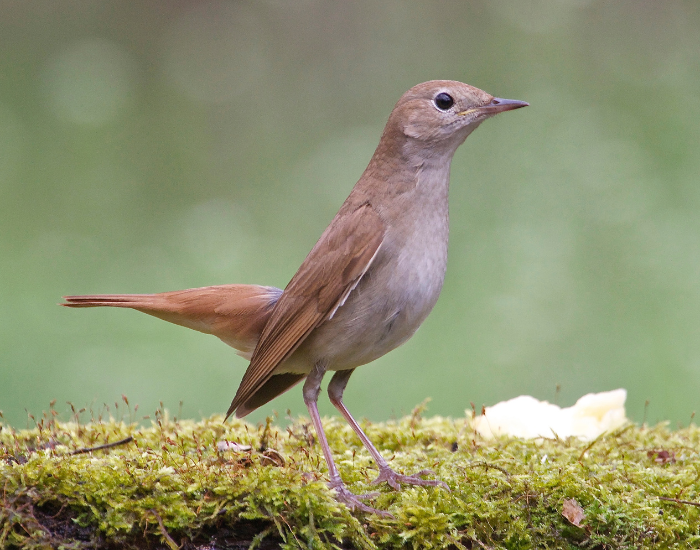
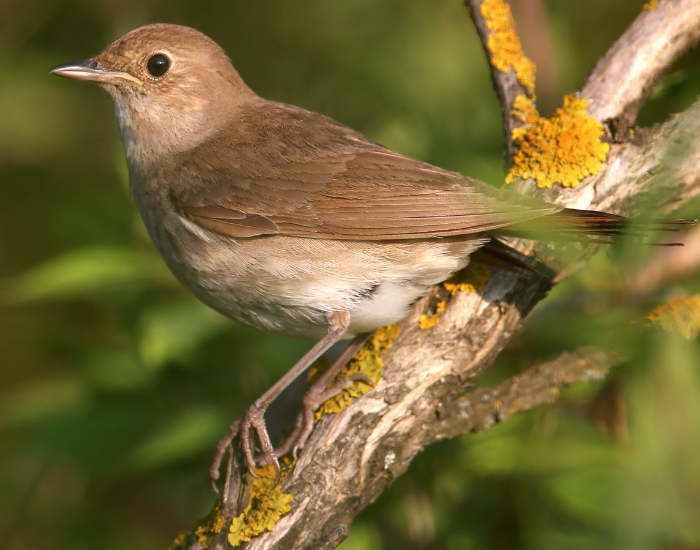
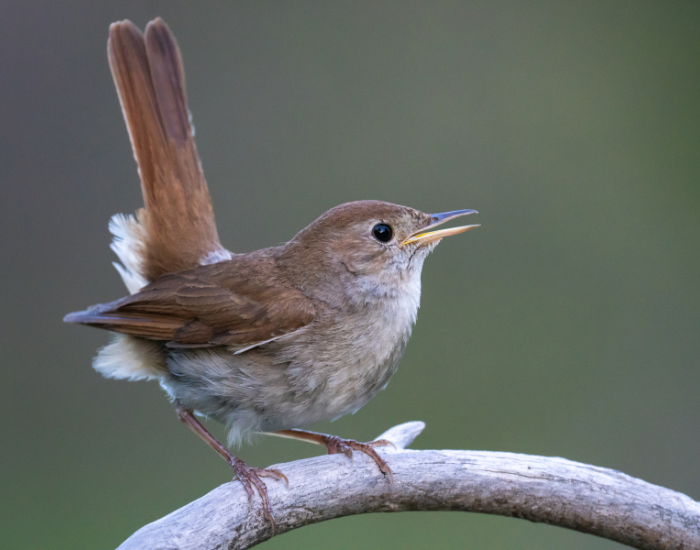
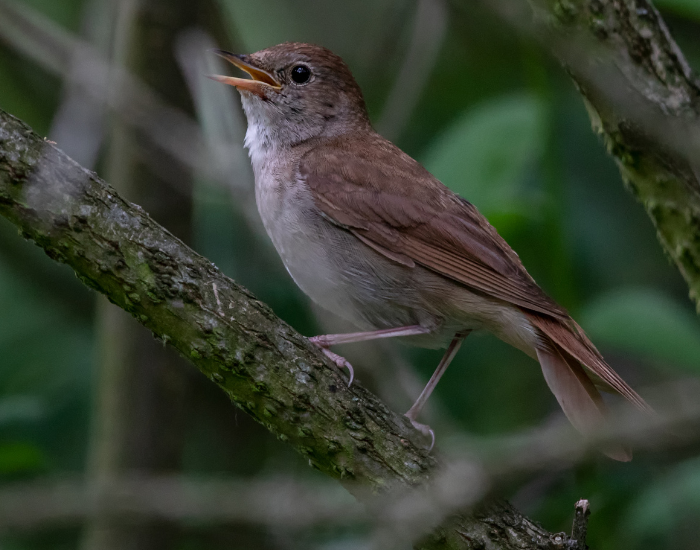
The common nightingale (Luscinia megarhynchos) will never win a beauty contest. This is a plain brown bird with warm, earthy upperparts and a rusty brown tail that flicks constantly when the bird perches. The underside carries a variable buffy wash across the breast that fades to pale cream on the belly. That is it. No flashy crest, no iridescent sheen, no bold eye ring.
In form, Luscinia megarhynchos sits within the Old World flycatcher family (Muscicapidae). The common nightingale is slightly larger than a European robin but shares that same round-bodied, large-eyed look. From a distance, you could easily mistake one for a juvenile robin or one of several drab thrushes. I have walked past these shy, secretive birds in scrub habitat without noticing them; they rely on camouflage, not colour.

2. Male Nightingales Sing Over 200 Different Songs
The nightingale song ranks among the most complex vocal performances in the avian world. Males produce over 190 distinct types on average, with some individuals reaching 250. Each phrase lasts two to four seconds, built from rich combinations of trills, whistles, and percussive calls that shift in tempo and volume.
What makes nightingale singing so remarkable is the sheer dynamic range. A male can drop to a barely audible whisper, then erupt into a crescendo so loud it carries over a kilometre through dense cover. Researchers in ornithology have measured those calls at up to 95 decibels — roughly the volume of a motorcycle. Females do not sing. They produce short contact calls and alarm calls, but the elaborate performance belongs entirely to males.
I remember standing in that Swedish forest as the light faded, and the performance kept building. The nightingale song felt less like birdsong and more like a jazz improvisation — unpredictable, layered, and deeply alive.
3. Nightingales Sing at Night for a Very Specific Reason
Here is something most people get wrong: not all nightingales sing at night. Only unpaired male nightingales sing after dark. They do this to attract a mate. Once a male pairs up, he switches almost entirely to daytime singing to defend his breeding territory.
So when you hear nightingale singing through the still hours of a spring evening, you are listening to a lonely bachelor advertising himself. The name itself reflects this habit — “nightingale” derived from the Old English nihtegale, meaning “night singer.” That serenade has inspired centuries of poetry, but the biology behind it is purely practical. Singing after sunset reduces competition from other species, and sound travels farther in cool air. The song cuts through the silence like a sign that says: “I am here, I am fit, come find me.”
Urban nightingales sing even louder at night to overcome background noise. A study from Berlin found city birds cranking up the volume by several decibels compared to their rural counterparts.
4. The Common Nightingale Has Three Subspecies Across Two Continents
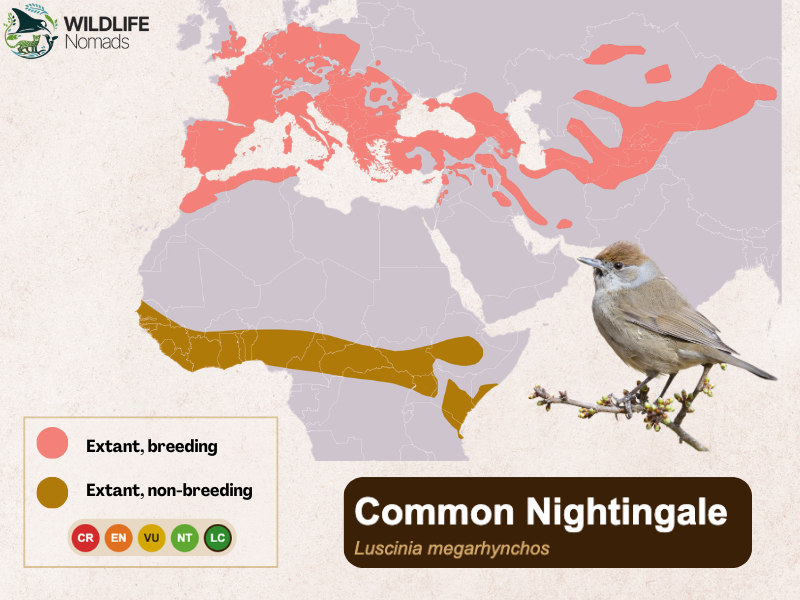
Scientists have recognized three subspecies of Luscinia megarhynchos, each occupying a distinct range. The nominate form, L. m. megarhynchos, breeds across western Europe, north Africa, and Turkey. The second, L. m. africana, breeds from the Caucasus through Iran. The third, L. m. golzii, occupies Central Asia. All share the same basic appearance, that plain brown plumage with a rusty brown tail and variable buffy wash, but differ slightly in size and tonal warmth of the upperparts.
This diversity matters for conservation. Each subspecies follows a different migration route to sub-Saharan Africa, where the common nightingale winters from September through March. The western birds cross the Sahara on a broad front, reaching wintering grounds from Senegal to Uganda. The other populations funnel through Arabia into East Africa. Understanding these routes helps researchers pinpoint where habitat loss hits hardest.

5. They Arrive in Spring and Disappear by Late Summer
Nightingales arrive on their breeding grounds in April and early spring, with males typically showing up a few days before females to stake out territories. In the UK, the first nightingales arrive in mid-April, and peak song season runs through May and into early June. By late June, most males have stopped singing altogether.
By late summer — August into early September — nightingales begin moving south. They slip away quietly, nothing like the vocal fanfare of their spring arrival. Most reach north Africa and sub-Saharan Africa by October. The entire window is remarkably short. You have roughly six to eight weeks in spring to hear them sing, and then they vanish.
I have planned spring fieldwork around nightingale arrival dates. Miss April and May, and you miss them entirely. That narrow window makes every encounter feel urgent and special.
6. Nightingales Live in Thick Woodland and Dense Scrub
If you want to find nightingales, look low. These birds favour dense, tangled habitat, think overgrown hedgerows, coppiced woodland, blackthorn scrub, and thickets near streams. They rarely venture into open areas or high canopy. Everything about their life happens at ground level or just above it.
This habitat preference explains why nightingales are so hard to spot despite their loud song. You will catch one singing from deep inside a wall of vegetation, but actually seeing the bird requires patience and luck. In southern England, the best sites tend to be young, regenerating woodland with thick understorey. Mature, tidy forests with clean floors hold almost no appeal for this species. Like thrushes and other ground-foraging birds, the common nightingale depends on a rich layer of leaf litter and low cover.
During my exchange year, I have learned to listen for nightingales in scrub edges, the boundary zones where woodland meets open areas. These transitions offer the dense cover nightingales need for nesting and the insect-rich habitat they need for feeding.
7. Nightingales Nest on the Ground — Or Very Close to It
Nightingales nest at or near soil level, usually tucked into dense vegetation at the base of a bush or within a tangle of brambles. The female builds the nest alone using dead leaves, grass, and fine plant material. She lines it with hair, rootlets, and softer fibres.
A typical clutch contains four to five olive-brown eggs. The female incubates them for about thirteen days, and the chicks fledge roughly eleven days after hatching. Both parents share feeding duties once the chicks hatch. The low nest makes nightingales vulnerable to predation by foxes, cats, and rats — a problem in the UK where deer browsing has thinned out the protective scrub layer. Thousands of nests have likely been killed off indirectly through this habitat degradation over the past few decades.
8. Nightingales Feed on Insects, Berries, and the Occasional Spider
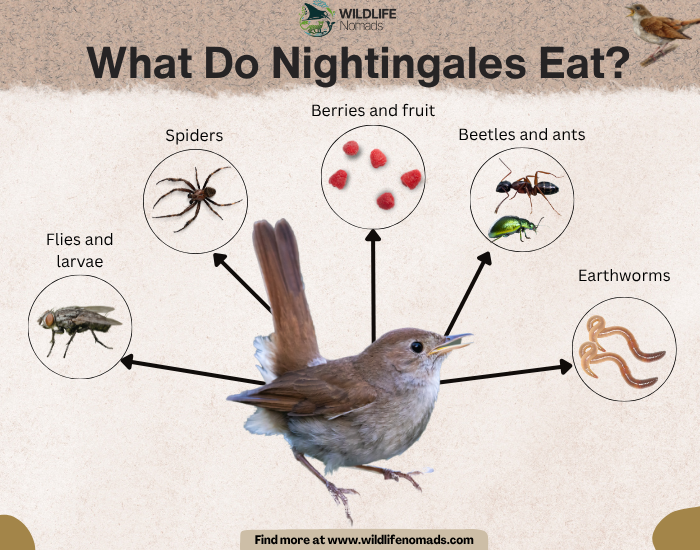
Nightingales feed primarily on invertebrates, foraging at ground level and flicking through leaf litter to find beetles, ants, caterpillars, and earthworms. Spiders also make regular appearances in their diet. During late summer and early autumn, nightingales eat berries and small fruits to build up fat reserves for migration.
Their diet shifts with the seasons. In spring and June, diets lean heavily toward protein-rich insects to fuel egg production and chick growth. The late-summer switch to fruit reflects a common pattern among migratory thrushes and similar species, carbohydrate loading before a multi-thousand-kilometre flight. I find this dietary shift fascinating. It mirrors what long-distance human athletes do before a race, just on a much smaller scale.
9. Nightingales Are Among the Shyest Birds in Europe
Spend enough time in the field and you develop a sense for which species tolerate humans and which do not. Nightingales fall firmly into the “do not” category. These are shy, secretive birds that flush at the slightest disturbance. They stick to dense cover, rarely perch in the open, and sing from concealed positions deep within vegetation.
This shy nature makes photographing the common nightingale notoriously difficult. Most wildlife photographers I know have spent hours waiting for a clear shot and come away with nothing. The drab plumage only compounds the problem, even when one does perch briefly in the open, it blends perfectly with the tangle of twigs and dead leaves around it.

10. UK Nightingale Numbers Have Crashed by 90 Percent
The nightingale population in Britain has collapsed. Between 1967 and 2022, numbers dropped by roughly 90 percent. The species now sits on the UK red list, recognized as a high conservation concern. Nightingales have vanished from Wales, most of northern England, and large swaths of the Midlands. Today, populations cling to a handful of counties in south-eastern England — Kent, Suffolk, Essex, and parts of Sussex.
Several forces drive this decline. Habitat loss ranks first. The UK has lost huge areas of the scrubby, regenerating woodland that nightingales require. Increased deer populations browse the understorey down to bare soil, destroying nesting habitat. Climate change adds pressure by altering conditions on the wintering grounds in Africa, where drought and land-use change reduce food availability.
11. Nightingales Have Inspired Poets, Musicians, and Myth-Makers for Millennia
Few birds carry as much cultural weight as the common nightingale. Its song appears as a theme in literature stretching back thousands of years. In Greek mythology, Orpheus — the legendary musician whose music could charm animals and bend nature — drew comparisons to the nightingale. The bird became a symbol of love, loss, and the transcendent power of melody.
Keats gave nightingales their most famous literary moment in “Ode to a Nightingale,” written in 1819. He used the nightingale song as a metaphor for immortality, the idea that it outlives any individual singer. The poetry captures something real. Nightingale singing in an English wood today sounds exactly as it did in his Hampstead garden two centuries ago. That continuity across generations is inspiring.
12. Nightingale Populations Face an Uncertain Future Across Europe
The UK decline is part of a broader pattern. Populations across parts of Europe have fallen over the past several decades. Habitat fragmentation, agricultural intensification, and changing land management practices all play a role. The species remains relatively common in southern Europe, north Africa, and parts of the east, but the trend lines worry conservation biologists.
Climate change threatens to shift ranges northward, potentially opening new habitat in Scandinavia while squeezing populations out of traditional strongholds. Meanwhile, conditions on the African wintering grounds, where Luscinia megarhynchos winters from September through March, remain poorly studied. We know surprisingly little about what happens during those months when the species winters far from its European range.

Frequently Asked Questions About Nightingales
Across cultures, the nightingale has served as a symbol of love and poetic inspiration for thousands of years. In Greek mythology, the bird represented the power of music through its association with Orpheus. In Romantic literature, Keats used it as a theme of immortal beauty and the bittersweet nature of art. Persian and Arabic traditions link nightingales to longing and devotion.
The association comes from Florence Nightingale (1820–1910), the founder of modern nursing. Her family surname happened to match the bird’s name — “Nightingale” came from an estate her father inherited. Florence became famous for her night rounds caring for wounded soldiers during the Crimean War, earning her the title “The Lady with the Lamp.” The Nightingale Pledge, taken by new nurses, honours her legacy.
Not exactly. Nightingales are primarily diurnal — they feed, move, and interact during daylight hours. However, unpaired males sing at night during the spring season to attract a mate. Once paired, they sing mainly during the day. The nocturnal song is intended as a mating strategy, not a sign of a fully nocturnal lifestyle.

The Ordinary Bird with an Extraordinary Voice
Nightingales teach a lesson I come back to constantly in my work as a wildlife biologist: the most extraordinary things sometimes wear the plainest disguises. A drab, shy bird hiding in a thicket produces one of the richest, most complex songs in the natural world. That contrast between appearance and ability never gets old.
If you have never heard a nightingale sing in the wild, make it a goal for next spring. Head to a patch of dense woodland in southern England, southern France, or the Mediterranean coast during late April or May. Go at dusk. Wait. The song will find you.
For more on the fascinating birds of Europe, check out my guide to types of birds, or explore the surprising world of the common hoopoe and cedar waxwings.
References:
Amrhein, V., Korner, P., & Naguib, M. (2002). Nocturnal and diurnal singing activity in the nightingale: Correlations with mating status and breeding cycle. Animal Behaviour, 64(6), 939–944. https://doi.org/10.1006/anbe.2002.1974
Brumm, H. (2004). The impact of environmental noise on song amplitude in a territorial bird. Journal of Animal Ecology, 73(3), 434–440. https://doi.org/10.1111/j.0021-8790.2004.00814.x
Kirkland, M., Annorbah, N. N. D., Barber, L., & et al. (2025). Extreme migratory connectivity and apparent mirroring of non-breeding grounds conditions in a severely declining breeding population of an Afro-Palearctic migratory bird. Scientific Reports, 15, Article 3307. https://doi.org/10.1038/s41598-025-86484-z
Kiefer, S., Spiess, A., Kipper, S., Mundry, R., Sommer, C., Hultsch, H. and Todt, D. (2006), First-Year Common Nightingales (Luscinia megarhynchos) Have Smaller Song-Type Repertoire Sizes Than Older Males. Ethology, 112: 1217-1224. https://doi.org/10.1111/j.1439-0310.2006.01283.x
Naguib, M., & Riebel, K. (2014). Singing in space and time: The biology of birdsong. In Biocommunication of Animals (pp. 233–247). Springer. https://doi.org/10.1007/978-94-007-7414-8_13
Wilson, J. M., & Cresswell, W. (2006). How robust are Palearctic migrants to habitat loss and degradation in the Sahel? Ibis, 148(4), 789–800. https://doi.org/10.1111/j.1474-919X.2006.00581.x