Cedar waxwings (Bombycilla cedrorum) are, without hyperbole, one of the most aesthetically “perfect” birds in North America. They look less like creatures of flesh and bone and more like smoothed-over silk carvings. But behind that black mask and pointed crest lies one of the most specialized and fascinating lifestyles in the avian world.
I encountered them for the first time in humid lowlands of Mexico many years ago while I was still an undergrad. But last year iI found them while trekking through the forests in British Columbia, Canada. It’s a strange feeling for a biologist, seeing the same migratory birds thousands of miles apart, realizing that while I needed a passport and three flights, they just needed a healthy supply of small fruits.
In this guide, you’ll discover twelve essential facts about cedar waxwings that reveal why they’re considered one of the continent’s most intriguing species.
1. Cedar Waxwings Are Masters of Fruit Consumption
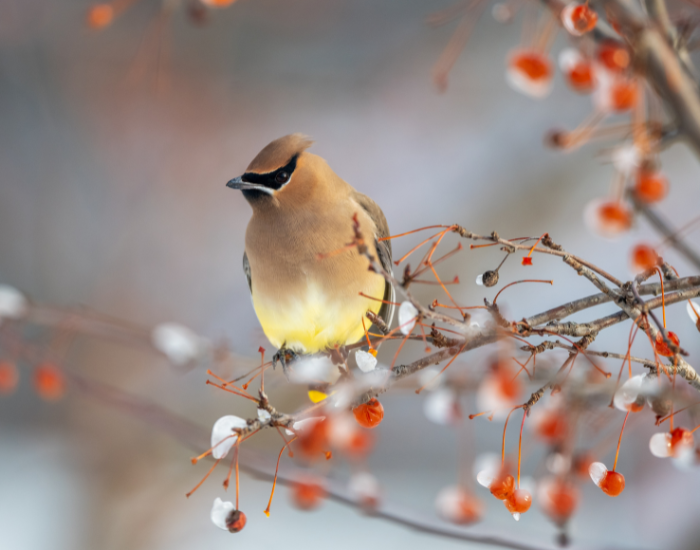
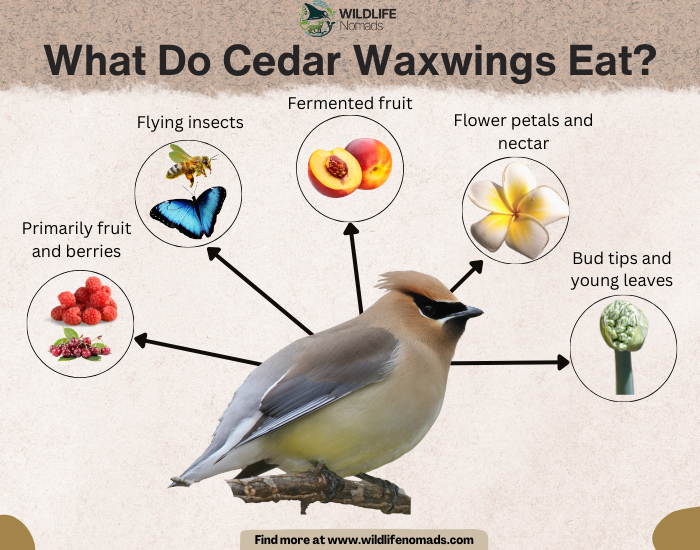
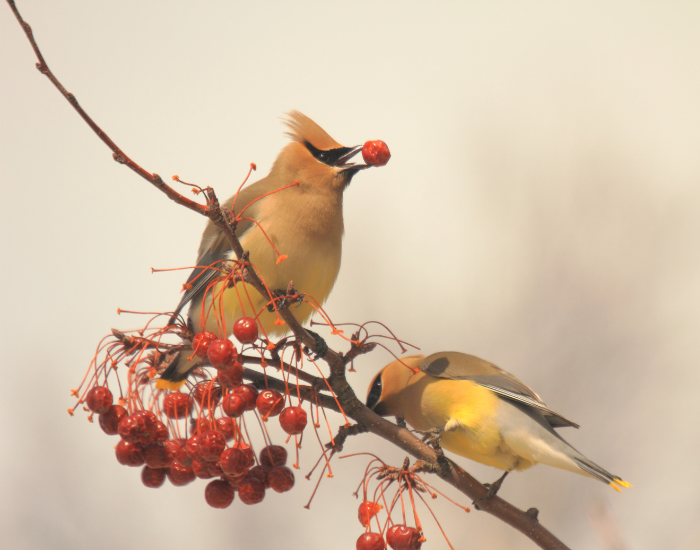
Most birds treat fruit as a dietary supplement. Cedar waxwings, however, rely on berries as their primary food source. Cedar waxwings primarily eat small fruits and are often found near bushes or trees bearing small fruits such as blueberry, dogwood, serviceberry, winterberry, and juniper. In fact, they can survive on fruit alone for extended periods.
During winter months, these birds consume juniper berries, dogwood fruit, and cedar berries, often gathering in substantial flocks when foraging for fruit. They are also frequently found in urban and suburban areas where ornamental berry trees are planted during winter. When summer arrives, they shift their diet slightly. The birds catch insects mid-air, including dragonflies and mayflies, to provide protein for their young birds.
Their fruit-heavy diet creates an unusual risk. Waxwings sometimes become intoxicated from eating fermented berries. When berries freeze and thaw repeatedly, ethanol builds up in the fruit. Consuming these fermented berries can disorient the birds, leading to window strikes—one of the leading causes of mortality in disturbed habitats. Cedar waxwings may gorge themselves on sugary fruit to the point where they cannot fly.
2. The Mysterious Red Waxy Tips Give Them Their Name
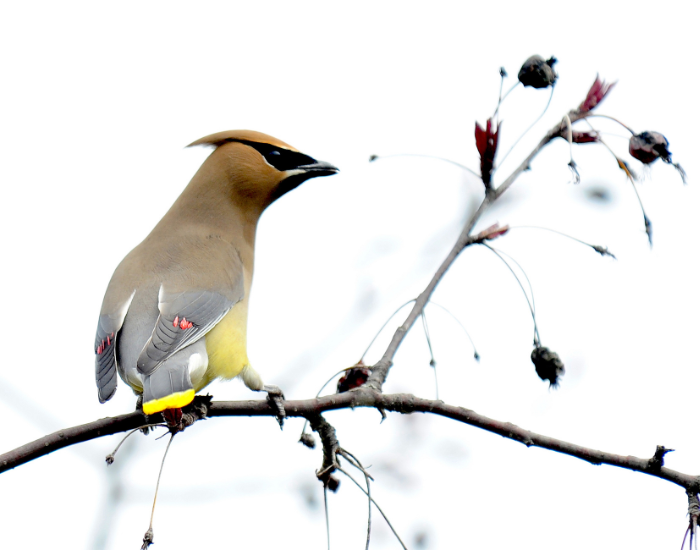
The bird’s common name comes from distinctive red, waxy-looking tips on their wing feathers. These tips are actually hardened secretions of astaxanthin, a carotenoid pigment derived from their fruit-based diet.
Scientists believe these red waxy tips serve important social functions. Older, more experienced birds typically display more prominent sealing wax droplets than younger individuals. Therefore, the tips may signal maturity and fitness to potential mates.
Not all waxwings possess these distinctive markings, though. The number and size of red waxy tips vary between individuals based on age, diet quality, and overall health.
3. They’re One of Three Waxwing Species Worldwide
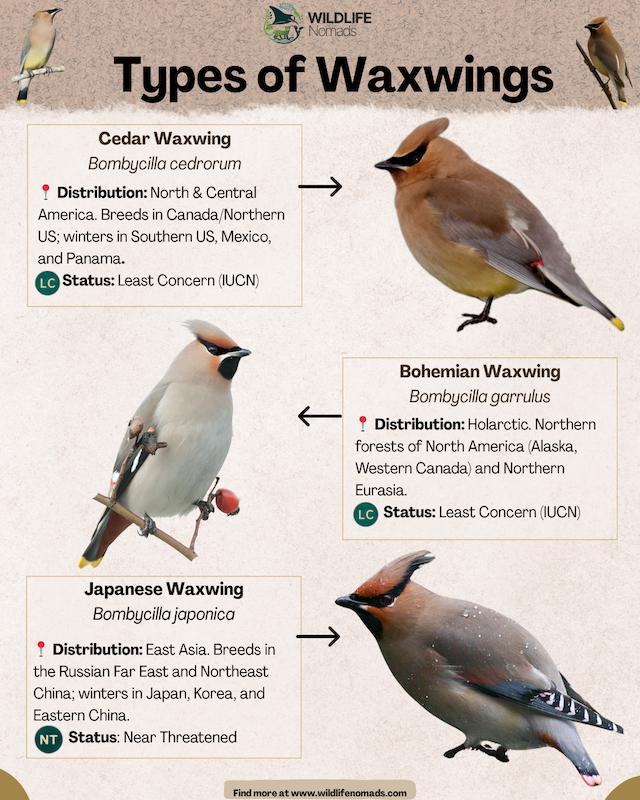
Cedar waxwings belong to the genus Bombycilla, which contains only three species globally. The name Bombycilla translates to “silk tail,” referring to their impossibly smooth plumage.
The three waxwing species include:
1. Cedar Waxwing (Bombycilla cedrorum) – Found throughout North America
2. Bohemian Waxwing (Bombycilla garrulus) – Inhabits northern forests across North America, Europe, and Asia
3. Japanese Waxwing (Bombycilla japonica) – Native to East Asia
Each species exhibits similar behaviors and dietary preferences. However, they occupy different geographic ranges and show subtle differences in appearance and size.
4. Cedar Waxwing vs Bohemian Waxwing: Key Differences
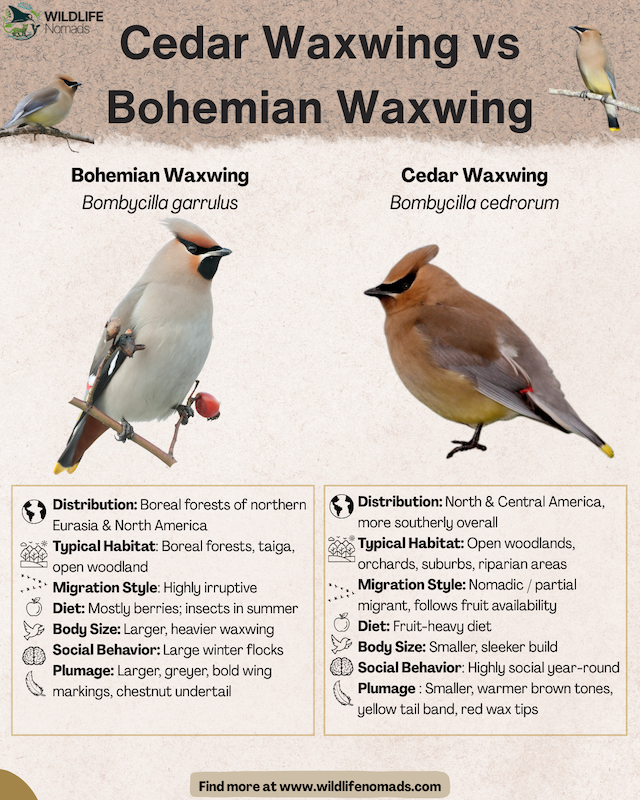
Birdwatchers in northern regions often encounter both cedar and Bohemian waxwings. While these species share many characteristics, several features help distinguish them. You can have a look at the previous infographic, or the photo below.
Cedar waxwings appear smaller and sleeker than their Bohemian counterparts. Their belly color is pale yellow, whereas Bohemian waxwings display buff grey underparts. Additionally, cedar waxwings have white undertail coverts, while Bohemian waxwings show distinct cinnamon or rufous coloring in this area.
The wing patterns also differ significantly. Cedar waxwings possess plain bluish-gray wings. In contrast, Bohemian waxwings exhibit detailed white and yellow markings on their wing feathers. These differences become apparent when observing flocks in good lighting conditions.
5. Their Black Mask Creates a Distinctive Bandit Look
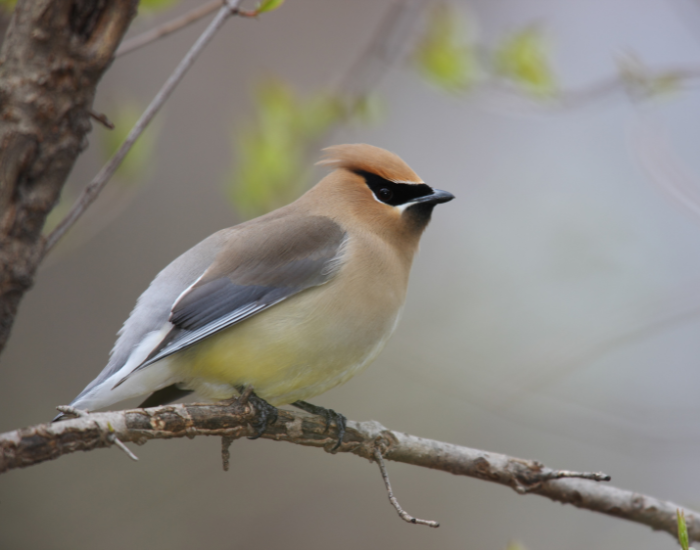
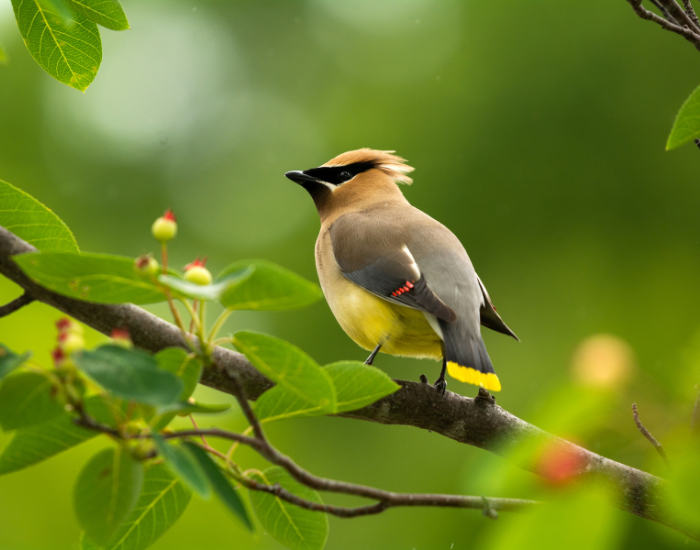
One of the most striking features of cedar waxwings is their bold black mask. This facial marking extends across the eyes and is narrowly outlined in white, creating a sophisticated appearance.
The black mask serves multiple purposes beyond aesthetics. Scientists believe it may reduce glare when hunting insects mid-air during summer. The white line bordering the mask enhances visual communication between flock members.
Combined with their pointed crest, the mask gives cedar waxwings an unmistakable profile. Even from a distance, this characteristic feature makes identification straightforward for experienced birdwatchers.
6. The Bright Yellow Tail Band Varies in Color
A diagnostic feature of cedar waxwings is the bright yellow band at their tail tip. This vibrant marking stands out against their otherwise muted plumage, making it an excellent identification characteristic.
Interestingly, some waxwings in the northeastern United States display orange tail tips instead of yellow. This color variation isn’t genetic. Rather, it results from birds consuming invasive honeysuckle berries while their tail feathers were growing.
The pigments in honeysuckle berries alter the natural yellow coloration, producing orange hues. This phenomenon demonstrates how diet directly influences plumage appearance in cedar waxwings.

7. They Form Large Flocks Outside the Breeding Season
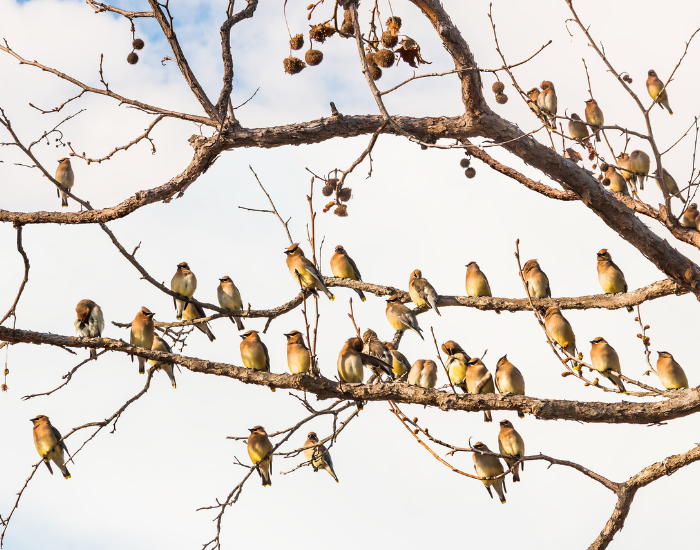
Cedar waxwings are highly social birds that rarely travel alone. Outside the breeding season, they form large flocks that can number in the hundreds. A flock of cedar waxwings is sometimes poetically called a “museum” or “ear-full,” though “flock” remains the standard term.
These flocks provide several advantages. Large groups help overwhelm predators through sheer numbers. Additionally, many birds can more efficiently locate fruit-bearing trees across vast territories.
The nomadic nature of cedar waxwings means flock locations change unpredictably. If a neighborhood juniper tree produces abundant fruit, hundreds of waxwings might descend upon it. The following year, however, the same location might see zero birds.
8. Cedar Waxwing Courtship Involves Berry Passing
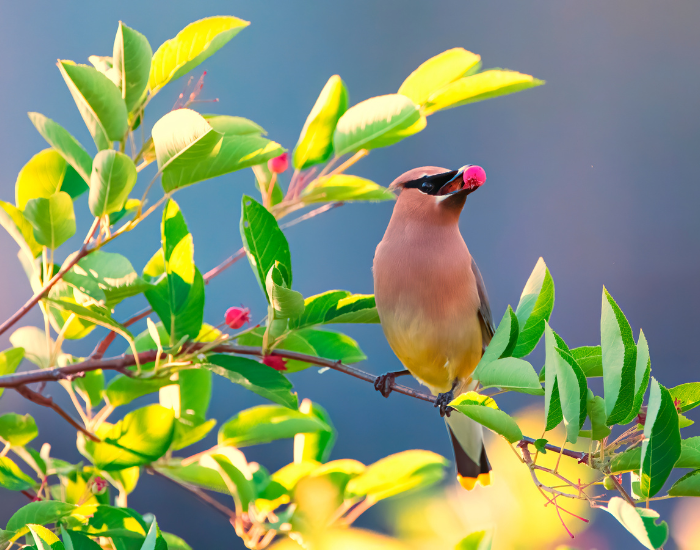
The breeding season brings one of nature’s most charming courtship rituals. Cedar waxwing pairs engage in a delicate dance on horizontal branches, passing a single berry or flower petal back and forth.
During this ritual, the birds hop away from each other, then hop back together, exchanging the fruit repeatedly. Eventually, the female consumes the offering. This behavior tests the male’s provisioning abilities and commitment.
Scientists believe this courtship ritual strengthens pair bonds. It also demonstrates whether the male can successfully find food resources needed to support nestlings during the breeding habitat period.
9. They’re Late Nesters Who Time Breeding with Fruit Ripening
Cedar waxwings are a classic example of how birds breed in response to environmental cues. Unlike most North American birds that breed in spring, cedar waxwings are notoriously late nesters, typically nesting late in the summer, often in June or July, timed with fruit abundance. They often delay breeding until late June or July, well after other species have fledged their young.
This timing synchronizes with the summer berry crop. By waiting until fruit ripens, waxwings ensure abundant food for their nestlings. Cedar waxwings typically nest in small colonies, with nests often built close to one another. The female incubates 3 to 6 eggs, which are pale bluish-grey with small black spots.
Nest placement usually occurs in the fork of a horizontal branch, ranging from 3 to 50 feet above the ground, often near water sources. Cedar waxwing nests are constructed from twigs, grasses, and soft materials like animal hair, taking about five to six days to complete. The female incubates the eggs for about 11 to 13 days, and both parents feed the nestlings after they hatch. Cedar waxwing pairs can have one to two broods per season, with young leaving the nest approximately 14 to 18 days after hatching.
10. Their Call Is a High-Pitched, Thin Whistle
Cedar waxwings don’t produce elaborate songs like many songbirds. Instead, their cedar waxwing bird call consists of a very high-pitched, thin trill or whistle. The sound resembles a tiny silver bell or a delicate “seee” note.
This distinctive call helps locate flocks before you see them. However, the extreme high pitch presents challenges. Some people with age-related hearing loss actually lose the ability to detect these calls.
Despite the simplicity of their vocalizations, cedar waxwings maintain constant communication within flocks. Their calls coordinate movements when the group descends upon fruit trees or migrates between feeding areas.
11. They’re Nomadic Rather Than Truly Migratory
Cedar waxwings are classified as nomadic wintering species rather than traditional migratory birds. Unlike species that follow rigid, calendar-based flight paths, waxwings move wherever food resources exist.
Their breeding range covers most of southern Canada and the northern parts of the United States. During winter, they may travel as far south as Central America. However, some populations remain in northern areas year-round if sufficient fruit is available.
This unpredictable movement pattern makes them “here today, gone tomorrow” guests. Birdwatchers might observe hundreds of waxwings in their backyard one year, then see none the next. Everything depends on local fruit production and weather conditions.

12. Cedar Waxwing Population Status Is Stable
According to conservation organizations, cedar waxwings maintain a status of least concern. Their population trend has remained stable or even increased in recent decades. This success partly results from human activities that benefit the species.
Suburban areas often contain abundant fruit-bearing trees planted for landscaping. These ornamental shrubs provide excellent food sources for waxwings. As a result, the birds have adapted well to living alongside humans.
However, threats still exist. Window strikes caused by intoxication from fermented berries remain a concern. Additionally, pesticide use on shrubs and fruit trees can poison birds that consume treated berries.
Where Can I Find Cedar Waxwings?
Look for cedar waxwings in forest edges, open woodlands, and suburban orchards throughout North America. They prefer areas with dense trees that produce visible fruit.
The birds are most visible when feeding in groups. Listen for their high-pitched calls, which often reveal flock locations before the birds become visible. Early summer offers excellent viewing opportunities when breeding pairs engage in courtship displays.
While not considered rare, cedar waxwing sightings remain erratic. Their nomadic nature means presence varies dramatically year to year based on fruit availability and weather patterns.
Seeing Cedar Waxwings With New Eyes
Cedar waxwings represent one of North America’s most captivating bird species. Their sleek plumage, distinctive markings, and fascinating behaviors make them favorites among birdwatchers and nature enthusiasts.
From their fruit-based diet to their charming courtship rituals, these birds demonstrate remarkable adaptations. Understanding their habits helps us appreciate their ecological importance and create welcoming habitats.
Next time you hear that thin, silvery whistle, look up. You might spot a flash of bright yellow and a black mask staring back at you, a cedar waxwing gracing your neighborhood with its elegant presence.

Frequently Asked Questions About Cedar Waxwings
While “flock” serves as the standard term, groups of cedar waxwings are sometimes poetically referred to as a “museum” or “whisper” of waxwings. These collective nouns reflect the birds’ refined appearance and soft vocalizations.
Cedar waxwings aren’t necessarily rare, but their appearances are unpredictable. You might observe fifty birds today and none for the remainder of the year. Their nomadic behavior means they follow fruit sources rather than predictable patterns.
While fruit dominates their diet, cedar waxwings catch insects during summer months. They capture dragonflies, mayflies, and other flying insects mid-air to provide protein for their young birds. However, berries remain their primary food source year-round.