
Most people walk past a pond and see “just a duck.” But after spending a decade moving across continents, I’ve learned that waterfowls are the true masters of the avian world. I remember sitting in a makeshift blind in the Canadian prairies at dawn; the sound of thousands of wings cutting through the mist isn’t just noise—it’s a great example of evolutionary perfection.
Whether you’re an aspiring birder or just curious about the birds at your local park, understanding what are waterfowl opens up a new layer of the natural world. In this guide, I’m taking you beyond the bread-throwing at the park to look at the grit, the science, and the sheer diversity of the family Anatidae.
What is Considered a Waterfowl?
When we talk about waterfowl birds, we are technically referring to the order Anseriformes — a group that also includes the screamers (Anhimidae) of South America and the peculiar Magpie Goose (Anseranatidae) of Australia. However, when most ornithologists and birders use the term ‘waterfowl,’ they are specifically referring to the family Anatidae:
- Ducks (Dabbling, diving, and sea ducks)
- Geese
- Swans
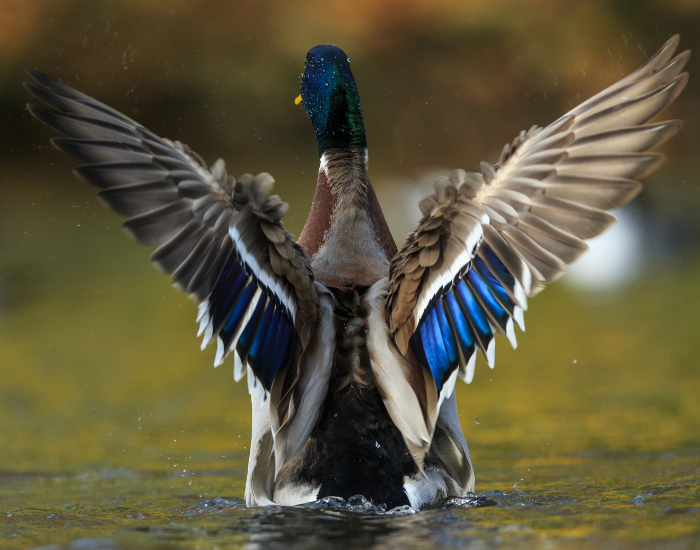
The meaning of waterfowl is actually quite literal: birds that spend a significant portion of their life on the water. They are biologically engineered for this. Evolution has gifted them with webbed feet for propulsion, shorter bills (usually) designed for filter-feeding or grasping, and a specialized preen gland that produces oil to keep their feathers waterproof. Without that oil, a duck would become waterlogged and sink, a biologist’s nightmare to witness.
The body of waterfowl is specially adapted for aquatic life, characterized by webbed feet, oily waterproof feathers, and broad bills that help them thrive in water environments.

Overview of Waterfowl Species
Across the world, there are approximately 180 waterfowl species. While they inhabit almost every continent (except Antarctica), North America is a particular hotspot, especially during the fall and spring migration.
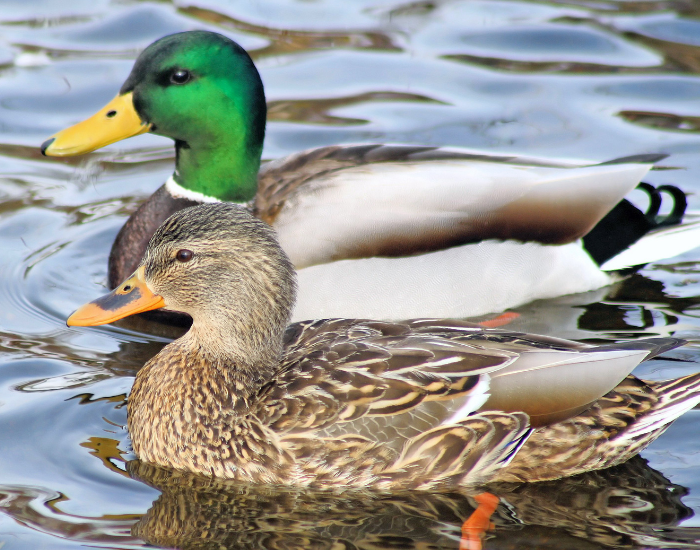
Most waterfowls show “sexual dimorphism,” where the drake (male) sports conspicuous, flashy colors to attract a mate, while the hen (female) wears mottled browns to blend into the ground while nesting. Among most species, most waterfowl are migratory. When it comes to mating, most ducks form short-term pair bonds that last less than 9 months, while all species of geese and swans form life-long pairs. (1)
Types: Dabbling Ducks vs. Diving Ducks
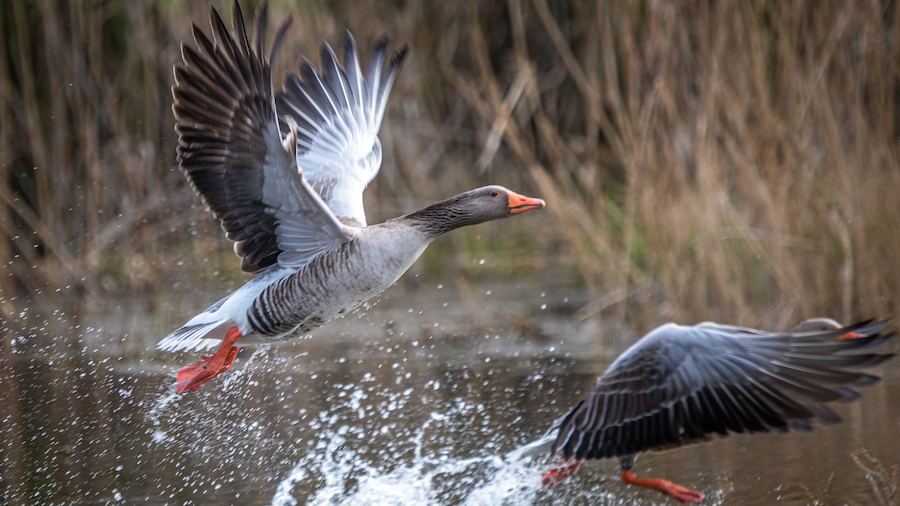
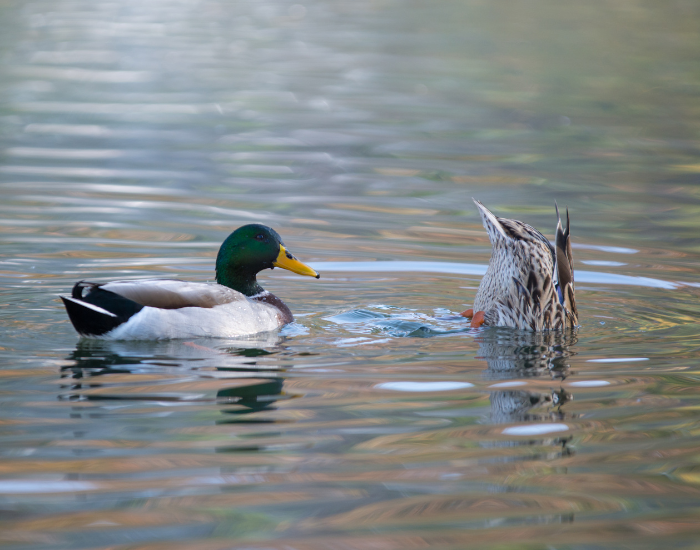
As a biologist, the first thing I look at isn’t the color, it’s the “butt.” If the bird tips its tail in the air to feed, it’s a dabbler. Dabbling ducks feed by tipping their body upwards and submerging their heads under the water while remaining at the surface. If it disappears entirely underwater, it’s a diver. Diving ducks dive underwater to find their preferred foods.
| Feature | Dabbling Ducks (Anas) | Diving Ducks (Aythya/others) |
|---|---|---|
| Feeding Style | “Tip-up” on the surface | Dive completely underwater |
| Leg Position | Centered (good for walking on land) | Far back (great for swimming, bad for walking) |
| Takeoff | Jump straight out of the water | “Run” across the surface to gain flight |
| Habitat | Shallow ponds, flooded fields | Deep lakes, rivers, coastal bays |
Diving ducks require a running start on the water to fly, while dabbling ducks can jump straight out of the water. Ducks have evolved two different foraging strategies: diving and dabbling.
1. Blue-winged Teal (Spatula discors)
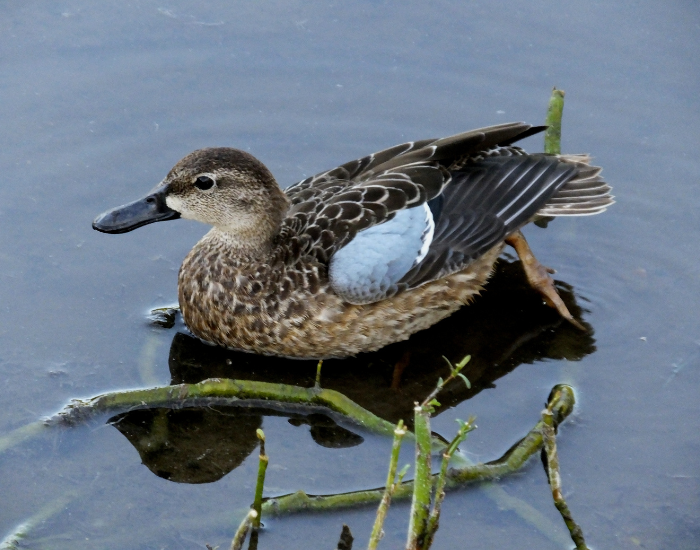
The Blue-winged Teal is the “early bird” of the waterfowl world. In my experience, they are often the first to migrate south in the fall, sometimes as early as August.
- Identification: Look for the bold white ring (crescent) on the male’s face. In flight, both sexes reveal a stunning sky-blue shoulder patch.
- Field Note: They are quite small compared to mallards. If you see a tiny duck zig-zagging at high speed, it’s likely a teal. They love shallow ponds with plenty of invertebrates to snack on.
2. Green-winged Teal (Anas crecca)
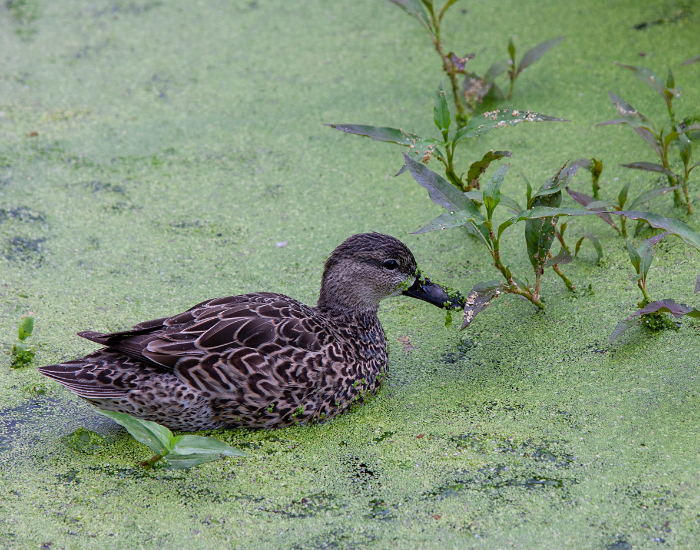
The “tiny titan” of North American waterfowls. I’ve watched these birds in sub-zero temperatures; they are remarkably hardy for their size.
- Identification: The male has a chestnut head with a shimmering green swoosh through the eye.
- Behavior: They are erratic flyers. When a flock takes off, it looks like a coordinated dance. They prefer the muddy edges of lakes where they can filter-feed on seeds and plants.
3. Hooded Merganser (Lophodytes cucullatus)
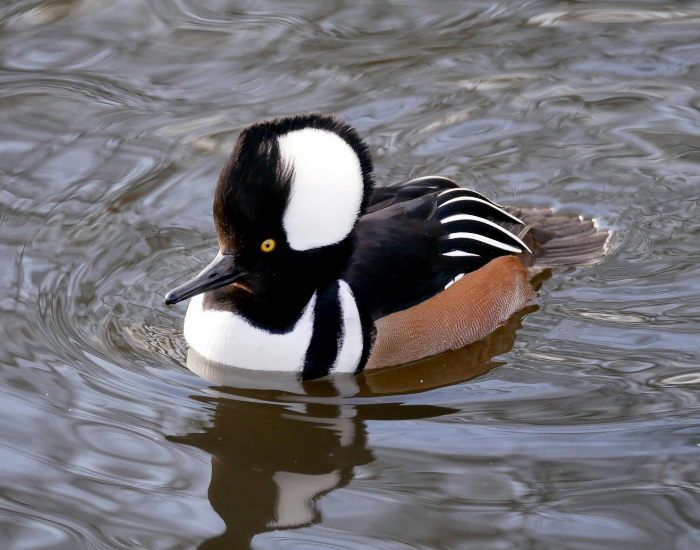
This is arguably the most “punk rock” of all waterfowl animals. I remember the first time I saw a male expand his white crest—it’s an incredible sight.
- Identification: A fan-shaped, collapsible white crest rimmed in black. They have narrow, serrated bills for grabbing slippery fish.
- Habitat: Unlike most ducks, they love trees. They are cavity nesters, often taking over old woodpecker holes or nesting boxes.
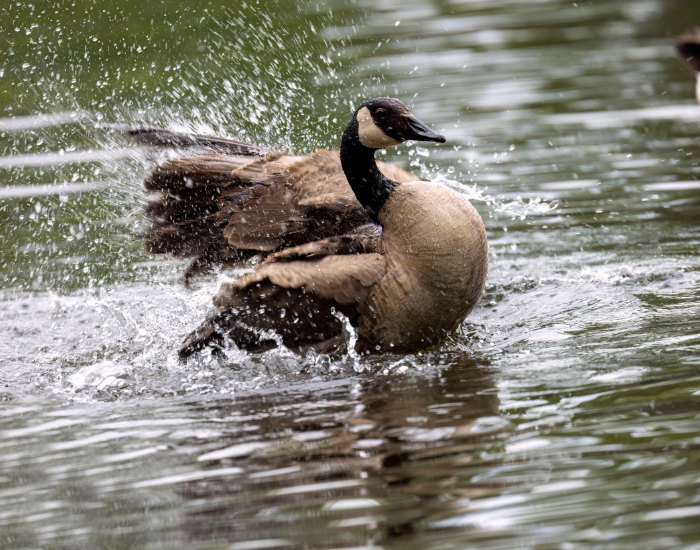
4. Canada Geese (Branta canadensis)
The “urban warrior.” While some people find them a nuisance in city parks, as a biologist, I admire their adaptability. They have conquered North America by thriving in man-made environments.
- Identification: Black neck and head with a distinctive white “chinstrap.” Their black head and neck, white cheek patch, and brownish-gray body are distinctive features that help identify them among waterfowls.
- Social Life: They mate for life and travel in large families. If you see them in a V-formation, they are utilizing aerodynamics to save energy during long-distance flight.
- Canada geese are often called ‘honkers’ because of their distinctive call.
5. Long-tailed Duck (Clangula hyemalis)
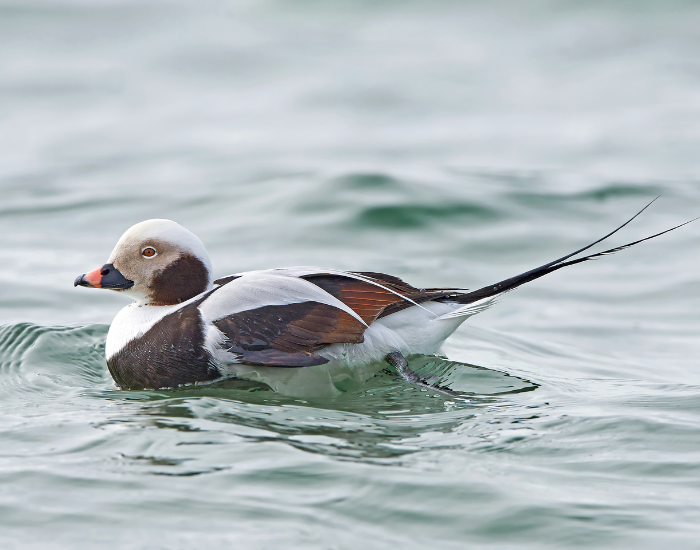
I spent a season in the Arctic circle studying these, and they are masters of the deep. They can dive up to 200 feet underwater—that’s deeper than almost any other duck.
- Identification: The male has an insanely long, needle-like tail. Their plumage changes drastically between winter and summer, more so than almost any other species.
- Vocalization: They are loud. Their call sounds like a musical yodeling that carries across open water.
6. Lesser Scaup (Aythya affinis)
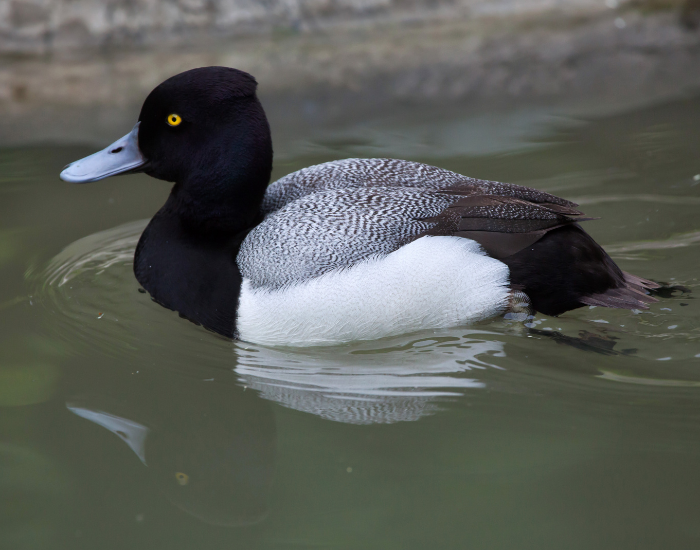
Commonly called “bluebills,” these are classic diving ducks. Identifying them is a rite of passage for any serious birder because they look so similar to their “Greater” cousins.
- Identification: Look for a slight “peak” or tuft at the back of the head. The bill has a small black tip called a “nail.”
- Diet: They love clams and aquatic invertebrates. You’ll find them in large numbers on big, open lakes during migration.
7. Greater Scaup (Aythya marila)
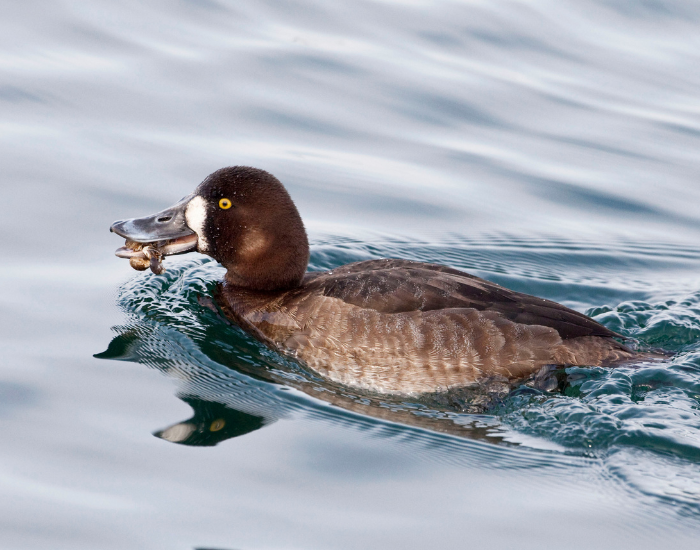
At a distance, you’ll swear this is a Lesser Scaup. But look closer.
- Difference: The Greater Scaup is larger and has a more rounded head (no peak). If you see them on the salty coastal waters of the world, it’s more likely a Greater.
- Field Tip: The white stripe on the wing (visible in flight) extends further toward the wingtip in the Greater Scaup than in the Lesser.
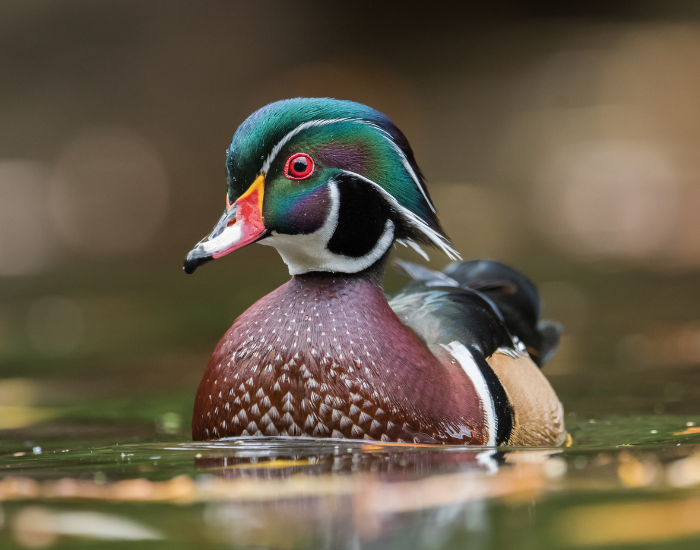
8. Wood Duck (Aix sponsa)
I’ve often said that if a Wood Duck didn’t exist, an artist would have to invent it. They are arguably the most beautiful waterfowls in existence.
- Identification: Iridescent greens, purples, and whites. They have a unique “slicked-back” crest.
- Behavior: They are one of the few ducks with actual claws on their feet to grip tree branches. Watching a duck perching in a tree always feels like a glitch in the matrix.
9. Northern Pintail (Anas acuta)
The “greyhound of the air.” Northern pintails are elegant, slender ducks with long, pointed tails and graceful necks.
- Identification: The male has a chocolate-brown head and a white stripe running up the neck.
- Migration: They are famous for their incredible migrate distances, often crossing the Pacific to Hawaii.

10. Mallard (Anas platyrhynchos)
We can’t have a list of types of waterfowls without the king. As mentioned, the mallards are the ancestors of almost all domestic ducks.
- Adaptability: They can live in a ditch or a pristine mountain lake.
- Interaction: They frequently hybridize with other species, which can make details in identification tricky for field biologists!

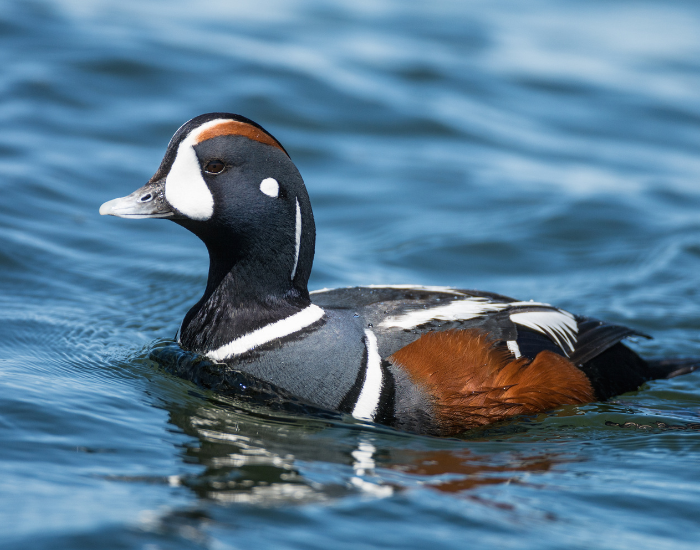
11. Harlequin Duck (Histrionicus histrionicus)
If the Wood Duck is the artist’s masterpiece, the Harlequin duck is the “adrenaline junkie.” While most ducks look for calm water, Harlequins are often found in the middle of Class III rapids or crashing ocean surf.
- Identification: The male is unmistakable—a slate-blue body with bold white stripes and patches that look like tribal paint, accented by rich chestnut flanks. Females are a muted brown but have two or three distinctive white spots on the face.
- Behavior: They are one of the few birds that can walk along the bottom of a rushing river, fighting the current to find insect larvae.
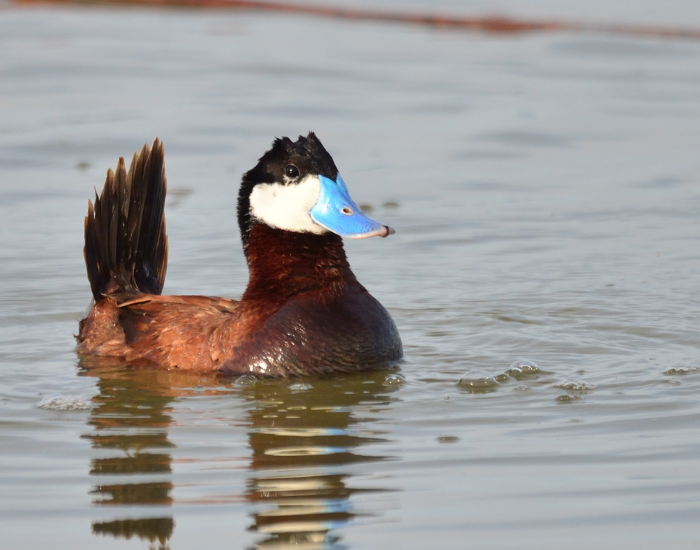
12. Ruddy Duck (Oxyura jamaicensis)
The Ruddy Duck is the “compact car” of the waterfowl world—small, chunky, and surprisingly aggressive. They belong to a group called “stiff-tailed ducks,” and they definitely live up to the name.
- Identification: In the breeding season, the male looks almost like a cartoon: a brilliant chestnut body, a black “cap,” bright white cheeks, and a bill that turns a shocking, sky-blue color.
- Behavior: They are famous for their “bubbling” display, where the male beats his bill against his neck to create a swirl of bubbles in the water to impress females.
Shifting Gears: The Heavyweights of the Anatidae Family
Up until now, we’ve looked at the diverse world of ducks—from the “punk rock” merganser to the “stiff-tailed” ruddy. But the family Anatidae has two other famous branches: geese and swans.
You may ask, “Isn’t a goose just a big duck?” Not exactly. While they share the same webbed feet and waterproof feathers, geese and swans have evolved for a slightly different lifestyle. They generally have longer necks (more vertebrae), stouter bills designed for grazing on land rather than just filtering water, and a much stronger commitment to family, often mating for life.
Let’s look at the most iconic “big birds” of the wetlands.
13. Snow Goose (Anser caerulescens)
If you ever find yourself in a field that suddenly looks like it’s covered in a living, breathing blanket of white, you’ve found a flock of Snow Geese. They are the “socialites” of the waterfowl world, rarely seen alone and almost always heard before they are spotted.
- Identification: Most are pure white with black wingtips (visible in flight) and a pink bill featuring a dark “grin patch” along the side.
- The “Blue Morph”: Keep an eye out for the “Blue Goose.” It isn’t a different species, but a color variation with a dark bo

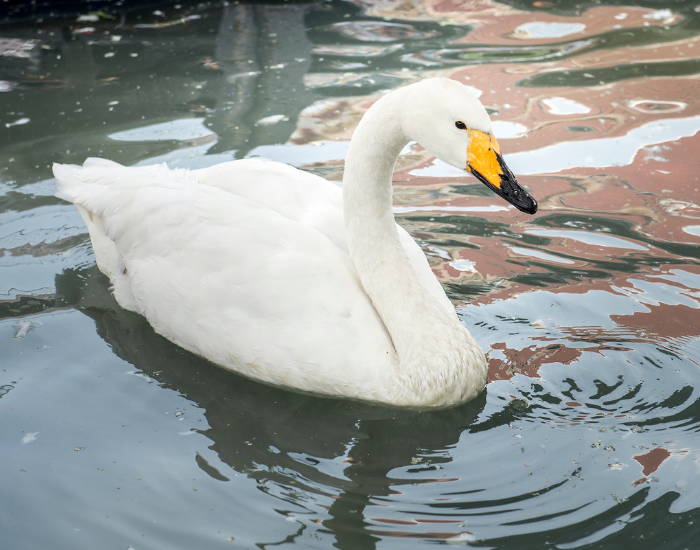
14. Mute Swan (Cygnus olor)
If the Snow Goose is the socialite, the Mute Swan is the “monarch.” Originally brought from Europe to decorate estates, these birds are now common across North American ponds. Despite their name, they aren’t actually silent—they just don’t have the loud, trumpeting “honk” of their cousins.
Behavior: They are famously territorial. If you see a swan raising its wings over its back like a sail (a pose called “busking”), it’s a warning to stay back. They’ve been known to chase off dogs and even small boats that get too close to their nests.
Identification: Look for the classic “S-curve” in the neck. They are pure white with a bright orange bill and a distinctive black knob at the base of the forehead.
FAQ: Everything You Wanted to Know About Waterfowls
Think of it like a square and a rectangle. All ducks are waterfowls, but not all waterfowls are ducks. The term “waterfowl” is the broad category that also includes geese and swans, which are all members of the Anatidae family. Geese are distinguishable from ducks primarily by their larger body size and shorter bills.
Geese and swans are not sexually dimorphic; males and females look very similar but may differ in size.
The Mallard is widely considered the most abundant and widespread duck in the world.
There are about 180 species globally. In North America, birders typically track about 45-50 common species.
Conservation and Population Trends
According to groups like Ducks Unlimited and the Smithsonian, waterfowls are a rare conservation success story. Because of hunting regulations (like the Federal Duck Stamp) and habitat restoration in ponds and lakes, many populations are expanding. However, climate change and the loss of trees in nesting areas remain a threat to specialized nesters like the Wood Duck.
The Living Symphony: Why We Keep Watching
Understanding what are waterfowl is more than just a hobby—it’s an entry point into understanding our wetlands. These birds are “indicator species.” When waterfowl birds are thriving, it means our ponds, lakes, and marshes are healthy.
Next time you’re near the water, don’t just walk past. Look for the bill shape, watch the diving behavior, and try to spot the males‘ flashy colors. You might just find yourself as obsessed as I am.
References:
Black, J. M. (2001). Fitness consequences of long-term pair bonds in barnacle geese: Monogamy in the extreme. Behavioral Ecology, 12(5), 640–645. https://doi.org/10.1093/beheco/12.5.640
Routh, A., & Sanderson, S. (2009). Waterfowl. In Handbook of avian medicine (2nd ed., pp. 275–308). Saunders Elsevier. https://doi.org/10.1016/B978-0-7020-2874-8.00012-2
Schell, E. R., McCracken, K. G., Scott, G. R., White, J., Lavretsky, P., & Dawson, N. J. (2023). Consistent changes in muscle metabolism underlie dive performance across multiple lineages of diving ducks. Proceedings. Biological sciences, 290(2007), 20231466. https://doi.org/10.1098/rspb.2023.1466
Winkler, D. W., S. M. Billerman, and I. J. Lovette (2020). Ducks, Geese, and Waterfowl (Anatidae), version 1.0. In Birds of the World (S. M. Billerman, B. K. Keeney, P. G. Rodewald, and T. S. Schulenberg, Editors). Cornell Lab of Ornithology, Ithaca, NY, USA. https://doi.org/10.2173/bow.anatid1.01
Guo, X., He, X. X., Chen, H., Wang, Z. C., Li, H. F., Wang, J. X., Wang, M. S., & Jiang, R. S. (2021). Revisiting the evolutionary history of domestic and wild ducks based on genomic analyses. Zoological research, 42(1), 43–50. https://doi.org/10.24272/j.issn.2095-8137.2020.133