
There is a specific kind of “birder’s high” that hits when you spot a species that feels entirely out of place in a city landscape.
In early 2025, while traveling through Vancouver, Canada, I found myself wandering near the waterfront. After living and witnessing many animals in Australia for four years, my eyes were getting used to the iridescent plumage of Pacific Black Ducks and the quirky elegance of the Australian Wood Duck. However, there, gliding through the crisp northern waters, was something entirely different. It was slender, moved with an almost royal poise, and carried a striking appearance so sharp it looked like it had been sketched by a calligrapher.
It was a male northern pintail (Anas acuta).
For a moment, I forgot I was in a bustling metropolitan hub. I was watching one of the most widely distributed, yet ecologically sensitive, waterfowl on the planet. Therefore, I knew I had to share what makes these elegant ducks so special. If you’ve also been captivated by other waterfowl species like the ruddy duck, or wetland species like the shoebill, you’ll appreciate the unique characteristics that set northern pintails apart.
Often called the “sea pheasant” because of its long tail, the northern pintail is a master of migration and a sentinel for the health of our northern wetlands. In this guide, you’ll discover everything from identification tips to conservation challenges facing these remarkable birds.
1. The Silhouette of an Aristocrat: Identification
When you first see a pintail bird, the first thing you notice isn’t the color, it’s the shape. Most ducks are somewhat chunky. In contrast, the northern pintail is built like a racing yacht. This slender duck stands out immediately among other ducks in any wetland habitat.
The Male Northern Pintail
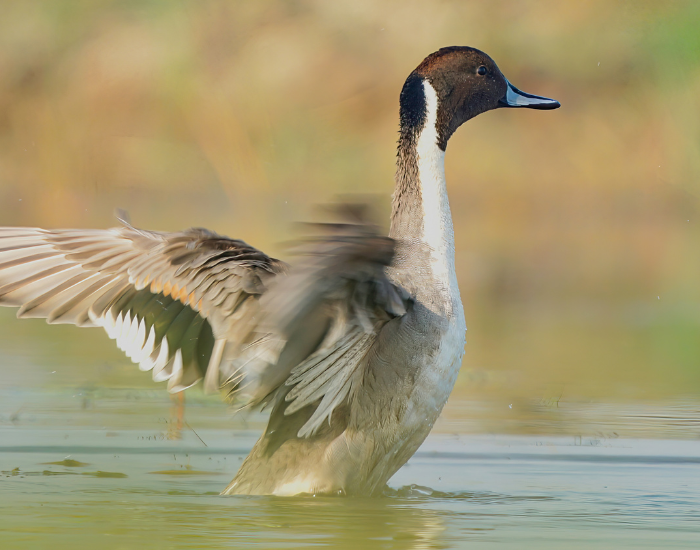
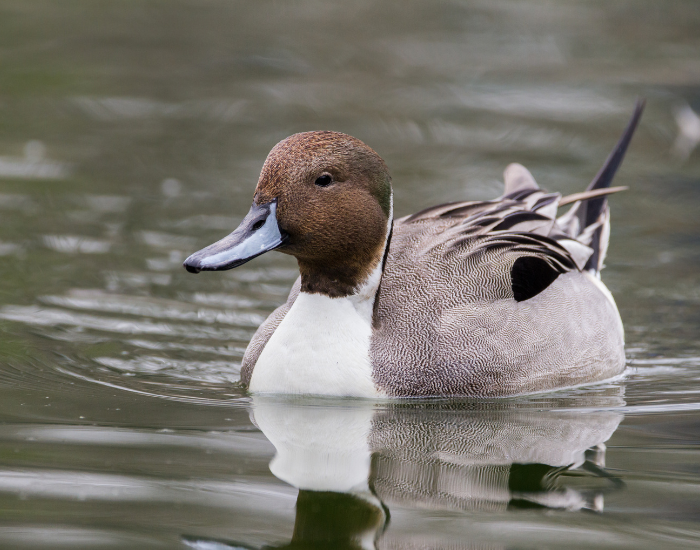
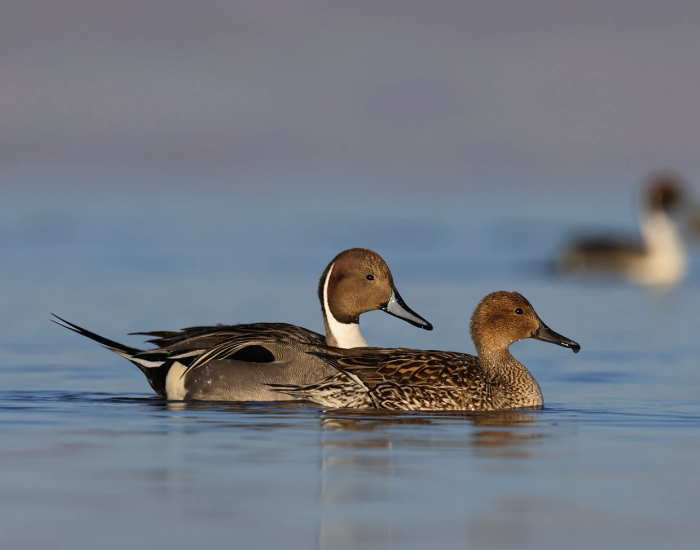
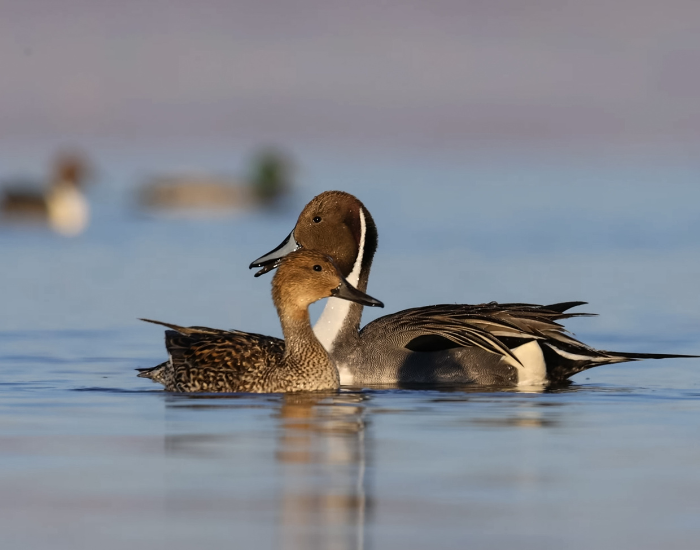
The drake is unmistakable during breeding season. He sports a chocolate brown head that contrasts sharply with a brilliant white breast. A thin white stripe extends from the white of the chest up the side of the neck, ending just behind the eye. This white stripe is one of the most reliable identification markers.
However, the piece de resistance is the pointed tail. These pointed tail feathers can reach up to 10 centimeters in length, giving the bird its name. The long tail creates an elongated profile unlike any other waterfowl. Also males display narrow wings in flight, making them fast flyers capable of impressive aerial maneuvers.
The head and neck of breeding males feature a distinctive tan head coloration that transitions into the chocolate brown. Moreover, their elegant appearance has made them favorites among bird watchers worldwide.

The Female Northern Pintail and Ducklings
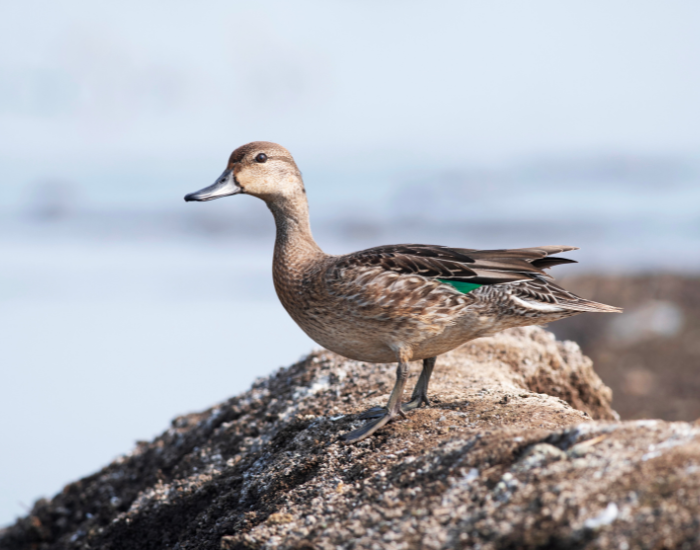
The female northern pintail is more subtle, draped in light brown and tan feathers with intricate mottling. Nevertheless, she retains that signature slender duck profile and a long neck that distinguishes her from a female mallard. Look for a pale olive green speculum (the colored patch on the wing) and observe her overall graceful build.
Female pintails also have a pointed tail, though less pronounced than the males. Their female’s speculum shows subtle green tones that flash during flight. Furthermore, one female typically lays between 7-9 eggs in a single clutch, carefully selecting nest sites away from shallow water.
Northern pintail ducklings are equally camouflaged, designed by evolution to vanish into the short vegetation of the northern great plains. These young birds grow rapidly on a diet rich in aquatic insects and small fish.
2. A Global Wanderer: Habitat and Distribution
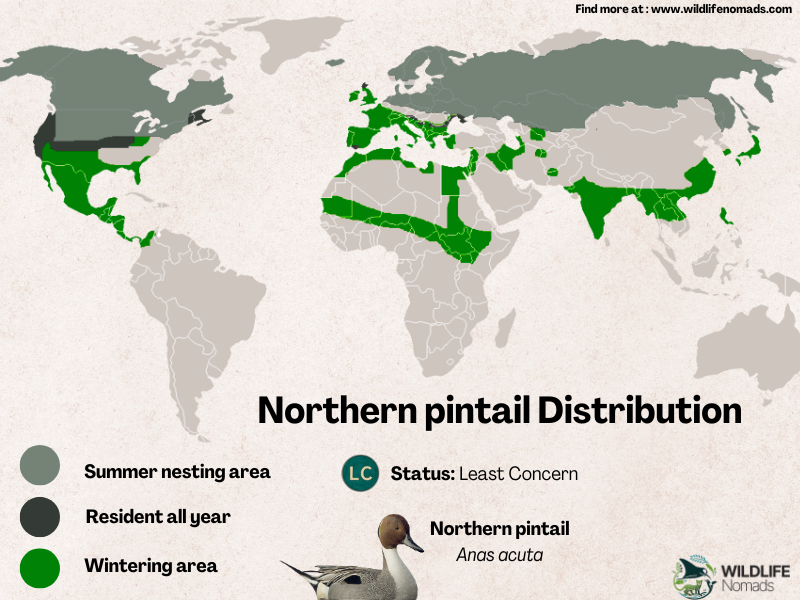
One of the reasons I was so keen to see them in Vancouver is their incredible range. The northern pintail habitat isn’t restricted to just one corner of the map. In fact, they are found across North America, Europe, Asia, and even reach the Middle East during migration.
Breeding Grounds and Breeding Habitat
During the breeding season, northern pintails nest primarily in the Prairie Pothole Region, which stretches across the northern great plains of North America. They also head north to the Northwest Territories, Alaska, and other northern breeding grounds. These breeding habitats feature open habitats with shallow water, shallow wetlands, and prairie potholes ideal for nesting.
The breeding population concentrates in areas with short vegetation surrounding seasonal wetlands. Therefore, the prairie pothole region remains critical for successful reproduction. However, habitat loss in these breeding grounds has contributed to a significant decline in recent decades.
Wintering Grounds and Winter Range
When the ice sets in, northern pintails migrate as far south as Central America and even beyond. On the Atlantic Coast, you can find them in brackish marshes, freshwater wetlands, and coastal areas. Their winter range extends across diverse habitats, including flooded fields where they feed on waste grain.
Wintering grounds also include shallow wetlands throughout the southern United States and Mexico. Some populations winter in the Middle East and across Asia! This extensive winter range makes them one of the most cosmopolitan duck species.
Agricultural Fields and Human Landscapes
Interestingly, northern pintails have adapted to human landscapes remarkably well. You will often see them in flooded agricultural fields or agricultural fields where they forage for leftover grain and aquatic insects. In fact, flooded agricultural fields provide important supplementary habitat, especially when natural wetlands are scarce.
3. The Science of the Pointed Tail: Why the Long Tail?
As a biologist, I’m always looking at the “why” behind the “what.” Why would a duck evolve such a seemingly cumbersome long tail?
In the world of northern pintail ducks, the pointed tail feathers serve as a signal of fitness. During pair formation, pintail males use their striking appearance to signal to females that they possess the best genes. The long tail indicates good health and genetic quality.
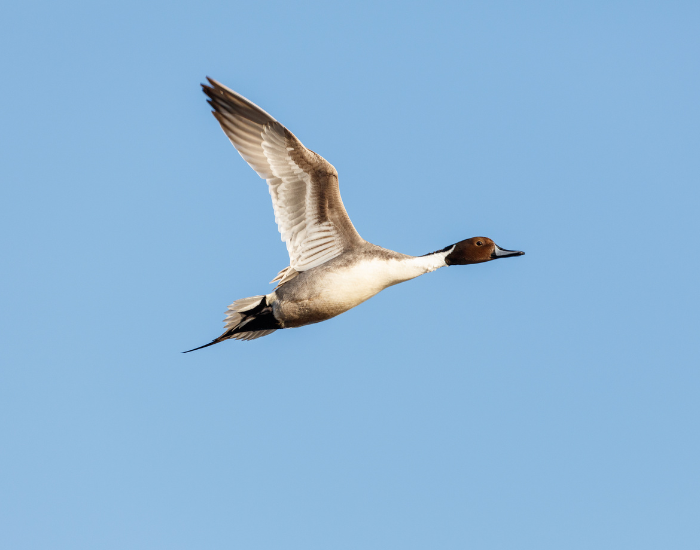
While it might look like a hindrance, it doesn’t stop them from being fast flyers. In fact, northern pintails are among the fastest ducks in the sky, capable of sustained flight speeds that leave other ducks trailing behind. Their narrow wings and streamlined bodies contribute to exceptional aerial performance.
4. Life in the Potholes: Breeding and Nesting Behavior
The way northern pintails nest makes them particularly vulnerable compared to other species. Unlike many ducks that nest right at the water’s edge, pintails often place their nest on the ground in short vegetation, sometimes up to half a mile away from the nearest shallow water.
The Nest Structure
Female northern pintails create a shallow scrape in the ground, lining it with plant material and down feathers plucked from their own bodies. The nest is typically well-hidden in prairie vegetation or agricultural cover. However, this ground-nesting strategy exposes them to numerous predators and farming equipment.
The Breeding Season Timeline
The breeding season typically begins in late April and extends through June in most northern breeding grounds. During this time, pair formation occurs, and males compete for female attention through elaborate courtship displays.
One female will lay between 7-9 eggs, which she incubates for approximately 22-24 days. Therefore, timing is crucial, the breeding habitat must provide adequate food resources when ducklings hatch. Aquatic insects, aquatic plants, and small invertebrates fuel rapid growth during these critical weeks.
Prairie Potholes: A Critical Ecosystem
By nesting in prairie potholes, northern pintails take advantage of the explosion of aquatic plants and insects in late spring. These seasonal wetlands are biodiversity hotspots, supporting not just pintails but countless other birds and wildlife.
However, this upland nesting strategy creates a double-edged sword. It makes them highly susceptible to habitat loss from agricultural expansion and vulnerable to ground predators. The breeding population has declined significantly as prairie potholes have been drained or converted to farmland.
5. A Species at a Crossroads: Conservation Status and Challenges
Despite being a pintail duck species with a massive global footprint, the breeding population has experienced a significant decline since the 1950s. While some ducks, like mallards, have stayed stable, the northern pintail has struggled in recent decades.
Why the Decline?
Habitat Loss: The conversion of the prairie pothole region into intensive agriculture has stripped away their nesting cover. The breeding range has been dramatically reduced, and suitable breeding habitat continues to disappear. Therefore, conservation efforts focus heavily on protecting remaining prairie potholes.
Climate Change: Shifting weather patterns are drying up the shallow wetlands they depend on for breeding and wintering. Climate change affects water availability in critical breeding grounds, and late summer droughts can devastate productivity. Moreover, the long term average precipitation in key habitats has decreased.
Avian Diseases: Like many migratory birds, northern pintails are susceptible to outbreaks of avian botulism and avian diseases, which can spread quickly in large wintering flocks. These avian diseases pose a significant threat, particularly in crowded wintering grounds.
6. Diet and Foraging Behavior: What Does a Pintail Eat?
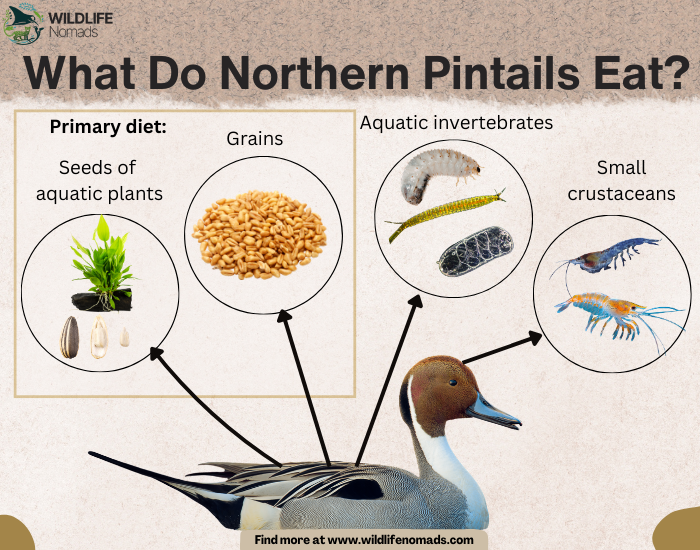
The northern pintail habitat dictates their menu throughout the year. They are primarily dabblers, meaning they tip their tails up in the air to reach food underwater rather than diving like other ducks.
Winter Diet
During winter, their winter diet consists mostly of plant material, seeds, and waste grain from flooded fields. Therefore, flooded agricultural fields become critical foraging habitat. They consume large quantities of grain, including corn, wheat, and rice left after harvest.
Additionally, their winter diet includes seeds from native aquatic plants. In brackish marshes along the Atlantic Coast, they also consume salt-tolerant plant species.
Breeding Season Diet
When breeding season arrives, northern pintails shift to a high-protein diet. This dietary change includes aquatic insects, mollusks, crustaceans, and even small fish. The increased protein fuels egg production and supports the demanding breeding habitat requirements.
Females require substantial energy reserves for egg-laying. Therefore, the availability of aquatic insects in breeding grounds directly impacts reproductive success.
7. Northern Pintail vs. Mallard: Key Differences
Many people ask: Is a pintail bigger than a mallard? The answer requires some nuance.
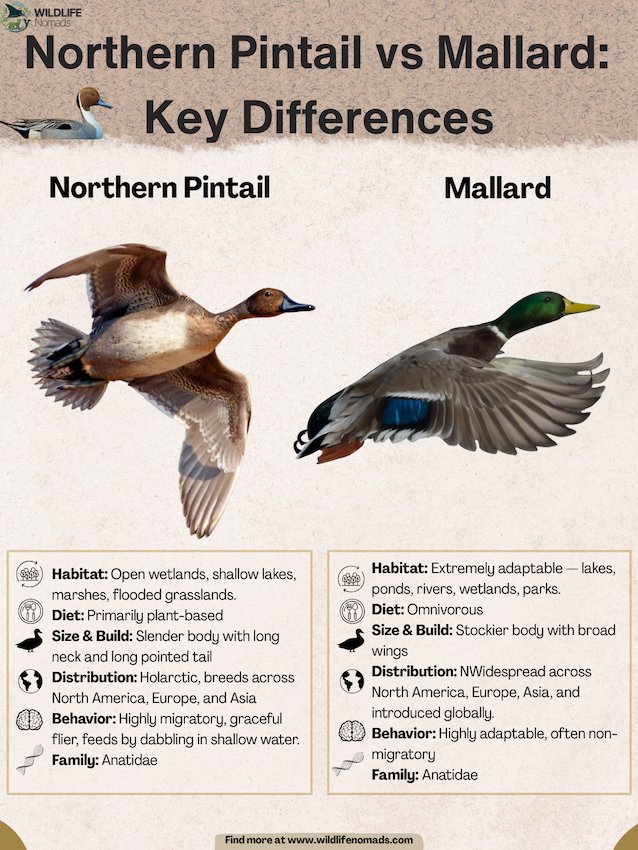
In terms of length, including that characteristic long tail, the male northern pintail is longer, measuring up to 76 cm compared to the mallard’s 65 cm. However, mallards are heavier and more robust, typically weighing more than the slender pintail.
Visual Identification Differences
If you see a slender duck with a long neck, white stripe running up the neck, and pointed tail, it’s a northern pintail. The pintail males display a chocolate brown head and elegant duck profile that’s unmistakable.
In contrast, mallards have a green head (in males), orange legs, and a stockier build. The mallard is like a sturdy truck, while the pintail is like a sports car, built for speed and elegance rather than power.
Habitat Overlap
Both species overlap in wintering grounds and some breeding habitats. However, northern pintails prefer more open habitats with shallow water, while mallards tolerate a wider range of conditions including urban parks and ponds.
8. Migration Patterns: Fast Flyers on Epic Journeys
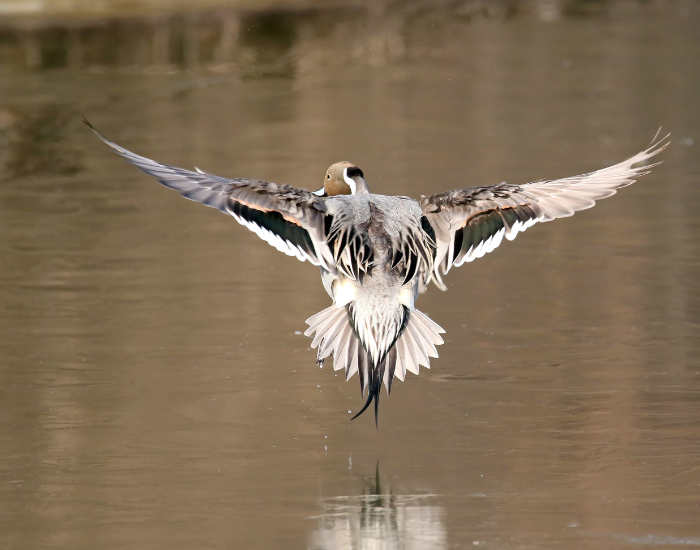
Northern pintails are extraordinary migrants, traveling thousands of miles between breeding grounds and wintering grounds annually. Their narrow wings and streamlined bodies make them exceptionally fast flyers, capable of sustained speeds exceeding 65 km/h.
Spring Migration
In late April and early May, northern pintails depart their wintering grounds heading north. They follow traditional flyways, stopping at key wetland staging areas to refuel. The journey to breeding grounds in the Northwest Territories or Prairie Pothole Region can span thousands of kilometers.
Fall Migration
As breeding season concludes, northern pintails begin moving south. Some populations travel to the Middle East, while others head to Central America. This flexibility in winter range demonstrates remarkable adaptability.
The Atlantic Coast sees significant numbers during migration and winter. Brackish marshes and shallow wetlands provide critical stopover habitat where birds rest and feed before continuing their journey.
9. Relationship with Humans: Hunting and Appreciation
Northern pintails hold a special place in waterfowl hunting culture. They’re considered one of the most desirable game birds due to their diet of grain and aquatic plants, which influences meat quality.
However, hunting regulations carefully manage harvest to prevent further population declines. The significant decline in breeding populations has led to more restrictive bag limits in recent years.
Beyond hunting, bird watchers prize pintail sightings for their elegant duck appearance and striking appearance. They represent the health of wetland ecosystems and serve as ambassadors for conservation efforts.
FAQ: Everything You Need to Know About Northern Pintails
They are not rare in absolute numbers—millions exist globally. However, they are “rarely stable,” meaning populations fluctuate wildly based on moisture levels in the northern great plains. The breeding population has experienced a significant decline since peak numbers in the mid-20th century.
Look for them in shallow wetlands, coastal marshes, brackish marshes, prairie potholes, and flooded agricultural fields across North America and Eurasia. During winter, check the Atlantic Coast, southern wetlands, and agricultural fields.
They are often called the “sea pheasant” or “sprig” in hunting circles. The scientific name, Anas acuta, refers to the pointed tail.
Male northern pintails are longer (up to 76 cm) due to their long tail, but mallards are heavier and more robust in build. The slender duck profile of pintails creates an illusion of greater size.
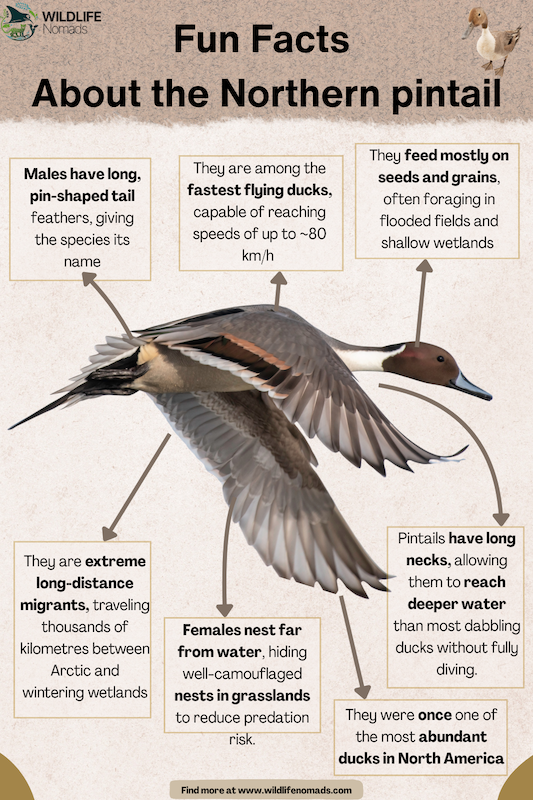
Why Northern Pintails Matter
Watching that male northern pintail in Vancouver reminded me that nature doesn’t just prioritize function; it often prioritizes beauty. This elegant duck survives by being faster, flying further, and being more adaptable than many of its cousins.
The northern pintail represents the fragile beauty of our global wetlands. These birds connect the Atlantic Coast to the Northwest Territories, weaving the world together with their flight paths. Each northern pintail carries the story of the prairie potholes, the shallow wetlands of the north, and the brackish marshes where they spend winter.
Therefore, protecting northern pintail habitat means preserving entire ecosystems. When we safeguard the prairie pothole region and restore shallow wetlands, we don’t just help one species. We support countless other birds, insects, and aquatic plants that depend on these critical habitats.
The next time you spot a slender duck with a long neck, white stripe, and pointed tail feathers, take a moment to appreciate this elegant duck. You’re witnessing a master of migration, a survivor of the northern great plains, and a testament to the interconnected beauty of our planet’s wetland ecosystems.