I still remember the first time I learned about the shoebill. Long before I saw any photos, I was struck by how often it was described in old natural history accounts as a bird that looked “half stork, half dinosaur.” Explorers in the 19th century wrote about its massive bill and solemn stare with a mix of awe and disbelief, as if they had stumbled across a relic from another age. Reading those descriptions, you realize this isn’t just another wetland bird, it’s a living fragment of evolutionary history. Just by looking at a shoebill, you feel as though you’re staring at a dinosaur. And I can’t help but think how devastating it would be if future generations missed the chance to look into that window to the past and experience the same awe, if this bird join the list of extinct birds.
So, what exactly makes shoebills (Balaeniceps rex) so unusual? And why do they spark such fascination among scientists, birders, and even casual travelers? Let’s explore 10 facts about shoebills, from their dinosaur-like appearance to their fragile conservation status.
1. A Bird That Looks Like a Dinosaur
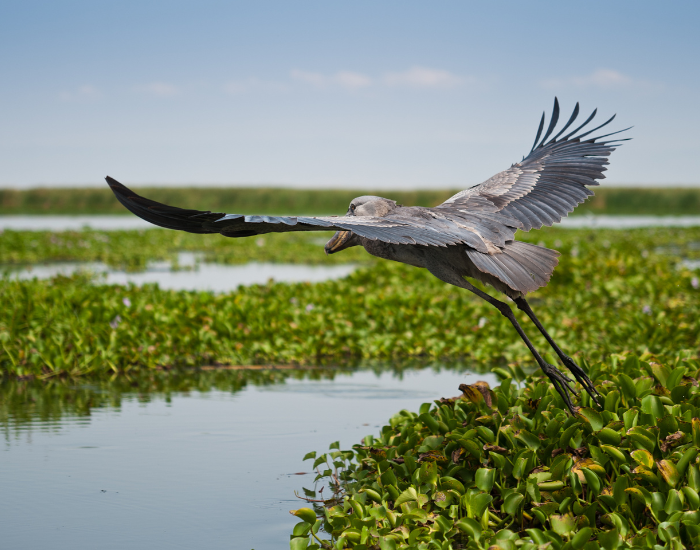
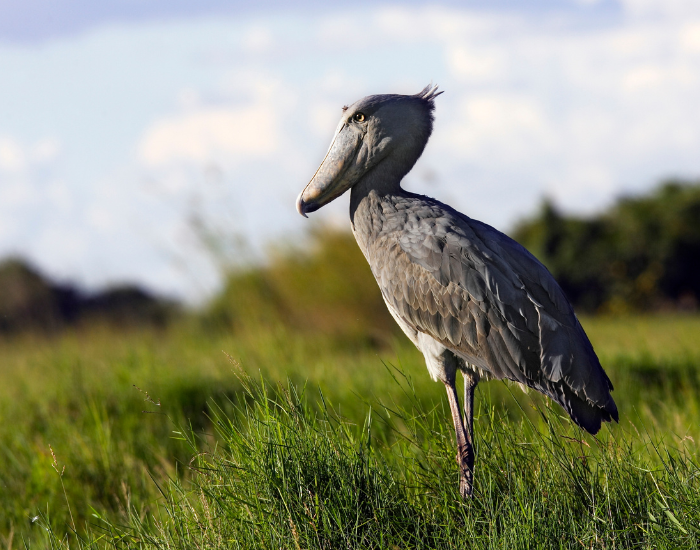
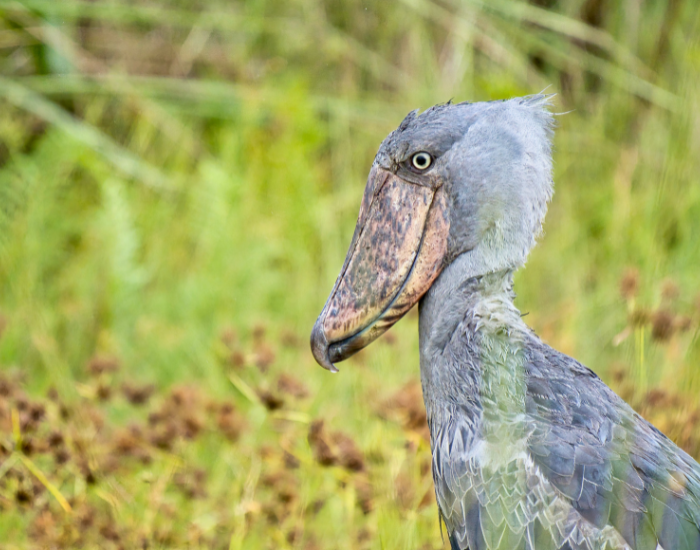
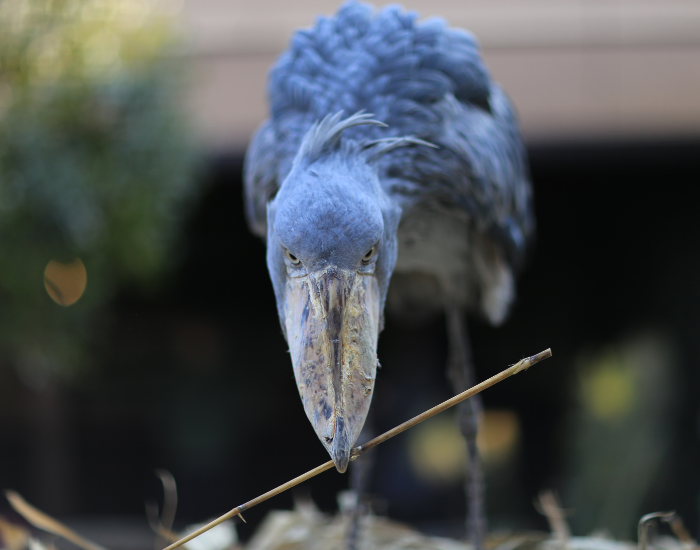
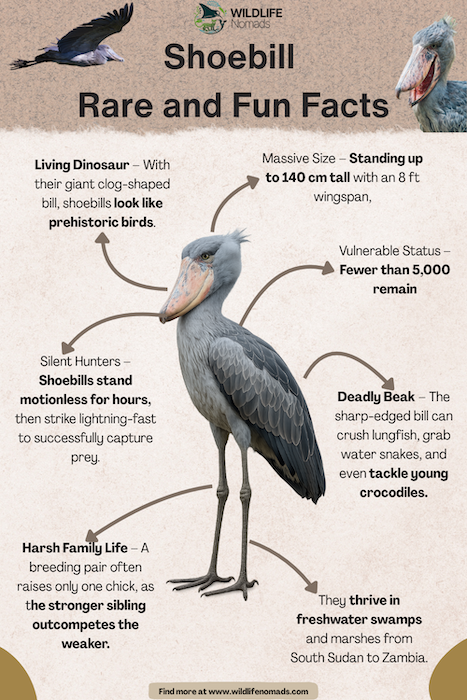
Shoebills are often called “dinosaur birds,” and it’s not hard to see why. They stand 110–140 cm tall, with a wingspan over 2.5 meters, and their massive, clog-shaped bill, distinctively resembling a Dutch clog, makes them look like they’ve stepped out of the Jurassic. The signature feature of this bird is its broad, pale yellow beak with sharp edges and a hooked tip designed to crush prey. Their blue-grey plumage and solemn stare only add to the impression that they’re relics of a forgotten world.
2. Where Do Shoebills Live?
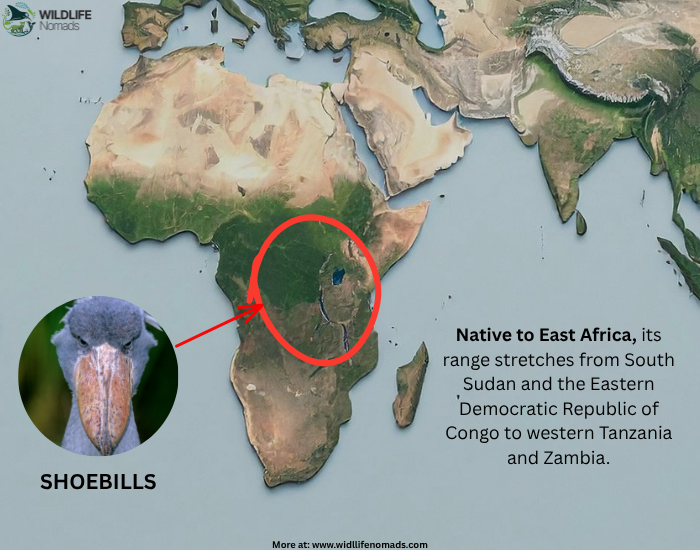
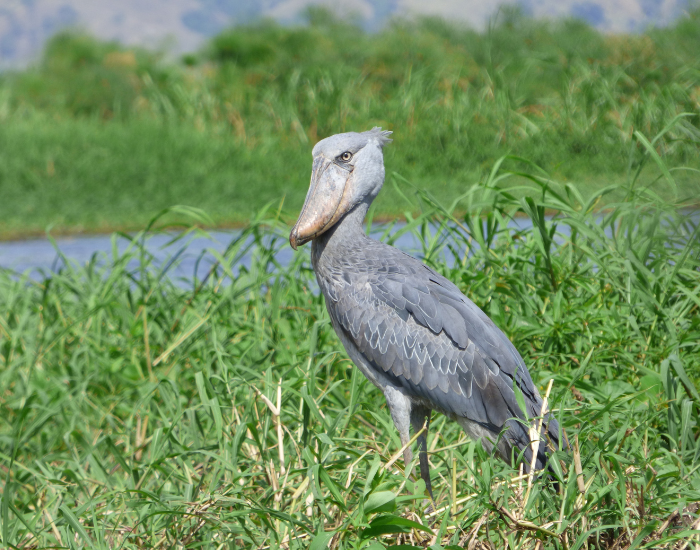
Shoebills are native to East Africa, inhabiting freshwater marshes, swamps, freshwater swamps, and floodplains with dense papyrus. Their species range stretches from South Sudan and the Eastern Democratic Republic of Congo to western Tanzania and Zambia’s Bangweulu swamps. A significant population of shoebill occurs in southern Sudan, particularly in the Sudd region.
They are often found in flood plain interspersed with undisturbed papyrus and reedbeds. Shoebills prefer poorly oxygenated water, where fish living in these conditions must surface often. This makes wetlands with undisturbed papyrus and dense vegetation ideal hunting grounds. These habitats support high food availability due to the presence of fish living in poorly oxygenated water.
If you’ve ever dreamed of seeing one, the best places are Uganda’s Mabamba Wetland or Zambia’s Bangweulu Swamps, where eco-tours balance conservation of the shoebill with responsible tourism. Protecting these habitats is crucial for the continued survival of the shoebill. If you are interested in this stories, you may find interesting the following articles:
3. Master of Patience and Precision
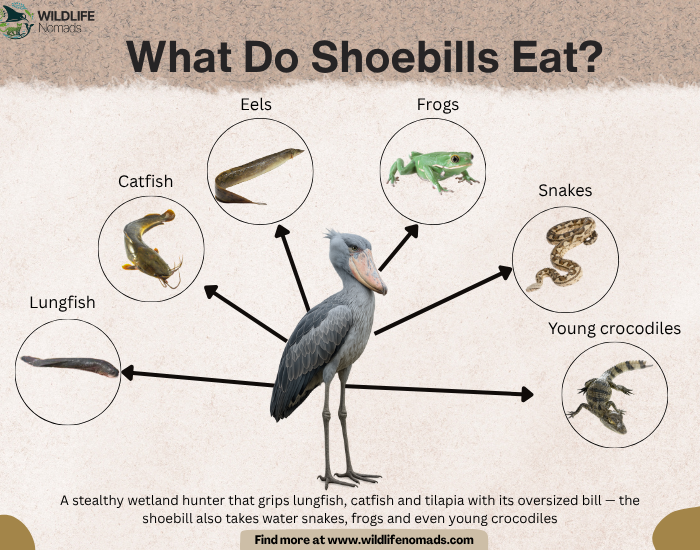
Unlike many wading birds that forage in groups, shoebills are solitary hunters. Their style is all about stillness. They can remain statue like for hours, then strike with shocking speed to successfully capture prey. This hunting technique, known as “stand and wait,” often delivers meals like lungfish, catfish, water snakes, and even young crocodiles.
When food is abundant, shoebills may take down large prey almost half their own body length. Watching them engulf a thrashing fish is both brutal and awe-inspiring, as they feed by seizing and swallowing their prey whole with powerful, precise movements.
4. Bill Clattering: The Shoebill’s Voice
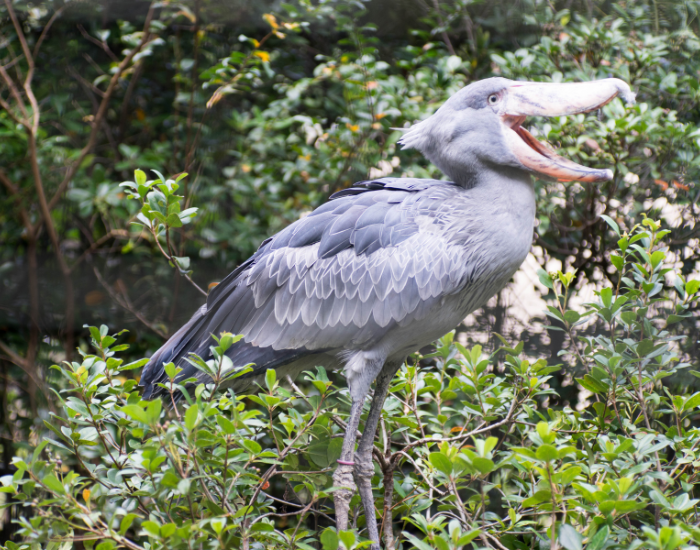
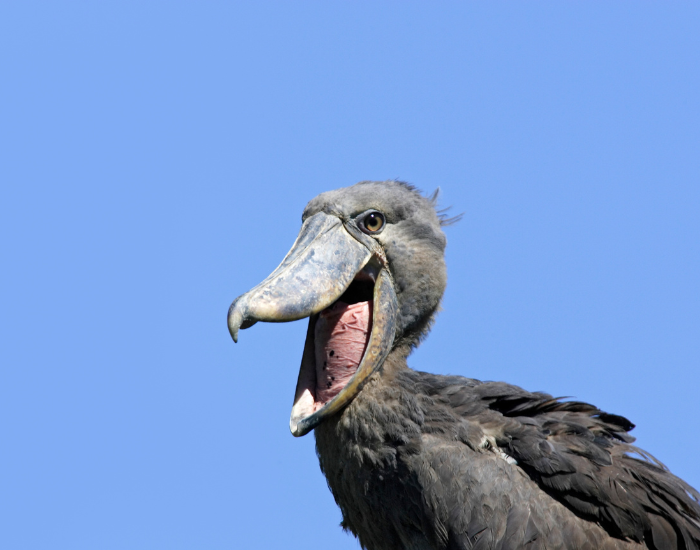
Shoebills are mostly silent, which adds to their eerie presence. But during the breeding season, or when greeting a mate, they produce a rattling bill clattering sound, like two pieces of hollow wood snapping together. It’s their version of conversation, echoing across the swamp like a drumbeat in the reeds.
5. A Difficult Family Life
Shoebills form a breeding pair during nesting season, building their home on a floating platform hidden among papyrus or on a small island. Typically, females lay two eggs, but only one chick usually survives. The older chick often outcompetes its sibling, leading to only one chick reaching adulthood. This strategy, known as siblicide, ensures at least one strong fledgling survives when food is scarce.
It’s a harsh reality: while shoebills may produce more than one chick, younger chicks rarely make it. This contributes to their low breeding success and fragile population.
6. Conservation Status: Are Shoebills Endangered?
So, are shoebill storks endangered? Officially, the IUCN lists them as Vulnerable, not extinct, but with only 3,300–5,300 individuals left in the wild, they’re dangerously close. The shoebill is considered an endangered species by many conservationists due to its declining population and ongoing threats, highlighting the importance of protecting endangered species through focused conservation efforts. Asking “is the shoebill stork extinct?” is premature, but without intervention, the risk is real.
Shoebills are also on Appendix II of CITES, which regulates trade and prevents them from being taken for the pet market, a cruel fate that still threatens some populations.
7. Why Are Shoebills Endangered?
The main reasons shoebills are declining include:
- Habitat destruction and habitat loss: from agriculture, grazing, and wetland drainage.
- Disturbance during the breeding season, which can cause nests to fail.
- Illegal trade, where chicks are captured and sold at high prices. You can red more about Illegal pet trade here.
- Climate change: which alters rainfall, food supply, and swamp ecosystems.
Additionally, keeping shoebills in captivity presents significant challenges and ethical concerns, such as breeding difficulties, high costs, and negative impacts on their well-being and population.
In areas like South Sudan and the DRC, conflict and lack of monitoring make it even harder to protect these birds.

8. Conservation Efforts Across Africa
Thankfully, biological conservation projects are stepping in. At Mabamba Wetland, local communities have turned from hunting shoebills to guiding tourists, creating financial incentives for protection. In Bangweulu Swamps, community-based programs ensure wetlands are preserved not just for shoebills but for fish, herons, pelicans, and humans who depend on them.
Shoebills are often promoted as flagship species: protect them, and you protect an entire ecosystem.
9. Shoebills in the Ecosystem
Shoebills are apex predators of their watery world. By preying on fish, amphibians, and reptiles, they help balance wetland food webs. Their role is similar to other closely related waterbirds like pelicans, but with a uniquely fearsome twist. Without shoebills, certain fish populations might surge unchecked, shifting the delicate equilibrium of swamp ecosystems.
10. A Bird That Inspires Awe
In many cultures, animals like jaguars, snow leopards, or sacred cats like bengal tigers have been woven into myth. Shoebills may not feature in ancient carvings, but they inspire modern legends. Travelers speak of them in whispers, as though encountering a spirit of the swamp. For me, watching a shoebill in the wild was a reminder of why conservation matters. Every species lost diminishes our shared story with the natural world.
Shoebill’s Place in the Tree of Life: Scientific Classification
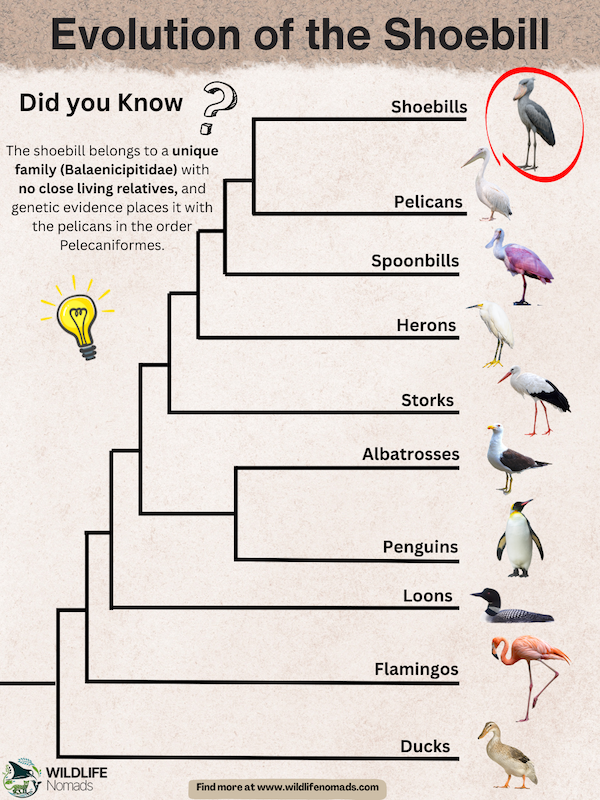
The shoebill stork, known to science as Balaeniceps rex, is a true oddity in the world of birds. For years, ornithologists puzzled over where this remarkable species fits in the avian family tree. At first glance, its towering stature and long legs might remind you of storks or herons, and indeed, it was once grouped with these familiar wading birds. But as researchers dug deeper—examining everything from its DNA to the sharp edges of its massive bill—a different story emerged.
Today, the shoebill is classified under the order Pelecaniformes, making it more closely related to pelicans than to storks or herons. This surprising connection highlights just how unique the shoebill’s evolutionary journey has been. Its family, Balaenicipitidae, contains only this single species, a testament to its distinctiveness among birds.
Research on Shoebill Movements
For those interested in science, there ha sbeen recent studies about these prehistoric birds! For a long time, shoebills were thought to be largely sedentary, but recent research is giving us new insights into how these birds use wetlands.
A 2021 study in Scientific Reports – tracked shoebills with GPS in Zambia’s Bangweulu Wetlands. It revealed that both immature and adult birds adjust their movements in response to changing water levels, sometimes covering surprisingly large home ranges while still staying within the wetland system. Interestingly, immatures and adults responded differently to shifts in surface water, suggesting that age and foraging experience influence how shoebills navigate their environment. This kind of research is crucial, not only does it unravel the hidden rhythms of a species still poorly known, but it also helps conservationists design strategies that safeguard wetlands as dynamic, living systems.
Where to See Shoebills in the Wild
While shoebills inhabit several countries across Central and East Africa, certain locations offer significantly better chances of encountering these prehistoric-looking birds. Here are the top destinations where you can witness shoebills in their natural habitat:
Mabamba Swamp, Uganda – The Most Accessible Option
Location: Northern shores of Lake Victoria, 40km west of Entebbe
Mabamba Swamp is widely regarded as the best and most convenient place to see shoebills in Africa. This expansive papyrus wetland covers approximately 16,500 hectares and was designated a Wetland of International Importance by the Ramsar Convention in 2006. With over 300 bird species recorded, it’s not just about shoebills – though they are undeniably the star attraction.
Success Rate: Extremely high – most visitors see shoebills, especially during morning tours
Best Time to Visit: Early morning (around 7am) when shoebills are most active and hunting. The dry season from January to March is ideal, with less fishing activity in the swamp.
How to Get There:
- By road: 1-2 hour drive from Entebbe or Kampala
- By boat: Cross Lake Victoria from Nakiwogo landing site in Entebbe (approximately 10-15 minutes), providing opportunities to spot additional bird species
Tour Duration: Typically 3-4 hours total, with about 1-2 hours in the swamp itself
Recommended Tours in Mabamba Swamp, Uganda:
Murchison Falls National Park, Uganda – Combine Wildlife with Birding
Location: Northwestern Uganda, 305km north of Kampala
Uganda’s largest and oldest national park offers a different shoebill experience – one that combines incredible wildlife viewing with bird watching. The Victoria Nile’s delta area where it meets Lake Albert is considered one of the best places in Africa to spot the rare shoebill stork.
Unlike the intimate canoe experience at Mabamba, shoebill viewing at Murchison Falls typically occurs during boat cruises along the Victoria Nile. The journey downstream to the Albert Delta takes 4-5 hours and offers spectacular wildlife encounters including hippos, Nile crocodiles, elephants, buffaloes, and giraffes coming to drink at the river’s edge.
Success Rate: High during boat trips to the Albert Delta, particularly in the rainy season
Best Time to Visit: Year-round, though the dry seasons (December-February and June-September) offer the best overall wildlife viewing
Recommended Tours in Murchison Falls National Park
FAQ – What You Want To Know about the Shoebill Bird
No, shoebills are native only to East and Central Africa. You won’t find them in the wild anywhere outside their natural wetland habitats.
Yes, despite their heavy appearance, shoebills can fly short distances. Their wingspan of over 2.5 meters gives them powerful flight, though they prefer to stay close to swampy habitats rather than travel long distances.
Shoebills are generally calm and tolerant of quiet human presence, especially in eco-tourism areas like Mabamba Wetland. However, they are still wild birds and should always be respected from a distance.
No. Shoebills are protected under CITES regulations, making it illegal to capture or trade them for the pet market. Keeping one in captivity is not only unethical but also highly damaging to conservation efforts.
Shoebills are not typically aggressive toward humans. Their “intimidating” look comes from their size and dinosaur-like stare, but their hunting is focused entirely on fish, amphibians, and small reptiles.
Quick Fire Shoebill Facts
- Scientific name: Shoebill Balaeniceps rex
- Family: Monotypic; closest relatives are pelicans and herons
- Habitat: Swamps, marshes, and floodplains of East Africa
- Movement: Non-migratory, typically remaining in the same habitat year-round
- Nest size: Built on papyrus mats, defending a territory of up to a square kilometre
- Eggs: Usually 2, but survival is often less than three nests per pair per year
- Lifespan: 20–35 years
- Status: Vulnerable, not extinct, but threatened by climate change and habitat destruction (source: Animal Diversity Web)
A True Looking Dinosaur
The shoebill is more than just a bird, it’s a living relic, a statue like sentinel of Africa’s wetlands. It embodies resilience, fragility, and mystery all at once. Protecting the shoebill means safeguarding swamps, fish, and even human communities that rely on these waters.
If you ever find yourself drifting through a papyrus swamp in Uganda or Zambia, keep your eyes on the horizon. You might just meet the shoebill: part bird, part dinosaur, and wholly unforgettable.
This blog is reader-supported. When you buy experiences through links listed on this site, we may earn an affiliate commission.
References:
Acácio, M., Mullers, R. H. E., Franco, A. M. A., Willems, F. J., & Amar, A. (2021). Changes in surface water drive the movements of Shoebills. Scientific Reports, 11(15796). https://doi.org/10.1038/s41598-021-95093-5
BirdLife International. (2020). Species factsheet: Balaeniceps rex. https://www.birdlife.org
Buxton, L., Slater, J., & Brown, L. H. (1978). The breeding behaviour of the shoebill or whale-headed stork Balaeniceps rex in the Bangweulu Swamps, Zambia. African Journal of Ecology, 16(3), 201-217. https://doi.org/10.1111/j.1365-2028.1978.tb00440.x
Cano Alonso, L. S. (2026). The shoebill’s silent struggle: Guarding the future in Zambia’s wetlands. Stork, Ibis and Spoonbill Specialist Group News. https://storkibisspoonbill.org/topics/shoebill/
CITES. (2026). Balaeniceps rex. https://cites.org/eng/gallery/species/bird/shoebill.html
IUCN Red List. (2018). Balaeniceps rex: The IUCN Red List of Threatened Species. https://www.iucnredlist.org/species/22697583/133840708
Mayr, G. (2003). The phylogenetic affinities of the Shoebill (Balaeniceps rex). Journal of Ornithology, 144, 157–175. https://doi.org/10.1007/BF02465644
Mullers, R. H. E., & Amar, A. (2015). Shoebill Balaeniceps rex foraging behaviour in the Bangweulu Wetlands, Zambia. Ostrich: Journal of African Ornithology, 86(1-2), 113-118. https://doi.org/10.2989/00306525.2014.977364