
When I first began working as a biologist in Sydney, I was drawn to the Australia’s birdlife, so many bird that I have never seen before. From black cockatoos screeching overhead to the very noisy kingfishers like the kookaburra, I realized how deeply birds reflect the health of an ecosystem. Yet, in every conversation with colleagues, I heard about species we had already lost, birds I would never see. Extinct birds are not just names in textbooks; they are cautionary tales of human impact, invasive species, and habitat destruction.
In this article, we’ll explore ten of the most fascinating extinct bird species, from the iconic dodo to the mysterious Kauaʻi ʻōʻō. Their stories highlight what we risk losing and what conservation can still protect.
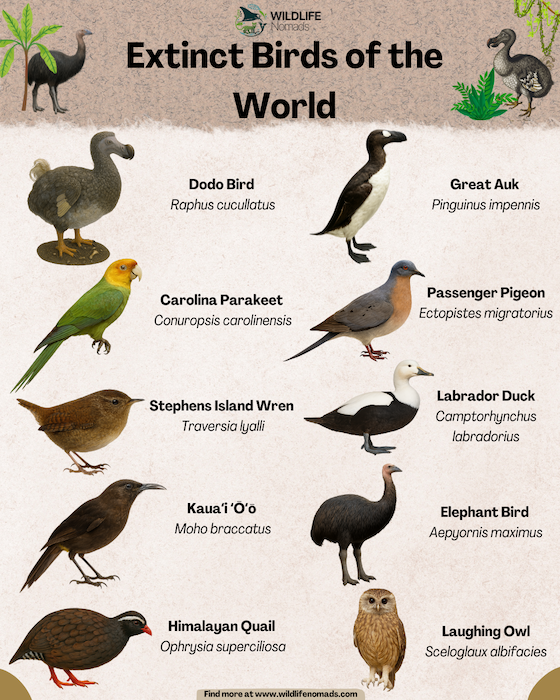
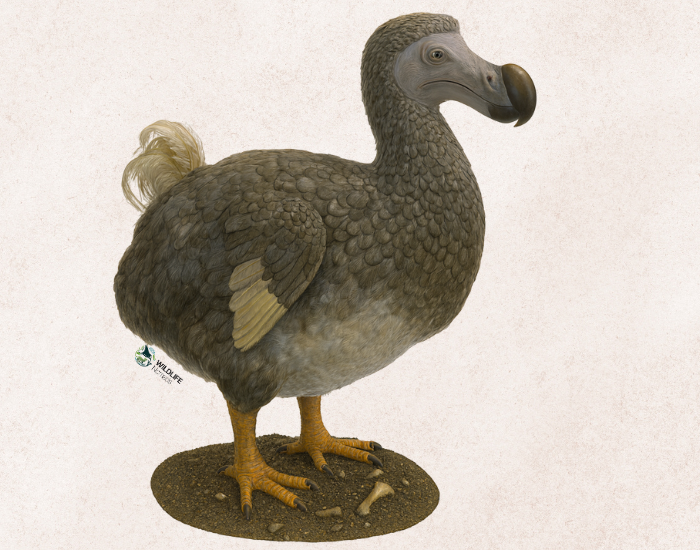
1. The Dodo Bird (Raphus cucullatus)
No list of extinct birds is complete without the dodo. Native to Mauritius in the Indian Ocean, this large flightless bird vanished in the 17th century. Human predation, combined with the introduction of rats, pigs, and cats, led to its rapid extinction.
What’s remarkable is how quickly it disappeared: discovered by sailors around 1598, the last confirmed sighting was in the 1660s. Today, the dodo is a global symbol of extinction.
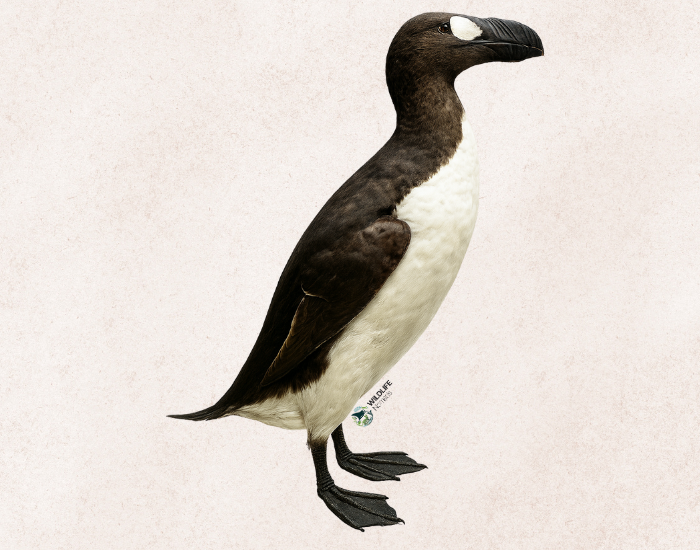
2. The Great Auk (Pinguinus impennis)
Another flightless bird, the great auk once thrived in the North Atlantic, from Canada to the UK. Hunted relentlessly for meat, feathers, and oil, the last known pair was killed in Iceland in 1844.
The great auk’s extinction is a great example the devastating impact of unchecked hunting, and the difficulty of conserving slow-breeding species.
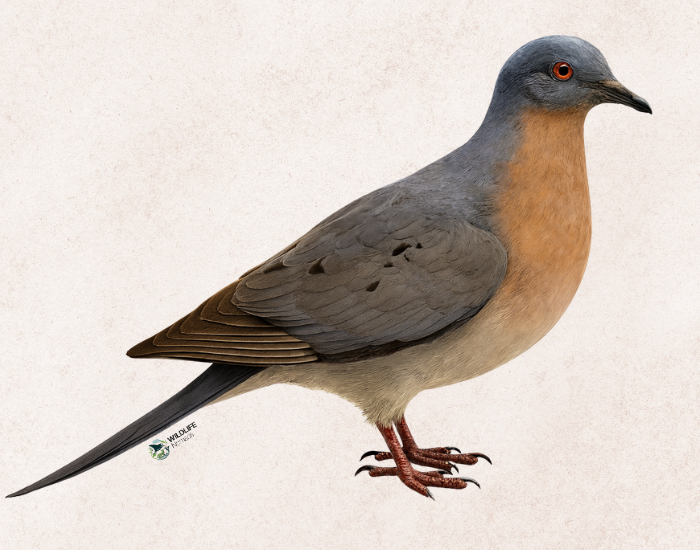
3. Passenger Pigeon (Ectopistes migratorius)
It’s hard to imagine that birds once numbering in the billions, known as passenger pigeons, could vanish. Passenger pigeons, native to North America, went extinct in 1914 when the last individual, Martha, died in captivity at the Cincinnati Zoo. Martha was the last specimen of her species.
Habitat loss and industrial-scale hunting drove its collapse. Flocks that once darkened the sky for hours became a memory within a few decades.
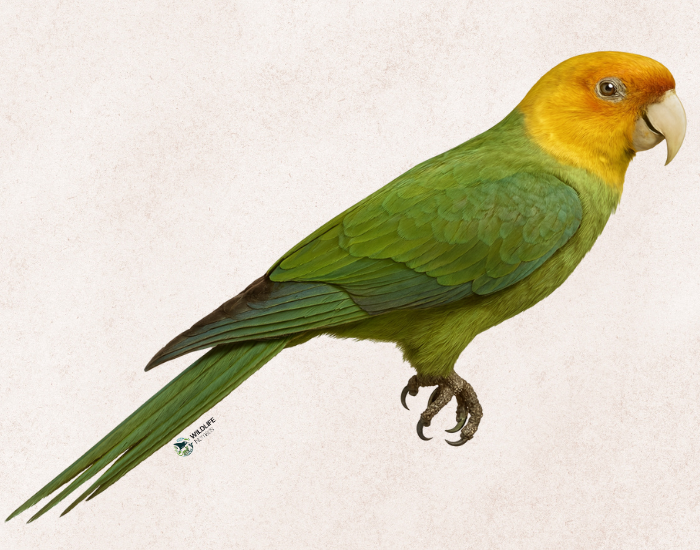
4. Carolina Parakeet (Conuropsis carolinensis)
Bright green and native to the southeastern US, the Carolina parakeet was North America’s only native parrot. Carolina parakeets had vibrant green bodies, yellow heads, and orange faces, and their historical range extended from the Midwest to the Atlantic coast and as far south as Florida and Texas.
It went extinct by the early 20th century due to deforestation, hunting, and the spread of disease from domestic poultry.
Its loss reminds us that even colourful, abundant species are not immune to extinction. Find more about endangered bird in the US in thi article.
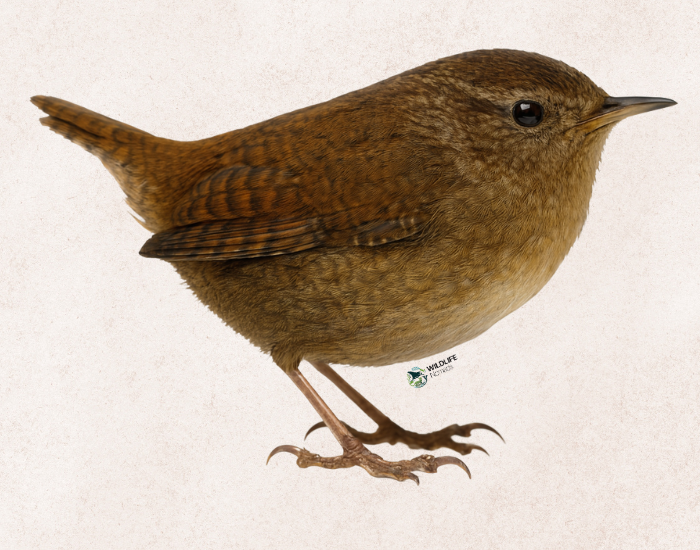
5. Stephens Island Wren (Traversia lyalli)
On a remote island off New Zealand, this tiny, flightless wren met a tragic fate. Introduced cats, especially one said to belong to the lighthouse keeper, wiped out the entire population by the late 19th century.
The Stephens Island wren is often cited as one of the clearest examples of how introduced predators devastate island bird species.
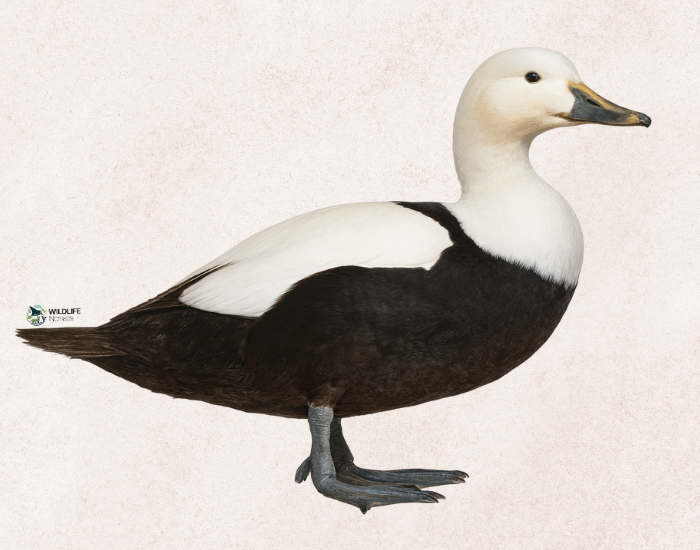
6. Labrador Duck (Camptorhynchus labradorius)
Little is known about the Labrador duck, which disappeared in the mid-1800s. It lived along the North Atlantic coast and may have succumbed to a combination of overhunting and declining food resources.
Its story underscores how some extinct species vanish with little documentation, leaving mysteries behind.
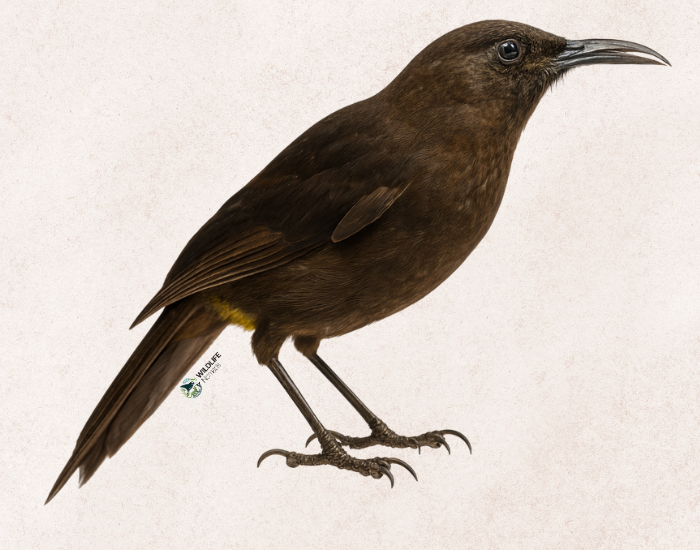
7. Kauaʻi ʻŌʻō (Moho braccatus)
The haunting call of the Kauaʻi ʻōʻō, recorded in the 1980s, is one of the most famous sounds of extinction. Native to Hawaii, this bird’s decline was caused by habitat destruction, avian malaria, and introduced species.
Other extinct Hawaiian birds include the Drepanis pacifica, a songbird from the Drepanididae family, which was once found in Hawaiʻi. Some of these birds, like the Po‘ouli, played important ecological roles by feeding on insects.
The last known male was heard singing alone in 1987, a reminder of how disease and invasive species imperil Hawaiian Islands birds.
8. Elephant Bird (Aepyornis maximus)
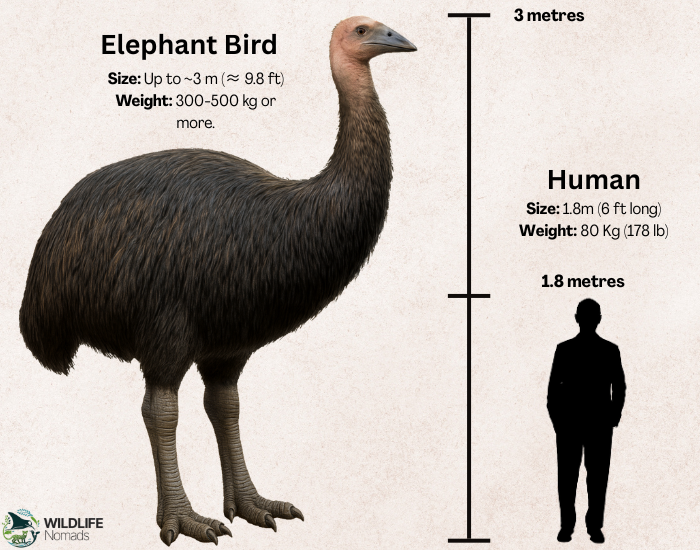
Native to Madagascar, the elephant bird was one of the largest birds ever, standing up to 12 feet tall. Likely driven extinct by human activities and egg harvesting around 1,000 years ago, it remains an enduring mystery of lost megafauna.
Its eggs, the largest known of any bird, are still prized by collectors and scientists.
9. Himalayan Quail (Ophrysia superciliosa)
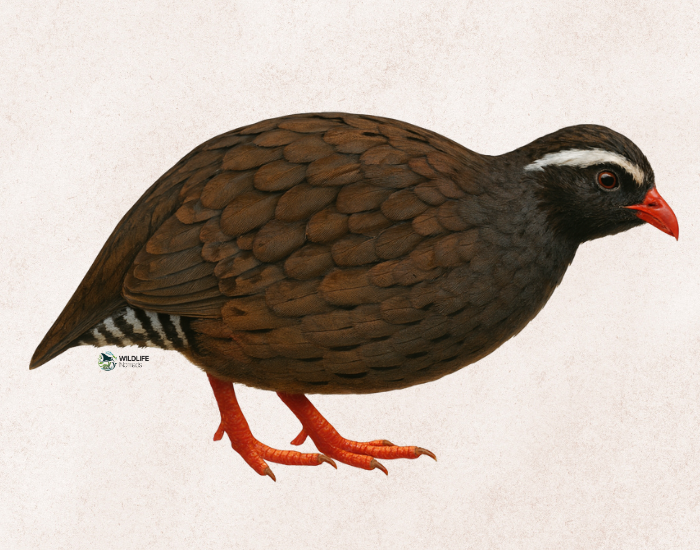
Last seen in the 19th century, the Himalayan quail may still persist in remote India, though most scientists believe it’s extinct. Unconfirmed sightings keep hope alive, but habitat loss and hunting were almost certainly factors in its disappearance.
10. Laughing Owl (Sceloglaux albifacies)
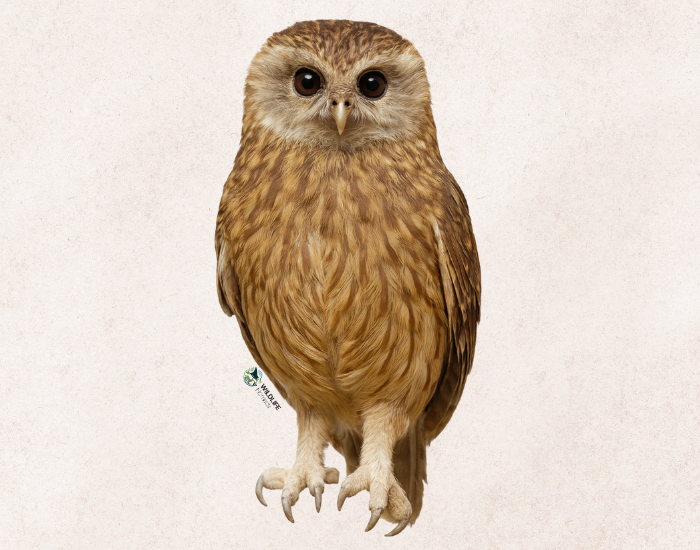
Once widespread across New Zealand, the laughing owl earned its name for its eerie, human-like calls. The species vanished by the early 20th century due to habitat degradation and the spread of introduced animals such as stoats.
Its extinction shows how vulnerable island bird species are when their ecosystems are disrupted.
Shared Traits of Extinct Birds: What Made Them Vulnerable
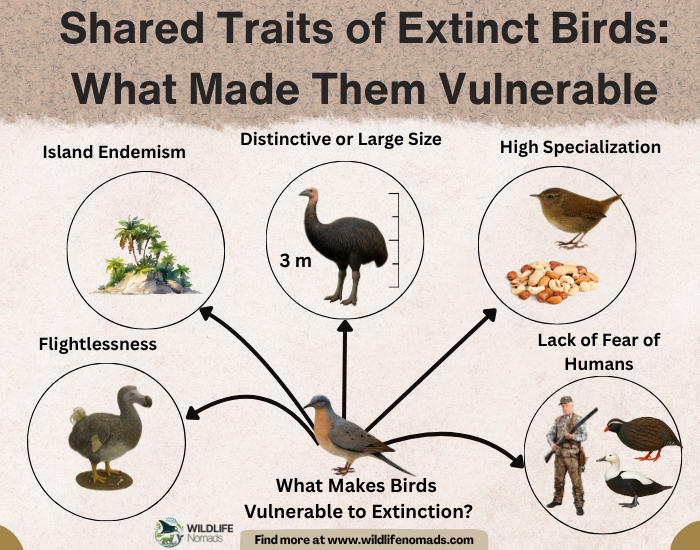
Extinct bird species are as varied as the environments they once inhabited, but many share traits that made them especially vulnerable to extinction. Some, like the Passenger Pigeon and Carolina Parakeet, were once among the most numerous bird species in their regions, yet their populations plummeted rapidly due to relentless habitat destruction and the pressures of human activities. Others, such as the Dodo Bird of the Indian Ocean, were flightless birds that evolved without natural predators, until humans and introduced predators like rats and pigs arrived, making them easy targets for human predation.
Physical characteristics also played a role. The Elephant Bird of Madagascar, for example, was notable for its massive size and unique appearance, which made it both a curiosity and a target. These extinct bird species remind us that being abundant or distinctive is no guarantee of survival when faced with rapid environmental change, predation, and habitat loss. By studying the characteristics that led to the extinction of these birds, we gain valuable insights into how to better protect today’s endangered species from similar fates.
Ecosystems and Bird Species
Bird species are vital threads in the fabric of healthy ecosystems, and their loss can trigger far-reaching consequences. On the Hawaiian Islands, for instance, the extinction of many native birds has been driven by habitat destruction and the arrival of invasive species that outcompete or prey upon local wildlife. The Great Auk, a flightless bird of the North Atlantic, was once a key part of its ecosystem before human activities like hunting and egg collection led to its disappearance. Similarly, the Stephens Island Wren in New Zealand was wiped out by introduced predators, highlighting how isolated island environments are especially sensitive to ecological disruption.
Protecting forest habitat and controlling invasive species are essential steps in preventing further extinctions. When bird species vanish, the balance of their ecosystems can be thrown off, affecting everything from insect populations to plant regeneration. The stories of these extinct birds underscore the importance of proactive conservation to maintain the health and diversity of our world’s ecosystems.
Why Do Birds Go Extinct?
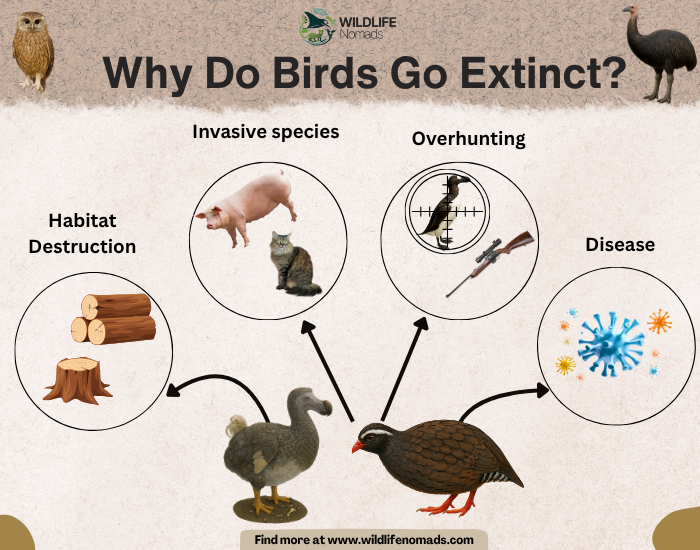
Since humans started expanding, we have been using resources and interacting with the natural world, similar as today, arrival of humans have triggered a cascade of actions that leads to species extinction. Across all these examples, patterns emerge:
- Habitat destruction and degradation (logging, farming, urbanization)
- Invasive species (cats, rats, pigs, introduced rats)
- Overhunting and human predation
- Disease, particularly avian malaria on islands
These threats have led to the extinction of many bird species worldwide. Regions like the Hawaiian Islands, Chatham Islands, and Guadalupe Island suffered especially heavy losses, with numerous birds disappearing from the wild and surviving, if at all, only in captivity or museum collections.
Lessons from Extinct Birds
The stories of recently extinct birds fuel conservation today:
- Rat and cat eradication projects on islands like Lord Howe and Wake Island
- Habitat restoration in the Indian Ocean and North Atlantic regions
- Captive breeding and reintroductions for endangered birds, with some programs relying on maintaining birds in captivity before reintroduction
Education, research, and community involvement are key to ensuring species don’t join the list of extinct birds.
Learning More About Extinct Birds
For those eager to delve deeper into the world of extinct bird species, there are a wealth of resources to explore.
- The Cincinnati Zoo famously housed Martha, the last Passenger Pigeon, and today preserves specimens and stories of vanished birds.
- On Lord Howe Island, the local museum offers exhibits on the island’s lost species, such as the Lord Howe Swamphen, providing a tangible connection to the past.
- Online, the IUCN Red List is an invaluable database, cataloging both extinct and endangered bird species like the Guadalupe Caracara and the elusive Pink-headed Duck.
Exploring the stories of extinct birds is a powerful reminder of the importance of conservation and the role each of us can play in safeguarding the future of our planet’s avian life.
FAQs About Extinct Birds
The dodo bird is the most famous, symbolizing extinction worldwide.
Habitat loss, invasive species, and avian malaria wiped out this Hawaiian bird.
The passenger pigeon and Carolina parakeet are two of the most iconic extinct American birds.
The elephant bird of Madagascar, which grew up to 12 feet tall.
Occasionally, reports of the Himalayan quail surface, though it remains officially extinct.
The poʻouli of Hawaii was last seen in the early 2000s, one of the most recent bird extinctions.
The Po‘ouli was the only member of its genus, making it unique among Hawaiian honeycreepers before its extinction.
The Norfolk Island Kaka was an extinct parrot species that lived on Norfolk Island and nearby Phillip Island.
Yes, several extinct birds were considered rare before their extinction, such as the Po‘ouli, Bonin grosbeak, and Rodrigues solitaire, highlighting the importance of conservation for rare species.
The Saint Helena dove was a flightless bird from Saint Helena island, belonging to the Columbidae family, and is now extinct.
Extinct Birds Quiz: How Much Do You Know? 🪶
Ten questions on the world’s most famous lost birds and their stories. Answer each one — you can go back and change any answer before you score.
Not the Same Fate
As a biologist traveling between Australia, Mexico, and beyond, I’ve often wondered which birds I’ve missed seeing simply because we acted too late. The list of extinct bird species is a stark reminder of what we’ve lost, but also a call to action. Protecting habitats, tackling invasive species, and supporting conservation groups are not optional. They’re essential if we want the incredible diversity of birds still alive today to thrive.
Learning the stories of extinct birds isn’t just about mourning the past. It’s about shaping a future where today’s endangered species never meet the same fate.
Further Reading
- 10 Endangered Birds and Animals You Need to Know About
- Saving the Vaquita: Urgent Steps for the Most Endangered Marine Mammal
References:
Angst, D., Chinsamy, A., Steel, L., & Hume, J. P. (2017). Bone histology sheds new light on the ecology of the dodo (Raphus cucullatus, Aves, Columbiformes). Scientific Reports, 7, Article 7993. https://doi.org/10.1038/s41598-017-08536-3
Burgio, K. R., Carlson, C. J., Bond, A. L., Rubega, M. A., & Tingley, M. W. (2022). The two extinctions of the Carolina parakeet Conuropsis carolinensis. Bird Conservation International, 32(3), 498–505. https://doi.org/10.1017/S0959270921000241
Frankham, R. (1998). Inbreeding and extinction: Island populations. Conservation Biology, 12(3), 665–675. https://doi.org/10.1111/j.1523-1739.1998.96456.x
Medina, F. M., Bonnaud, E., Vidal, E., Tershy, B. R., Zavaleta, E. S., Donlan, C. J., Keitt, B. S., Le Corre, M., Horwath, S. V., & Nogales, M. (2011). A global review of the impacts of invasive cats on island endangered vertebrates. Global Change Biology, 17(11), 3503–3510. https://doi.org/10.1111/j.1365-2486.2011.02464.x
Murray, G. G. R., Soares, A. E. R., Novak, B. J., Schaefer, N. K., Cahill, J. A., Baker, A. J., Demboski, J. R., Doll, A., Da Fonseca, R. R., Fulton, T. L., Gilbert, M. T. P., Heintzman, P. D., Letts, B., McIntosh, G., O’Connell, B. L., Peck, M., Pipes, M.-L., Rice, E. S., Santos, K. M., Shapiro, B. (2017). Natural selection shaped the rise and fall of passenger pigeon genomic diversity. Science, 358(6365), 951–954. https://doi.org/10.1126/science.aao0960
Thomas, J. E., Carvalho, G. R., Haile, J., Rawlence, N. J., Martin, M. D., Ho, S. Y. W., Sigfússon, A. Þ., Jósefsson, V. A., Frederiksen, M., Linnebjerg, J. F., Samaniego Castruita, J. A., Niemann, J., Sinding, M.-H. S., Sandoval-Velasco, M., Soares, A. E. R., Lacy, R., Barilaro, C., Best, J., Brandis, D., … Knapp, M. (2019). Demographic reconstruction from ancient DNA supports rapid extinction of the great auk. eLife, 8, e47509. https://doi.org/10.7554/eLife.47509
Wood, J. R., Mitchell, K. J., Scofield, R. P., De Pietri, V. L., Rawlence, N. J., & Cooper, A. (2017). Phylogenetic relationships and terrestrial adaptations of the extinct laughing owl, Sceloglaux albifacies (Aves: Strigidae). Zoological Journal of the Linnean Society, 179(4), 907–918. https://doi.org/10.1111/zoj.12483