While I’ve never witnessed a living auk in its natural habitat. I’ve dedicated years to understanding extinction patterns. Therefore, the question haunts me: Why did species vanish? What lessons can these losses teach us about protecting the auk birds still clinging to life on rocky coasts today?
To untrained observers, an auk looks remarkably similar to a type of penguin. Both species stand erect. and both sport distinctive black and white plumage. They also excel as underwater hunters. However, here’s the surprising truth: auks aren’t closely related to penguins at all. Instead, they represent convergent evolution, nature’s fascinating way of solving similar problems through completely different evolutionary paths.
Today, let’s do a deep dive into the auk family. We’ll explore their incredible biology and examine the lessons we must learn. Ultimately, our goal is keeping the remaining types of auk from following the Great Auk into the history books.
1. How Many Auk Species Actually Exist?
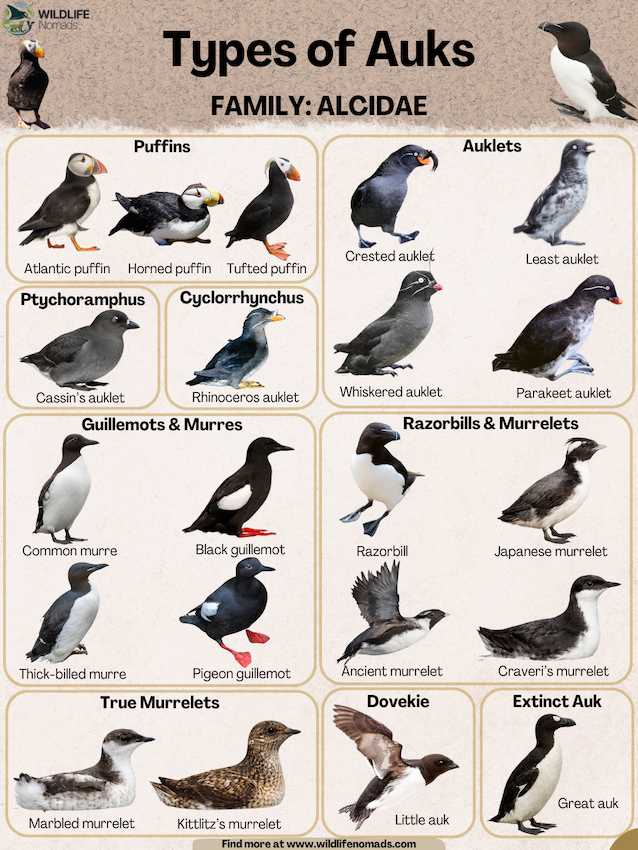
If you’re looking for a straight answer on the auk species count, it depends on which taxonomist you ask after a long field day. However, the generally accepted number is 24 extant (living) species. The family contains 25 extant or recently extinct species that are classified into 11 genera.
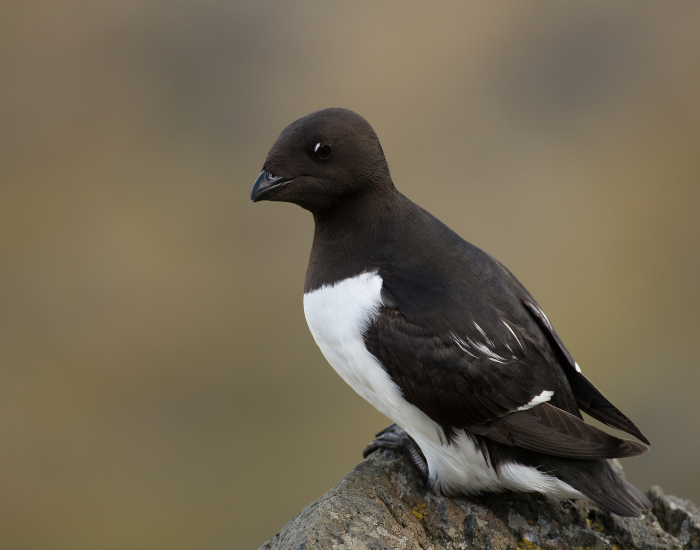
The family Alcidae (the scientific name for the auk family) once included the legendary Great Auk (Pinguinus impennis). Today, the 24 remaining species are spread across 11 genera. Most species show remarkable diversity in size, behavior, and habitat. These range from the tiny little auk to the iconic Atlantic puffin. The little auk is the smallest species of auk.
Interestingly, geographic distribution shows fascinating patterns. Specifically, six species inhabit the North Atlantic region. In contrast, approximately 20 species populate the North Pacific and Bering Sea waters. This Pacific diversity reflects deep evolutionary history across rocky islands and open sea environments. There are two species within the genus Synthliboramphus (Craveri’s and Xantu’s Murrelets), and Synthliboramphus antiquus is also recognized within this group.
2. The “Penguin” of the North (That Isn’t a Penguin)
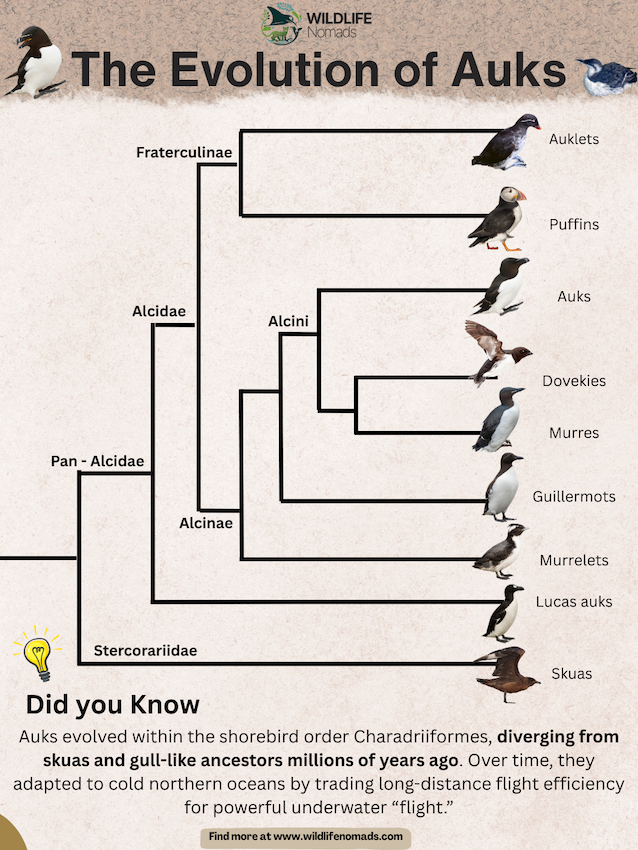
Auks belong to the order Charadriiformes. Auks were once thought to be in their own suborder (Alcae), but genetic data now places them within the Lari suborder. Recent genetic data has also shown that auks are part of a much older charadriiform lineage, and they are longer separated from their relatives than previously thought.
Therefore, they’re part of the earliest distinct charadriiform lineages. Their closest living relatives are actually gulls and skuas, not penguins. While penguins lost the ability to fly millions of years ago to become better divers, true auks took a more difficult path. Specifically, they kept the ability to fly while also becoming wing-propelled pursuit divers.
Auks radically changed from wading shorebirds into diving seabirds, a transformation that highlights how two groups—auks and penguins—evolved similar traits independently. When discussing their similarity to penguins, it’s important to note that although auks and penguins are both diving seabirds, they are only distantly related and have diverged from other similar birds over millions of years.
Imagine trying to design a vehicle that is both a high-speed submarine and a functional airplane. That is an auk. This remarkable adaptation allows them to hunt the same prey as larger marine mammals while still traveling between distant islands and breeding sites.
3. The Tragedy of the Great Auk: A Warning from the Past
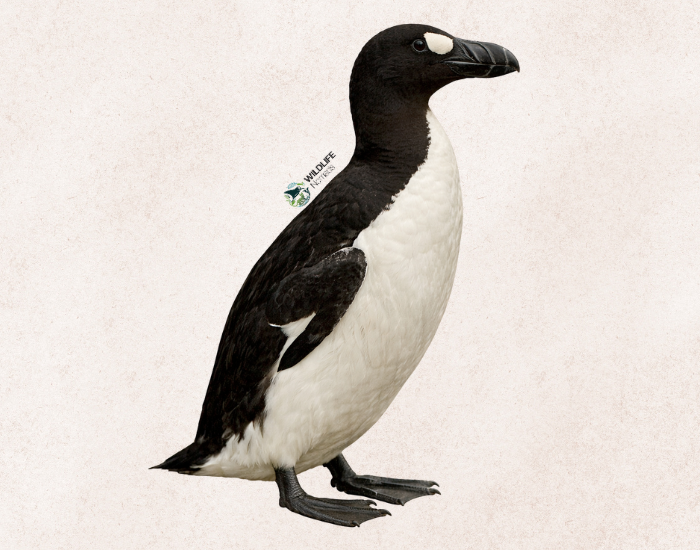
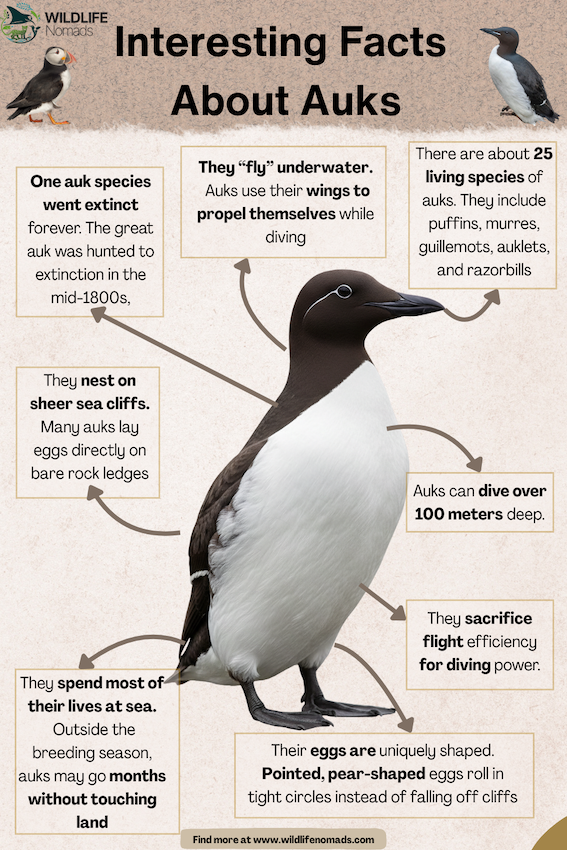
The story of the Great Auk hits hard, another animal gone forever. The Great Auk was the only flightless member of the family. Because it couldn’t fly, it was an easy target for sailors who killed them for meat, eggs, and feathers, just like the dodo story in Mauritius.
The last Great Auk was killed on June 3, 1844, on the island of Eldey, off the coast of Iceland. They weren’t just hunted for food. As they became rarer, they were hunted by collectors who wanted “the last specimens.” It’s a haunting reminder that human greed often accelerates the end of a struggling species.
By understanding what killed them, we can better protect auk bird populations today. The Great Auk’s extinction serves as a critical lesson. Moreover, it demonstrates how quickly species can vanish when multiple threats converge on rocky coasts and breeding islands.
4. Where Do Auks Live?
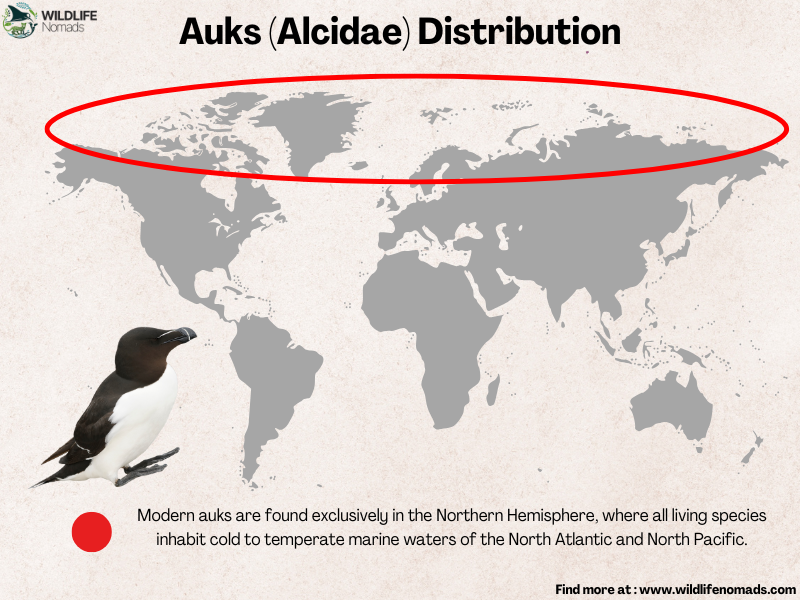
If you want to find these birds, you have to head north. Auks live exclusively in the Northern Hemisphere. You’ll find them clinging to rocky coasts, nesting in rocky crevices, or huddled on cliff edges across several key regions:
The North Atlantic Ocean hosts species including Atlantic puffins and razorbills. The Bering Sea and North Pacific support the greatest diversity of auk species. Additionally, the Arctic Ocean provides critical habitat for little auks and Brünnich’s guillemots. Specific breeding islands span from Greenland to Norway, Iceland to Alaska, and Scotland to eastern Canada.
In my research, I’ve found that their distribution is strictly tied to cold, nutrient-rich waters. Unlike open sea wanderers that roam vast distances, most auks tend to stay near the continental shelf where their food is abundant. This close association with productive coastal waters makes them vulnerable to localized threats.
5. Master Divers: The Science of the “Underwater Fly”
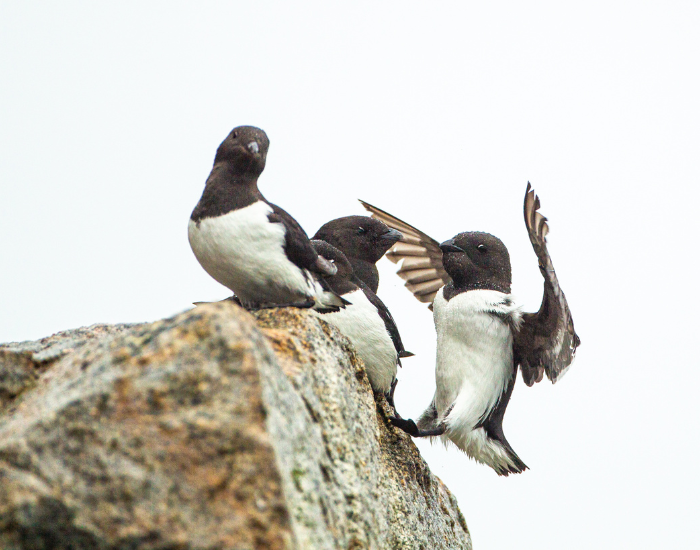
Auks have short wings and strong feet, which make them look a bit clumsy on land. But once they hit the water? They are acrobats. Auks are specialized carnivores that hunt exclusively underwater using their wings to swim.
Using time depth recorders, scientists have discovered impressive diving capabilities across auk species. For instance, some species like the common guillemot (also known as the common murre) can dive to depths of 100 meters (330 feet) up to 180 meters!. Black guillemots regularly reach 40 meters. Even smaller auklets achieve 30-meter depths consistently.
Their feeding behaviour is highly adapted to the marine environment, with groups feed strategies observed in many species, especially during breeding season when they form large colonies on cliffs or nest in small groups in burrows. Auks often face only seabird competition from cormorants in their feeding regions, which influences their foraging strategies and habitat selection.
They aren’t just floating. They are literally “flying” through the water using their short wings for propulsion. This technique allows them to catch the same prey as much larger marine mammals. However, this specialization comes at a cost. Their wings represent an evolutionary compromise between aerial flight and underwater pursuit diving.
6. The Slow Road to Evolution
The auk family is a fascinating case of slow genetic evolution. While they have undergone strong morphological changes to adapt to a diving seabird lifestyle, their genetic makeup has remained remarkably stable over millions of years.
Auks are known for their long lifespan, which contributes to their slow genetic evolution and slow reproduction. Scientists believe auks split from other members of the Lari suborder (which includes gulls and terns) approximately 30 million years ago. This slow genetic change is a double-edged sword. It made them perfectly adapted for stable Arctic and subarctic environments. However, it makes them vulnerable to the rapid changes of modern climate change.
Research suggests two possible scenarios for auk evolution. First, they might represent one of the earliest distinct charadriiform lineages that evolved separately. Alternatively, they may have undergone exceptionally strong morphological changes requiring intense evolutionary pressure. Their long lifespans and slow reproduction rates may explain this pattern. Strong-swimming murres hunt faster schooling fish, while auklets take slower-moving krill.
7. Breeding and the Single Egg Strategy
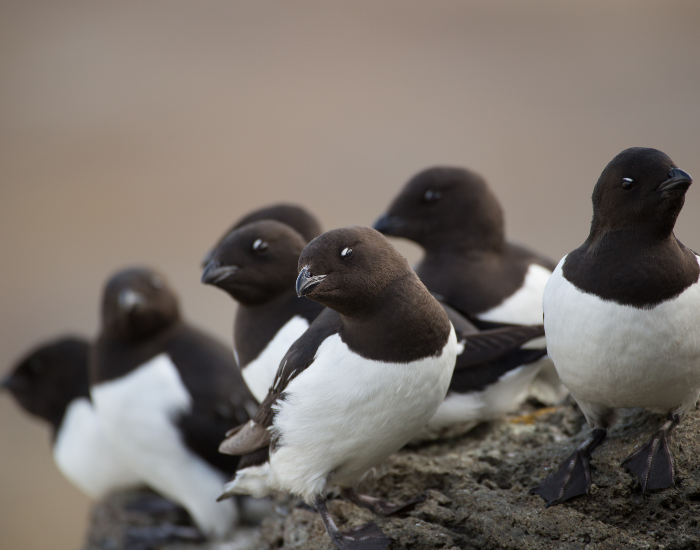
Most auk species have a “quality over quantity” approach to parenting. They typically lay a single egg per breeding season. Auks are monogamous and show strong site fidelity. They return to the same nesting spot year after year during breeding season. This behavior helps maintain stable colonies. Nevertheless, it also makes populations vulnerable to habitat destruction on specific islands.
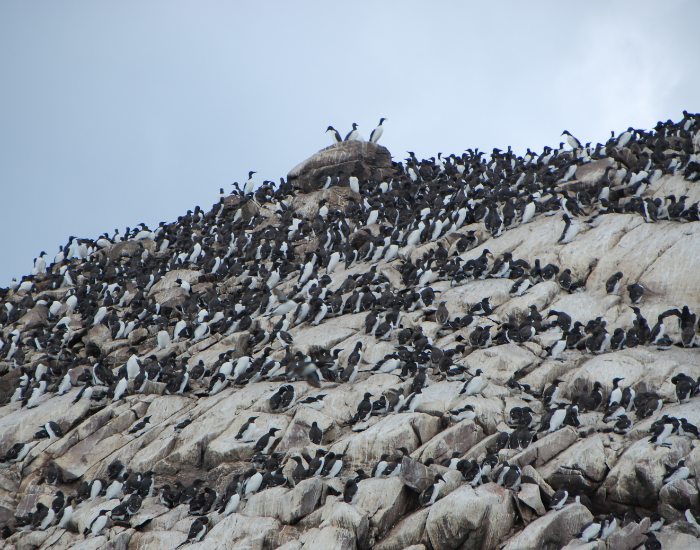
Nesting strategies vary considerably across species. Uria guillemots (murres) breed in massive colonies on exposed cliff ledges. Cepphus guillemots nest in small groups scattered along rocky shorelines. Meanwhile, puffins, auklets, and some murrelets nest in burrows or utilize rock crevices on islands. Some murrelets nest in burrows, while others have unique nesting behaviors. For example, the Marbled Murrelet (Brachyramphus marmoratus) nests high in tall coastal trees, and Kittlitz’s Murrelet (Brachyramphus brevirostris) nests on remote, rocky ground, both showing distinctive strategies within the auk family.
8. Identifying the “Orc Bird” and Other Nicknames
You might hear locals refer to certain auks as an “orc bird” or “sea parrot.” The Atlantic puffin is the most famous for its colorful breeding plumage, but the auk family is incredibly diverse:
Little Auk: The bird known as a little auk (or dovekie) is the smallest and often the most numerous. Weighing just 140-170 grams, this species forms the backbone of Arctic marine ecosystems.
Common Puffin (Atlantic Puffin): Known for their burrow-nesting habits on islands and distinctive breeding plumage. Their parrot-like bills give them the “sea parrot” nickname.
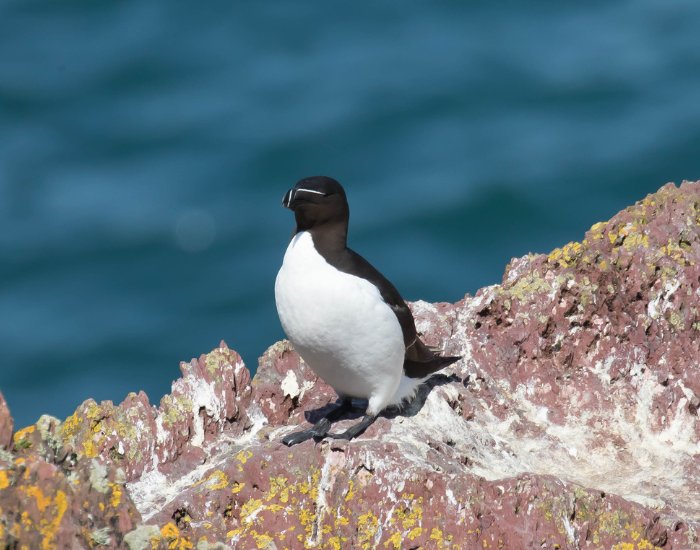
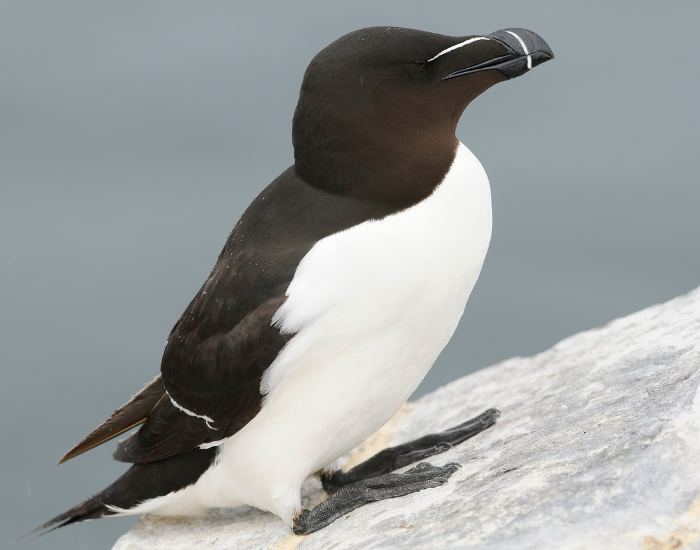
Razorbill (Alca torda): Distinguished by its thick black bill with a white line. This species most closely resembles the extinct Great Auk.
Brünnich’s Guillemot (Thick-billed Murre): Specialized for the high Arctic environment. They breed on remote islands in some of Earth’s harshest conditions.
Whiskered Auklet (Aethia pygmaea): Known for its funky facial feathers and ornamental breeding plumes.
Common Guillemot (Common Murre): One of the most widespread auk species across both Atlantic and Pacific waters. They form enormous breeding colonies on cliff edges.
9. The Diet: Krill vs. Fish
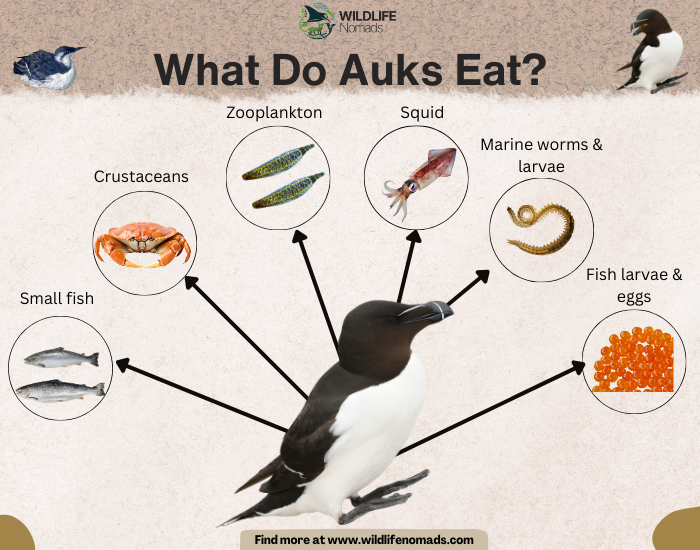
Feeding behavior varies wildly across the auk family. While the larger species chase fast-schooling fish, smaller species like the auklets focus on slower-moving krill. This niche partitioning allows multiple types of auk to live in the same area without starving each other out.
Larger auks like common guillemots hunt capelin, herring, and Arctic cod. These fish-eating specialists dive deep to pursue schooling prey. In contrast, little auks consume vast quantities of Calanus copepods, a keystone species of zooplankton in Arctic waters.
Medium-sized species show more varied diets. For example, puffins feed their chicks primarily on sandeels and other small fish. Meanwhile, auklets concentrate on krill and other crustaceans found in nutrient-rich upwelling zones.
10. The Modern Threat: Why We Must Act
Today, auks face a new kind of “sailor.” Climate change is shifting the distribution of the fish they eat. Overfishing and oil spills are constant threats to the open sea where they spend their winters.
Climate Change Impacts: Rising sea temperatures force prey species northward and poleward. Little auks already show declining body condition linked to warming waters. Sea ice loss reduces habitat for ice-associated prey species. This forces diet shifts to less nutritious alternatives.
Breeding Season Disruption: Earlier spring warming creates mismatches between breeding timing and peak prey availability. This phenological mismatch significantly affects chick survival rates across species.
Ocean Acidification: Changing ocean chemistry impacts the entire marine food web. Everything from zooplankton to fish populations faces altered conditions.
Overfishing: Commercial fishing reduces available prey for auks. Competition with fisheries particularly affects species feeding on commercially valuable fish like capelin and herring.
Marine Pollution: Oil spills pose catastrophic risks to auk populations. Additionally, mercury contamination now affects even remote Arctic populations. Plastic pollution also threatens these seabirds through ingestion and entanglement.
FAQ: Quick Hits on the Auk
Yes! Currently, 24 species still thrive, though many face conservation threats. They remain abundant across Arctic and subarctic regions.
Absolutely. The puffin is one of the most recognizable members of the alcid family. All three puffin species belong to the auk family.
A group of fishermen on Eldey Island in 1844, acting on behalf of a collector. This tragic event marked the extinction of the only flightless auk.
No. They look similar due to convergent evolution, but they are more closely related to gulls. Auks live in the Northern Hemisphere, while penguins inhabit southern regions.
They are often called “alcids” after their family name. Depending on the species, they’re also known as murres, guillemots, or puffins.
Visit rocky coasts and islands during breeding season (April through August). Prime locations include Iceland, Scotland, Norway, Alaska, and eastern Canada.
The Biologist’s Verdict
The auk is more than just a “penguin lookalike.” It is a resilient survivor of a lineage that dates back to the earliest distinct charadriiform lineages. Every time I look at a photo of a common guillemot standing defiantly on a cliff edge, I don’t just see a bird. I see a biological marvel that has figured out how to conquer both the sky and the deep sea.
These remarkable seabirds stand erect on rocky coasts. Their strong feet grip precarious cliff edges. Their short wings power them through both air and water. They nest on remote islands throughout the Northern Hemisphere. They pursue the same prey as whales and seals. They form lifelong pairs and return faithfully to breeding sites each season.
We lost the Great Auk because we didn’t know the value of what we had until it was gone. Let’s not make the same mistake with the Atlantic puffin or the little auk. These 24 remaining species deserve our protection. Their colonies on rocky islands need safeguarding. The open sea they navigate requires conservation.
Where to see Auks in the wild?
As a biologist, I only recommend tours that follow strict ethical guidelines to ensure we don’t disturb nesting puffins. These are the four partners I trust most based on their conservation records:
This blog is reader-supported. When you buy experiences through links listed on this site, we may earn an affiliate commission.