
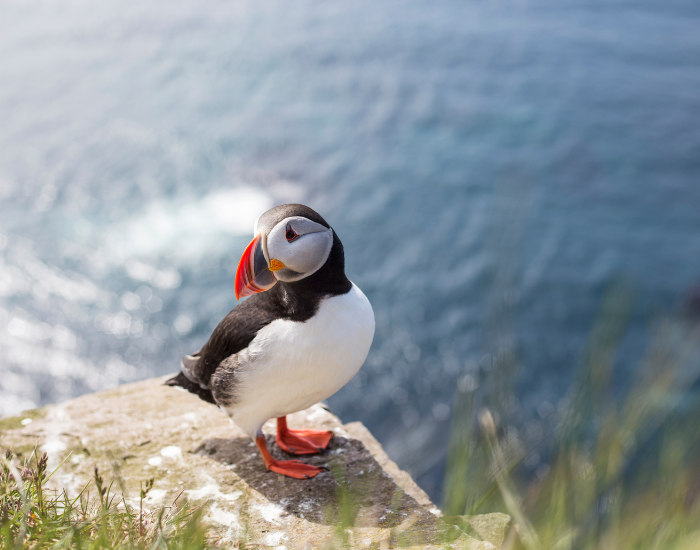
I still remember the first time I stood on the cliffs in Iceland. The Atlantic wind did its best to toss me into the ocean. Then I saw it, a small, tuxedoed bird with a neon beak, crash-landing into a grassy slope with a beak full of sand eels.
As a biologist, you spend years reading about Fratercula arctica. Nothing prepares you for the sheer awkwardness and brilliance of puffins in the wild. These birds are not just cute internet icons. They are high-performance athletes of the North Atlantic and North Pacific oceans.
Often grouped with other Arctic animals and coastal seabirds, puffins also appear among the famous animals of Iceland and are a beloved part of wildlife in the UK. As members of the auk family, they belong to a group of remarkable diving birds found across the northern hemisphere.
From their glowing beaks to their secret underground lives, here are 12 facts about puffins that prove they are among the toughest characters in the bird world.
1. Puffins Are Not Mini-Penguins
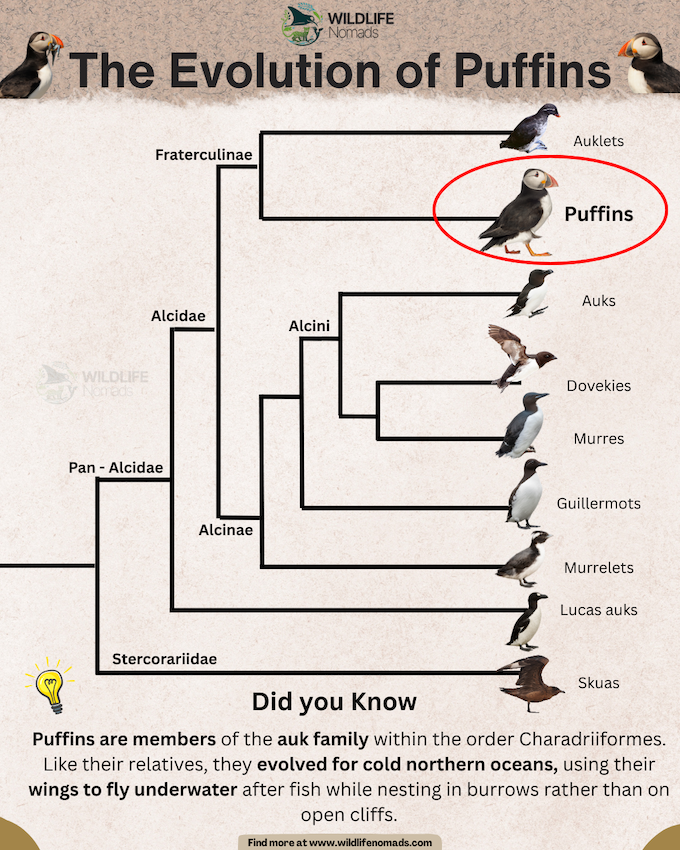
You may ask: “Are puffins related to penguins?” Not really. Puffins belong to the auk family (Alcidae). Penguins belong to the family Spheniscidae — an entirely separate lineage.
Both birds share black-and-white plumage, but this is convergent evolution at work. Puffins can fly, whereas penguins cannot. A puffin in flight looks like a frantic, vibrating potato. However, those short wings make them world-class swimmers.
Puffins are also distinct from most seabirds in their lifestyle and nesting habits. Most birds do not share the puffin’s distinctive colorful beak and dapper appearance, making puffins stand out among marine birds. They share more in common with murres and razorbills — fellow auks — than with any penguin.
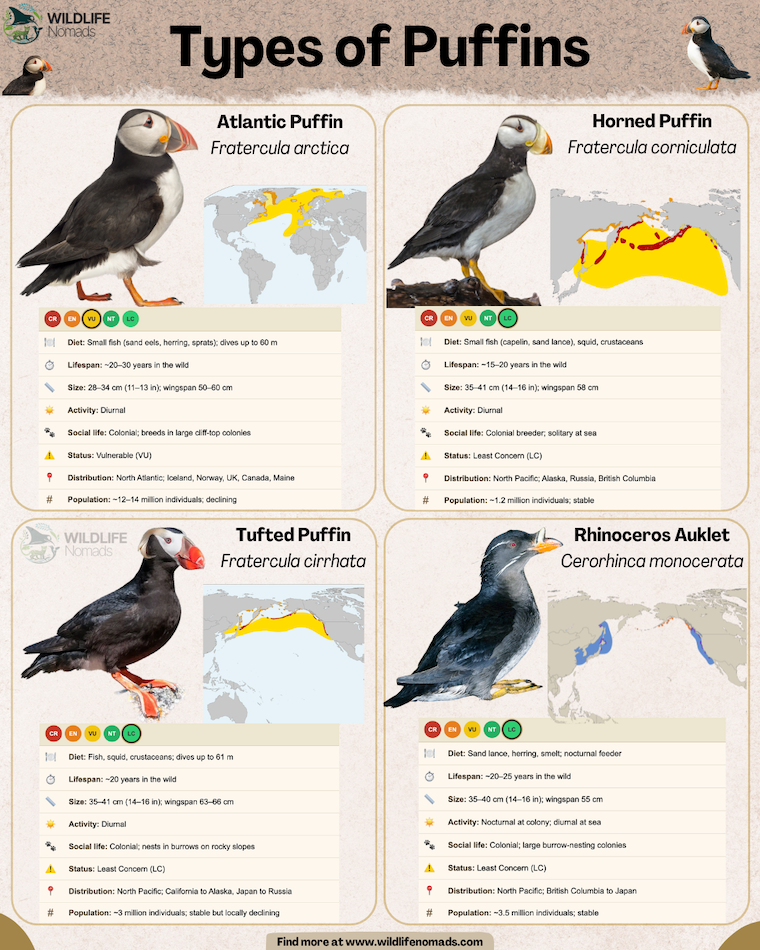
2. There Are 4 Puffin Species
When people say “puffin,” they usually mean the Atlantic Puffin (Fratercula arctica). However, there are actually four puffin species in total, and each occupies a different corner of the northern hemisphere.
In the North Pacific Ocean, you find the Tufted Puffin (Fratercula cirrhata) and the Horned Puffin (Fratercula corniculata). Adult tufted puffins are recognisable by their spectacular golden head tufts. Horned puffins sport a small fleshy “horn” above each eye during breeding season.
The fourth species is the Rhinoceros Auklet (Cerorhinca monocerata). Though not officially in the Fratercula genus, it is so closely related that researchers treat it as an honorary puffin. The rhinoceros auklet gets its name from a small horn that grows on its beak during the breeding season. Unlike its colourful cousins, it visits its breeding colonies only at night — a strategy to avoid having its fish stolen by larger birds.
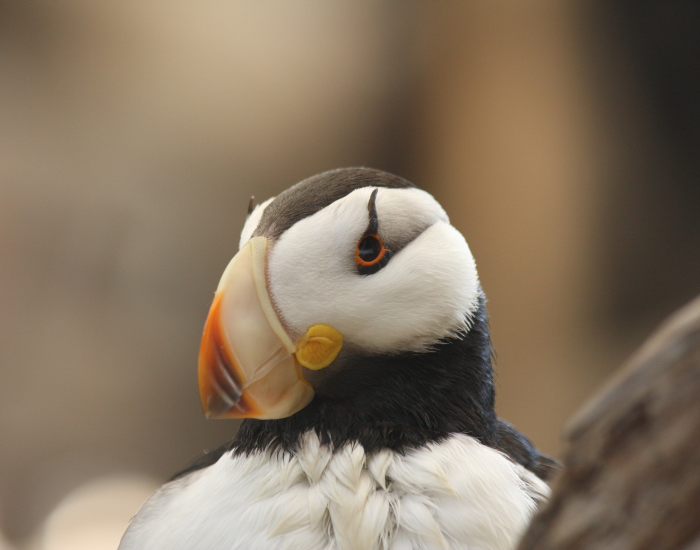
3. The Sea Parrot Beak Is a Seasonal Mask
The puffin’s beak is its most famous feature. It earns the bird its nickname: the “Sea Parrot.” However, puffins are not born with that bright orange bill. They do not keep it year-round either. The puffin’s beak changes color from dull gray in winter to bright orange in spring.
During the breeding season, the beak grows larger and turns vibrant shades of orange and red to attract mates. After the breeding season ends, puffins shed the outer layers of their beak. Underneath sits a smaller, duller grey bill. It is a literal unmasking — one that helps them stay streamlined during winter months at sea.
This seasonal beak change is unique among birds. It also means that puffin chick photos and winter photos look almost nothing like the famous breeding-season portraits.
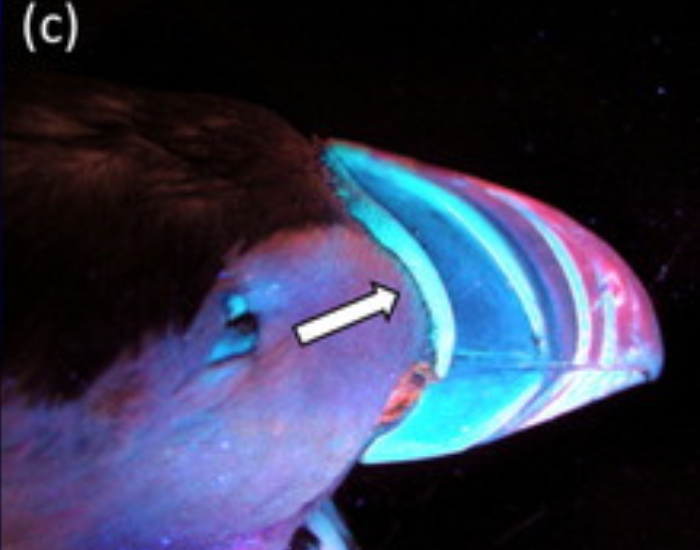
4. Their Beaks Glow Under UV Light
In 2018, scientists discovered that the Atlantic Puffin’s beak is UV-fluorescent. Shine a blacklight on a puffin and those yellow ridges glow. Birds see in the UV spectrum, so a glowing beak is likely a high-definition “I am a healthy mate” signal.
Humans cannot perceive this glow with the naked eye. However, to another puffin, a brightly fluorescent beak may communicate fitness and health. Researchers are still studying the full role of this remarkable adaptation.
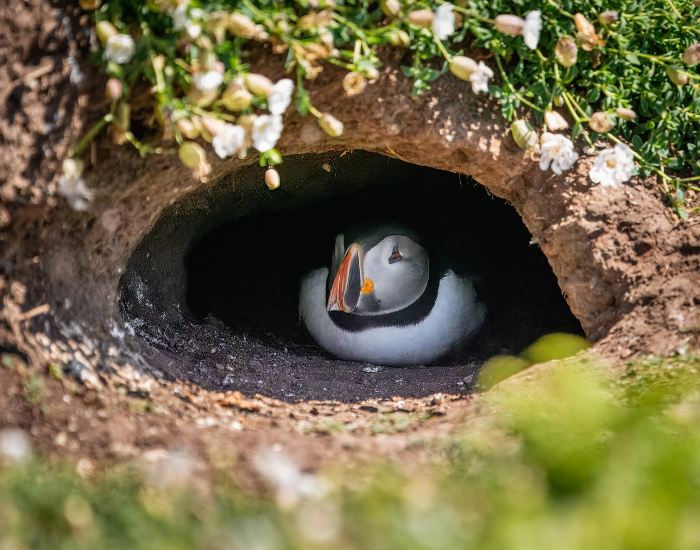
5. Puffins Nest Underground
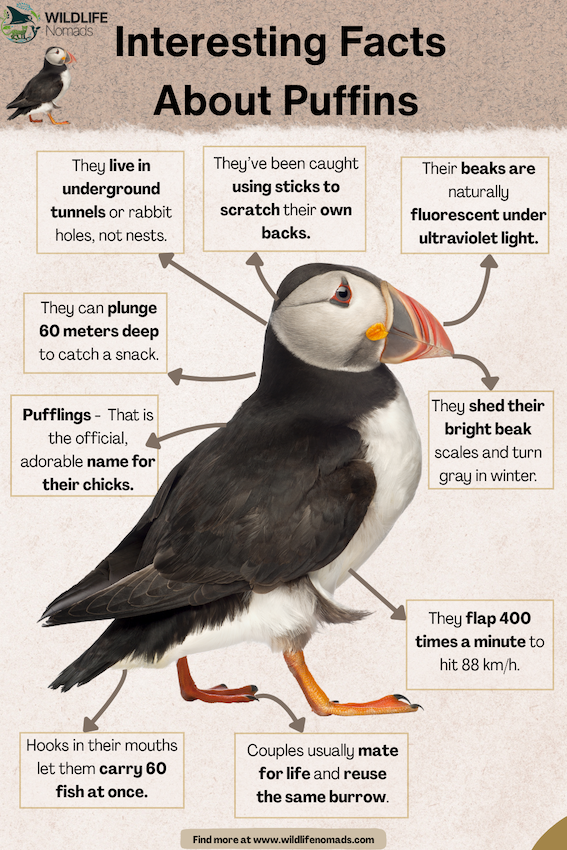
Most marine birds nest on bare rock. Puffins, however, nest underground. They use their webbed feet and sharp claws to dig a nesting burrow up to three feet deep. In places like the Aleutian Islands and British Columbia, you must watch every step. A puffin colony is essentially a giant, fragile honeycomb of tunnels beneath your feet.
Puffins strongly prefer offshore islands where land predators like foxes cannot easily reach. Each breeding pair typically returns to the same burrow year after year. A single egg is laid per season, and both parents share incubation duties.
These nesting habits make puffin colonies easy to visit but easy to disturb. If you plan to observe them — whether in Iceland, Scotland, or British Columbia — always stay on marked paths and respect buffer zones.
6. They Are the World’s Best Fish Stackers
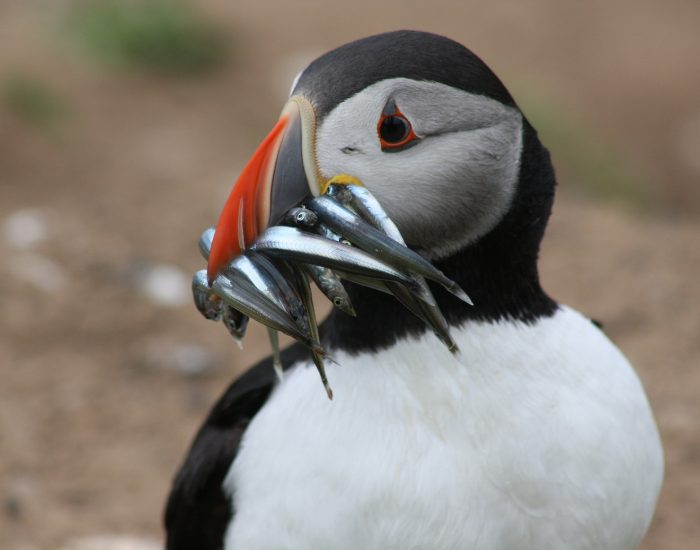
If you have ever seen a puffin with twenty small fish lined up neatly in its beak, you have witnessed a biological marvel. Most seabirds swallow fish whole to carry them back to the nest. Puffins, however, have a serrated upper mandible and a specialised tongue. Together, these allow them to lock fish in place while they keep hunting for more.
The recorded maximum is around 60 small fish in a single trip. Sand eels and herring make up the bulk of their diet. This extraordinary fish-carrying ability is essential during the chick-rearing season, when parents make dozens of trips per day to feed hungry puffin chicks.
7. A Puffin Chick Is Called a Puffling
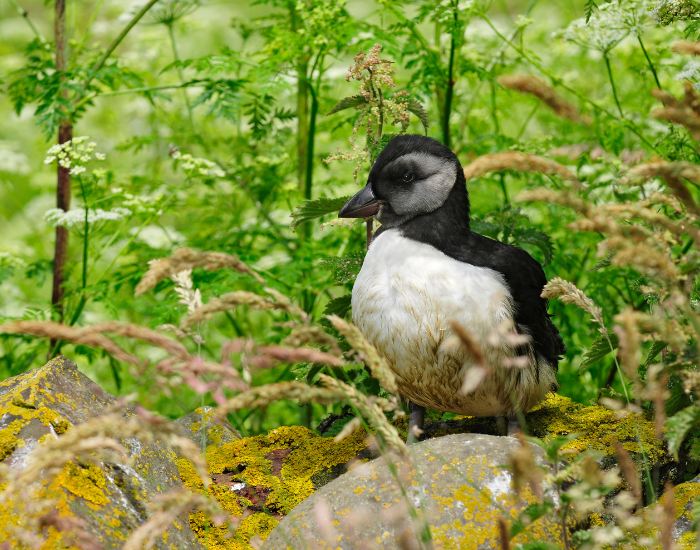
The baby puffin — properly called a puffling — hatches as a ball of grey fluff. It stays hidden in the nesting burrow for around six weeks. During this time, both parents deliver a constant stream of sand eels and herring.
When it is time to fledge, the puffling usually leaves the nest at night to avoid herring gulls. It heads straight for the ocean. For the next two to three years, it will live entirely at sea, never touching land until it is ready to breed.
Pufflings in coastal areas sometimes get disoriented by bright lights on shore. Many wildlife service volunteers in Iceland and other nesting areas run “puffling patrols” each autumn to rescue confused chicks and return them to the sea.
8. They Spend Most of Their Lives at Sea
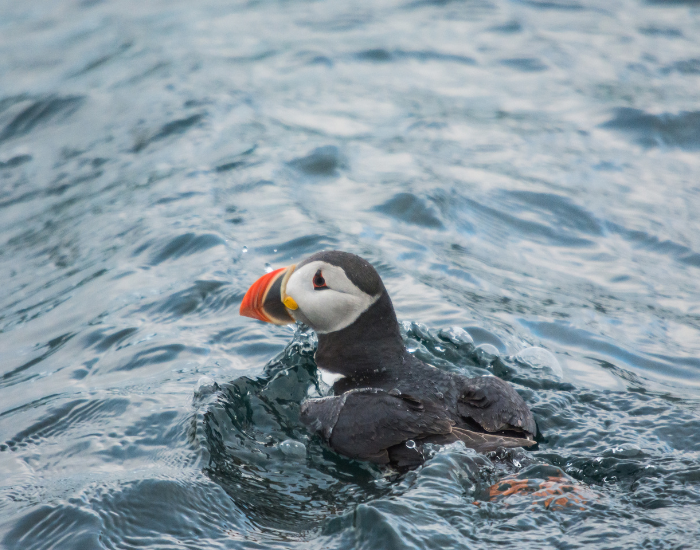
Puffins are pelagic birds. This means they spend the vast majority of their lives on the open water, far from land. During winter, the global population disperses across the Atlantic Ocean and North Pacific. Individual birds have been tracked from Southern California all the way to the coast of Norway.
They are remarkably hardy birds. A puffin can bob on the waves through North Atlantic storms that would sink most small vessels. Their dense, waterproof feathers and thick layer of fat insulate them against frigid ocean temperatures.
9. Puffins Fly Underwater
To stay airborne, puffins must flap their short wings up to 400 times per minute. In the air, this looks exhausting. Underwater, however, those same small wings become the perfect tool. Puffins “fly” through the water in exactly the same motion they use in the air. They dive with remarkable skill, using their wings for propulsion and their feet as rudders to direct their course.
Puffins are exceptional swimmers and divers, expertly navigating the ocean by using their wings to ‘fly’ underwater and their feet for steering. They can reach depths of 200 feet (60 metres) in search of fish, and in some cases, puffins can dive to depths of up to 250 feet. Puffins can hold their breath for up to a minute while diving, making them expert divers and swimmers.
Watching a tufted puffin chase a school of fish is a masterclass in fluid dynamics. The North Pacific species tend to dive deeper than their Atlantic cousins.
10. Puffin Colonies Are Loyal, Loud Communities
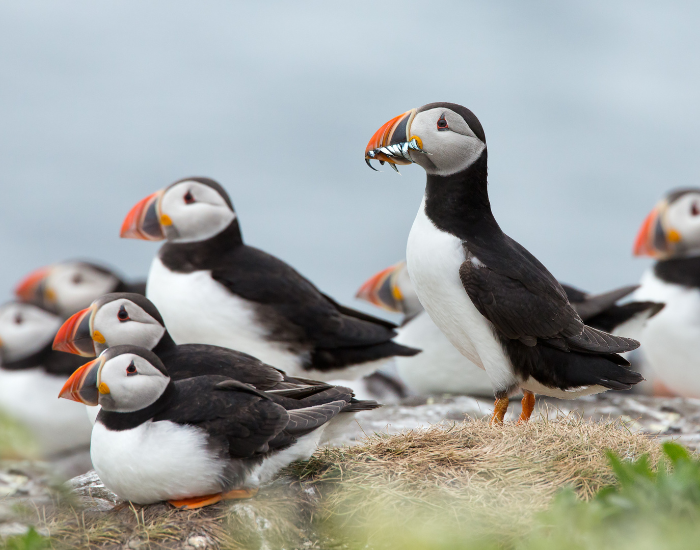
A puffin colony is a bustling city of sound and activity. Puffins perform a behaviour called “billing” — rubbing their beaks together to strengthen pair bonds. It looks like kissing. The sound of a large colony is a constant, low grunting that every wildlife service ranger recognises immediately.
Puffins show extraordinary fidelity to their breeding colonies. They return to the same single colony — and often the same individual burrow — year after year. Pairs that breed successfully together tend to reunite the following season.
11. They Live on Both Sides of the Northern Hemisphere
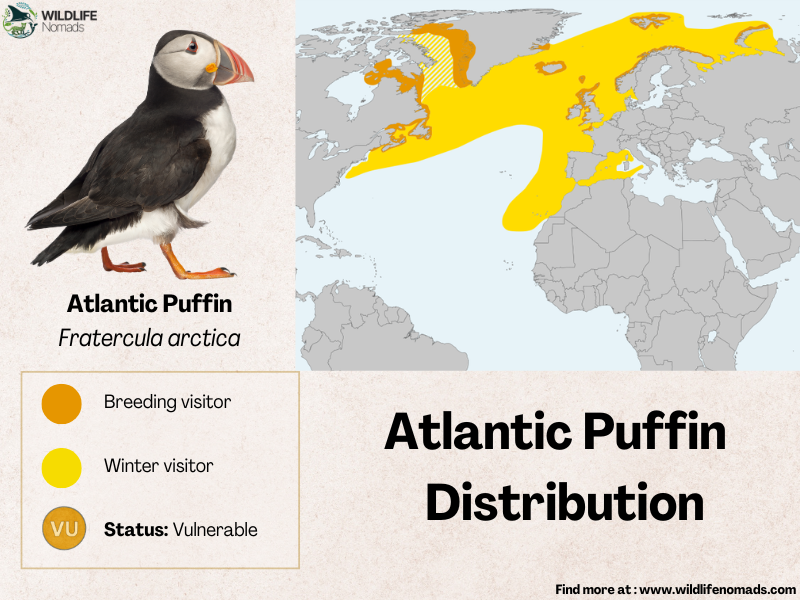
The Atlantic Puffin is the only puffin species in the Atlantic Ocean. The largest breeding colonies sit in Iceland (home to over 60% of the global population), the Faroe Islands, Norway, Scotland, and parts of eastern Canada. More than half of the world’s puffin population breeds on Icelandic coastlines each year, highlighting the importance of these sites for the species’ nesting and conservation. Smaller colonies exist in Ireland, Wales, and on islands off the coast of Maine in the United States.
In the Pacific, Tufted Puffins and Horned Puffins nest from the Aleutian Islands down through British Columbia and as far south as the Farallon Islands off California. The rhinoceros auklet nests across a broad range of North Pacific coastlines, from Japan to Canada.
12. Puffins Face Real Conservation Challenges
The Atlantic Puffin is currently listed as Vulnerable on the IUCN Red List. Climate change is shifting sand eel populations northward. As a result, parent puffins must fly longer distances to feed their chicks. In some nesting areas, pufflings are malnourished because the right fish simply are not close enough.
Even more fascinating (and concerning) is that these “small fledgers” grow into smaller adults. The study found that while their overall body size is decreasing, their proportional bill size is actually increasing—likely a mix of developmental stress and an evolutionary attempt to dissipate heat in a warming climate.
Offshore wind development and fishing nets add further pressure, but targeted work like Project Puffin shows we can fight back. By using decoys and social attraction, researchers have successfully restored nesting colonies on islands where they had previously vanished.
Puffin FAQ
Puffins live in the North Atlantic (Iceland, Scotland, Norway, Canada) and the North Pacific (Alaska, British Columbia, and as far south as California). Iceland hosts the world’s largest breeding colonies.
There are four species: the Atlantic Puffin, the Tufted Puffin, the Horned Puffin, and the Rhinoceros Auklet. The first three belong to the genus Fratercula, while the rhinoceros auklet sits in its own genus but is treated as a close relative.
Puffins primarily eat small fish — sand eels and herring especially. They use their serrated beak and specialised tongue to carry multiple fish back to the nest in a single trip.
A puffin is a bird — specifically an auk. It is not related to ducks or penguins. The auk family (Alcidae) includes puffins, murres, razorbills, and the extinct Great Auk.
This behaviour is called billing. It is a bonding ritual between a breeding pair. Puffins are monogamous and often return to the same partner and the same burrow each breeding season.
Why Puffins Never Get Old
If you ever get the chance to visit a puffin colony, take it. Standing on a clifftop in Iceland or North America, watching these birds battle the Atlantic wind, gives you a deep respect for the resilience of nature. They are small. They are remarkably tough.
You might also enjoy reading about other remarkable seabirds of Antarctica, types of auks, or the best bird watching destinations around the world.
Where to See puffins in the Wild?
Here is a list of 6 Puffin tours where you can see Puffins in the wild. As a biologist, I only recommend tours that follow strict ethical guidelines to ensure we don’t disturb wildlife. These are the three tours/ partners I trust most based on their conservation records:
This blog is reader-supported. When you buy experiences through links listed on this site, we may earn an affiliate commission.
References:
Anker-Nilssen, T., Kadin, M., & Hilde, C. H. (2024). Stay or go? Changing breeding conditions affect sexual difference in colony attendance strategies of Atlantic puffins Fratercula arctica. Ecology and Evolution, 14(7), e11681. https://doi.org/10.1002/ece3.11681
Corkhill, P. (1973). Food and Feeding Ecology of Puffins. Bird Study, 20(3), 207–220. https://doi.org/10.1080/00063657309476382
Dunning, J., Diamond, A. W., Christmas, S. E., Cole, E.-L., Holberton, R. L., & Jackson, H. J. (2019). Photoluminescence in the bill of the Atlantic Puffin Fratercula arctica. Bird Study, 65(4), 570–573. https://doi.org/10.1080/00063657.2018.1563771
Dunn, R. E., Wanless, S., Green, J. A., Harris, M. P., & Daunt, F. (2019). Dive times and depths of auks (Atlantic puffin, common guillemot and razorbill) from the Isle of May outside the seabird breeding season [Data set]. NERC Environmental Information Data Centre. https://doi.org/10.5285/6ab0ee70-96f8-41e6-a3e3-6f4c31fa5372
Fayet, A. L., Clucas, G. V., Anker-Nilssen, T., Syposz, M., & Hansen, E. S. (2021). Local prey shortages drive foraging costs and breeding success in a declining seabird, the Atlantic puffin. Journal of Animal Ecology, 90(5), 1152–1164. https://doi.org/10.1111/1365-2656.13442
Major, H. L., Rivers, J. E., Carvey, Q. B., & Diamond, A. W. (2024). The incredible shrinking puffin: Decreasing size and increasing proportional bill size of Atlantic puffins nesting at Machias Seal Island. PloS one, 19(1), e0295946. https://doi.org/10.1371/journal.pone.0295946