I was kayaking the glassy canals of the Gold Coast in Australia when a black shape shot under my hull. Seconds later, a cormorant surfaced beside me with a wriggling fish crosswise in its bill. It tipped its head back, gulped, and vanished again. I have chased wildlife across continents, and few birds have hooked me the way cormorants have. You probably see them too, perched on a piling, wings spread to the sun, watching the water like they own it.
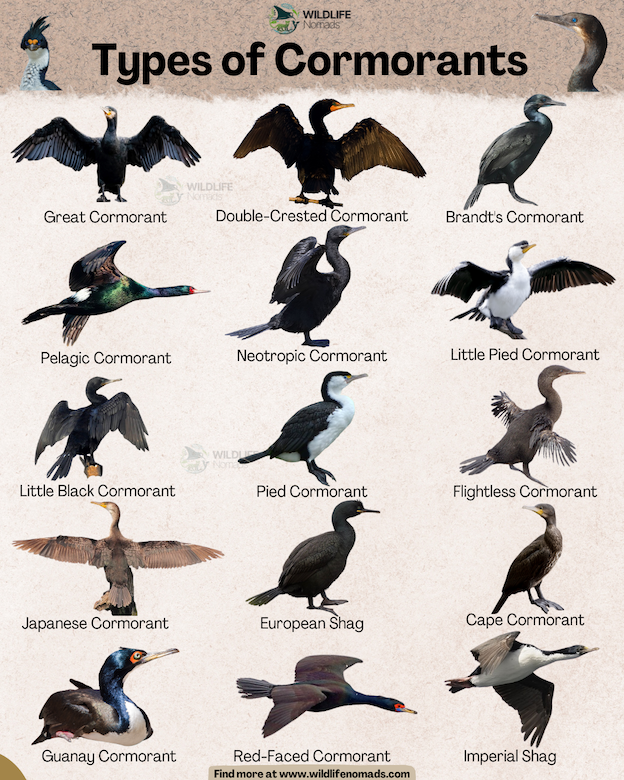
Most people notice the flashier seabirds first. Albatrosses steal the horizon, and gulls steal your chips. But cormorants are always there, working the shore beside the herons, patient and deadly efficient. This guide walks through 15 iconic cormorant species you are most likely to recognise, from mangroves in Mexico to boat tours across Southeast Asia. By the end, you will never look at that black bird on a rock the same way.
What Makes a Cormorant a Cormorant?
Cormorants belong to the family Phalacrocoracidae, which includes roughly 35 to 40 species depending on who is counting. They inhabit both freshwater and marine environments worldwide, from coastal lagoons to inland ponds and lakes. Another name you will hear is “shag,” used widely in Britain and the southern hemisphere.
These birds are built for the hunt. They are primarily piscivorous, consuming fish and occasionally crustaceans. Their hooked bills, each ending in a sharp hooked tip, grip slippery fish that would slide out of any straight beak. Powerful webbed feet drive them underwater like torpedoes, and their dark plumage is only partially waterproof, a strange trait I will explain below.
Come the breeding season, most species return to the same breeding range each year. There they defend a nest site, and the noisy work of nest building fills crowded colonies with their own nests.
Cormorants are exceptional underwater hunters, some diving to depths exceeding 40 meters. They are sociable, often flying in long lines low over the sea or congregating in large flocks on a favourite rock. The smallest species weigh under 1 kg, while the largest exceed 5 kg, an enormous range for one family.
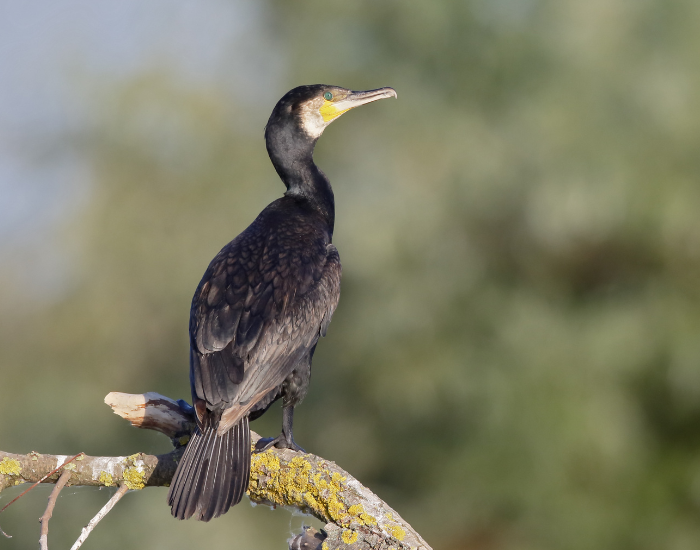
1. Great Cormorant (Phalacrocorax carbo)
The great cormorant is the one most of the world knows. It has the widest range of any species in the family, spanning Europe, Africa, Asia, Australia, and even North America’s Atlantic coast. On a grey morning in Ireland, I watched a row of them hang their wings out to dry on a harbour wall like black laundry.
Adults are mostly blackish with a bronze sheen and a patch of bare skin at the throat. In breeding plumage they flash white plumes on the head. They hunt in both salt water and freshwater, happily fishing an estuary one day and a lake the next.
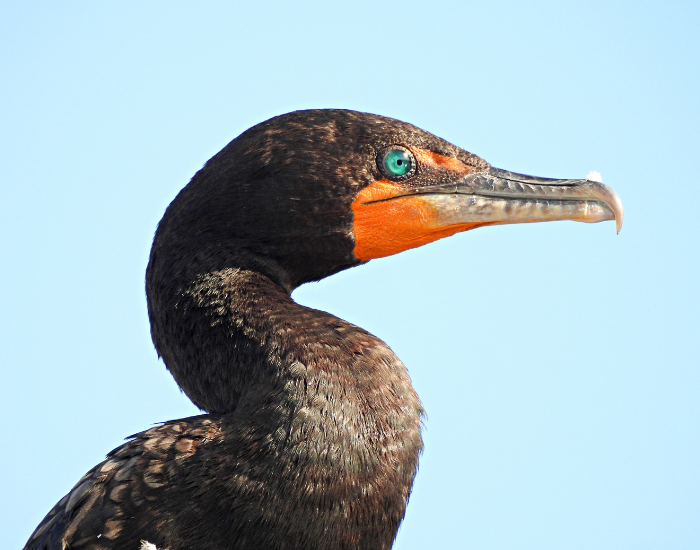
2. Double-Crested Cormorant (Nannopterum auritum)
If you live in North America near water, this is your bird. The double-crested cormorant is abundant across the continent, and its populations have rebounded dramatically since the DDT era. I once watched hundreds congregate on a Florida sandbar, wings out, drying feathers in the sun.
The name comes from two small crests that appear on the head during the breeding season. Look for orange throat skin and a slim, hooked bill. They nest in dense colonies and build bulky nests from sticks and debris.
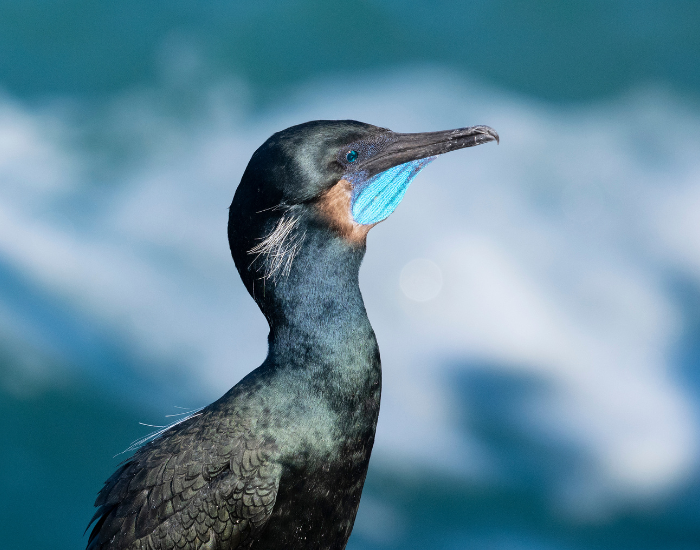
3. Brandt’s Cormorant (Urile penicillatus)
Brandt’s cormorant is the Pacific coast specialist, and it is a genuinely spectacular diver. These birds can dive over 200 feet deep (more than 60 metres) though they usually forage at depths over 36.5 metres and hold their breath for around 30 to 45 seconds, sometimes up to 90 seconds. That is elite performance for any seabird.
Adults are mostly blackish with striking blue eyes and a bright blue throat pouch that glows during courtship. Juveniles are brownish overall with buffy throat skin. They primarily eat fish such as herring and rockfish, and they also consume shrimp and crabs. Brandt’s cormorants often forage in large flocks, sometimes wheeling over a bait ball by the thousand.
They breed in dense colonies on rocky islands and cliffs, typically between March and August. Nests are made of seaweed, algae, and droppings, cemented into a low cup. A pair usually lays four eggs per clutch, and both parents care for the young after hatching. Breeding adults weigh between 1,400 and 2,700 grams, measure 70 to 79 cm in length, and have a wingspan of 108 cm (42.5 in).
4. Pelagic Cormorant (Urile pelagicus)
Despite the name, the pelagic cormorant sticks close to rocky shores, not the open ocean. It is the smallest cormorant on the North Pacific coast, slim and glossy with a greenish sheen. I have watched them tuck into impossibly narrow cliff ledges to build their nests.
In breeding plumage they show two crests and bold white flank patches. Their thin bill and delicate build make them look almost dainty next to a hulking Brandt’s, yet they dive confidently among kelp for small fish.
5. Neotropic Cormorant (Nannopterum brasilianum)
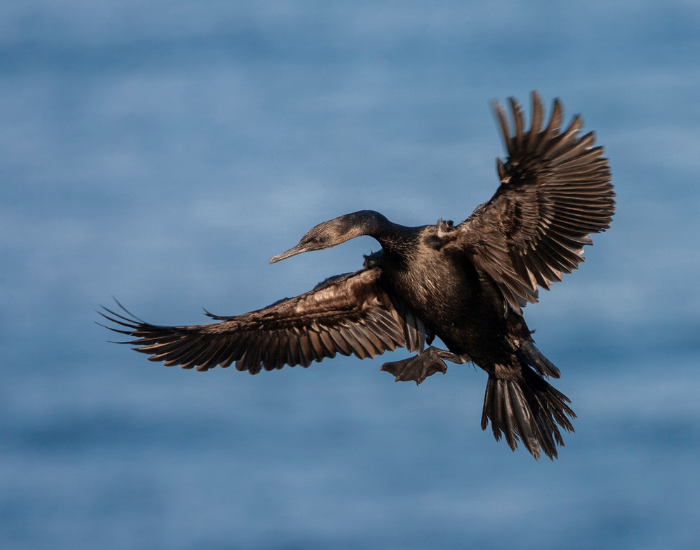
This is the cormorant I know best from Mexico. Kayaking through tangled mangroves near the coast, I would see neotropic cormorants perched low on the roots, drying their wings in dappled light. They range from the southern United States down through Central and South America.
They are smaller and longer-tailed than the double-crested, with a distinctive white border edging the throat pouch in breeding condition. Highly adaptable, they work coastal lagoons, rivers, and adjacent mainland wetlands with ease. I have seen them hunt cooperatively, herding small fish into the shallows.
6. Little Pied Cormorant (Microcarbo melanoleucos)
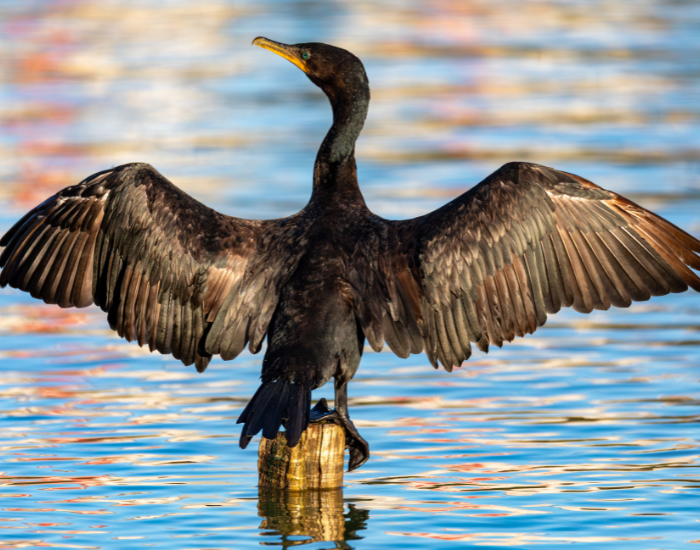
Back to those Gold Coast canals… the little pied cormorant was my constant companion there. Small, black above and clean white below, it is one of Australia’s most familiar waterbirds. It shows up on suburban ponds as readily as on wild estuaries.
Despite its size, it is a confident hunter of small fish and, notably, crustaceans. Crabs and yabbies feature heavily in its diet. Its stubby yellow bill makes it an easy favourite for beginner birders.
7. Little Black Cormorant (Phalacrocorax sulcirostris)
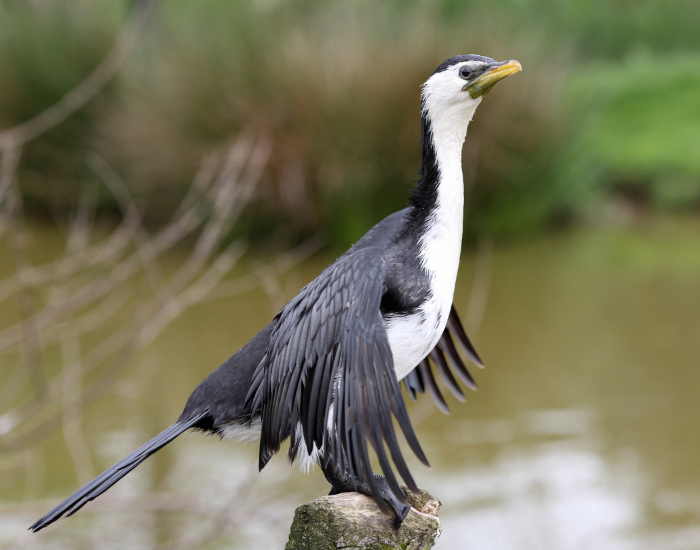
Often sharing the same water as its pied cousin, the little black cormorant is slender, all-dark, and gregarious. In Australia and across Southeast Asia, I have watched flocks work together, driving their prey into a churning mass at the surface, one of the most coordinated hunts in the bird world.
They congregate in large flocks and breed in noisy colonies, frequently alongside other cormorants and even herons. On boat tours through Indonesian waters, these were the birds streaming past in long, low lines at dawn.
8. Pied Cormorant (Phalacrocorax varius)
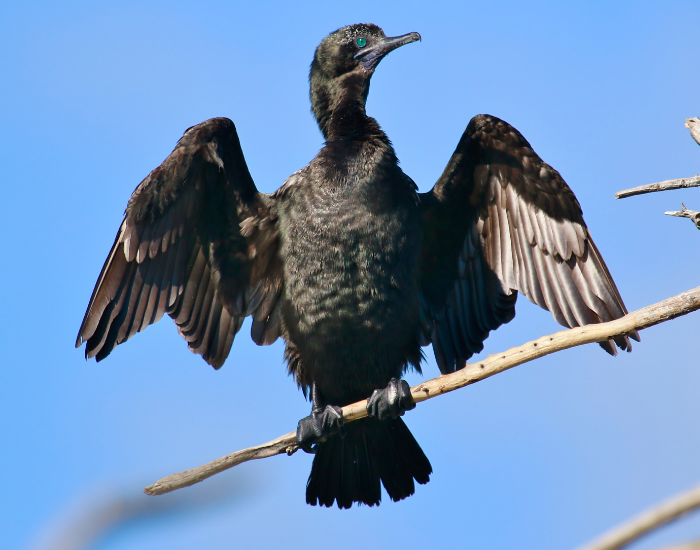
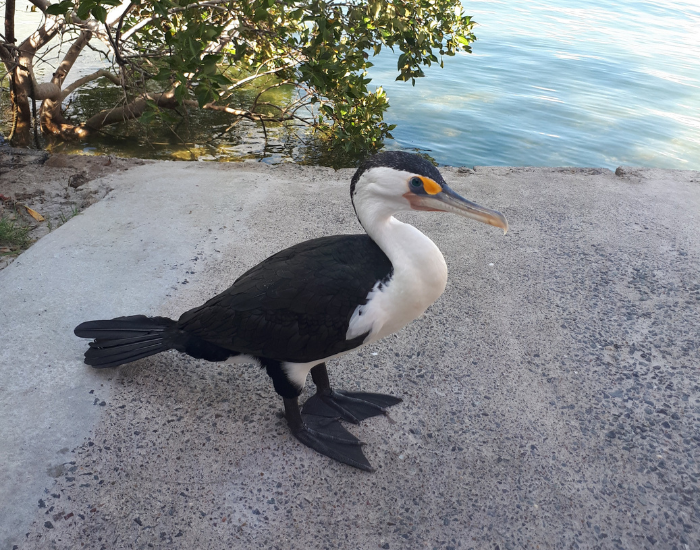
This is one of my favourites. I spotted a few on a roadtrip along the australian East Coast from Cairns to Brisbane. The larger Australian pied cormorant is a handsome coastal bird with a yellow and orange face patch. It patrols large bays, estuaries, and sheltered coasts, often perching on jetties beside wary fishers.
They dive for fish in shallow, protected water and rest in loose groups on sandbars. Their bulky stick nests sit in colonies on islands and mangroves, sometimes shared with other seabirds. Both parents share the work of raising chicks.
9. Flightless Cormorant (Nannopterum harrisi)
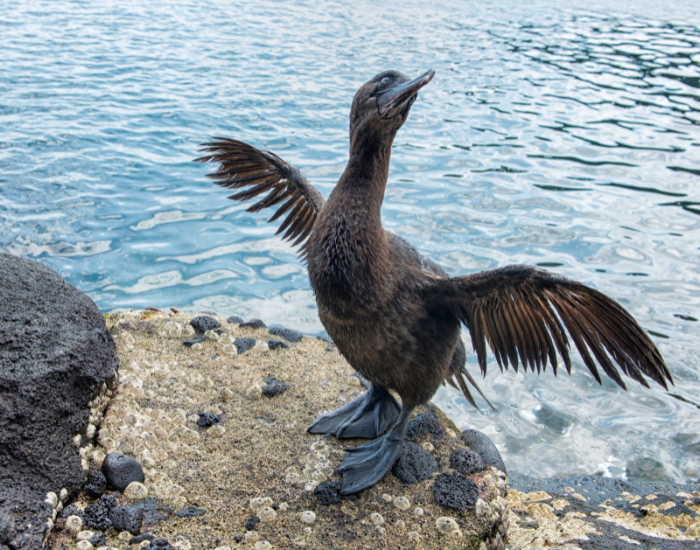
Here is the family’s oddball, and another I have spottend in the wild. The flightless cormorant of the Galápagos is the only cormorant that cannot fly, having traded flight for supreme diving power. Its wings are stubby, almost useless in the air but perfect for stability underwater.
With no land predators historically, evolution let its wings shrink. It forages close to shore among volcanic rocks, hunting fish and octopus with those powerful webbed feet. BirdLife International lists it as Vulnerable, with a small range restricted to two islands.
10. Japanese Cormorant (Phalacrocorax capillatus)
Along the rocky coasts of Japan and Korea, the Japanese cormorant fishes the cold northern seas. It is closely related to the great cormorant but shows more white on the face during breeding. For over a thousand years, fishers on Japan’s rivers have used trained cormorants to catch ayu fish, a practice called ukai. That deep human connection is part of why this species fascinates me. In the wild, it nests on rocky cliffs and dives for small fish.
11. European Shag (Gulosus aristotelis)
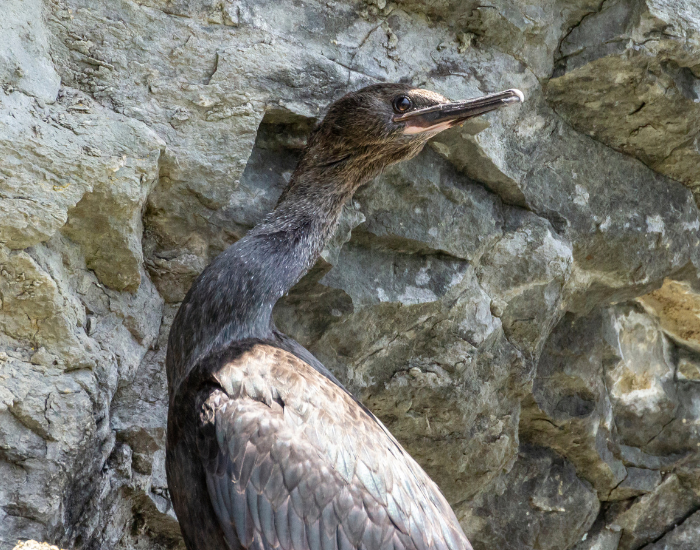
The European shag is the great cormorant’s sleeker, more marine cousin. Glossy green-black with a jaunty forward crest in breeding season, it clings to rocky Atlantic and Mediterranean coasts, and I have watched them thread between waves off the Scottish cliffs.
Shags rarely venture inland, preferring salt water and deep coastal channels. They are superb divers, using powerful webbed feet to pursue small fish near the seabed. Their bulky nests cling to ledges and sea caves.
12. Cape Cormorant (Phalacrocorax capensis)
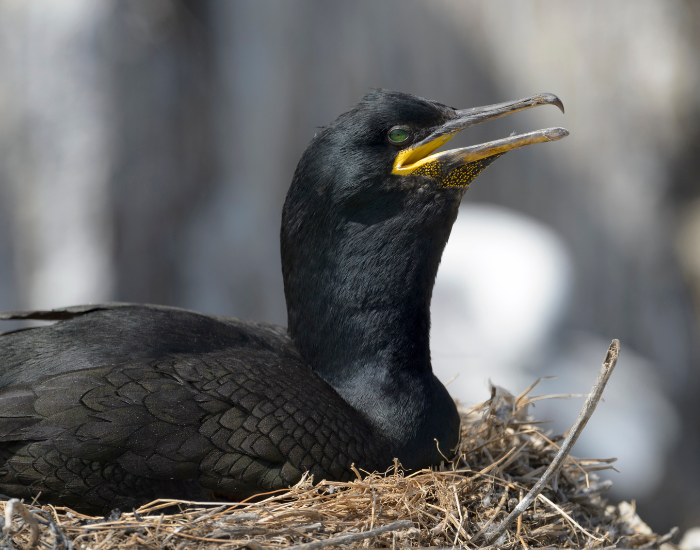
Off the coast of South Africa and Namibia, the Cape cormorant gathers in some of the largest flocks I have ever seen. Tens of thousands can stream along the shore in ribbons, following the sardine runs, one of the great wildlife spectacles of the Atlantic.
They are compact, glossy black birds with a small yellow-orange throat patch. They breed in dense colonies on islands and feed almost entirely on shoaling fish. Their guano once supported a harvesting industry along that coast.
13. Guanay Cormorant (Leucocarbo bougainvillii)
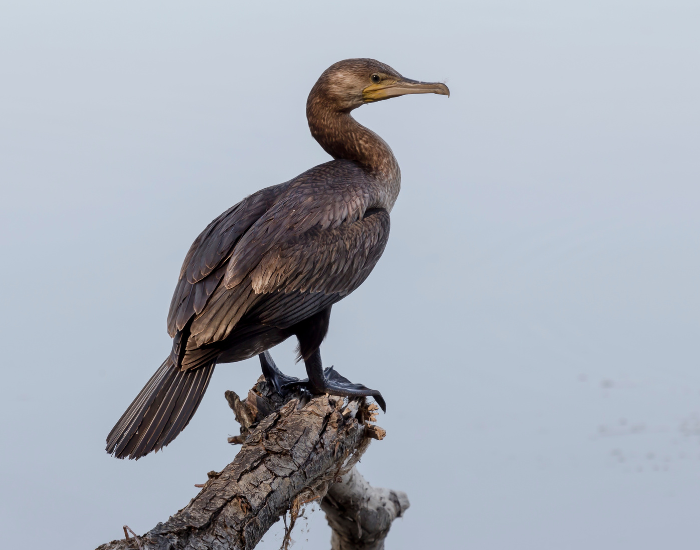
The guanay cormorant of the Humboldt Current is a heavyweight of the seabird economy. Its colonies once numbered in the millions along Peru and Chile, and their droppings built the famous guano islands that fuelled a fertiliser boom.
Handsome in black and white with a red face, the guanay feeds on anchovy schools driven by cold, nutrient-rich upwelling. When El Niño warms those waters, the fish vanish and colonies crash.
14. Red-Faced Cormorant (Urile urile)
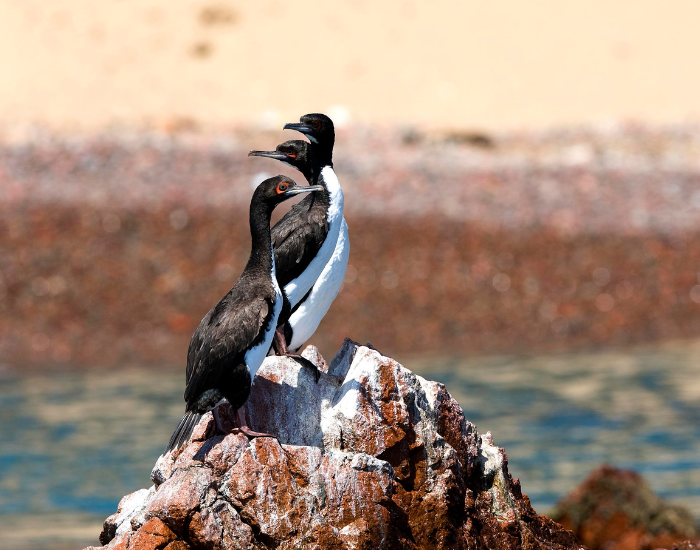
The red-faced cormorant is a bird of the far north, ranging from Alaska’s Aleutians across the Bering Sea. Its bright red facial skin stands out against glossy, iridescent plumage, and few birders ever see it.
It nests on steep sea cliffs and forages in cold, productive waters for small fish. Like its relatives, it prefers rocky islands and remote shores, and it remains one of the least-studied members of the family.
15. Imperial Shag (Leucocarbo atriceps)
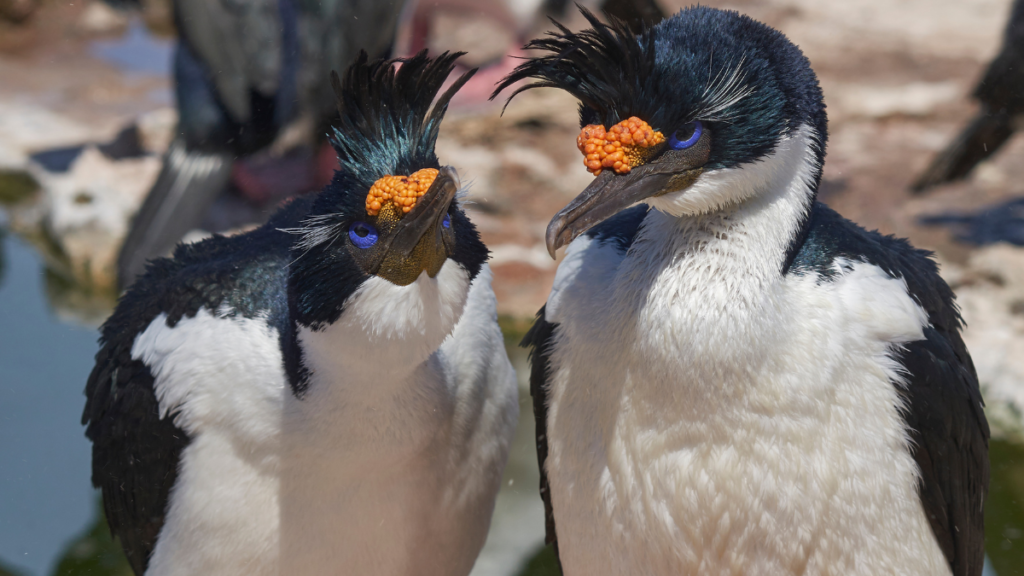
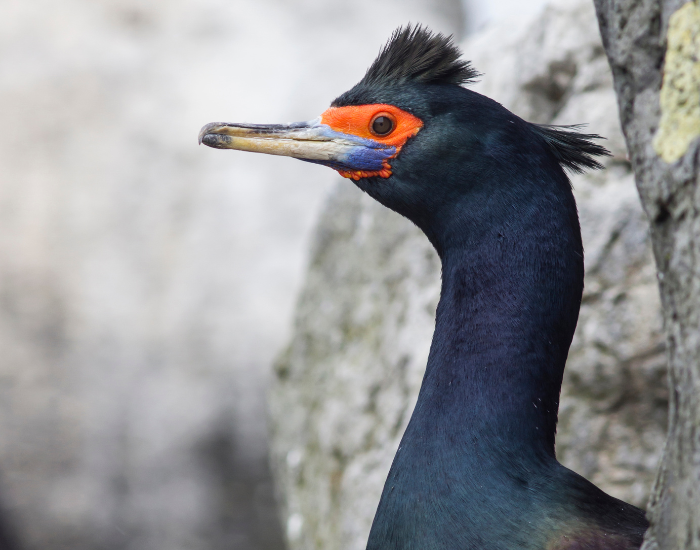
To close, my favourite from the deep south: the imperial shag, or blue-eyed shag, of Patagonia and the sub-Antarctic. Its crisp black-and-white plumage, blue eye-ring, and orange facial caruncles make it look almost formal. Cruising the Beagle Channel, I saw them packed onto guano-white islets by the hundred.
They breed in dense colonies and forage in cold, rich seas for fish and invertebrates. Both parents guard the nest and feed the growing chicks where few other birds survive.
Frequently Asked Questions
The most common alternative name is “shag,” used especially in Britain, Australia, and New Zealand. Older regional names include “sea crow” and “water crow.” The scientific family name is Phalacrocoracidae. In practice, “shag” often refers to the more marine, crested species, though the line is blurry.
Cormorants live on every continent except Antarctica’s interior, in both freshwater and marine environments. You will find them on the Pacific coast, the Mexican coast, coastal lagoons, estuaries, large bays, and inland lakes. They range from tropical mangroves to the icy sub-Antarctic. Wherever there is water and fish, a cormorant is usually nearby.
Cormorants have a characteristic wing-drying behaviour after diving because their feathers are less waterproofed than those of most water birds. That partial wettability reduces buoyancy and helps them dive deep, but it leaves them with wet feathers. Spreading their wings to the sun and wind dries those wet feathers and restores insulation before the next hunt.
The Takeaway
Cormorants reward anyone willing to slow down and watch. Behind that plain black silhouette sits a globe-spanning family of master divers, from the flightless oddball of the Galápagos to the million-strong guanay colonies of Peru. Once you learn to tell them apart, every waterfront becomes a small safari.
So next time you pass a bird drying its wings on a piling, stop and look. Is it a little pied on a suburban pond, or a red-faced rarity on a northern cliff? Tell me which cormorants you have spotted in the comments, and if you want more diving birds, wander over to my guides on seabirds, herons, and the ever-graceful albatross. The grey heron and the many types of seagulls make fine company for a day by the water.
Can You Name That Cormorant? 🐦
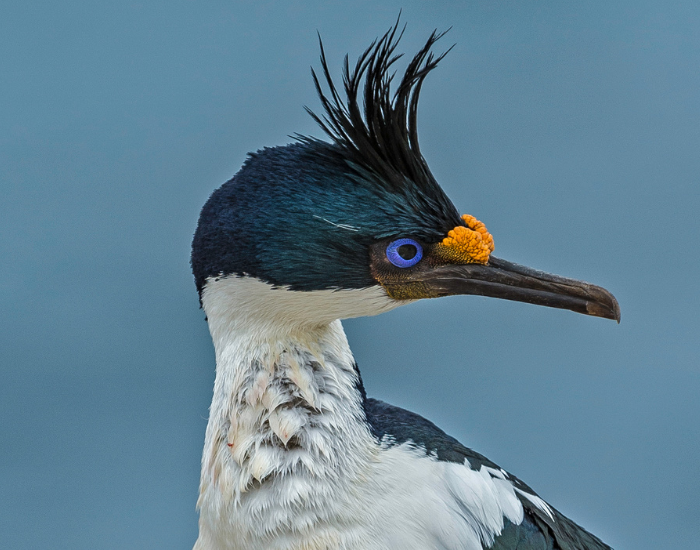
A 15-photo identification challenge — the wrong answers are deliberately tricky look-alikes from a similar group. Go back and change any answer before you score.
Which cormorant is this?
References:
Cook, T. R., Kato, A., Tanaka, H., Ropert-Coudert, Y., & Bost, C.-A. (2010). Buoyancy under control: Underwater locomotor performance in a deep diving seabird suggests respiratory strategies for reducing foraging effort. PLoS ONE, 5(3), e9839. https://doi.org/10.1371/journal.pone.0009839
Grémillet, D., Chauvin, C., Wilson, R. P., Le Maho, Y., & Wanless, S. (2005). Unusual feather structure allows partial plumage wettability in diving great cormorants Phalacrocorax carbo. Journal of Avian Biology, 36(1), 57–63. https://doi.org/10.1111/j.0908-8857.2005.03331.x
Grémillet, D., Tuschy, I., & Kierspel, M. (1998). Body temperature and insulation in diving great cormorants and European shags. Functional Ecology, 12(3), 386–394. https://doi.org/10.1046/j.1365-2435.1998.00199.x
Kennedy, M., & Spencer, H. G. (2014). Classification of the cormorants of the world. Molecular Phylogenetics and Evolution, 79, 249–257. https://doi.org/10.1016/j.ympev.2014.06.020
Ribak, G., Weihs, D., & Arad, Z. (2005). Water retention in the plumage of diving great cormorants Phalacrocorax carbo sinensis. Journal of Avian Biology, 36(2), 89–95. https://doi.org/10.1111/j.0908-8857.2005.03499.x
White, C. R., Butler, P. J., Grémillet, D., & Martin, G. R. (2008). Behavioural strategies of cormorants (Phalacrocoracidae) foraging under challenging light conditions. Ibis, 150(s1), 231–239. https://doi.org/10.1111/j.1474-919X.2008.00837.x
BirdLife International. (2024). IUCN Red List assessments for Phalacrocoracidae. https://www.iucnredlist.org