

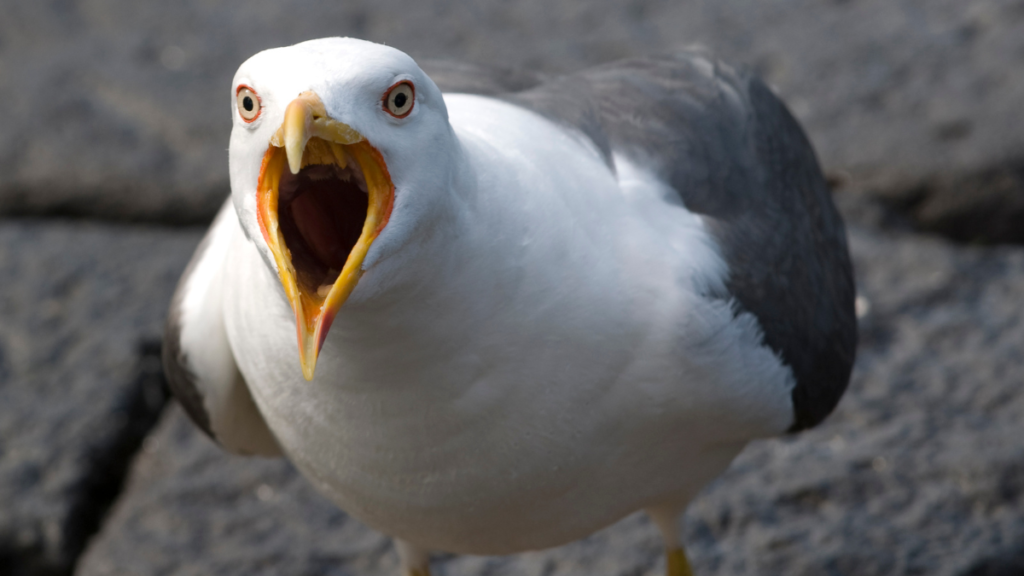
I am writing this from Shoreham-by-Sea, on the south coast of England. Yesterday I saw the biggest seagull of my life. It stood on a harbour post like it owned the town. At lunch, the restaurant had hand-painted signs warning that the local gulls steal food straight off your plate. Our dogs earned their keep as bodyguards.
That giant got me thinking. Are these the same seagulls I photograph in Mexico, or the ones dive-bombing chips in Australia? The answer is fascinating. Seagulls are not one bird but a whole family of species, and telling them apart is a skill worth having.
So here is a field guide to 15 types of seagulls you will actually remember. For each one I cover the key features, where the birds live, and the odd behaviour I have watched firsthand. By the end, you will identify gulls with new confidence. Let’s meet the family.
First, “Seagull” Isn’t Really a Word
Scientists never say seagull. We say gull, because most gulls belong to the family Laridae, and plenty of them rarely touch the sea. Gulls live inland around lakes, rivers, farmland, and city rooftops, not only along the coast.
Gulls breed on every continent, including Antarctica. Some nest in marine habitats, others in freshwater marshes, and some on dry terrestrial ground far from any wave. Many species prefer remote coastal islands, safe from foxes and people.
Gulls also drink seawater, which should poison them but doesn’t. Specialised supraorbital salt glands above the eyes filter excess salt from the blood. The concentrated brine drips out through grooves in the bill. It clears the salt in about three hours, letting these birds thrive where fresh water is scarce.
One more thing before you shoo one away. In the US and Canada, gulls are protected under the Migratory Bird Treaty Act of 1918, so harming them or their nests is illegal. Removing food sources deters gulls far better anyway.
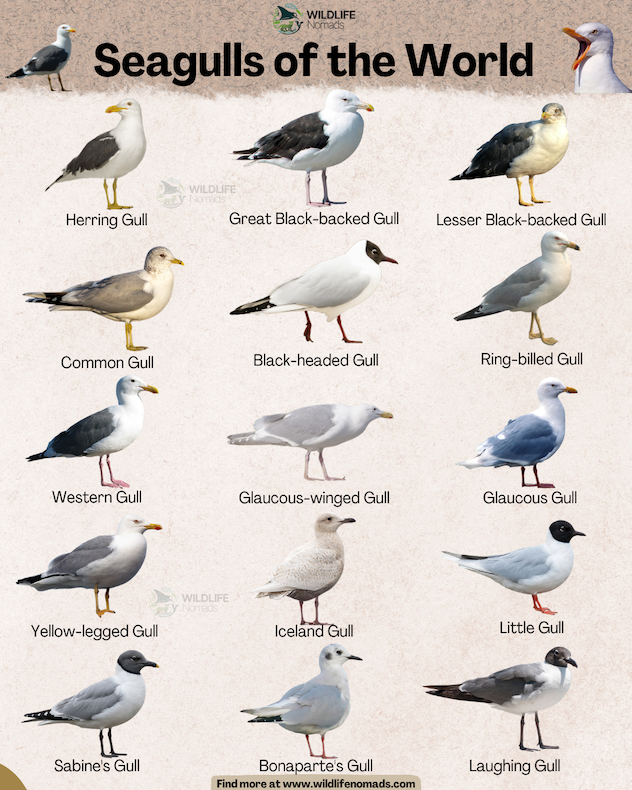
1. Herring Gull (Larus argentatus)
When someone pictures a “seagull,” they are usually picturing a herring gull. This is the classic large gull of the North Atlantic, with a white head and body, gray wings, pink legs, and a yellow bill marked with a single red spot. Chicks peck that red spot to beg for food, a trigger the ethologist Niko Tinbergen made famous.
Herring gulls are the ultimate opportunistic feeders. They eat fish, crabs, and mollusks, but also chips, sandwiches, and anything a distracted tourist leaves unguarded. Many even use tools of a sort, dropping shellfish onto rocks and roads to crack them open. In the UK plenty have swapped cliffs for rooftops, where pairs often mate for life and share the parenting. A big herring gull can weigh up to 1.5 kg and measure around 65 cm, so that food theft carries real weight.
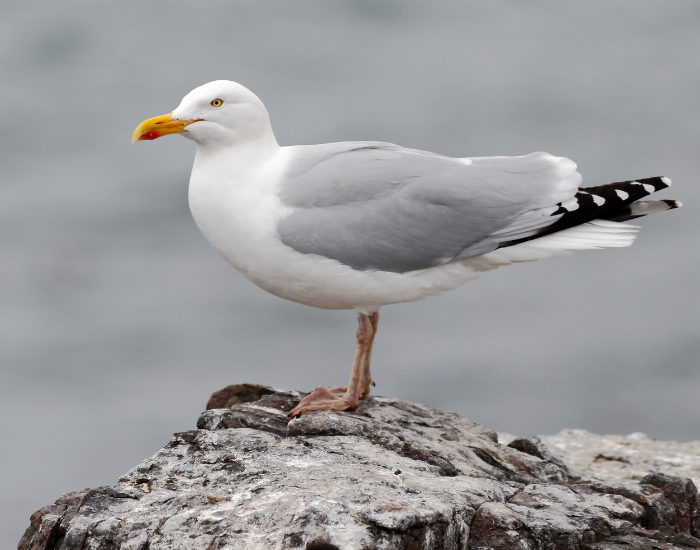
2. Great Black-backed Gull (Larus marinus)
This is almost certainly my Shoreham giant. The great black backed gull is the world’s largest gull, a genuine heavyweight with a slate-black back, pink legs, and a heavy yellow bill. Adults span up to 1.7 metres across the wings and can top 2 kg.
Do not mistake this bird for a scavenger alone. Larus marinus is a formidable predator that swallows puffins whole and hunts the chicks of other seabirds. I once watched one patrol a Cornish colony like a shark cruising a reef. Where it landed, panic followed.
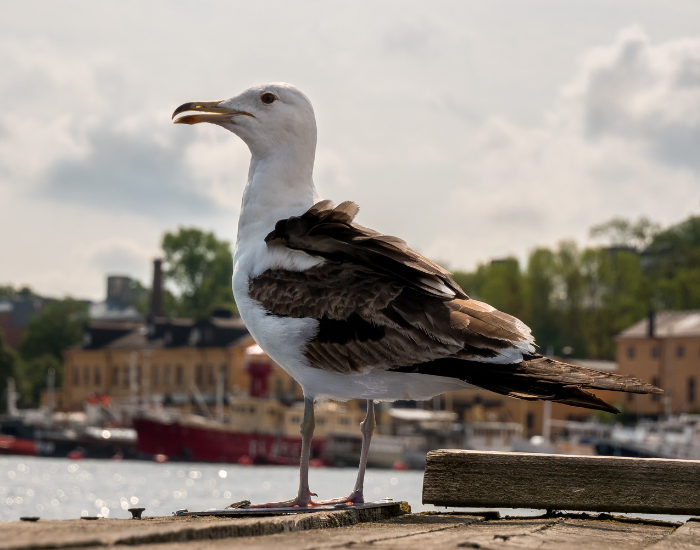
3. Lesser Black-backed Gull (Larus fuscus)
Slightly smaller and slimmer than its great cousin, the lesser black backed gull wears a dark slate-gray back rather than true black. The clean giveaway is the legs: bright yellow, not pink. Learn that single feature and you separate Larus fuscus from most large gulls instantly.
These birds are long-distance travellers. Many breed in northern Europe and winter as far south as West Africa. In recent decades they have become confident urban nesters too, raising gull chicks on the same warehouse roofs as herring gulls, sometimes side by side.
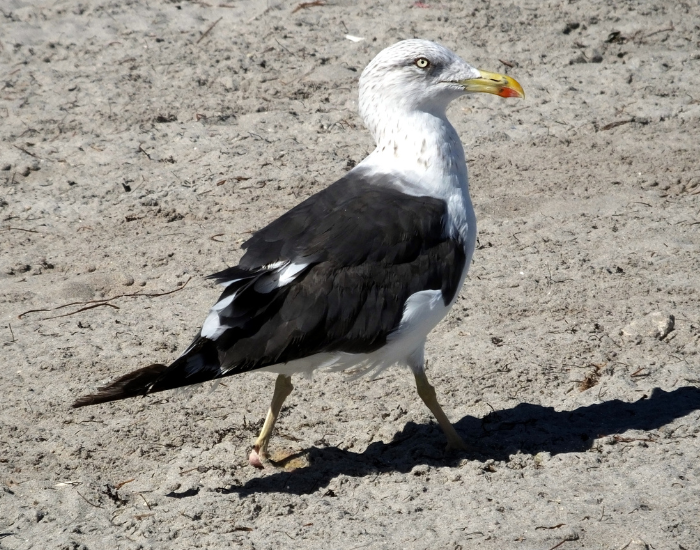
4. Common Gull (Larus canus)
The common gull looks like a herring gull that shrank in the wash. It is a medium, gentle-faced bird with greenish-yellow legs, a thin unmarked yellow bill, and soft dark eyes that give it a kindly expression. Despite the name, common gull species are not always the most numerous bird on any given beach.
This is a gull of grassland as much as shoreline. I regularly find them on playing fields and farmland, probing for worms and insects far from salt water. In winter their numbers swell across northern Europe as continental birds move west.
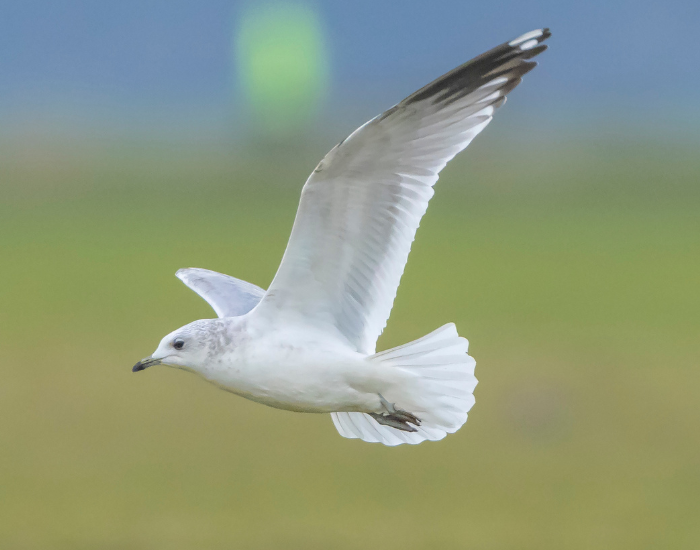
5. Black-headed Gull (Chroicocephalus ridibundus)
Here is a naming lesson. The black headed gull does not have a black head. In breeding season it sports a rich dark brown, chocolate-coloured hood, plus a slender red bill and red legs. Outside the breeding season the hood vanishes, leaving just a dark smudge behind the eye.
These small gulls are noisy, sociable, and everywhere across Europe and Asia. They nest in dense, squabbling breeding colonies in marshes and lakes. Watch one foot-paddle on a wet lawn: the drumming feet mimic rain, tricking earthworms into surfacing. Tinbergen studied that clever con decades ago.
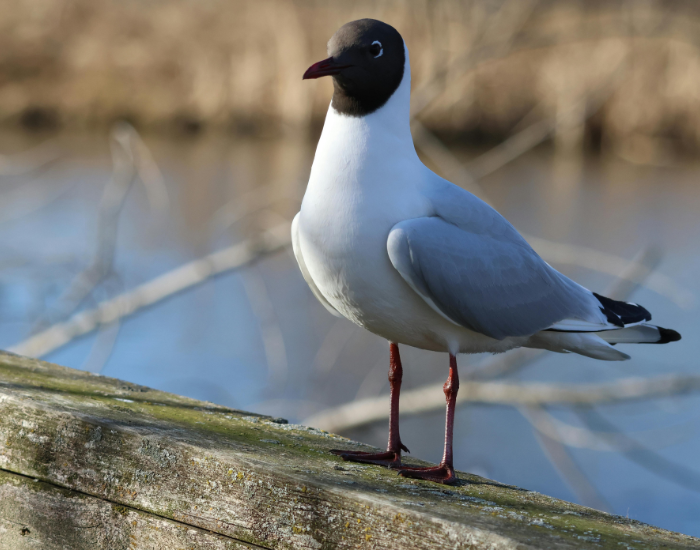
6. Ring-billed Gull (Larus delawarensis)
If you have eaten fast food anywhere in North America, you have met the ring billed gull. This medium gull is named for the crisp black ring circling its yellow bill. Adults show pale gray wings, yellow legs, and a neat white body.
This is arguably the most common gull across much of the continent, and it loves people. Parking lots, dumpsters, and picnic tables are its natural habitat now. Human refuse is a significant food source, and ring-bills exploit it brilliantly, hesitating only briefly before snatching a fry.
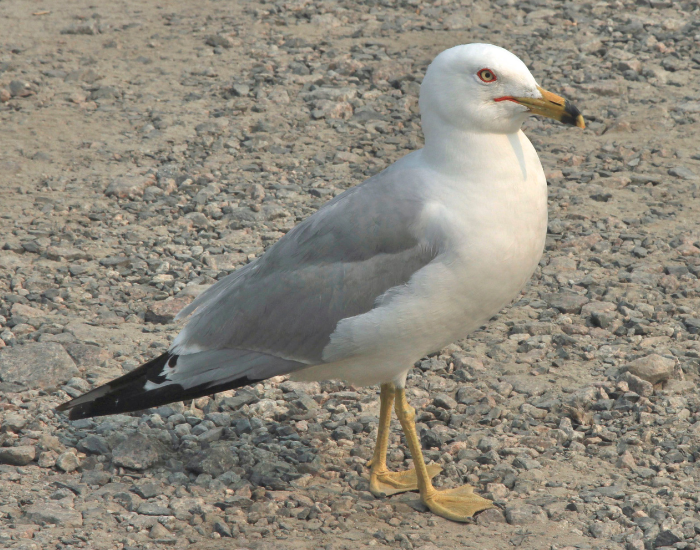
7. Western Gull (Larus occidentalis)
Travel the Pacific coast of the United States and the big dark-backed bird overhead is the western gull. It has a thick yellow bill, pink legs, and a dark slate mantle. This is a strictly coastal species, rarely straying far inland from the west coast.
Western gulls nest on rocky offshore islands in tight breeding colonies. They are aggressive nest defenders and skilled kleptoparasites, meaning they steal food from other birds and even sea lions. Off California I have watched them shadow fishing boats for hours, waiting for scraps.
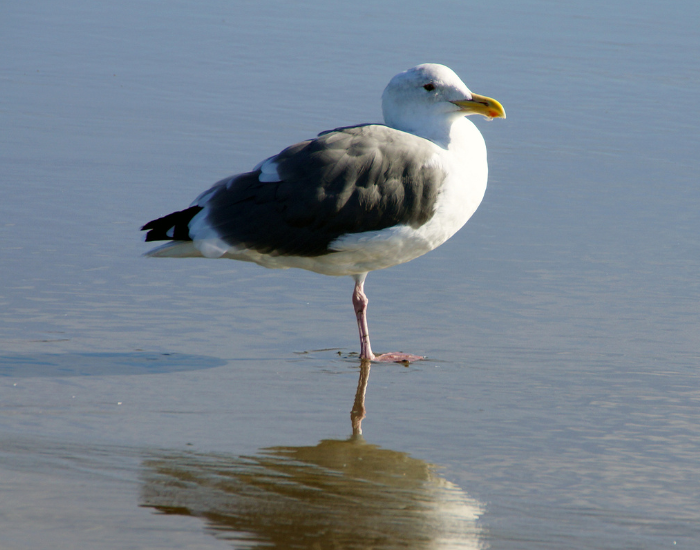
8. Glaucous-winged Gull (Larus glaucescens)
The Pacific Northwest belongs to the glaucous winged gull. Unlike most large gulls, glaucous-winged gulls show gray wingtips instead of black ones, a subtle but reliable key feature. Pair that with pink legs and a heavy build and you have your bird.
These gulls hybridise freely with western and herring gulls, which delights and torments birdwatchers. The resulting mixed offspring blur every field mark. Along the Seattle and Vancouver waterfront, “pure” glaucous-winged gulls can be surprisingly hard to pin down.
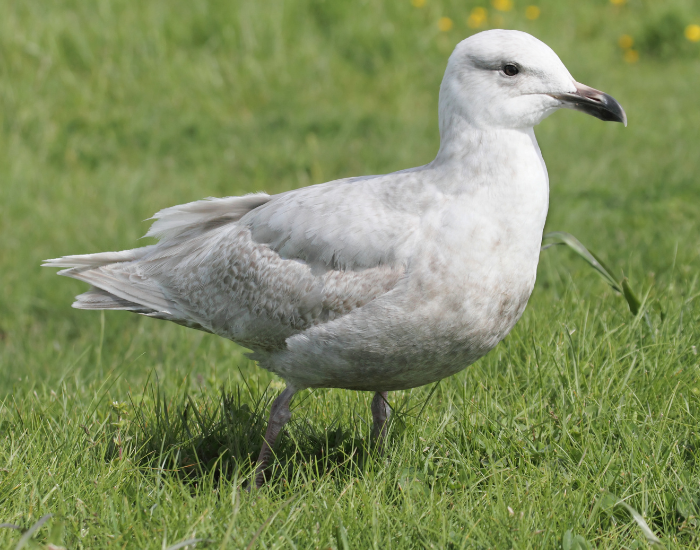
9. Glaucous Gull (Larus hyperboreus)
The glaucous gull is a pale Arctic giant, one of the few gulls that rivals the great black-backed in size. Adults look frosted and clean, with a white body, very pale gray wings, and no black in the wingtips at all. In winter, dark streaking flecks the head.
This is a true bird of the high north, breeding on Arctic cliffs and tundra. Down south it becomes a prized winter visitor, and I always scan gull flocks for that ghostly pale shape. It preys on other seabirds and their eggs without hesitation.
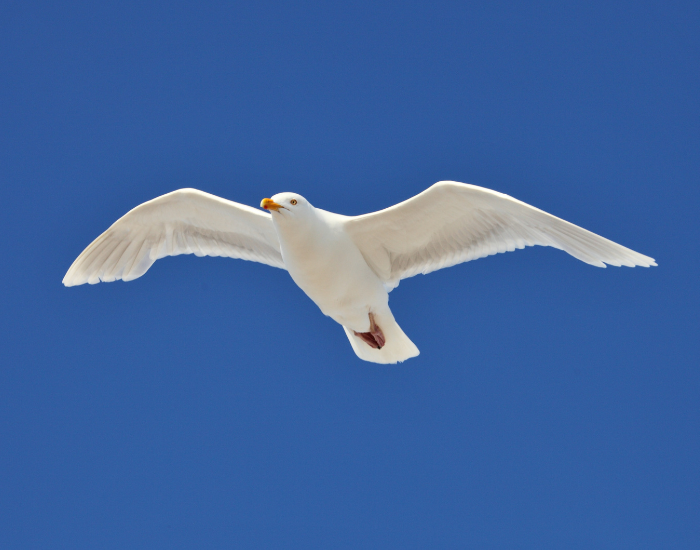
10. Yellow-legged Gull (Larus michahellis)
Around the Mediterranean and Iberian coast, the yellow legged gull replaces the herring gull. It looks similar but stands taller and cleaner, with a darker gray back, bright yellow legs, and a fierce staring eye. Long treated as a herring gull race, it is now its own species.
This bird tells a powerful conservation story. On Berlenga Island off Portugal, the population exploded from 2,600 to 44,698 birds as open rubbish dumps fed them. When managers closed the dumps and culled nests, numbers fell. Eliminating food sources really can deter gulls.
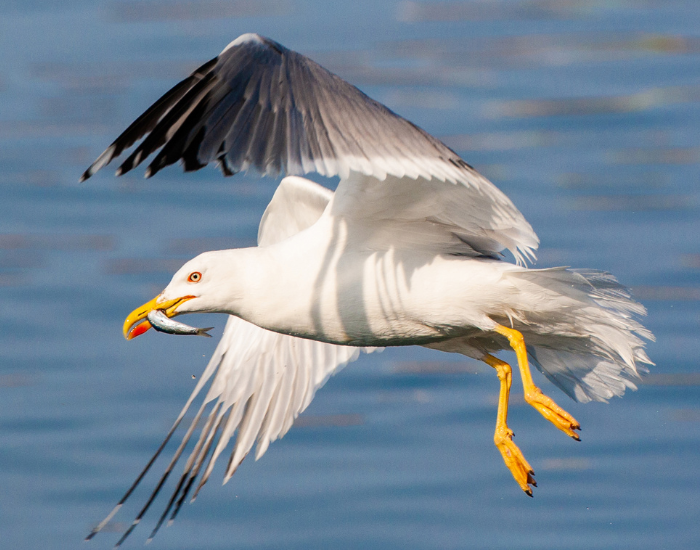
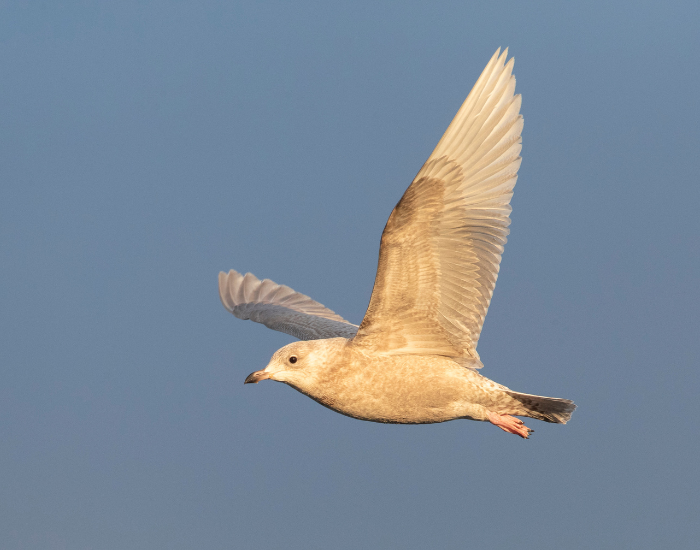
11. Iceland Gull (Larus glaucoides)
The Iceland gull carries the most misleading name in this guide. It does not breed in Iceland at all. It nests in Greenland and Arctic Canada, then winters around Iceland and northwest Europe, which is how it earned the label.
This is a pale, delicate-looking gull, smaller and rounder-headed than the glaucous, with white wingtips and a soft expression. Every winter, birders comb harbours hoping to pick one from among the herring gulls. Finding my first felt like spotting a pale ghost in a gray crowd.
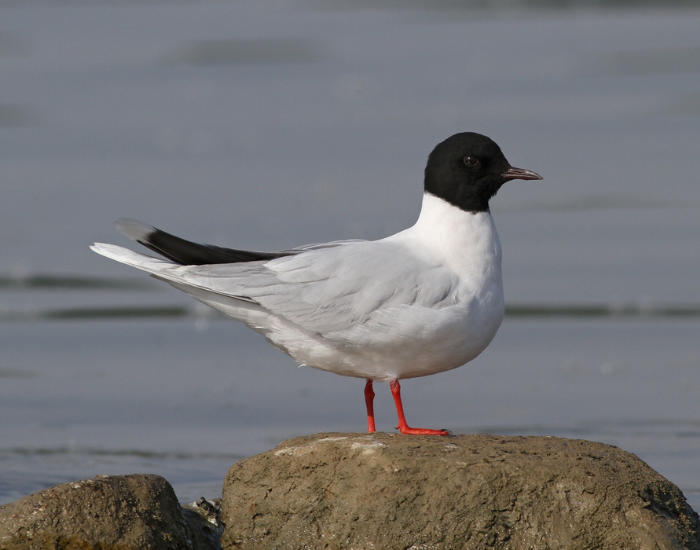
12. Little Gull (Hydrocoloeus minutus)
Meet the smallest gull on Earth. The little gull weighs only around 120 grams and measures roughly 28 cm, delicate enough to fit in your hand. Breeding adults wear a full black cap, dusky underwings, and a buoyant, almost tern-like flight.
These small gulls breed on freshwater lakes and marshes across the Palearctic, with a few colonies in North America. They feed by dipping gracefully to the water’s surface for insects and small fish. Watching a flock feed looks less like gulls and more like drifting butterflies.
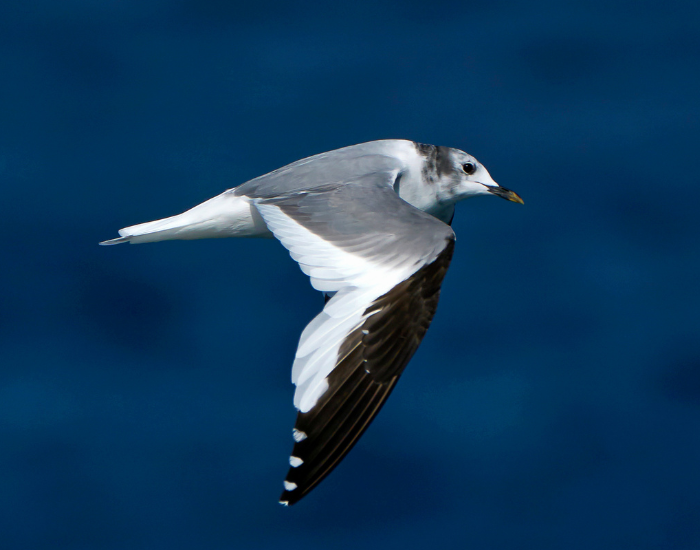
13. Sabine’s Gull (Xema sabini)
If you want a gull that breaks every rule, choose Sabine’s gull. It has a forked tail, unlike almost any other gull, plus a striking three-part wing pattern of gray, black, and white. In breeding plumage it wears a clean slate-gray hood ringed by a thin black collar.
This bird nests on Arctic tundra, then performs an epic migration to winter at sea off western South America and southern Africa. I have only seen a handful, always far offshore. Each one flew with the light, flickering grace of a tern rather than a gull.
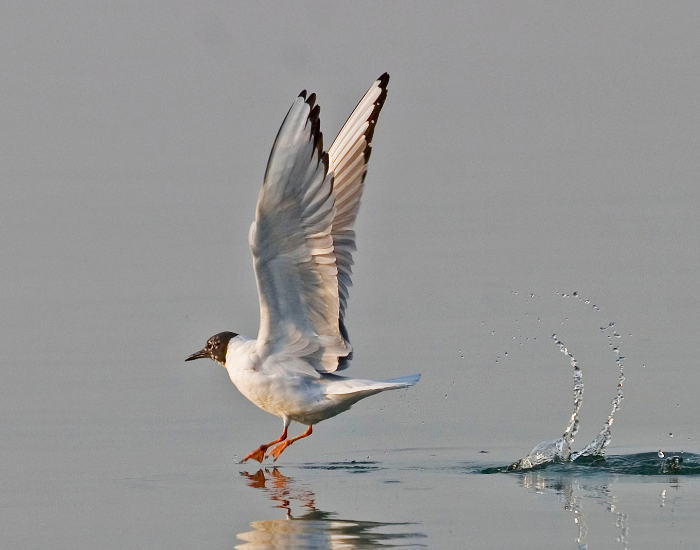
14. Bonaparte’s Gull (Chroicocephalus philadelphia)
Bonaparte’s gull is a dainty North American beauty, named for a nephew of Napoleon, not the emperor himself. Breeding adults show a full black hood, a thin black bill, and orange-red legs. It is one of the smallest and most elegant gulls on the continent.
Here is its party trick: unlike almost every other gull, it nests in conifer trees rather than on the ground. It breeds across the boreal forest of Canada and Alaska. In migration, flocks gather on lakes and bays, twisting through the air like oversized terns.
15. Laughing Gull (Leucophaeus atricilla)
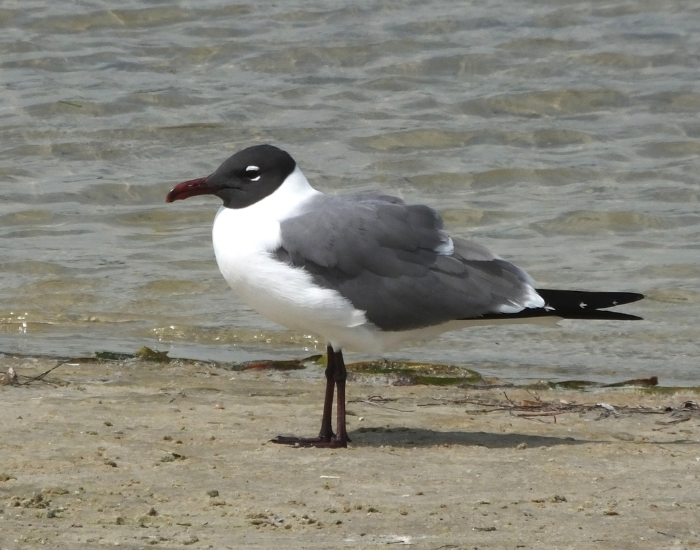
The laughing gull earns its name honestly. Its call is a rolling, cackling laugh that carries across every warm American beach it haunts. In summer it wears a crisp black hood, a drooping dark-red bill, and dark gray wings that fade to black wingtips.
This is the gull of the Gulf Coast, the Caribbean, and the US east coast in summer. It is bold, curious, and a shameless beach thief. I have watched one hover beside a boardwalk vendor, timing its raid on a hot dog with almost military precision.
How to Identify Gulls Without Losing Your Mind
Gulls are hard because they change. A single bird can take up to four years to reach full adult plumage, passing through mottled dark brown phases along the way. Juvenile gulls look nothing like their parents, which fools even seasoned birders.
So focus on three stable clues. Check leg colour first: pink, yellow, or red. Then read the bill for rings, red spots, or dark tips. Finally, note the wingtip pattern, since black, gray, or white tips separate many similar large gulls. Master those three and you will identify gulls faster than the crowd.
Frequently Asked Questions
Terns are the classic gull impostors. They belong to the same broad group but are slimmer, with pointed wings, forked tails, and daggerlike bills. Other seabirds like fulmars and shearwaters also fool people from a distance. If you enjoy sorting these apart, my guide to seabirds you must know breaks down the lookalikes.
In common usage people say seagull, but scientists simply say gull. The whole group sits in the family Laridae. Individual species carry names like herring gull, mew gull, or laughing gull. You will also hear scientific labels such as Larus argentatus and Larus marinus for the larger species.
The ivory gull and Ross’s gull rank among the rarest, both scarce Arctic specialists that few people ever see. Sabine’s gull, with its forked tail, is also a genuine prize away from its remote breeding grounds. Rarity often comes down to how hard a species is to reach, not just its total numbers.
It depends where you stand. In North America the ring-billed gull dominates parking lots and shorelines. Across Europe the black-headed gull and herring gull are the everyday birds. Globally, no single species wins, because different gulls rule different coasts and continents.
Gulls are intelligent opportunistic feeders that learned humans mean easy calories. Studies show they read human behaviour and even watch where we look before making a move. They often hesitate, then strike when your attention drifts. That restaurant in Shoreham was right to post warnings.
Can You Name That Gull? 🐦
A 15-photo identification challenge — the wrong answers are deliberately tricky look-alikes. Remember the field marks: leg colour, bill, and wingtips. Go back and change any answer before you score.
Which gull is this?
Go Watch the Gulls Yourself
The real lesson from my Shoreham giant is that “seagull” hides a rich, clever, globe-spanning family. Learn the legs, the bill, and the wingtips, and a gray blur on the pier becomes a named, knowable bird with its own story.
So next time one eyes your lunch, look back and try to name it. You may spot a great black-backed king or a rare forked-tailed wanderer. If you love clever, adaptable birds, wander next into my guides to the crows and ravens that share our cities, or the ocean-crossing albatrosses that dwarf even these gulls. Then tell me in the comments: which gull did you finally identify?
References:
Alonso, H., Almeida, A., Granadeiro, J. P., & Catry, P. (2015). Temporal and age-related dietary variations in a large population of yellow-legged gulls Larus michahellis: Implications for management and conservation. European Journal of Wildlife Research, 61(6), 819–829. https://doi.org/10.1007/s10344-015-0958-9
Goumas, M., Burns, I., Kelley, L. A., & Boogert, N. J. (2019). Herring gulls respond to human gaze direction. Biology Letters, 15(8), 20190405. https://doi.org/10.1098/rsbl.2019.0405
Goumas, M., Boogert, N. J., & Kelley, L. A. (2020). Urban herring gulls use human behavioural cues to locate food. Royal Society Open Science, 7(2), 191959. https://doi.org/10.1098/rsos.191959
Gutiérrez, J. S. (2014). Living in environments with contrasting salinities: A review of physiological and behavioural responses in waterbirds. Ardeola, 61(2), 233–256. https://doi.org/10.13157/arla.61.2.2014.233
Morais, L., Santos, C., Vaz, P. G., & Ramos, J. A. (2023). Gulls as indicators of environmental changes in the North Atlantic: A long-term study on Berlenga Island, western Portugal. Diversity, 15(11), 1148. https://doi.org/10.3390/d15111148
Pons, J.-M., Hassanin, A., & Crochet, P.-A. (2005). Phylogenetic relationships within the Laridae (Charadriiformes: Aves) inferred from mitochondrial markers. Molecular Phylogenetics and Evolution, 37(3), 686–699. https://doi.org/10.1016/j.ympev.2005.05.011





_a_(4834254958).jpg)