Wildlife Nomads

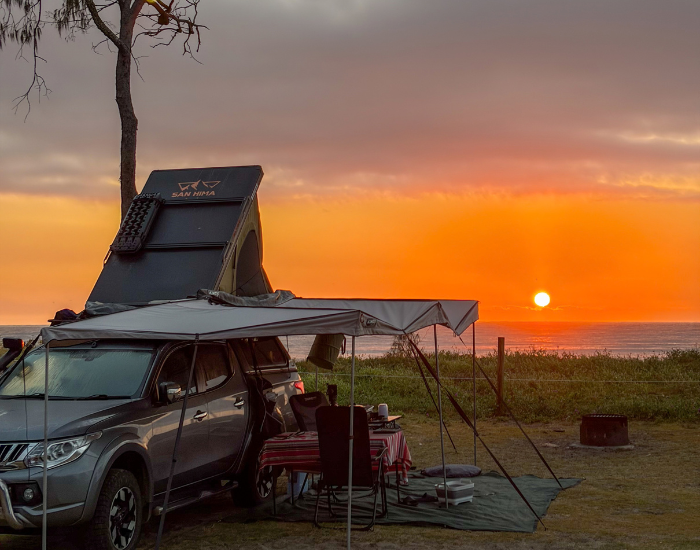
Nobody had told us about Urunga. As a foreigner, I knew Byron Bay and the Gold Coast, the names every backpacker repeats. Urunga never came up. My partner Jackie is Australian and lives not far away, and she hadn’t heard of it either. So when I picked it from a few photos on Google Maps, I expected a quick fuel stop.
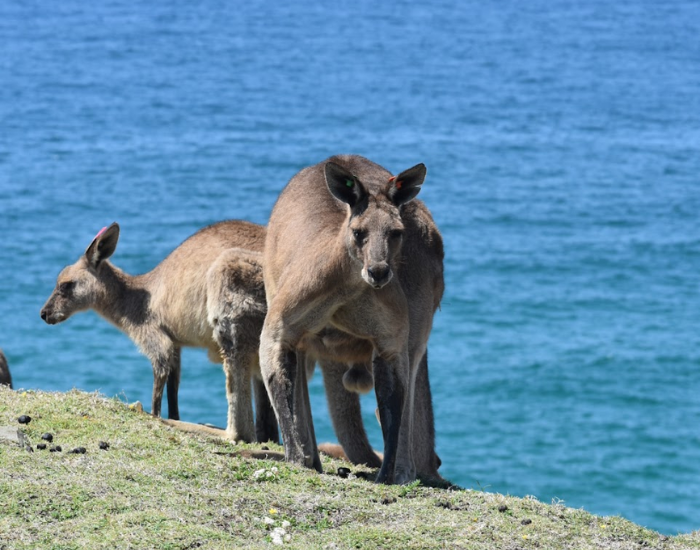
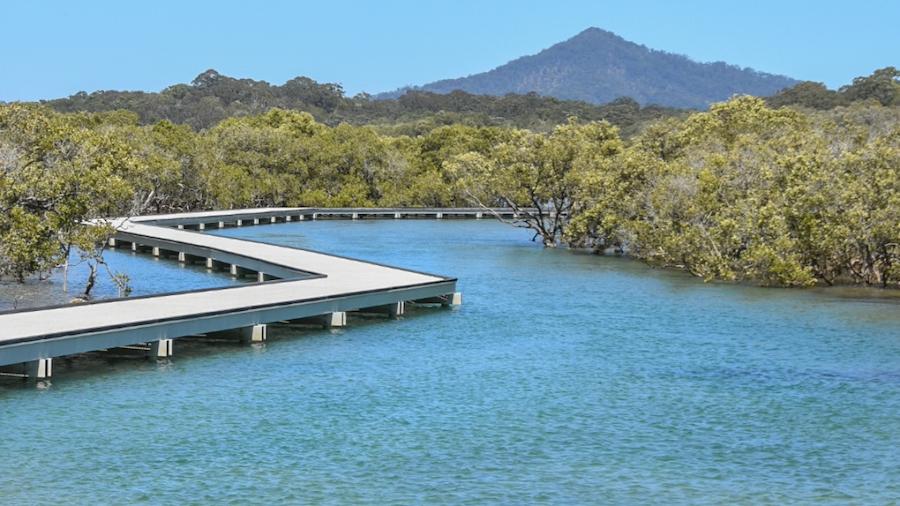
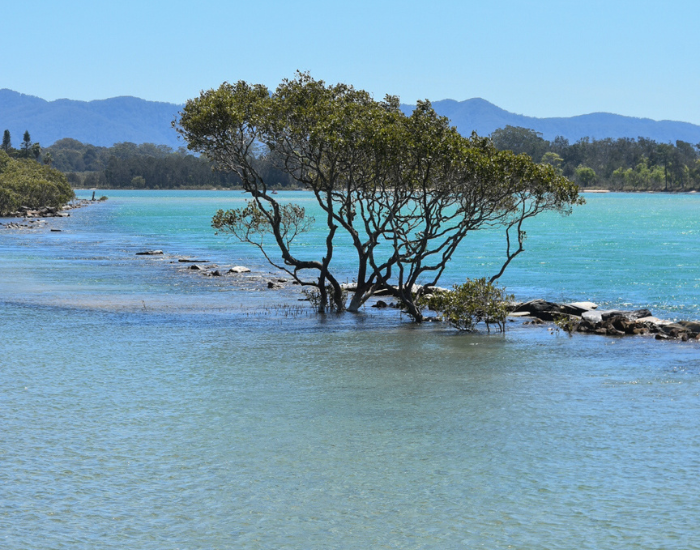
Instead, we found crystal-blue tide water sliding through mangroves under a clear sky. A few days later we reached Nambucca Heads, a quiet NSW town where the Nambucca River meets the Pacific Ocean. Kangaroos grazed the backyard, and black cockatoos screeched from the banksias.
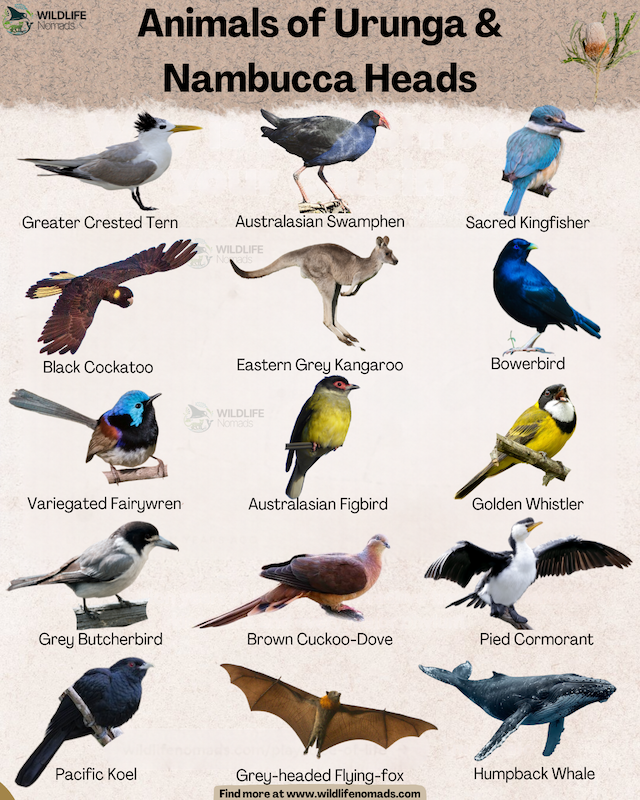
This is stop eight of our Australia lap, right after Bellingen. Masked lapwings, noisy miners and galahs showed up everywhere, as usual. I’ll skip those familiar faces. Instead, here are the 20 animals that felt new, surprising or worth a second look.
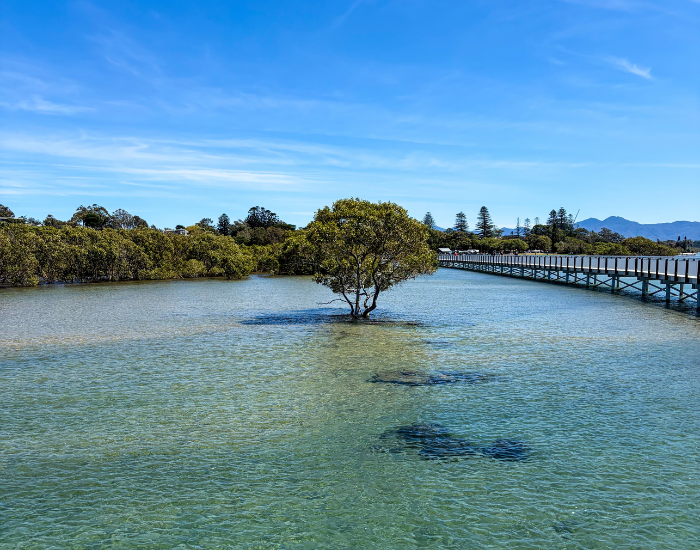
Urunga Boardwalk: Mangroves, Terns and a Toadfish
Urunga sits where the Bellinger and Kalang rivers meet the sea, on the Coffs Coast in the Bellingen Shire. The name is often linked to the Gumbaynggirr word yurūnga, usually translated as “long white sands”. The boardwalk carries you over the river and mangroves toward the beach, with elevated views the whole way. It is a short, peaceful stroll, and one of the best boardwalks I’ve walked on the east coast.
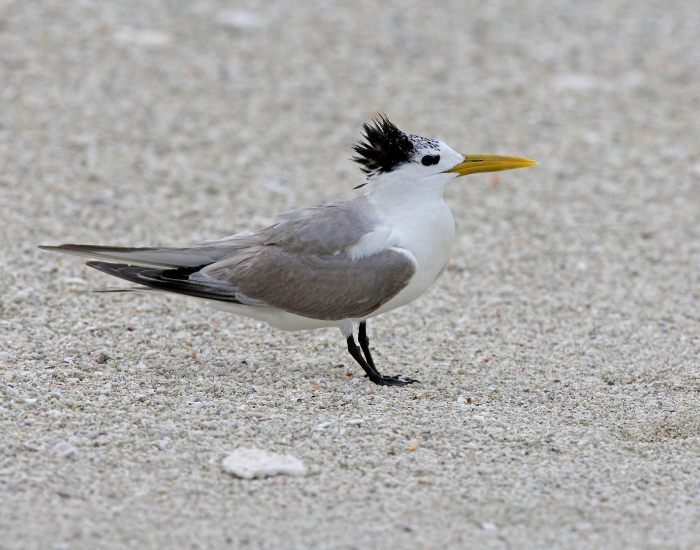
1. Greater Crested Tern (Thalasseus bergii)
Two of them sat on a rock beside the boardwalk, shaggy crests blown back like bad haircuts. Greater crested terns are big, yellow-billed seabirds that plunge-dive for small fish. Unlike gulls, they rarely scavenge, so watching one hunt is a lesson in precision.
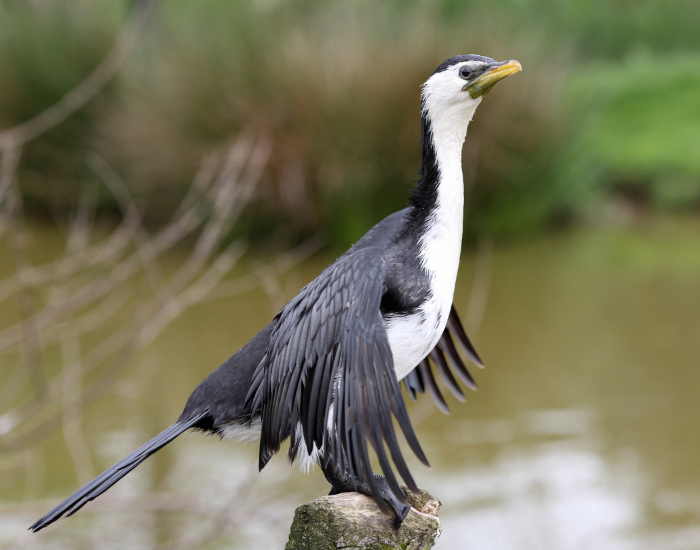
2. Little Black and Little Pied Cormorants
A little black cormorant (Phalacrocorax sulcirostris) was fishing in the channel below us. This species often hunts in loose groups, herding fish together before diving. Later, on the Nambucca foreshore, we found its cousin, the little pied cormorant (Microcarbo melanoleucos), perched in a mangrove. The pied one usually fishes alone, so you rarely see the two behaving the same way.
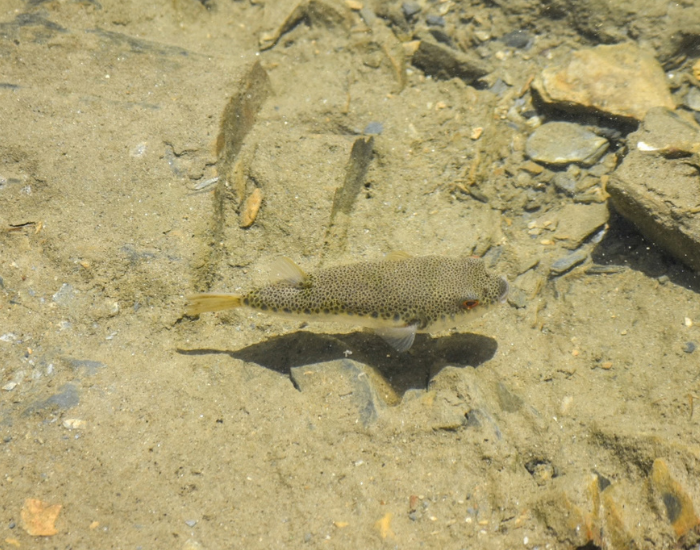
3. Common Toadfish (Tetractenos hamiltoni)
Look down from any estuary boardwalk in NSW and you’ll probably meet a “toadie”. They hovered in the shallows, easy to recognise by their fat bodies and spotted backs. Their skin and organs carry tetrodotoxin, the same nerve toxin found in pufferfish. That’s why anglers never eat them, and why dog owners should keep pets away from dead ones on the shore.
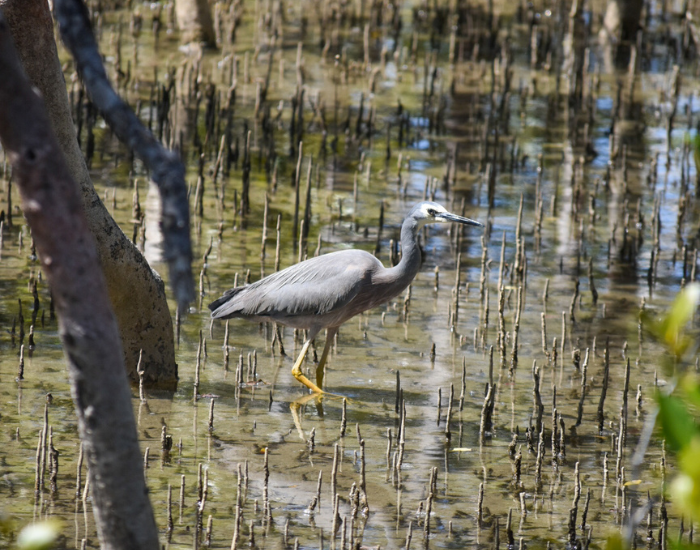
4. White-faced Heron (Egretta novaehollandiae)
One flew right over our heads and landed in the mangroves. Then it hunted, slow step by slow step, before snatching a small fish. White-faced herons are the most widespread heron in Australia. They often stir the mud with one foot to flush prey, a trick I love watching.
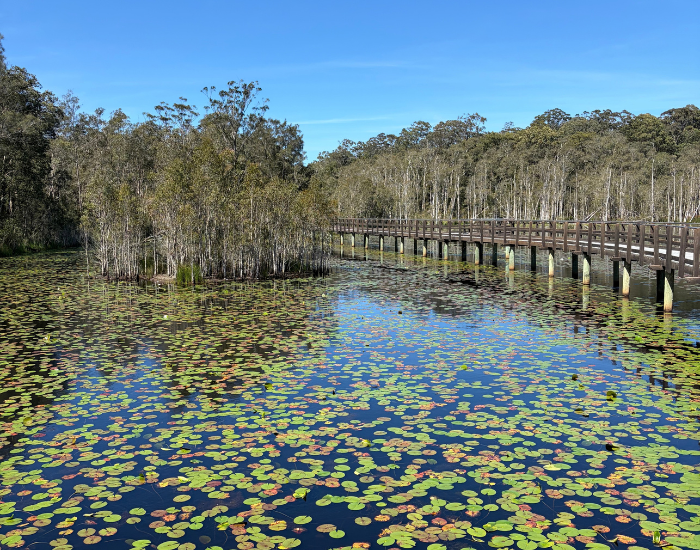
Urunga Restored Wetland: Lilies, Swamphens and Fairywrens
From the boardwalk we followed the track to the Urunga restored wetland. Honestly, go if you’re nearby. The ponds fill with water lilies, and the birdlife is far richer than the small site suggests.
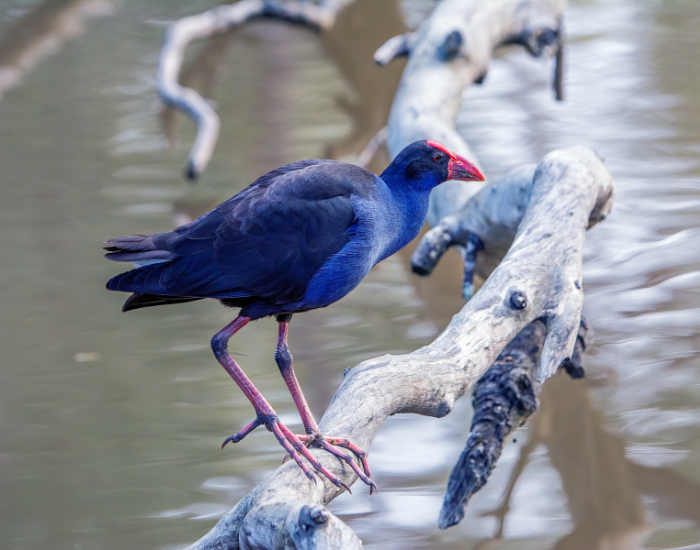
5. Australasian Swamphen (Porphyrio melanotus)
Two swamphens were grazing a garden lawn in front of a house, between the river and the mangroves. I hadn’t seen one in years, and they seem to grow more common the further south we travel. Their giant red shield and bright blue chest look almost cartoonish. That nervous tail-flick flashes white feathers underneath, a signal to others in the group.
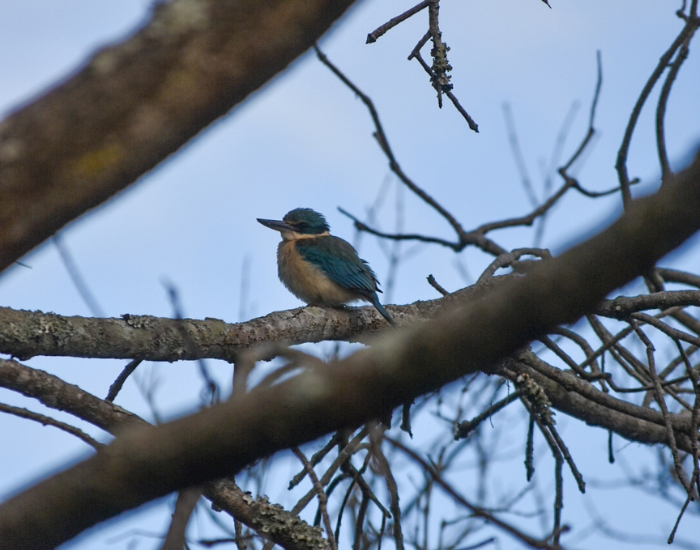
6. Sacred Kingfisher (Todiramphus sanctus)
A sacred kingfisher dived from a perch over the lily pads, an iconic view. Later, on the Nambucca foreshore, we saw at least three more, flashing shiny blue between trees. Interestingly, this “kingfisher” eats more insects, crabs and lizards than fish. Many southern birds migrate north for winter and return in spring, which fits our October timing.
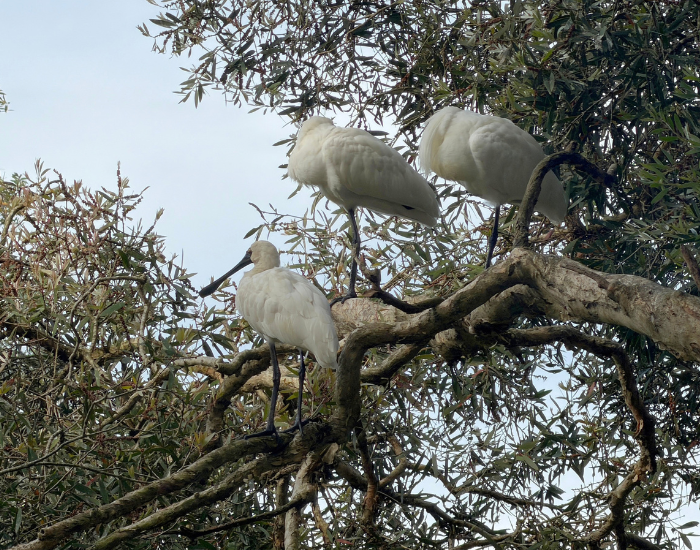
7. Royal Spoonbill (Platalea regia)
Royal spoonbills perched on top of trees, exactly as we saw them at Evans Head. They feed by sweeping that flat black bill side to side through shallow water. The bill is packed with touch receptors, so they find prey by feel rather than sight.
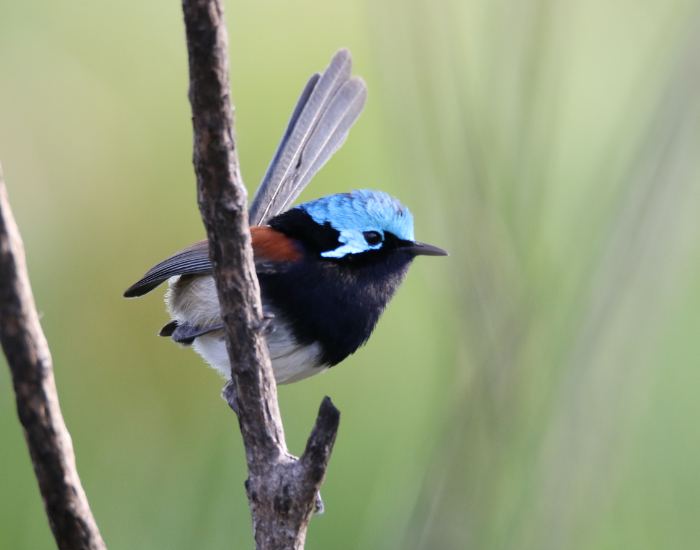
8. Variegated Fairywren (Malurus lamberti)
This was a first for us. A small group jumped and flew from tree to tree along the walk trail. Males look like superb fairywrens at first glance, but chestnut shoulder patches give them away. We also saw female superb fairywrens (Malurus cyaneus) in the same wetland, which made the comparison easy.
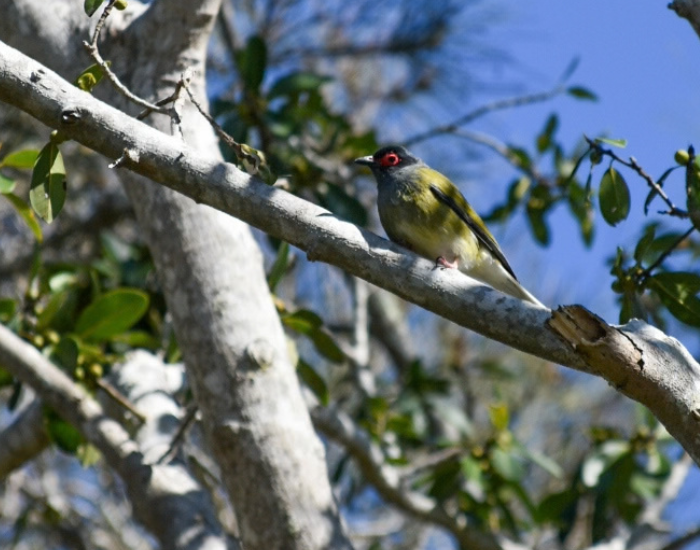
9. Australasian Figbird (Sphecotheres vieilloti)
My first wild figbird, on the same wetland track. You recognise males instantly by the bare red skin around their eyes. Figbirds travel in noisy flocks and eat mainly fruit, especially native figs. As a result, they scatter seeds along rivers and through towns.
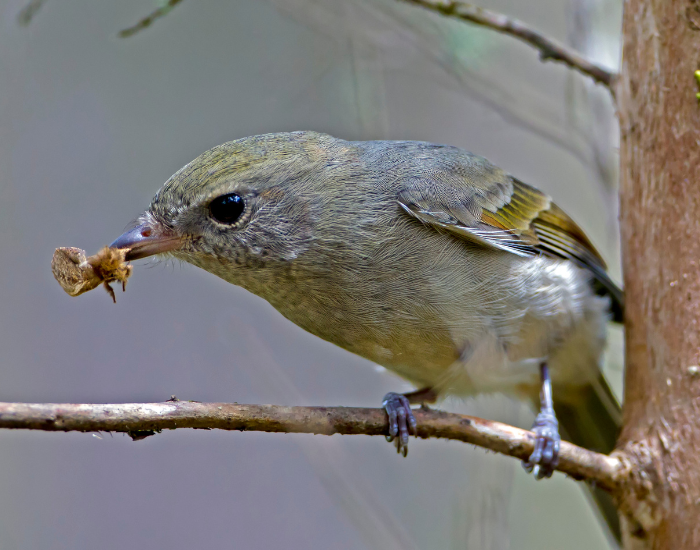
10. Golden Whistler (Pachycephala pectoralis)
Ours was an immature bird, plain and brownish rather than gold. That confused me at first. Young males can take more than a year to grow the yellow chest and black collar. Their song, however, is one of the richest in the eastern forests.
11. Grey Butcherbird (Cracticus torquatus)
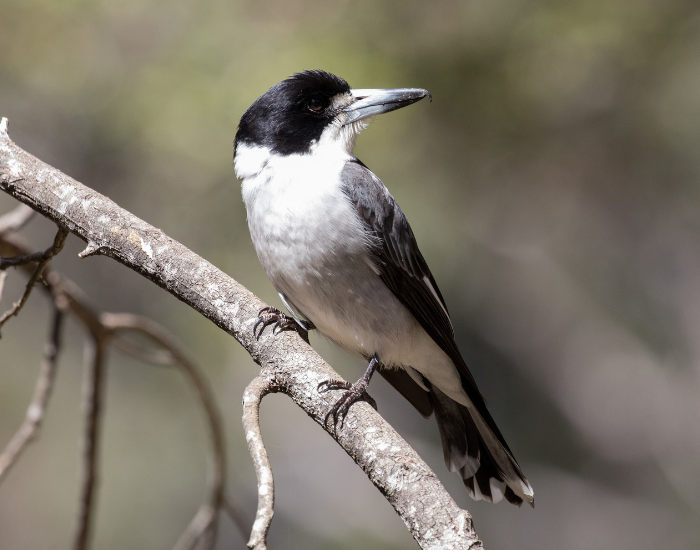
High in a tree, it looked like any butcherbird, but something felt off. Later I confirmed a grey butcherbird. The name comes from its habit of wedging prey into tree forks or onto thorns. That “larder” lets it store lizards and insects for later.
Nambucca Heads: Lookouts, the V-Wall and Backyard Visitors
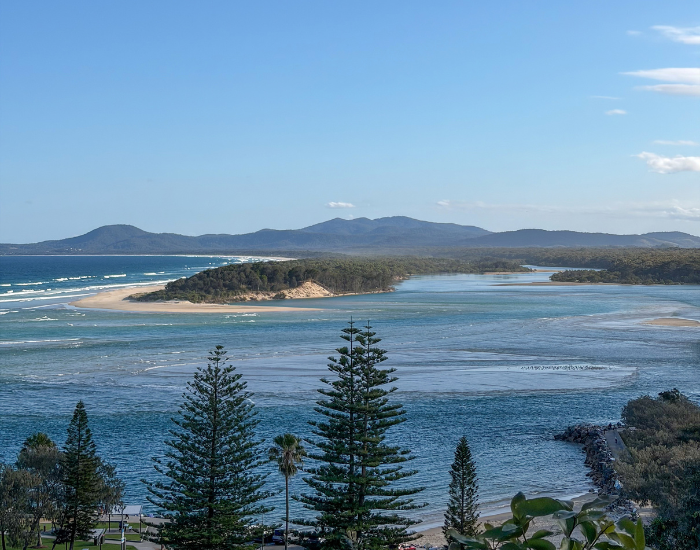
In Nambucca Heads we mostly worked for a few days, but the town makes that hard. It’s known for a laid-back lifestyle and vibrant community arts. The lookouts show the whole creek and estuary, and on a clear day the view is stunning.
Rotary Lookout looks over the Nambucca River. Captain Cook Lookout has two viewing areas with panoramic coastal views. Lions Lookout gives a sweeping view of the coastline. From up there, the coast runs from South West Rocks to Coffs Harbour. Dolphins often appear near the river mouth and around the headland, so bring binoculars.
Down on the shore, the V-Wall is an outdoor gallery of rocks painted by visitors. Travellers leave messages, memories and artwork on the breakwall. Walking along it feels like reading a guestbook written by half the world.
12. Grey-headed Flying-fox (Pteropus poliocephalus)
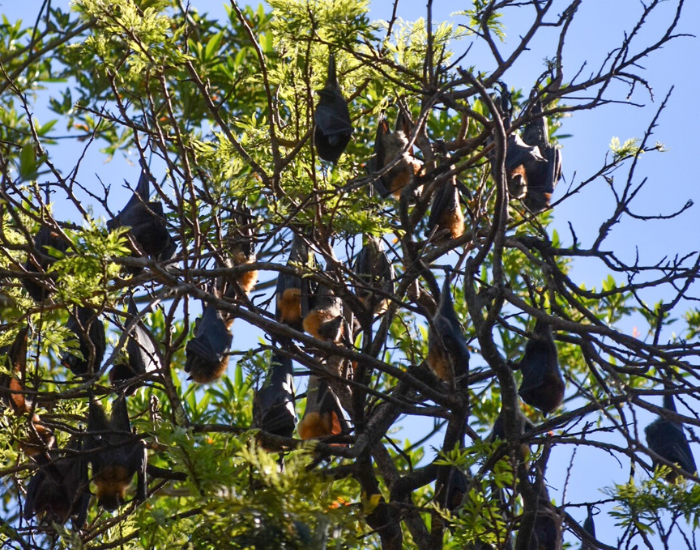
Driving downhill toward the V-Wall, we spotted hundreds of flying-foxes hanging from the trees beside the right-hand sidewalk. We stopped to take photos, and locals drove past laughing at us. Fair enough. It reminded me how tourists treat macaques in Indonesia or cats in Turkey. Still, this species is listed as Vulnerable. Heatwaves can kill thousands in a single day, and they pollinate eucalypts and disperse seeds across huge distances. Read our fruit bat facts for more.
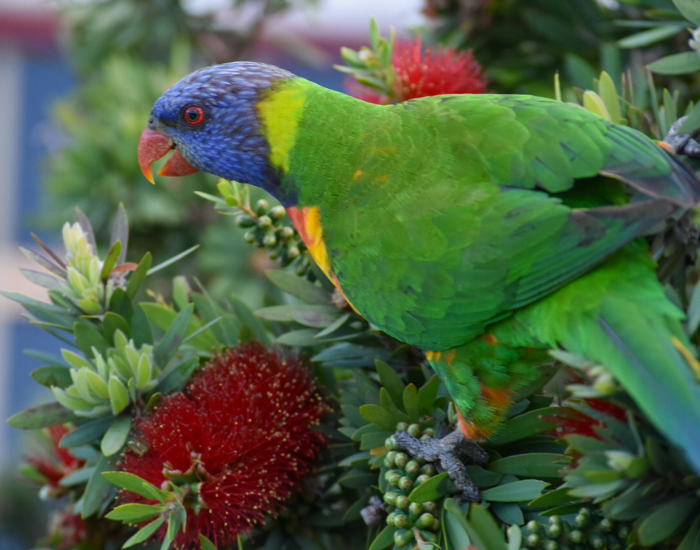
13. Rainbow Lorikeet (Trichoglossus moluccanus)
We first heard them along the V-Wall, and then they took over the trees outside our house. Lorikeets have brush-tipped tongues for mopping up nectar and pollen. They’ve also boomed in Australian cities, helped by flowering street trees. Our rainbow lorikeet facts explain how.
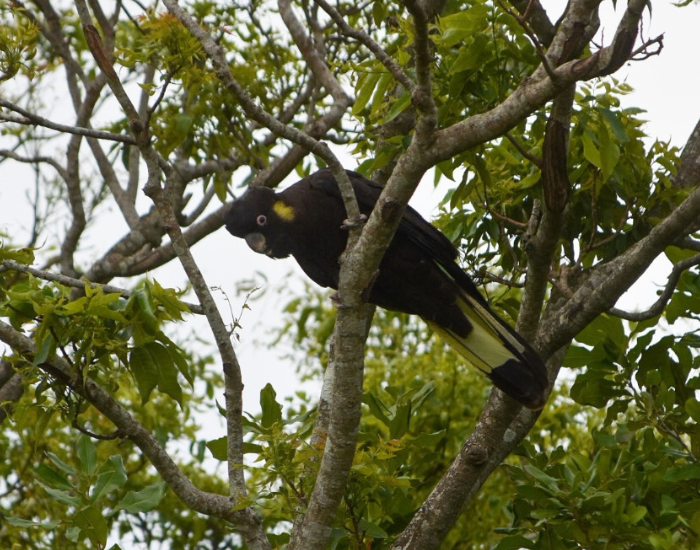
14. Yellow-tailed Black Cockatoo (Zanda funerea)
We now recognise black cockatoos wailing call instantly, and there they were. They fed in the banksia tree behind our house, tearing cones apart for seeds. One day, driving to Scotts Head, a huge one flew right above our car. Its wings and yellow tail spread wide, and it kept pace for about ten seconds.
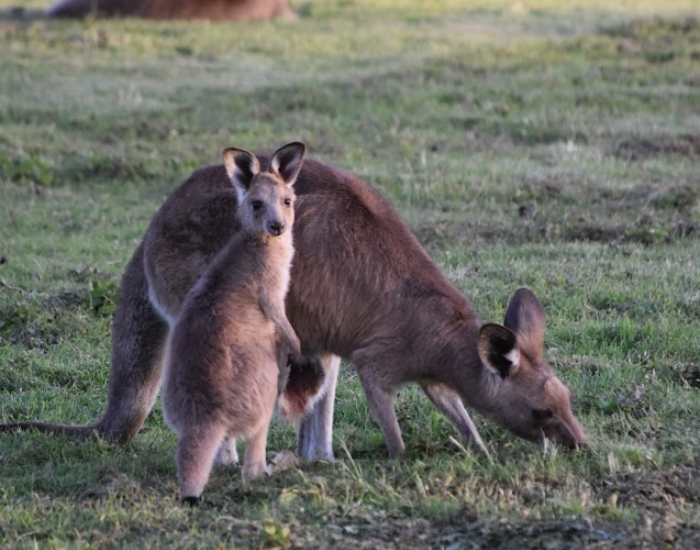
15. Eastern Grey Kangaroo (Macropus giganteus)
Families and small mobs hopped into the backyard most evenings. Eastern greys graze at dawn and dusk and rest in shade through the heat of the day. Watching them from the kitchen window never got old. Our kangaroo facts cover how mobs work.
Yarriabini National Park: Old Trees and Rainforest Birds
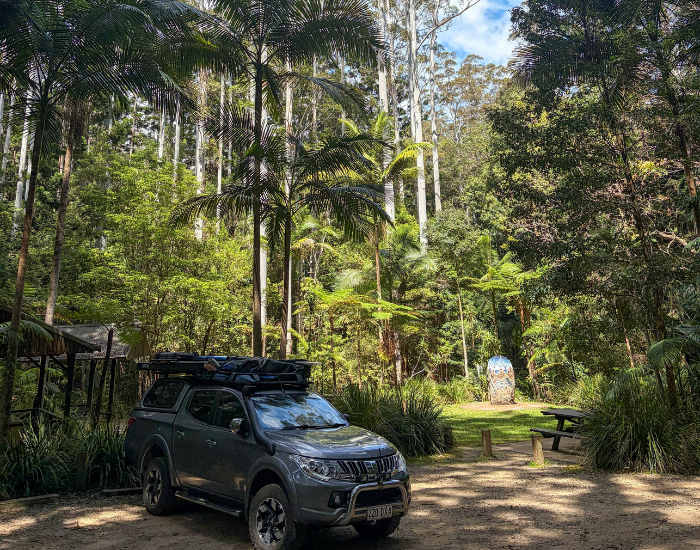
One day we drove the unsealed gravel road into Yarriabini National Park, another strong recommendation. A sign said some trees here could be over 1,000 years old. That forest inspired my rainforest layers tool, which you can explore on Wildlife Nomads. We walked along the creek near the picnic area, surrounded by birdsong. We also heard what I assume was a frog, calling from beneath logs and debris.
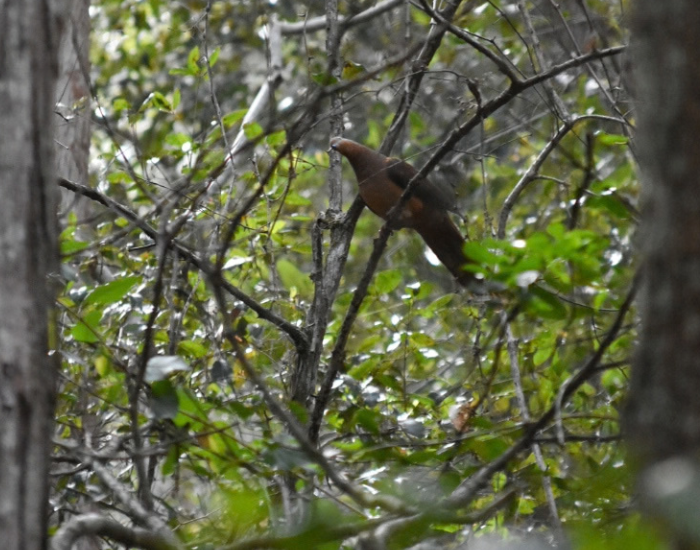
16. Brown Cuckoo-Dove (Macropygia phasianella)
We stopped the car to watch one flying between trees. This long-tailed, rusty pigeon lives along rainforest edges and eats mostly fruit. Interestingly, it often feeds on weedy fruits too, including lantana and wild tobacco. See our pigeons of Australia for its relatives.
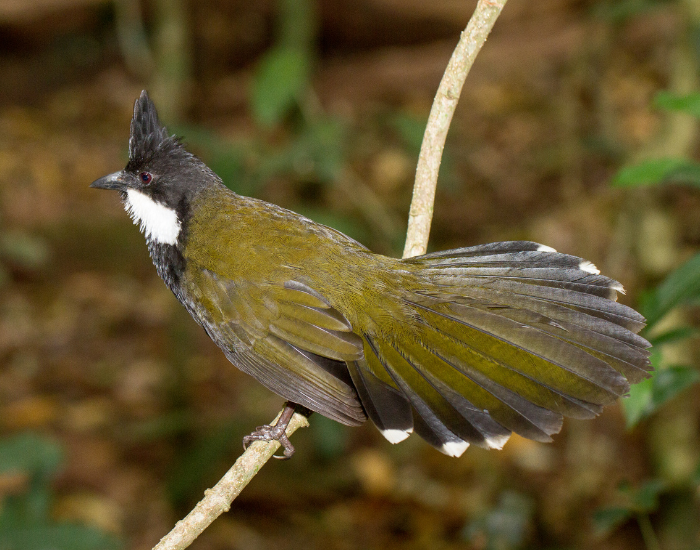
17. Eastern Whipbird (Psophodes olivaceus)
We heard them everywhere along the river. The famous “whip-crack” is usually a duet: the male cracks, and the female answers within a fraction of a second. Many people think one bird makes the whole sound. Seeing one is harder, because they skulk in dense undergrowth.
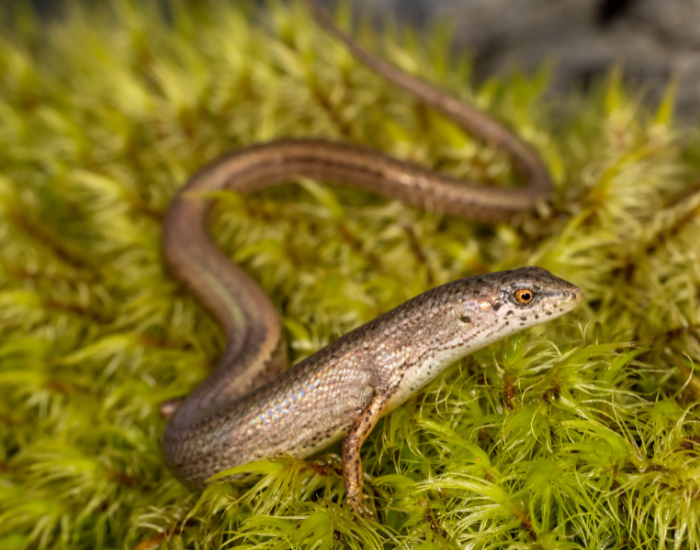
18. Southern Weasel Skink (Saproscincus mustelinus)
Small skinks darted through the leaf litter near the creek. I believe they were weasel skinks, slender and brown with a pale line along the side. That said, several Saproscincus species look alike on the Mid North Coast. So I treat this ID as probable, not certain. They need damp, shady ground, which makes them a good sign of healthy forest floor.
Nambucca Foreshore Walk: Bowerbirds, Koels and Juveniles
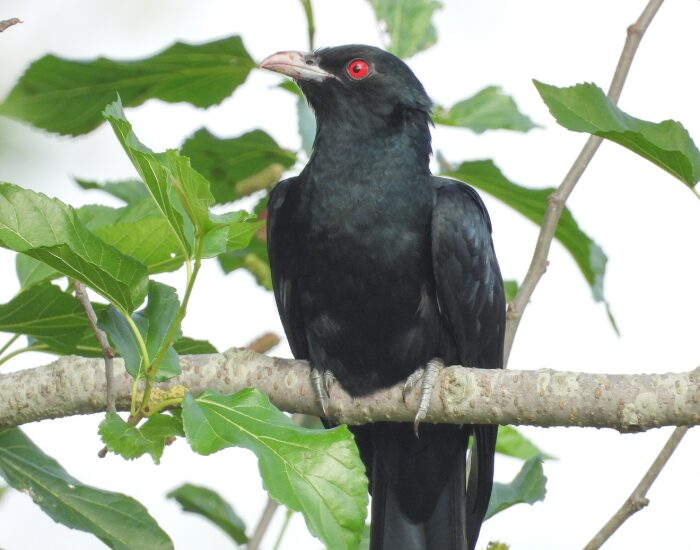
19. Pacific Koel (Eudynamys orientalis)
This bird has a personal story. When I first met Jackie, we flew to Langkawi, Malaysia, just four weeks after meeting. An Asian koel called outside our room every day. So hearing that same classic call here surprised us both. Australia’s bird is the Pacific koel, a close relative that migrates south from New Guinea and Indonesia each spring. Like all koels, females lay eggs in other birds’ nests, often wattlebirds and figbirds.
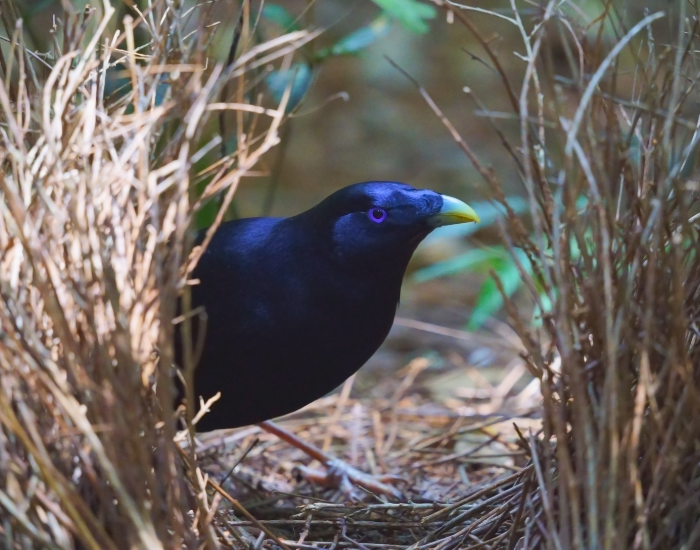
20. Satin Bowerbird (Ptilonorhynchus violaceus)
In Sydney I once found a bower decorated with blue objects but never saw the builder. Here it was the opposite: I saw the bird and heard its call for the first time, but found no bower. It was green, so likely a female or young male. Males need about six to seven years to gain glossy blue-black plumage. Sadly, I couldn’t get a photo.
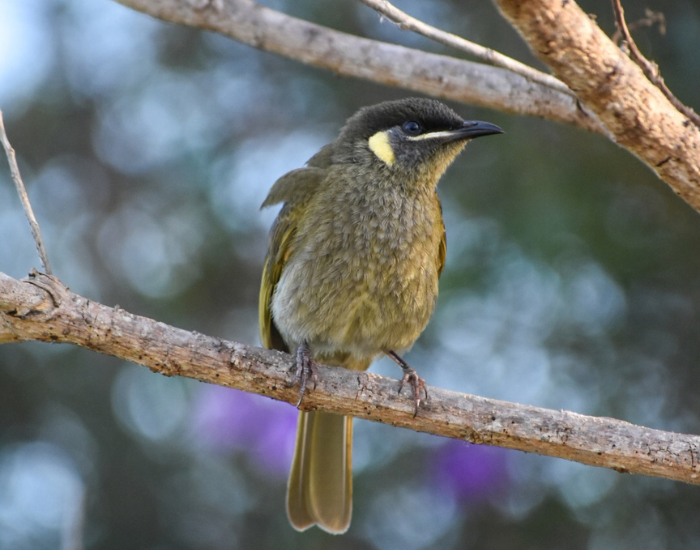
21. Lewin’s Honeyeater and the Juvenile Season
The foreshore was full of young birds: kingfishers, little wattlebirds (Anthochaera chrysoptera), blue-faced honeyeaters and Lewin’s honeyeaters (Meliphaga lewinii). They seemed remarkably calm with people nearby. One young blue-faced honeyeater had warm, orange-toned face skin, and I briefly thought it was another species. Juveniles start with yellowish-green skin that turns blue with age. Spring is breeding season on the Mid North Coast, so October is perfect for fledglings. Browse more in honeyeaters of Australia.
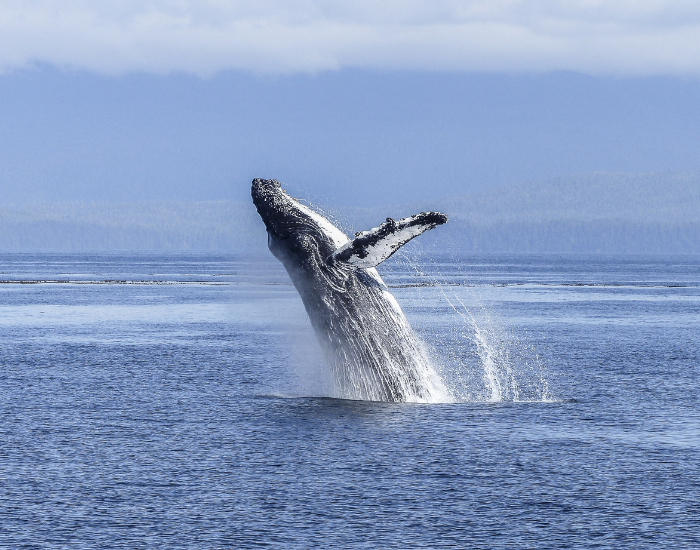
22. Humpback Whale (Megaptera novaeangliae)
Along the coastal walks, and again at Scotts Head, we watched a humpback on its migration journey. They’ve become a regular sighting on this lap. East Australian humpbacks recovered from a few hundred animals in the 1960s to tens of thousands today. In spring, mothers and calves head south past these headlands toward Antarctic feeding grounds.
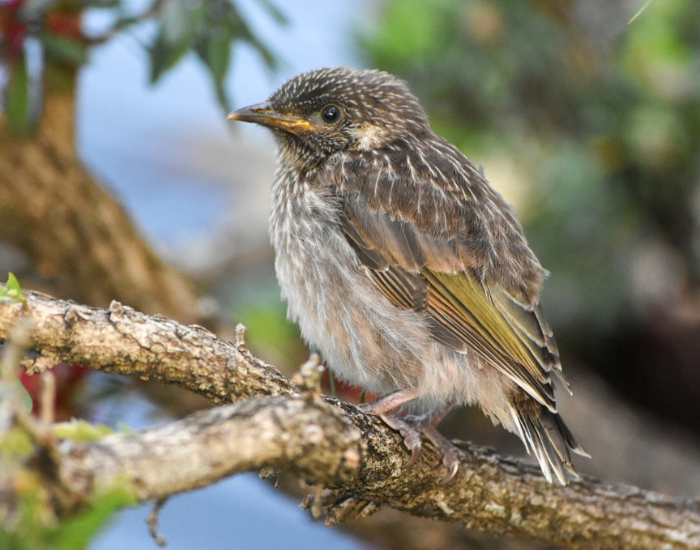
23. Little Wattlebird (Anthochaera chrysoptera)
A very young one landed close to us and showed no fear at all. Despite the name, little wattlebirds have no wattles, unlike their red wattlebird cousins. They make loud, cackling calls and feed heavily on banksia and grevillea nectar. Expect them anywhere flowering shrubs grow along the coast.
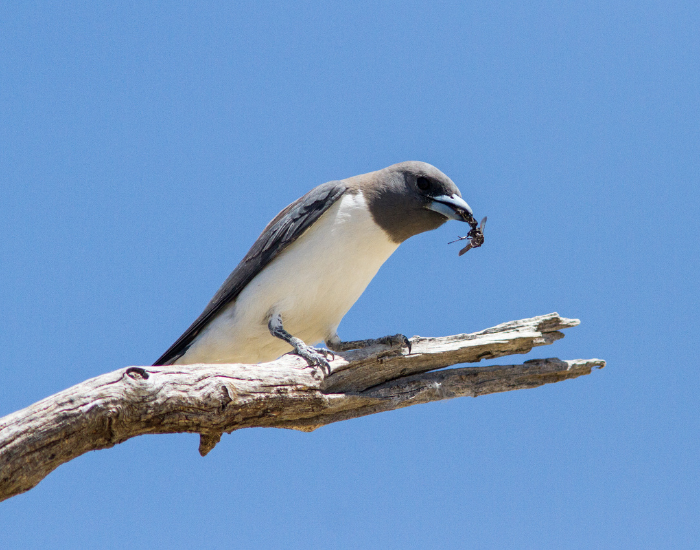
24. White-breasted Woodswallow (Artamus leucorynchus)
This was our first woodswallow of the lap. We saw them along the walking track beside the river, always flying in pairs. Woodswallows hunt insects on the wing, gliding in wide arcs like swallows. When they rest, they often huddle shoulder to shoulder on a single branch. They favour water, mangroves and open coastal country, and their range extends into Southeast Asia.
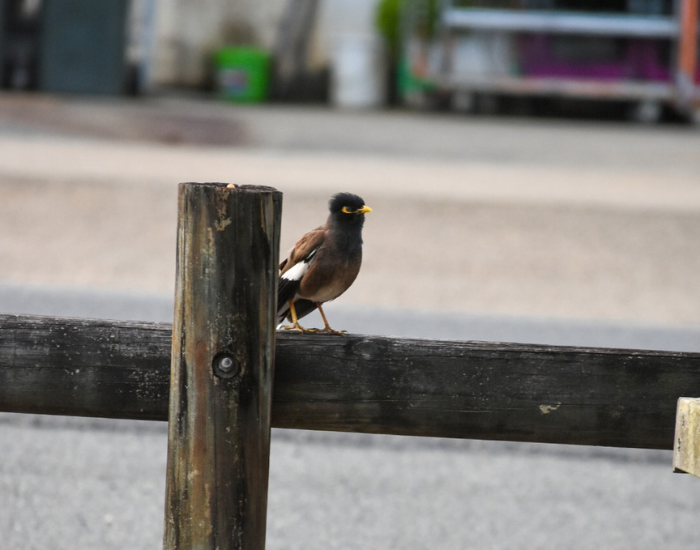
25. Common Myna (Acridotheres tristis)
Another first for this trip, though not a welcome one. A group hopped beside a street next to white ibis, trying to snatch bread. They looked completely at home in town. Mynas come from South Asia and were released in Australia in the 1860s. Research has linked them to declines in some native birds that nest in tree hollows.
Planning Your Trip to Nambucca Heads, NSW
Nambucca Heads sits on the Mid North Coast of New South Wales, between Coffs Harbour and Port Macquarie. It suits families, surfers, anglers and slow travellers alike.
Beaches and the river. Main Beach is patrolled on weekends from October to Easter by the local surf life saving club. South Beach suits experienced board riders, while other breaks suit beginner surfers. Swimming Creek Beach is dog-friendly, and Shelly Beach is a quieter option. The estuary has tranquil tidal flats and safe, shallow swimming spots. The Nambucca River is ideal for fishing, kayaking, paddleboarding and canoe trips. Bellwood Park offers riverside beaches with picnic facilities.
Walks and parks. The town is famous for scenic coastal walking trails. Gordon Park has walking tracks through urban rainforest. Stuart Island, home to the Nambucca Heads Island Golf Club, sits in the river near town. Gaagal Wanggaan National Park and Yarriabini National Park are both a short drive away.
Food and accommodation. V Wall Pavilion serves modern cuisine built around local seafood. Wharf Street Cafe does breakfast and lunch with river views. Matildas is known for pizza, oysters and wine. For a place to rest, the Big 4 Tasman Caravan Park is popular with families. Pelican Caravan Park is another option, with cabins and sites. Beach Rooms offers river and ocean views. In school holidays, book online well in advance.
FAQ
Yes. Nambucca Heads combines quiet beaches, a calm estuary, rainforest parks and excellent birdwatching without the crowds of Byron Bay. Locals are friendly and the lookouts offer breathtaking water views. For wildlife lovers, kingfishers, flying-foxes, kangaroos and migrating humpbacks are all realistic sightings.
By car is the most flexible way. The Pacific Highway runs past town, so it’s an easy drive from Sydney or Queensland. A car also lets you reach Yarriabini National Park, Scotts Head and Urunga. Coffs Harbour has the closest major airport, about 40 minutes north.
Yes. NSW TrainLink’s XPT stops at Nambucca Heads station on the North Coast line. The trip to Sydney Central takes roughly eight hours. Buy your ticket in advance, since the cheapest fares sell out first.
Urunga and Coffs Harbour lie to the north, and Scotts Head and Macksville to the south. South West Rocks and Port Macquarie are further south along the coast. Bellingen, up in the hinterland near the mountains, makes a great day trip.
Go and Visit Nambucca
Nambucca Heads proved that the best wildlife stops are often the ones nobody mentions. In a few days we found kingfishers, a bowerbird, a koel with a personal story and a humpback heading south. Most of them were within walking distance of town.
If you’re driving the Mid North Coast, give Urunga and Nambucca a few days instead of a fuel stop. Walk the boardwalk at low tide, check the foreshore trees in spring and listen for whipbirds in Yarriabini. Then tell me in the comments what you spotted. For more ideas, see our guide to the best NSW national parks or the best places to go whale watching.
References:
Grarock, K., Tidemann, C. R., Wood, J., & Lindenmayer, D. B. (2012). Is it benign or is it a pariah? Empirical evidence for the impact of the common myna (Acridotheres tristis) on Australian birds. PLoS ONE, 7(7), e40622. https://doi.org/10.1371/journal.pone.0040622
Mennill, D. J., & Rogers, A. C. (2006). Whip it good! Geographic consistency in male songs and variability in female songs of the duetting eastern whipbird Psophodes olivaceus. Journal of Avian Biology, 37(1), 93–100. https://doi.org/10.1111/j.0908-8857.2006.03548.x
Noad, M. J., Kniest, E., & Dunlop, R. A. (2019). Boom to bust? Implications for the continued rapid growth of the eastern Australian humpback whale population despite recovery. Population Ecology, 61(2), 198–209. https://doi.org/10.1002/1438-390X.1014
Tait, J., Perotto-Baldivieso, H. L., McKeown, A., & Westcott, D. A. (2014). Are flying-foxes coming to town? Urbanisation of the spectacled flying-fox (Pteropus conspicillatus) in Australia. PLoS ONE, 9(10), e109810. https://doi.org/10.1371/journal.pone.0109810
Welbergen, J. A., Klose, S. M., Markus, N., & Eby, P. (2008). Climate change and the effects of temperature extremes on Australian flying-foxes. Proceedings of the Royal Society B, 275(1633), 419–425. https://doi.org/10.1098/rspb.2007.1385