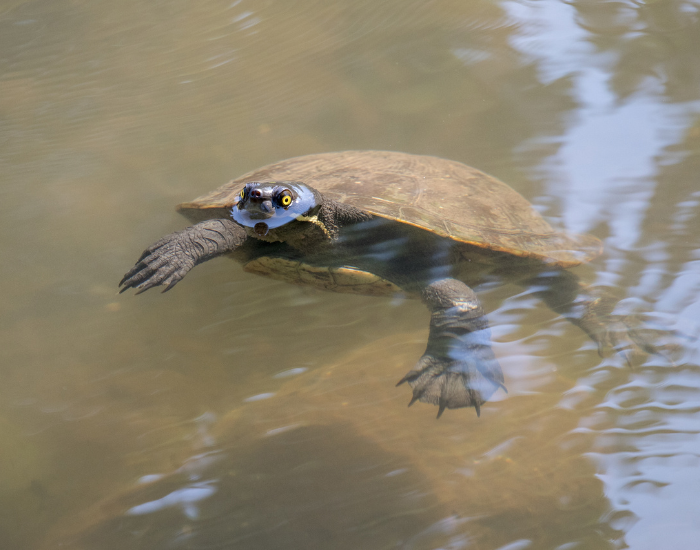
We were halfway through dinner beside the river when a head broke the surface. My first thought was “sea turtle,” which made no sense in fresh water. We stared at the brown water, watching a fish jump and a wood duck drift past. Then she came up again. Four times in total, slowly working her way upstream.
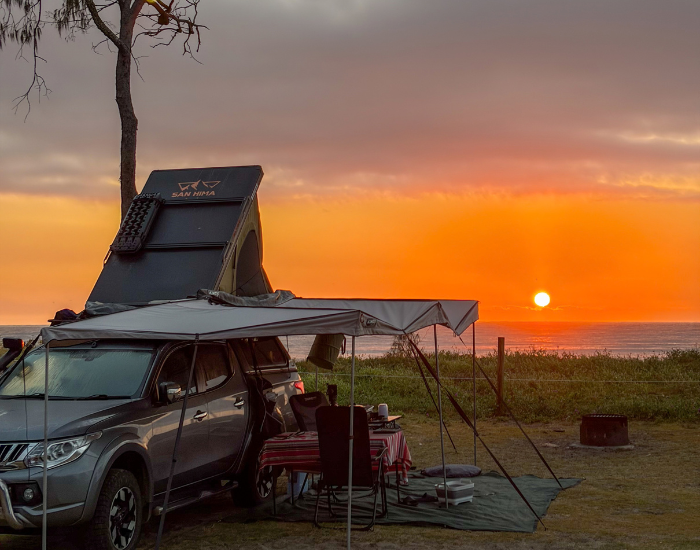
That turtle became my favourite of all the animals of Bellingen, New South Wales and Coffs Harbour. Bellingen was the seventh stop on our lap around Australia. A strong, wet wind had hammered us at Pebbly Beach, so we planned just one night here before Nambucca. We stayed three.
The calm Bellinger River, the bats at dusk and constant birdsong simply won us over. Below are the 15 species that made this stop special. I’ve left out most regulars from earlier stops and focused on new faces. Most made me smile. One made me stop and think about how we build our world.
Why Bellingen Won Us Over
Bellingen is a small town on the Waterfall Way, roughly six hours’ drive north of Sydney. It sits on Gumbaynggirr Country, in a green valley between the hills and the coast. The river runs right past the tourist park, and locals launch boats from its banks most mornings.
The town has a laid-back, progressive and community-focused feel. Historic 19th-century buildings line the main street, mixed with galleries, jewellery shops and a rich arts scene. It’s also a hub for alternative lifestyles, which explains its “hippie town” reputation. For a wildlife person, though, the real magic sits on the doorstep: river, rainforest and ocean within a short drive.
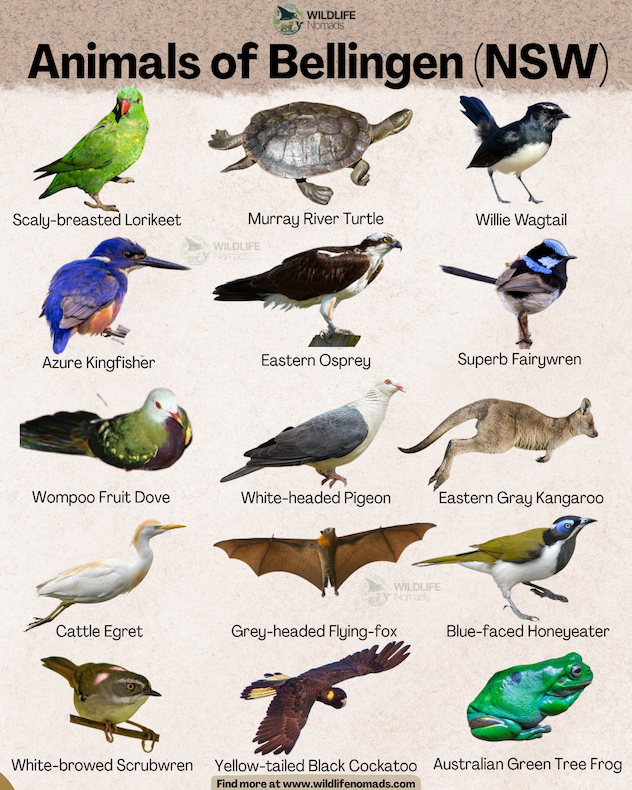
15 Animals of Bellingen, New South Wales and Coffs Harbour
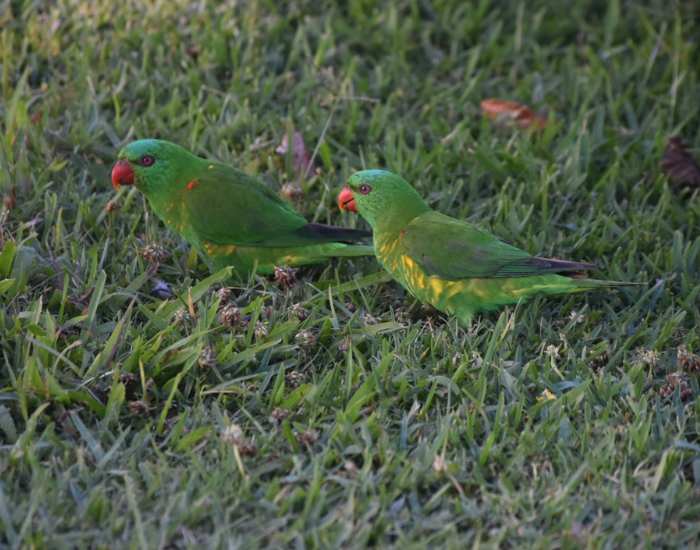
1. Scaly-breasted Lorikeet (Trichoglossus chlorolepidotus)
I stepped out of the shower block onto the deck and found two parrots feeding on the ground. My brain instantly filed them as rainbow lorikeets. Then I looked properly. They were far too green, and the blue head was missing entirely.
When they took off, red flashed under their wings. After five years in Australia, this was my first scaly-breasted lorikeet. The name comes from yellow chest feathers edged in green, like fish scales. They live only in eastern Australia, often flock with rainbow lorikeets and occasionally hybridise with them.
2. Murray River Turtle (Emydura macquarii)
Back at the campsite, we went through the options. Three turtle species live in this river. The neck was short, so the eastern long-necked turtle was out. The head looked too big for the endemic Bellinger River snapping turtle (Myuchelys georgesi). That left the Murray River turtle, also called the Macquarie turtle.
Here’s the twist I didn’t expect. Researchers believe this species was probably introduced to the Bellinger, and it now hybridises with the critically endangered endemic. In 2015, a newly discovered virus tore through the snapping turtles, killing mostly adults. The Murray River turtles stayed healthy. The endemic population has since fallen by more than 90%.
So the turtle that thrilled me is, quietly, part of the endemic’s problem. Honestly, I also can’t rule out a hybrid from a few glimpses at dinner time. That’s the nuance of field biology: excitement and concern can share the same moment.
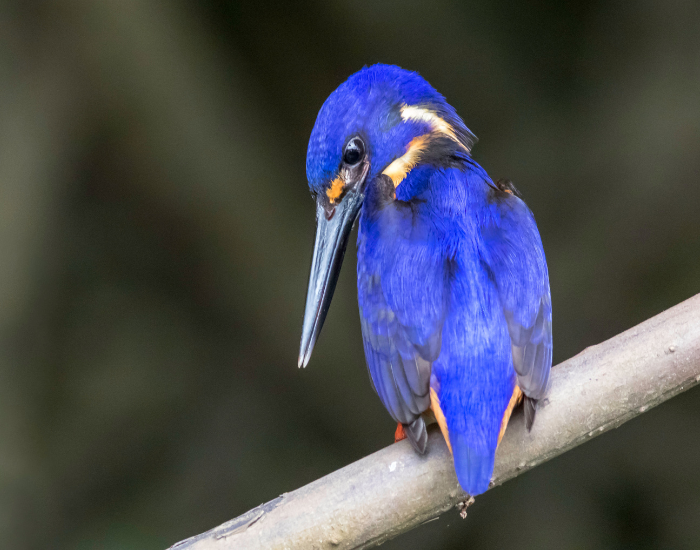
3. Azure Kingfisher (Ceyx azureus)
On our last night, we sat beside the river doing nothing at all. A streak of electric blue shot past at water level, metres from our chairs. It landed on a low branch, dived, surfaced and dived again.
Azure kingfishers are true fishers, unlike many Australian kingfishers that hunt lizards and insects on land. They perch low over still water, plunge, then beat prey against a branch before swallowing it. Their orange belly and stubby tail make identification easy once they sit still.
4. Eastern Osprey (Pandion cristatus)
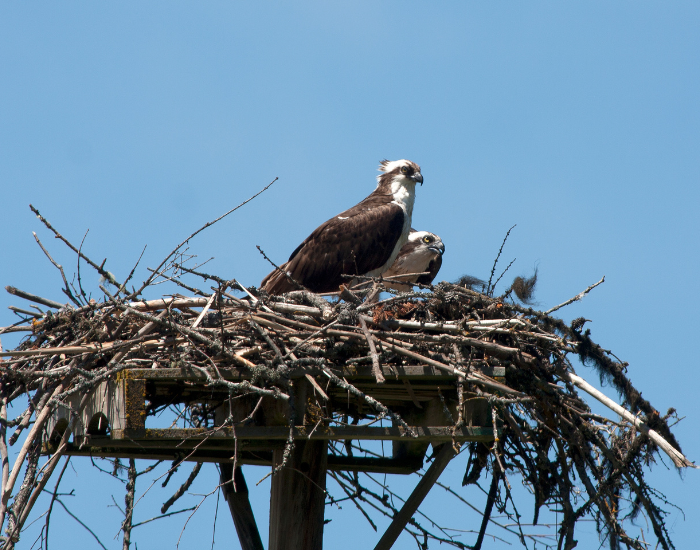
Above the river, on the railway bridge where trains rumble across, sat a huge stick nest. Two adults stood on it together. We’d admired Kingscliff’s famous osprey on its pole earlier, but this was a pair.
You may think these are eagles, but it is not a true eagle. We have an article abaout australian eagles you settle the confusion.
Eastern ospreys usually pair for life and return to the same nest each year, adding sticks every season. Both parents raise the chicks, though the male brings most of the fish. Nesting on a working train bridge shows how readily they adopt human structures, as long as the fishing stays good.
5. Wompoo Fruit Dove (Megaloprepia magnifica)
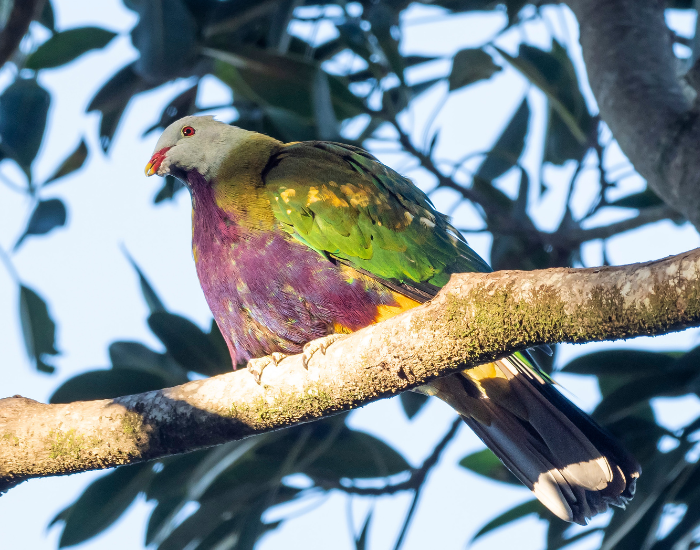
I almost walked past this one. A flash of bright green on its back caught my eye, then a plum-purple chest. Few birds in Australia look this tropical.
Wompoo fruit doves live in rainforest canopies down the east coast into central New South Wales. They swallow figs and other fruit whole, then pass the seeds intact. That makes them important seed dispersers for the forest. You’ll usually hear their deep “wom-poo” call long before you spot one. More in Pigeons of Australia.
6. White-headed Pigeon (Columba leucomela)
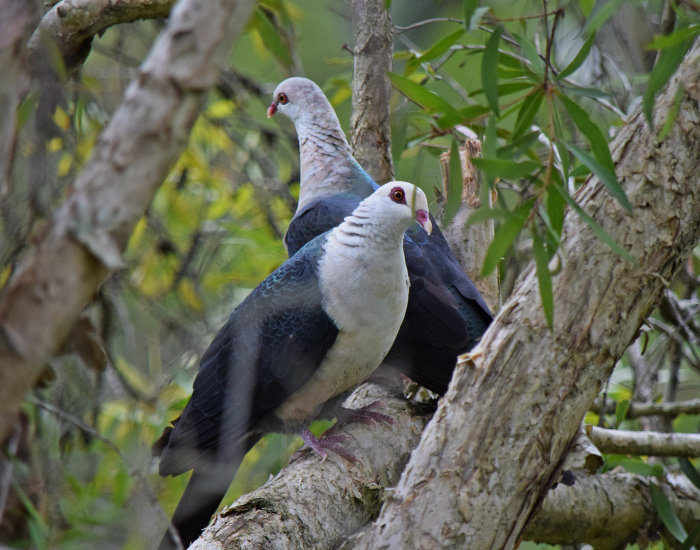
One morning we walked the riverbank hoping for a platypus. Needless to say, no luck this time, despite perfect calm pools. Instead, a white-headed pigeon landed in a tree above us.
This chunky pigeon pairs a white head with a dark, glossy body. It eats rainforest fruit but has also learned to feed on camphor laurel, an invasive Asian tree. That food source has helped it in farming valleys like this one. Yet the pigeon also spreads the weed’s seeds. Nature rarely gives us clean heroes and villains.
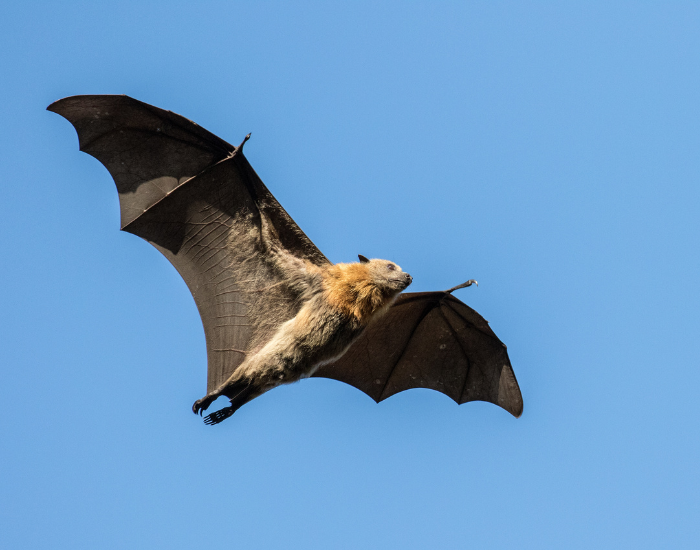
7. Grey-headed Flying-fox (Pteropus poliocephalus)
This is the hard one. We found two dead grey-headed flying-foxes hanging on the power lines near the river. A few living ones flew over at dusk, which somehow made the scene sadder.
Flying-foxes often die when their wings touch two wires at once. Barbed wire and loose fruit netting kill many more. The species is listed as Vulnerable nationally, and extreme heat has caused mass die-offs. Losing them matters, because they pollinate eucalypts and carry rainforest seeds across huge distances. More in Fruit Bat Facts.
8. Cattle Egret (Bubulcus ibis)
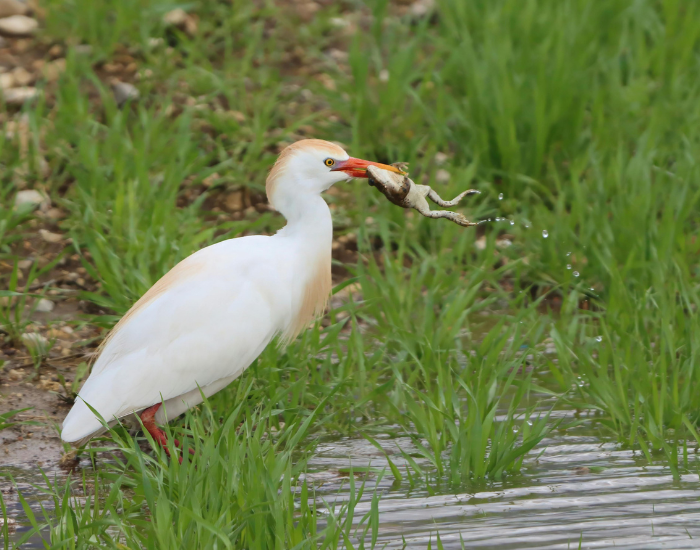
The name never fit better. Across the road from the park, a cattle farm had three or four egrets shadowing every cow. At dusk they gathered in at least three trees, well over 30 birds.
Cattle egrets snap up grasshoppers and other insects that grazing animals flush from the grass. Interestingly, they reached Australia largely on their own from Asia during the 20th century. In breeding season, look for orange-buff plumes on the head and back. It was our first cattle egret of the lap.
9. Australian Magpie (Gymnorhina tibicen)
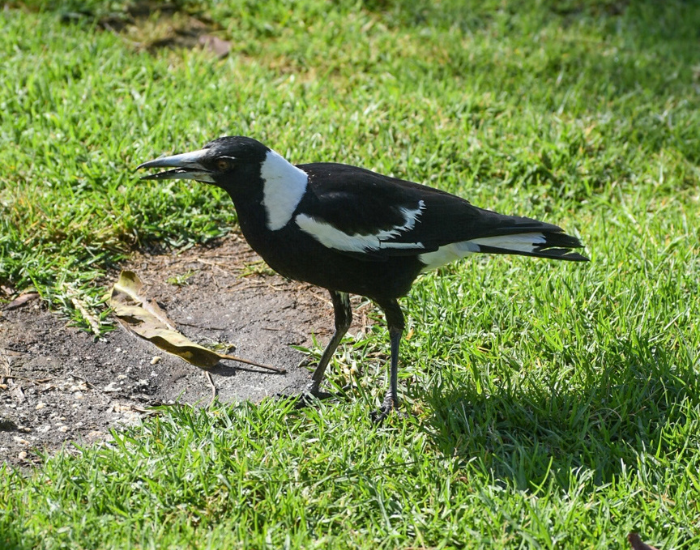
I promised to skip the regulars, but one magpie earned his spot. He visited our campsite daily, closer than any magpie I’ve known. But he wasn’t a swooper. He just watched us with that permanently cross face, clearly working things out.
Magpies really are clever. A Western Australian study found magpies in larger groups performed better on cognitive tasks, and smarter females raised more chicks. They also recognise individual human faces, which may explain why this one trusted us. Willie wagtails, welcome swallows and galahs kept him company, along with the usual suspects from Woody Head and Illaroo.
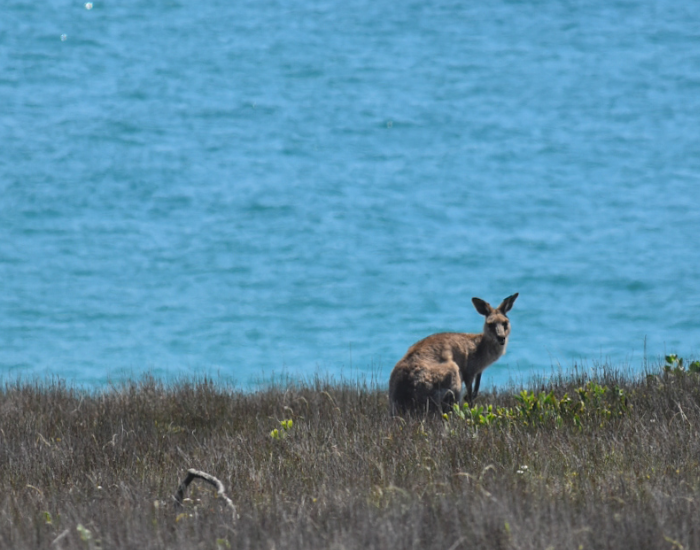
10. Eastern Grey Kangaroo (Macropus giganteus)
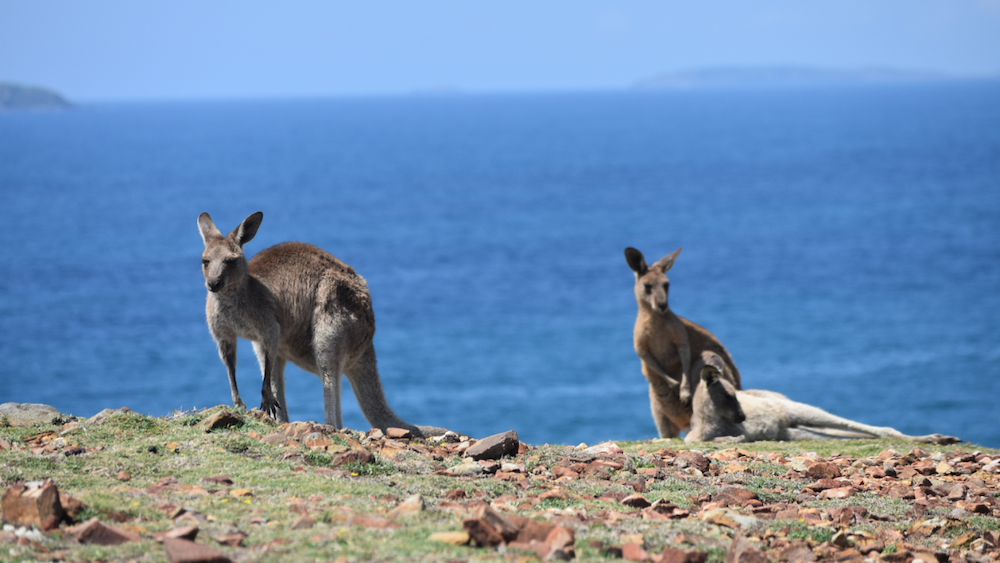
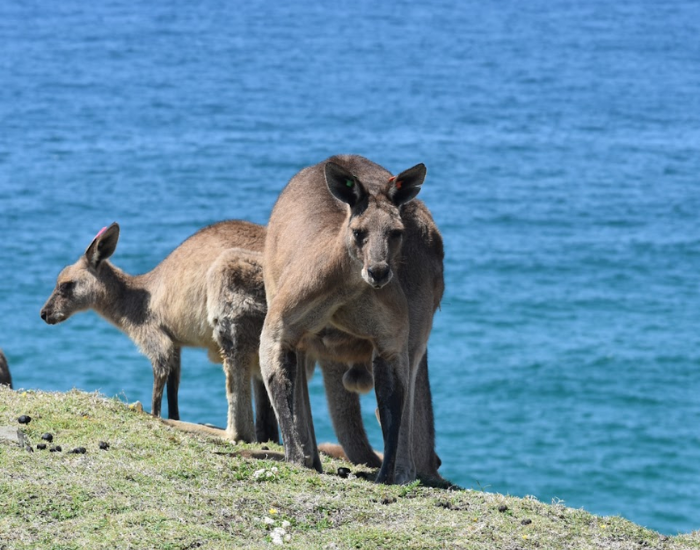
North of Coffs Harbour, the Look At Me Now Headland walk at Emerald Beach is pure beauty. Grassy slopes roll down to the ocean, and kangaroos graze right beside the track. We packed a picnic one day and ate with a relaxed mob nearby.
Eastern greys feed mostly in the early morning and late afternoon, resting in shade through the middle of the day. Keep a respectful distance, especially around big males.
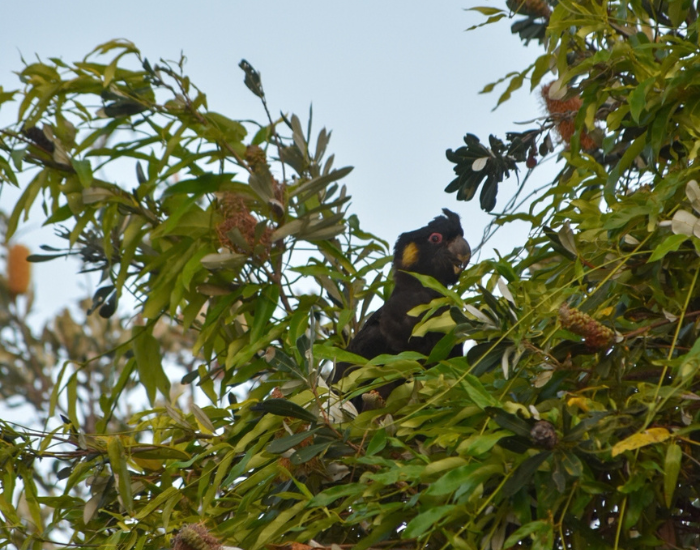
11. Yellow-tailed Black Cockatoo (Zanda funerea)
Back in the headland car park, a surprise waited for us. Yellow-tailed black cockatoos were feeding in the trees, right beside the grazing kangaroos.
These big black cockatoos rip open bark and branches to reach wood-boring grubs. They also crack pine cones and banksia pods. Their wailing call carries a long way, so listen before you look. Older field guides still list them under Calyptorhynchus.
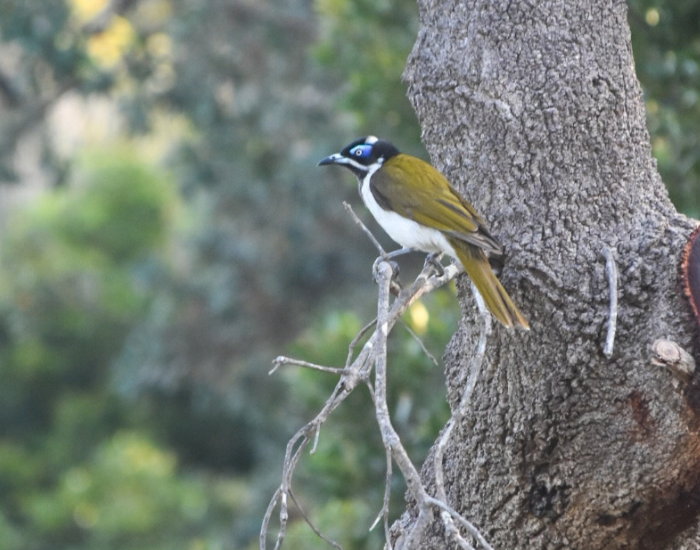
12. Blue-faced Honeyeater (Entomyzon cyanotis)
I watched one blue-faced honeyeater get chased off by an angry mob of noisy miners. You’ll see this scene across much of eastern Australia.
Noisy miners (Manorina melanocephala) are native, yet they act like a despotic species. Research shows that where miners dominate, many smaller woodland birds vanish. They thrive in cleared edges, which humans keep creating. The blue-faced honeyeater is big and bold, but even it gave up the tree.
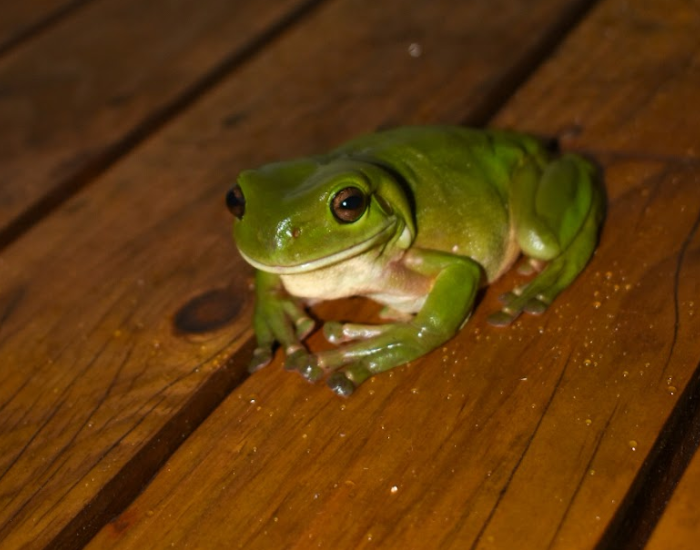
13. Australian Green Tree Frog (Litoria caerulea)
Tucked into the vegetation, then jumping into the floor of the bathrooms, this frog looked straight at me with that famous “smile.” It might be the cutest animal on this whole list.
Green tree frogs are nocturnal and often move into bathrooms, tanks and downpipes looking for moisture. Their skin produces peptides with antimicrobial properties, which scientists have studied for decades. More in Australian White Tree Frog Facts.
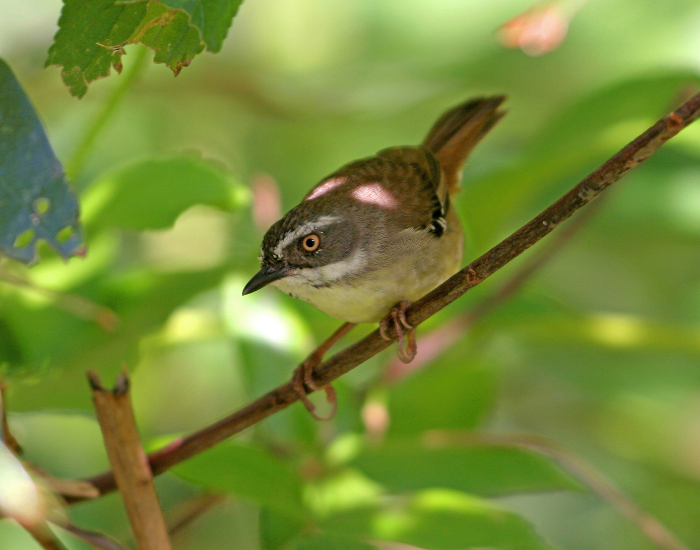
14. White-browed Scrubwren (Sericornis frontalis)
I never got a photo of this one. But to be fair, anyone that has tried photographing a wren will agree. They stayed deep in the bush beside our campsite, too quick for my camera to click. Still, I saw one clearly: white brow, pale eye, olive-brown body.
Scrubwrens forage on the ground and in low thickets for insects and spiders. They nest in dense cover, so messy understorey matters for them. If you hear soft, scolding chatter from a bush, look low.
15. Pacific Black Duck and Australian Wood Duck
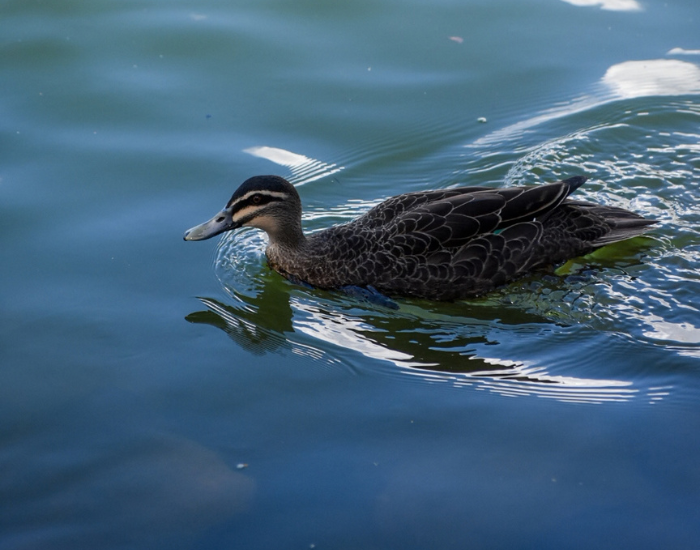
Pacific black ducks (Anas superciliosa) cruised past while I worked by the river. Australian wood ducks (Chenonetta jubata) waddled across the lawns. I’d seen both at Coombabah, but these were the first of the lap.
Wood ducks are unusual ducks. They graze grass like geese and nest in tree hollows. Their ducklings leap from the hollow to the ground soon after hatching. Pacific black ducks, by contrast, dabble on the water and live almost everywhere in Australia.
Exploring Bellingen Between Wildlife Walks
We spent our afternoons in town, and it’s a great place to slow down. Bellingen offers a rich selection of cafés and eateries. Hearthfire Bakery is known for woodfired sourdough, perfect with your morning coffee. Charlie’s at Church serves fresh pasta daily, and Bruno’s Mediterranean Kitchen, which opened in 2021, adds sharing dishes to the mix. Bellingen Brewery pairs woodfired pizza with craft beer. Then indulge at Bellingen Gelato Bar, which makes house-made flavours from natural, locally sourced ingredients.
For shopping, the Old Butter Factory features locally made goods, crafts and artisan workshops. Retro Bello sells curated vintage clothing and homewares. Kombu Wholefoods has supported local farmers and artisans for over 20 years, so pick up your supplies there. Time your trip for the third Saturday of the month to catch the community market. The town also hosts festivals and events throughout the year, so check the calendar before planning.
The Bellinger River is popular for kayaking and swimming. Bellingen Canoe Adventures runs both flatwater and rapids tours. The Promised Land, a 15-minute drive away, has several deep swimming holes for a dip with the kids. Down at the river mouth, the Urunga boardwalk is constructed over the estuary, offering easy birdwatching.
Head up the Waterfall Way and you reach Dorrigo National Park, part of a World Heritage-listed rainforest area. The Wonga Walk is roughly a 6 km circuit through ancient rainforest. Red Cedar Falls is the tallest waterfall in Dorrigo. We’ll cover it properly in our next post.
FAQs You May Have
Yes. If you have the time and want to get away from the crowds. You get a calm river full of birds, rainforest and the World Heritage-listed Dorrigo National Park nearby. The town adds good food, galleries and markets. We planned one night and stayed three.
Urunga, at the mouth of the Bellinger River, is roughly a 15-minute drive. Coffs Harbour’s beaches and headlands are about 35 minutes away by road.
Urunga, Dorrigo, Coffs Harbour, Sawtell and Nambucca Heads are all within an easy drive. Dorrigo sits up the Waterfall Way, while the coastal towns lie east along the Pacific Highway.
It combines a pretty heritage town with river swimming, rainforest walks and the coast. Locals support independent shops and cafés, and the arts and festival scene draws visitors all year. For wildlife lovers, the variety of habitat is the main draw.
Bellingen was a Reminder
Bellingen reminded me that a single calm river can hold a whole story. The same water gave me my first scaly-breasted lorikeet, a kingfisher at dusk, and a turtle tangled in an endangered species’ fight for survival. It also showed me two flying-foxes that never made it home.
If you visit, sit by the river at dusk and wait. Have you seen a platypus in the Bellinger? Tell me in the comments, because we’re still looking. Our next stop covers Nambucca and maybe Dorrigo. Until then, browse the best NSW national parks for your own trip.
References:
Ashton, B. J., Ridley, A. R., Edwards, E. K., & Thornton, A. (2018). Cognitive performance is linked to group size and affects fitness in Australian magpies. Nature, 554(7692), 364–367. https://doi.org/10.1038/nature25503
Bino, G., Kingsford, R. T., Archer, M., Connolly, J. H., Day, J., Dias, K., … Whittington, R. J. (2019). The platypus: Evolutionary history, biology, and an uncertain future. Journal of Mammalogy, 100(2), 308–327. https://doi.org/10.1093/jmammal/gyz058
Georges, A., Spencer, R.-J., Kilian, A., Welsh, M., & Zhang, X. (2018). Assault from all sides: Hybridization and introgression threaten the already critically endangered Myuchelys georgesi (Chelonia: Chelidae). Endangered Species Research, 37, 239–247. https://doi.org/10.3354/esr00928
Maron, M., Grey, M. J., Catterall, C. P., Major, R. E., Oliver, D. L., Clarke, M. F., … Thomson, J. R. (2013). Avifaunal disarray due to a single despotic species. Diversity and Distributions, 19(12), 1468–1479. https://doi.org/10.1111/ddi.12128
Welbergen, J. A., Klose, S. M., Markus, N., & Eby, P. (2008). Climate change and the effects of temperature extremes on Australian flying-foxes. Proceedings of the Royal Society B, 275(1633), 419–425. https://doi.org/10.1098/rspb.2007.1385
Zhang, J., Finlaison, D. S., Frost, M. J., Gestier, S., Gu, X., Hall, J., … Kirkland, P. D. (2018). Identification of a novel nidovirus as a potential cause of large scale mortalities in the endangered Bellinger River snapping turtle (Myuchelys georgesi). PLoS ONE, 13(10), e0205209. https://doi.org/10.1371/journal.pone.0205209