If you have spent time near the coast or a large lake, you have probably spotted a familiar silhouette, wings bent at the wrist, hovering with precise, almost frantic energy. That, my friend, is an osprey bird in full hunting mode.
I still remember my first sighting. I was on a field trip in Baja, Mexico, heading toward Ensenada. Coming from Mexico City, I was used to concrete. Spotting what looked like a white eagle hovering above the Pacific surf was genuinely mind-blowing. I watched it hover, fold its long wings, and plummet toward the ocean, emerging seconds later with a live fish locked in its black talons.
Now living on the coast of Australia, I see ospreys all the time. A breeding pair nests above a creek flowing into a beach near my home. After a massive cyclone hit us last year, the local council stepped in to help the birds rebuild their nest site. Community osprey support at its finest.
So, here are 12 osprey facts that prove Pandion haliaetus is not just another hawk. It is evolution’s answer to one question: how do you turn a bird of prey into the ultimate fisherman?
1. Ospreys Are the Only True Fish Hawks
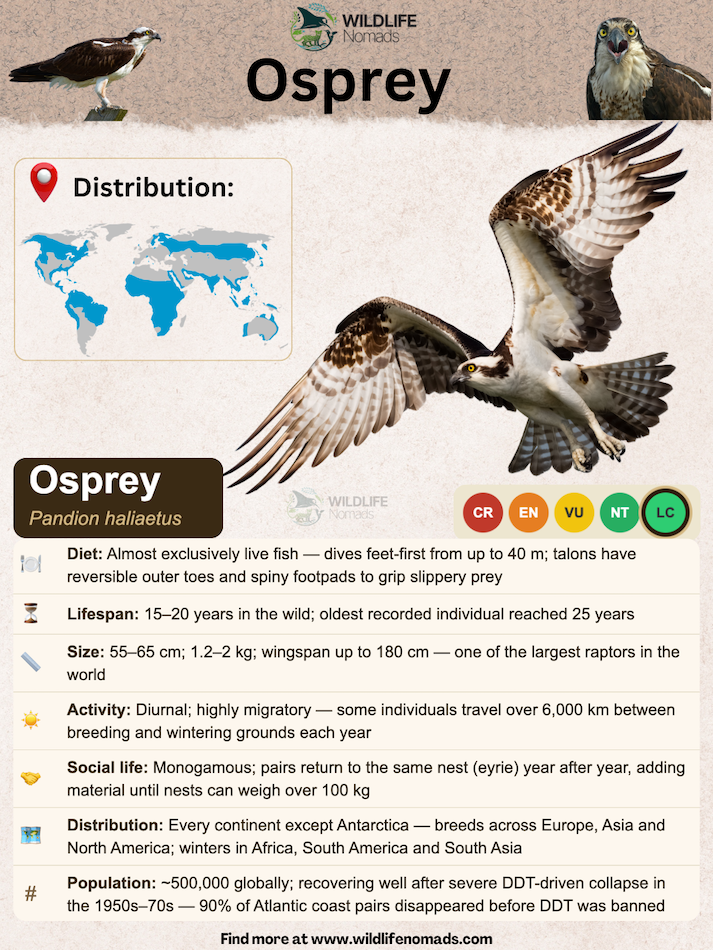
Many birds of prey will opportunistically snatch a fish. Bald eagles do it. Some owls do too. However, the osprey is in a class of its own. Fish make up approximately 99% of the osprey’s diet, nearly all of it live fish caught fresh from the water. Osprey birds are also commonly known as ‘sea hawks’ and ‘river hawks’ due to their aquatic hunting habits.
This extreme specialisation means ospreys belong to their own unique family, Pandionidae, entirely separate from all other hawks and eagles. Scientists recognise four subspecies distributed across different parts of the globe. Because of this, some researchers classify each regional population differently, though most authorities currently treat them under the single species Pandion haliaetus.
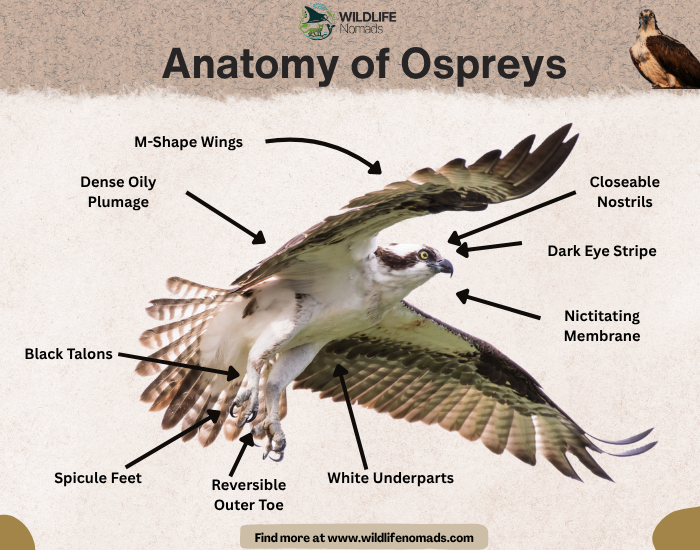
Think of the osprey as the elite aquatic sniper of the bird world. The fish hawk title is entirely earned. While a golden eagle targets small mammals on open hillsides, every part of the osprey’s anatomy is tuned to catching fish, from its large feet to its closeable nostrils.

2. A Reversible Outer Toe — The Ultimate Grip
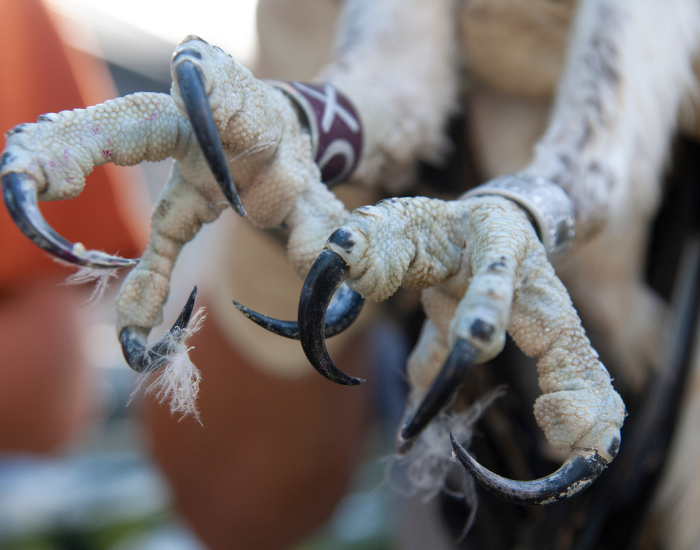
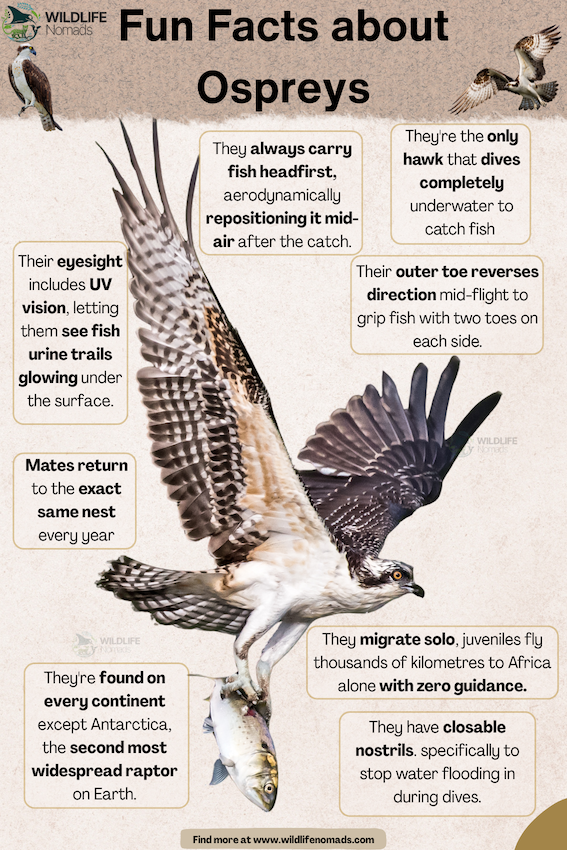
Try holding a live, slippery fish and you will quickly understand the problem ospreys had to solve. Their answer is a reversible outer toe, a biological feature unique among North American raptors.
Most birds of prey have three toes forward and one back. Ospreys can rotate their outer toe backward, creating a ‘two-and-two’ grip. This four-way pincer clamps down on prey with extraordinary force. No other widely distributed raptor species shares this particular adaptation.
The reversible outer toe works in concert with another feature: spicules. These sharp, needle-like scales cover the soles of the osprey’s large feet. Spicules dig into a fish’s scales the instant those black talons make contact, preventing escape.
Together, the reversible toe and spicules give ospreys a catch success rate of roughly between 25% up to 70%, one of the highest of any bird of prey on the planet. But it depends on location, season, and individual bird skill.
3. They Carry Fish Headfirst — And It’s Pure Physics
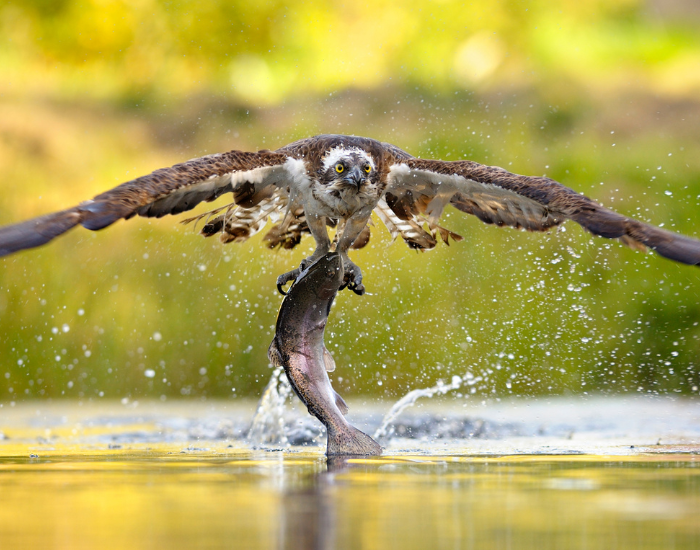
Watch a breeding osprey fly back to its nest site after a successful hunt. You will notice something remarkable. It does not carry fish sideways. It rotates the fish in its talons so the head faces forward, aligning the prey with the direction of flight.
Carrying fish headfirst reduces aerodynamic drag significantly. The osprey minimises wind resistance and conserves energy on every trip between fishing ground and nest. It is instinctive, consistent, and beautifully efficient.
4. Built-In Goggles and Nose Plugs
When ospreys dive, they do not merely skim the surface. They often submerge completely, chasing unsuspecting fish below the waterline. To survive this, evolution gave them two remarkable adaptations.
First, a nictitating membrane, a third eyelid that slides across the eye like a pair of goggles, allowing clear vision underwater. Second, nostrils they can voluntarily close to prevent water entering their lungs on impact. No other commonly seen bird of prey routinely does both of these things.
These adaptations transform the osprey from a bird that hunts near water into one that operates confidently within it. Osprey dives typically reach depths of up to one metre below the surface, sometimes more, depending on the depth of the prey.
5. High-Speed Plunge Dives from 10 to 40 Metres
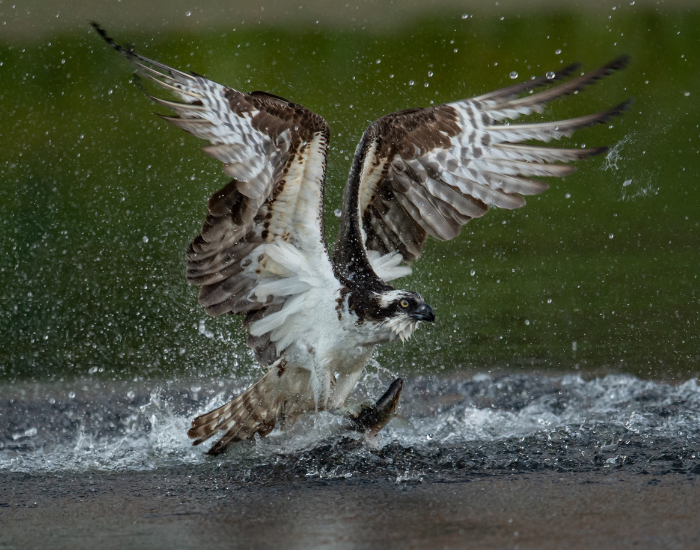
Osprey dives begin with a long hover, sometimes lasting several minutes, as the bird tracks an unsuspecting fish below. Then it folds its long wings tight and plunges feet-first from heights of 10 to 40 metres, hitting the water at remarkable speed.
The entire sequence from commitment to impact takes just a few seconds. Young ospreys and juvenile birds refine this technique over their first season, watching adults and practising repeatedly. Osprey behavior around hunting is highly deliberate, these are not impulsive strikers. They wait for the right angle, the right depth, and the right moment.
Osprey dives are among the most dramatic hunting sequences in the natural world. Once you see one, you understand immediately why this species has survived for millions of years.
6. Osprey Nests Are Architectural Masterpieces
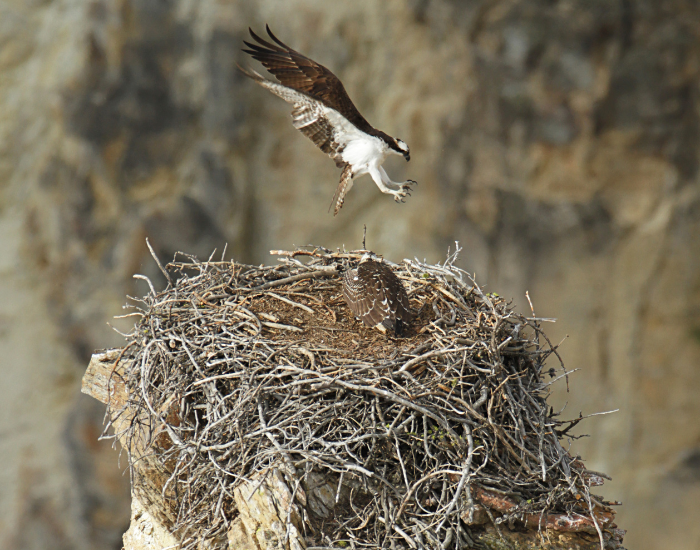
Osprey nests, known as eyries, are genuinely impressive structures. Breeding ospreys return to the same nest site year after year, adding fresh sticks, seaweed, rope, and debris each breeding season. Over decades, these nests grow heavy enough to break tree limbs.
In many regions, ospreys have adapted to human infrastructure. They build on utility poles, channel markers, and cell towers. Conservationists across Australia, the southern United States, the Gulf Coast, and the UK now install dedicated osprey platforms, raised nesting poles that give breeding pairs a safer location away from power lines.
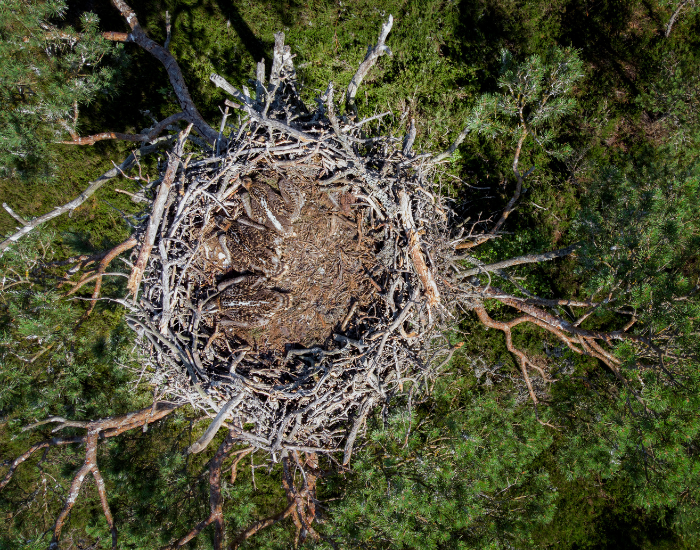
7. Breeding Season, Osprey Eggs, and Chick Development
Breeding ospreys typically start breeding in spring. Timing varies by region, pairs in the southern United States and Gulf Coast start breeding earlier than those in Scotland or northern Canada. The female osprey lays two to four osprey eggs per clutch, with three being the most common number.
Both osprey parents share incubation duties, though the female osprey does the majority. Osprey eggs hatch after approximately 37 days. Juvenile birds remain in the nest for around 50 to 55 days before fledging.
Young ospreys and juvenile birds spend their first summer near the nest site, learning to hunt. Chicks learn to catch fish through trial and error, and many fail repeatedly before mastering the plunge dive. Osprey behavior during this period is fascinating to observe. The male osprey delivers live fish to the nest while the female tears it apart for young birds who cannot yet catch prey themselves.
Young birds that survive their first year face their greatest test next: a solo migration south, often their first major journey, completed entirely without parental guidance.
8. Osprey Migration: Solo Marathons Across Continents
Ospreys migrate across extraordinary distances. North American ospreys travel to South America and Central America for winter. European ospreys head to West Africa. Some individual birds cover more than 5,000 kilometres in a single migration.
Ospreys migrate almost entirely solo. They do not form flocks. Young ospreys on their first southward journey do not follow their parents, they navigate by instinct alone, using the sun, stars, and magnetic cues to find wintering grounds they have never visited.
Satellite tracking has confirmed that individual ospreys follow highly consistent routes year after year, stopping at the same locations. Long migrations are, therefore, not random wandering. They are precision journeys encoded in the osprey’s biology.
When ospreys migrate north in spring, they return to the same nest site with remarkable accuracy. Many breeding pairs reunite at the same nest within days of each other, a testament to how deeply nest-site fidelity is embedded in osprey behavior.
9. The DDT Comeback, A Conservation Success Story
By the mid-20th century, osprey populations across North America and Europe had collapsed. The pesticide DDT accumulated in the food chain, concentrating in the fish that ospreys ate. It caused catastrophic eggshell thinning, osprey eggs broke under the weight of incubating parents before chicks could hatch.
The US ban on pesticide DDT in 1972, .driven in part by Rachel Carson’s landmark 1962 work Silent Spring, and later supported by the US Fish and Wildlife Service and EPA, allowed osprey populations to recover. Conservation programs, artificial nest platforms, and habitat protection accelerated the comeback dramatically.
Today, the IUCN lists the osprey as Least Concern. Osprey populations in North America are stable and growing. Climate change now poses a newer, subtler threat, shifting prey fish distributions and altering the timing of breeding season. However, the DDT recovery remains one of the most compelling conservation success stories in the history of birds of prey.
10. Site-Faithful, Not Strictly Mate-Faithful
Ospreys are generally monogamous. However, their loyalty is primarily to a nest site rather than to a specific partner. Each spring, ospreys return to the same nest site. If their previous mate also returns, the pair re-forms naturally.
If one bird in an osprey pair fails to return, the remaining bird finds a new mate. It is a pragmatic approach to breeding, the nest site stays occupied and ospreys tend to maximise reproductive success regardless of partner continuity.
Aerial display plays an important role in pair formation and nest defence. Male ospreys perform spectacular courtship flights, carrying live fish while calling loudly above the nest site. These aerial displays help establish pair bonds and signal territorial boundaries to rival osprey pairs in the area.
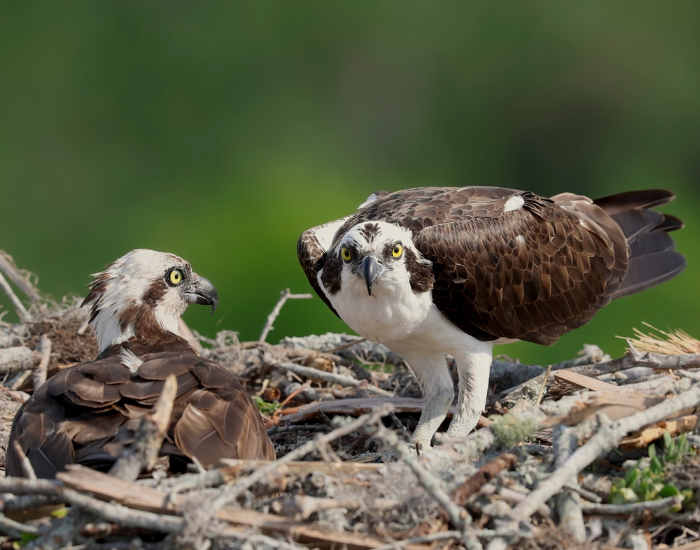
11. How to Identify Osprey Birds in the Field
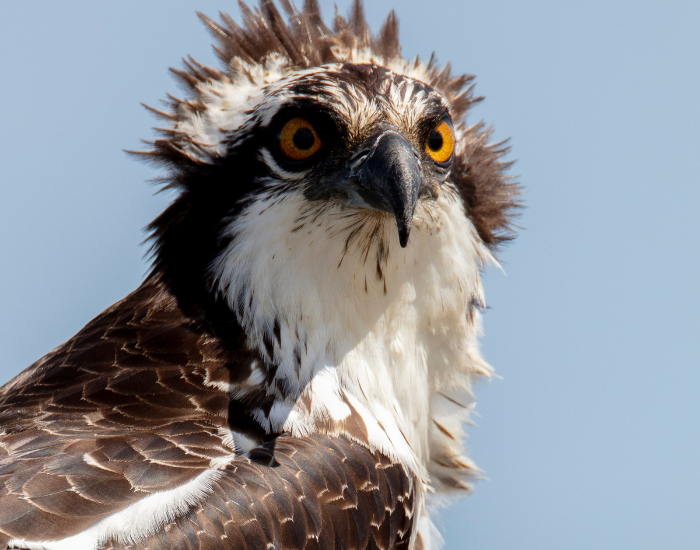
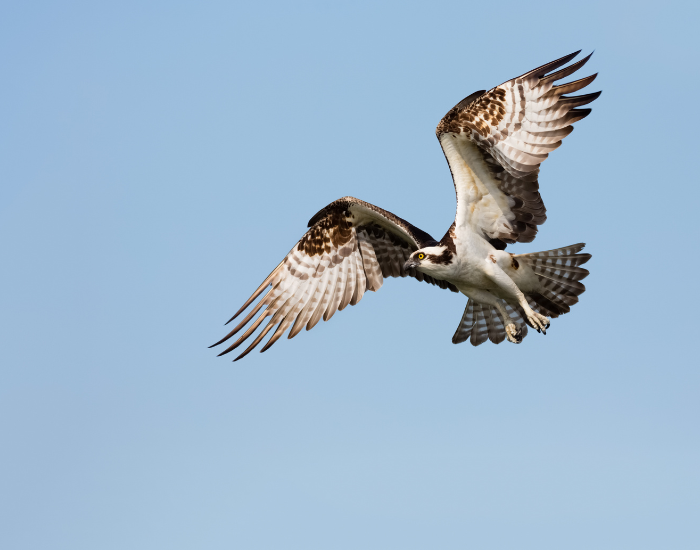
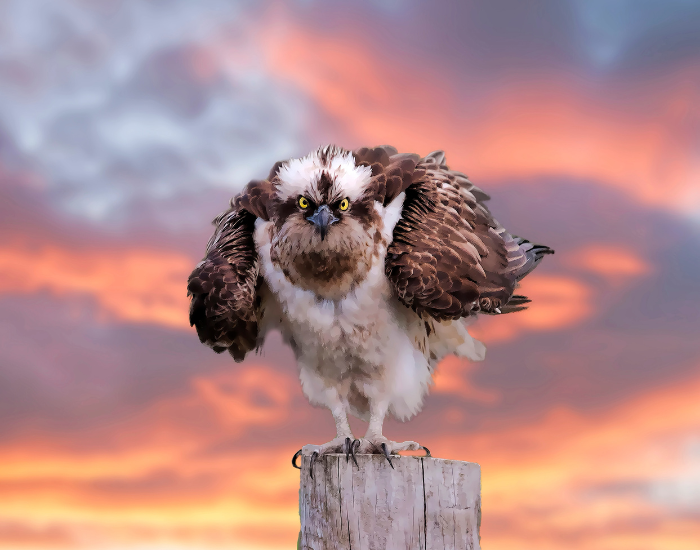
The osprey’s appearance is distinctive once you know what to look for. Adults have white underparts, a white head with a prominent dark eye stripe, and brown feathers across the upper wings and back. The dark eye stripe running from the bill through the bright yellow eyes to the back of the head is one of the most reliable field marks.
In flight, the long wings bend at the wrist into a clear M-shape, unlike the flat, plank-like silhouette of bald eagles. Female ospreys often display a ‘necklace’ of dark, streaked feathers across the upper chest. Female ospreys are also larger and heavier than male ospreys, typical of birds of prey.
Young ospreys and juvenile birds show pale fringes on their brown feathers across the upperwing, giving them a slightly spotted or scaly appearance. This plumage fades as they mature into full adult breeding birds by their third year.
Many birds get misidentified in coastal areas. However, the bent wing shape, white underparts, and dark eye stripe make osprey birds unmistakable once you know the combination.
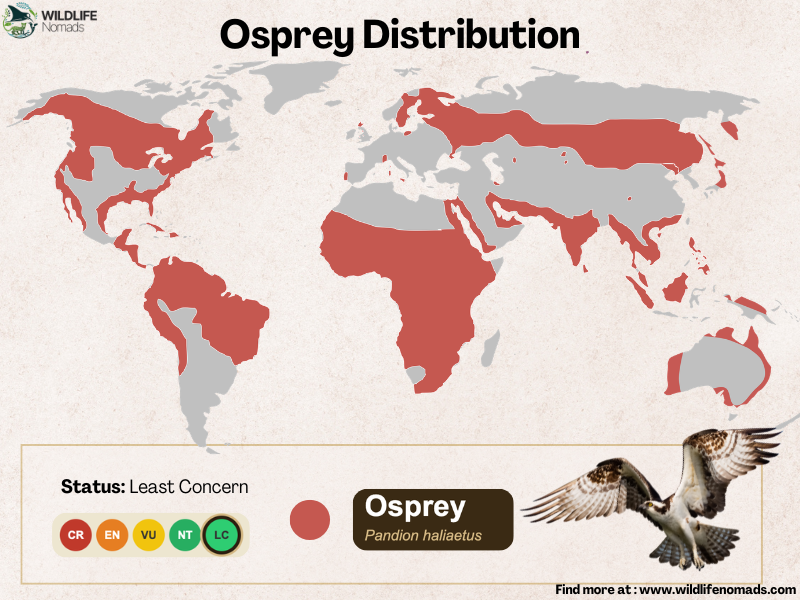
12. Ospreys Are One of the World’s Most Widely Distributed Raptor Species
Of all the birds of prey on Earth, the osprey has one of the widest distributions. Breeding ospreys nest across North America, Europe, Australia, and parts of Asia. Osprey pairs winter across South America, West Africa, and Southeast Asia. They are, without question, a truly global species.
This near-global range speaks directly to the success of the fish hawk strategy. As long as clean water and fish exist, and osprey populations remain protected from pesticide DDT and habitat loss, these birds thrive wherever they settle.
Ospreys tend to avoid only truly extreme environments: high-altitude deserts, frozen tundra, and dense interior forests far from water. Everywhere else, if there is a river, a lake, a coast, or an estuary, ospreys will likely find it. They are not many birds, they are one species doing the work of many.
Osprey vs. Bald Eagles: How to Tell Them Apart
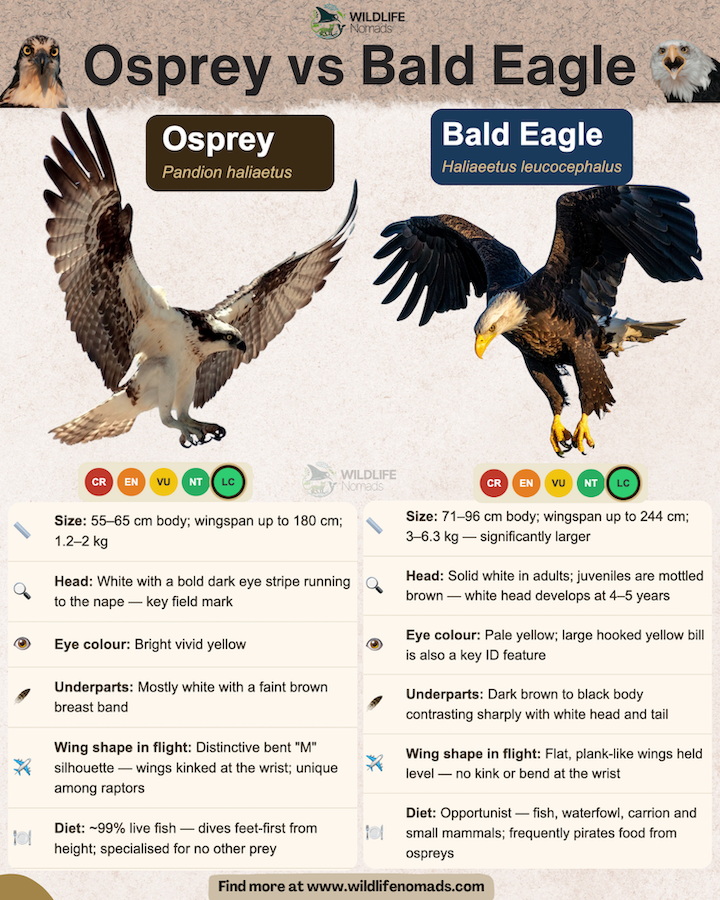
Confusing ospreys with bald eagles is one of the most common mistakes in wildlife watching. The key differences come down to size, wing shape, and colouration. Here is a quick comparison:
| Feature | Osprey | Bald Eagle |
| Head | White with a dark eye stripe | Solid white (adults) |
| Eye colour | Bright yellow eyes | Pale yellow eyes |
| Underparts | Mostly white | Dark brown / black |
| Wing shape in flight | Bent ‘M’ silhouette | Flat, plank-like wings |
| Body size | 55–58 cm body length | 71–96 cm body length |
| Diet | ~99% live fish | Fish, carrion, small mammals |
| Feet | Large feet with spicules, reversible toe | Large talons, fixed toe arrangement |
The single most reliable field mark is the wing shape in flight. Osprey birds bend their long wings at the wrist into a clear M-silhouette. Bald eagles hold their wings flat. Once you know that, you will never confuse them again.
FAQs: Osprey Facts
Neither, strictly speaking. Osprey birds belong to their own family, Pandionidae. They are commonly called fish hawks, sea hawks, or river hawks, but these are informal names. Scientists recognise four subspecies of Pandion haliaetus across the globe.
In the wild, ospreys typically live 15 to 20 years. The oldest known osprey on record reached 25 years of age. Captive birds may live longer with consistent food and veterinary care.
Rarely. Ospreys tend to eat almost exclusively live fish. They have been documented taking the occasional small rodent or small snake when fish are unavailable.
References:
Bierregaard, R. O., Poole, A. F., & Washburn, B. E. (2014). Ospreys (Pandion haliaetus) in the 21st century: Populations, migration, management, and research priorities. Journal of Raptor Research, 48(4), 301–308. https://doi.org/10.3356/0892-1016-48.4.301
Bierregaard, R. O., Poole, A. F., Martell, M. S., Pyle, P., & Patten, M. A. (2020). Osprey (Pandion haliaetus), version 1.0. In P. G. Rodewald (Ed.), Birds of the World. Cornell Lab of Ornithology. https://doi.org/10.2173/bow.osprey.01
BirdLife International. (2021). Pandion haliaetus. The IUCN Red List of Threatened Species 2021: e.T22694938A206628879. https://dx.doi.org/10.2305/IUCN.UK.2021-3.RLTS.T22694938A206628879.en
Hake, M., Kjellén, N., & Alerstam, T. (2001). Satellite tracking of Swedish Ospreys Pandion haliaetus: Autumn migration routes and orientation. Journal of Avian Biology, 32(1), 47–56. https://doi.org/10.1034/j.1600-048X.2001.320107.x
Henny, C. J., Grove, R. A., Kaiser, J. L., & Johnson, B. L. (2010). North American osprey populations and contaminants: historic and contemporary perspectives. Journal of toxicology and environmental health. Part B, Critical reviews, 13(7-8), 579–603. https://doi.org/10.1080/10937404.2010.538658
Klećkowska-Nawrot, J. E., Kroczak-Zdańkowska, A., Urantówka, A. D., Barszcz, K., & Goździewska-Harłajczuk, K. (2025). Descriptive histological analysis of the upper, lower, and third eyelids and the conjunctiva-associated lymphoid tissue in birds of prey. BMC veterinary research, 21(1), 213. https://doi.org/10.1186/s12917-025-04677-0
Martell, M. S., Henny, C. J., Nye, P. E., & Solensky, M. J. (2001). Fall migration routes, timing, and wintering sites of North American Ospreys as determined by satellite telemetry. The Condor: Ornithological Applications, 103(4), 715–724. https://doi.org/10.1093/condor/103.4.715