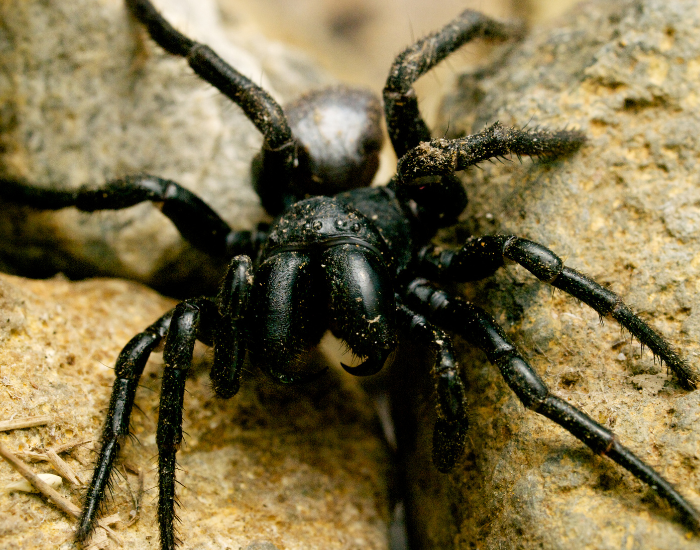
Discover Britain’s Raptors
The birds of prey in the UK, also known as raptors, are some of the most charismatic predatory bird species in Europe. The UK is home to 15 breeding species, spanning the main raptor groups: buzzards and eagles, hawks and harriers, falcons, and owls. They are defined by sharp talons, hooked bills, and keen eyesight, and as top predators they play a crucial role in keeping their ecosystems in balance. You’ll find them adapted to habitats right across the country, from dense woodland to open coast, though open farmland and heathland are some of the best places to spot them. Identifying one comes down to reading its silhouette, flight behaviour, and habitat. Yet this abundance was hard-won: many of these species were persecuted to near extinction in the 20th century, and their recovery is one of British conservation’s quiet triumphs.
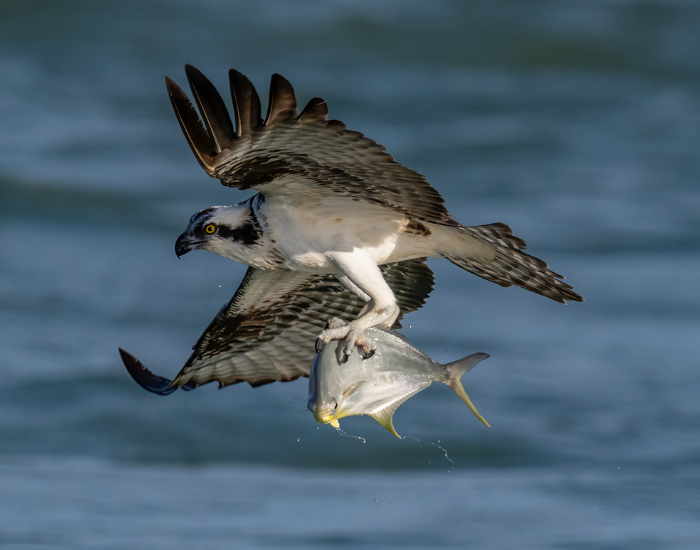
At Wildlife Nomads, this isn’t theory for us. Our team spent a few years living and hiking in the UK, and some of our clearest memories are of common buzzards working the fields for food, wheeling low over the hedgerows on a cold morning. On the coast we’d watch ospreys hunt — a bird so widely distributed that I’ve since seen it fishing the shores of Mexico too.
In this guide, I’ll walk you through the top UK birds of prey. You’ll learn how to identify them, understand their conservation status, and discover the best places to spot them. If you’re interested in the wider range of animals found in the UK, dive deeper into our blog: Animals of the United Kingdom

What Makes Birds of Prey Special?
Defining Characteristics of Raptors
What makes a bird of prey different from, say, a crow or gull? Three key features define these predatory bird species.
First, they possess sharp talons for seizing prey. These powerful weapons grip with incredible force, allowing them to catch everything from fish to small mammals.
Second, they have hooked bills for tearing flesh. This adaptation makes them efficient hunters and scavengers.
Third, they display keen eyesight, up to eight times sharper than ours. This means they can spot movement from extraordinary distances.
Additionally, some species can be identified by their yellow legs, which is a distinctive feature among certain birds of prey.

Top 12 Birds of Prey in the UK
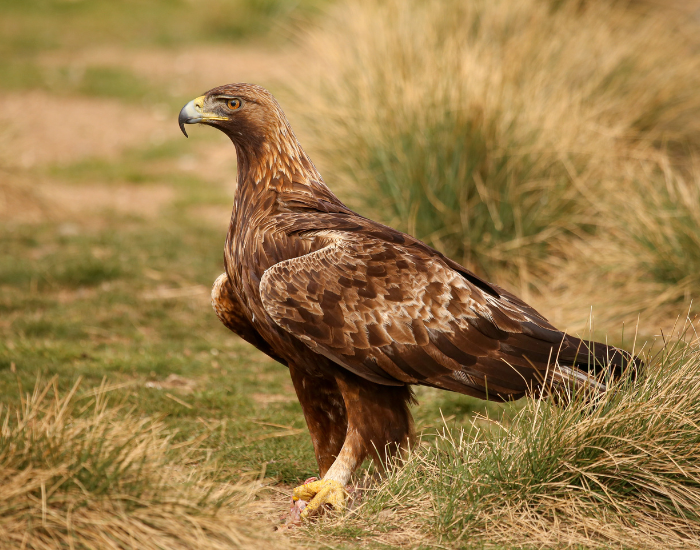
1. Golden Eagle: Britain’s Apex Predator
The golden eagle is Britain’s giant. Wingspans can reach 220cm (sometimes up to 240cm), making them truly impressive. As one of such large birds, the golden eagle stands out for its sheer size compared to other UK raptors.
With dark brown plumage and golden head feathers, they dominate Scotland’s highlands. Their broad wings allow them to soar effortlessly over rugged moorland. Furthermore, their keen eyesight scans for hares and small mammals from great heights.
Conservation projects have stabilized their numbers. However, they remain rare outside Scotland. These eagles represent the wild spirit of the British Isles.
2. White-Tailed Eagle: The Flying Barn Door
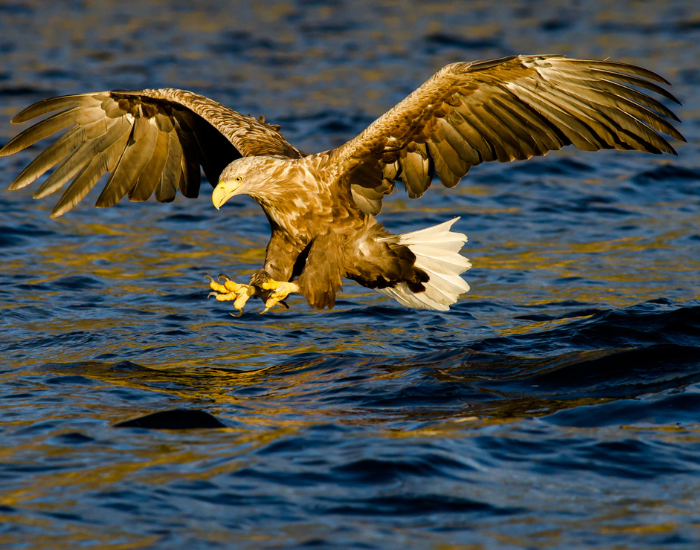
The white-tailed eagle is the UK’s largest raptor. Nicknamed the “flying barn door” for its immense size, this giant sports exceptionally broad wings, a pale grey head, and a brilliant white tail that contrasts sharply with dark brown plumage.
Once driven to extinction in the British Isles, their return is a masterclass in modern conservation. Successful reintroduction programs first established breeding populations in western Scotland. More recently, a landmark English reintroduction project launched on the Isle of Wight in 2019, meaning these magnificent eagles are now expanding their territory across southern skies.
Primarily feeding on fish, seabirds and other waterbirds, their presence is a prime indicator of a healthy coastal ecosystem. Spotting one silhouette against the coast remains a bucket-list experience for any birdwatcher.
3. Red Kite: A Conservation Triumph
Few conservation stories are as uplifting as the red kite’s journey. Once persecuted across Britain, these graceful birds of prey were reintroduced in the 1990s.
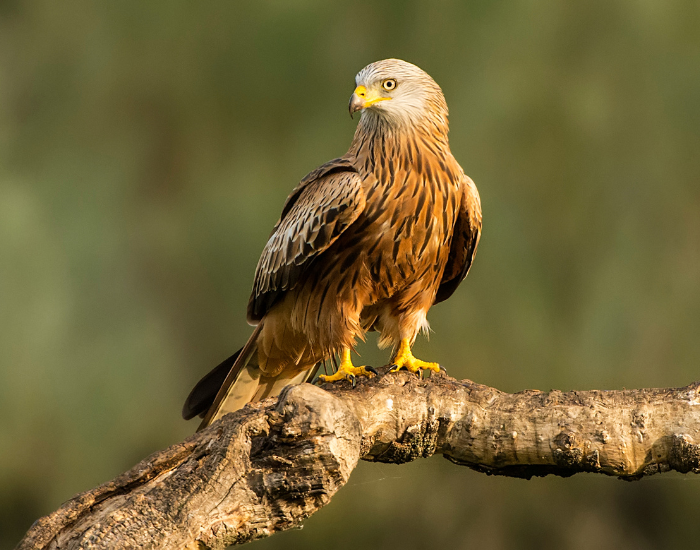
They are now common in parts of England and Wales, especially in South East England where they are prevalent in woodland and farmland areas. Their reddish brown plumage, distinctive forked tail, and the white patches underneath their wings are key identification features. The presence of white patches on the wings and tail are distinctive markers that make them easy to identify. The Red Kite has a wingspan of up to 195cm! Moreover, they glide over urban green spaces and countryside alike.
Red kites are very adaptable. They feed on carrion, small mammals, and even earthworms. This makes them prone to thrive in various habitats. Watching red kites soar above British birds always lifts my spirits.
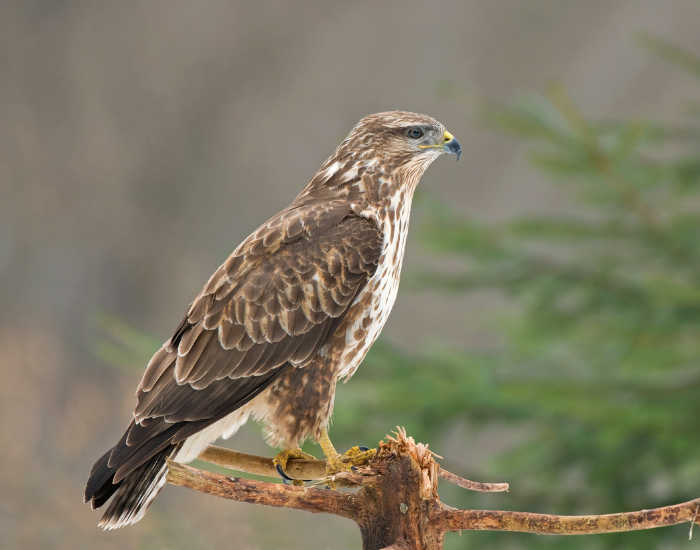
4. Common Buzzard: The UK’s Most Common Raptor
The buzzard is now the UK’s most common raptor. With a mix of grey brown plumage and mottled silver grey feathers, they’re highly variable.
Adaptable and opportunistic, these birds of prey feed on rabbits, carrion, and even earthworms. Their broad wings are perfect for soaring on thermals. In addition, their rounded head and stocky build make them distinctive.
I often saw buzzards perched on fence posts while driving across Devon. It’s an everyday but impressive sight. Furthermore, their mewing call is a familiar sound across the British countryside.
5. Sparrowhawk: The Woodland Assassin
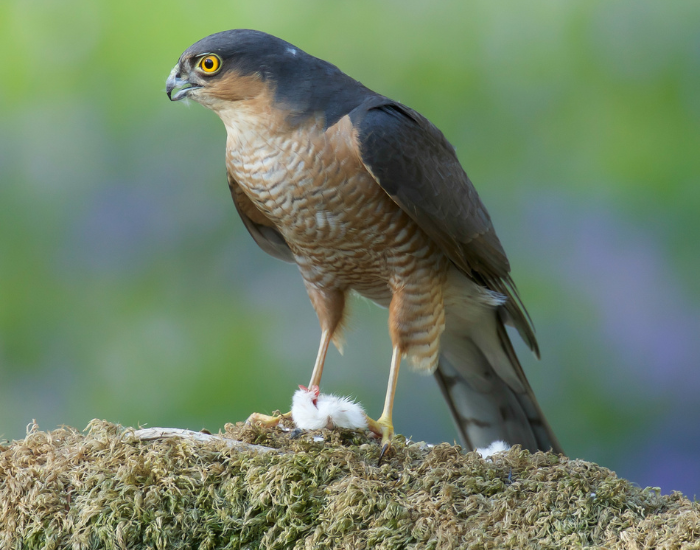
This small but fierce hunter has blue-grey backs, orange barring underneath, and yellow eyes. Males are notable for their white underparts, which contrast with their grey head and barring underneath. Females are larger, taking pigeons and other substantial prey, and can be distinguished by their brown wings.
Males often hunt small birds with remarkable agility. Their grey head and grey barring underneath help camouflage them in woodland. Additionally, their rounded or broad wings allow tight maneuvering between trees.
6. Kestrel: The Hovering Hunter
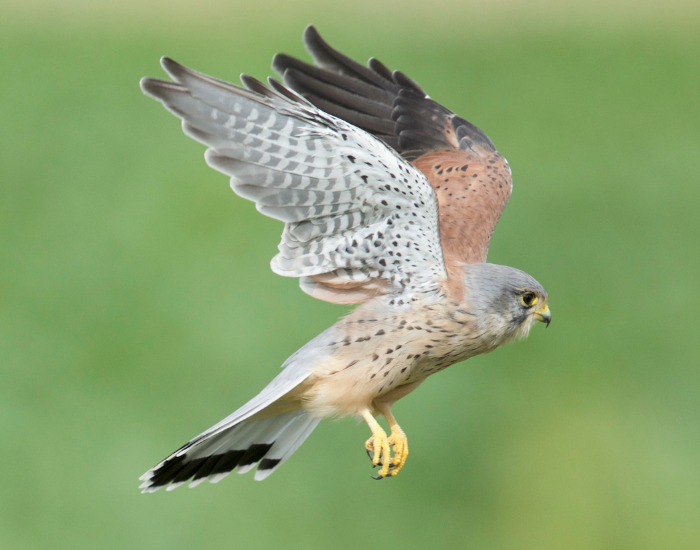
Famous for hovering mid-air with pointed wings, the kestrel is one of the easiest raptors to spot. Their grey head and reddish brown plumage are distinctive. The kestrel’s tail features dark banding, and males have a distinctive grey tail with dark banding, which is a useful identification marker.
Males display attractive blue grey backs. In contrast, females show more uniform brown coloring. However, both sexes hunt voles and insects with precision.
Motorway verges and farmland are prime kestrel-watching spots. Even casual observers often encounter these birds of prey. Their hovering behavior is instantly recognizable among British birds.
7. Peregrine Falcon: The Speed King
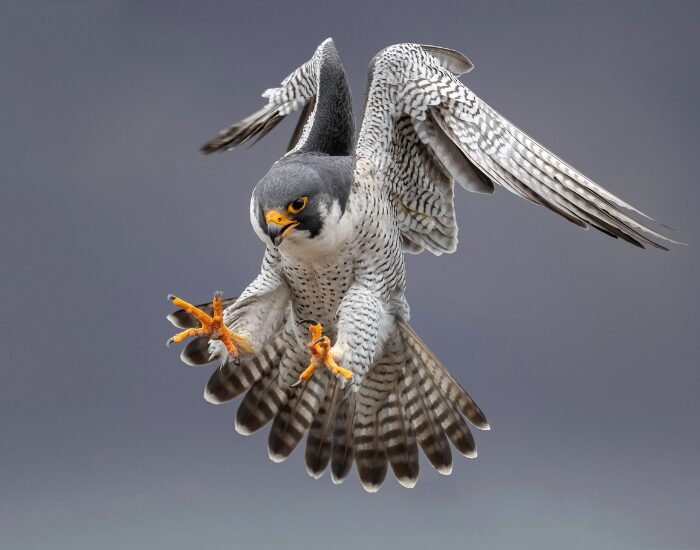
The Peregrine Falcon is recognised as the fastest animal on Earth. They can dive at over 200mph. With a black moustache, black tipped wings, and distinctive black bars underneath its white belly, they’re unmistakable. The peregrine also features a white throat, which is a key identification marker.
They often nest on cathedrals and city skyscrapers. So, urban green spaces provide excellent viewing opportunities if you are looking up. Their slate grey plumage and powerful build inspire awe.
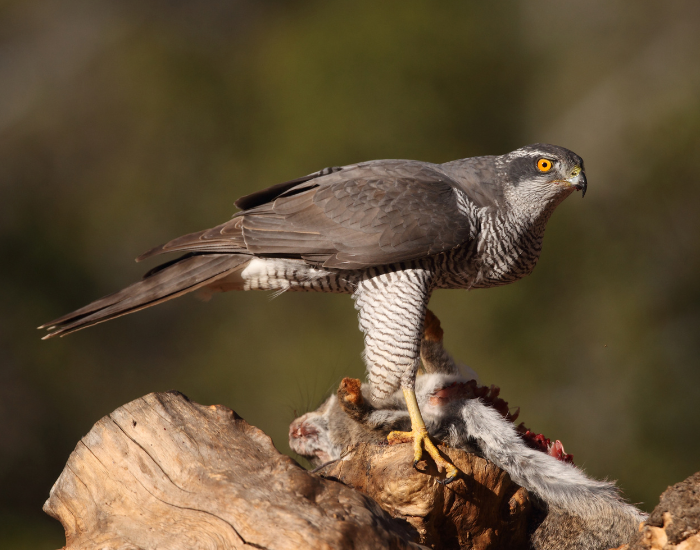
8. Goshawk: The Phantom of the Forest
The goshawk is a powerful woodland hunter. With a rounded head, grey plumage, and fierce stare, they command respect.
Goshawks are secretive and rare. However, if you walk through ancient woodland in Wales or northern England, you might spot them. Their broad wings cut between trees with remarkable precision. The Goshawk favours dense woodland and is larger than the Sparrowhawk!
Goshawks represent the wild heart of British forests. In addition, their presence indicates healthy woodland ecosystems. Spotting one remains a special achievement for birdwatchers.
9. Merlin: Britain’s Smallest Falcon
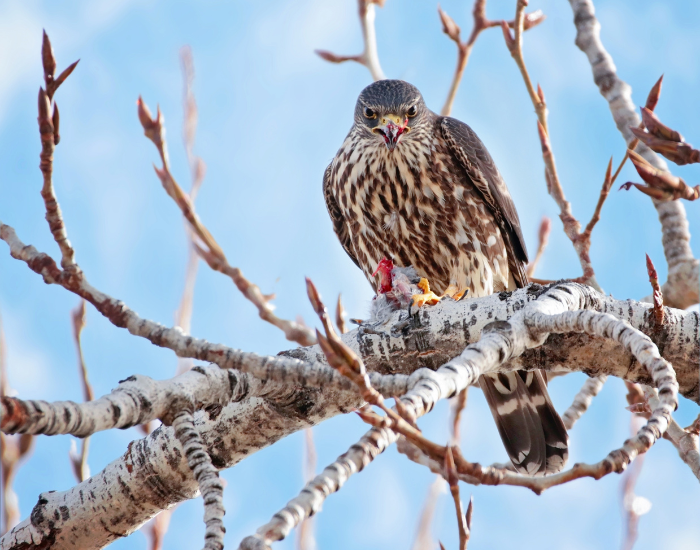
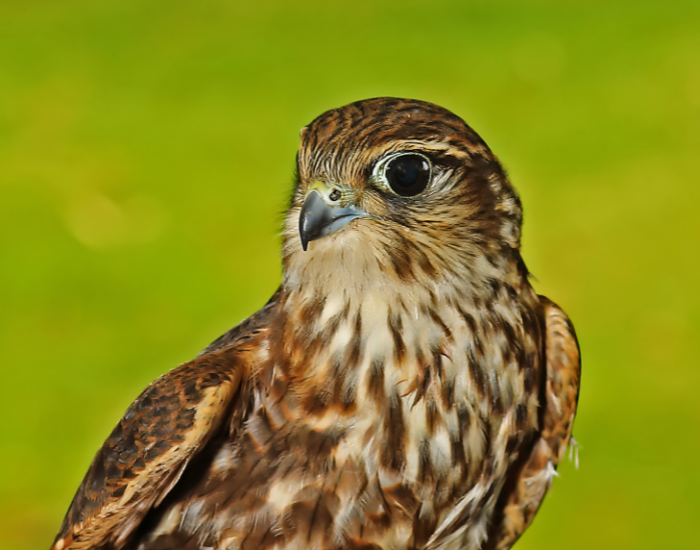
The merlin is Britain’s smallest falcon. Males display mottled silver grey plumage and distinctive red trousers, with black streaks underneath and dark streaking on their underparts, key identification features of the species.
They hunt skylarks and pipits over moorlands. Their compact size belies their ferocious hunting ability. Moreover, their speed is breathtaking.
10. Marsh Harrier: The Wetland Specialist
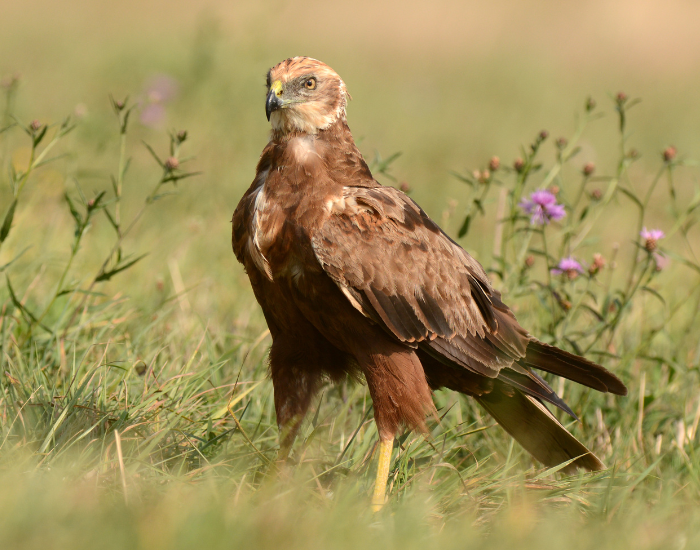
With long broad wings and dark brown plumage, the marsh harrier is a wetland specialist. Females are easily identified by their rich chocolate brown plumage and a striking golden yellow crown and throat. Males, in contrast, display a distinctive ginger underneath on their bellies and underparts, which stands out against their brown upperparts. Look for them gliding low over reedbeds, wings held in a distinctive V-shape.
These birds of prey were almost lost to the UK. However, they have rebounded thanks to habitat protection. Their grey head markings help distinguish males from females.
11. Barn Owl: The Silent Hunter
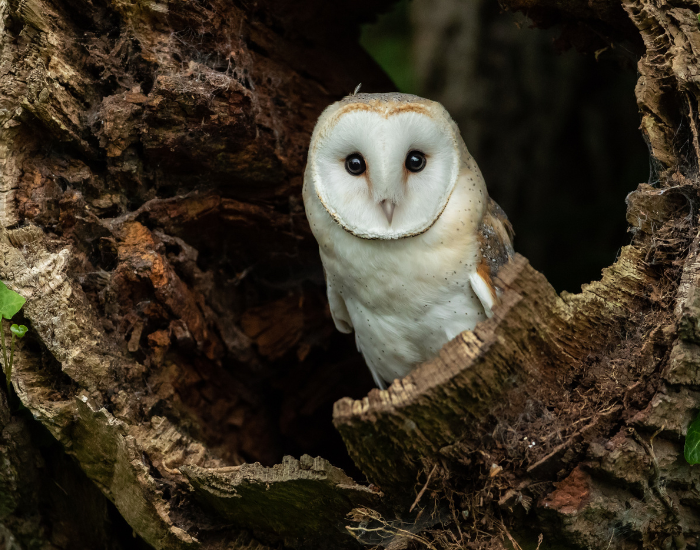
One of Britain’s most beloved nocturnal birds of prey, the barn owl is distinctive for its bright white underside and heart-shaped face. Hunting silently over farmland and grassland at dusk, barn owls feed mostly on voles and mice. They’re widely distributed across the UK and often seen gliding low over fields or perched on fence posts at night. At their roosting sites, smaller birds sometimes mob barn owls to defend themselves or alert others to the predator’s presence.
Where to see: Countryside and farmland across England, Wales, and southern Scotland.
12. Osprey: The Fishing Specialist
Migrating from West Africa (or Iberia) to the UK each spring, ospreys are remarkable fish hunters found around freshwater lakes and reservoirs. The Osprey has a wingspan of up to 170cm, and with those long, angled wings and a distinctive M-shaped flight, they dive feet-first to catch fish with precision. Ospreys can be identified by the dark patches on their wings, a key feature that helps distinguish them in flight. Osprey populations are growing thanks to reintroduction programs, especially in Rutland Water and the Scottish Highlands.
Where to see: Rutland Water, Loch Garten (Scotland), and Poole Harbour.
Conservation Status and Ongoing Challenges
Success Stories:
While some species like the buzzard and red kite are thriving, conservation remains critical. The white tailed eagle and red kite demonstrate what’s possible with dedicated efforts.
These predatory bird species have recovered from near extinction. Furthermore, their populations continue to grow. However, not all of them enjoy such success.
Threats Facing UK Raptors
Habitat loss remains a primary threat. Draining wetlands or clearing woodland reduces hunting grounds.
Persecution continues despite legal protection. Poisoning and shooting still occur, especially against eagles and hen harriers. In addition, climate change shifts prey ranges, affecting kestrels and ospreys.
To support raptor conservation, it is important to link urban green spaces with nature reserves and the countryside, creating connected habitats that help wildlife movement and survival.
How to Identify Birds of Prey in the UK
Key Identification Features
Look for wing shape first. Broad wings indicate buzzards and eagles. Pointed wings suggest falcons and kestrels.
Note the tail shape carefully. A forked tail identifies red kites. A short tail is a key identification feature for some species, such as the sparrowhawk, and helps distinguish them from similar birds like the hobby. And white tail feathers are diagnostic for white tailed eagles.
Additionally, rounded heads are characteristic of owls and help with identification. The hobby can also be identified by its distinctive dark moustache, a prominent facial marking that sets it apart from other similar species.
Observing Flight Patterns
Watch flight style closely. Kestrels hover with remarkable stability. Buzzards soar on thermals for hours. In contrast, peregrines stoop at incredible speeds. Ospreys can be identified in flight by their angled wings, which give them a distinctive flight style and help distinguish them from other raptors.
Flight behavior reveals identity even at great distances. Honestly, learning these patterns improves identification success.
Plumage Patterns and Colors
Check plumage carefully. Mottled brown plumage provides camouflage for many species. A grey head appears on sparrowhawks and kestrels. Additionally, reddish brown plumage characterizes red kites and some kestrels.
Look for black streaks on the underparts, dark eyes, and dark circles around the eyes, as these are important identification features for certain species. Pale grey plumage is characteristic of male hen harriers, especially noticeable during their spring display.
Blue grey coloring marks male sparrowhawks and kestrels. Dark brown plumage is typical of eagles and marsh harriers. Furthermore, slate grey plumage identifies adult peregrines.
Where and When to Spot Birds of Prey
Habitat Preferences
The Wildlife Trusts manage over 2,300 nature reserves across the UK, many of which offer prime raptor-watching. Woodland birds include sparrowhawks, goshawks, and tawny owls. Open countryside attracts buzzards, kestrels, and red kites. Some raptors, such as the female hen harrier, can be identified by their white rump when seen in open habitats. The short-eared owl’s mottled yellowy brown plumage helps it blend into moorlands and grasslands.
Wetlands provide habitat for marsh harriers and ospreys. Urban green spaces increasingly support peregrines and kestrels.
Seasonal Considerations
Summer is best for spotting migrants like hobbies and ospreys. Winter often concentrates raptors in food-rich areas. In addition, autumn migration brings passage birds through Britain.
FAQs About UK Birds of Prey
The buzzard is now the most common raptor. They’re widely spread across England and Wales. Furthermore, their population continues to grow.
Use wing shape, tail length, flight style, and plumage. A field guide or apps like Merlin Bird ID are invaluable. In addition, practice improves identification skills. Learning to distinguish birds of prey from other birds, such as crows or gulls, is an important identification skill.
Yes, over 15 species of birds of prey. From eagles and kites to hawks, falcons, and owls, Britain hosts diverse raptors. Also, some species are increasing in number.
The white tailed eagle holds this title. With a wingspan up to 2.4m, they’re truly impressive. Their broad wings are unmistakable in flight.
Kestrels hover with pointed wings. Sparrowhawks dash through woodland with rounded or broad wings. In addition, their hunting techniques differ completely.
Golden eagles inhabit Scottish highlands and islands. Mull, Skye, and the Cairngorms offer good opportunities. However, patience and luck are essential.
Celebrating Britain’s Birds of Prey
The birds of prey in the UK are more than spectacular hunters. They’re keystone species, shaping ecosystems and inspiring awe. From golden eagles soaring in Scotland to kestrels hovering over road verges, these raptors connect us to the wild.
Protecting these birds of prey means protecting their habitats. It requires reducing persecution and supporting conservation efforts. Furthermore, every observation contributes to understanding these magnificent predatory bird species.
You never know which shadow might glide across your path. Therefore, keep watching the skies. British birds of prey reward patient observers with unforgettable experiences.
Further Reading
References:
Arraut, E. M., Walls, S. W., Macdonald, D. W., & Kenward, R. E. (2021). Anticipation of common buzzard population patterns in the changing UK landscape. Proceedings of the Royal Society B: Biological Sciences, 288(1952), 20210993. https://doi.org/10.1098/rspb.2021.0993
Mills, R., Hildenbrandt, H., Taylor, G. K., & Hemelrijk, C. K. (2018). Physics-based simulations of aerial attacks by peregrine falcons reveal that stooping at high speed maximizes catch success against agile prey. PLOS Computational Biology, 14(4), e1006044. https://doi.org/10.1371/journal.pcbi.1006044
Murgatroyd, M., Redpath, S. M., Murphy, S. G., Douglas, D. J. T., Saunders, R., & Amar, A. (2019). Patterns of satellite tagged hen harrier disappearances suggest widespread illegal killing on British grouse moors. Nature Communications, 10, 1094. https://doi.org/10.1038/s41467-019-09044-w
Orros, M. E., & Fellowes, M. D. E. (2015). Widespread supplementary feeding in domestic gardens explains the return of reintroduced Red Kites Milvus milvus to an urban area. Ibis, 157(2), 230–238. https://doi.org/10.1111/ibi.12237
Potier, S., Mitkus, M., & Kelber, A. (2018). High resolution of colour vision, but low contrast sensitivity in a diurnal raptor. Proceedings of the Royal Society B: Biological Sciences, 285(1885), 20181036. https://doi.org/10.1098/rspb.2018.1036
Sutton, A. E. (2015). Leadership and management influences the outcome of wildlife reintroduction programs: Findings from the Sea Eagle Recovery Project. PeerJ, 3, e1012. https://doi.org/10.7717/peerj.1012
Waterman, J., Black, S., Sykes, N., Kitchener, A. C., Mills, W. F., & Fellowes, M. D. E. (2025). The return of raptors to Scotland’s skies: Investigating the diets of reintroduced red kites and white-tailed eagles using stable isotopes. PLOS ONE, 20(1), e0315945. https://doi.org/10.1371/journal.pone.0315945