The first time I saw merlins, I didn’t know I was looking at one. I was hiking through a sun-bleached meadow in southern Sweden, halfway through my biology exchange year, when a small dark bullet shot past my shoulder at chest height. My friend, another biology student originally from Seattle, lifted his binoculars and grinned. “Merlins,” he said. “I used to watch them tear through the city back home.” I had assumed I was looking at some kind of overgrown swallow.
A few weeks later, on a hike toward a Norwegian cabin where we’d spend four days without electricity, I spotted one merlin perched on a dead pine. Tiny. Furious-looking. Magnetic. Since then, merlins have shown up in my notebooks across three continents, and yet most people I meet have either never heard of them or confused them with another bird. This guide collects 12 things I wish someone had told me about merlins before that Swedish meadow.
1. Merlins Are Small, but They Don’t Act Like It
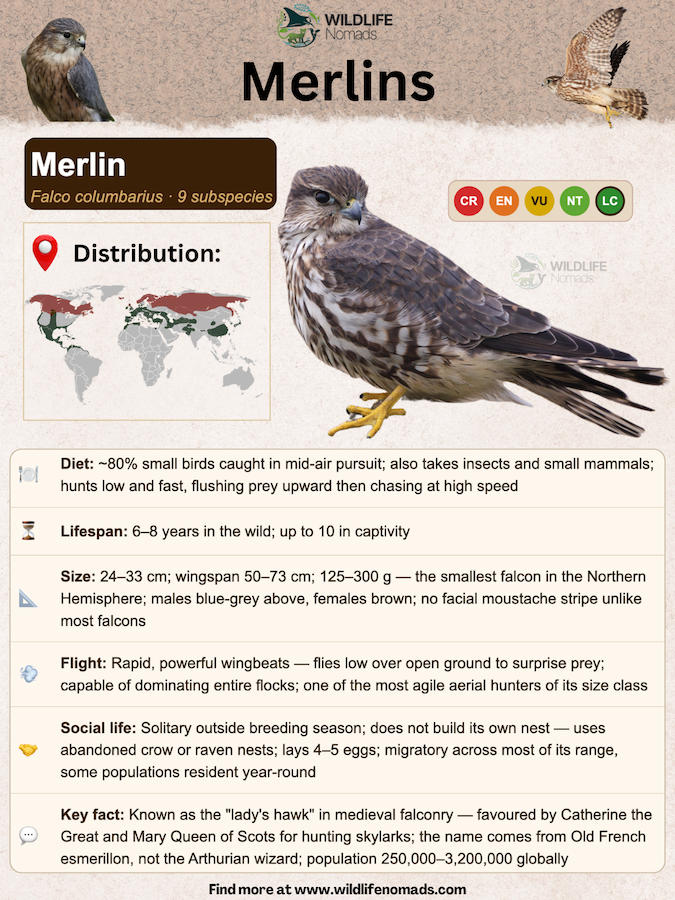
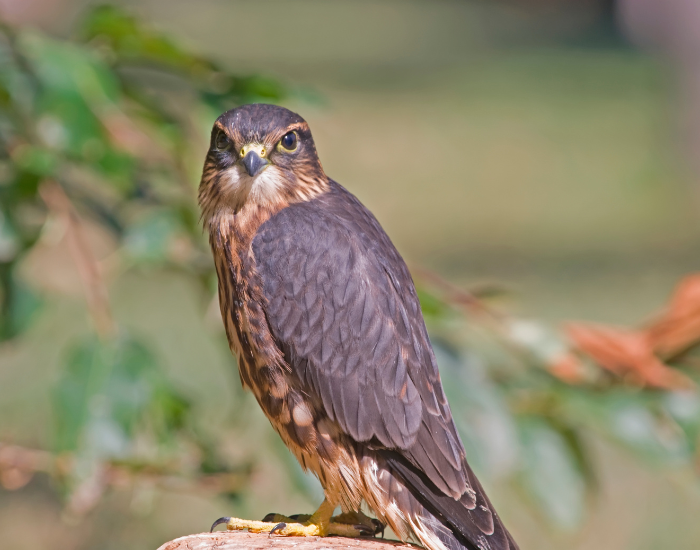
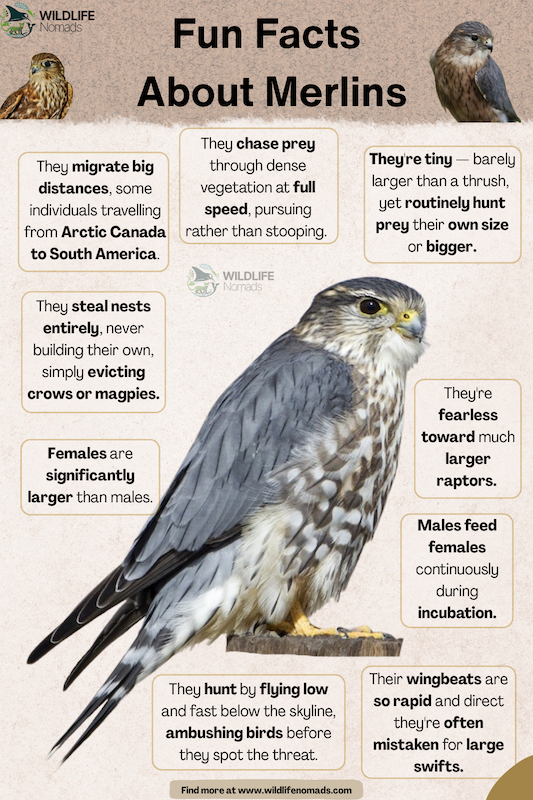
Merlins (Falco columbarius) are compact falcons, barely larger than a robin and noticeably smaller than the more famous peregrine. Adult females are slightly larger than males, weighing around 190 to 280 grams. The adult male is daintier, hovering near 150 to 210 grams. Despite those modest dimensions, merlins behave like they own the sky.
Perched, a merlin almost looks cute. In flight, that impression dies fast. Their pointed wings cut tight, fast arcs, and their long tail steers them through tight corners with absurd precision. They hunt with a focused aggression you usually associate with much bigger raptors.
2. The Old Name “Pigeon Hawks” Says a Lot
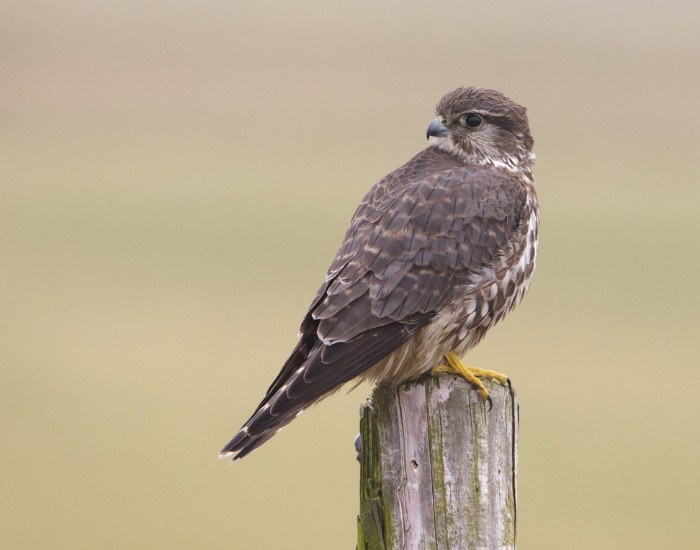
Older field guides still call merlins “pigeon hawks.” The name is a little misleading. They aren’t true hawks at all, and they don’t usually hunt pigeons. But “pigeon hawks” stuck because their flight silhouette and rapid wingbeats reminded early ornithologists of a pigeon’s fast, direct flight.
I find the comparison useful. Pigeon hawks fly differently from other falcons, lower, with less of the dramatic vertical stoop you’d see in a peregrine. If a “pigeon” suddenly veers and slams into a flock of small birds, that’s no pigeon. That’s one of the merlins.
3. There Are Three North American Subspecies
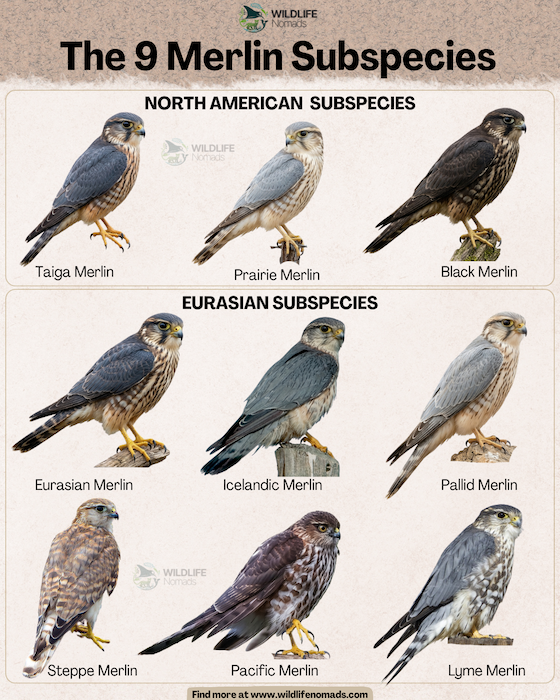
In North America, scientists recognize three north american subspecies: the taiga merlin, the prairie merlin, and the black merlin. Each one tells a story about local adaptation.
The taiga merlin breeds across the boreal forests of Canada and Alaska. The prairie merlin claims the open habitats of the northern prairies, from southern Canada down into the northern united states. The black merlin lives along the Pacific Northwest coast, where its dark plumage matches the perpetually wet, mossy forests of British Columbia, Washington, and Oregon. Each subspecies has slightly different breeding grounds and slightly different prey preferences.
4. The Black Merlin Is the Goth of the Group
The black merlin is, frankly, gorgeous. Its plumage runs heavily streaked across the chest, with a back so dark it can look almost black in poor light. The dark tail shows narrow white bands instead of the broader gray bands seen on its prairie merlin and taiga merlin cousins.
When my Seattle friend recognized those Swedish merlins, he was reaching for his memory of the black merlin form he knew best from the Pacific Northwest. The European subspecies looked lighter to him, but the silhouette was unmistakable. Across all three north american subspecies, the tail is the easiest place to start narrowing down which merlins you’re looking at.
5. Merlins Don’t Build Their Own Nests
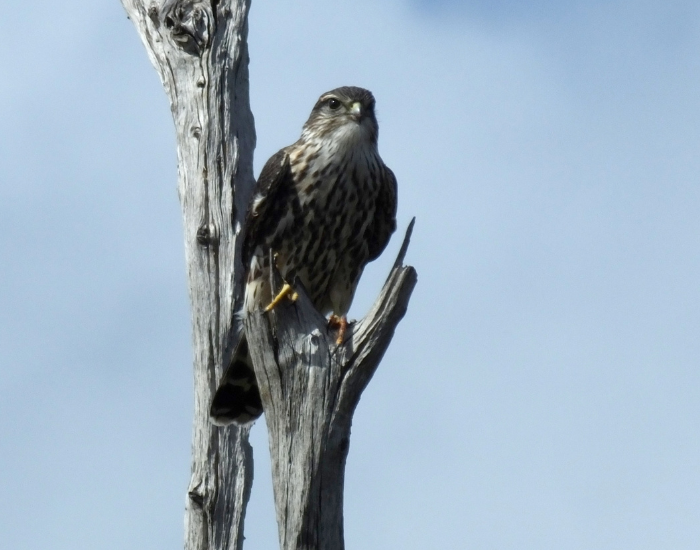
This one surprises a lot of people. Merlins almost never construct their own nests. Instead, merlin pairs will take over abandoned nests or will actively harass and drive away crows, magpies, or other raptors to take over a fresh nest. In some regions, especially the northern prairies, they’ll use cavities in cliffs or even old tree stumps. Nest sites get reused across years, sometimes by different merlin pairs, which complicates monitoring.
Squatting in someone else’s house is common among falcons — peregrines do the same — but it always feels a little cheeky to find a merlin glaring out of a magpie’s old construction. Each merlin breeds in whatever vacant accommodation it can find.
6. They’ve Become Surprisingly Comfortable in Urban Areas
Over the past few decades, merlins have moved into urban areas across North America with remarkable success. Cities offer two things merlins love: tall structures for perching and dense populations of small birds, especially house sparrows. In Saskatoon, Edmonton, and Calgary, breeding merlin populations have grown dramatically. Canadian populations have increased by nearly 300% since 1970, largely due to this urban shift.
I’ve watched a perched merlin hunt from a streetlight in Edmonton, completely unbothered by traffic below. Urban settings increasingly act as productive breeding grounds for the prairie merlin in particular. The shift toward urban areas is one of the more hopeful raptor conservation stories of the last fifty years, and it’s pushed the merlin breeding range further into the southern united states than historical data suggested.
7. Merlins Are Brutally Effective Hunters of Small Birds
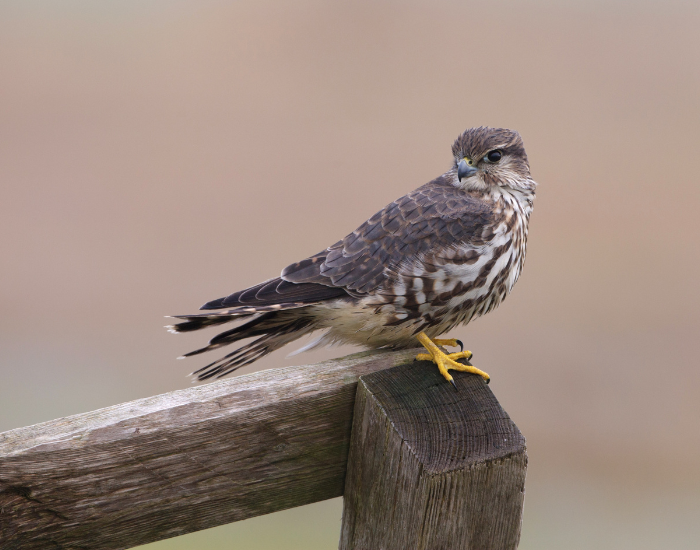
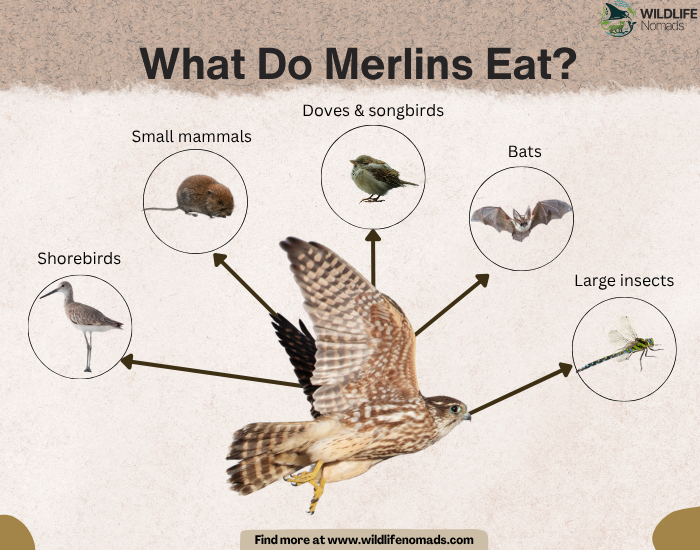
The feeding habits of merlins center almost entirely on other birds. They specialize in capturing prey in mid air, often after surprising a flock at low altitude. Their preferred targets include house sparrows, finches, larks, pipits, and small shorebirds along coastal marshes. Small mammals occasionally appear in the diet, but birds dominate.
Unlike a peregrine that uses dramatic high-altitude steep dives, a merlin hunts with low, fast pursuit. It bursts out of cover, accelerates over open areas, and tries to overtake medium sized birds before the flock can scatter. Coastal marshes during migration are especially productive because small shorebirds have nowhere to hide.
8. The American Kestrel Mix-Up Almost Everyone Makes
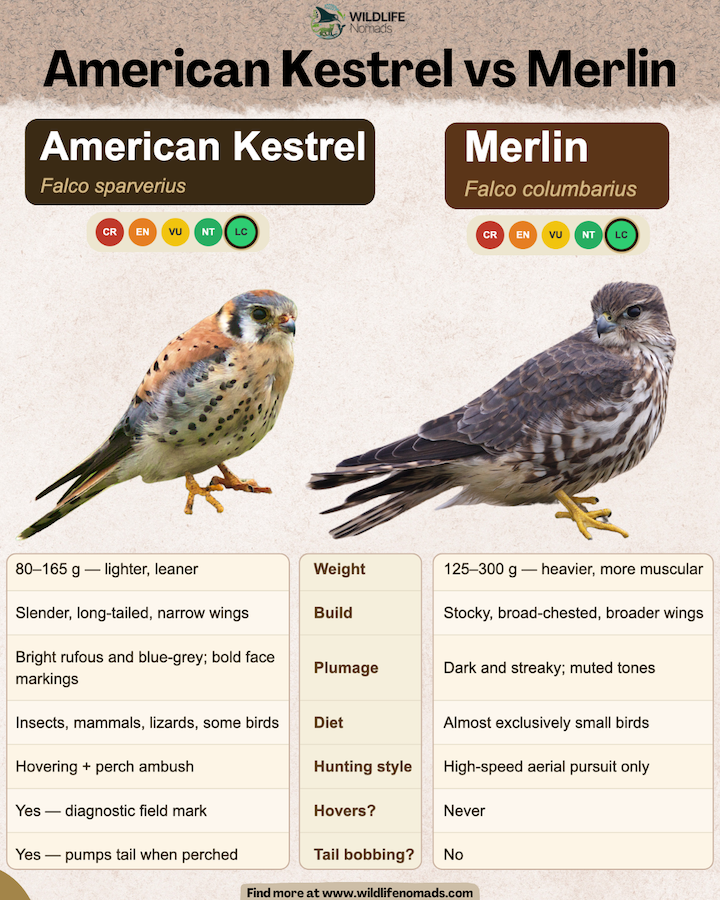
If you’ve ever seen a small falcon perched on a wire and thought “kestrel,” you might have been looking at a merlin. The American kestrel is the most commonly confused species, and for good reason. Both are small, both perch on wires, and both have pointed wings.
But the differences are clear once you know them. The American kestrel is more colorful, with rusty back tones and bold facial markings. The American kestrel hovers while hunting; merlins almost never do. The male kestrel’s tail shows a single bold dark band, whereas the merlin’s tail always features multiple gray bands or white bands depending on subspecies and regardless of sex. The American kestrel feeds heavily on insects and small mammals; merlins specialize in birds.
I keep American kestrel field marks fresh in my mind every time I’m scanning open habitats. The moment I assume “American kestrel,” I miss the merlins sitting one wire over.
9. Adult Males and Adult Females Look Like Different Species
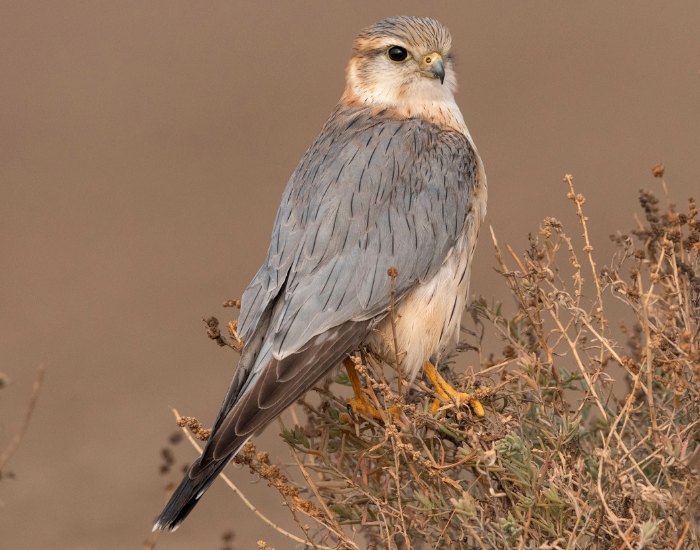
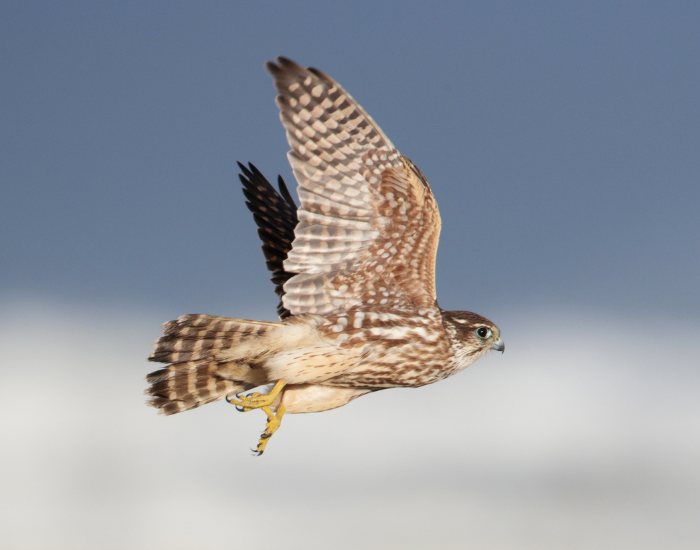
Sexual dimorphism is striking in merlins. The adult male wears a slate gray, almost sky blue back, clean and sharp. His chest is buffy with thin streaking. The adult female is dark brown above, with heavy dark streaking on a paler chest, and she’s noticeably slightly larger than the male.
Adult females also show a heavily marked breast and a more banded tail than the adult male. Juvenile merlin plumage resembles adult females, which catches a lot of birders off guard. If you see what looks like a heavily streaked dark brown female and a sleek slate gray male in the same area, you’re probably watching a mated pair during the breeding season.


10. Their Range Stretches Across the Northern Hemisphere
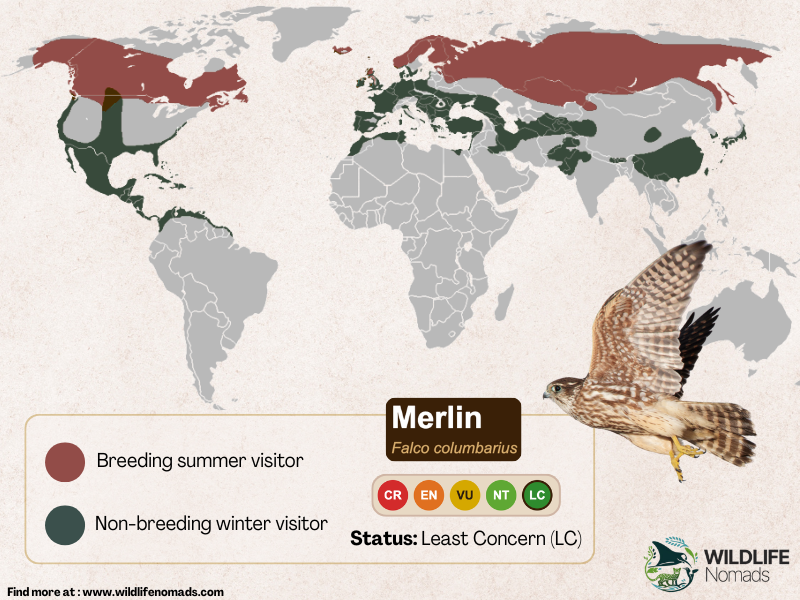
The merlin breeding range is enormous. Merlins breed across northern north america, northern Europe, and northern Asia. In winter, north american populations migrate south, with some birds reaching central america and even northern south america. Eurasian merlins may winter as far south as North Africa.
In the western hemisphere, you’ll find wintering merlins from southern Canada through the southern united states, with smaller numbers reaching south america. The Pacific Northwest and the Great Lakes region are important migration corridors. Merlins migrate further than many other raptors of comparable size, and the long tail combined with rapid wingbeats makes them recognizable at distance.
11. Merlins Survived DDT and Largely Recovered
Like peregrines and bald eagles, merlins suffered from eggshell thinning caused by DDT in the mid-20th century. Populations crashed across much of their breeding range. After DDT was banned in North America in 1972, merlin populations have largely recovered, though monitoring continues to track regional trends.
Their adaptation to urban areas has helped. So has the recovery of prey populations and improved nest site availability in second-growth forests. Few raptor success stories get the attention merlins deserve.
12. Merlins Have Been a Symbol of Royalty for Centuries
Merlins carry a quietly remarkable cultural history. In medieval Europe, the merlin was the falcon of choice for noblewomen, small enough to carry on a delicate gloved hand and aggressive enough to hunt larks with style. Mary Queen of Scots famously kept merlins for falconry, and “mary queen” appears in falconry texts because of her enthusiasm for the species. The Latin name Falco columbarius ties merlins to those old ideas about pigeon-hunting birds.
When I think about merlins now, I think about that long human relationship layered on top of the wild biology — a tiny falcon that has impressed people for a thousand years.
FAQs About Merlins
A merlin is a small, fierce falcon in the genus Falco, scientifically named Falco columbarius. Merlins are slightly larger than the American kestrel but much smaller than the peregrine. They specialize in hunting small birds in fast, low-altitude pursuits across open habitats throughout the northern hemisphere. The three north american subspecies are the taiga merlin, prairie merlin, and black merlin.
A merlin’s wingspan runs from about 53 to 68 centimeters (21 to 27 inches). Adult females weigh roughly 190 to 280 grams; the adult male is slightly smaller at 150 to 210 grams. The tail is relatively long for the body size, contributing to the merlin’s compact, agile silhouette in flight.
Keeping an Eye Out for the “Pigeon Hawk”
Merlins are the kind of bird you only really notice once someone points one out, and then you start seeing them everywhere. That tiny, fierce falcon I almost missed in a Swedish meadow has shown up in my notebooks from three continents since.
If you spend time outdoors anywhere in North America or Europe, there’s a good chance a merlin has flown past you without you knowing. Take a closer look at the next “small dark bird” you see streaking across an open field. You might be watching one of the most underrated raptors on the planet.
If this piece helped you ID your first merlin, leave a comment with where you saw it. For more on small raptors, check out my guide to the kinds of hawks, my overview of birds of prey, and my broader types of birds guide. If you want to dig into typical merlin prey, my posts on types of finches and types of thrushes are good next reads.
References:
Warkentin, I. G., Sodhi, N. S., Espie, R. H. M., Poole, A. F., Oliphant, L. W., & James, P. C. (2020). Merlin (Falco columbarius), version 1.0. In S. M. Billerman (Ed.), Birds of the World. Cornell Lab of Ornithology. https://doi.org/10.2173/bow.merlin.01
Navjot S. Sodhi, Paul C. James, Ian G. Warkentin, and Lynn W. Oliphant. (1992) Breeding ecology of urban Merlins (Falco columbarius). Canadian Journal of Zoology. 70(8): 1477-1483. https://doi.org/10.1139/z92-204
Sodhi, N. S., & Oliphant, L. W. (1992). Hunting ranges and habitat use and selection of urban-breeding merlins. The Condor, 94(3), 743–749. https://doi.org/10.2307/1369259
Wright, J. M., & Bechard, M. J. (2018). Trends and drivers of merlin breeding success in western North America. Journal of Raptor Research, 52(2), 198–209. https://doi.org/10.1002/jwmg.70146