Everyone’s seen a thrush before. They’re those familiar brown birds that all look kind of the same, easy to overlook, easy to misidentify. I’d seen plenty of them too. But I still remember the first time I actually saw one. My turning point came while birding with a biologist friend in a near by reserve. He stopped me, held up a finger, and whispered, “Listen.”
A series of flute-like, ethereal notes spiraled through the canopy, the song of a Wood Thrush. He showed me how to look past the “brown bird” camouflage and see the intricate spotting and the intelligent, large eyes that characterize the thrush family. Since that day, these birds have become some of my favorite subjects. They aren’t just “common birds”; they are the musicians of the forest floor, and once you know what to look for, you’ll realize thrushes are everywhere, from your backyard to the deepest reaches of the boreal forest.
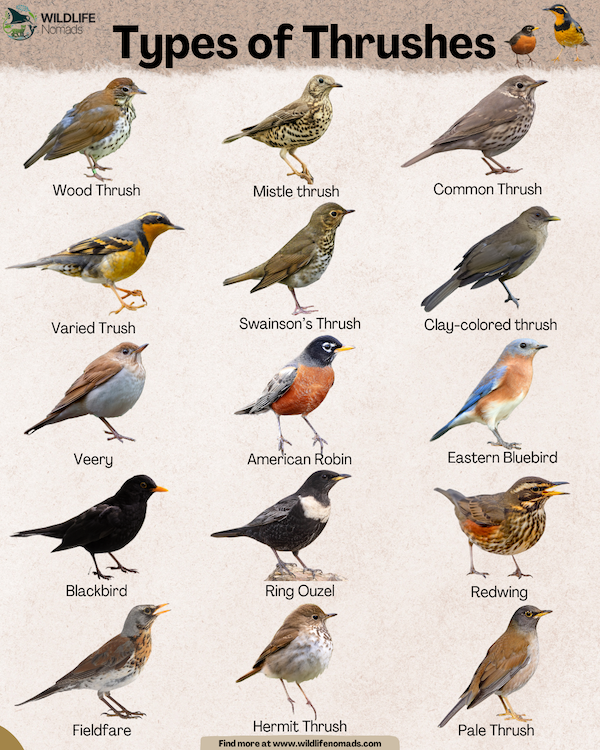
What Makes a Bird a Thrush?
There are over 120 species of thrushes worldwide, with eight species regularly observed in Pennsylvania.
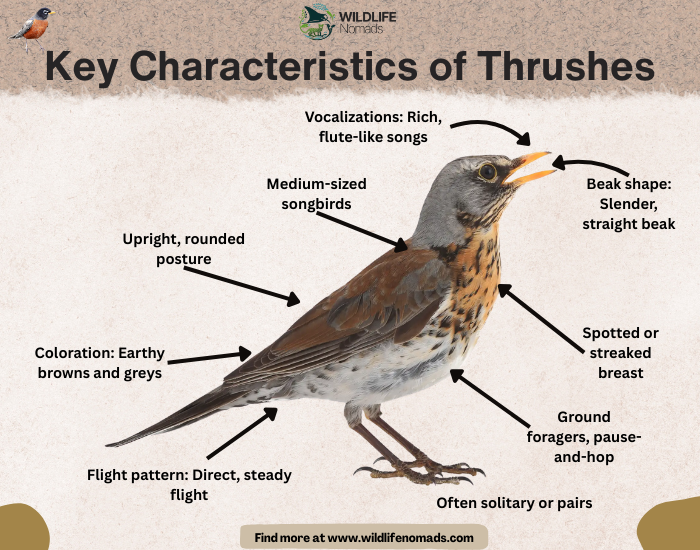
Scientifically, these birds belong to the family Turdidae. To the untrained eye, many thrush species look like generic brown birds, but they share specific traits. Thrushes are songbirds that have thin bills, plump bodies, and strong legs. They are generally medium-sized birds with soft plumage and distinctive feathers, upright stances, and a specialized syrinx (vocal organ) that allows them to produce complex, multi-tonal songs.
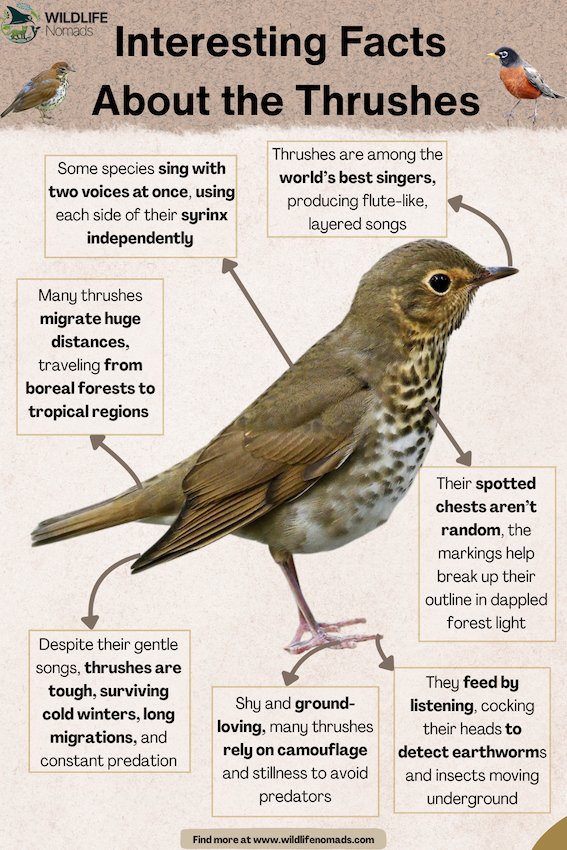
Most thrushes feed as ground-foragers. If you see a bird flipping over leaf litter to find insects, worms, or beetles, there is a high probability you’ve found one. They play a vital role in the ecosystem by controlling invertebrates and dispersing seeds after they eat berries and other fruits. Their diet consists of insects, berries, fruits, and other invertebrates.
1. Wood Thrush (Hylocichla mustelina)
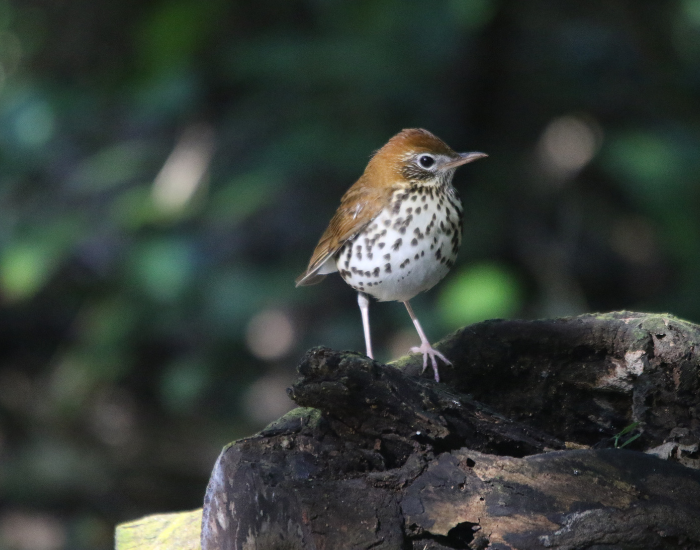
The Wood Thrush is the gold standard for thrushes in North America. When I’m trekking in north America, their song is the definitive soundtrack. They are distinguished by their bold, “ink-smear” black spots on a snowy white breast and a warm, reddish-brown back.
The wood thrush breeds in the eastern half of the United States and winters in Central America.
In my experience, they are a bit more “bold” than their cousins, often seen hopping through the forest floor in search of snails and ants. Sadly, they are a species of conservation concern due to habitat fragmentation, as they prefer deep, moist woodlands.
2. Hermit Thrush (Catharus guttatus)
The Hermit Thrush is the “introvert” of the family. They are the only thrush species in their genus to winter in North America, while others migrate to Central and South America.
The key identification mark is the “foxy” reddish tail that contrasts with a duller brown back. They have a nervous habit of flicking their wings and slowly raising and lowering their tails. If you see that tail-pump, you’ve found a Hermit.
3. Swainson’s Thrush (Catharus ustulatus)
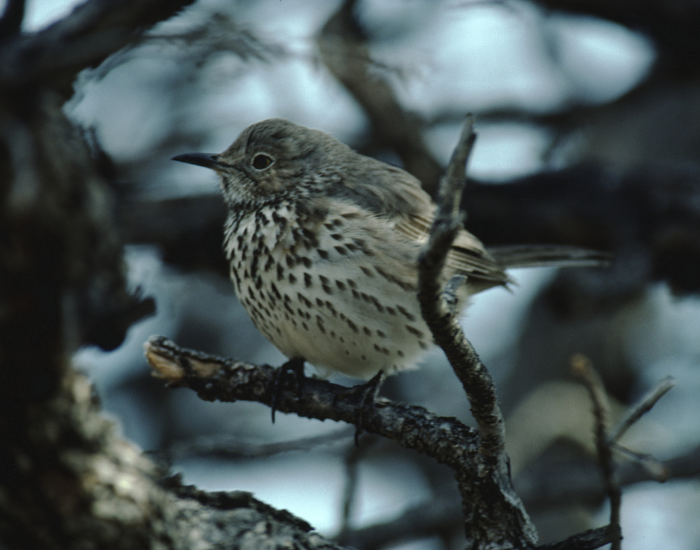
Named after the English ornithologist William Swainson, this bird is a marathon traveler. I’ve encountered them in the West Indies during their migration. They have a distinct “spectacled” look, bold buffy rings around their large eyes.
Their song is a series of upward-spiraling notes. Unlike the Wood Thrush, their spotting is a bit more blurred and olive-toned. They are quintessential wooded areas inhabitants, often found near water.
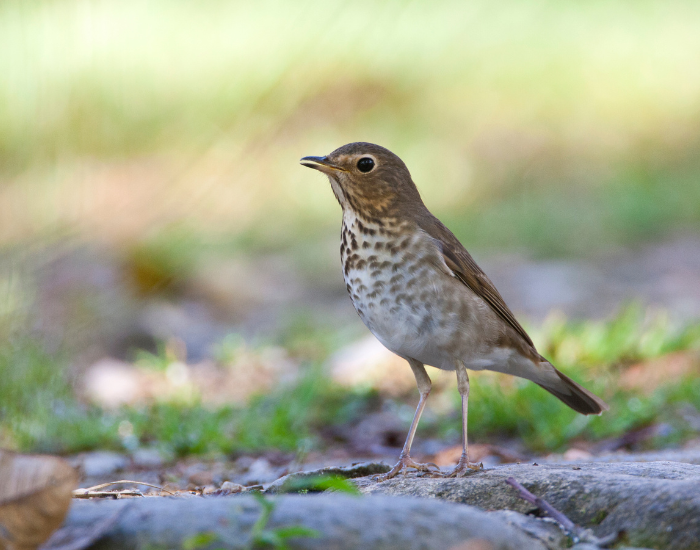
4. Gray-cheeked Thrush (Catharus minimus)
This is a “lifer” for many birders because they are incredibly shy. As the name suggests, they lack the buffy “spectacles” of the Swainson’s and have a cold, grey wash on their faces.
They breed in the far north in places such as Alaska, and are long-distance migrants, heading all the way to the Amazon basin. Because they look so similar to the Bicknell’s Thrush, even experts sometimes struggle with ID without hearing the call.
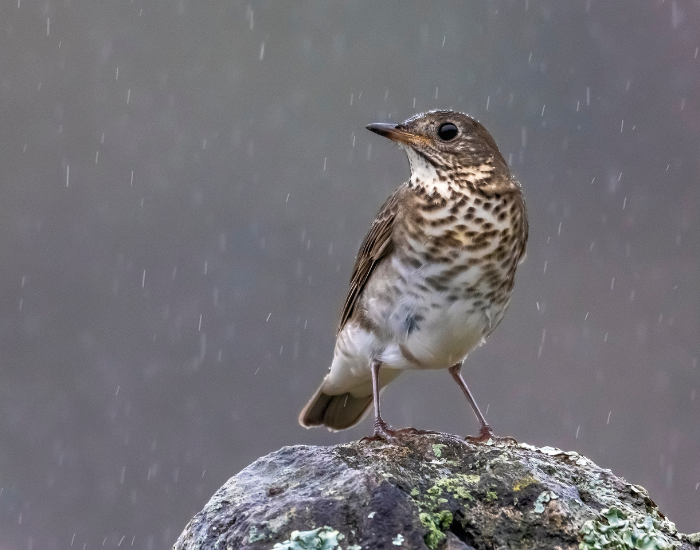
5. Bicknell’s Thrush (Catharus bicknelli)
The Bicknell’s is one of the rarest thrush species in North America. They have a very restricted breeding range, as they inhabit wooded areas, specifically high-altitude balsam fir forests in the Northeast.
I learned that these birds are vulnerable to climate change. They look almost identical to the Gray-cheeked, but they are slightly smaller and have a different song. If you’re at the top of a mountain in Vermont and hear a thin, wiry whistle, you’re in luck.
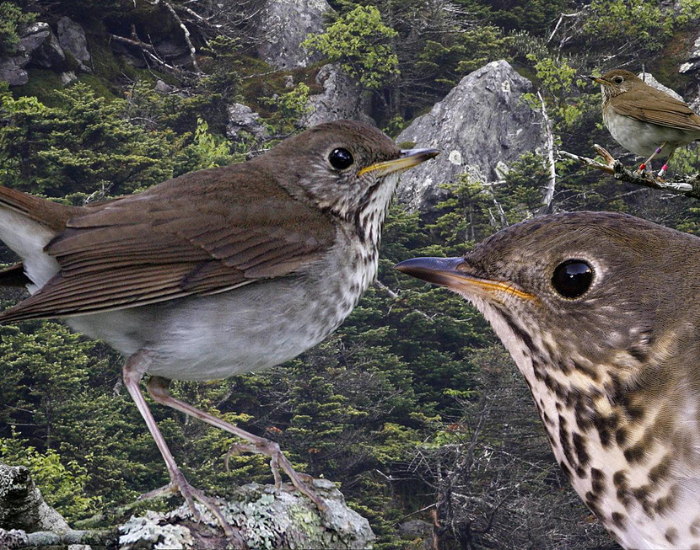
6. Eastern Bluebird (Sialia sialis)
Wait, a bluebird is a thrush? Absolutely! This is a common point of confusion. While they don’t have the “brown and spotted” look of a bird of thrush family, their behavior and anatomy place them squarely in Turdidae.
Bluebirds are a conservation success story. By providing nest material and nest boxes, humans helped their population bounce back after they were outcompeted by invasive species. They love open wooded areas and gardens, where they sit on low perches to scout for insects.
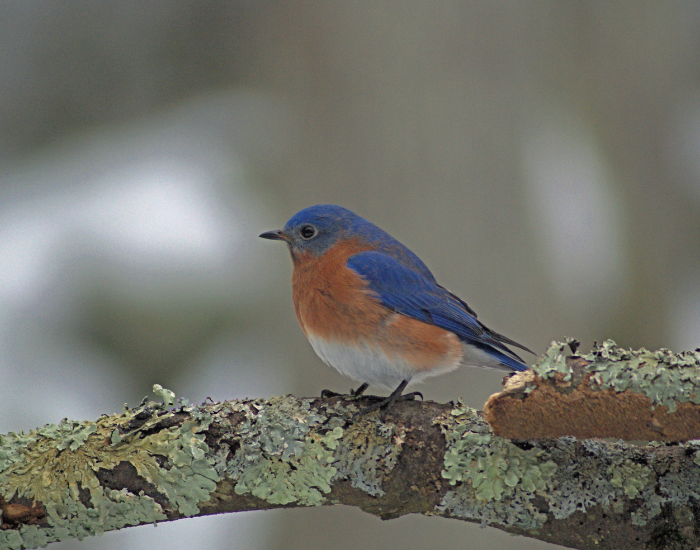
7. Veery (Catharus fuscescens)
The Veery has a beautiful, uniform cinnamon-colored back and very faint spotting on the breast. Their song is a haunting, downward-spiraling whistle that sounds like it’s being played through a metal pipe.
I’ve found them to be quite territorial. During nest building season, they prefer damp, deciduous woods with a thick understory of shrubs. They are a great example of a bird that is more often heard than seen.
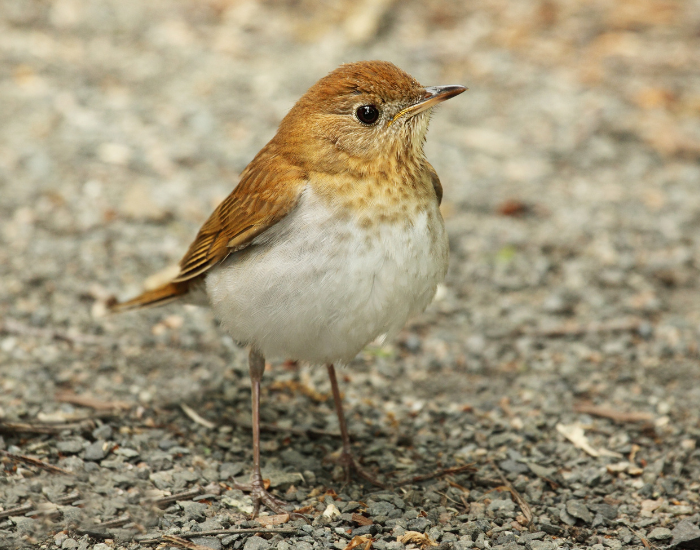
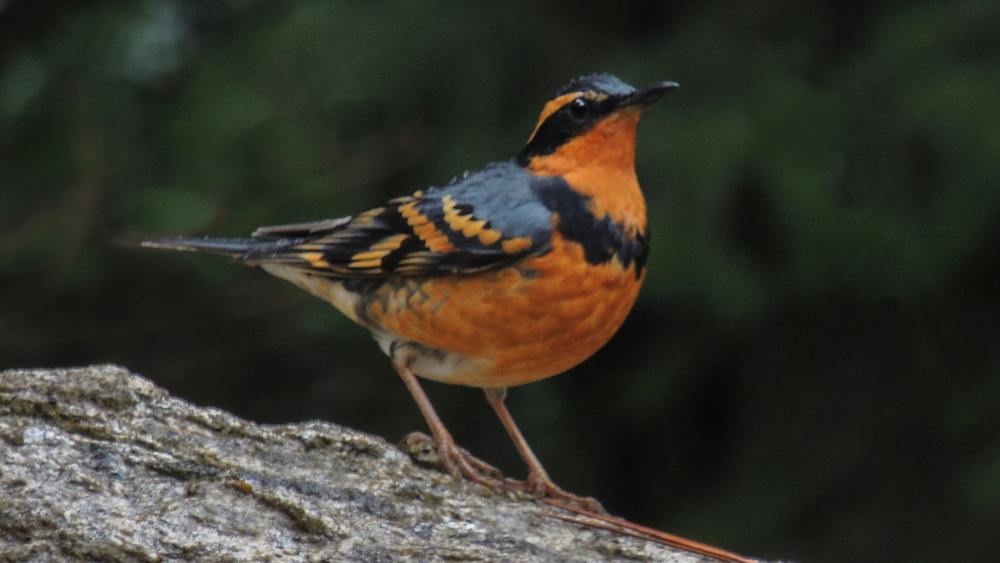
8. Varied Thrush (Ixoreus naevius)
If you find yourself in the Pacific Northwest, look for the Varied Thrush. It looks like a “Goth” version of a Robin, with a striking black orange-and-black pattern, a dark breast band, and distinctive black tails.
They are primarily winter visitors to lower elevations. I’ve noticed they will fly down from higher elevations and become quite aggressive at feeders during snowstorms, fending off other birds to get to the berries.
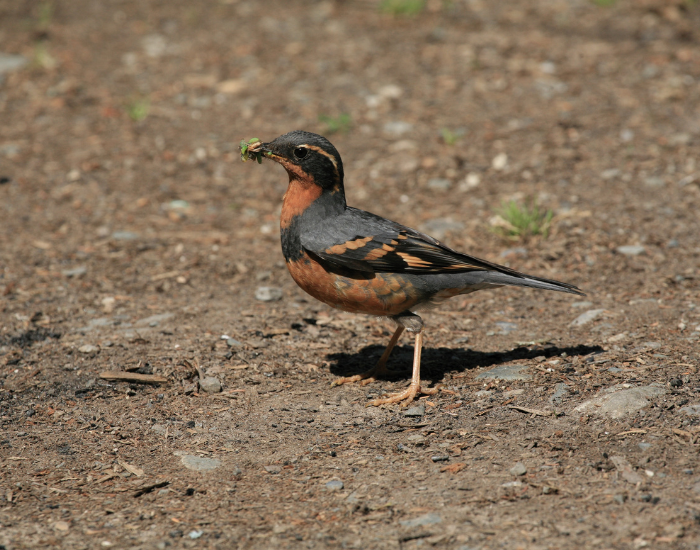
9. Song Thrush (Turdus philomelos)
A common garden visitor across Europe, the Song Thrush is famous for its habit of using a stone as an “anvil” to break open snails.
Their markings are very distinct, arrowhead-shaped spots arranged in neat rows. It is one of the most beloved birds in the UK cause of their loud, repetitive song, where they repeat each phrase two or three times.
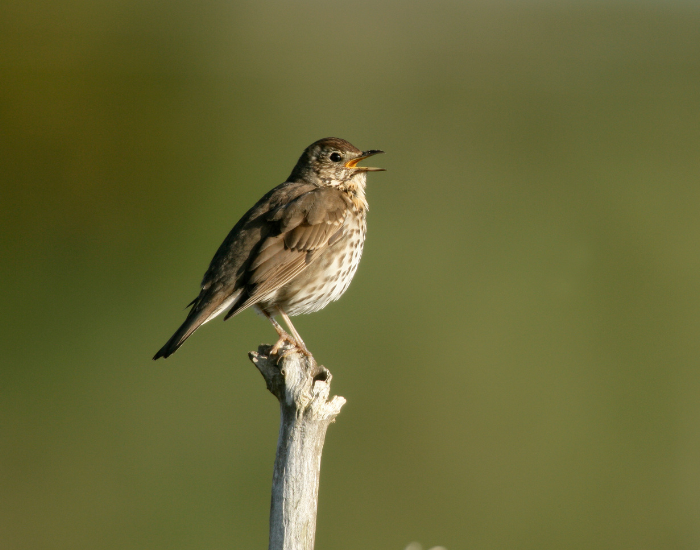
10. Mistle Thrush (Turdus viscivorus)
The Mistle Thrush is the largest thrush in Europe. They are much paler and grayer than the Song Thrush and are known for being incredibly brave. I’ve seen a Mistle Thrush chase a magpie, and even a small hawk, away from its nest.
They love mistletoe (hence the name) and will defend a berry-laden tree throughout the winter against all challengers.
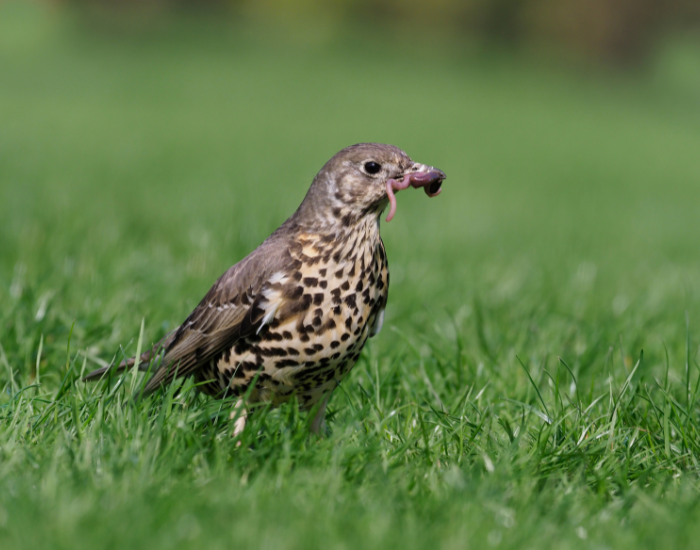
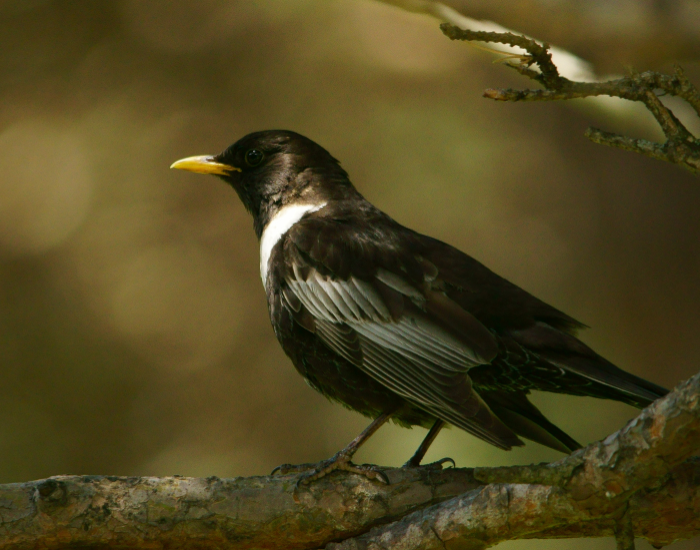
11. Ring Ouzel (Turdus torquatus)
The “Thrush of the Mountains.” The Ring Ouzel looks like a blackbird but features a stark white “gorget” or collar on its chest.
They are upland visitors, breeding in craggy, mountainous areas of northern europe. Seeing one usually requires a hike into the mist, which makes the encounter feel all the more rewarding.
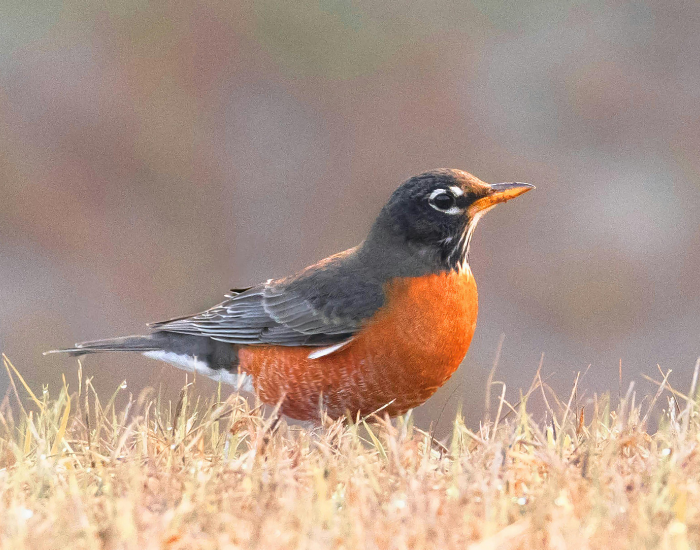
12. American Robin (Turdus migratorius)
Yes, the most famous “bird on the lawn” is a thrush! Robins are perhaps the most adaptable thrush species. Whether it’s northern Canada or a suburban park, they thrive.
While we see them as year round residents in many places, they are actually nomadic, moving in large flocks to find fruits and berries when the ground freezes and they can no longer pull up worms.
If you want to explore beyond the classic European and North American species, visit our robins of Australia guide to see an entirely different spectrum of avian diversity.
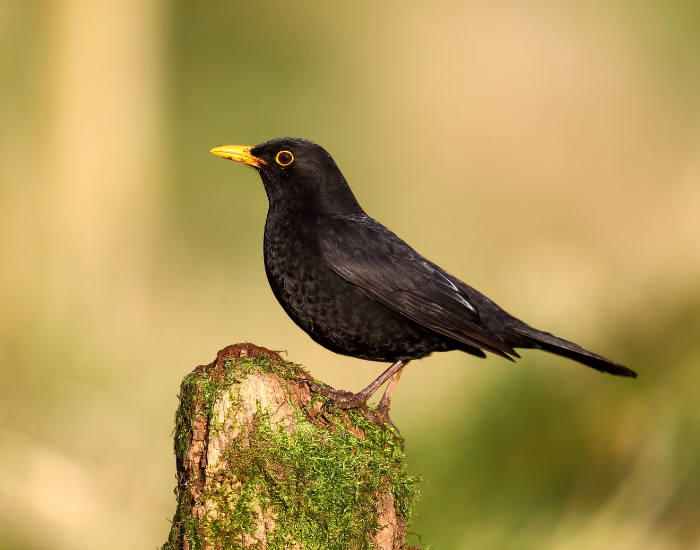
13. Blackbird (Turdus merula)
In Europe, “The Blackbird” is a staple of folklore. Only the males sing that iconic, mellow, fluting song from the tops of trees. The females are actually dark brown with faint spotting, making them look much more like a “typical” thrush. It is goo to emphasize that while blackbird the common name of a thrush, there are many other types of black birds that you may want to look in our article.
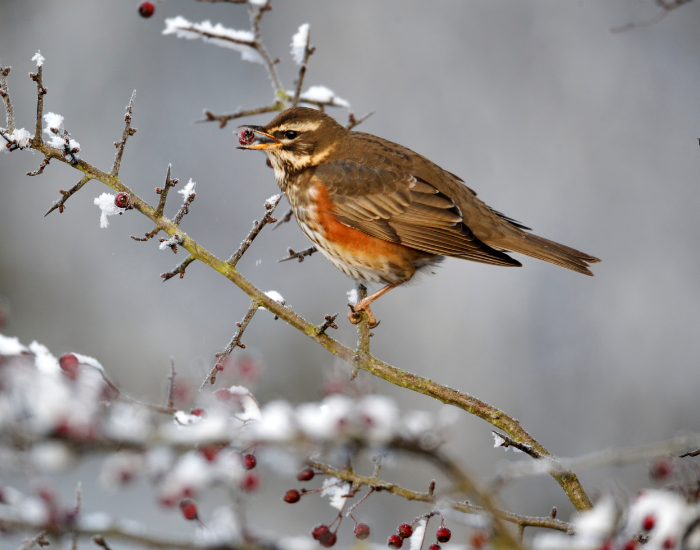
14. Redwing (Turdus iliacus)
Redwings are the smallest thrushes in Europe and are primarily winter visitors from Scandinavia. You can identify them by the bold creamy “supercilium” (eyebrow) and the namesake rusty-red patch under their wings.
I love listening for their thin “seeeh” calls on dark October nights as they migrate overhead in the thousands.
15. Fieldfare (Turdus pilaris)
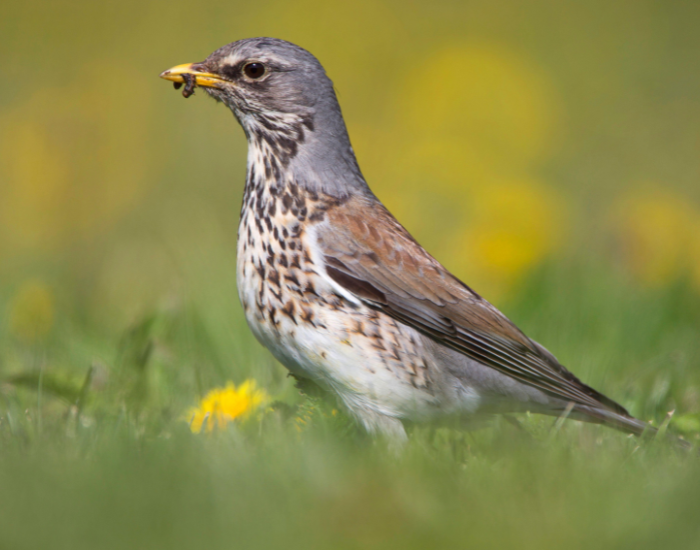
A large, colorful thrush with a grey head and a chestnut back. They are highly social and often seen in large flocks during the winter, roaming across open fields. They are quite “clattery” and loud, a sharp contrast to the shy woodland thrushes.
The Field Biologist’s FAQ
The name “thrush” comes from the Old English thrysce. It’s an ancient name for an ancient group of birds that has been part of human culture and poetry for millennia.
Yes! North America is home to some of the most beautiful thrush species, including the Wood Thrush, Hermit Thrush, and all three species of bluebirds. Nightingale thrushes, members of the genus Catharus, are also found in the Americas and are known as forest-dwelling songbirds with complex vocalizations.
Aside from being in the Turdidae family, they are characterized by their large eyes, upright posture, and specialized leg muscles for hopping and leaf-flipping. Most juveniles are heavily spotted, even if the adults are solid-colored (like Robins). Nightingale thrushes are a notable group within the family, recognized for their melodic songs and complex vocal abilities.
Excellent! They are natural pest controllers, eating everything from raccoons‘ leftovers (occasionally) to spiders, ants, beetles, and other invertebrates. Thrushes often forage on the ground, searching in leaf litter and on lawns for insects and other invertebrates such as spiders, earthworms, and snails. Plus, their songs are arguably the best in the avian world.
Some, like the Bicknell’s Thrush, are very rare and habitat-specific. Others, like the American Robin or the Song Thrush, are among the most common birds in the world. The Song thrush is now a red list species due to a decrease in population linked to pesticide use in agriculture.
How to Spot Your First Thrush
The secret to finding thrushes isn’t looking, it’s listening. Next time you’re in a park or forest, stop walking. Wait for the sound of dry leaves being kicked around. Look for a medium sized bird with a “proud” posture and pale underparts.
Whether it’s a common garden visitor, a rare migrant from South America, or an unusual vagrant like the Aztec Thrush that can occasionally be spotted in southern parts of the USA, every encounter with a thrush is a reminder of the complex, migratory world we share with them.
Thrush Identification & Science Quiz
Ten fun study questions covering family Turdidae traits, key field marks, song patterns, and unexpected species like Bluebirds and Robins. Test your retention!
Multiple Choice
References:
Taylor, C. M., & Stutchbury, B. J. M. (2016). Effects of breeding versus winter habitat loss and fragmentation on the population dynamics of a migratory songbird. Ecological Applications, 26(2), 424–437. https://doi.org/10.1890/14-1410
Cadieux, P., Boulanger, Y., Cyr, D., Taylor, A. R., Price, D. T., & Tremblay, J. A. (2019). Spatially explicit climate change projections for the recovery planning of threatened species: The Bicknell’s Thrush (Catharus bicknelli) as a case study. Global Ecology and Conservation, 17, e00530. https://doi.org/10.1016/j.gecco.2019.e00530
Morales, J. M., García, D., Martínez, D., Rodriguez-Pérez, J., & Herrera, J. M. (2013). Frugivore behavioural details matter for seed dispersal: A multi-species model for Cantabrian thrushes and trees. PLOS ONE, 8(6), e65216. https://doi.org/10.1371/journal.pone.0065216
Campagnoli, M. L., & Christianini, A. V. (2024). Individual body mass and sex of a frugivorous bird affect the quality of seed dispersal. Biotropica, 56(1), e13281. https://doi.org/10.1111/btp.13281
Rushing, C. S., Ryder, T. B., & Marra, P. P. (2016). Quantifying drivers of population dynamics for a migratory bird throughout the annual cycle. Proceedings of the Royal Society B: Biological Sciences, 283(1823), 20152846. https://doi.org/10.1098/rspb.2015.2846