Most of us grow up treating ants like background noise, tiny, industrious pixels moving across the pavement in a straight line. As a kid, I’d spend hours crouched over a sidewalk, fascinated by how they worked together to haul a single potato chip crumb like it was a holy relic. But for the longest time, despite my love for nature, they all kind of looked the same to me. Just “ants.”
That perspective shifted violently during a field job in Sydney. I was kneeling in the brush, hand pressed firmly against the soil to steady myself, when I felt a sensation I can only describe as a white-hot needle being driven through my palm. I looked down, expecting a jagged either a scary spider like the Sydney funnel web, or maybe a piece of glass or a rusty nail. Instead, I saw a Bull Ant (Myrmecia). It was massive, nearly an inch long, with mandibles that looked like surgical pincers. I shook it off, but the damage was done. My hand throbbed for hours, and that single encounter sparked a deep, professional curiosity.
Since then, I’ve learned that “ant” is a massive understatement for one of the most successful organisms on Earth. It could be that you are dealing with an ant infestation in your kitchen or you just like social insects in the wild, understanding ant types is the first step toward living in harmony with them (or getting them out of your cereal).
Quick Overview of Ant Species
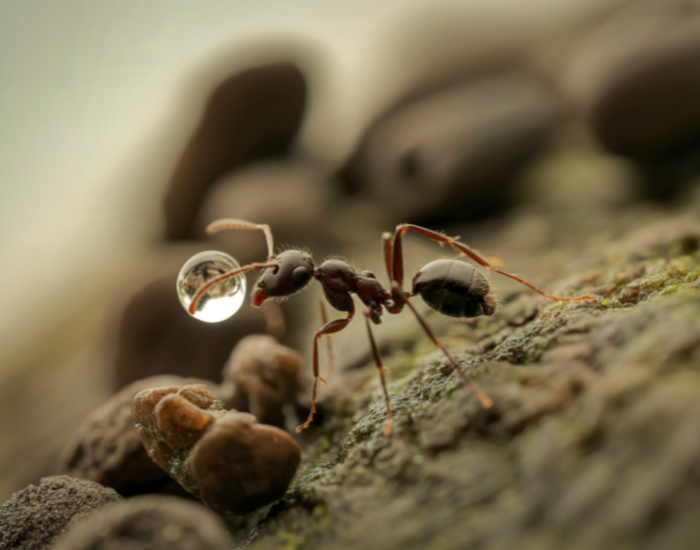
When we talk about different ant species, we are looking at a group of over 12,000 classified species. In the biological world, ant species identification isn’t just about color; it’s about “nodes” (the bumps between their thorax and abdomen), antennae segments, and behavior.
Ants are often confused with other common insects like the honeybee , the wasp, or even spiders or other types of arachnids, but the differences are clear once you know what to look for. Ants have elbowed antennae and a narrow waist with one or two nodes, while honeybees and wasps have straighter antennae and lack those distinct node segments. This simple comparison is one of the fastest ways to separate ants from other stinging insects in the field.
Identifying what type of ants you have is crucial because a treatment that kills pavement ants might do absolutely nothing to stop Argentine ants. Some kinds of ants are monogyne (one queen), while others have multiple queens, making them incredibly difficult to eradicate.
How to Identify Ant Species
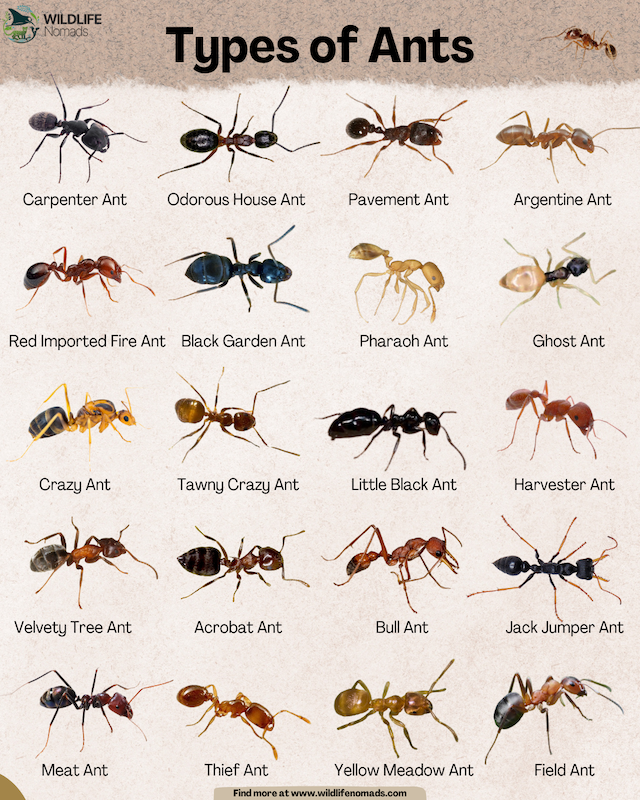
Before you reach for the ant baits or liquid insecticide, you need to play detective. In the field, I look for three specific things:
- Nodes: Does the ant have one hump or two between its midsection and rear?
- Thorax Shape: Is it smooth and rounded, or does it have spines?
- The “Smush” Test: It sounds unscientific, but many house ants release distinct pheromones. If you crush one and it smells like rotten coconut, you’ve got an odorous house ant.
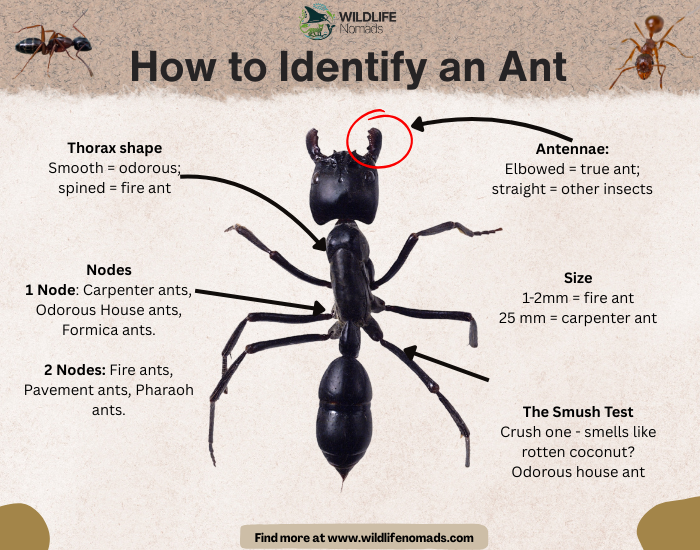
17 Ant Types You Need to Know
1. Carpenter Ants (Camponotus spp.)
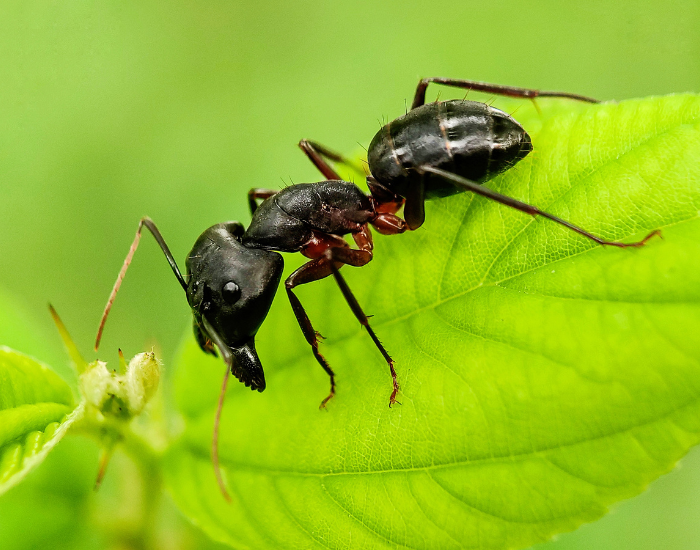
If you see large ants that are brown to black inside your home, you might be looking at a Carpenter ant. Unlike termites, these ants don’t eat wood; they excavate it to build nesting sites.
I’ve seen carpenter ants turn a perfectly good porch support into sawdust. They love decaying wood and moist environments. If you find them, check your wall voids and anywhere with water damage. They are one of the most common types of house ants that require professional attention because they can compromise your home’s structure.
2. Odorous House Ant (Tapinoma sessile)
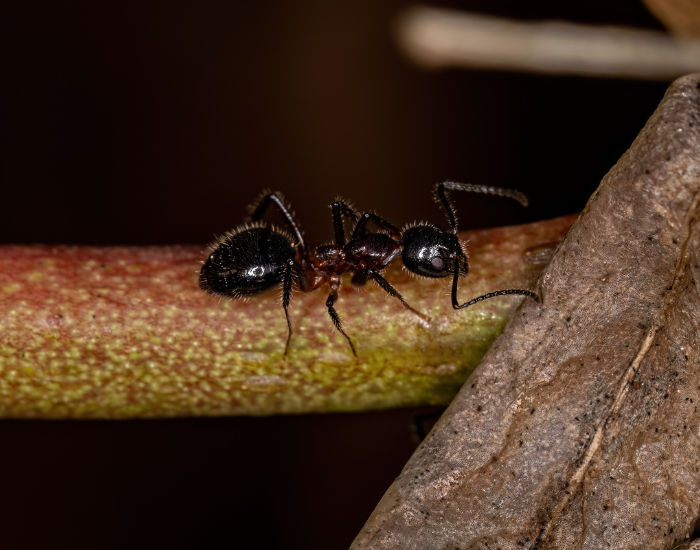
These are the quintessential house ants. They are small, dark, and seemingly endless. Their most defining feature is the smell they release when crushed, a pungent, chemical odor often compared to rotting coconut or blue cheese.
In my experience, these ants are opportunistic. They move their ant nest frequently, especially after heavy rain. They love sweets and will form massive ant trails leading straight to your sugar jar. Because they have multiple queens, simply killing the workers you see won’t solve the ant problem.
3. Red Imported Fire Ant (Solenopsis invicta)
A native of South America, the red imported fire ant is now a major pest in the Southeastern United States. These are not just “ants”; they are tiny warriors.
If you stumble upon one of their soil nests (which look like fluffy mounds of dirt), stay back. They don’t just bite; they use a painful sting to inject venom. Fire ants could swarm a person’s boot in seconds. They are highly aggressive and will defend their ant colony at all costs.
4. Argentine Ants (Linepithema humile)
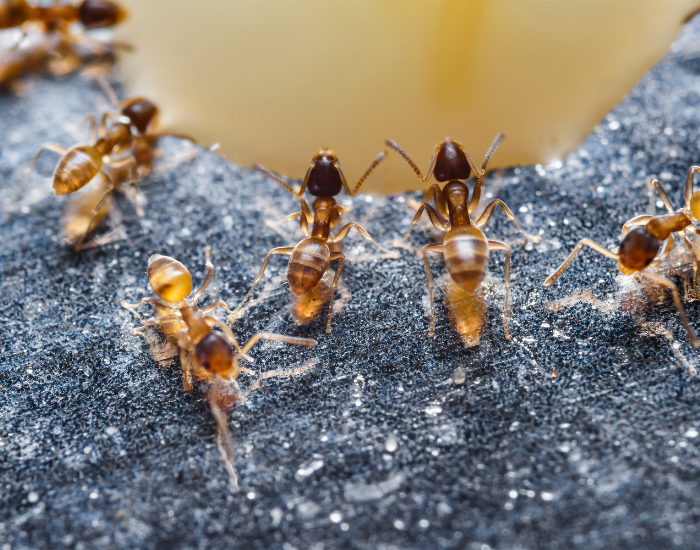
Originally from Central and South America, these ants have conquered the world. Argentine ants are the masters of the “supercolony.” Because they are not aggressive toward other argentine ant colonies, they can form massive networks that span entire city blocks.
They are a common ant in California and the Mediterranean. I’ve observed their satellite nests moving seamlessly between a garden and a kitchen. Because they have multiple queens, they are arguably the hardest ant to get rid of.
5. Acrobat Ants (Crematogaster spp.)
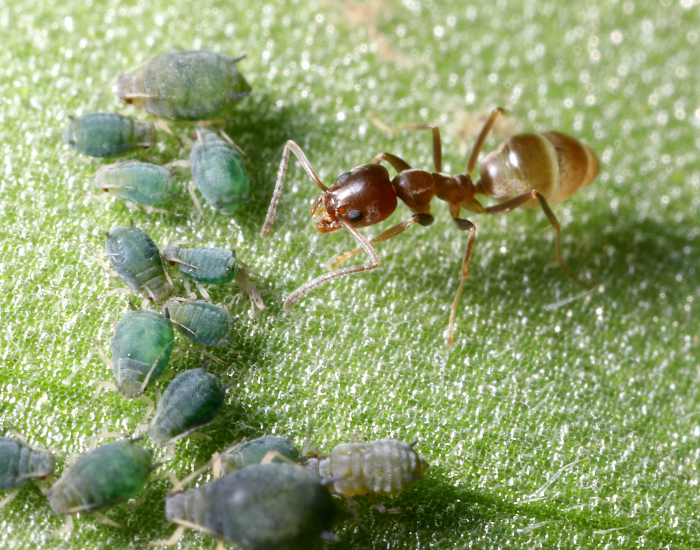
These are fascinating social insects. When threatened, they raise their heart-shaped abdomens over their heads, looking like tiny circus performers, hence the name.
You’ll often find them nesting in tree limbs, tree branches, or abandoned termite galleries. While they usually stay outdoors, they will enter through ant entry points like window frames if they find a food source.
6. Pharaoh Ants (Monomorium pharaonis)
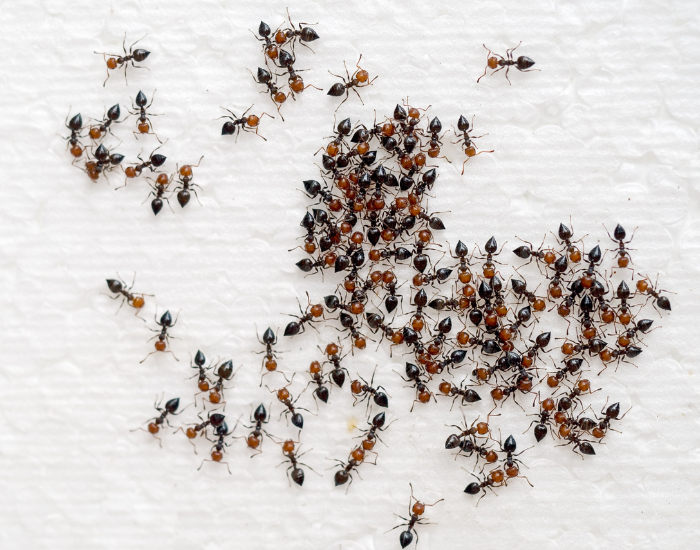
These are tiny ants, often yellow or light brown. They are notorious in hospitals and apartment buildings because they can transmit pathogens like Salmonella.
The biggest mistake people make with pharaoh ants is using repellent sprays. These ants respond to stress by “budding,” where the colony splits into several new ones. This makes the ant infestation much worse. Ant baits are the only way to go here.
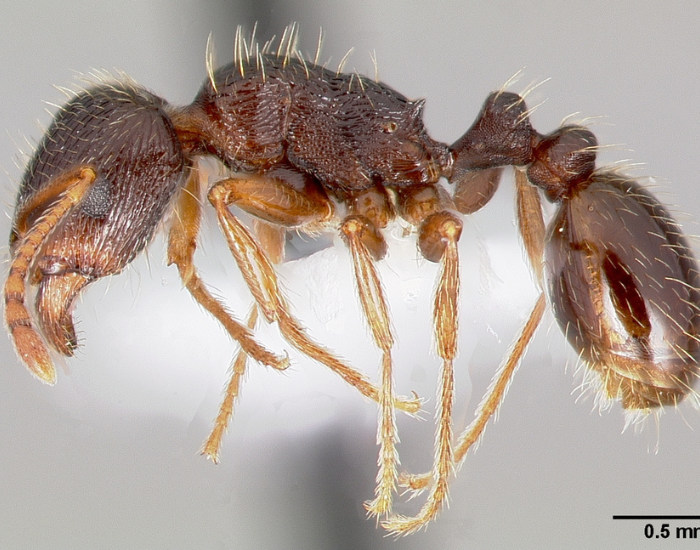
7. Pavement Ants (Tetramorium immigrans)
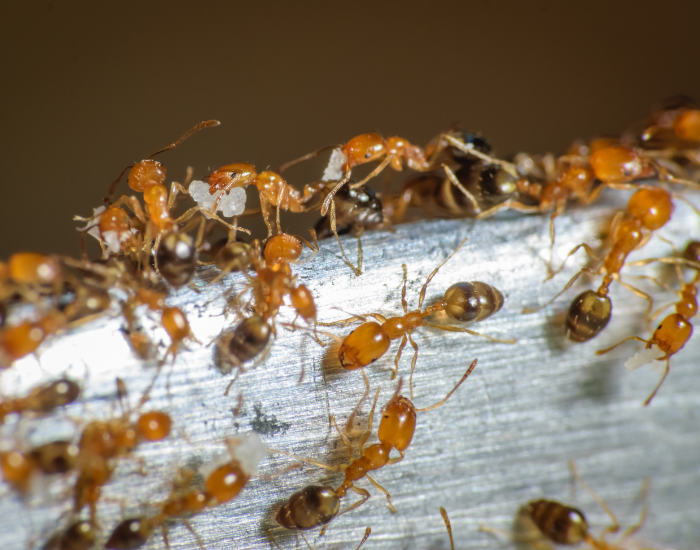
Ever seen a “war” on the sidewalk between two groups of ants? Those are pavement ants. They are dark brown and build their nest entrances in the cracks of pavement or under stones.
They are a very common household ant in the northern US. And you gotta know they aren’t particularly dangerous, but they will happily feast on anything from grease to seeds.
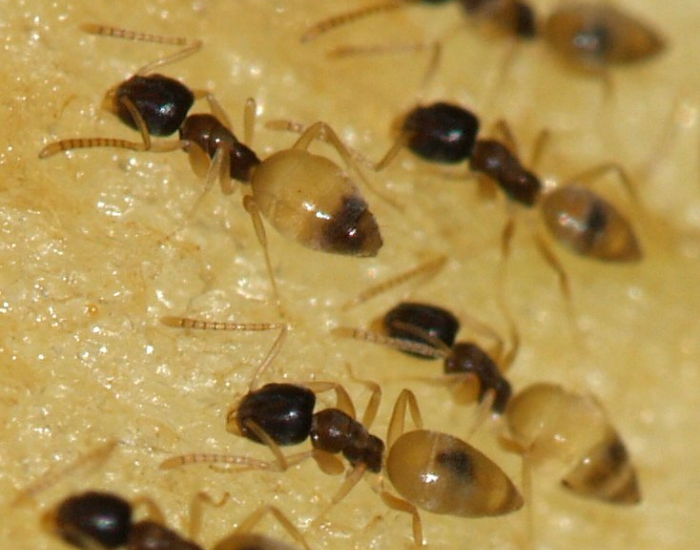
8. Ghost Ants (Tapinoma melanocephalum)
These get their name from their pale, almost translucent legs and abdomen, which make them very hard to see. They are indoor ants that thrive in warm, humid spots like bathrooms or behind baseboards. They are so small they can fit through the tiniest cracks in wall voids
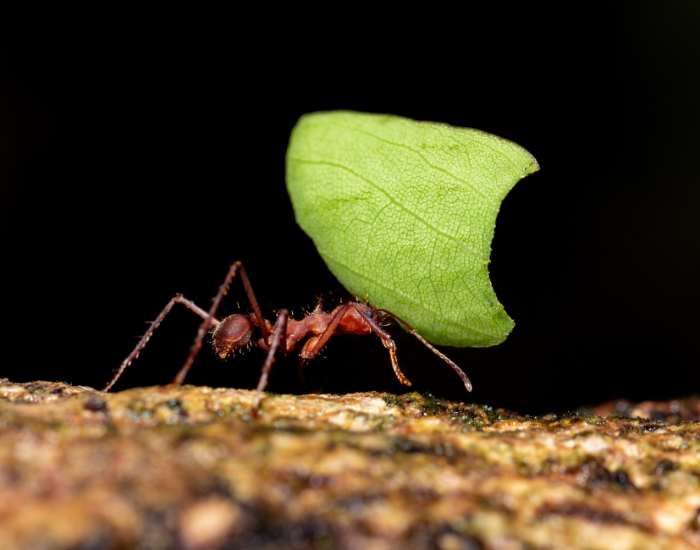
9. Leafcutter Ants (Atta spp.)
Mainly found in Central and South America, leaf cutter ants are the world’s first farmers. They don’t eat the leaves they cut; they use them to grow a specific type of fungus in their large colonies.
Watching a line of leafcutter ants carry green fragments through a jungle is a biological masterpiece. Their nests can be over 30 feet deep!
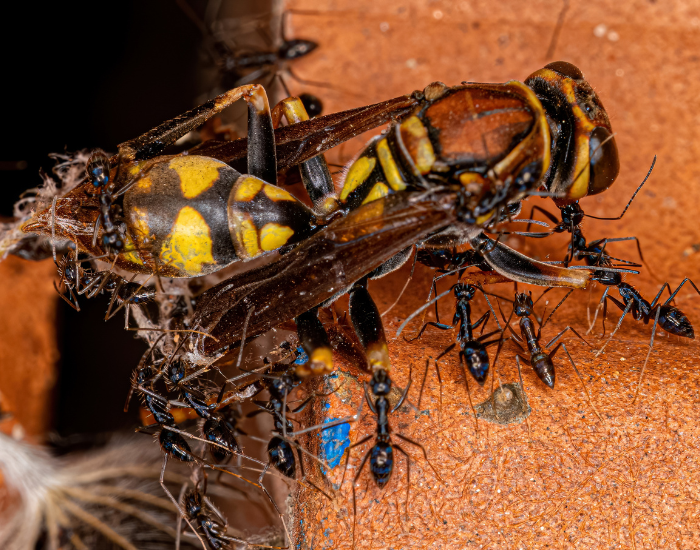
10. Crazy Ants (Paratrechina longicornis)
Crazy ants (Nylanderia fulva and Paratrechina longicornis) are known for their frantic, zigzag movement, which actually helps them forage more efficiently by covering large areas quickly. They are especially notorious for swarming electrical equipment, as they’re attracted to electromagnetic fields. When electrocuted, they release an alarm pheromone that draws thousands more ants, often causing short circuits and equipment damage.
In the southern United States, the Tawny Crazy Ant has become a serious invasive species. It can neutralize fire ant venom by coating itself in formic acid, allowing it to outcompete aggressive species. Because they form massive supercolonies with multiple queens and little internal aggression, their populations can explode into millions, overwhelming ecosystems and even killing small animals.
11. Citronella Ants (Lasius interjectus)
If you dig up a nest and it smells like lemons, you’ve found citronella ants. They are mostly subterranean, feeding on the honeydew of aphids that live on roots. They rarely enter homes except during swarming season.
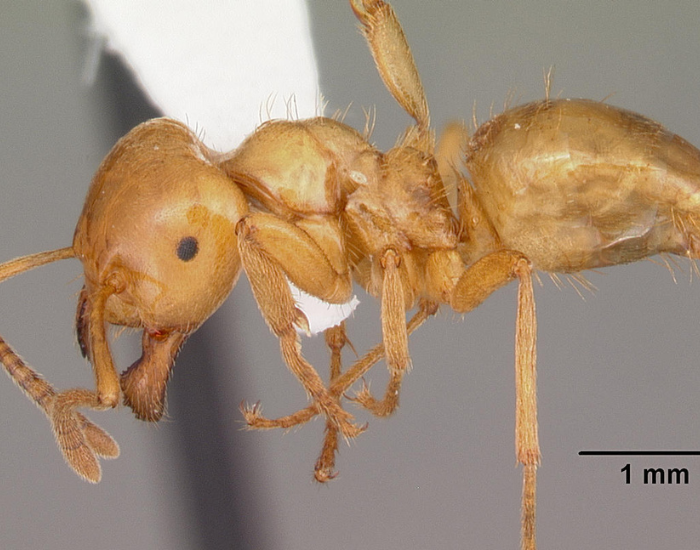
12. Thief Ants (Solenopsis molesta)
These are some of the smallest ant types in the world. They are called “thief ants” because they nest near other ant species and steal their larvae and food. Because of their size, they easily get into “sealed” food containers.
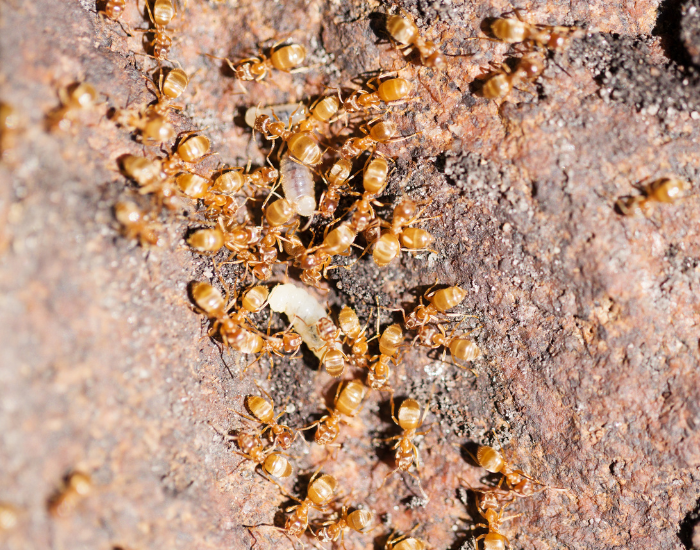
13. Field Ants (Formica spp.)
These are the ants that make those large, thatch-covered mounds in your yard. Field ants are often confused with carpenter ants due to their size, but they prefer outdoor nests in open sunshine.
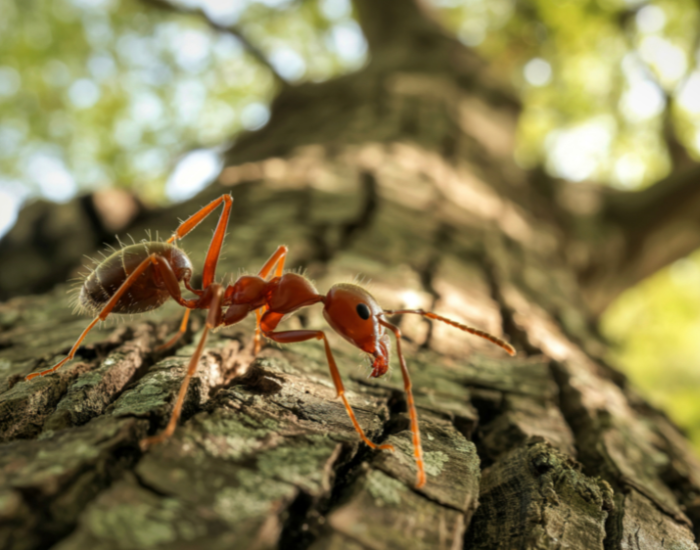
14. Harvester Ants (Pogonomyrmex spp.)
Common in the southern United States, especially in dry grasslands and deserts, harvester ants are expert seed collectors. They gather grass and wildflower seeds and store them in underground granaries, creating food reserves that help the colony survive drought. Their nests are often marked by large, bare circular patches of cleared land around the entrance.
Despite their farming lifestyle, harvester ants are heavily armed. They possess one of the most painful stings of any insect in North America, delivering potent venom used to defend their colony from predators. Tough, organized, and well-adapted to harsh environments, these ants are true survivors of the desert.
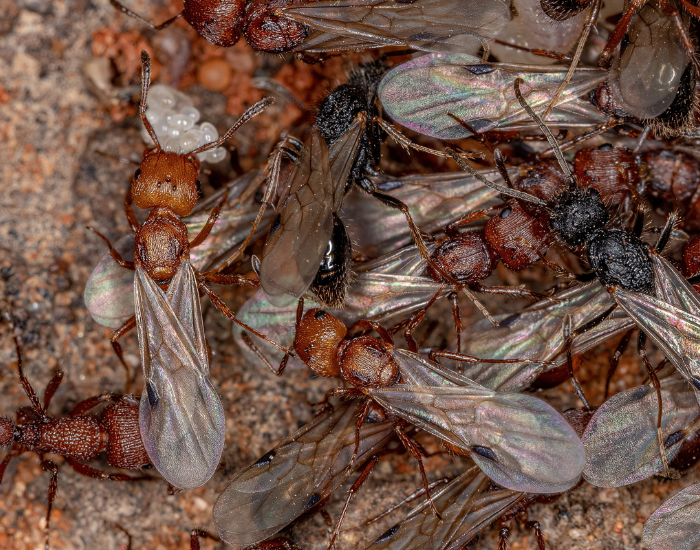
15. Honey Ants (Myrmecocystus spp.)
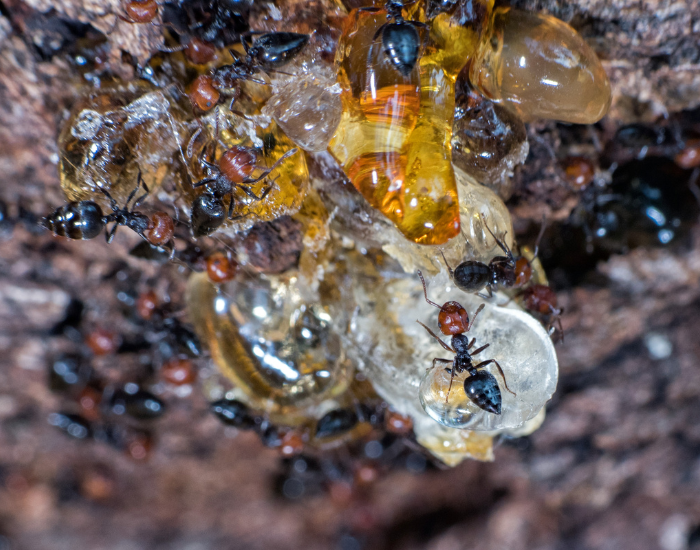
Among the strangest types of ants on Earth, honey ants have evolved a living food-storage system that seems almost unbelievable. In colonies of Myrmecocystus (found in arid regions of North America and Mexico), certain workers become specialized “repletes” — essentially living storage tanks.
These repletes are fed enormous amounts of nectar and honeydew by other workers until their abdomens swell into large, translucent globes that can be as big as a small grape. The swollen ants hang motionless from the ceiling of underground chambers, clinging with their legs while their bodies act as biological pantries.
When food becomes scarce — especially during droughts in desert habitats — other workers gently stroke the replete’s antennae, prompting it to regurgitate sweet liquid to feed the colony. This stored nectar can sustain the entire nest through long periods when flowers and insects are hard to find.
16. Bull Ants (Myrmecia spp.)
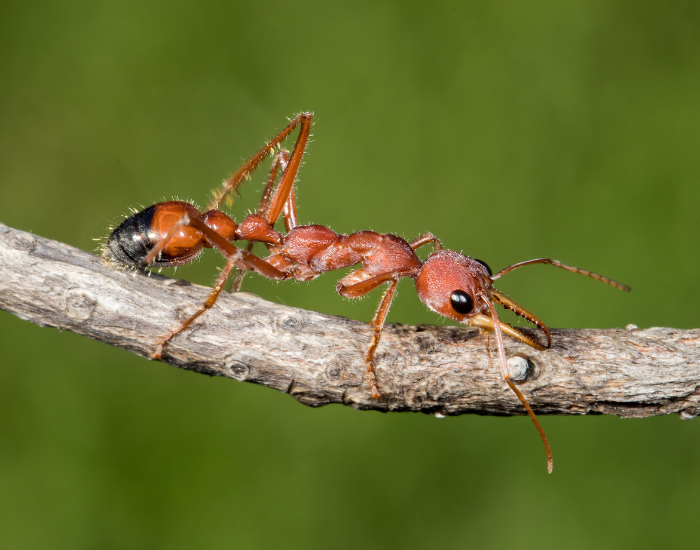
Native to Australia, these are the giants of the ant world. Unlike most worker ants that rely on chemical trails, Bull Ants have incredible vision and will actually track you as you walk by.
They possess a painful sting and a bite that can cause anaphylaxis in some people. In my field days, I learned that if you see one, there are likely nest entrances nearby in the soil. They are primitive, aggressive, and represent one of the most unique different ant species on the planet.
17. Pennant Ants (Tetramorium bicarinatum)
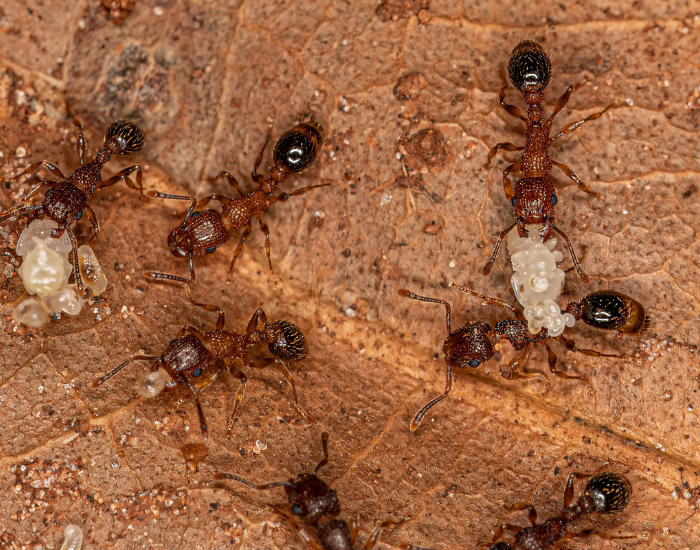
Commonly found in the Southeastern United States, east Australia and tropical regions, Pennant ants are easy to ID if you have a hand lens. Pennant ants have two distinct spines on their back and a “pennant-like” look to their abdomen.
They often build outdoor nests in plant material or under stones but can become indoor ants if they find a reliable food source. They are scavengers, often seen preying on smaller insect prey.
The venom composition of Tetramorium bicarinatum reveals promising potential for the development of a novel pharmacologically active compound known as bicarinalin.
Ant Nests and Nesting Habits
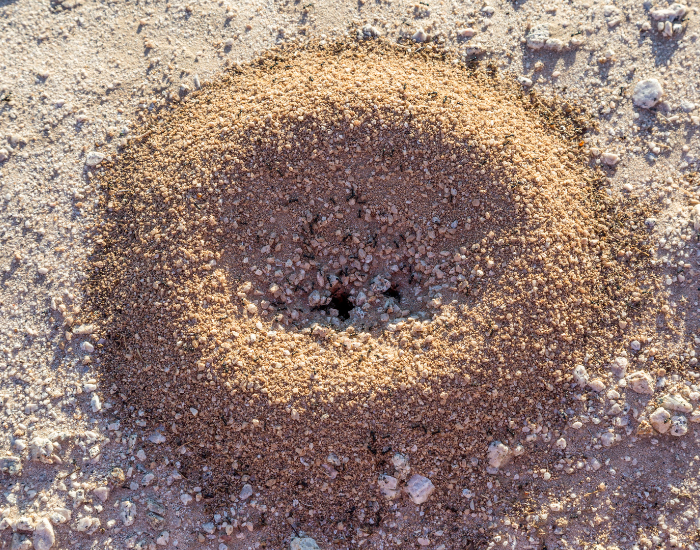
Ants are one of the best architects in the animal world. Understanding nesting habits is key to ant control. Most ants prefer soil nests, but as we’ve seen, wood-boring ants like the Carpenter ant or indoor ants like the Pharaoh ant have adapted to our structures.
When I’m in the field, I look for “frass” (ant debris) or nest entrances near moisture. If you are dealing with satellite nests, you must treat the entire perimeter, or they will just keep coming back.
FAQ: What People Ask About Ant Types
The most common house ants are Odorous House Ants, Pavement Ants, and Carpenter Ants.
Look at the size, color, and number of nodes. A magnifying glass helps! Also, pay attention to where they are—are they in the wood, the soil, or the kitchen?
Yes! Studies (like those from the Journal of Insect Behavior) show that worker ants take hundreds of short power naps totaling several hours a day, while queens sleep much longer to stay refreshed for egg-laying.
Argentine ants and Pharaoh ants are notoriously difficult because of their multiple queens and ability to move their colonies quickly.
The Biologist’s Verdict
Ants amazing as they embody the power of community. Whether they are black ants in your driveway or caribbean crazy ants invading a new ecosystem, they are just trying to provide for their colony.
However, when ant types move from the forest into your pantry, it’s time to act. Always start with non-toxic ant baits that allow the worker ants to carry the solution back to the queen. If you have a massive ant infestation, especially with stinging species or wood-destroying types, don’t hesitate to call a pest management professional.
In my years of travel, I’ve learned that the more you know about all type of ants, the less “creepy” they become. They aren’t just pests; they are one of the most complex social insects on our planet. And if you are ever curious about hw big ants are compared to other creatures, from a tardigrade, or monarch butterfly, to a blue whale, do not forget to visit our animal size comparison tool.
Can You Name That Ant Species? 🐜
A 15-photo identification challenge — test your ability to distinguish different ant species by shape, color, and behavior. Go back and change any answer before you score.
Which ant species or type is this?
References:
Conway, J. R. (1977). Analysis of Clear and Dark Amber Repletes of the Honey Ant, Myrmecocystus mexicanus hortideorum. Annals of the Entomological Society of America, 70(3), 367–369. https://doi.org/10.1093/aesa/70.3.367
Erthal, M., Jr., Silva, C. P., Cooper, R. M., & Samuels, R. I. (2009). Hydrolytic enzymes of leaf-cutting ant fungi. Comparative Biochemistry and Physiology Part B: Biochemistry and Molecular Biology, 152(1), 54–59. https://doi.org/10.1016/j.cbpb.2008.09.086
Islam, M., Deeti, S., Kamhi, J. F., & Cheng, K. (2021). Minding the gap: learning and visual scanning behaviour in nocturnal bull ants. The Journal of experimental biology, 224(14), jeb242245. https://doi.org/10.1242/jeb.242245
Rifflet, A., Gavalda, S., Téné, N., Orivel, J., Leprince, J., Guilhaudis, L., Génin, E., Vétillard, A., & Treilhou, M. (2012). Identification and characterization of a novel antimicrobial peptide from the venom of the ant Tetramorium bicarinatum. Peptides, 38(2), 363–370. https://doi.org/10.1016/j.peptides.2012.08.018
Robinson, S. D., Deuis, J. R., Niu, P., Touchard, A., Mueller, A., Schendel, V., Brinkwirth, N., King, G. F., Vetter, I., & Schmidt, J. O. (2024). Peptide toxins that target vertebrate voltage-gated sodium channels underly the painful stings of harvester ants. The Journal of biological chemistry, 300(1), 105577. https://doi.org/10.1016/j.jbc.2023.105577
Zhang, Q. H., McDonald, D. L., Hoover, D. R., Aldrich, J. R., & Schneidmiller, R. G. (2015). North American Invasion of the Tawny Crazy Ant (Nylanderia fulva) Is Enabled by Pheromonal Synergism from Two Separate Glands. Journal of chemical ecology, 41(9), 853–858. https://doi.org/10.1007/s10886-015-0622-6