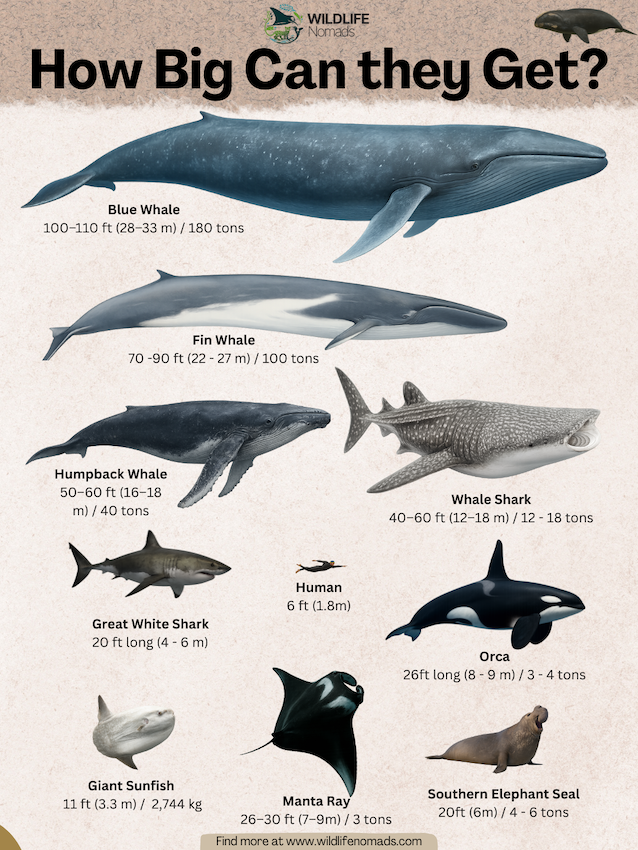
As a biologist who’s been fortunate enough to witness humpback whales breaching off distant coastlines and lock eyes with gentle gray whales in Baja’s serene lagoons, I thought I’d seen nature at its most magnificent. Yet despite these incredible encounters, I’ve never seen a blue whale in person. Honestly, I’m not sure anything could prepare me for it. These gentle giants don’t just breach the surface, they redefine your understanding of scale itself. That’s why we build an interactive tool where you can explore who blue whales compare in size with other whales, and another one for how it compares in size with other animals, like elephants or giraffes.
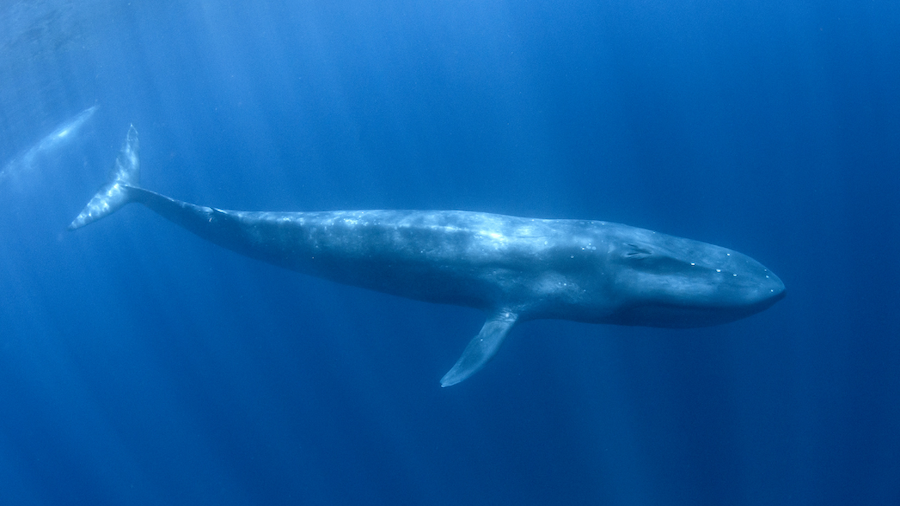
Blue whales represent the largest animal to have ever existed on Earth, surpassing even the mightiest dinosaurs. When one surfaces near your vessel, it resembles a living island more than a creature. This guide explores everything about Balaenoptera musculus, from their incredible biology to the conservation challenges they face today.
1. Earth’s Heavyweight Champion, No Contest
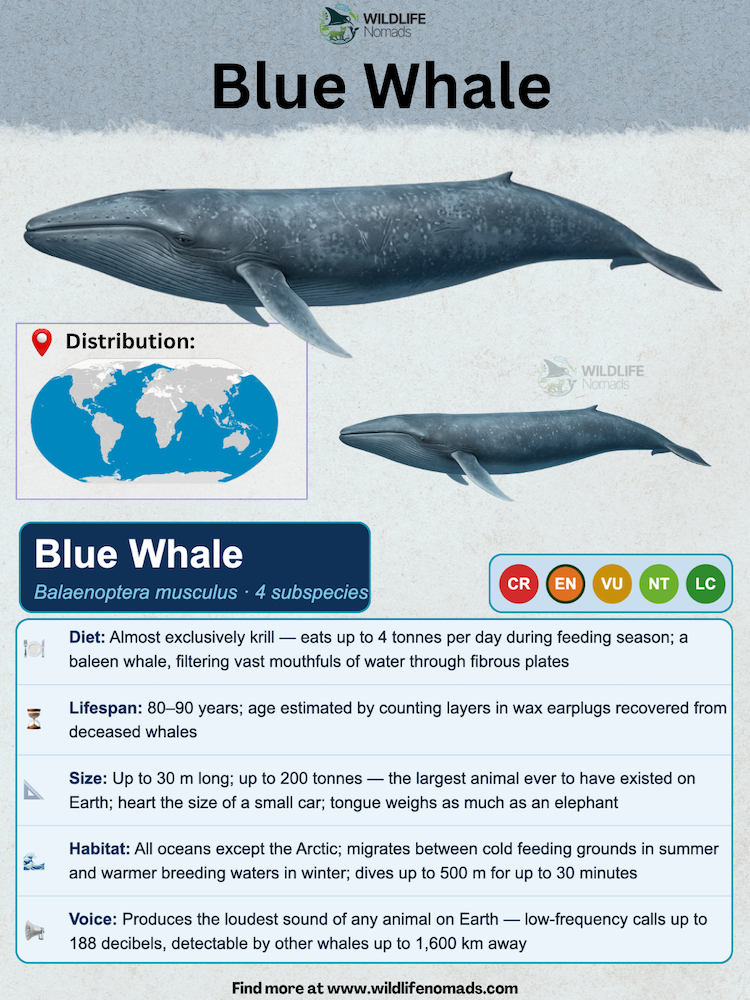
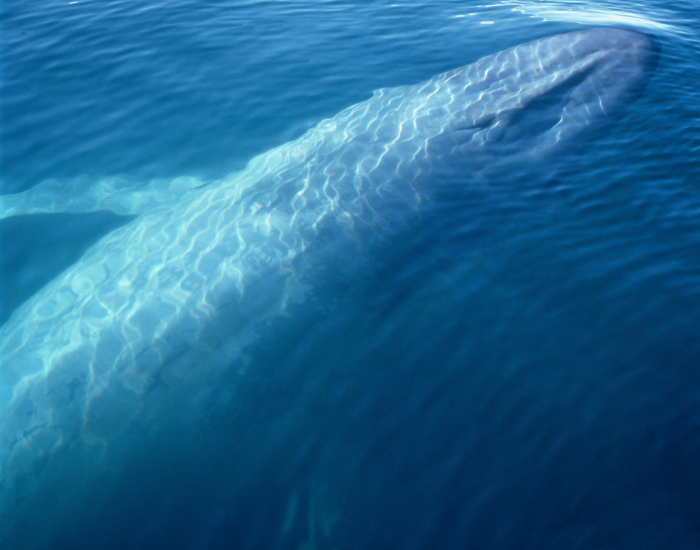
The largest blue whale ever measured was a female discovered in the South Atlantic in 1909, stretching an astonishing 33 meters (110 feet). That’s roughly three school buses parked end-to-end. While most blue whales measure between 24-27 meters (80-90 feet), their mass remains staggering.
The average weight of a blue whale ranges from 100 to 150 tons, though Antarctic blue whales can reach 200 tons. Female blue whales typically weigh more than males. In Antarctic waters, females average 130 tons while males reach about 112 tons. To put this in perspective, that’s equivalent to about 33 African elephants or 2,400 people. Their sheer size makes them the biggest animal ever documented in Earth’s history.

How many school buses long is a blue whale?
Two and a half. A blue whale is about 30 metres, or 98 feet, and a full-size school bus is about 12 metres, or 40 feet. Park two buses nose to tail and you are still eight metres short.
That comparison exists because almost nobody has stood beside a blue whale. A school bus is different: most people have sat in one, walked past one, or waited behind one at a light, so its length is already in your head. Numbers are not. Thirty metres means very little until you have something to put it against.
2. A Heart That Pumps Like a Small Car Engine
Blue whale anatomy defies imagination. Their heart alone weighs approximately 400 pounds (180 kilograms), roughly the size of a golf cart, and pumps 60 gallons of blood with each beat. During deep dives into the ocean depths, the blue whale’s heart rate drops to just 2 beats per minute to conserve precious oxygen. Upon surfacing, however, the heart rate can spike to 25-37 beats per minute.
Perhaps even more remarkably, their tongue weighs around 2.7 tons, matching the weight of an entire adult elephant. Their aorta is wide enough that a small child could crawl through it. The blue whale’s heart can be heard from over 2 miles away underwater. Everything about these marine mammals operates on a scale that challenges human comprehension.

3. Are Blue Whales Mammals? Absolutely
Despite spending their entire lives underwater, blue whales are indeed mammals. They’re warm-blooded, breathe air through lungs, and females give birth to live young. Female blue whales nurse their calves on milk that’s 35-50% fat—far richer than any land mammal produces.
As members of the animal phyla, they belong to baleen whales. Blue whales are specifically part of the rorqual whales, a subgroup of baleen whales characterized by their pleated throats that expand during feeding. Other baleen whales, such as humpback whales and fin whales, share these unique feeding adaptations. These large whales feature distinctive pleated throat grooves, between 55-88 grooves, that expand dramatically during feeding, allowing them to engulf massive amounts of water and food.

4. Antarctic Giants Rule the Southern Ocean
The Antarctic blue whale (Balaenoptera musculus intermedia) represents the largest subspecies. These behemoths depend on the frigid antarctic waters and Southern Ocean to feed on massive krill blooms that thrive in these nutrient-rich seas. Pygmy blue whales, meanwhile, are a smaller subspecies found primarily in the Southern Hemisphere and Northern Indian Ocean.
Blue whales were abundant in nearly all the Earth’s oceans until the end of the 19th century. Historically, blue whale populations in Antarctic regions numbered in the hundreds of thousands. Whalers began hunting blue whales in earnest after the invention of the harpoon gun. Commercial whaling peaked between 1930 and 1931 when 30,000 animals were taken. The pre-whaling population of blue whales quickly fell from an estimated 350,000 to just a few thousand. Blue whales were killed in staggering numbers across the Southern Ocean, North Atlantic Ocean, and North Pacific.
Blue whales have been protected in areas of the Southern Hemisphere since 1939 and were given complete protection in the North Atlantic in 1955. The International Whaling Commission banned all hunting of blue whales in 1966.
5. Living Nearly a Century in Ocean Realms
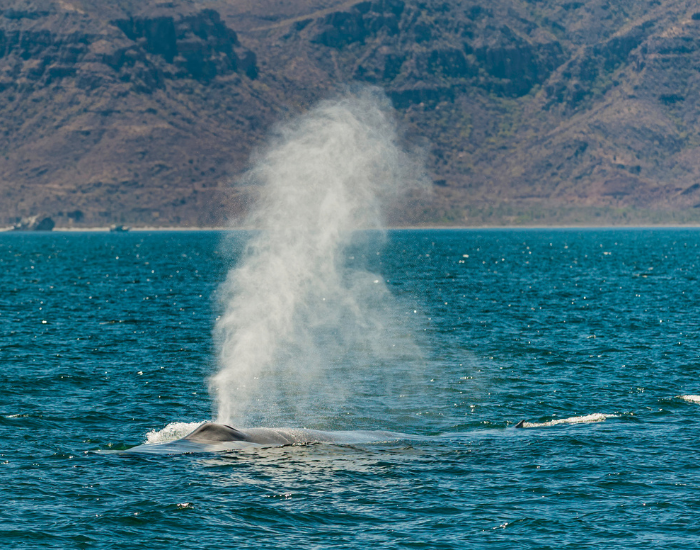
Blue whales enjoy very long lifespans, typically living 80-90 years in the wild. Scientists determine their age by examining layers in their earwax plugs, which accumulate annually like tree rings. The oldest blue whale found was estimated at approximately 110 years old, making these marine mammals among the longest-living creatures in the ocean.
This longevity means blue whales witness decades of ocean changes, from shifting krill populations to warming waters. Their extended lifespan also means recovery from near-extinction takes generations rather than years. Female blue whales reach sexual maturity around 5-15 years of age, depending on the population.
6. Dining Exclusively on Tiny Crustaceans
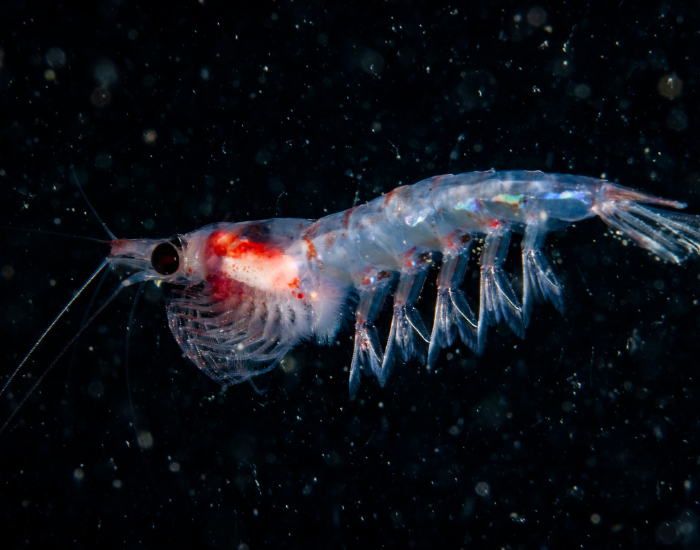
Nature’s greatest irony: the largest animal on Earth survives almost entirely on one of the smallest. The blue whale’s diet consists primarily of antarctic krill, tiny shrimp-like crustaceans barely exceeding two inches in length. Using their baleen plates as sophisticated filters, these whales can consume up to 4 tons of krill daily during feeding season. That’s approximately 40 million krill per day.
Blue whales have between 300-400 baleen plates in their mouths. During summer feeding grounds in areas like Monterey Bay or along the West Coast, blue whales feed intensively to build fat reserves. They strain massive volumes of seawater through their baleen, trapping millions of these tiny crustaceans with each gulp. A single mouthful can contain 500,000 calories worth of krill. This feeding strategy is called lunge feeding, the whale accelerates toward dense krill swarms with its mouth open, engulfing enormous quantities of water.
7. The Ocean’s Loudest Voice Travels for Miles
Blue whales are among the loudest animals on Earth, producing vocalizations that can travel vast distances across the ocean. A blue whale call reaches up to 188 decibels, louder than a jet engine and far exceeding the threshold of human hearing pain. These low-frequency vocalizations travel through deep sea channels for hundreds, sometimes thousands, of miles.
Scientists believe these calls serve multiple purposes: attracting mates, navigating vast ocean basins, and communicating with other blue whales across enormous distances. Only male blue whales sing, and scientists believe their song is a mating call. The famous “52 blue whale”, nicknamed the “loneliest whale”, produces calls at an unusual 52Hz frequency, making it potentially unable to communicate with other whales.
8. Epic Migrations Between Poles and Equator
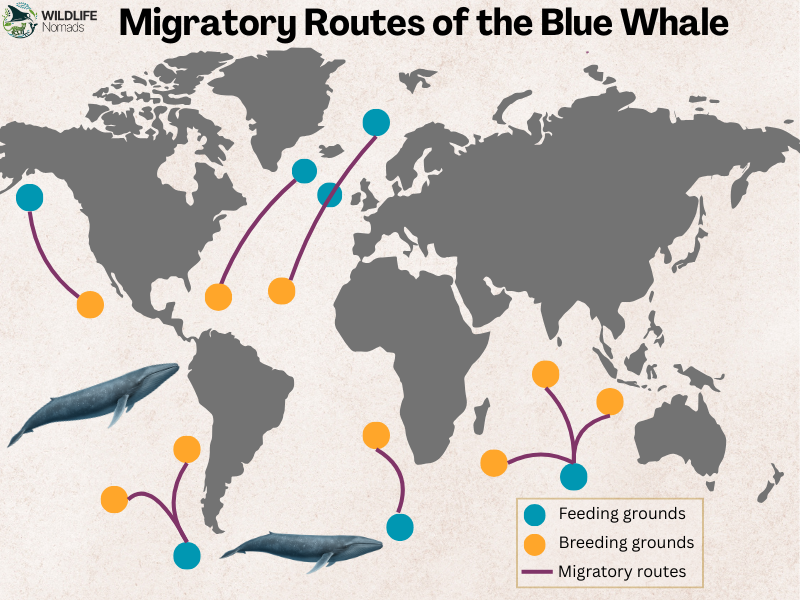
Blue whales undertake some of the longest migrations in the animal kingdom. They spend summers in high-latitude summer feeding grounds, places like Eastern Canada, the North Pacific, North Atlantic Ocean, and waters off Eastern Australia. These summer feeding areas near the poles are crucial habitats where blue whales forage during the summer months, taking advantage of abundant krill blooms in cold, nutrient-rich waters.
Blue whales are found in all oceans except the Arctic Ocean. When winter arrives, these giants travel thousands of miles to warmer waters near the equator. Winter breeding grounds span from Central America to the Northern Indian Ocean, Southern California to the Eastern Tropical Pacific. In these temperate zones, female blue whales give birth and mate, though they eat little during this period. Some blue whale populations are resident year-round, such as those in the Northern Indian Ocean.
Blue whales migrate from these polar feeding grounds to warmer waters for calving. During migration, they can travel thousands of miles, relying almost entirely on stored blubber for energy.
9. Baby Blues: Born Big and Growing Fast
Female blue whales reach sexual maturity around 5-15 years of age. After a 10-12 month gestation period, a single baby blue whale is born already measuring about 7 meters (23 feet) and weighing 2.8 to 3 tons, larger than most adult land animals. Blue whale pregnancies last about 10 to 12 months, with calves typically born in winter months in warmer waters.
A newborn blue whale calf can weigh up to 3 tons and grow about 200 pounds daily by consuming up to 50 gallons of rich milk. A nursing blue whale mother produces over 50 gallons of milk a day, which is about 35 to 50 percent milk fat. This extraordinarily high-fat milk allows the calf to gain weight at an astonishing rate.
Baby blue whales grow faster than any other animal on Earth. Calves nurse for approximately 6-8 months. By the time they’re weaned, they’ve doubled in length and weigh around 23 tons. Mother-calf pairs remain together for approximately one year, making this the most consistent social unit among blue whales.
10. Solitary Swimmers in Small Groups
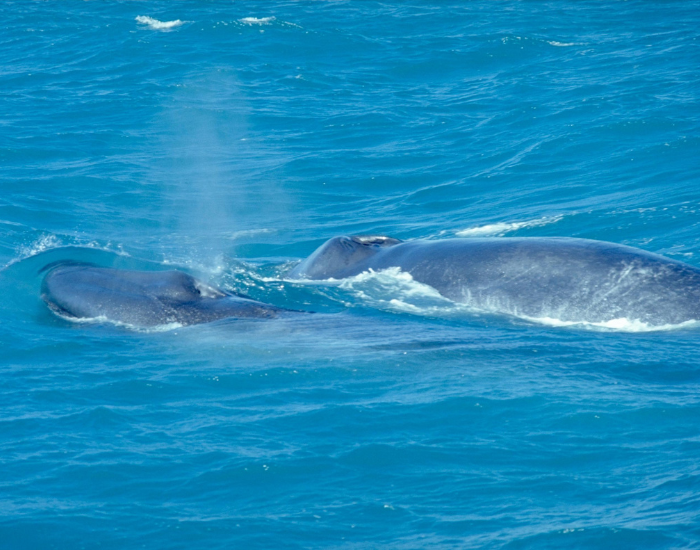
Unlike some other marine mammals that form large pods, blue whales are typically found alone or in small groups of 2-5 individuals. However, in areas with abundant food sources, such as Monterey Bay, along the California coast, or near South Georgia, multiple whales may congregate to feed on dense krill concentrations.
These gatherings aren’t truly social groups but rather independent whales taking advantage of the same rich feeding grounds. Blue whales are generally solitary creatures outside of the mother-calf bond. They don’t form the complex social structures seen in other marine mammals like killer whales or sperm whales.
11. Even Giants Have a Natural Predator
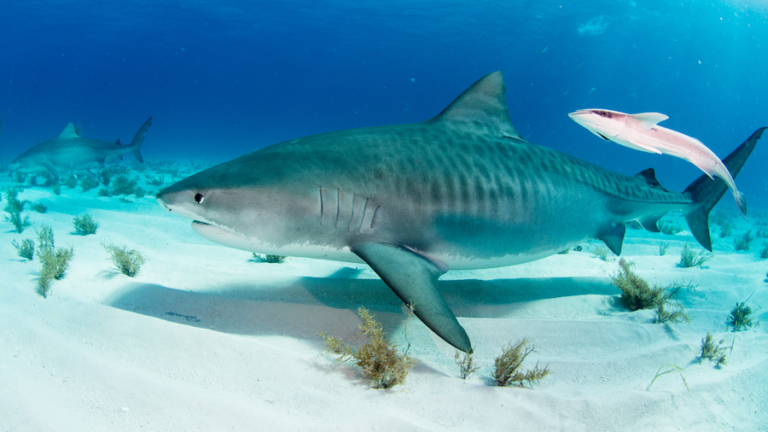
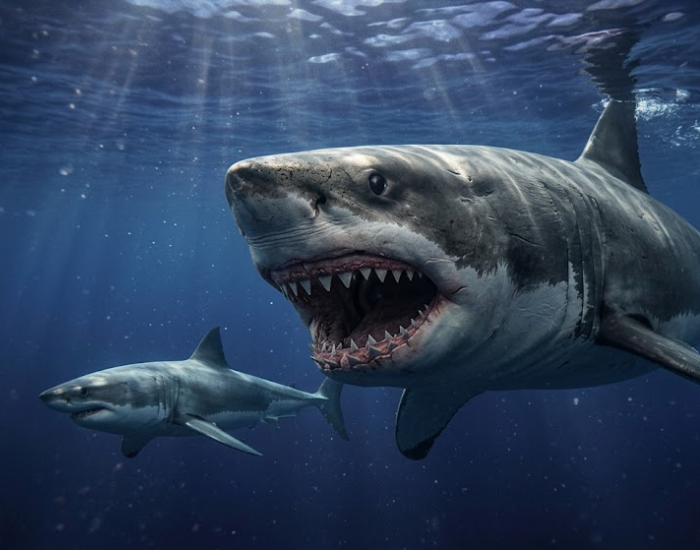
Despite their enormous size, blue whales aren’t completely invincible. The only known natural predator of the blue whale is not any shark species, but the orca, or killer whale. While attacks remain relatively rare, coordinated orca pods have been documented targeting blue whale calves or weakened adults. Documented predation events and sightings have occurred off the coast of Western Australia, highlighting this area’s significance as a location where orca predation on blue whales has been directly observed.
These attacks typically involve 5-15 killer whales working together, focusing on young, sick, or isolated individuals. Killer whales have been observed attacking the blue whale‘s head to consume the tongue, which is incredibly nutrient-dense. However, healthy adult blue whales can usually outswim orcas, reaching speeds of 20-30 mph when threatened. The vast majority survive to their natural lifespan without predator encounters.
12. Protected but Still Recovering from Near-Extinction
The blue whale is currently protected under the Endangered Species Act in US waters and by international agreements worldwide. Blue whales are listed as endangered under both the U.S. Endangered Species Act and the IUCN Red List. The International Whaling Commission banned commercial whaling of this species in 1966, after centuries of hunting reduced global blue whale populations from roughly 350,000 to just a few thousand.
Today’s blue whale populations face modern threats. Ship strikes are a significant mortality factor, especially off the U.S. West Coast. Entanglement in fishing gear can lead to fatigue, compromised feeding ability, or severe injury. Ocean noise pollution and climate change, which may cause a decline in their primary food source, Antarctic krill, due to warmer temperatures and ocean acidification, also pose serious risks.
Conservation efforts focus on establishing marine protected areas, regulating shipping routes, and monitoring population recovery. Unusual mortality events, as defined under the Marine Mammal Protection Act, are important to monitor for blue whale conservation. The global blue whale population is estimated to be between 5,000 and 15,000 mature individuals as of 2018, a fraction of historic numbers. Protecting marine life, including blue whales, requires following responsible wildlife observation guidelines and legal regulations to minimize human impact.

The Baleen Secret: How Blue Whales Filter-Feed
The blue whale’s dining habits are a marvel of the animal kingdom. As the largest animal on Earth, you might expect blue whales to hunt massive prey, but their survival depends on consuming billions of tiny crustaceans called krill. Their secret weapon? Baleen plates—rows of flexible, comb-like structures made of keratin, the same protein found in our hair and nails.
When a blue whale feeds, it lunges through dense swarms of krill with its enormous mouth agape, taking in up to 50 tons of seawater and prey in a single gulp. Then, with a mighty push of its tongue, which can weigh as much as an elephant, the whale forces the water out through its baleen plates. These plates act like a giant sieve, trapping the krill inside while the water flows back into the ocean.
In peak feeding season, a blue whale can consume up to 40 million krill in a single day. This remarkable adaptation not only sustains the blue whale’s massive body but also plays a vital role in maintaining the balance of marine ecosystems. Blue whales produce nutrient-rich fecal plumes that fertilize phytoplankton, which in turn produce oxygen and support entire food webs.
Blue Whale FAQ
The biggest blue whale measured approximately 33 meters (110 feet) long, discovered in 1909 in the South Atlantic.
Researchers continue tracking signals from this whale with its unique 52Hz call frequency, though its exact species and current status remain uncertain.
Blue whales inhabit all major ocean basins except the Arctic Ocean. They’re most common in the North Pacific, North Atlantic Ocean, and Southern Ocean. Blue whale habitat includes both coastal and pelagic environments.
Current estimates suggest 10,000-25,000 blue whales exist globally. Blue whale populations vary by region, with different populations in the Northern Hemisphere, Southern Hemisphere, and specific regions like the Eastern North Pacific.
Blue whales produce their massive size by eating krill—tiny crustaceans. They consume up to 4 tons (40 million krill) daily during feeding season.
Blue whales typically live 80-90 years, though the oldest blue whale found was estimated at 110 years old.
Protecting Earth’s Gentle Giants
Protecting blue whales extends beyond saving a single species, it’s about preserving ocean health itself. As these marine mammals migrate from the North Pacific to the Southern Ocean, they function as nutrient pumps, distributing iron and nitrogen that fertilize phytoplankton blooms. These microscopic plants produce much of Earth’s oxygen and form the foundation of marine food webs.
Every whale that survives represents not just a conservation victory, but hope that humanity can coexist with nature’s most magnificent creations. Blue whales continue to face threats in the modern ocean, but with continued conservation efforts and public awareness, these gentle giants have a fighting chance at recovery.
Blue Whale Genius Challenge
Eight questions to test your knowledge on Blue Whale biology, scale, diet, and conservation. Can you score 100%?
Multiple Choice
Blue Whale Watching!
If you are keen to see blue whales, have a look at our recommended tour, you won’t regrest these experiences:
This blog is reader-supported. When you buy experiences through links listed on this site, we may earn an affiliate commission.
References:
Freitas, C., Skogen, M. D., Sigurðsson, G. M., Biuw, M., Haug, T., Lindblom, L., & Gundersen, K. (2025). Impact of baleen whales on ocean primary production across space and time. Proceedings of the National Academy of Sciences of the United States of America, 122(43), e2505563122. https://doi.org/10.1073/pnas.2505563122
Guzman, H. M., Estévez, R. M., & Kaiser, S. (2024). Insights into Blue Whale (Balaenoptera musculus L.) Population Movements in the Galapagos Archipelago and Southeast Pacific. Animals : an open access journal from MDPI, 14(18), 2707. https://doi.org/10.3390/ani14182707
Ryan, J. P., Benoit-Bird, K. J., Oestreich, W. K., Leary, P., Smith, K. B., Waluk, C. M., Cade, D. E., Fahlbusch, J. A., Southall, B. L., Joseph, J. E., Margolina, T., Calambokidis, J., DeVogelaere, A., & Goldbogen, J. A. (2022). Oceanic giants dance to atmospheric rhythms: Ephemeral wind-driven resource tracking by blue whales. Ecology letters, 25(11), 2435–2447. https://doi.org/10.1111/ele.14116
Melica, V., Atkinson, S., Gendron, D., Calambokidis, J., & Mueter, F. (2021). Blubber endocrine profiles provide insights into reproductive biology in blue whales from the eastern North Pacific Ocean. General and comparative endocrinology, 310, 113830. https://doi.org/10.1016/j.ygcen.2021.113830
Totterdell, J. A., Wellard, R., Reeves, I. M., Elsdon, B., Markovic, P., Yoshida, M., Fairchild, A., Sharp, G., & Pitman, R. L. (2022). The first three records of killer whales (Orcinus orca) killing and eating blue whales (Balaenoptera musculus). Marine Mammal Science, 38(3), 1286–1301. https://doi.org/10.1111/mms.12906