
My first encounter with a giant happened in Holbox Island, I was there to swim with whale sharks. The adrenaline spiking as it was finally my turn to jump. I scrambled into the blue, frantic to “find” the animal, only to have the sun blotted out from below. A massive, dappled shadow materialized out of the deep, a whale shark cruising with a speed that defied its size! It was only ten seconds, but in that moment, the scale of the natural world recalibrated itself for me.
That sense of awe followed me from the open ocean to the dusty enclosures of a zoo in Mexico. While I spent my days in the reptile and amphibian wing, where handling a massive, prehistoric crocodile reminds you very quickly of your place in the food chain, it was the giraffes that caught me off guard. There is something hauntingly soulful about a giraffe’s eye the size of a dinner plate staring back into yours from several meters up.
Nature has never held back when it comes to size. From oceanic titans to savanna giants, the planet is home to some of the world’s largest animals, truly, massive creatures. In this guide, we dive deep into the top 12 world biggest animal on Earth.
A photograph never does this. That gap is why I built the animal size comparison, which draws fifteen species at one true scale with a person standing beside each of them. There is a whale size comparison too, for the ocean giants further down this list.

Why Do Animals Get So Big?
Throughout Earth’s history, animal size has been shaped by evolutionary pressures, environmental factors, and biological constraints. Exploring why animals grow so large is fascinating. Apex predators, for instance, play a crucial role in shaping whole ecosystems. Some species grew huge to deter predators. Meanwhile, other animals grew large to reach food sources that smaller competitors could not access. Today, marine biologists and ecologists continue to study how species reach these extraordinary dimensions.
- Buoyancy in Water: Aquatic animals like whales can grow much larger than land animals because water supports their immense weight, reducing the need for load-bearing limbs.
- Climate and Oxygen: In prehistoric times, higher oxygen levels and warmer climates allowed some species (like giant insects and reptiles) to grow far larger than modern equivalents.
- Predation and Defence: Being large often deters predators and allows access to tall trees and hard-to-reach food sources unavailable to smaller animals.
- Reproductive Strategy: Bigger animals tend to have fewer offspring but invest more time and energy raising them, increasing the odds of survival.
Despite the advantages, there are trade-offs to enormous size: slower reproductive rates, higher food needs, and vulnerability to habitat loss or hunting, many of which are concerns for modern giants like elephants, blue whales, and polar bears.
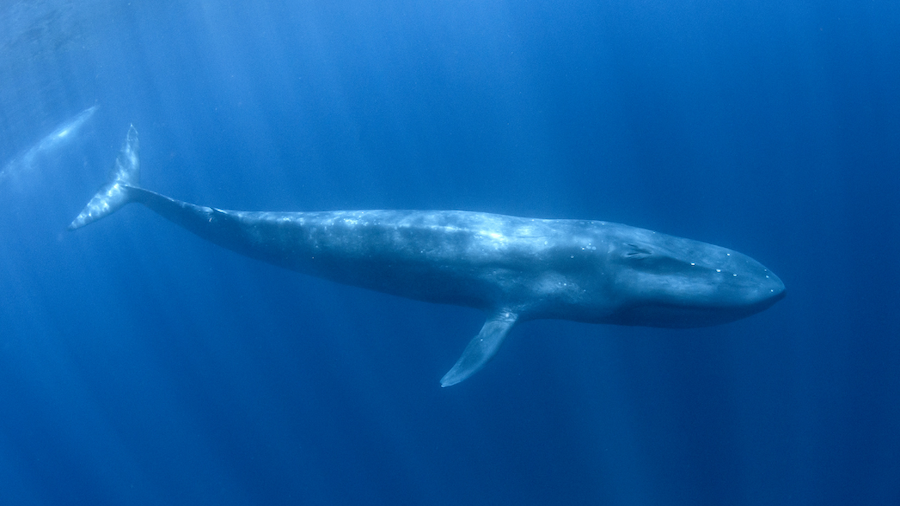
1. Blue Whale (Balaenoptera musculus)
Without a doubt, the blue whale is the largest animal to have ever lived on Earth, the ultimate giant among all world’s largest animals, past or present. The largest blue whale ever recorded reached a length of 110 feet (33.5 metres) and weighed approximately 210 tons. Most adult blue whales measure up to 100 feet (30 metres) and weigh around 200 tons, making the blue whale larger than any dinosaur that ever walked the Earth.
To put the blue whale’s enormous size in perspective: its heart alone weighs about 400 pounds, roughly the size of a small car, and its arteries are wide enough for a human to crawl through. The blue whale’s tongue can weigh as much as an elephant, and its body length is longer than two school buses placed end to end.
Blue whales feed on tiny krill, just like many other types of whales, consuming up to 4 tons a day during peak feeding seasons. Marine biologists tracking blue whale migration patterns have found that these animals travel thousands of miles annually between feeding and breeding grounds.
Blue whales were nearly hunted to extinction in the 20th century, whale hunting remains a conservation concern today, but the blue whale is now protected globally. You can even join whale watching tours.

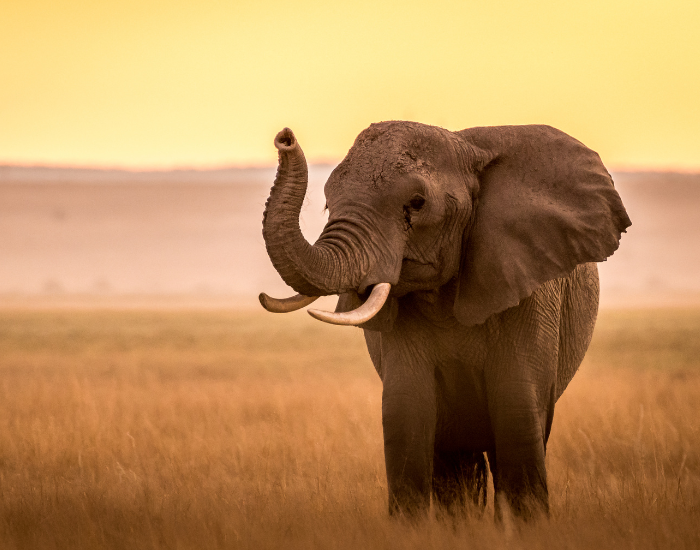
2. African Elephant (Loxodonta africana)
The African elephant is the largest land animal on the planet, the undisputed biggest land animal alive today and the largest land mammal in existence. Adult males can stand up to 13 feet (4 m) tall at the shoulder and weigh as much as 14,000 pounds (6,350 kg), roughly the weight of a small car, or even two. The average height of an adult bull measures around 10–11 feet, but the largest individuals recorded have been significantly taller.
As the largest land animal, the African elephant plays a critical role in shaping the ecosystems it inhabits across sub-Saharan Africa and East Africa. By uprooting trees and digging water holes, African elephants create habitats used by dozens of other animals. Their enormous size also allows them to access tall trees and vegetation unavailable to smaller species.
African elephants live in matriarchal social groups and are known for their intelligence, empathy, and long memory. They are among the most iconic animals in Africa and play a vital role in savanna ecosystems.
Sadly, poaching and habitat destruction have severely threatened African elephant populations across sub-Saharan Africa.
3. Giraffe (Giraffa camelopardalis)
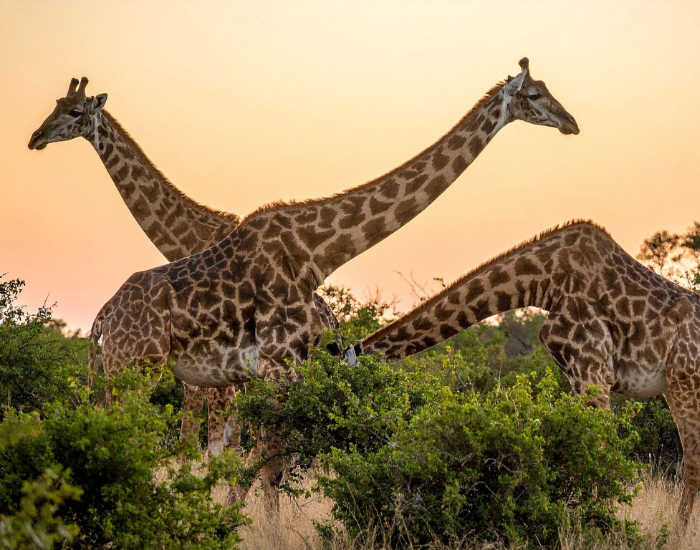
Giraffes are the tallest land animals on Earth, with adult males reaching an average height of up to 18 feet, almost double the height of most other large land animals. Their long necks, which can measure over 6 feet alone, are used for browsing tall trees and engaging in “necking” battles for dominance, feeding on leaves and shoots that other animals simply cannot reach.
Despite their extraordinary height, giraffes have the same number of neck vertebrae as humans, seven, but each one can measure over 10 inches in length. Their cardiovascular system is equally remarkable: a specialised heart and arterial valves pump blood all the way up to the brain, a feat that marine biologists and physiologists have likened to nature’s most complex engineering.
Giraffes are native to East Africa and sub-Saharan Africa, living in savannas and open woodlands in countries such as Kenya, South Africa, and Tanzania. Sadly, giraffe populations across East Africa are declining due to habitat fragmentation and human conflict.
4. Whale Shark (Rhincodon typus)
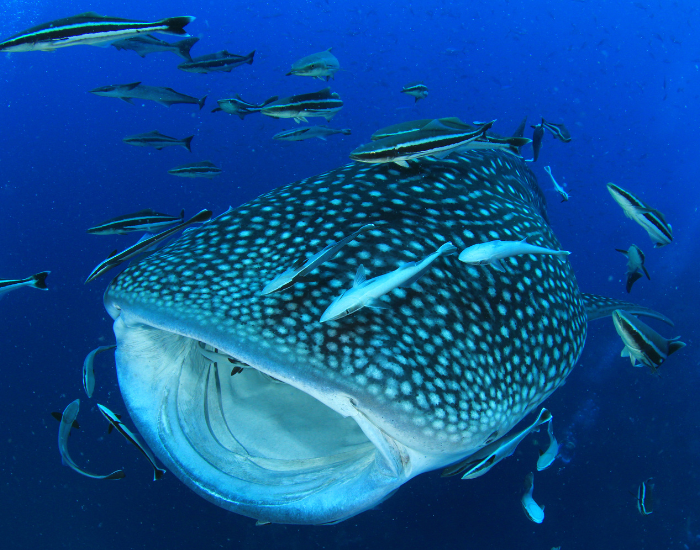
The whale shark is the largest fish in the world, the largest fish species ever recorded in the modern era. As the undisputed largest fish in the sea, whale sharks can measure up to 40 feet in length and weigh over 20 tons. The average whale shark measures about 32 feet, though some individuals have been recorded at much greater lengths. Marine biologists studying whale shark populations have noted that the enormous size of this species makes it unlike any other fish on Earth.
Despite being the largest fish in the world, whale sharks are gentle giants. Each whale shark has a unique pattern of white spots on its skin, a pattern as individual as a human fingerprint, which scientists and marine biologists use to identify and track individual animals. These sharks prefer warm, tropical oceans and migrate great distances in search of food plankton. Want to experience them firsthand? See the best places to swim with whale sharks.
Though whale sharks pose no threat to humans, this largest fish species is vulnerable to unregulated tourism, accidental capture, and demand for fins and oil.
5. Saltwater Crocodile (Crocodylus porosus)
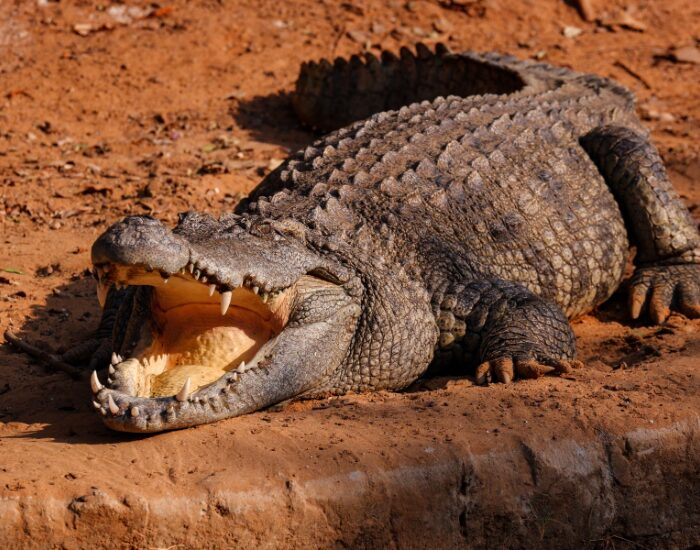
The saltwater crocodile is the largest reptile in the world, the biggest of all living reptiles and one of the most dangerous animals on the planet. Adult males of this species measure up to 23 feet in length and weigh over 2,200 pounds. As the largest reptile alive, the saltwater crocodile far outstrips other large reptiles: even the Komodo dragon, the world’s largest lizard, reaches only about 10 feet in length, less than half the size of an adult male saltwater crocodile.
Saltwater crocodiles are found from South Asia and India through Southeast Asia all the way to Northern Australia. As one of the largest living reptiles, the saltwater crocodile inhabits estuaries, rivers, and coastal regions across a wide range. Northern Australia holds some of the world’s largest crocodile populations.
These largest reptiles have existed virtually unchanged for millions of years, they have existed far longer than most other land animals alive today, a testament to the evolutionary success of their species.
6. Ostrich (Struthio camelus)
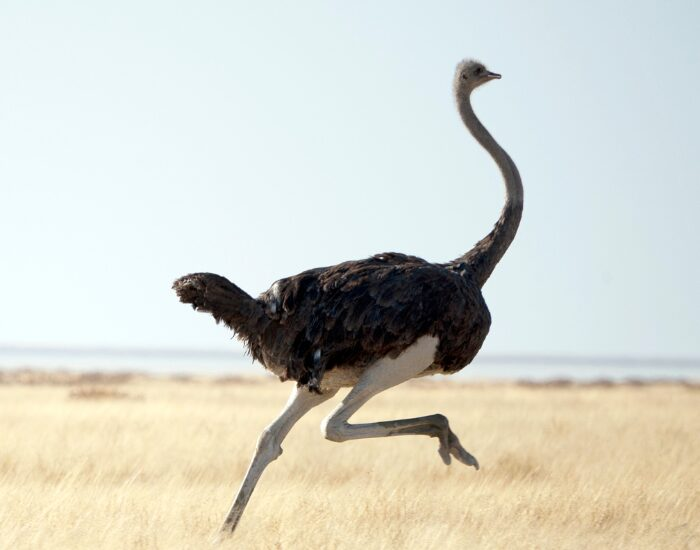
The common ostrich is the largest bird in the world, the largest living bird species and the heaviest bird on Earth. The common ostrich stands up to 9 feet tall and weighs as much as 340 pounds, making it far larger than most other birds. The average height of an adult male ostrich measures around 7–8 feet. While the common ostrich cannot fly, its powerful legs allow it to sprint up to 60 mph, making it the fastest land bird alive and faster than most birds can fly.
As the largest living bird, the ostrich also lays the largest eggs of any living land animal. Most birds cannot come close to the ostrich in terms of size and weight, it is truly a giant among birds.
Despite being farmed for meat and feathers, wild common ostrich populations remain stable across sub-Saharan Africa.
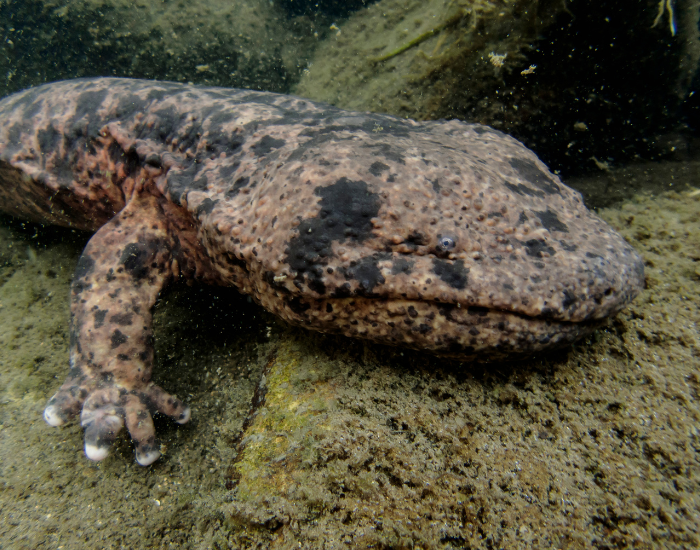
7. Chinese Giant Salamander (Andrias davidianus)
The Chinese giant salamander is the world’s largest amphibian and one of the world’s largest species of salamander, capable of growing up to 6 feet in length. It belongs to a diverse group, explore the many types of amphibians that exist worldwide. This remarkable species lives in cool, fast-flowing streams and rivers in China.
These salamanders breathe through their skin and are highly sensitive to environmental changes. They are nocturnal hunters, feeding on insects, frogs, and small fish. Other animals in the same habitat, fish, birds, and small mammals, also compete for similar food sources.
Due to habitat loss, pollution, and poaching for traditional medicine, this type of salamander is critically endangered, wild populations have declined by more than 80% since the 1950s.
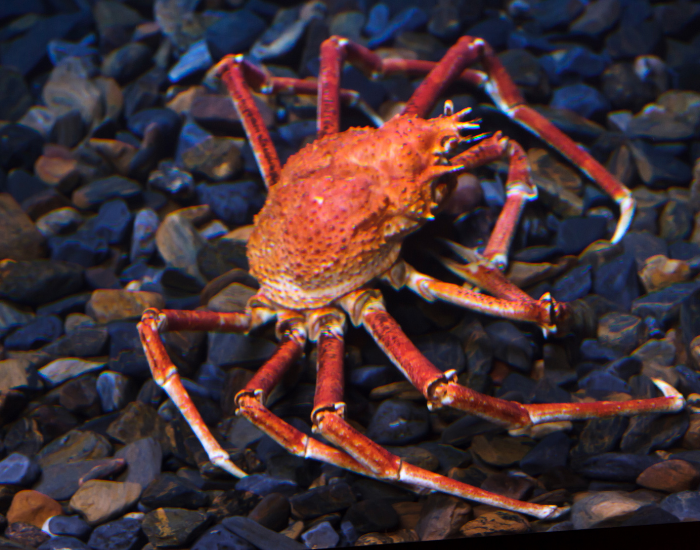
8. Japanese Spider Crab (Macrocheira kaempferi)
With a leg span reaching up to 12 feet, the Japanese spider crab holds the record for the largest leg span of any arthropod on Earth. The largest individuals measure leg spans of up to 12.1 feet and weigh as much as 42 pounds. To put that leg span in perspective, consider the giant huntsman spider (Heteropoda maxima), a huntsman spider can have a leg span of up to 12 inches and is considered one of the world’s largest spiders. Y
et the Japanese spider crab’s leg span is roughly twelve times greater than even the largest huntsman spider, making the comparison between a huntsman spider and this ocean giant truly staggering. While the huntsman spider is the largest spider by leg span on land, it would look like a toy next to the Japanese spider crab.
These crabs measure up to 2,000 feet below the ocean surface in the Pacific Ocean near Japan. Their long limbs and hard exoskeleton are perfectly adapted for deep-sea survival. Unlike the huntsman spider, which hunts actively on land, the spider crab is a slow-moving scavenger of the ocean floor.
Japanese spider crabs can live up to 100 years and are considered a delicacy in some regions, which poses conservation challenges.
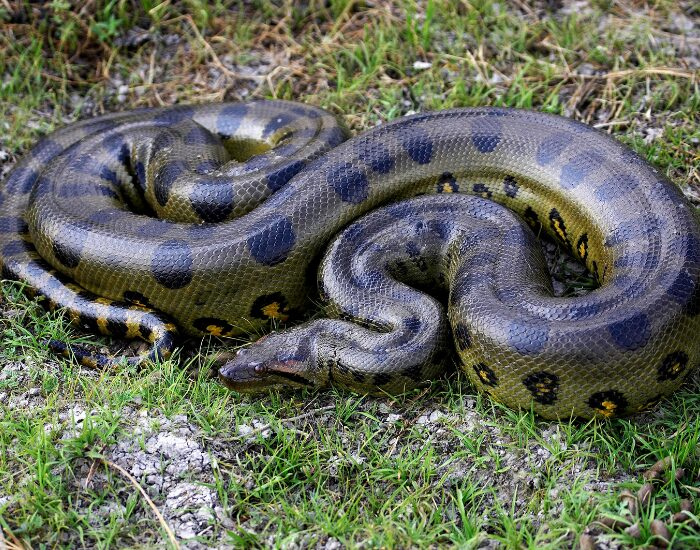
9. Green Anaconda (Eunectes murinus)
The green anaconda is the largest snake in the world by body mass, the heaviest snake species alive, with some individuals weighing over 500 pounds and reaching lengths of up to 30 feet. As the largest snake on Earth, it ranks among the biggest snakes in the world. This species is native to the swamps and rivers of South America and is an exceptionally powerful swimmer.
These non-venomous constrictors wrap around their prey to suffocate it before swallowing it whole. The green anaconda’s diet includes fish, birds, wild pigs, and even caimans, other animals far smaller than themselves. This largest snake species is capable of consuming prey that weighs more than its own body weight.
Due to their elusive nature in the rainforest, accurate population size estimates for this species are difficult to obtain, but habitat destruction poses a growing threat.
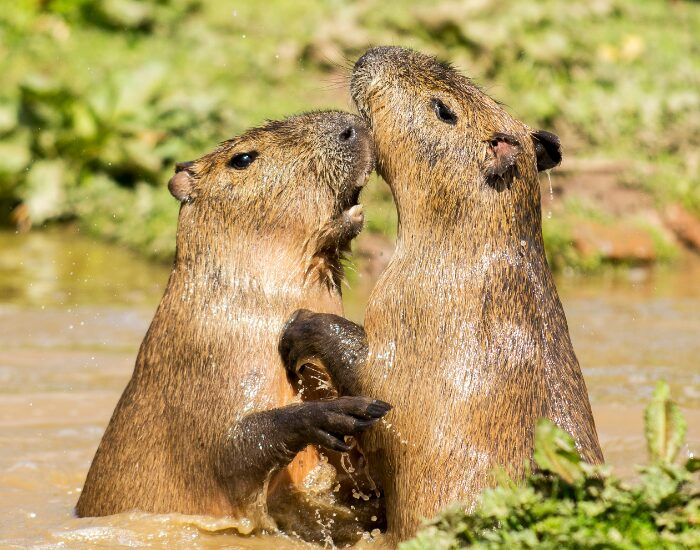
10. Capybara (Hydrochoerus hydrochaeris)
Capybaras basically look like oversized guinea pigs. They are the world’s largest rodents, weighing up to 146 pounds and measuring up to 4.6 feet long, enormous by rodent standards. Highly social animals, they live in groups near water bodies across South America, including in the Amazon basin.
Excellent swimmers, capybaras can hold their breath underwater for up to five minutes. Their webbed feet help them move efficiently through marshes and rivers, while other animals on land struggle to keep up. Their body length and average weight place them in a league of their own among rodent species. Though not endangered, they are hunted for meat and hide in some regions.
11. Polar Bear (Ursus maritimus)
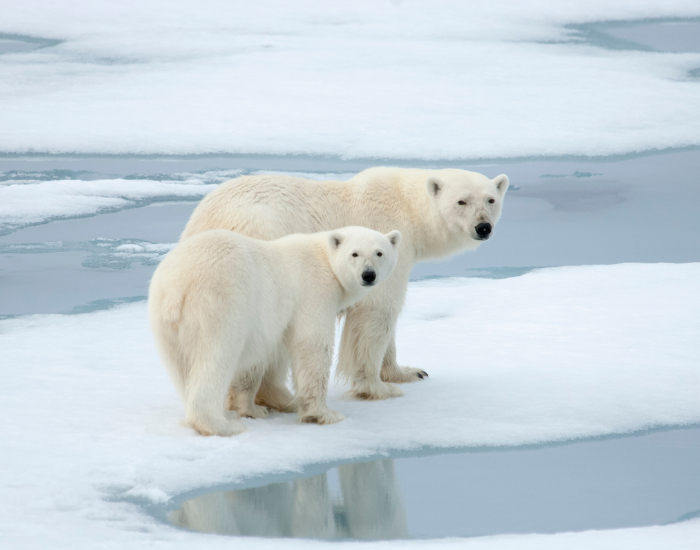
Polar bears are the largest terrestrial carnivores on Earth, and among the largest land animals of any kind. Adult male polar bears weigh between 900 and 1,600 pounds and measure up to 10 feet in body length. These adult males are substantially larger than the females of their species, and larger than most other land animals in the world.
Polar bears depend heavily on sea ice to hunt seals, their primary food source. Following closely in size is the grizzly bear. These Arctic giants have a sense of smell capable of detecting other animals from miles away. Their thick blubber and double-layered fur insulate them against extreme cold.
Climate change is the greatest threat facing polar bears today, shrinking sea ice directly limits the hunting grounds available to polar bears and reduces their access to food. Read more in our polar bear facts guide, and explore the different species of bear for size comparisons.
12. Colossal Squid (Mesonychoteuthis hamiltoni)
The colossal squid is the largest invertebrate on Earth, and one of the largest species of any kind in the deep ocean. Confirmed size estimates based on recovered specimens put the colossal squid at body masses of at least 495 kg (1,091 lb). Because most of what we know comes from incomplete remains found in fishing nets and the stomachs of sperm whales, accurate size estimates for the largest individuals remain uncertain. Found in the deep Southern Ocean near Antarctica, it is one of the most mysterious of all deep-sea animals.
Unlike the more commonly known giant squid, the colossal squid has a heavier body mass and the largest eyes documented in the animal kingdom. measuring up to 11 inches in diameter. Marine biologists who study this species note that it was previously thought to be much smaller before larger specimens were examined.
Ongoing deep-sea research by marine biologists continues to reveal new information about these elusive giants and refine our size estimates of this remarkable species.

World’s Biggest Animals: Size in Perspective
It can be hard to truly grasp the enormous size of these record-holding animals. Here are some comparisons that help measure their scale against everyday objects and other animals in the world:
- Blue whale heart vs. a small car: The blue whale’s heart weighs around 400 pounds, roughly the size of a small car. The blue whale itself weighs as much as 30 small cars combined.
- African elephant vs. a small car: A fully grown African elephant can weigh as much as three small cars, no other land animal comes close in terms of body mass.
- Colossal squid eyes vs. a dinner plate: The colossal squid’s eyes measure up to 11 inches across… larger than most dinner plates.
- Goliath beetle — the heaviest insect: The heaviest insect alive today is the Goliath beetle, which weighs up to 3.5 ounces. Even the world’s heaviest insect is tiny compared to the smallest animals on this list, highlighting just how staggering the enormous size of megafauna truly is.
- Ostrich egg vs. other birds: The largest egg laid by any living land animal belongs to the common ostrich. Most birds lay eggs a fraction of this size, the ostrich egg can be 20 times heavier than the eggs of most birds.

Frequently Asked Questions About the World’s Biggest Animals
The whale shark is the largest fish in the world. As the biggest fish species alive, the whale shark can measure up to 40 feet in length and weigh over 20 tons. Despite being the largest fish, whale sharks are filter feeders and completely harmless to humans.
The saltwater crocodile is the largest reptile in the world. As the biggest of all living reptiles, adult male saltwater crocodiles can measure up to 23 feet in length. Other large reptilesm, including the Komodo dragon, the world’s largest lizard, are significantly smaller than a full-grown saltwater crocodile.
The green anaconda is the largest snake in the world by body weight, with some individuals exceeding 500 pounds. The reticulated python can rival the green anaconda in length, but the anaconda is the heaviest snake species alive. As the largest snake on Earth, the green anaconda is one of the most formidable predators in South America.
Drag the slider to travel from a half-millimetre tardigrade up to the blue whale, all at one true scale. For the full version, with every species and the measurements behind it, open the animal size comparison.
The Awe of Earth’s Giants
Whether they swim, fly, run, crawl, or creep, the world’s biggest animals captivate us for a reason. The sheer size of these animals emphasizes their extraordinary dimensions and weight. They challenge what we think we know about biology, physics, and the limits of life itself. From the deep ocean to the African plains and the prehistoric fossil beds of Patagonia, these giants are reminders of nature’s grandeur, power, and mystery.
Many of these species are endangered or vulnerable, and their protection is vital to maintaining the balance of their ecosystems.
So the next time you hear the term “the big animal in the world,” remember that behind that size is a story, a story of evolution, adaptation, and survival that’s just as big as the creature itself.
World’s Biggest Animals Genius Challenge
Eight questions testing why animals evolve to be so large and the science behind Earth’s biggest creatures. Can you score 100%?
Multiple Choice
References:
Danowitz, M., Vasilyeva, A., Kortlandt, V., & Solounias, N. (2015). Fossil evidence and stages of elongation of the Giraffa camelopardalis neck. Royal Society Open Science, 2(10), 150393. https://doi.org/10.1098/rsos.150393
Liang, Z., Wang, Y., Nace, T., Lathrop, A., Murphy, R. W., & Zhang, Y. (2019). Phylogeographic patterns and conservation implications of the endangered Chinese giant salamander. Ecology and Evolution, 9(7), 4090–4104. https://pmc.ncbi.nlm.nih.gov/articles/PMC6467858/
Read, T. D., Petit, R. A., III, Joseph, S. J., Alam, M. T., Weil, M. R., Ahmad, M., & Bhatt, D. L. (2017). Draft sequencing and assembly of the genome of the world’s largest fish, the whale shark: Rhincodon typus Smith 1828. BMC Genomics, 18(1), 532. https://doi.org/10.1186/s12864-017-3926-9
Pagano, A. M., Rode, K. D., Cutting, A., Owen, M. A., Jensen, S., Savage, S. V., & Williams, T. M. (2018). High-energy, high-fat lifestyle challenges an Arctic apex predator, the polar bear. Science, 359(6375), 568–572. https://doi.org/10.1126/science.aan8677
Regehr, E. V., Laidre, K. L., Akçakaya, H. R., Amstrup, S. C., Atwood, T. C., Lunn, N. J., Obbard, M., Stern, H., Thiemann, G. W., & Wiig, Ø. (2016). Conservation status of polar bears (Ursus maritimus) in relation to projected sea-ice declines. Biology Letters, 12(12), 20160556. https://pmc.ncbi.nlm.nih.gov/articles/PMC5206583/
Rosa, R., & Lopes, V. M. (2017). Biology and ecology of the world’s largest invertebrate, the colossal squid (Mesonychoteuthis hamiltoni): A short review. Polar Biology, 40(9), 1871–1883. https://doi.org/10.1007/s00300-017-2104-5