Whales are some of the most incredible and beautiful creatures, and their diversity across the world’s oceans is nothing short of impressive. Scientists divide the roughly 90 species of whales, dolphins, and porpoises in the order Cetacea into two broad categories: odontocetes (toothed whales) and mysticetes (baleen whales). These whales vary in size, from the tiny dwarf sperm whale to the massive blue whale, the largest animal to have ever existed on Earth. You can explore how these massive creatures stack up against each other using our interactive whale size comparison tool.
The ‘great whales’ are a group of baleen whales that include species such as blue, humpback, and gray whales, all known for their immense proportions and extraordinary journeys across the globe. To track their seasonal movements, explore our interactive whale migration maps.
Whales are further classified into different families based on their physical traits and evolutionary relationships.

How Many Categories of Whales Are There?
Before we dive into specific species, let’s answer one of the most common questions: how many categories of whales are there? As I mentioned before, the Order of Cetacea divides whales into two main suborders: Mysticeti (baleen whales) and Odontoceti (toothed whales). A baleen whale is a member of the Mysticeti group, characterized by having baleen plates for filter-feeding.
This chart breakdown is crucial for understanding the different types of whales:
- Baleen Whales (Mysticeti): Approximately 14 species that filter-feed using baleen plates
- Toothed Whales (Odontoceti): The remaining species that actively hunt prey using teeth
This classification helps us understand the feeding behaviors, social structures, and habitats of different types. Most baleen whales undertake long migratory journeys between feeding and breeding grounds, making migration a key aspect of their life cycle. Now, let’s explore our list of whale species that represents the most important and fascinating members of both categories.
Whales play a critical role in marine ecosystems, but they face significant threats from human activity, climate change, and habitat degradation. The whaling industry was a major historical threat that led to the endangerment of several species.
Let’s look at 15 notable types of whales you should know, along with some interesting facts and conservation insights.
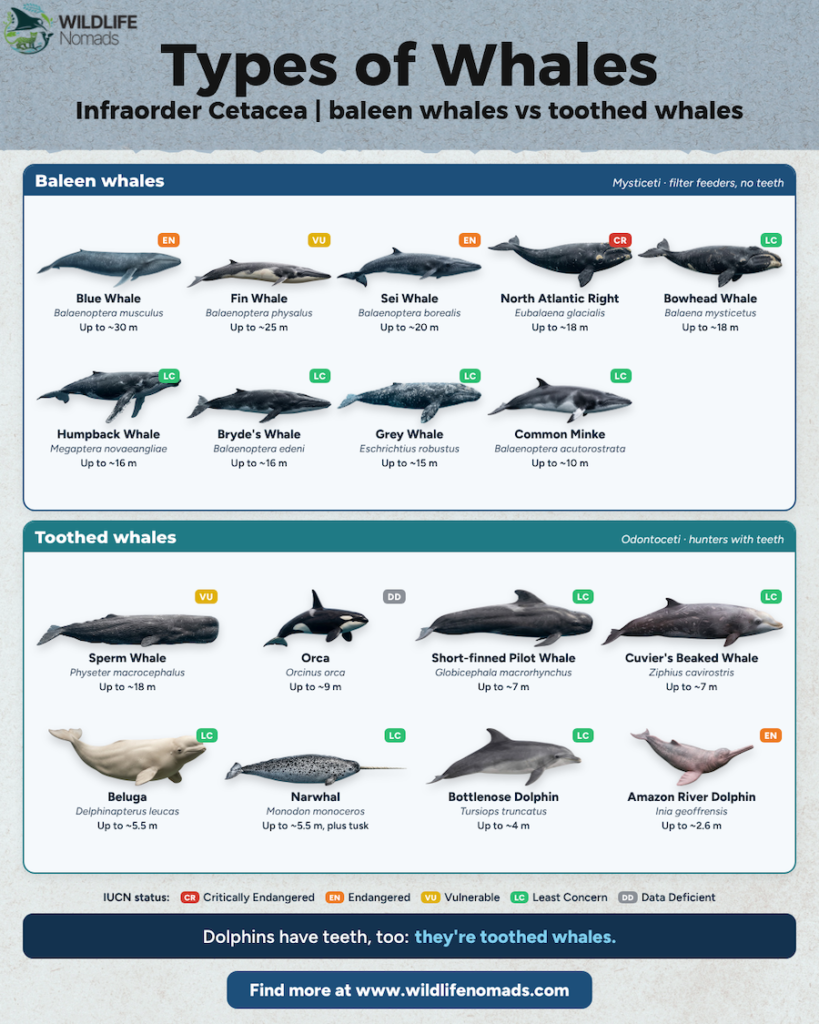
1. Blue Whale (Balaenoptera musculus)
The Blue Whale is the largest animal ever to have lived on Earth. With some individuals reaching lengths of up to 30 meters and weighing as much as 180 metric tons, the blue whale is a true giant. Blue whales are part of the rorqual whales, a group characterized by throat grooves and baleen plates.
Found in oceans across the globe, including the southern hemisphere, especially in the Southern Ocean—and the Indian Ocean, these mysticetes feed primarily on krill, filtering the tiny crustaceans through their baleen plates. Blue whales are often found in deep offshore waters far from land. Despite their immense size, blue whales are endangered due to historical whaling practices and ongoing environmental threats. And if you were wondering, a blue whale’s tongue alone can weigh as much as an elephant, and its heart can weigh as much as a car!
- Conservation Status: Endangered, but populations are slowly recovering due to international protection efforts.
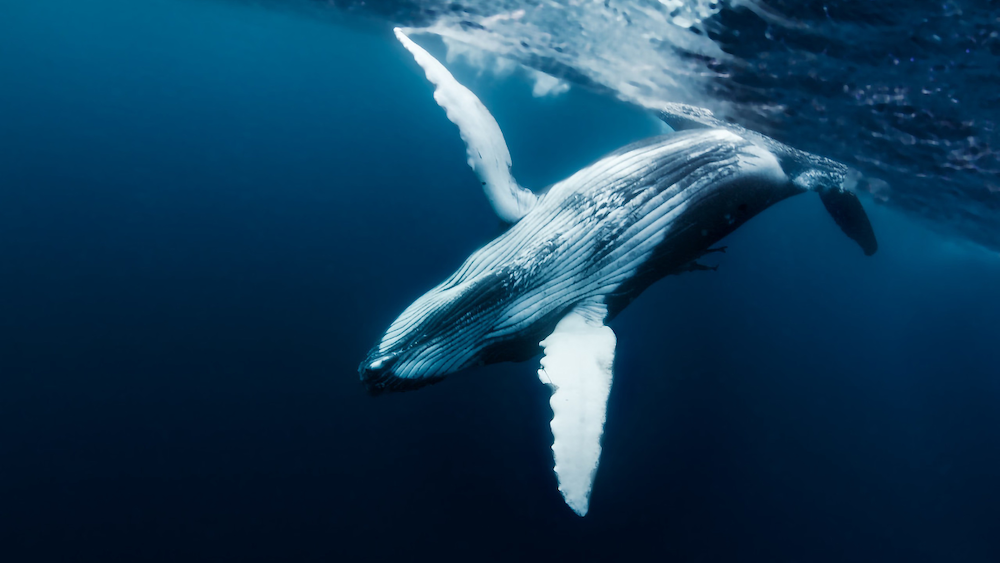
2. Humpback Whale (Megaptera novaeangliae)
The humpback whale is famous for its long pectoral fins, humpbacked body shape, and complex songs. These whales are migratory, traveling thousands of miles between feeding and breeding grounds, like most baleen whales, humpbacks undertake long migrations between feeding and breeding areas.
Humpbacks are baleen whales that primarily feed on krill and small fish, and are capable of deep dives to reach dense schools of prey. During breaching and diving, humpbacks often display their dramatic tail flukes, which are highly visible and a key feature during these behaviors. Humpback whales are known for their very interesting communication, singing, a complex, long series of sounds that may last for hours and can be heard over great distances.
- Conservation Status: Least Concern, with populations increasing thanks to global protections.
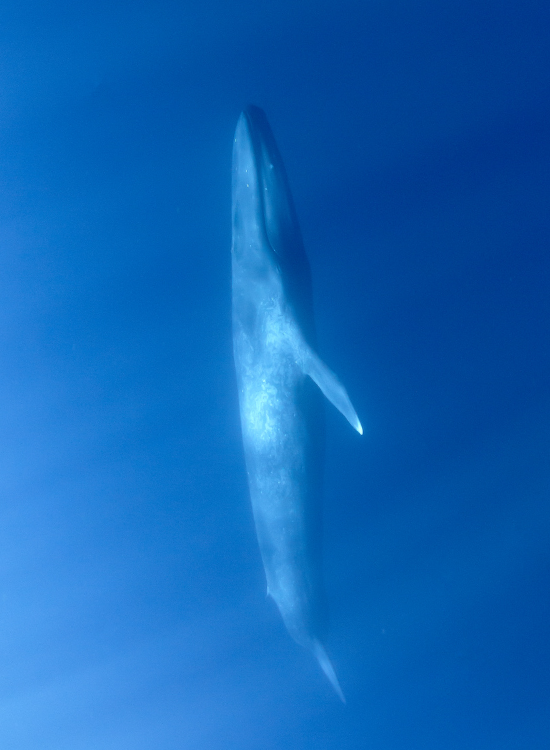
3. Sperm Whale (Physeter macrocephalus)
Sperm whales (or cachalots) are the largest of the toothed whales and are remarkable marine mammals. Their distinctive appearance features a massive, block-shaped head housing the spermaceti organ, set against a surprisingly narrow body. Known for their deep-diving abilities, they feed on giant squid and other deep-sea creatures, often diving thousands of meters below the surface.
Can you believe it? A sperm whale’s head can make up one-third of its entire body length, and it has the largest brain of any animal on Earth. In fact, adult males can reach lengths of up to 18 meters and weigh over 40 tonnes.
- Conservation Status: Vulnerable due to past whaling and ongoing threats from human activities.
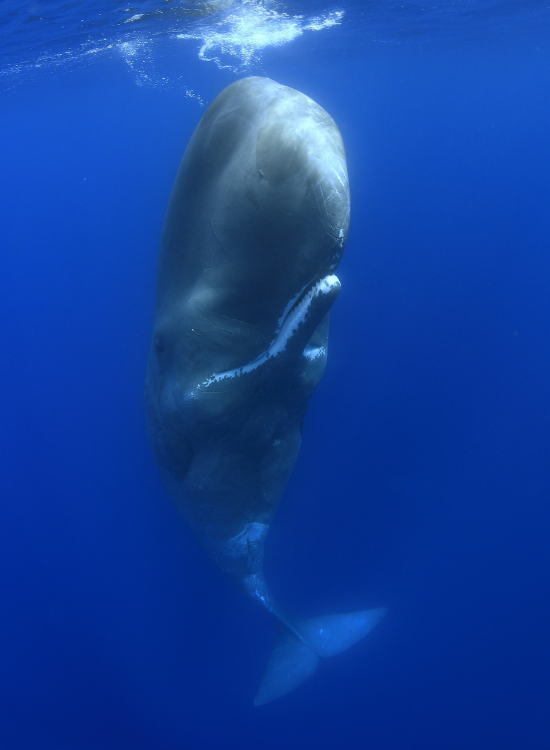
4. Gray Whale (Eschrichtius robustus)
The gray whale is famous for its impressive migration, one of the longest of any mammal. These whales travel up to 12,000 miles between their summer feeding grounds in the Arctic and their winter breeding grounds in Mexico. They are baleen whales, feeding on small crustaceans and plankton.
Mottled gray skin covered in barnacles and whale lice easily identifies this species. Whalers historically nicknamed them ‘devil fish’ due to their fierce, aggressive defense when hunted.
- Conservation Status: Least Concern, though researchers closely monitor populations to ensure their continued recovery. Heavy commercial whaling drastically reduced their numbers until international protections allowed the species to rebound.
5. Fin Whale (Balaenoptera physalus)
As one of the great whales, the fin whale earns its nickname, the ‘greyhound of the sea’, thanks to incredible swimming speeds that place it among the fastest sea animals in the world. It is the second-largest whale species after the blue whale. Reaching lengths of up to 27 meters, these baleen whales inhabit open oceans around the globe and use specialized adaptations to filter huge quantities of prey.
- Fun Fact: Despite their size, fin whales are fast swimmers, capable of reaching speeds of up to 37 mph.
- Conservation Status: Classified as Vulnerable globally due to historical whaling but recovering thanks to conservation efforts.
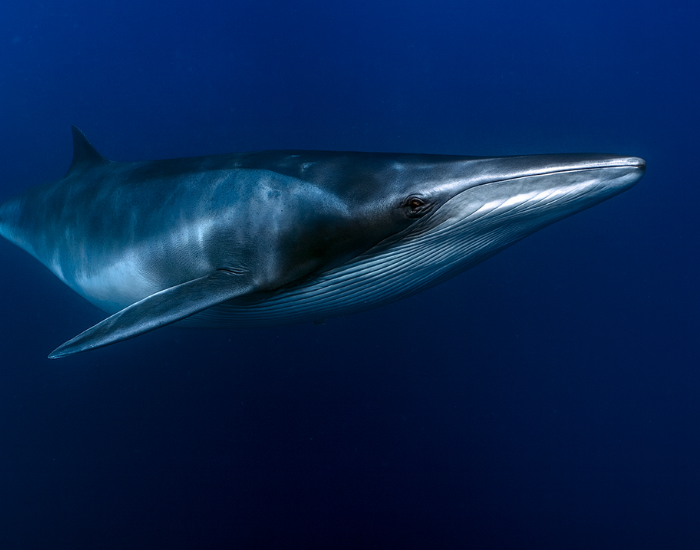
6. Minke Whale (Balaenoptera acutorostrata)
Taxonomists recognize two distinct species: the common minke whale and the Antarctic minke whale. While common minkes inhabit waters across the North Atlantic and North Pacific, the Antarctic minke occupies the Southern Ocean. Both species navigate both coastal regions and open offshore waters.
- Conservation Status: Least Concern, though some populations are still impacted by whaling.
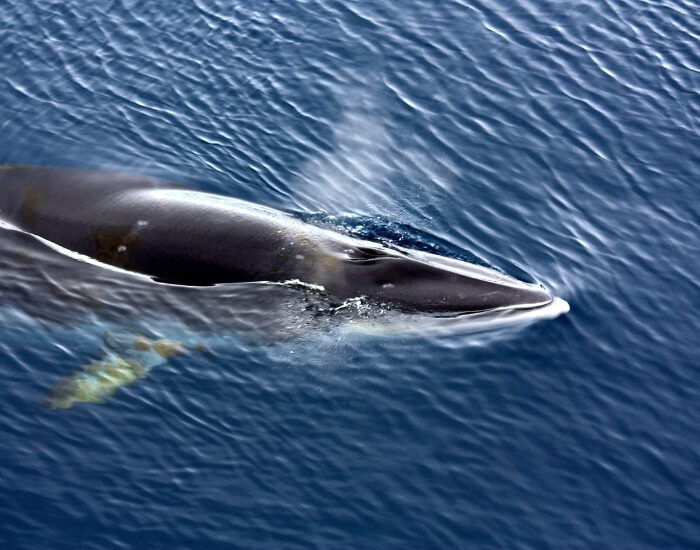
Common Minke Whale Habitat
The common minke whale is one of the most widespread species of whales, inhabiting oceans from the polar regions to temperate waters. These adaptable marine mammals are often found in cooler waters, especially in areas with abundant food sources such as upwelling zones and near productive coral reefs. During the winter months, common minke whales migrate to warmer regions to breed and give birth, returning to richer feeding grounds as the seasons change. Despite being one of the smaller baleen whales, with adults reaching up to 12 meters in length, the common minke whale is a frequent sight for whale watchers due to its relative abundance and wide distribution across the globe.
7. Right Whale (Eubalaena spp.)
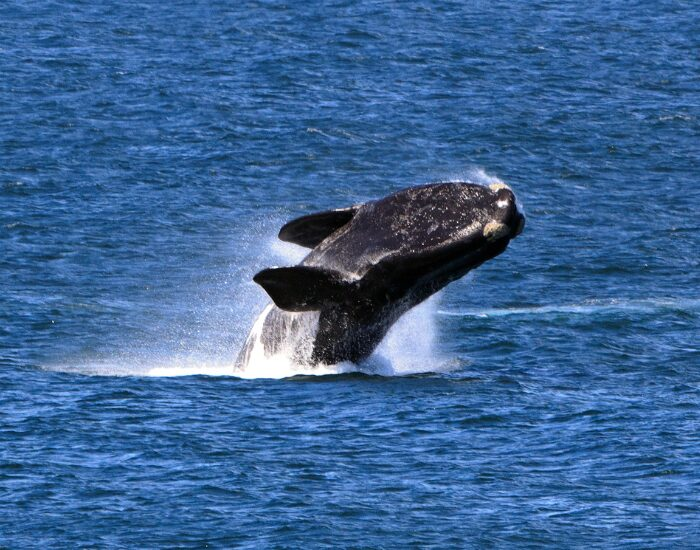
Right whales are large, slow-moving baleen whales known for their distinctive callosities (rough patches of skin) on their heads. They are filter feeders, primarily consuming zooplankton and small crustaceans. There are three main species: North Atlantic right whale, North Pacific right whale, and Southern right whale.
Whalers named these animals because they viewed them as the ‘right’ targets to hunt—they swam slowly and floated after death. Today, Southern right whales frequently approach boats closely, making them a major draw for whale watchers
- Conservation Status: Critically Endangered, with fewer than 400 North Atlantic right whales remaining. Historic commercial whaling heavily targeted these species, driving populations down to critically low levels.
8. Beluga Whale (Delphinapterus leucas)
Known for their white coloration and lively behavior, beluga whales are small, toothed whales that live in the Arctic Ocean and surrounding subarctic waters. They are easily identified by their rounded foreheads and are highly social animals, often found in large pods. Belugas are predators, feeding on fish, crustaceans, and worms.
Belugas are often called the “sea canary” because of their high-pitched vocalizations that sound like cheerful, bird-like calls.
- Conservation Status: Least Concern, but habitat loss and pollution are ongoing threats.

9. Orca (Orcinus orca)
The orca, or killer whale, is the largest species of dolphin and one of the most well-known toothed whales. Orcas are classified as the largest dolphin species and are closely related to other dolphins. Orcas are highly social and live in tight-knit family groups called pods. They share some social behaviors with bottlenose dolphins, another well-known dolphin species. They are apex predators, feeding on a variety of prey, including fish, seals, and even whales.
Orcas are known for their cooperative hunting tactics, where entire pods work together to catch prey.
- Conservation Status: Data Deficient, though populations are stable in some areas.
10. Narwhal (Monodon monoceros)
Yes, narwhals are real, often called the “unicorn of the sea” due to its distinctive long, spiral tusk. This toothed whale is found primarily in the Arctic Ocean and is highly adapted to life in cold waters. Narwhals are social animals, often found in small groups of up to 20 individuals, although larger aggregations can occur, and they feed on fish and squid.
- Fun Fact: Only male narwhals have the iconic tusk, which is actually an elongated tooth.
- Conservation Status: Near Threatened due to climate change and hunting pressures.
11. Pygmy Sperm Whale (Kogia breviceps)
The pygmy sperm whale is a small, toothed whale, reaching lengths of about 3.5 meters. Found in tropical and temperate waters, they are typically found in deep offshore waters rather than near the coast, where they feed on squid and deep-sea fish. Pygmy sperm whales are known for their deep dives in search of prey, a behavior that helps them survive in these remote ocean environments.
Pygmy sperm whales are known to eject a cloud of ink-like substance when threatened.
- Conservation Status: Data Deficient, but considered vulnerable due to potential threats from bycatch.

12. Dolphin (Delphinidae family)
While dolphins are not technically whales, they belong to the Cetacea order and are closely related. There are many different dolphin species, each with unique characteristics and behaviors. The bottlenose dolphin is one of the most well-known dolphin species, recognized for its intelligence and adaptability. Dolphins are highly intelligent and social animals, often found in large groups, called pods. Dolphins primarily feed on fish, squid, and krill.
Also, Dolphins are known for their playful behavior and remarkable echolocation abilities.
- Conservation Status: Varies by species; some dolphin populations are endangered due to pollution and habitat destruction.

13. Vaquita (Phocoena sinus)
The vaquita is the smallest cetacean on Earth. It is also the closest to extinction.
Technically it’s a porpoise, not a whale. Like the dolphins above, it belongs to the order Cetacea. Adults reach about 1.5 metres and weigh around 50 kg. Dark rings around the eyes and dark lips make it look like it’s wearing makeup.
It lives in only one place: the far north of the Gulf of California, in Mexico. That is the other side of the Baja peninsula from the gray whale lagoons I visited on my university field trip. Same country, same peninsula, two very different stories.
The vaquita was never hunted. It drowns in gillnets set for totoaba, a fish whose swim bladder sells illegally in Asia. In 2025, the joint survey estimated just 7 to 10 vaquitas left. At least one calf was seen, so they are still breeding.
There is hope in the genes. A 2022 study found vaquitas are not doomed by inbreeding. If the gillnets go, they can recover. I wrote about what that would take in can the vaquita be saved from extinction.
Two other cetaceans sit close to the edge. Around 380 North Atlantic right whales remain. Rice’s whale, named in 2021 from the Gulf of Mexico, may number only about 50.
Conservation Status: Critically Endangered. It is the rarest marine mammal in the world.

14. Cuvier’s Beaked Whale (Ziphius cavirostris)
Cuvier’s beaked whale holds the record for the deepest dive of any mammal. In 2014, a tagged whale off California reached 2,992 metres. That is deeper than a sperm whale has ever been recorded.
It can also hold its breath longer than any other mammal. Its longest dive lasted 137.5 minutes in the 2014 study. A later study recorded one that lasted 222 minutes, almost four hours.
Cuvier’s beaked whale, the deepest-diving mammal, waits at 2,992 m in my deep sea dive.
It grows to about 7 metres, with a short beak and a gently curved mouth. Some people call it the goose-beaked whale. Adult males carry two teeth at the tip of the lower jaw, and their skin gets covered in pale scars from fighting.
It is the most widespread beaked whale, found in deep water in every ocean except the polar seas. You will rarely see one. They spend most of their lives far below the surface and come up only briefly to breathe.
Conservation Status: Least Concern, though sonar and ocean noise remain serious local threats.
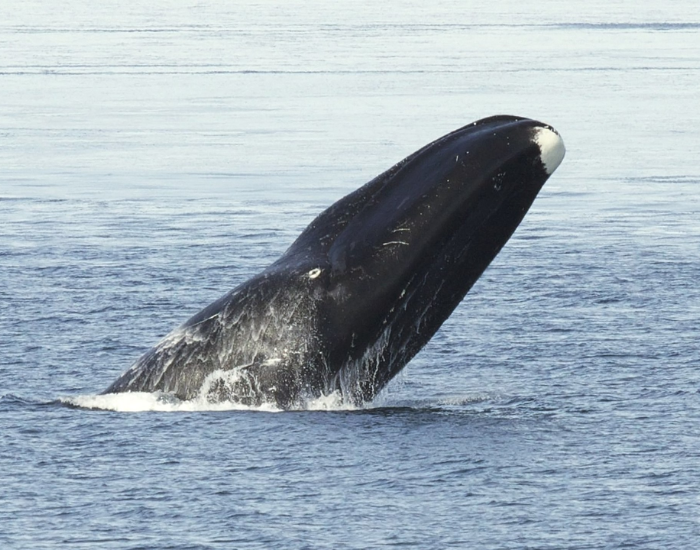
15: Bowhead Whale (Balaena mysticetus)
Add this one if you want the list to cover the Arctic baleen whales. It links to your bowhead whale facts post. If you’d rather stop at 14, skip it.
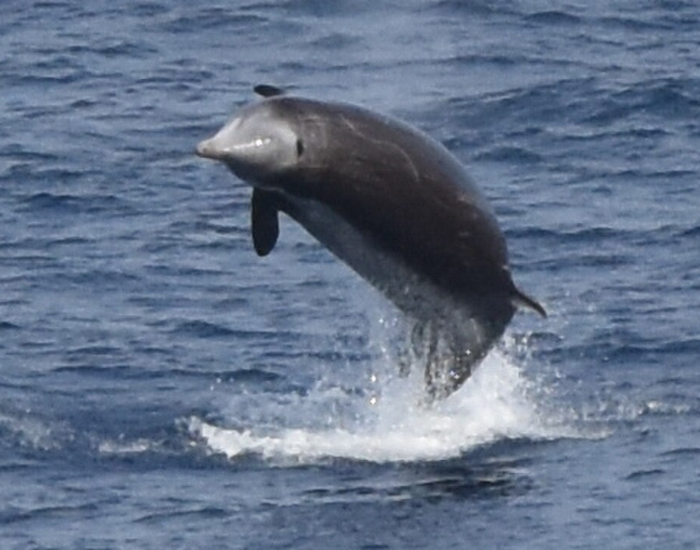
The bowhead whale is the longest-lived mammal known. Some have been estimated at over 200 years old. Harpoon points from the 1800s have turned up buried in the blubber of bowheads landed by Inuit hunters in recent decades.
It lives year-round in the Arctic, in water close to freezing. Its bow-shaped skull can break through sea ice to make a breathing hole. Its blubber can be up to 50 cm thick, the thickest of any whale, and it has the longest baleen of any whale, at up to 4 metres.
Conservation Status: Least Concern, after recovering from heavy commercial whaling.
River Dolphins and Freshwater Habitats
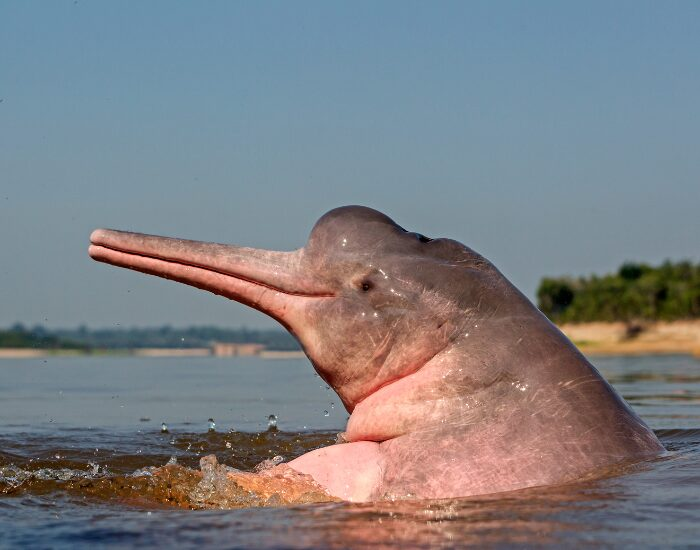
River dolphins are a unique group of dolphins that have adapted to life in freshwater environments, such as rivers and lakes in tropical and subtropical regions. Unlike their oceanic relatives, river dolphins are known for their flexible necks and rounded foreheads, which help them navigate the often murky and complex waterways they call home. These remarkable marine mammals play a crucial role in their ecosystems, acting as both predators and prey within the food web.
However, river dolphins face significant threats from habitat loss, pollution, and overfishing, which have led to declining populations in many areas. Conservation initiatives are working to protect river dolphins and their freshwater habitats by establishing protected areas and implementing regulations to reduce human impact, ensuring these fascinating species continue to thrive in the world’s great river systems.
Common Whale FAQ
One of the most frequently asked questions is: are dolphins whales? The answer is yes and no, depending on how we define “whale.” Scientifically, dolphins are part of the order Cetacea, which includes all whales, dolphins, and porpoises. However, when most people say “whale,” they’re referring to the larger cetacean species.
Dolphins are actually toothed whales (odontocetes), making them more closely related to sperm whales than to baleen whales. There are many dolphin species within this group, each with distinct traits and adaptations. This is why orcas, despite being called “killer whales,” are actually the largest dolphins.
When it comes to groups of whales, the terminology varies by species and context. A group of whales is generally called a “pod,” but you might also hear terms like “school,” “gam,” or “herd.” Many baleen whales are typically found in small groups or alone, while toothed whales may form larger pods. There isn’t a specific term for exactly 100 whales, but a large gathering might be called a “superpod” – spectacular events where hundreds of whales come together, usually for feeding or mating.
Whale Conservation: Current Threats and Protection Efforts
Understanding whale species isn’t just about appreciation – it’s crucial for conservation. As of 2020, six cetacean species are considered at risk, ranked as “Critically Endangered” or “Endangered”. The main threats facing whale populations today include:
- Ship Strikes: Recent studies have quantified the risk for whale-ship collisions worldwide for blue, fin, humpback and sperm whales
- Fishing Gear Entanglement: Nets and lines pose serious threats to whale populations
- Climate Change: Affecting food sources and migration patterns
- Pollution: Chemical contaminants and plastic debris impact whale health
- Noise Pollution: Interfering with whale communication and navigation
- Whaling Industry: Historical and, in some regions, ongoing whaling industry activities have significantly reduced certain whale populations
Protecting whales also benefits other marine mammals and supports the broader marine ecosystem.

The Future of Whale Species
The study of whale species continues to evolve with new discoveries and research methods. Advanced technologies like satellite tagging, genetic analysis, and underwater drones are revealing new insights about whale behavior, migration patterns, and population structures.
Advances in genetic analysis have also enabled scientists to identify separate species among whales that were previously grouped together, improving our understanding of their taxonomic classification and aiding conservation efforts.
Recent discoveries of new species and subspecies remind us that there’s still much to learn about these magnificent creatures. In 2019, a 38-foot-long whale washed ashore in Florida, leading scientists to identify it as a new species – the Rice’s whale.
Whale Species Chart: Key Differences
Here’s a quick breakdown of the types of whale in a whale types chart for easier comparison. Note: The term baleen whale refers to a classification that includes several of the species listed below, such as blue whale, humpback whale, fin whale, minke whale, right whale, gray whale, Bryde’s whale, and sei whale. Sei whales are found globally across subtropical, temperate, and subpolar waters.
| Whale Type | Size | Feeding Method | Primary Diet | Conservation Status |
|---|---|---|---|---|
| Blue Whale | Up to 30 meters | Filter Feeding (Baleen Whale) | Krill | Endangered |
| Humpback Whale | Up to 19 meters | Filter Feeding (Baleen Whale) | Krill, Small Fish | Least Concern |
| Fin Whale | Up to 27 meters | Filter Feeding (Baleen Whale) | Krill, Fish | Vulnerable |
| Gray Whale | Up to 15 meters | Filter Feeding (Baleen Whale) | Plankton, Crustaceans | Least Concern |
| Minke Whale | Up to 10 meters | Filter Feeding (Baleen Whale) | Krill, Small Fish | Least Concern |
| Right Whale | Up to 18 meters | Filter Feeding (Baleen Whale) | Zooplankton | Critically Endangered |
| Bryde’s Whale | Up to 15 meters | Filter Feeding (Baleen Whale) | Small Fish, Plankton | Least Concern |
| Sei Whale | Up to 20 meters | Filter Feeding (Baleen Whale) | Krill, Small Fish | Endangered |
| Sperm Whale | Up to 20 meters | Deep Diving (Toothed) | Giant Squid | Vulnerable |
| Pygmy Sperm Whale | Up to 3.5 meters | Deep Diving (Toothed) | Squid, Deep-sea Fish | Data Deficient |
| Beaked Whale | Up to 13 meters | Deep Diving (Toothed) | Squid, Deep-sea Fish | Varies by Species |
| Bottlenose Whales | Up to 10 meters | Deep Diving (Toothed) | Squid, Fish | Varies by Species |
| Beluga Whale | Up to 5 meters | Predatory (Toothed) | Fish, Crustaceans | Least Concern |
| Orca (Killer Whale) | Up to 9 meters | Predatory (Toothed) | Fish, Seals, Whales | Data Deficient |
| Narwhal | Up to 5 meters | Predatory (Toothed) | Fish, Squid | Near Threatened |
| Dolphin (Various) | Up to 4 meters | Predatory (Toothed) | Fish, Squid | Varies by Species |
Can You Name That Whale? 🐋
A 9-photo identification challenge — tougher than it looks, since so many cetaceans are look-alikes. Go back and change any answer before you score.
Which cetacean is this?
Why Understanding Whale Species Matters
Whales are some of the most fascinating creatures on Earth, with each species displaying unique adaptations to their environments. The diversity of the beaked whale family includes rare and elusive species, such as Baird’s beaked and the saber toothed whale, as well as unique types like melon headed whales.
Many whale species inhabit the southern hemisphere, particularly the Southern Ocean, while key habitats also include the North Pacific Ocean, North Atlantic Ocean, Atlantic Ocean, and the West Coast of the United States. Whether it’s the blue whale’s sheer size or the humpback whale’s complex songs, these animals are crucial to maintaining the balance of marine ecosystems. Conservation efforts remain critical, as many whale species face threats from pollution, climate change, and commercial whaling.
References:
McGowen, M. R., et aal., (2020). Phylogenomic resolution of the cetacean tree of life using target sequence capture. Systematic Biology, 69(3), 479–501. https://doi.org/10.1093/sysbio/syz068
Morin, P. A., et al., (2024). Revised taxonomy of eastern North Pacific killer whales (Orcinus orca): Bigg’s and resident ecotypes deserve species status. Royal Society Open Science, 11(3), 231368. https://doi.org/10.1098/rsos.231368
Nisi, A. C., et al., (2024). Ship collision risk threatens whales across the world’s oceans. Science, 386(6724), 870–875. https://doi.org/10.1126/science.adp1950
Robinson, J. A., Kyriazis, C. C., Nigenda-Morales, S. F., Beichman, A. C., Rojas-Bracho, L., Robertson, K. M., Fontaine, M. C., Wayne, R. K., Lohmueller, K. E., Taylor, B. L., & Morin, P. A. (2022). The critically endangered vaquita is not doomed to extinction by inbreeding depression. Science, 376(6593), 635–639. https://doi.org/10.1126/science.abm1742
Rosel, P. E., Wilcox, L. A., Yamada, T. K., & Mullin, K. D. (2021). A new species of baleen whale (Balaenoptera) from the Gulf of Mexico, with a review of its geographic distribution. Marine Mammal Science, 37(2), 577–610. https://doi.org/10.1111/mms.12776