Whales have followed me through most of my life as a biologist. In my undergrad, I joined a field trip to the Baja California calving lagoons (one of the best places to see whales in the world) where a grey whale mother surfaced beside our small boat and eased her calf toward us. We sat still, hands inside the boat, watching them breathe and roll at arm’s length.
Since then, humpbacks have become a constant presence. During my Master’s in Conservation Biology in Sydney, I’d spot them on their annual migration up the coast, and now living on the Gold Coast, I still watch them breach, whether in WA, up north, or right off the beach here. No matter how many times you see it, the sheer size never stops being startling.
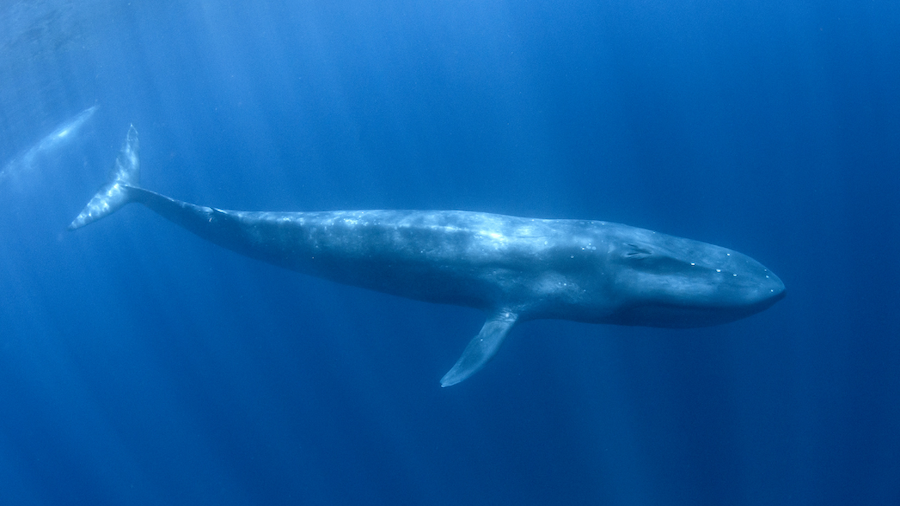
Which brings me to this article. Because as big as humpbacks are, they’re not even close to the top. When we talk about the true giants of the animal kingdom, one creature always comes out on top: the blue whale (Balaenoptera musculus). This marine mammal isn’t just the biggest whale in the world — it’s the largest animal ever known to have lived on Earth. Larger than any dinosaur, blue whales can reach up to 33 metres (108 feet) in length and weigh up to 180–250 tonnes, and consume up to 16 tons of krill per day. To put that in perspective, their tongue alone can weigh as much as an elephant, and their heart is the size of a small car.
But how did these creatures become the largest animals on the planet? And what challenges do they face in today’s oceans?

See the True Size of Whales with this Fun Tool
All fourteen whales are drawn at one true scale, with a two-metre diver alongside each of them. For the full version, with every species, its measurements and the notes behind them, open the whale size comparison.
1. Blue Whale (Balaenoptera musculus)
The undisputed heavyweight champion of the animal kingdom, the blue whale is more than just large, it’s living proof of how abundant and productive our oceans once were. At up to 33 meters long, its sheer size is almost incomprehensible until you realize its heart alone weighs as much as a small car. Yet this massive marine mammal survives on some of the tiniest animals in the sea, krill, consuming millions each day. Watching a blue whale feed is like witnessing nature’s paradox: the biggest animal ever relying on the smallest prey.
- Length: Up to 33 meters (108 ft)
- Weight: 180–250 tons

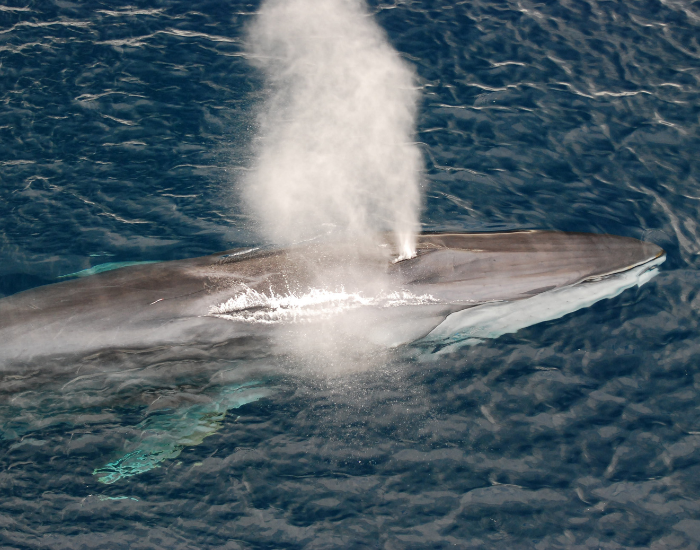
2. Fin Whale (Balaenoptera physalus)
Often called the “greyhound of the sea”, the fin whale is one of the fastest sea animals, combining power with grace. Sleek and streamlined, it can reach impressive speeds, outrunning many ships in its heyday. Fin whales are slightly smaller than blue whales but still immense, with a body length of around 24–27 meters. Scientists believe their speed helps them travel long distances across oceans, linking ecosystems from the Northern Hemisphere to the Southern Hemisphere.
- Length: 24–27 meters (78–89 ft)
- Weight: 80 tons
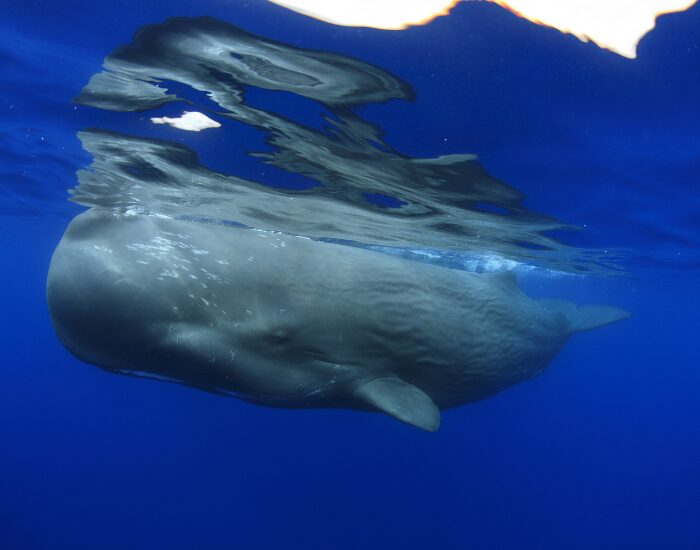
3. Sperm Whale (Physeter macrocephalus)
The sperm whale or cachalot, stands apart from the baleen giants, it’s the largest of the toothed whales. Known for its square-shaped head filled with spermaceti oil, it dives deeper than any other whale, reaching depths over 2,000 meters in search of giant squid. These dives, which can last more than an hour, show just how extreme adaptations can be in the ocean. Sperm whales also have strong cultural ties, immortalized by Herman Melville’s Moby-Dick, symbolizing both the wonder and fear humans have long associated with whales.
- Length: 16–20 meters (52–67 ft)
- Weight: Up to 57 tons
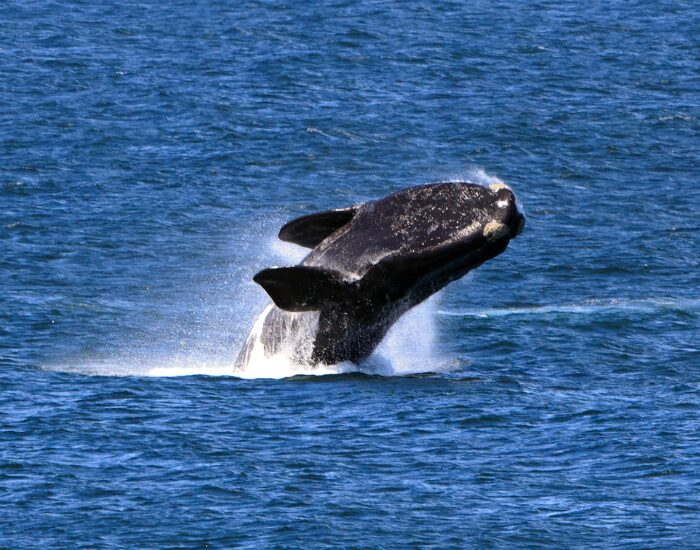
4. Right Whale (Eubalaena spp.)
Right whales earned their name for a dark reason: they were considered the “right” whales to hunt because of their slow speed and high blubber content. Today, they’re a conservation priority, with fewer than 400 individuals left in some populations. What makes right whales remarkable is their enormous head, which can make up a third of their body length, and their unique callosities (rough skin patches) that make each whale identifiable.
- Length: 16–18 meters (52–59 ft)
- Weight: 70 tons
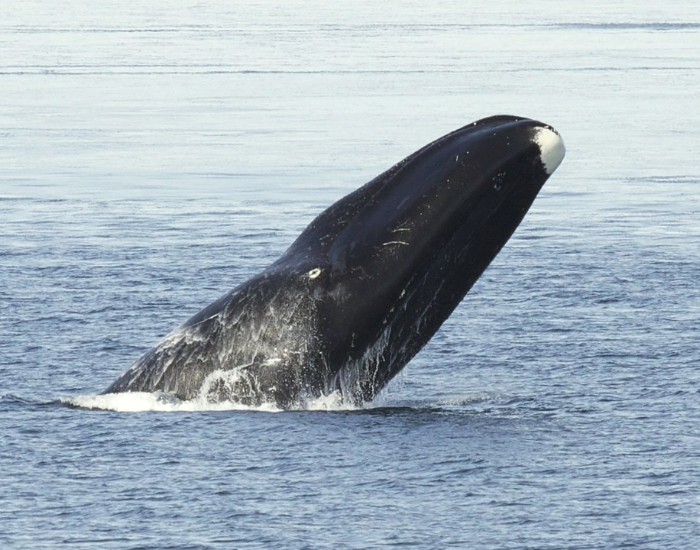
5. Bowhead Whale (Balaena mysticetus)
Living exclusively in the Arctic, the bowhead whale is a true survivor. It thrives in icy waters where few other giants can live, and it holds the record for longevity among mammals, living over 200 years. That means some bowheads alive today may have been born before the industrial revolution. With their massive skulls, bowheads are strong enough to break through thick sea ice to breathe, a skill essential in their frozen habitat.
- Length: 14–18 meters (46–59 ft)
- Weight: 75–100 tons
6. Sei Whale (Balaenoptera borealis)
If whales had sprinters, the sei whale would be among the fastest. Known for its slender body and streamlined build, it can reach bursts of speed up to 50 km/h. Unlike the blue whale or fin whale, sei whales feed on both krill and small fish, adjusting their diet depending on availability. Their ability to adapt makes them one of the more resilient baleen whales, though they are still considered endangered due to past whale overhunting.
- Length: 12–16 meters (39–52 ft)
- Weight: 20 tons
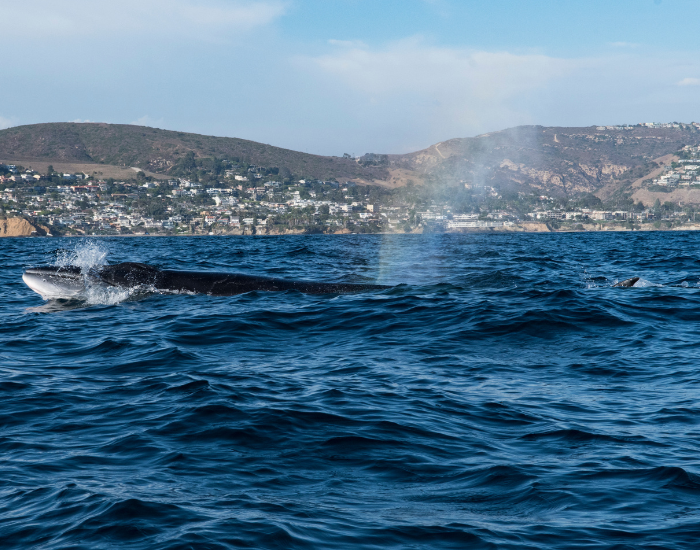
7. Humpback Whale (Megaptera novaeangliae)
Few whales inspire as much human fascination as the humpback whale. Their acrobatic breaches and haunting songs make them a favorite among whale watchers. Humpbacks use their long pectoral fins, the longest in proportion to body size of any whale, for dramatic displays and intricate feeding strategies like bubble-net feeding. Though smaller than blue or fin whales, they hold a special place in the public imagination because of their charisma and visible behaviors.
- Length: 12–16 meters (39–52 ft)
- Weight: 25–30 tons
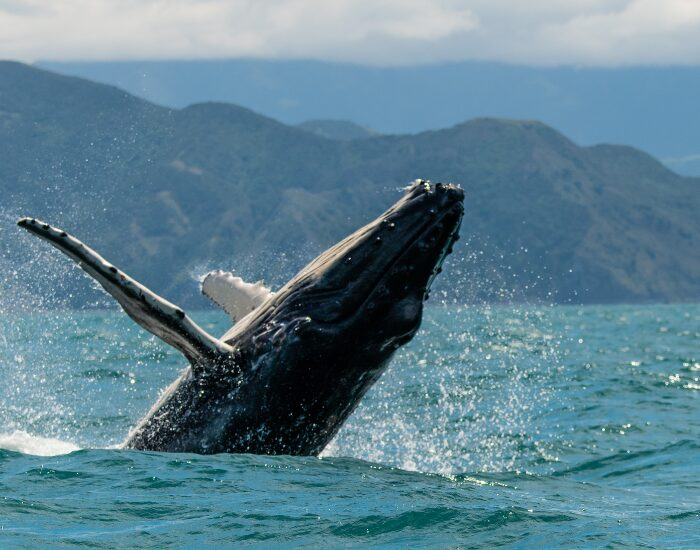
8. Gray Whale (Eschrichtius robustus)
This is the one I saw in Baja California. The gray whale is best known for its incredible migration, one of the longest of any mammal. Each year, they travel up to 16,000 kilometers round-trip between feeding grounds in the Arctic and breeding lagoons in Mexico’s warmer waters. Along the way, they often come close to shore, making them a common sight for coastal communities. Despite their endurance, gray whales have faced population fluctuations in recent decades, raising questions about climate impacts on their food supply.
- Length: 12–15 meters (39–49 ft)
- Weight: 30–40 tons
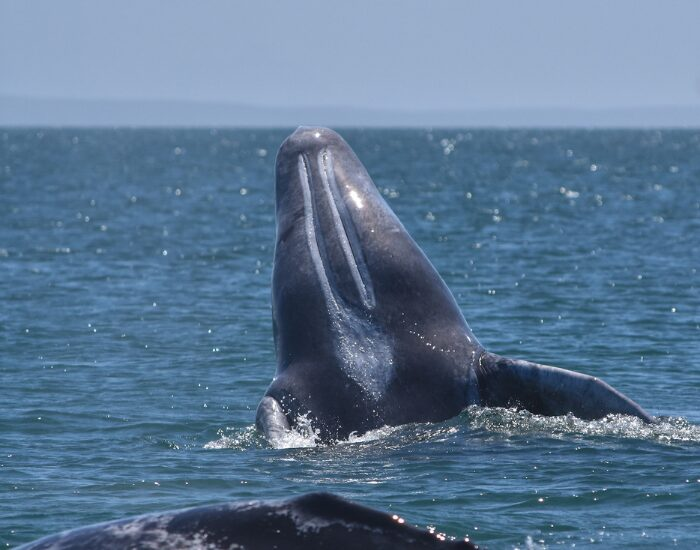
9. Bryde’s Whale (Balaenoptera brydei)
Often confused with sei whales, Bryde’s whales are warm-water specialists, typically found in tropical and subtropical oceans. They’re a bit more elusive, surfacing quickly and diving again, which makes studying them a challenge. A key identifying feature is the three distinct ridges on their upper surface, something scientists look for when spotting them at sea.
- Length: 12–14 meters (39–46 ft)
- Weight: 13–25 tons
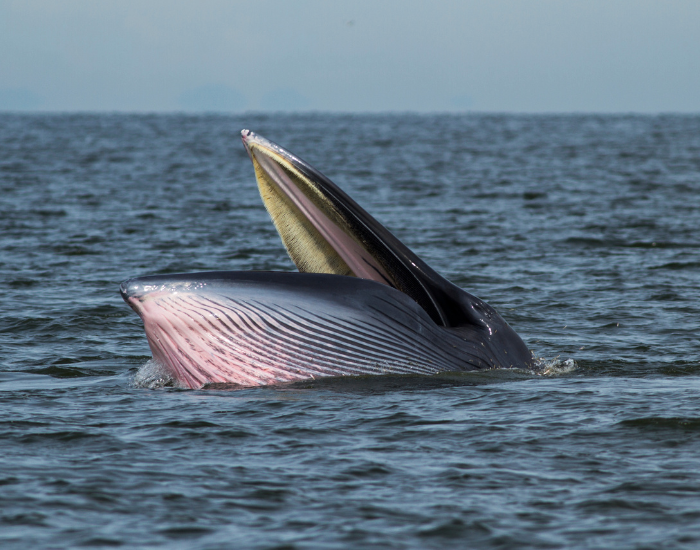
10. Minke Whale (Balaenoptera acutorostrata and B. bonaerensis)
The smallest of the baleen whales, the minke whale might seem out of place on a list of giants, but at up to 10 meters long, it’s still massive compared to most animals on Earth. Minkes are curious by nature and are often spotted approaching boats, giving researchers and whale watchers a chance to observe them up close. Their adaptability has also helped them fare better than larger whales when it comes to human threats.
- Length: 7–10 meters (23–33 ft)
- Weight: 5–10 tons
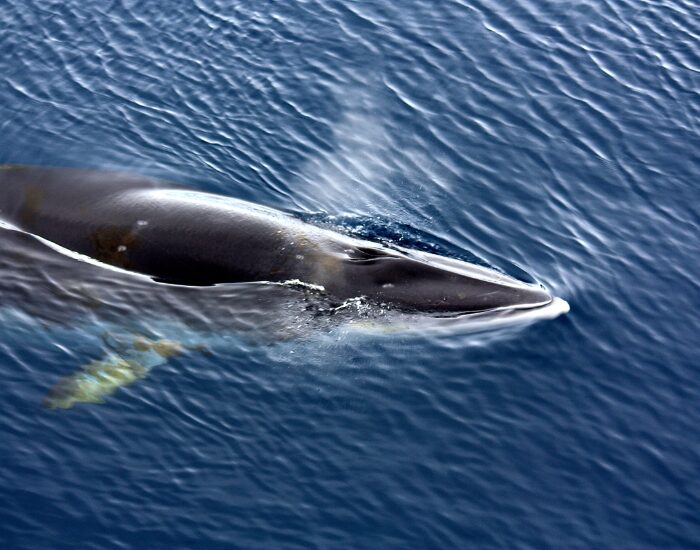
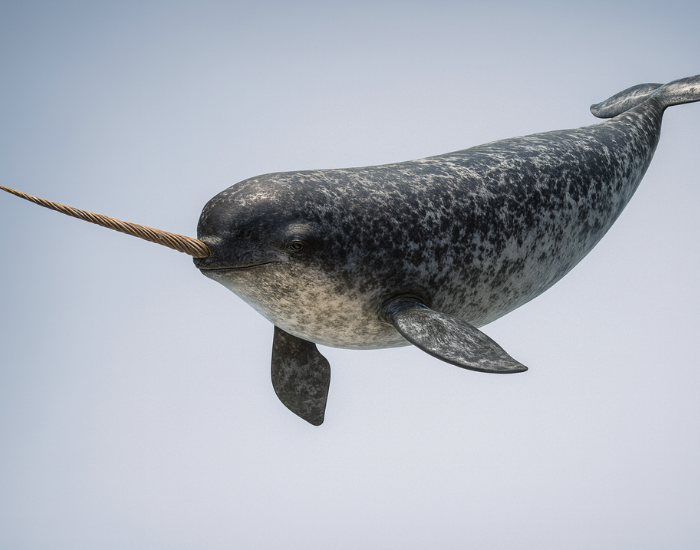
11. Narwhal (Monodon monoceros)
The narwhal is arguably the most extraordinary-looking whale in the ocean. Males grow a long, spiralling tusk, actually an elongated upper canine tooth, that can reach up to 3 metres in length. Narwhals live year-round in Arctic waters, making them one of the most cold-adapted cetaceans on Earth. Researchers have discovered that the tusk is packed with sensory nerve endings, suggesting it functions as a sophisticated environmental sensor rather than simply a weapon. Climate change poses a growing threat to narwhals as sea ice, which they depend on for protection, continues to diminish.
Length: 4–6 metres (13–20 ft), plus tusk
Weight: 0.8–1.6 tonnes
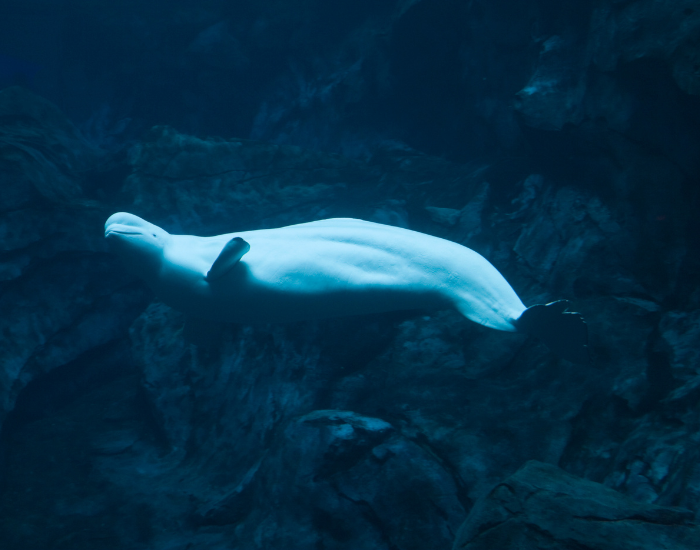
12. Beluga Whale (Delphinapterus leucas)
The beluga whale is the only entirely white whale species, and also one of the most vocal, earning the nickname “canary of the sea.” Belugas live in Arctic and subarctic waters and are highly social, travelling in pods of up to several hundred individuals. Unlike most whales, belugas have a flexible neck, allowing them to turn their head independently, a useful adaptation for navigating through sea ice. Their exceptional vocalisations include clicks, chirps, and whistles that scientists believe serve complex communication functions within their pods.
Length: 4–5.5 metres (13–18 ft)
Weight: 0.9–1.5 tonnes
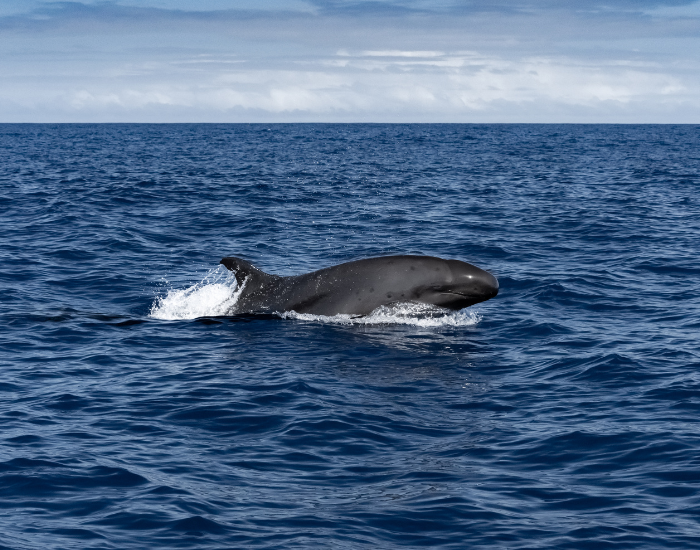
13. False Killer Whale (Pseudorca crassidens)
Despite its name, the false killer whale is not closely related to the orca (Orcinus orca), it simply shares a similar skull shape, which led to the common name. False killer whales are large, highly social dolphins found in deep, warm, and tropical oceans worldwide. They’re known for their cooperative hunting behaviour and, unusually, for sharing food with other members of their pod. False killer whales also form long-term social bonds and have occasionally been observed in mixed-species groups with common bottlenose dolphins.
Length: 5–6 metres (16–20 ft)
Weight: Up to 2 tonnes
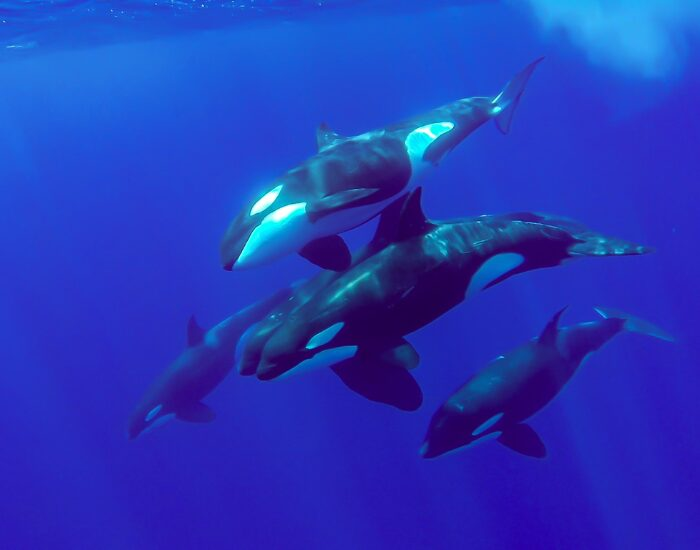
14. Orca / Killer Whale (Orcinus orca)
Technically the largest member of the dolphin family rather than a true whale, the orca nonetheless belongs firmly in any discussion of ocean giants. Orcas are apex predators found in every ocean on Earth, from Arctic ice to tropical seas. They hunt in sophisticated, coordinated family groups, pods, and use echolocation to locate prey with impressive precision. Different orca populations specialise in different prey, including fish, marine mammals, and even other whales. Their intelligence, social complexity, and cultural transmission of hunting techniques place them among the most cognitively advanced animals on Earth.
Length: 6–8 metres (20–26 ft)
Weight: Up to 6 tonnes
15. Pilot Whale (Globicephala spp.)
Pilot whales come in two species, the long-finned and short-finned, and both are found in deep, offshore waters worldwide. Highly social and strongly matrilineal, pilot whale pods follow the leadership of older females in a manner that closely resembles elephant family structure. Pilot whales are deep divers, regularly descending to over 600 metres in search of squid. They are also unfortunately prone to mass strandings, with large groups sometimes beaching themselves in events that researchers still do not fully understand.
Length: 4–7 metres (13–23 ft)
Weight: Up to 3 tonnes

Comparing Giants: Blue Whales vs. Prehistoric Creatures
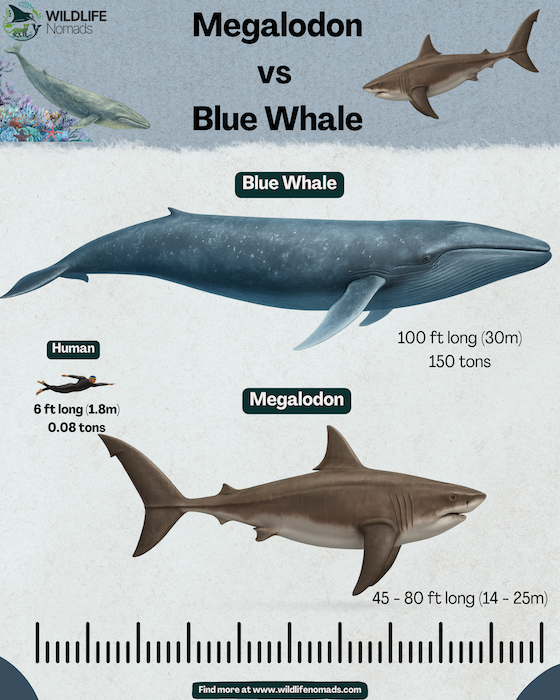
The prehistoric megalodon shark is often portrayed as the ultimate ocean predator, but was a megalodon bigger than a blue whale? The answer is no. While megalodons were impressive at an estimated 50-60 feet long, they were significantly smaller than modern blue whales. Even the largest megalodon estimates don’t come close to the biggest whale ever seen.
Dinosaurs vs. Blue Whales
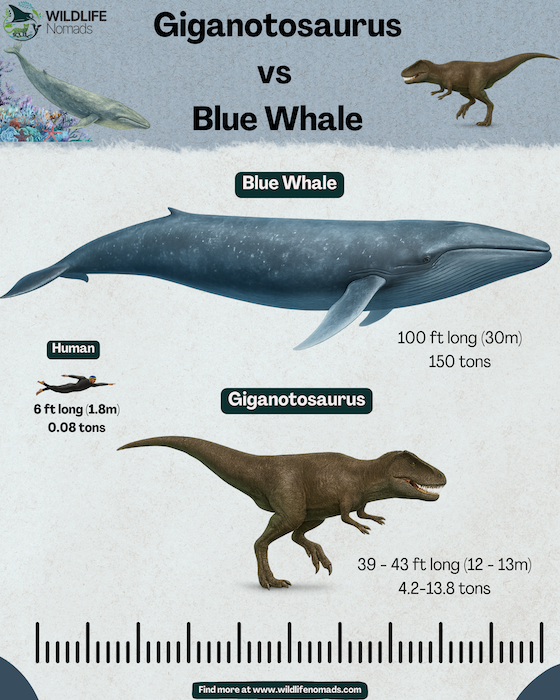
People often wonder is a blue whale bigger than Giganotosaurus? Absolutely. Even the largest known dinosaurs, including Giganotosaurus and Argentinosaurus, were smaller than blue whales. The largest dinosaurs might have reached 115 feet in length, but their body mass was distributed differently, making blue whales significantly heavier and more massive overall.
Marine Reptiles
Was a mosasaurus bigger than a blue whale? No, mosasaurus species maxed out at around 50-60 feet, making them impressive but still much smaller than modern blue whales. The same goes for other prehistoric marine reptiles – none approached the sheer mass and size of today’s blue whale giants.
Life Cycle and Reproduction of Female Blue Whales
Female blue whales play a vital role in the survival of the species. Here’s what we know about their reproduction:
- Sexual Maturity: Females reach sexual maturity between 5–10 years, though environmental factors such as food availability can affect this.
- Calving: A single calf is born after a 10–12 month gestation period. Calves are typically born in warmer waters, such as those in the northern gulf or southern hemisphere breeding grounds.
- Calf Size: At birth, a blue whale calf already measures around 7 meters (23 ft) and weighs 2–3 tons. They gain about 90 kg (200 pounds) per day while nursing on their mother’s rich milk.
- Weaning: After 6–8 months, the calf begins to eat krill and accompany its mother on long migrations.
- Lifespan: Blue whales can live up to 80–90 years, though most average around 50–60 years.
This long lifespan, combined with their slow reproductive rate, makes them highly vulnerable to population decline.
Migration and Distribution Across the World
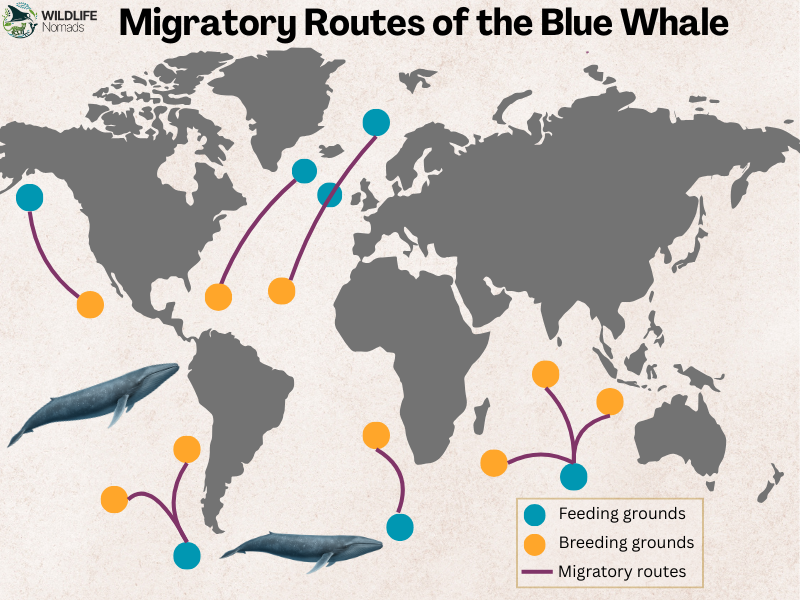
Blue whales are highly migratory, traveling thousands of miles between feeding and breeding grounds:
- Summer Feeding: They spend summers in Antarctic waters or the North Pacific, where krill populations boom.
- Winter Breeding: In winter, they migrate to warmer waters in the southern hemisphere or regions like the northern gulf.
- Global Range: Blue whales are found in the South Atlantic, Southern Ocean, Indian Ocean, and parts of the Northern Hemisphere.
These migrations are essential for survival, but they also expose whales to threats such as ship strikes and noise pollution along busy shipping routes.
Giants of the Ocean Challenge 🐋
Ten questions on the biggest whales in the sea — first a fact-or-fiction round, then multiple choice. How many can you get?
References:
Clapham, P. J., Young, S. B., & Brownell, R. L. Jr. (1999). Baleen whales: conservation issues and the status of the most endangered populations. Mammal Review, 29(1), 35–60. https://doi.org/10.1046/j.1365-2907.1999.00035.x
Fahlbusch, J. A., Czapanskiy, M. F., Calambokidis, J., Cade, D. E., Abrahms, B., Hazen, E. L., & Goldbogen, J. A. (2022). Blue whales increase feeding rates at fine-scale ocean features. Proceedings. Biological sciences, 289(1981), 20221180. https://doi.org/10.1098/rspb.2022.1180
Goldbogen, J. A., Calambokidis, J., Oleson, E., Potvin, J., Pyenson, N. D., Schorr, G., & Shadwick, R. E. (2011). Mechanics, hydrodynamics and energetics of blue whale lunge feeding: efficiency dependence on krill density. The Journal of experimental biology, 214(Pt 1), 131–146. https://doi.org/10.1242/jeb.048157
Reilly, S. B., Bannister, J. L., Best, P. B., Brown, M., Brownell, R. L. Jr., Butterworth, D. S., Clapham, P. J., Cooke, J., Donovan, G. P., Urbán, J., & Zerbini, A. N. (2008). Balaenoptera musculus. IUCN Red List of Threatened Species, e.T2477A9447146. https://doi.org/10.2305/IUCN.UK.2008.RLTS.T2477A9447146.en
O’Corry-Crowe, G., Suydam, R., Quakenbush, L., Smith, T. G., Lydersen, C., Kovacs, K. M., Orr, J., Harwood, L., Litovka, D., & Ferrer, T. (2020). Group structure and kinship in beluga whale societies. Scientific reports, 10(1), 11462. https://doi.org/10.1038/s41598-020-67314-w