Whales have always pulled me in. I have spent time in the field studying gray whales in Baja California, and I have been lucky enough to catch many humpback whales breaching on the horizon during my time travelling around Australia. That kind of fieldwork is what sparked a deeper obsession, one that sent me down a research rabbit hole on every whale species I could find. And one that made me build an interactive tool to compare whale sizes.
The minke whale kept showing up in the literature as a mystery wrapped in a dark gray torpedo. I dove into the science on this marine mammal, and what I found surprised me. Most people chase the acrobatic humpback whale when it breaches, or the biggest whale out there: the blue whale tail flukes. The minke whale (Balaenoptera acutorostrata) is the wallflower at the whale watching party, and that is exactly what makes it fascinating. These are 12 facts about the minke whale that changed how I see the ocean.
1. The Minke Whale Is the Smallest Baleen Whale… But “Small” Is Relative
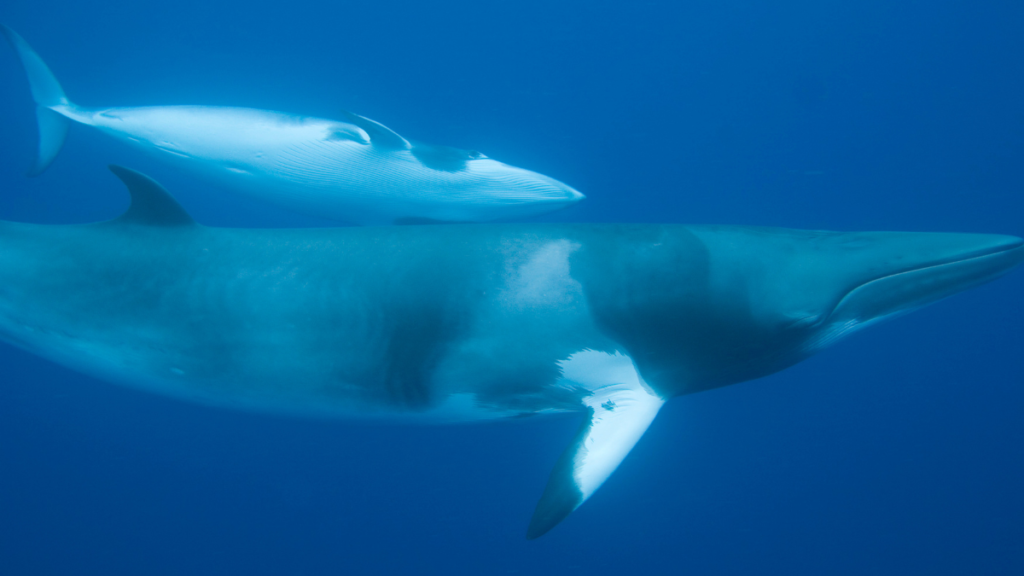
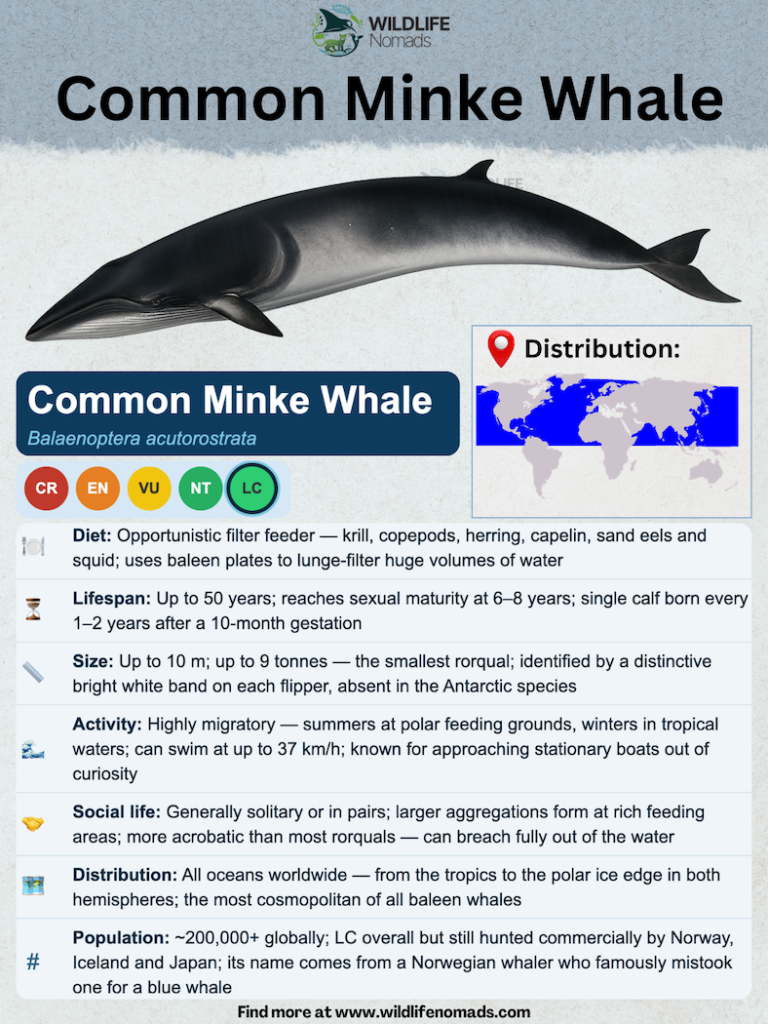
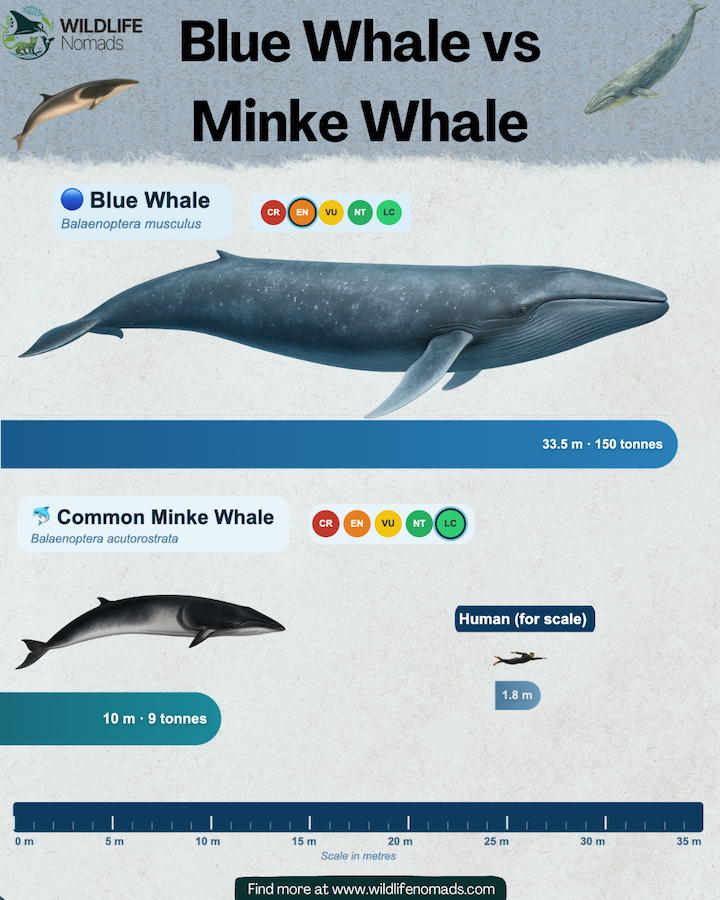
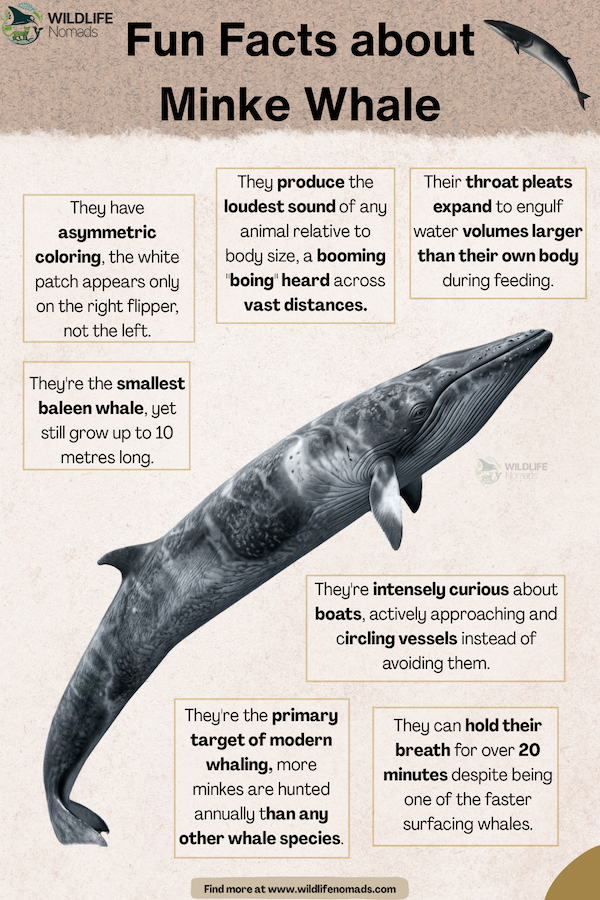
Let me be clear about minke whale size. We are still talking about an animal that stretches up to 35 feet long and can weigh close to 10 tons. The common minke whale typically reaches 23 to 26 feet, with female minke whales slightly outpacing males in length. That makes it the smallest of the filter-feeding whales in North American waters, but “small” only applies when your relatives include the fin whale and the blue whale.
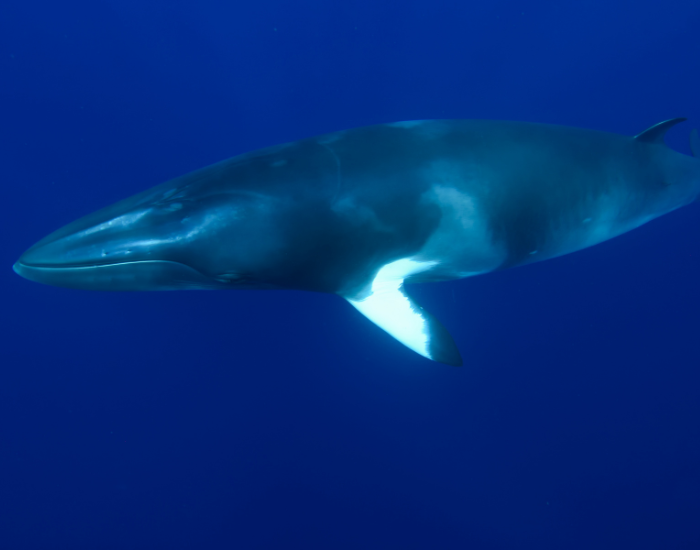
Compared to large whales like the humpback whale, the minke whale has a more torpedo-shaped body. Its sharp snout and streamlined profile allow it to cut through coastal waters at remarkable speeds. How big are minke whales, really? Picture a city bus. Now imagine it breathing, thinking, and hunting with surgical precision. That is what you are looking at.
2. There Are Actually Two (Maybe Three) Species of Minke Whales
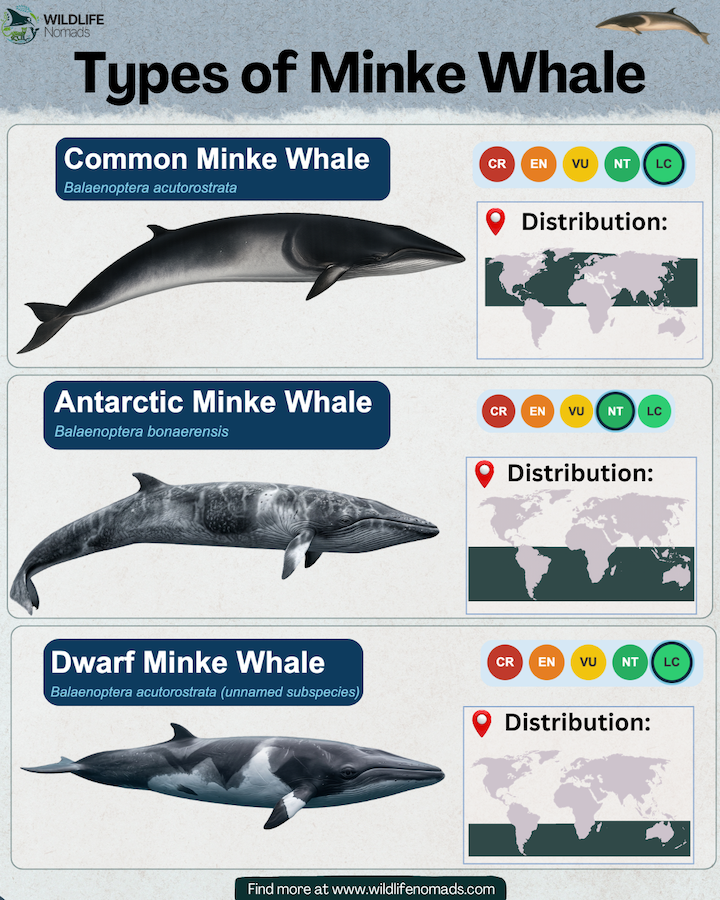
Here is where the taxonomy gets interesting. When we say “minke whale,” we are actually referring to a species complex. The common minke whale (Balaenoptera acutorostrata) lives primarily in the northern hemisphere, across the North Atlantic and North Pacific. The northern minke whale is sometimes used as a common name for this species. The Antarctic minke whale (Balaenoptera bonaerensis) is a separate species found in the southern hemisphere. Then there is the dwarf minke whale, an unnamed subspecies of the common minke whale that shows up in tropical waters and other warm-water regions. Some researchers argue this subspecies deserves full species status.
The name “minke” itself has an amusing origin, it reportedly comes from a Norwegian whaler named Meincke who mistakenly identified a group of these whales as blue whales. His crewmates teased him so relentlessly that the name stuck. Some old-timers still call them the “winged whale” because of the white flipper bands that flash like wings underwater. Cetacean research is still working to resolve the full taxonomy. The species of minke whales we recognize today may look very different in a decade. I find that thrilling, we are still discovering who these whales are.
3. These Whales (Balaenoptera Acutorostrata) Are Speed Demons
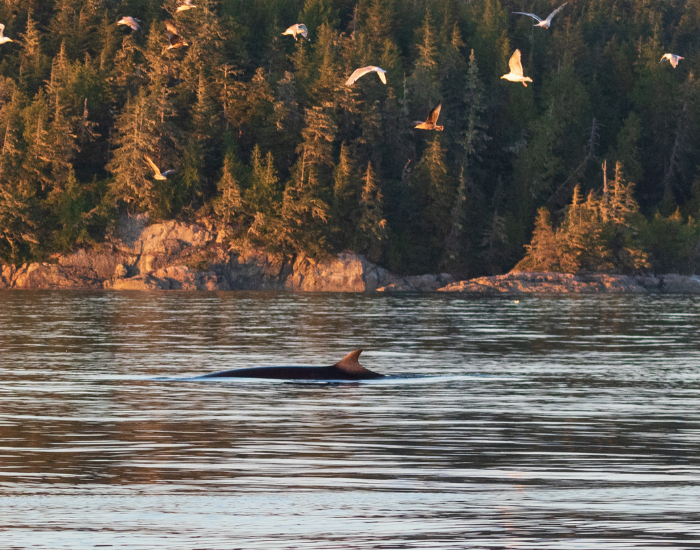
If you have ever tried to photograph a minke whale from a boat, you know the frustration. They are one of the fastest sea animals in the world. These whales can hit speeds over 20 miles per hour during a sprint. When fleeing killer whales — one of their primary predators — minke whales have been clocked at nearly 25 mph. That is faster than most boats used in whale watching operations. Their streamlined body and relatively small size among rorqual whales make them agile hunters and difficult prey. People have watched minke whales outmaneuver research vessels without apparent effort. One moment the dorsal fin breaks the surface.
The next, the animal is 200 yards away. Their speed is a survival tool. Killer whales, which hunt in coordinated packs across polar regions and temperate seas, are among the few predators that regularly kill minke whales. Pods of killer whales have been documented chasing northern minke whales for hours in open water. The minke whale’s only defense is pure acceleration, and deep dives that push them beneath the reach of pursuing whales.
4. What Does a Minke Whale Look Like? Think Stealth Fighter
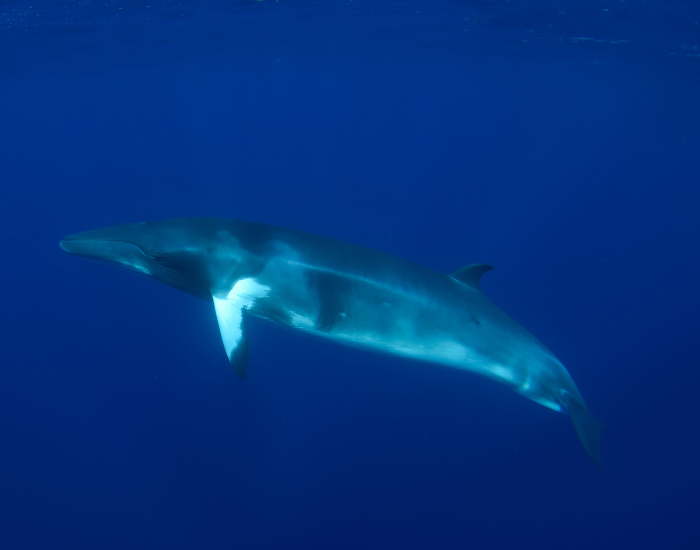
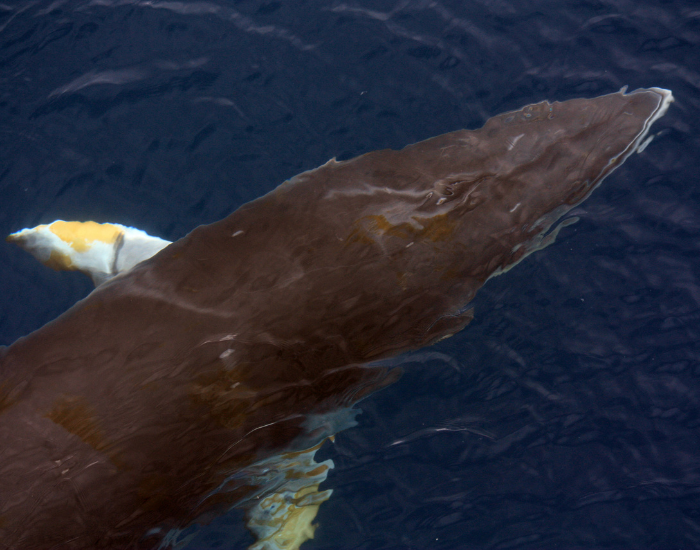
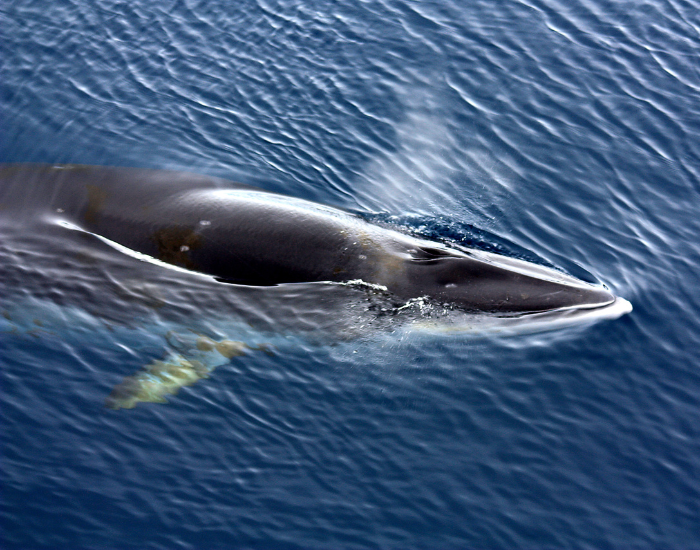
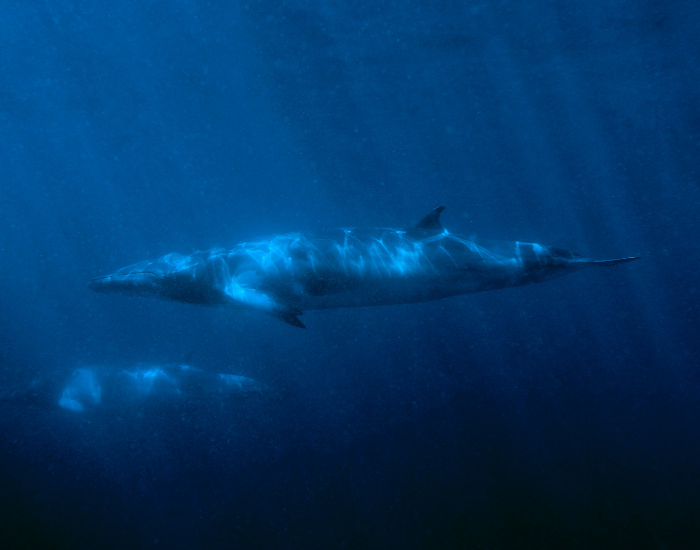
The minke whale’s appearance is built for efficiency. Its body is dark gray to black on the dorsal side, fading to white on the belly. The dorsal fin sits about two-thirds back on the body — proportionally tall and curved. What truly distinguishes the common minke whale from other minke whales and other species is the white band on each pectoral flipper. Antarctic minke whales lack this marking, sporting solid gray pectoral flippers instead.
The baleen plates inside the whale’s mouth are short and cream-colored, numbering between 230 and 360 on each side. And that sharp snout? It is a hallmark of the genus Balaenoptera. The overall look is utilitarian. No barnacle-crusted skin like a gray whale. No elaborate throat pleats visible from the surface. Unlike other whales covered in barnacles and scars, these animals look factory-fresh. Just a clean, hydrodynamic form designed for one thing: moving fast through water.

5. Minke Whale Diet: Generalist Feeders With a Flexible Menu
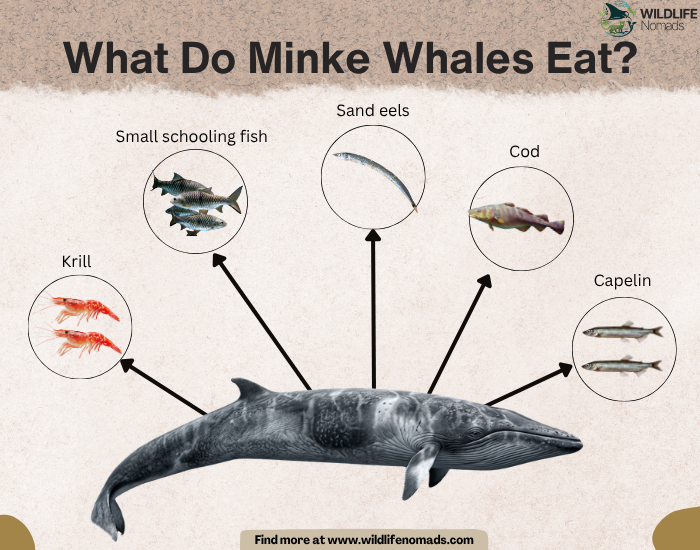
So what do minke whales eat? The short answer: almost anything small enough to filter. The minke whale diet depends on geography and season. In the North Atlantic, minke whales feed heavily on small schooling fish like herring, capelin, sand lance, and cod. In the North Pacific, they target anchovies, sardines, and Pacific saury. Antarctic minke whales rely almost entirely on krill. These whales are lunge feeders.
They accelerate toward a dense ball of prey species, open their massive jaws, and engulf both water and food. The baleen plates then act as a sieve, water pushes out through the baleen while prey stays trapped inside the whale’s mouth. Research from NOAA Fisheries shows that minke whales are dietary generalists. They readily switch between prey species depending on seasonal abundance. This flexibility is a major reason minke whale populations remain relatively healthy compared to other whales that depend on a single food source.
6. Minke Whales Live Everywhere, Seriously, Everywhere
Minke whale habitat spans nearly every ocean on Earth. They are found from the Arctic to the Antarctic, from the North Pacific to the North Atlantic, from the East China Sea to the Yellow Sea. Common minke whales dominate the northern hemisphere, favoring the coastal and inshore waters of the North Atlantic and North Pacific. They frequent the west coast of North America, the waters off Norway and Iceland, and large stretches of the western North Pacific. Antarctic minke whales rule the southern hemisphere, congregating near the Antarctic ice edge during summer feeding season.
Where do minke whales live during winter? They migrate toward warmer waters and tropical waters near the equator for breeding. Dwarf minke whales are found year-round in tropical and subtropical zones, including the Great Barrier Reef off Australia. Minke whales are found in coastal waters, open ocean, and everything in between. Their range flexibility is extraordinary among whale species. From polar regions to the southern hemisphere tropics, these animals cover serious ground.
7. The Curious Case of the “Stinky” Minke
Every whale watching captain has a minke whale smell story. Minke whales have notoriously foul breath. When a minke whale surfaces to exhale, the blow carries a pungent, fishy odor that experienced whale watchers can detect from a surprising distance. Some captains use the smell as an early detection system. The odor comes from the volatile compounds in the whale’s exhalation, a cocktail of digested fish oils, bacteria, and metabolic byproducts.
It is a perfectly natural phenomenon, but it catches people off guard. That stinky reputation is actually useful for cetacean research. Researchers can collect “blow samples”, the exhaled mist, to analyze hormone levels, DNA, and microbiome composition without ever touching the animal. What seems like a funny quirk is actually a window into the whale’s health.
8. Minke Whale Lifespan: Decades of Quiet Ocean Living
Minke whale lifespan is estimated at 40 to 50 years in the wild. Some researchers believe individual minke whales may live longer, but aging whales accurately remains a challenge. Scientists use earwax plugs, yes, literal plugs of waxy buildup in the ear canal, to count growth layers, similar to tree rings. The reproductive cycle adds context to their lifespan. Female minke whales reach sexual maturity at around six to eight years of age. The gestation period lasts approximately 10 months. Pregnant females migrate to warmer waters near the equator to give birth.
Calves measure about 8 to 9 feet at birth and nurse for five to ten months. Females can give birth every one to two years, making them among the most reproductively active of the large whales. Minke whales live solitary or in small groups of two to three. They are not social in the way that other cetacean — like orcas, dolphins or sperm whales — organize into complex family units. However, minke whales sometimes aggregate at rich feeding grounds, where dozens may gather temporarily.
9. Norway and Japan Still Hunt Minke Whales
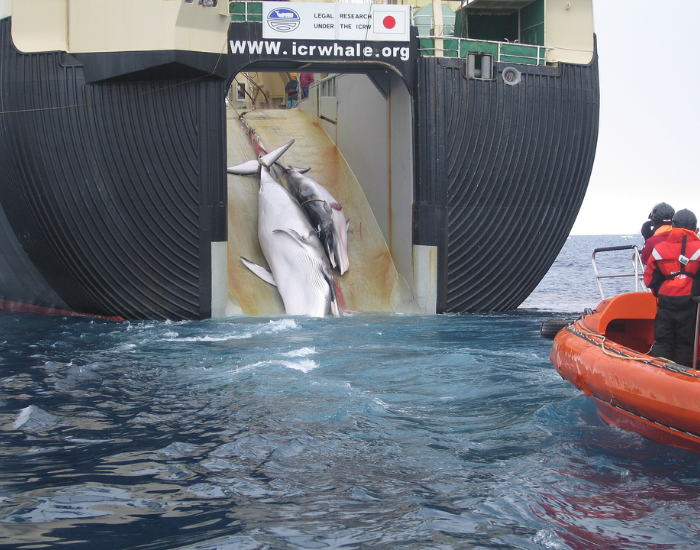
This is the fact most people do not want to hear. Commercial whaling of minke whales continues today. Norway never fully accepted the International Whaling Commission moratorium that took effect in 1986. Norwegian whalers kill hundreds of minke whales annually in Norwegian waters, and the whaling industry remains culturally embedded in certain coastal communities. Japan conducted so-called “scientific whaling” of minke whales from 1987 until 2019, when it officially withdrew from the International Whaling Commission and resumed openly commercial whaling. Japan’s catch quotas now target minke whales in the western North Pacific and surrounding waters. Iceland has also participated intermittently.
The argument from these nations centers on sustainable harvest and cultural tradition. Critics, and the scientific consensus, argue that commercial whalers have historically devastated whale populations and that the resumption of commercial whaling sets a dangerous precedent. The International Whaling Commission continues to debate these issues, but enforcement mechanisms remain weak. From my perspective as a biologist, the survival of minke whale populations is not currently at immediate risk from whaling alone.
10. Threats Beyond the Harpoon: Fishing Nets, Vessel Strikes, and Noise
Whaling gets the headlines. But the day-to-day threats facing these whales are more mundane and arguably more dangerous. Large whale entanglements in fishing gear are a leading cause of injury and death. Minke whales get tangled in fishing nets, gillnets, lobster trap lines, and trawl gear across multiple ocean basins. NOAA Fisheries documents these entanglements regularly along the east coast of the United States and Canada. The equipment does not discriminate, any large whale swimming through the wrong stretch of water can become ensnared. Ship collisions are another major concern.
As shipping traffic increases, particularly along busy coastlines and the west coast, the odds of a minke whale colliding with a vessel rise proportionally. Colder waters in polar regions are seeing increased ship traffic as Arctic sea ice retreats, opening new shipping lanes directly through minke whale habitat. Underwater noise pollution is the invisible threat. Minke whales, like all baleen whales, rely on low-frequency sound to communicate and locate prey.
11. Minke Whale Conservation Status: Least Concern… For Now
The conservation status of the common minke whale is listed as Least Concern by the IUCN. The Antarctic minke whale holds a Near Threatened designation. On paper, their numbers look healthy. Estimates suggest over 500,000 common minke whales exist worldwide, making them the most abundant rorqual whale on Earth. However, conservation status labels can be misleading. “Least Concern” does not mean “no concern.” Southern minke whales in Antarctic waters may be declining due to shifts in krill availability linked to climate change. Northern minke whale populations face localized threats from the whaling industry, vessel strikes, and entanglement.
FAQs About Minke Whales
The common minke whale reaches 23 to 35 feet in length and can weigh up to 10 tons. Minke whale weight varies by subspecies and region. Antarctic minke whales tend toward the upper end of the size range, while dwarf minke whales max out around 26 feet. How long is a minke whale compared to other baleen whales? About half the length of a humpback whale and roughly a third the length of a blue whale.
Minke whales eat small schooling fish like herring, capelin, cod, anchovies, and sardines. Antarctic minke whales feed primarily on krill. They are lunge feeders that filter prey through their baleen plates. Their diet shifts seasonally based on prey species availability across their range.
inke whale lifespan ranges from 40 to 50 years. Some individual whales may live longer, but accurate age estimation in whales remains challenging. Scientists use earwax plug growth layers to determine age — a technique also used for other whales.
The common minke whale is classified as Least Concern by the IUCN. The Antarctic minke whale is listed as Near Threatened. Neither is currently listed as a threatened species under the Endangered Species Act. However, ongoing threats from whaling, entanglement, ship collisions, and climate change warrant continued monitoring by organizations like NOAA Fisheries.
Protecting the Small Whales
The minke whale does not ask for your attention. It does not breach for tour boats or sing continent-spanning songs. These whales move through every ocean on Earth with quiet efficiency, hunting, migrating, and raising calves on a schedule that predates human civilization by millions of years. That understated nature is precisely what makes these whales worth knowing. Among all the great whales, the minke stands apart, not for its size, but for its resilience and adaptability.
Next time you are on a whale watching trip and someone spots a small, fast dorsal fin at the surface, do not look away. You are watching one of the most successful marine mammals on the planet doing what it does best: disappearing before you fully appreciate what you just saw.
References:
Herr, H., Viquerat, S., Bodenseek, F., Balzter, H., Autret, E., Gimenez, O., & Aoki, K. (2022). Epibiotic fauna of the Antarctic minke whale as a reliable indicator of seasonal movements. Scientific Reports, 12, 22291. https://doi.org/10.1038/s41598-022-25929-1
Kleivane, L., & Kvadsheim, P. H. (2024). Capture and release of minke whales offers new opportunities for mysticete sensory research. Aquatic Mammals, 50(4), 352–368. https://doi.org/10.1578/AM.50.4.2024.352
Risch, D., & Norris, T. (2019). Common and Antarctic minke whales: Conservation status and future research directions. Frontiers in Marine Science, 6, 247. https://doi.org/10.3389/fmars.2019.00247
Risch, D., Castellote, M., Clark, C. W., Davis, G. E., Dugan, P. J., Hodge, L. E. W., Kumar, A., Lucke, K., Mellinger, D. K., Nieukirk, S. L., Popescu, C. M., Ramp, C., Read, A. J., Rice, A. N., Silva, M. A., Sremba, A. L., & Van Parijs, S. M. (2021). Estimating minke whale relative abundance in the North Atlantic using passive acoustic sensors. The Journal of the Acoustical Society of America, 150(5), 3569. https://doi.org/10.1121/10.0007063
Víkingsson, G. A., & Heide-Jørgensen, M. P. (2015). First satellite tracking of minke whales (Balaenoptera acutorostrata) in Icelandic waters. Marine Biology Research, 11(2), 133–143. https://doi.org/10.1080/17451000.2014.904965
Perrin, W. F., Würsig, B., & Thewissen, J. G. M. (Eds.). (2018). Encyclopedia of Marine Mammals (3rd ed.). Academic Press.