I’ve been lucky enough to witness some extraordinary marine mammal encounters. I’ve locked eyes with gray whales in Baja’s lagoons and watched humpback whales breach off the Australian coast while driving around the country. Yet the right whale remains one of those species I think about constantly without ever having seen one in person. Maybe that’s what draws me to them. These aren’t the flashy acrobats of the ocean. They’re quiet, slow, and vanishing, and that makes their story all the more urgent.
The right whale is one of the most misunderstood large whales in the world. Most people couldn’t tell you there are three separate species. Fewer still know that North Atlantic right whales number barely 350 individuals. This article unpacks twelve facts about right whales that challenge common assumptions, from their grim naming history to the fishing gear and vessel strikes pushing them toward extinction.
1. The Name “Right Whale” Comes from a Dark Chapter in Whaling History
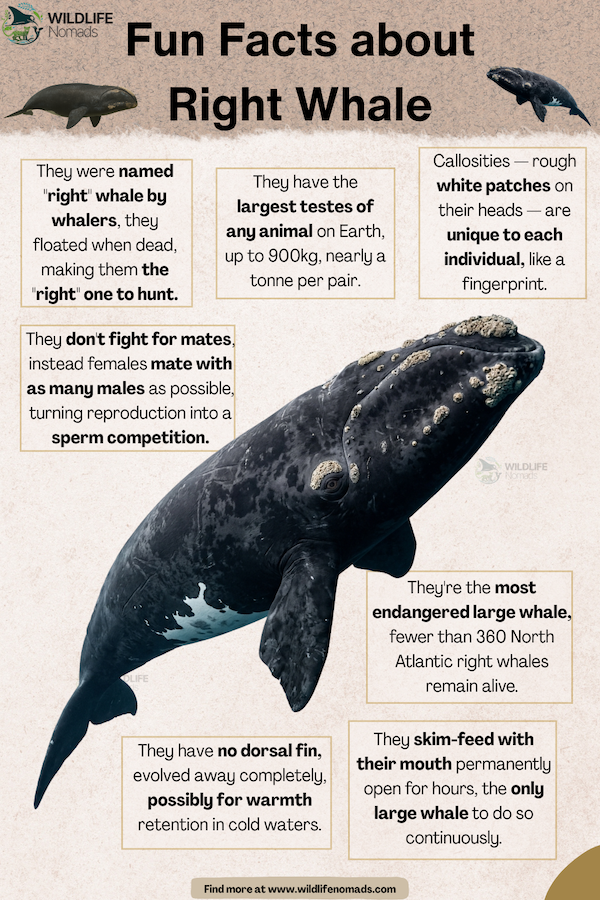
Why do they call it the right whale? The answer is grimmer than most people expect. Early whalers in the North Atlantic considered these the “right” whale to kill. Right whales swim slowly near the surface. They float when dead, thanks to their thick blubber. They frequented coastal waters close to shore. For commercial whaling operations spanning centuries, that combination made the right whale the easiest and most profitable target among all large whales in the Atlantic Ocean.
By the early 1900s, commercial whaling had devastated right whale populations across both hemispheres. The species that earned its name for being easy to hunt nearly went extinct because of it. International protections finally arrived in 1935, but for North Atlantic right whales, the damage was already catastrophic.
2. There Are Three Distinct Right Whale Species, Not One
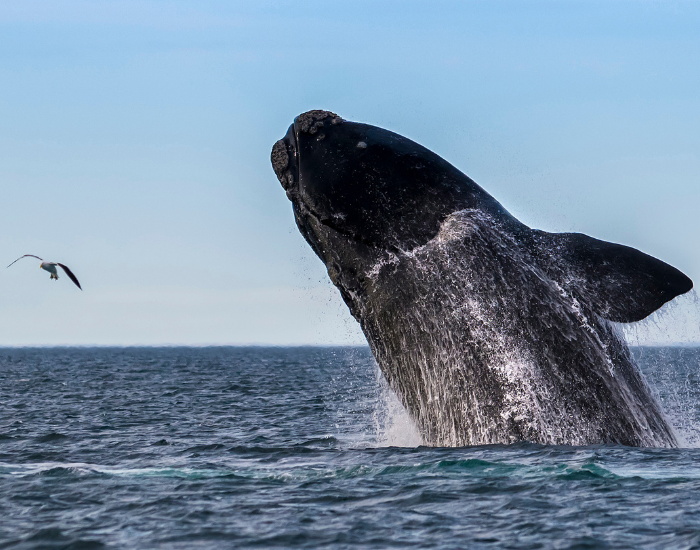
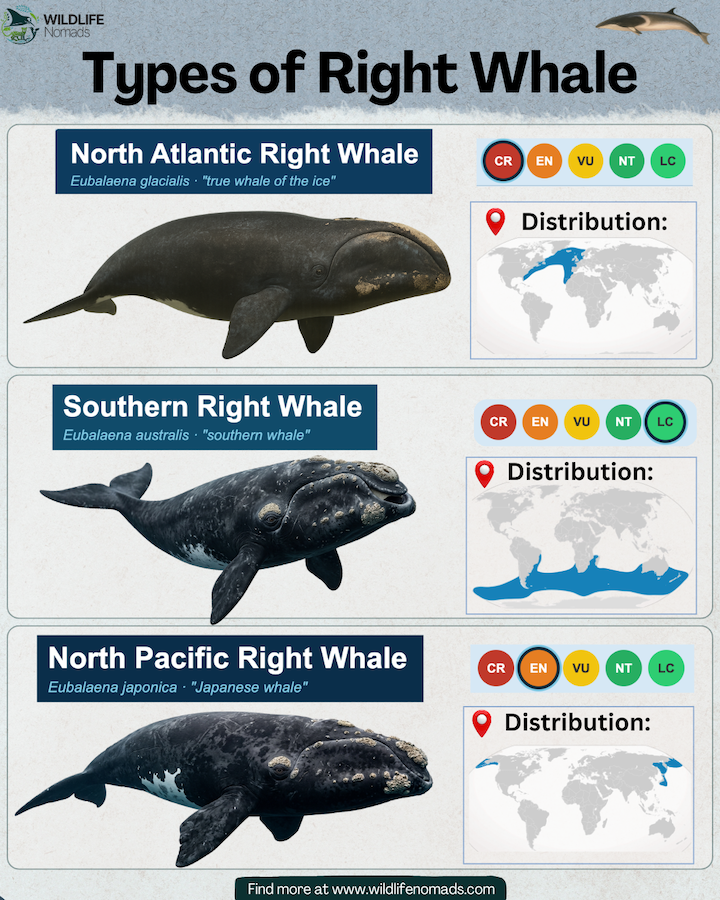
Most people hear “right whale” and picture a single species. In reality, scientists recognize three. The North Atlantic right whale (Eubalaena glacialis) inhabits the western North Atlantic, primarily along the east coast of the United States and Canada. The North Pacific right whale (Eubalaena japonica) lives in the North Pacific, making it one of the rarest large whales on Earth. While the total population is likely fewer than 500, the Eastern North Pacific sub-population, which frequents the waters off Alaska and British Columbia—is in a far more precarious state, with current estimates suggesting fewer than 50 individuals remain
These three right whale species diverged roughly 5–6 million years ago. Their life history patterns, feeding grounds, and calving grounds differ substantially. Genetic studies have confirmed they are distinct evolutionary lineages. The North Pacific right whale remains almost unstudied due to its extreme rarity in the North Pacific. Lumping all three species under one name obscures the unique conservation challenges each faces, particularly the critically endangered North Atlantic right whale.
3. North Atlantic Right Whales Are Among the Most Endangered Whales Alive
How many right whales are left? For the these whales, current estimates hover around 350 individuals. That makes them one of the most endangered large whales in the world and arguably the most endangered whales in the western North Atlantic.
NOAA Fisheries (also known as the National Marine Fisheries Service) tracks individual North Atlantic right whales using photo-identification of their unique callosity patterns. They monitor every North Atlantic right whale death because each loss matters at this population size. Between 2017 and 2023, an Unusual Mortality Event claimed dozens of North Atlantic right whales through vessel strikes and fishing gear entanglement. North Atlantic right whale mortality rates exceeded birth rates for several consecutive years. Their mortalities triggered alarm among marine mammal scientists and conservation groups throughout the United States and Canada.
The Endangered Species Act and the Marine Mammal Protection Act both protect North Atlantic right whales. Despite these legal frameworks, North Atlantic right whale recovery has stalled. The Office of Protected Resources within NOAA Fisheries continues to develop and refine the Atlantic Large Whale Take Reduction Plan.
4. Right Whales Are Big… But Definitely Not the Biggest
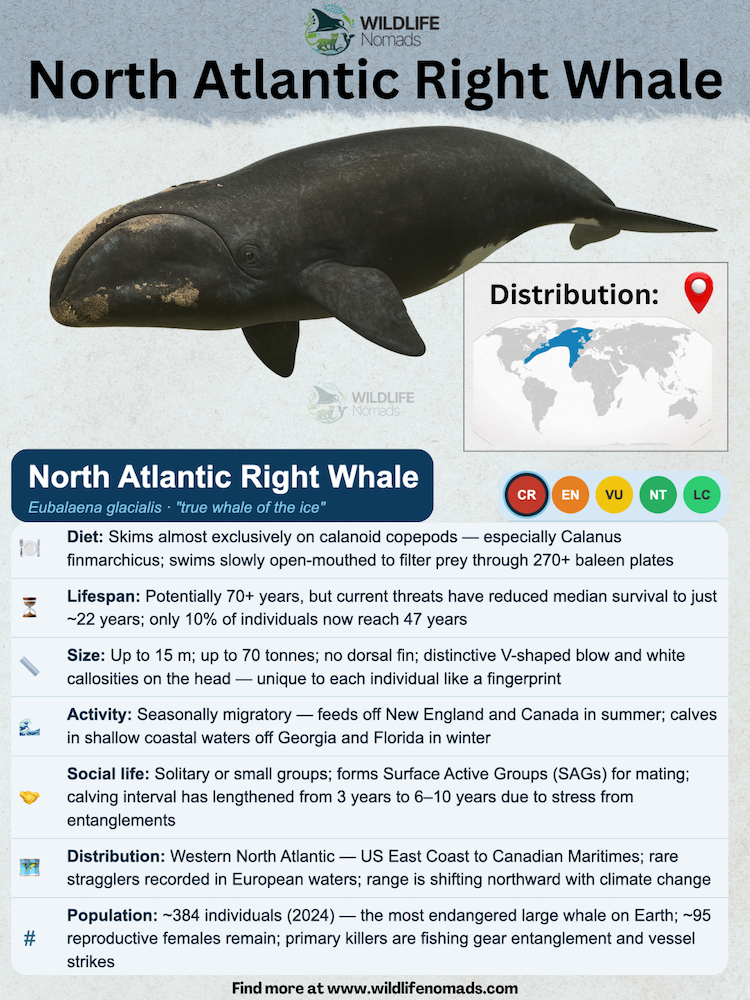
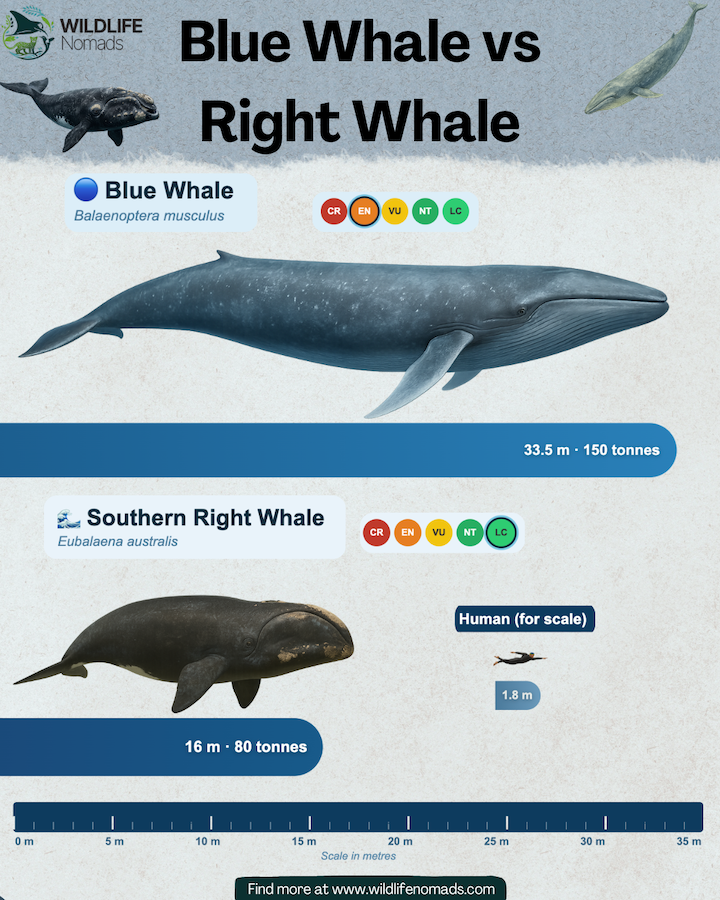
Right whale length tops out around 15–17 meters (roughly 50–55 feet). North Atlantic right whale size is impressive, adults weigh up to 70 tonnes. However, that puts them well behind blue whales, which reach 30 meters and 150 tonnes, making the blue whale the biggest whale in the world. North Atlantic right whales are also smaller than fin whales and comparable in size to their closest relatives among baleen whales. If you are curious to see how big the can get, visit our whale size comparison interactive tool to get the full scale.
How big is a right whale compared to other whales of the North Atlantic? They’re stocky and rotund rather than sleek. Their body shape, barrel-chested with enormous heads comprising roughly one-third of total body length, makes them look heavier than other whales of the Atlantic Ocean at similar lengths. That distinctive bulk is part of what made them float after death, sealing their fate during the whaling era.
5. Right Whales Have No Dorsal Fin… And That’s Surprisingly Rare
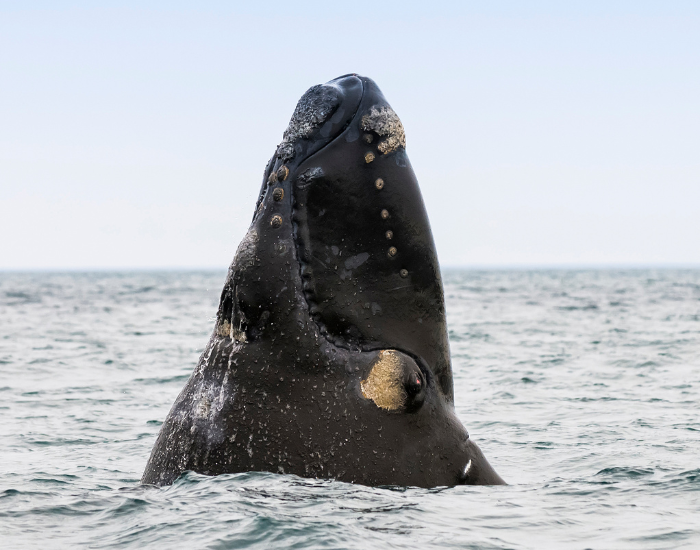
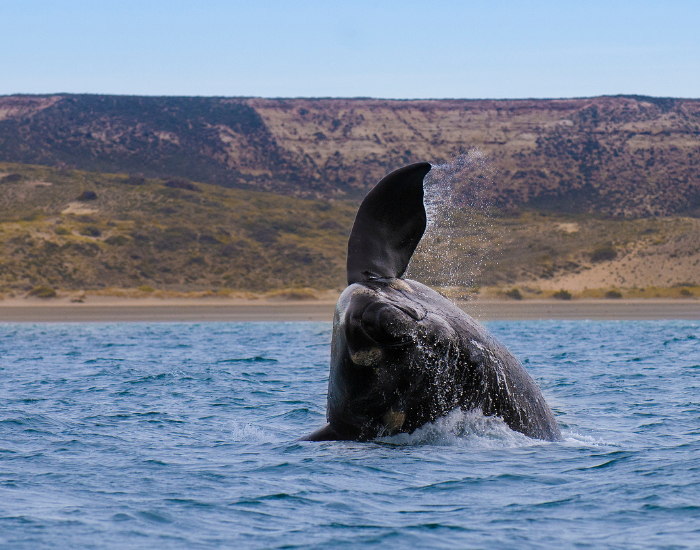
Here’s a detail that surprises most whale enthusiasts. Right whales lack a dorsal fin entirely. Among large whales, only right whales and bowhead whales share this trait. In my years of studying marine mammals and identifying whale species at sea, the missing dorsal fin is actually one of the fastest diagnostic features. If you spot a large whale in the North Atlantic with no fin on its back and rough white patches on its head, you’re almost certainly looking at a North Atlantic right whale.
The evolutionary reason for the absent dorsal fin remains debated. Some marine mammal scientists suggest it relates to thermoregulation in cold North Atlantic waters. Others propose it reduces drag during the right whale’s surface-skimming feeding style. Whatever the reason, it makes right whale sightings unmistakable for trained observers conducting whale watching surveys along the east coast.
6. Those Rough White Patches Aren’t Skin… They’re Whale Lice Colonies
The distinctive white callosities on a right whale’s head look like barnacles from a distance. They’re not. Those rough patches, called callosities, are actually areas of thickened, calcified skin that are naturally dark grey or black. They only appear white or cream-colored because they are densely colonized by thousands of cyamids, or ‘whale lice.’ These tiny crustaceans hitch a ride for life, creating a living map on the whale’s head that is as unique as a human fingerprint.
Every individual carries a unique callosity pattern. Researchers at the New England Aquarium and other institutions use these patterns to identify individual whales from photographs. The New England Aquarium maintains one of the most comprehensive right whale photo-ID catalogs in the world, tracking individual whales across decades.
Interestingly, southern right whale populations carry different whale lice species than North Atlantic right whales. Marine mammal science researchers have used these cyamid genetics to study right whale natural history and confirm the long evolutionary separation between northern and southern right whale species.
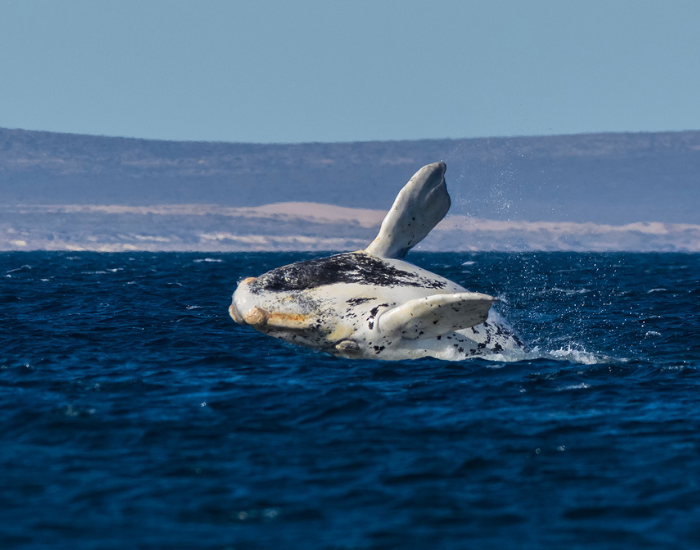
7. Right Whales Skim-Feed in a Way No Other Large Whale Does
Most baleen whales are lunge feeders. They engulf massive volumes of water and filter out prey. Right whales do something different. They skim-feed, swimming slowly at or near the surface with their mouths open, letting water flow through their baleen plates while trapping dense patches of tiny copepods called Calanus finmarchicus.
North Atlantic right whales feed in areas where these copepods concentrate in thick layers. They feed almost exclusively on these tiny crustaceans, unlike other whales that target fish or krill. Cape Cod Bay serves as one of the most critical feeding grounds for North Atlantic right whales during late winter and spring. Massachusetts coastal waters and the Bay of Fundy are other key areas where whales gather seasonally. These feeding grounds in the northwestern Atlantic Ocean must contain copepod densities above a certain threshold, otherwise, the energy spent feeding exceeds what they gain.
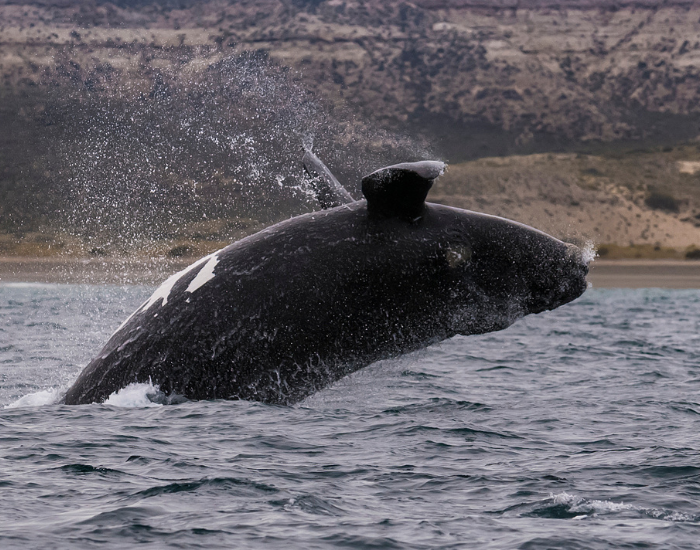
8. Fishing Gear Entanglement Is the Leading Killer of North Atlantic Right Whales
If you ask most people what threatens them, they’ll say hunting. That ended nearly a century ago. Today, entanglement in fishing gear is the primary cause of North Atlantic right whale deaths. Over 80% of North Atlantic right whales bear scars from at least one entanglement in fishing gear during their lifetime.
The ropes connecting lobster and crab traps to surface buoys create a near-invisible web throughout their habitat along the east coast. Entangled whales drag heavy gear for months or even years. The lines cut into blubber, restrict movement, prevent feeding, and cause chronic infections. Many entangled whales die slow deaths over months. NOAA Fisheries data shows that entanglement in fishing gear accounts for the majority of documented right whale mortality cases in the western North Atlantic.
The Atlantic Large Whale Take Reduction Plan targets commercial fixed gear fisheries, particularly the lobster industry — to reduce entanglement risk. Weak-link rope requirements, seasonal closures, and ropeless fishing gear trials represent current approaches. However, compliance remains inconsistent. The Coast Guard and National Marine Fisheries Service share enforcement responsibilities, but the scale of commercial fixed gear fisheries across the east coast makes comprehensive monitoring difficult.
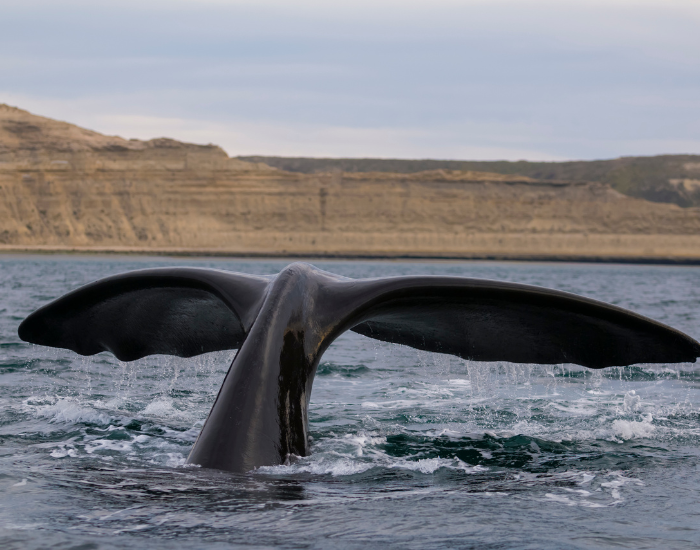
9. Vessel Strikes Are the Other Major Threat… And They’re Increasing
Ship strikes rank as the second leading cause of North Atlantic right whale deaths. Because right whales swim slowly at the surface and show minimal whale presence above water, ship captains often cannot see them in time. North Atlantic right whales don’t exhibit the dramatic blows that make other whale species visible from a ship’s bridge.
NOAA Fisheries and the Coast Guard have implemented vessel speed restrictions in certain areas along the Atlantic coast and near calving grounds off the coast of South Carolina and Georgia. Vessel strikes occur most often in busy shipping lanes where North Atlantic right whales overlap with cargo ships and tankers. Seasonal management areas reduce vessel speeds to 10 knots when right whale sightings confirm whale presence in these corridors. Vessel collisions and vessel strikes still occur because compliance is voluntary in many zones and enforcement is limited.
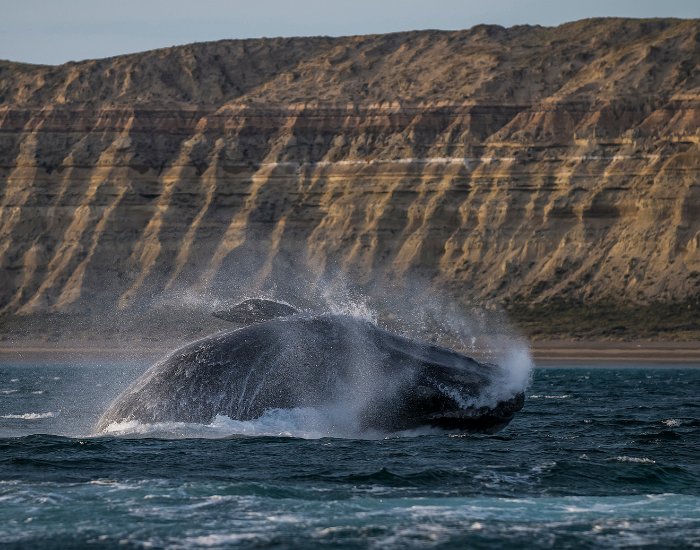
10. Southern Right Whales Are Actually Recovering… A Rare Success Story
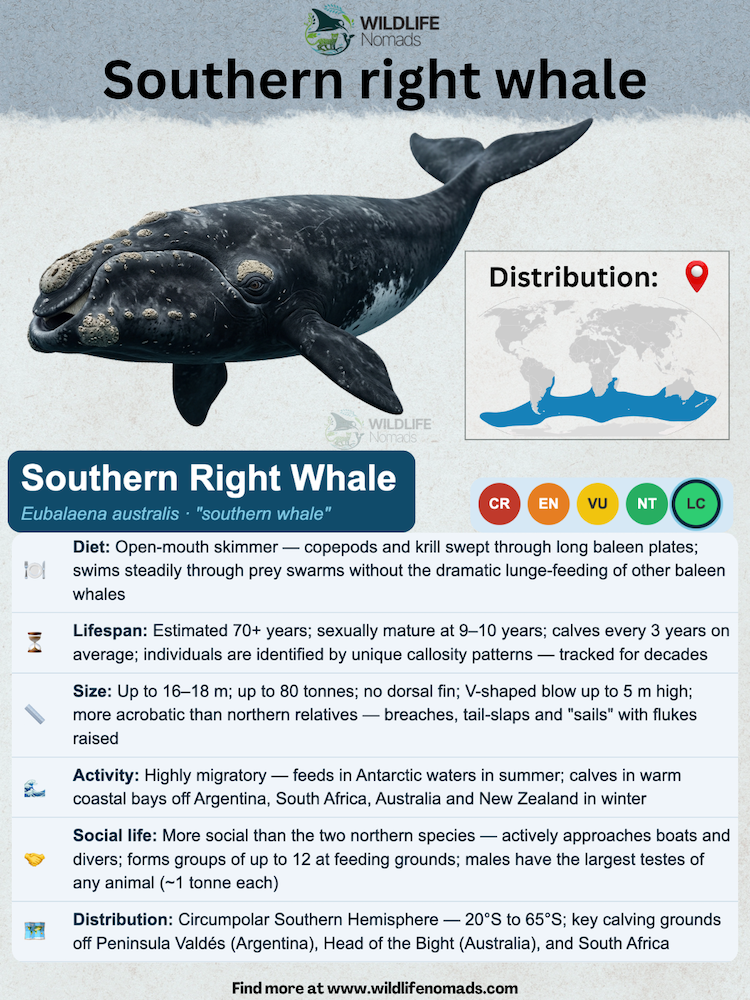
Not all news is grim. Southern right whale populations have shown strong recovery since whaling protections took effect. In the Southern Hemisphere, southern right whales now number an estimated 15,000–20,000 individuals. Some southern populations grow at 5–7% per year.
Why the dramatic contrast with their North Atlantic cousins? Southern right whales benefit from fewer vessel strikes and ship strikes, less fishing gear entanglement, and more remote feeding grounds in the open Southern Hemisphere oceans. The North Pacific right whale also remains critically endangered, with population estimates below 500. By contrast, southern right whales demonstrate that recovery is biologically possible when human threats are reduced.
11. Ocean Warming Is Rewriting the Rules for Right Whale Survival
Climate-driven ocean warming ranks among the most insidious threats facing North Atlantic right whales. Unlike fishing gear or ship strikes, warming waters don’t kill North Atlantic right whales directly. Instead, rising temperatures shift the distribution of Calanus finmarchicus, the copepod that right whales feed on exclusively.
Research documents a northward shift in copepod abundance over the past two decades. Right whales that historically relied on feeding grounds in the Gulf of Maine now travel farther north into Canadian waters. This behavioral shift exposes them to new areas with fewer protections.
Climate change also affects female North Atlantic right whale reproduction. Stressed, underfed females produce fewer calves and extend the interval between births. Calving rates among North Atlantic right whales have declined, further slowing any hope of recovery.

FAQs about right Whales
Approximately 350 North Atlantic right whales survive today, making them one of the most endangered large whales on Earth. North Pacific right whales number fewer than 500. Southern right whales are doing significantly better, with an estimated 15,000–20,000 individuals across the Southern Hemisphere.
Centuries of hunting nearly wiped out right whales, especially in the North Atlantic. After commercial whaling ended, North Atlantic right whale populations failed to recover because modern threats replaced historical ones. Entanglement in fishing gear and vessel strikes now kill more North Atlantic right whales than the population can replace through reproduction.
The Future of the Right Whale
Right whales have survived ice ages, shifting continents, and millions of years of evolution. Whether they survive us remains an open question. The North Atlantic right whale sits at a tipping point where every single individual matters. Every fishing gear modification that prevents entanglement, every vessel speed reduction that prevents vessel strikes, every protected feeding ground contributes to a species-level outcome.
If right whale conservation interests you, follow the work of NOAA Fisheries and the New England Aquarium — both organizations track endangered North Atlantic right whales in real time. For a broader perspective on marine mammals and the threats facing other whale species, explore my guides on types of whales and minke whales. And if you ever find yourself on the east coast during whale season, stand on a headland and scan the horizon. You might just witness something I’m still chasing.
Where to See Right Whales?
Here is a list of 6 whale watching tours where you see these whales! As a biologist, I only recommend tours that follow strict ethical guidelines to ensure we don’t disturb wildlife. These are the tours/ partners I trust most based on their conservation records:
This website is reader-supported. When you buy experiences through links listed on this site, we may earn an affiliate commission.
References:
Crossman, C. A., Fontaine, M. C., & Frasier, T. R. (2024). A comparison of genomic diversity and demographic history of the North Atlantic and Southwest Atlantic southern right whales. Molecular Ecology, 33, e17099. https://doi.org/10.1111/mec.17099
Kraus, S. D., & Rolland, R. M. (Eds.). (2007). The Urban Whale: North Atlantic Right Whales at the Crossroads. Harvard University Press. https://doi.org/10.2307/j.ctv1pnc1q9
Khan, C., Blount, D., Parham, J., Holmberg, J., Hamilton, P., Johnston, D. W., Graham, K., & Bogucki, R. (2022). Artificial intelligence for right whale photo identification: From data science competition to worldwide collaboration. Mammalian Biology, 102(4), 1025–1042. https://doi.org/10.1007/s42991-022-00253-3
Knowlton, A. R., Hamilton, P. K., Marx, M. K., Pettis, H. M., & Kraus, S. D. (2012). Monitoring North Atlantic right whale Eubalaena glacialis entanglement rates: A 30-year retrospective. Marine Ecology Progress Series, 466, 293–302. https://doi.org/10.3354/meps09923
Meyer-Gutbrod, E. L., Greene, C. H., Davies, K. T., & Johns, D. G. (2021). Ocean regime shift is driving collapse of the North Atlantic right whale population. Oceanography, 34(3), 22–31. https://doi.org/10.5670/oceanog.2021.308
Pettis, H. M., Pace, R. M., & Hamilton, P. K. (2023). North Atlantic Right Whale Consortium 2022 Annual Report Card. Report to the North Atlantic Right Whale Consortium. https://www.narwc.org/report-cards.html
Record, N. R., Runge, J. A., Pendleton, D. E., Balch, W. M., Davies, K. T., Pershing, A. J., … & Thompson, C. R. (2019). Rapid climate-driven circulation changes threaten conservation of endangered North Atlantic right whales. Oceanography, 32(2), 162–169. https://doi.org/10.5670/oceanog.2019.201
Sharp, S. M., McLellan, W. A., Rotstein, D. S., Costidis, A. M., Barco, S. G., Durham, K., … & Moore, M. J. (2019). Gross and histopathologic diagnoses from North Atlantic right whale Eubalaena glacialis mortalities between 2003 and 2018. Diseases of Aquatic Organisms, 135(1), 1–31. https://doi.org/10.3354/dao03376
Van der Hoop, J. M., Moore, M. J., Barco, S. G., Cole, T. V., Daoust, P. Y., Henry, A. G., & Solow, A. R. (2013). Assessment of management to mitigate anthropogenic effects on large whales. Conservation Biology, 27(1), 121–133. https://doi.org/10.1111/j.1523-1739.2012.01934.x