I remember sitting on a small boat in Baja California, the sun baking my neck as a friendly gray whale nudged our boat. In Australia, I’ve spent countless seasons watching humpback whales breach migrate when I travel around australia, their massive bodies defying gravity during their annual migration. But the bowhead whale (Balaena mysticetus) is different. It is a ghost. It doesn’t seek out tourist boats in warm lagoons. Instead, it haunts the fractured edges of the northern ice pack, a realm so harsh that few humans ever witness its true majesty.
What you need to know is that these creatures challenge everything we know about biology. These are not just “large whales.” They are sentient time capsules.
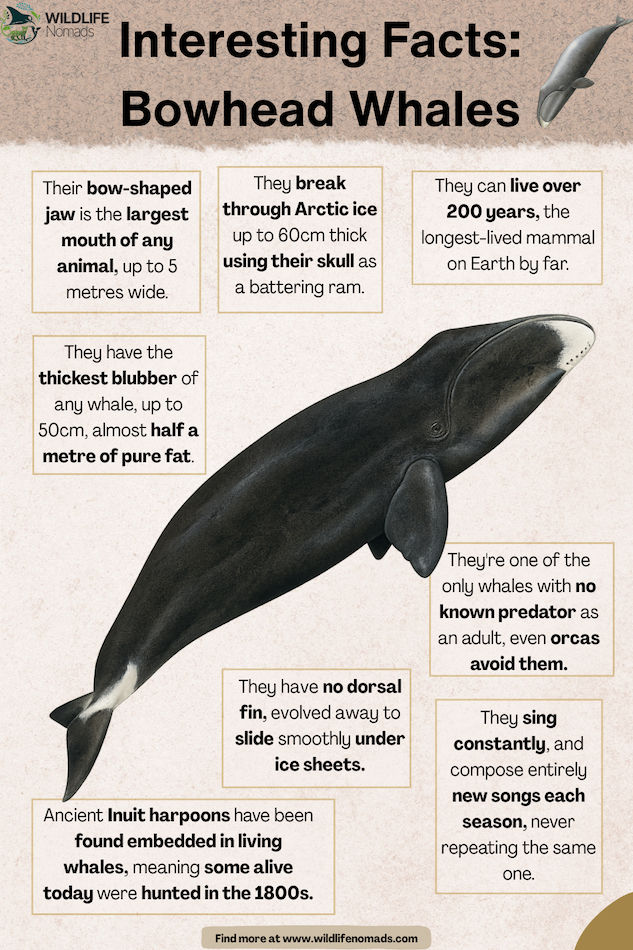
The bowhead whale is a specialist of the Arctic Ocean, perfectly adapted to a world of sub-zero temperatures and crushing floes. They lack a dorsal fin, a strategic evolution that allows them to swim directly under sea ice without snagging! As a biologist, I find their resilience intoxicating. We are talking about a mammal that can break through twenty inches of solid ice just to take a breath. Here are the most fascinating insights into the life of the “Greenland whale.”
1. The Mammal That Outlives Republics
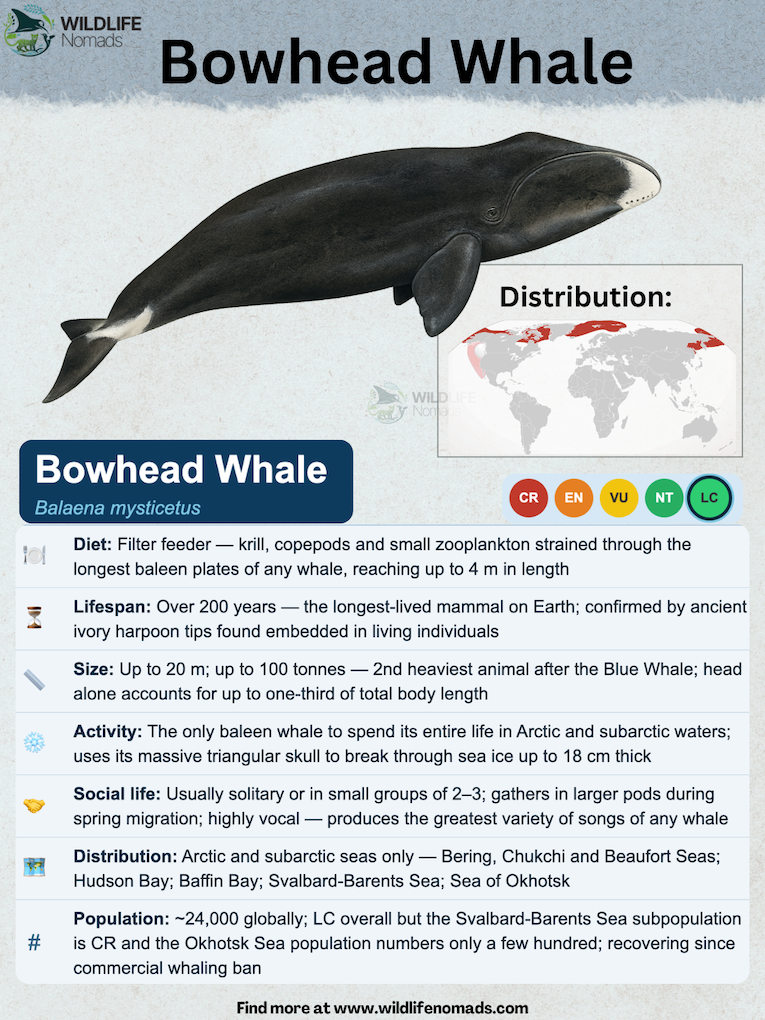
If you want to know which whale lives 500 years, the answer is slightly more nuanced, but the bowhead is the closest contender on Earth! For a long time, we underestimated their longevity. Then, researchers found traditional ivory harpoon tips embedded in the blubber of harvested whales. These tips hadn’t been used since the 1800s.
Scientific analysis of eye tissue now confirms that a bowhead whale can live for over 200 years. This means there are individuals swimming in the Arctic waters today that might have been calves when Queen Victoria was crowned. However, they share these icy waters with the Greenland shark, an even more extreme survivor that can live for over 390 years, currently believed to be the longest-living vertebrate known to science.
Neither species just “survives”; they actively resist the cellular decay we call aging. Studying their genomes could unlock secrets for human longevity, specifically how they suppress the cancer risks and metabolic slowdowns that usually come with having such a high cell count and a centuries-long lifespan.
2. A Head Built Like a Battering Ram
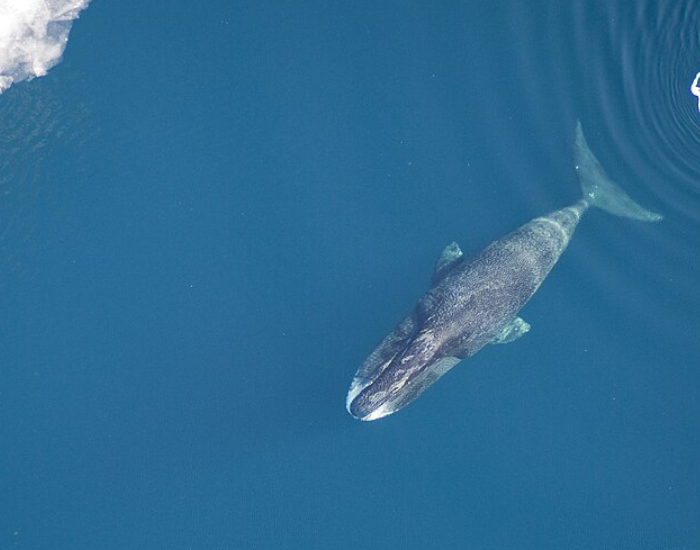
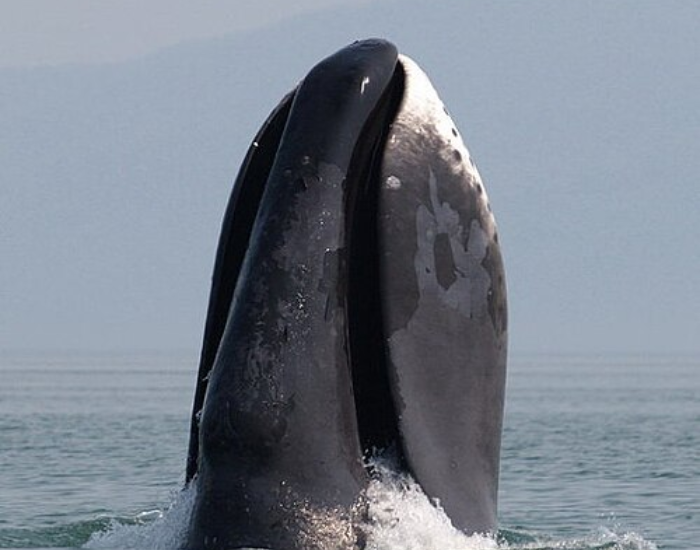
The name “bowhead” isn’t accidental. Their massive, triangular skull makes up nearly one-third of their entire body length. This anatomical feature is a biological sledgehammer. While most whale species avoid heavy ice, the bowhead uses its head to fracture breathing holes from beneath the surface.
In my years studying animal morphology, I’ve rarely seen such a specialized adaptation for a single environment. This ‘bullhead’ shape is what allows the Bering-Chukchi-Beaufort population to thrive in waters where other marine animals would be trapped and drown. Bowhead whales inhabit the Bering, Chukchi, and Beaufort seas, Hudson Bay, and other Arctic waters. They are the icebreakers of the animal kingdom, clearing the way for other arctic whales like the narwhal.

3. The Longest Baleen Plates in the Ocean
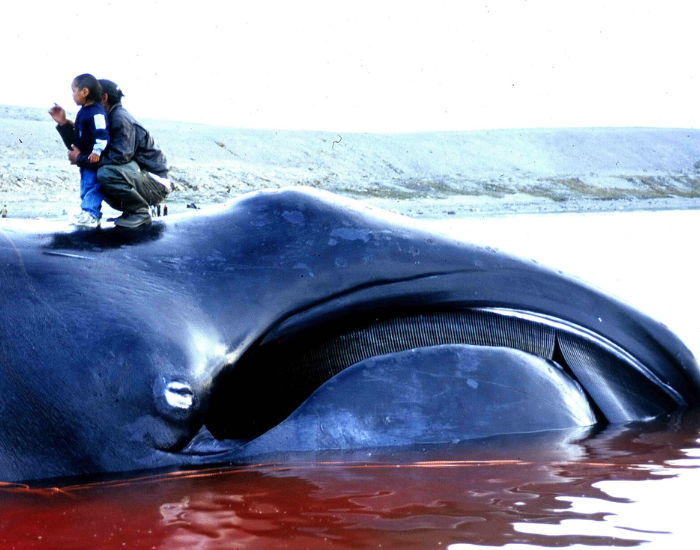
Despite being large whales, bowheads are filter feeders. They don’t have teeth; they have baleen plates. These plates are made of keratin, the same stuff as your fingernails. In a bowhead, the longest baleen plates can reach over 13 feet in length.
When a bowhead whale swims with its mouth open, it filters tons of water to catch tiny zooplankton and krill. They are “skim feeders,” moving slowly through the water column. It is a peaceful existence, contrasting sharply with the violent environment they inhabit. Unlike the blue whale, which lunges at its prey, the bowhead is a patient harvester of the cold.

4. Why They Lack a Dorsal Fin
If you look at a humpback whale or a fin whale, the dorsal fin is a prominent feature. However, the bowhead is completely smooth along its back. This is a vital adaptation for life in the Arctic and subarctic waters.
A fin would be a liability when navigating under thick arctic ice. By evolving away from this feature, the bowhead can surface in tiny cracks of open water, known as polynyas, with minimal clearance. It’s a reminder that in evolution, sometimes losing a limb or a fin is the ultimate gain for survival in a niche habitat.
5. The Mystery of the Okhotsk Sea Stock
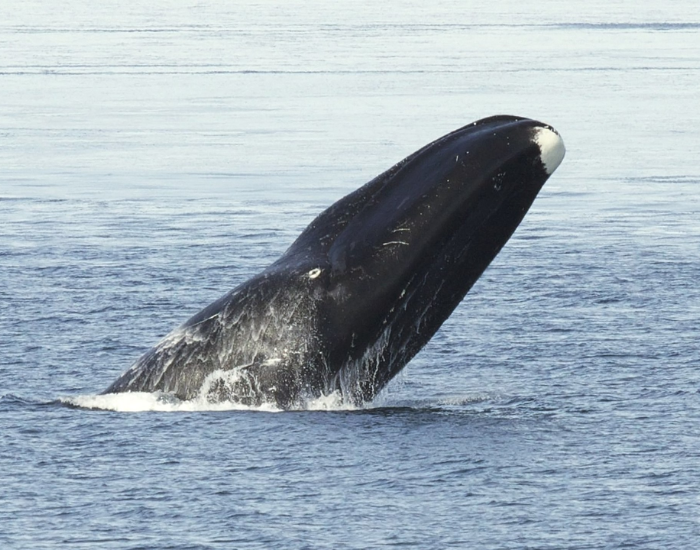
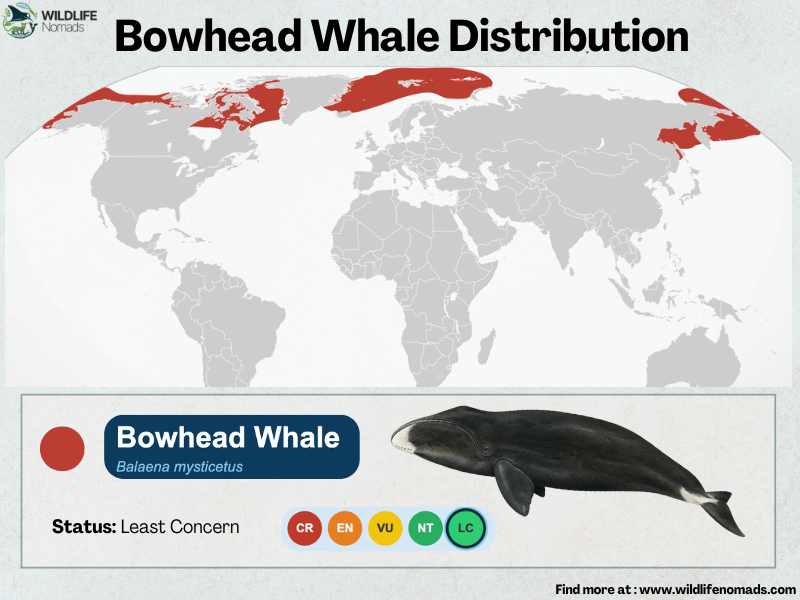
Most people associate these giants with Alaska or Greenland, but a small, isolated population exists in the Sea of Okhotsk in Russia. This Okhotsk Sea group is critically endangered and geographically cut off from the western arctic stock.
Biologists are deeply concerned about this specific bowhead whales population. Because they don’t migrate out of the ice-choked northern waters, they are highly vulnerable to localized threats. While the western arctic bowhead stock has shown a beautiful recovery since the end of commercial whaling, these Russian Pacific populations remain on the brink.
6. The Heavyweight Champion of the Ice
You may be asking if abowhead whale bigger than a blue whale. Well, the answer is no, the bowhead whale is not the largest whale species, but they are still gargantuan. A blue whale can reach 100 feet, while a bowhead whale size typically maxes out around 60 feet. However, they are much more rotund than the sleek blue whale. We built an interactive tool to help you grasp the true size of these whales.
A mature bowhead whale can weigh up to 100 tons (although common range is between 77 to 100). Bowhead whales have the thickest blubber of any whale, which can be up to 1.6 feet (about 20 inches) thick. This insulation is what allows them to remain in the northern hemisphere year-round, while other migratory species head south for the winter. They don’t need the tropics; they carry their own furnace.

7. Acoustic Sophistication and Underwater Noise
Bowhead whales are the jazz musicians of the ocean. While humpbacks have a set song for the season, bowheads are constantly improvising. They have a repertoire of hundreds of different songs that change frequently.
However, this complex communication is under threat from underwater noise. As arctic ice melts, whaling ships, oil exploration, and commercial shipping are moving into previously untouched areas. This noise pollution masks their songs, making it harder for adult whales to find mates or for mothers to track their calves. As a biologist, I find this “acoustic fog” one of the most heartbreaking impacts of climate change.
8. Survival Against the Killer Whale
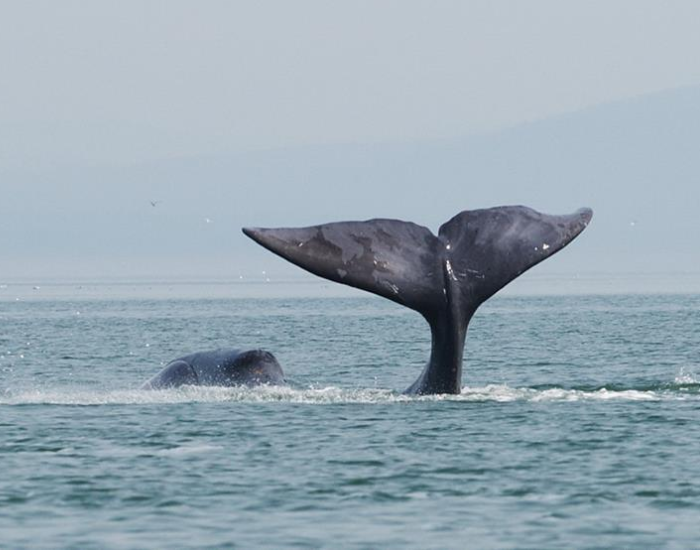
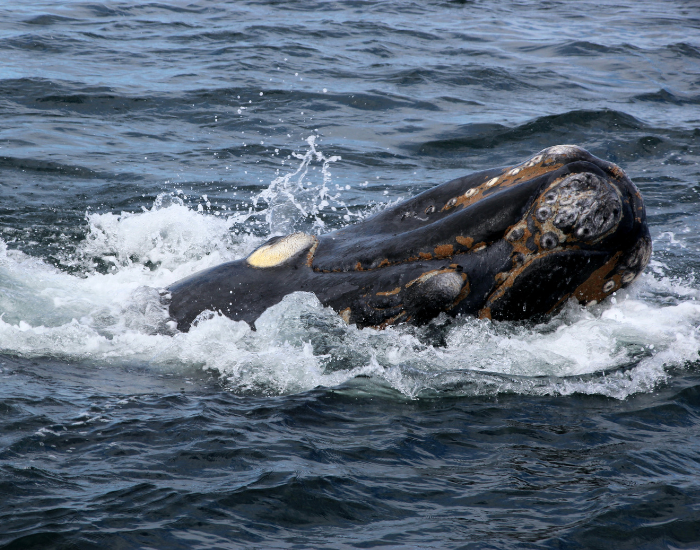
The only natural predator of the bowhead is the killer whale (Orca).In Arctic waters, including the Davis Strait, we are seeing an increase in orca attacks. As the ice disappears, Orcas gain access to waters that were previously too dangerous for their tall dorsal fins.
When an attack bowhead whales event occurs, the bowheads’ best defense is to retreat deep into thick ice where the Orcas cannot follow. Without that icy fortress, the bowhead whale becomes vulnerable. This shifting predator-prey dynamic is a direct consequence of our warming planet.
9. A History of Subsistence Whaling
For the Iñupiat and Yupik peoples of Alaska, the bowhead is more than a threatened species; it is the center of their culture. Subsistence whaling is a regulated, spiritual practice that has existed for thousands of years.
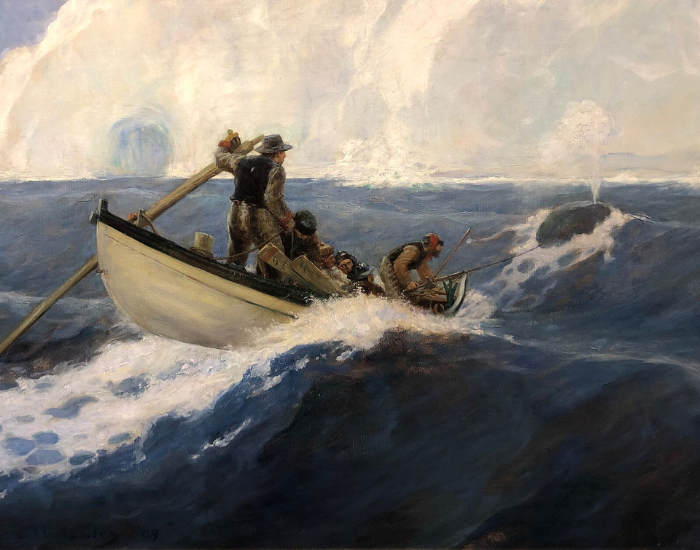
The Alaska Eskimo Whaling Commission works closely with scientists to ensure that the harvest is sustainable. Unlike the dark days of commercial bowhead whaling in the 19th century, which nearly wiped out the species, modern subsistence practices are based on deep respect and biological quotas. This partnership is a gold standard for how indigenous knowledge and marine mammal science can coexist.
10. The Baffin Bay Migration
The Baffin Bay and Baffin Island regions host another significant population of these whales. Their spring migration is a feat of endurance. They follow the retreating ice edge, moving through the Canadian Arctic Archipelago to reach their summer feeding grounds.
I’ve been fascinated by how these whales use their senses to navigate. They likely use a combination of acoustic “ice-mapping” and perhaps even magnetoreception to find their way through the dark, frozen labyrinth of the North Atlantic.
11. Resilience in the Face of Climate Change
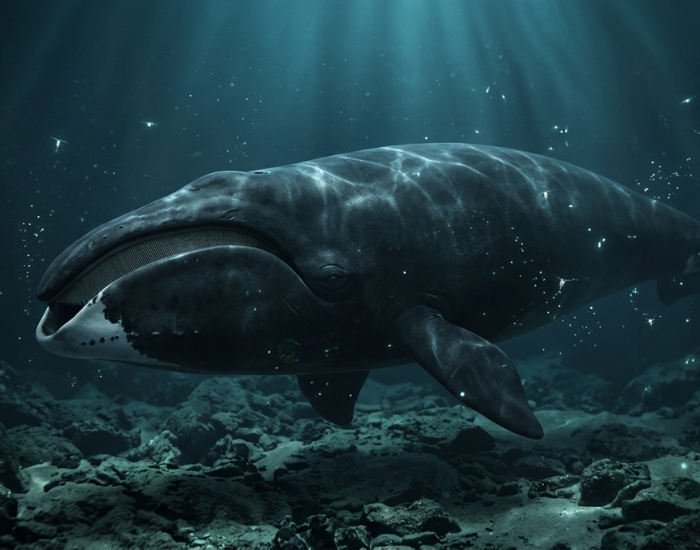
There is a common misconception that all arctic ecosystems will immediately collapse as the ice melts. While the situation is dire for some animals like the polar bear, the bowhead whale has shown surprising resilience. In some areas, the bowhead whale populations are actually increasing becauss reduced ice cover has led to increased phytoplankton blooms, temporarily boosting prey availability.
However, this is a double-edged sword. More open water means more fishing gear entanglement and more ship strikes. The International Whaling Commission monitors these threats closely. We have to ask ourselves: are we traded a frozen home for a crowded, noisy one?
12. Are They the “Leviathan”?
Cryptozoologists often wonder: Is the Leviathan whale still alive? While the biblical Leviathan is a myth, the bowhead is the closest real-world equivalent to a prehistoric sea monster. With its massive mouth and ancient lifespan, it bridges the gap between the world of the dinosaurs and the modern age.
They are the ultimate survivors. They survived the commercial whaling moratorium era, they survived the transition out of the last ice age, and now they are facing the greatest challenge of all: the Anthropocene. To look into the eye of a bowhead is to look at someone who might have seen the world before the industrial revolution.
FAQs about Bowhead Whales
The current bowhead whales population is estimated to be around 25,000 individuals globally. The Western Arctic stock is the healthiest, with over 16,000 whales, and has been growing at a steady rate since the end of heavy commercial whaling.
Yes, bowhead whales have historically been classified as an endangered species due to extensive commercial whaling. The United States listed all bowhead whales as endangered under the Endangered Species Conservation Act in 1970 and the Endangered Species Act in 1973. Some populations, such as the East Greenland-Svalbard-Barents Sea subpopulation, remain listed as endangered.
While the bowhead whale is generally shy and avoids humans, the Gray whale is widely considered the “friendliest.” In places like San Ignacio Lagoon, Gray whales are known to actively seek out human interaction, unlike the elusive bowhead.
The bowhead whale is the only mammal confirmed to have lived over 200 years.. Scientists use amino acid racemization in the eye lenses and the presence of ancient harpoon points to determine these incredible ages.
The Future of the Bowhead
The bowhead whale represents the sheer endurance of life. Every time I see a humpback whale tail-slap or a blue whale blow, I am reminded that our oceans are full of giants we are only just beginning to understand. The bowhead, with its 200-year perspective, reminds us that conservation isn’t just about the next five years; it’s about the next two centuries.
If we want these “bullhead whales” to continue their improvisational jazz under the ice, we must address climate change and the encroachment of underwater noise. They have survived us once; let’s make sure they don’t have to survive us again.
Bowhead Whale Biology & Science Quiz
Ten study questions covering bowhead longevity, skull adaptations, icebreaking mechanics, vocalizations, and conservation status. Test your retention!
Multiple Choice
References:
Bauer, G. B., Fuller, M., Perry, A., Dunn, J. R., & Zoeger, J. (1985). Magnetoreception and biomineralization of magnetite in cetaceans. In J. L. Kirschvink, D. S. Jones, & B. J. MacFadden (Eds.), Magnetite biomineralization and magnetoreception in organisms: Topics in geobiology (Vol. 5, pp. 489–507). Springer. https://doi.org/10.1007/978-1-4613-0313-8_24
Firsanov, D., Zacher, M., Tian, X., & et al. (2025). Evidence for improved DNA repair in the long-lived bowhead whale. Nature, 648(8012), 717–725. https://doi.org/10.1038/s41586-025-09694-5
Ferguson, S. H., Higdon, J. W., & Westdal, K. H. (2012). Prey items and predation behavior of killer whales (Orcinus orca) in Nunavut, Canada based on Inuit hunter interviews. Aquatic biosystems, 8, 3. https://doi.org/10.1186/2046-9063-8-3
Keane, M., et al., (2015). Insights into the evolution of longevity from the bowhead whale genome. Cell reports, 10(1), 112–122. https://doi.org/10.1016/j.celrep.2014.12.008
Nowak, B. V., Lydersen, C., Heide-Jørgensen, M. P., Acquarone, M., Ahonen, H., Vacquié-Garcia, J., & Kovacs, K. M. (2026). Endangered bowhead whales might buffer climate change with individual variability in movement patterns. Scientific Reports, 16, 6309. https://doi.org/10.1038/s41598-026-36908-1
Stafford, K. M., Citta, J. J., Okkonen, S. R., & Zhang, J. (2021). Bowhead and beluga whale acoustic detections in the western Beaufort Sea 2008-2018. PloS one, 16(6), e0253929. https://doi.org/10.1371/journal.pone.0253929
Wetzel, D. L., Reynolds, J. E., Mercurio, P., Givens, G. H., Pulster, E. L., & George, J. C. (2017). Age estimation for bowhead whales (Balaena mysticetus) using aspartic acid racemisation with enhanced hydrolysis and derivatisation procedures. Journal of Cetacean Research and Management, 17(1). https://doi.org/10.47536/jcrm.v17i1.426