
Not matter what you are doing right now, but somewhere in the icy depths of the Arctic Ocean, a massive shark is slowly cruising through the darkness, a shark that was already swimming when Shakespeare was writing his plays, when the Mayflower landed in America, maybe even when Galileo was peering through his telescope. This isn’t science fiction; this is the reality of the Greenland shark, one of nature’s most extraordinary sharks species, and creatures in general, and quite possibly the longest-living vertebrate on our planet.
The Greenland shark (Somniosus microcephalus) challenges everything we think we know about aging, survival, and life in extreme environments. These gentle giants of the Arctic have captured the attention of scientists worldwide, not just because of their impressive size, but because they might hold the secrets to longevity that could revolutionize our understanding of aging itself.
1. Ancient Swimmers in the Arctic
Somewhere in the icy depths of the Arctic Ocean, a massive shark slowly cruises through the darkness, a shark that may have been alive when Shakespeare was writing plays. This is the Greenland shark, likely the longest-living vertebrate on Earth.

2. Arctic Adaptations and Biology
The Greenland shark (Somniosus microcephalus) challenges everything we know about survival. With a slow metabolism and tolerance for extreme cold, it thrives in waters just above freezing and serves as a living time capsule for marine research.
3. They Have many Nicknames due to Their Slow Movement
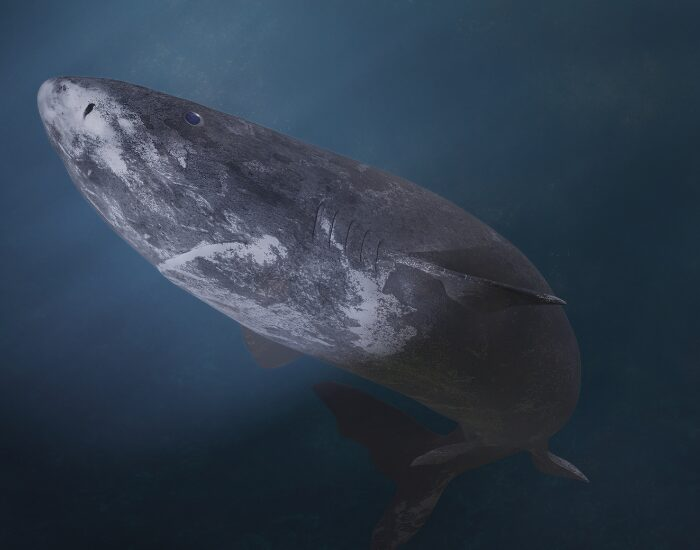
Known as “sleeper sharks” or “gurry sharks,” Greenland sharks are slow-moving giants adapted to the deep, dark cold. Despite their sluggish pace, they thrive in conditions lethal to most marine life.

4. Incredible Physical Features – Built for Survival
These sharks grow up to 6.4 meters and 1,000 kg. They have small eyes often damaged by parasites, a stubby snout, and toxic flesh due to TMAO—which Icelanders ferment into the dish hákarl.

5. They Can Live Very Deep
Greenland sharks are found in the Arctic and North Atlantic, from Greenland to Canada, and as far south as the Caribbean in deep waters. They inhabit depths up to 1,200 meters and adapt to different environments.
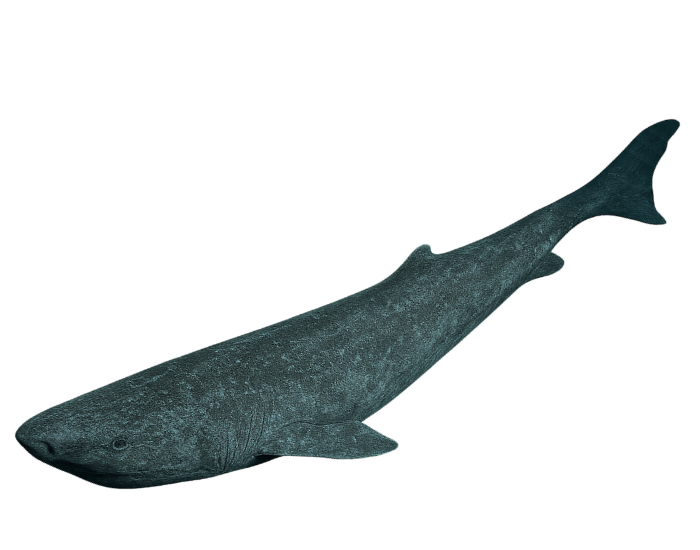
6. Feeding Strategy
These apex predators and scavengers consume cod, seals, and even reindeer carcasses. They hunt using stealth and scent, making use of their slow metabolism to conserve energy in a food-scarce ecosystem.
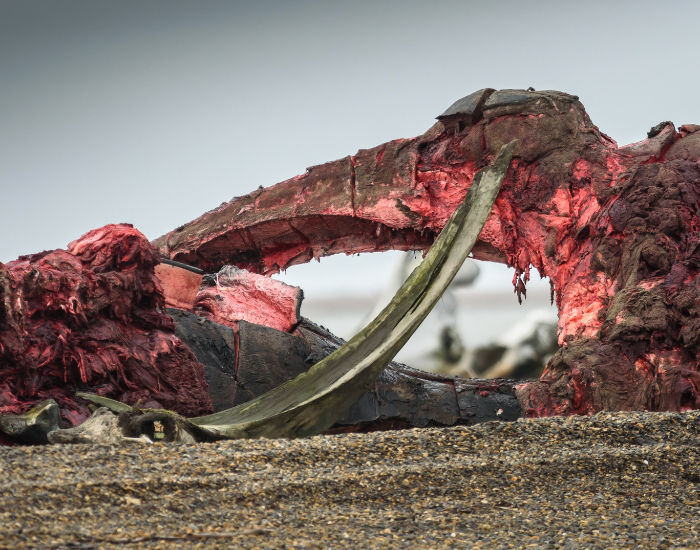
7. Longest-lived vertebrate known: likely 250–500+ years
Greenland sharks can live 400+ years. Scientists use radiocarbon dating of eye lens proteins to determine age, with one specimen estimated at 392 years old. They may reach sexual maturity at 100–150 years old.
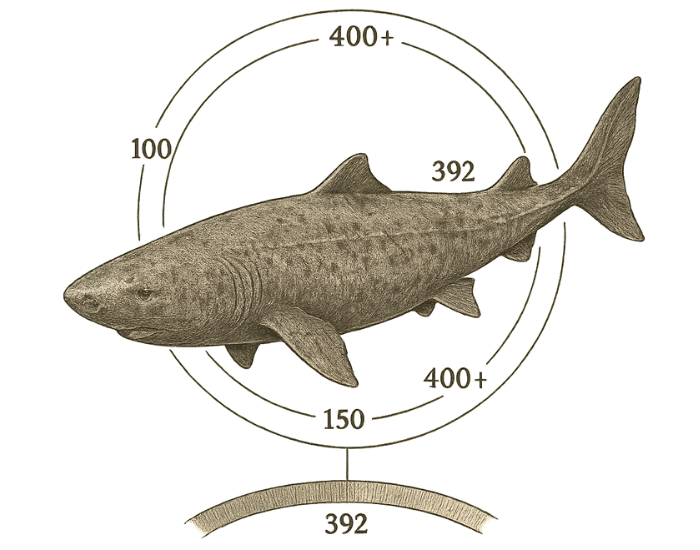
8. Cellular Clues to Aging
Their stable metabolic rate, efficient DNA repair systems, and possible telomere preservation mechanisms contribute to their longevity, sparking interest in anti-aging research.
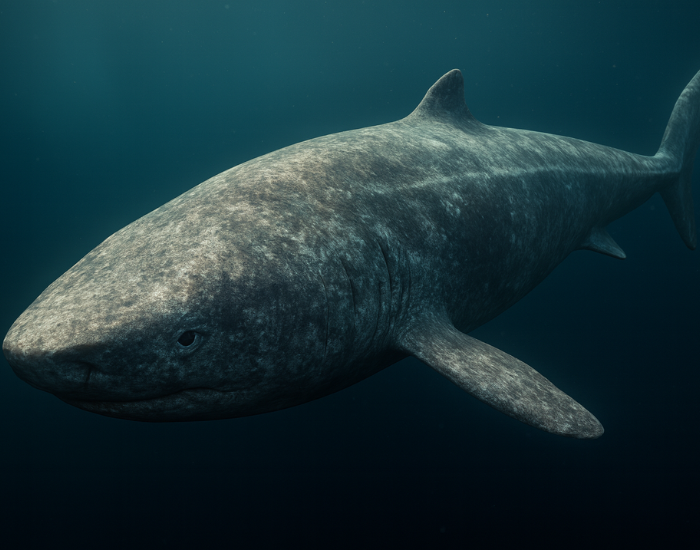
9. Conservation Concerns
Despite their adaptations, Greenland sharks are vulnerable. Bycatch, climate change, and overfishing of prey threaten their survival. Their slow reproduction rate makes recovery from losses difficult.
10. Cultural and Scientific Value
Greenland sharks hold cultural significance for Inuit communities and are a key species for Arctic conservation. Research organizations are working to map their movements and protect their habitats.
11. Curious Parasites and Bioluminescence
Their eyes are often infected by copepods (Ommatokoita elongata), potentially aiding in bioluminescent prey attraction. Most are functionally blind and rely on scent and vibration to hunt.

12. Future Research Frontiers
Scientists are exploring how these sharks resist aging, adapt to cold, and dive rapidly. Interdisciplinary studies across physiology, ecology, and genomics aim to uncover secrets of life in extreme environments.
Still interested? Keep reading…!
The Arctic’s Ancient Giant
The Greenland shark isn’t your typical shark. While most people picture sharks as sleek, fast-moving predators, the Greenland shark takes a completely different approach to life. Also known as “sleeper sharks” or “gurry sharks,” these remarkable creatures have earned their nicknames through their incredibly slow, almost lethargic movement through the frigid waters of the North Atlantic.
What makes the Greenland shark truly special isn’t just its greenland shark lifespan—though that’s certainly remarkable, it’s how perfectly adapted these creatures are to one of Earth’s harshest environments. Living in waters where temperatures hover just above freezing, these arctic sharks have evolved unique physiological adaptations that allow them not just to survive, but to thrive in conditions that would be lethal to most other marine life.

The species plays a crucial role in marine biology and polar biology research. Scientists studying fish biology and feeding ecology have found that Greenland sharks serve as living time capsules, offering insights into how marine ecosystems have changed over centuries. Their presence in the North Atlantic ecosystem connects them with various other marine mammals and fish species, making them integral to understanding the complex web of Arctic marine life.
As one of the longest-living vertebrates on Earth, the Greenland shark (Somniosus microcephalus; historically also known as scymnus glacialis and squalus borealis) has become a subject of intense scientific investigation. Many aspects of the Greenland shark’s biology, ecology, and physiology have been scientifically investigated, providing valuable data on its unique adaptations. Researchers are particularly interested in understanding how these creatures achieve their extraordinary longevity and what this might teach us about aging, metabolism, and survival in extreme environments.
Physical Characteristics: Built for the Arctic
When you first encounter a Greenland shark, you might be surprised by how different they look from the sharks you see in movies. These massive creatures can grow up to 6.4 meters (21 feet) long and weigh as much as 1,000 kg (2,100 pounds), making them one of the largest shark species in the world. But unlike the streamlined great white or the imposing tiger shark, Greenland sharks have a distinctly different build.
Their most striking features include a short, rounded snout and remarkably small shark’s eyes relative to their body size, a characteristic that becomes even more significant when you learn about the unique challenges facing the shark’s eyes. These eyes are often affected by parasitic crustaceans, which can cause damage or almost complete blindness, yet this does not seem to impair the Greenland shark’s ability to survive and hunt, as they rely heavily on other senses. They also have small dorsal and pectoral fins that point outward, giving them a somewhat stubby appearance that’s perfectly suited to their slow-moving lifestyle.
One of the most fascinating aspects of Greenland shark biology is their flesh composition. The shark’s body contains high concentrations of trimethylamine oxide (TMAO), a compound that helps them regulate their body fluids in the cold, high-pressure environment of the deep Arctic waters. However, this adaptation comes with an interesting side effect: their flesh is toxic to humans unless it undergoes a specific fermentation process, which is exactly what happens in the traditional Icelandic dish called hákarl.
Habitat and Behavior: Masters of the Arctic Deep
The Greenland shark calls some of Earth’s most inhospitable waters home. These remarkable arctic sharks inhabit the frigid waters of the Arctic and North Atlantic Ocean, thriving in temperatures that range from a bone-chilling 34°F to a relatively balmy 68°F. They’re found throughout Greenland waters, off the coasts of Canada and Iceland, and along various coasts, including the North Atlantic coast. They have even been spotted as far south as the Caribbean and the Gulf of Mexico, though these southern sightings are rare and usually occur in very deep, cold water. Pond inlets are also important habitat features influencing their distribution, especially in remote Arctic and Atlantic regions.
What’s truly impressive about their habitat preferences is their depth range. Greenland sharks have been found everywhere from just below the surface to depths of 3,937 feet (1,200 meters). This incredible depth tolerance allows them to follow food sources and optimal temperatures throughout the water column, making them one of the most adaptable deep-sea predators.
Their behavior patterns are as unique as their physical adaptations. As apex predators and opportunistic scavengers, Greenland sharks have developed a feeding strategy that’s perfectly suited to their slow-motion lifestyle. Rather than chasing down fast-moving prey like other sharks, they rely on stealth and patience. Their diet includes various fishes, such as cod and haddock, as well as fish, seals, marine mammals, and they’re not above scavenging large carcasses, including the occasional moose or reindeer that might have fallen through ice or drowned.
The feeding ecology of these creatures is highly opportunistic, reflecting their incredible adaptability. In the harsh Arctic environment, you can’t afford to be picky about your next meal. This flexibility has allowed Greenland sharks to maintain stable populations even as their environment has changed over the centuries.
Longevity and Aging: The 400-Year Mystery
Here’s where the Greenland shark becomes truly extraordinary. Scientists estimate that these creatures can live up to 400 years or more, with some research suggesting that the greenland shark age might extend even beyond 500 years. To put this in perspective, a Greenland shark alive today might have been born before the United States declared independence. Some of these sharks swimming in Arctic waters right now could have been alive during the reign of King James I of England.
But how do scientists determine the greenland shark age? Traditional methods of aging fish, like counting growth rings in otoliths (ear bones), don’t work with Greenland sharks because their otoliths don’t form clear annual rings. Instead, researchers have turned to a fascinating method: carbon dating proteins in the shark’s eyes.
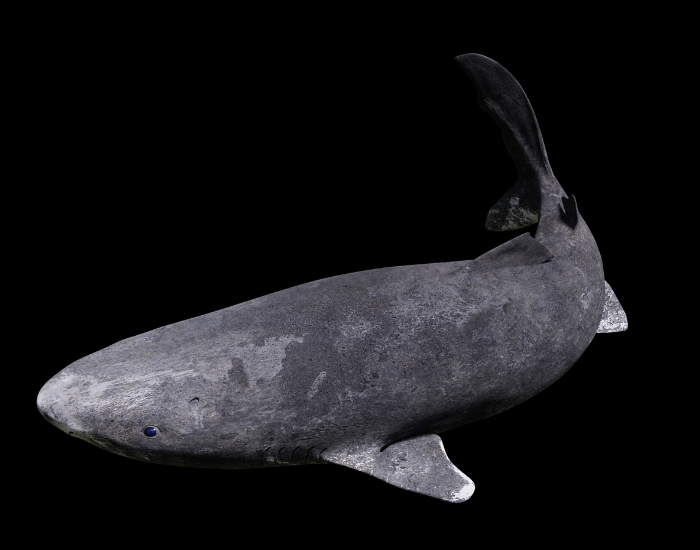
The secret to their incredible greenland shark lifespan lies in their extremely slow metabolism. Living in the frigid Arctic waters, these sharks have evolved to operate on an energy-saving mode that would make a hibernating bear jealous. Their slow metabolism means they grow incredibly slowly, only about 1 centimeter per year, and age at a similarly glacial pace.
Recent research has shown that unlike many animals whose metabolic rates decline with age, Greenland sharks maintain a remarkably stable metabolic rate throughout their lives. This metabolic consistency might be one of the keys to their extraordinary longevity, allowing them to avoid many of the cellular damage processes that cause aging in other animals.
Conservation Status: Protecting a Living Treasure
Given their incredible Greenland shark life expectancy, you might think these ancient mariners can handle any challenge. Unfortunately, their very longevity makes them uniquely vulnerable to modern threats. The Greenland shark is currently classified as near threatened, and several factors contribute to their precarious status.
Bycatch poses the primary threat to Greenland sharks, as fishing nets intended for other species often accidentally catch them. Because these sharks grow so slowly and don’t reproduce until they’re over a century old, even small numbers of accidental deaths can have devastating long-term impacts on the population. When a fishing net accidentally captures a 200-year-old breeding female, it’s not just losing one individual, it’s potentially losing decades of future offspring. Historically, Greenland sharks were also hunted for their liver oil, which further impacted their populations.
Climate change presents another significant challenge for these arctic sharks. As Arctic waters warm, the delicate balance of their ecosystem is shifting. Warmer temperatures can affect their metabolism, alter their food sources, and potentially push them into deeper, less productive waters. For a species that has spent millions of years adapting to stable, cold conditions, rapid environmental changes pose serious risks.
Conservation efforts for the Greenland shark focus on several key areas. Fisheries management initiatives aim to reduce bycatch through better fishing practices and gear modifications. International cooperation is crucial since these sharks migrate across national boundaries throughout their range in the North Atlantic.
Unique Characteristics and Traits: Nature’s Peculiarities
The more scientists study Greenland sharks, the more unique characteristics they discover. These creatures seem to challenge conventional wisdom about marine life at every turn, offering insights that could revolutionize our understanding of biology and aging.
One of the most intriguing aspects of Greenland shark biology is their relationship with parasites, particularly their Greenland sharks eyes. Nearly every Greenland shark examined by scientists has small, yellowish parasitic copepods attached to their eyes. These parasites, called Ommatokoita elongata, hang like streamers from the sharks’ corneas. While this might sound horrifying, the relationship appears to be more complex than simple parasitism.
The high concentrations of urea and TMAO in their flesh serve multiple purposes beyond just osmoregulation. These compounds act as natural antifreeze, preventing ice crystals from forming in their tissues even in sub-zero water temperatures. However, these same compounds make their flesh toxic to most other animals, including humans.
The traditional fermentation process used to create hákarl, the Icelandic delicacy made from Greenland shark meat, involves burying the shark meat for several months to allow the toxic compounds to break down. This process reflects centuries of indigenous knowledge about how to safely consume these remarkable creatures.
Recent studies have revealed that Greenland sharks have the ability to dive to extreme depths quickly and efficiently. Using specialized diving equipment, researchers have tracked individual sharks as they rapidly descend over 1,000 feet in just a few minutes, suggesting that they’re far more active and capable than their sluggish reputation suggests.
The Science Behind Their Incredible Longevity
Understanding why Greenland sharks live so long has become one of the most fascinating areas of aging research. These creatures don’t just live longer than other sharks, they live longer than virtually any other vertebrate animal on Earth. The greenland shark lifespan challenges our basic assumptions about biological limits and offers potential insights into human aging.
The key to their longevity appears to be their incredibly slow metabolism combined with the cold environment they inhabit. Cold temperatures slow down chemical reactions, including those that cause cellular damage and aging. Combined with their slow metabolic rate, this creates a perfect storm for longevity.

Recent research has focused on the sharks’ cellular repair mechanisms. Unlike many animals that accumulate cellular damage over time, Greenland sharks appear to have exceptionally efficient DNA repair systems and cellular maintenance processes. Their cells seem to resist the kinds of damage that typically accumulate with age, allowing them to maintain function for centuries.
The study of Greenland shark aging has implications far beyond marine biology. Understanding how these creatures avoid age-related diseases and maintain cellular function for centuries could provide insights into human aging and longevity research. Some researchers believe that studying these sharks could lead to breakthroughs in treating age-related diseases in humans.
Exploring the Frontiers: Future Research on Greenland Sharks
The story of the Greenland shark (Somniosus microcephalus) is far from complete. As one of the most mysterious and long-lived species in the ocean, this remarkable shark species continues to captivate scientists and researchers eager to unlock its secrets. With some individuals believed to live up to 500 years, the Greenland shark stands as the longest living vertebrate known to science, making it a living archive of the North Atlantic Ocean’s history.
Researchers on Greenland sharks plan to explore the frontiers of marine biology, fish biology, and polar biology even further. One of the most exciting areas of study is their unique physiology, which allows them to thrive in deep sea environments where few other sharks can survive. Scientists aim to understand how the sharks’ very slow metabolism, specialized liver oil, and high levels of trimethylamine oxide help them endure the cold, dark waters of the Arctic and North Atlantic.
Frequently Asked Questions About Greenland Sharks
Yes, scientific evidence strongly supports that Greenland sharks can live at least 400 years, with some individuals potentially living even longer. The oldest verified specimen was estimated to be 392 years old using radiocarbon dating of eye lens proteins.
No, Greenland sharks are not aggressive toward humans. They’re actually quite docile and pose no threat to people. Their slow movement and deep-water habitat mean encounters with humans are extremely rare.
While not technically blind, most Greenland sharks have severely impaired vision due to parasites that attach to their eyes. They compensate with an excellent sense of smell and other sensory adaptations.
Scientists determine greenland shark age by radiocarbon dating proteins in the center of the shark’s eye lens, which forms during embryonic development and remains unchanged throughout life.
Arctic sharks like the Greenland shark are opportunistic feeders, eating fish, seals, marine mammals, and scavenging large carcasses. Their diet is highly varied and depends on seasonal availability.
The oldest verified Greenland shark was estimated to be 392 years old, though scientists believe some individuals may live even longer, potentially reaching 500 years or more.
Guardians of Arctic Secrets
The Greenland shark represents one of nature’s most remarkable success stories, a creature so perfectly adapted to its environment that it has remained virtually unchanged for millions of years. Their incredible greenland shark lifespan offers us a unique window into the possibilities of longevity and the secrets of successful aging. As we face rapid environmental changes and seek to understand the limits of life itself.
The conservation of Greenland sharks isn’t just about protecting a single species, it’s about preserving a living link to our planet’s past and maintaining the integrity of Arctic ecosystems that depend on these apex predators. Every individual shark represents centuries of accumulated experience, genetic wisdom, and ecological knowledge that, once lost, cannot be replaced.
As we continue to study these remarkable creatures, we’re not just learning about shark biology, we’re gaining insights that could revolutionize our understanding of aging, longevity, and life in extreme environments. The arctic shark swimming slowly through the depths of the Greenland Sea today might have stories to tell that span centuries, if only we could learn to listen.
The next time you think about the mysteries of our oceans, remember the Greenland shark—proof that in the depths of our world’s coldest waters, life finds a way not just to survive, but to persist for centuries, carrying the secrets of longevity through the dark Arctic seas.