The Wildlife Nomads team has logged many hours in the water with hammerheads in Galapagos, zebra sharks on sandy reef floors in Australia, nurse sharks in warm Caribbean shallows, and whale sharks in open water. Yet there’s one shark species I keep circling back to in my research, one I haven’t met face-to-face. Salmon sharks (Lamna ditropis) don’t get the press that great whites or makos enjoy. That’s a mistake. These stocky, warm-blooded hunters are among the most remarkable shark species in the sea. Here are the salmon shark facts that prove it.

1. They Look Like Mini Great Whites… And That’s Not a Coincidence
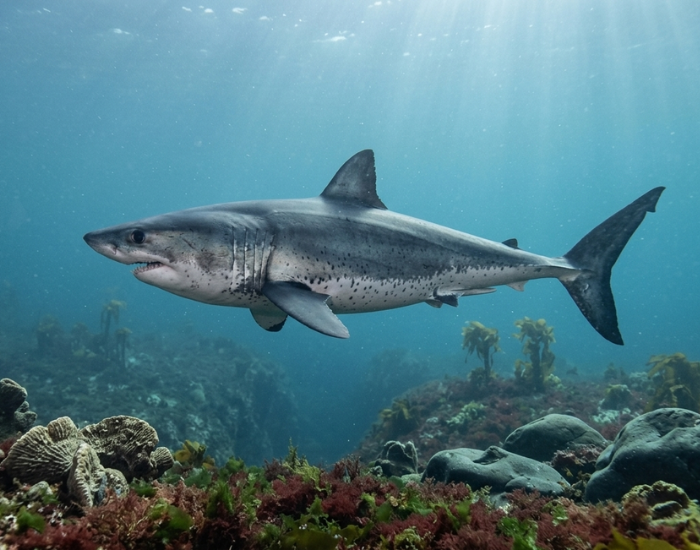
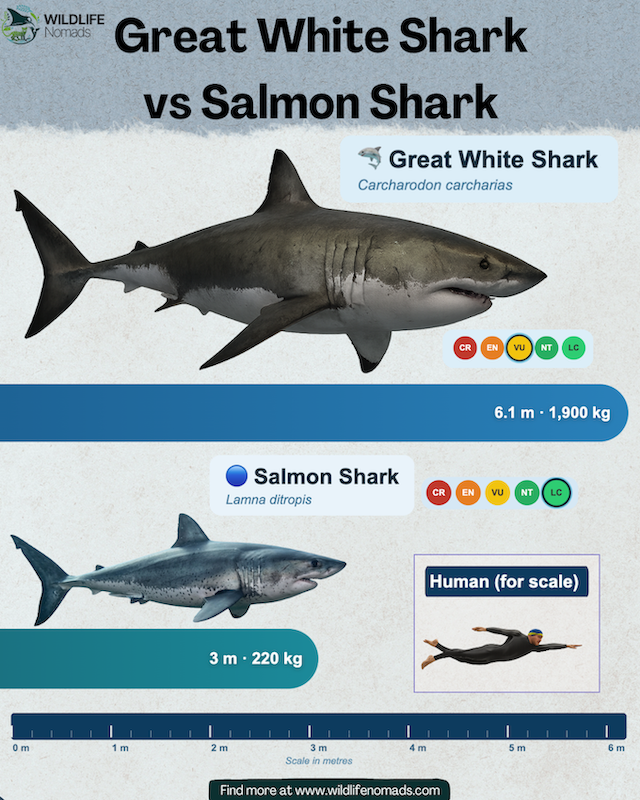
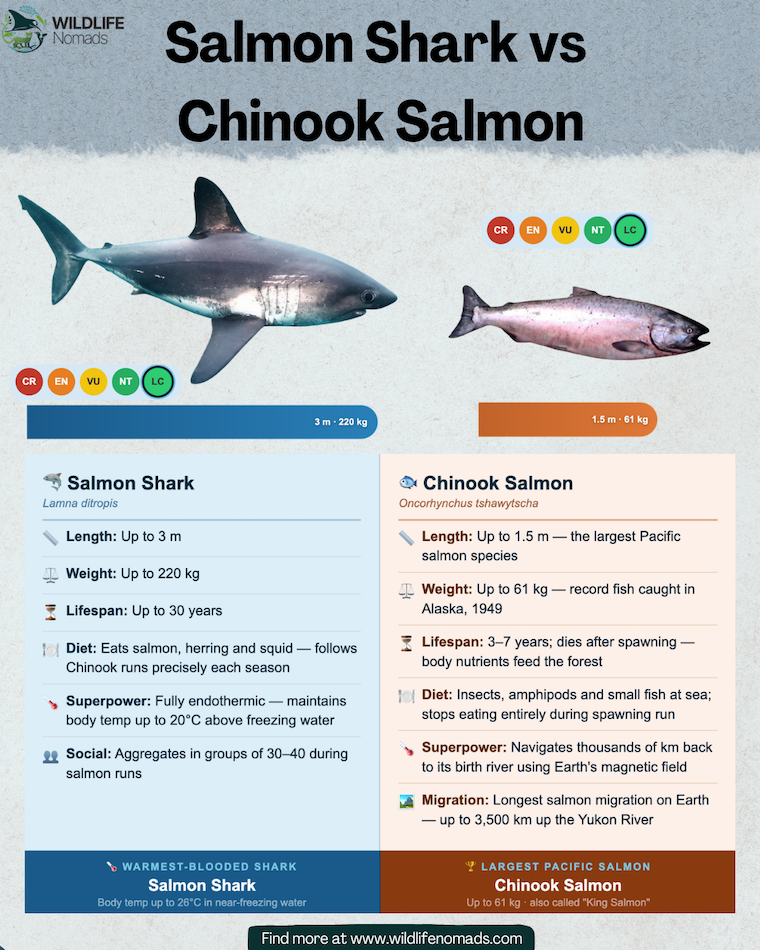
People confuse the salmon shark with the great white constantly. Both share a torpedo-shaped body, a dark dorsal surface, and a pale belly. The resemblance runs so deep that this species has earned the nickname “mini great white.” However, the salmon shark is considerably smaller than its famous cousin. Most adults measure 200–260 cm (6.6–8.6 ft) and weigh around 220 kg (485 lb). Great whites, among the larger sharks in the ocean, exceed 6 meters and weigh over 1,800 kg.
The species belongs to the order Lamniformes, the mackerel sharks, alongside thresher sharks and makos. Key differences help separate them from great whites. Salmon sharks have a shorter, blunter snout and a large first dorsal fin. Their undersides display dark blotches, a feature absent in great whites. They also have a secondary tail keel and lateral cusplets on their teeth. Compared to other sharks in the lamnid family, the salmon shark exists in a unique size category, smaller than the great white but stockier than the porbeagle.
2. A Constant Body Temperature Sets Them Apart
Here’s where things get extraordinary. Unlike most other sharks, the salmon shark maintains a constant body temperature far above the surrounding ocean. Most fish are ectothermic, their internal temperature matches the cold water around them. This species breaks that rule entirely, with the ability to maintain warmth across its entire body.
Salmon sharks achieve this through vascular structures called retia mirabilia, Latin for “wonderful nets.” These counter-current heat exchangers sit in the muscles, brain, eyes, and viscera. Cold blood coming from the gills passes alongside warm blood leaving the body core. Heat transfers between the two streams until the cold blood coming inward reaches about the same temperature as the tissue it’s entering. The result is a closed loop that traps warmth internally.
Research by Goldman et al. (2004) found that adult salmon sharks maintain stomach temperature between 25.0°C and 25.7°C, even in cold water as frigid as 5°C. That’s over 21°C above ambient, allowing salmon sharks to sustain peak muscle performance where other predators slow down. This body temperature advantage is the reason one salmon shark can outswim an entire school of fleeing salmon.
3. Their Range Spans the Western North Pacific to British Columbia and Beyond
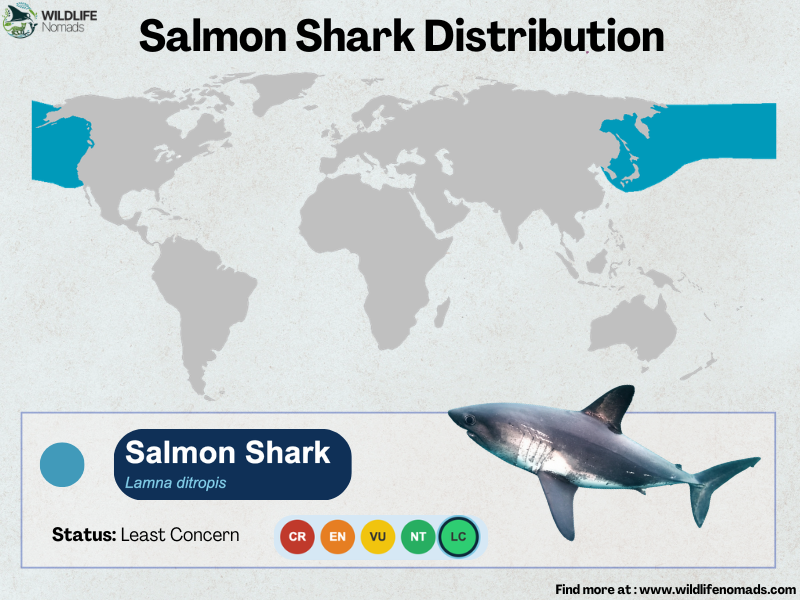
The salmon shark occurs across a vast stretch of the Pacific Ocean. In the western North Pacific, the species inhabits Japanese waters, the Sea of Okhotsk, and the northwest Pacific near the Kuril Islands. In the eastern North Pacific, salmon sharks range from the Bering Sea and Gulf of Alaska south through British Columbia, the west coast of the United States, and down to northern Baja California and southern Baja California, Mexico. The species also appears in the northeast Pacific near Washington and Oregon.
The salmon shark exists across both sides of the basin, with eastern and western populations showing distinct movement patterns. Salmon sharks prefer the temperate North Pacific Ocean, specifically cool temperate waters between 2.5°C and 24°C. In the eastern central Pacific, the species appears less frequently, favoring the productive continental offshore waters closer to land.
During summer, feeding aggregations form in Alaskan coastal waters near Prince William Sound. As autumn arrives, the salmon shark migrates south along the coast. Satellite-tagged animals have revealed just how dynamic this range really is, the salmon shark migrates south in winter and returns north with warming water temperatures. These oceanic environments serve as highways for seasonal travel across the entire northern Pacific.
4. They Feed on More Than Just Salmon
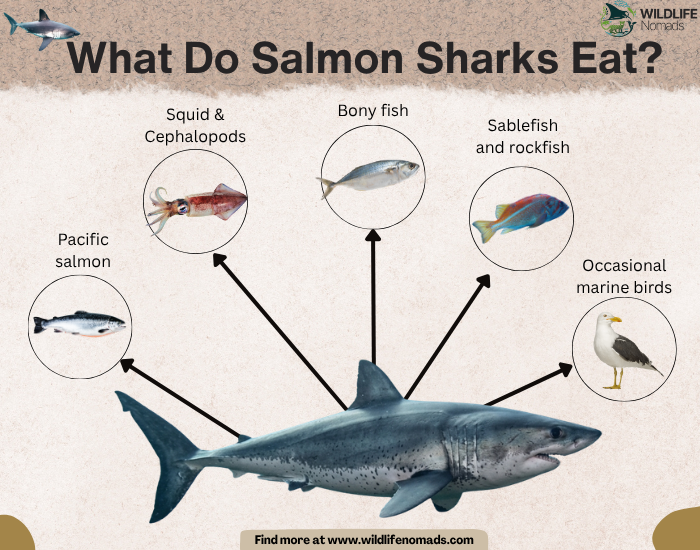
Their diet centers on Pacific salmon — pink, chum, and sockeye — but the menu extends far beyond that. The salmon shark feeds on squid, herring, sablefish, walleye pollock, and other fish throughout its range. Salmon sharks also take marine birds near the surface on occasion. In the western Pacific, Japanese waters support prey species like sardines and mackerel that supplement what salmon sharks eat.
During summer in Alaska, feeding aggregations of dozens of individuals target returning salmon runs. The salmon shark feeds aggressively during these events, using warm muscles to outpace prey in cold water. Studies from Prince William Sound estimate the species consumes substantial quantities each year. Interestingly, sea otters share these productive Alaskan coastal waters, and both benefit from the same rich ecosystem. Sea otters feed on invertebrates along the seafloor while salmon sharks hunt fish above, two apex consumers in one system.
5. How Big Are Salmon Sharks? Bigger Than Most People Expect
The average salmon shark size falls in the 6.6–8.6 foot range, but larger sharks reaching 3.7 meters (about 12 feet) and 454 kg (roughly 1,000 lb) have been recorded. Female salmon sharks grow bigger than males, a common pattern among lamnid sharks.
Salmon shark length at birth is already impressive. Newborn pups measure 84–96 cm (about 2.8–3.2 ft) and enter the world as fully formed predators. For perspective, a newborn is already the size of a mid-sized dog. With larger sharks ranging up to 12 feet at maturity, the growth from pup to adult is dramatic.
6. Salmon Sharks Breed With a Dark Reproductive Twist
Salmon sharks breed through ovoviviparity, embryos develop inside eggs that hatch within the mother’s body. Female salmon sharks carry litters of 2–5 pups after roughly nine months of gestation. Females mature at around 8–10 years of age. Males mature slightly earlier, at approximately 5–7 years. In the eastern North Pacific, males mature and then segregate from females outside breeding season. Commercial fisheries data suggests both sexes reach maturity at similar sizes.
Here’s what makes reproduction genuinely striking. Developing embryos consume unfertilized eggs inside the uterus, a process called oophagy. The pups literally eat their siblings’ potential, growing large on a diet of unfertilized eggs before birth. This strategy, shared with other lamnid sharks like great whites, ensures each pup emerges well-nourished and ready to hunt.
After birth, juveniles stay in warmer waters before gradually expanding their range. Juveniles migrating northward late in summer follow retreating prey species into the temperate North Pacific. Salmon sharks breed in cycles that sustain healthy numbers despite their low reproductive output.

7. Their Scientific Name Tells You Where to Look
The salmon shark scientific name is Lamna ditropis. The genus Lamna places it alongside porbeagle sharks, its closest relatives. The species name ditropis derives from Greek, translating roughly to “two keels”, a reference to the secondary keel on the caudal peduncle.
That double keel provides hydrodynamic stability during high-speed pursuit. When I research a species, the scientific name often tells a story. Here, the name points directly to one of the salmon shark characteristics that makes salmon sharks so efficient, their tail is engineered for explosive acceleration through cold environments.
8. They’re Not Dangerous to Humans… Despite the Family Resemblance
Are salmon sharks dangerous? No. There are zero confirmed attacks on humans. Divers encountering salmon sharks underwater have reported no aggressive behavior. Divers encountering salmon sharks in Alaskan waters describe them as curious but non-threatening. The few unverified reports likely involve misidentification with more aggressive species like the great white.
The Wildlife Nomads team has swum with hammerheads, zebra sharks, nurse sharks, and whale sharks. Fear of sharks is almost always disproportionate to actual risk. The bull shark causes far more human encounters because it frequents shallow, warm waters where people swim. By contrast, salmon sharks inhabit cold continental offshore waters far from most beachgoers.
9. What Does a Salmon Shark Look Like Up Close?
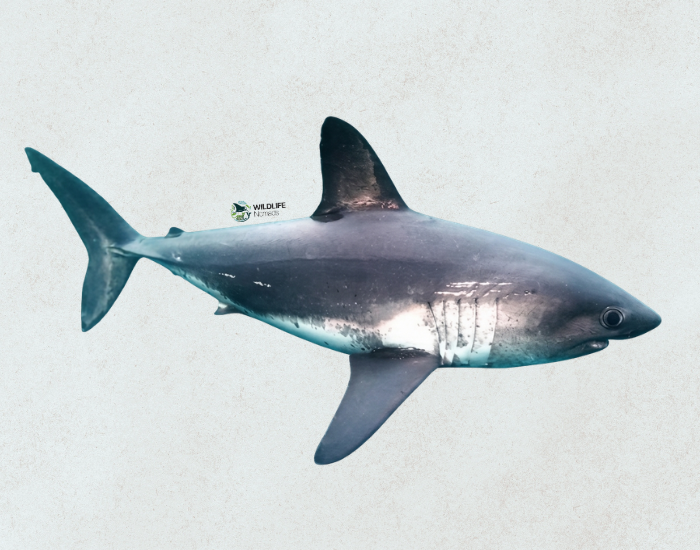
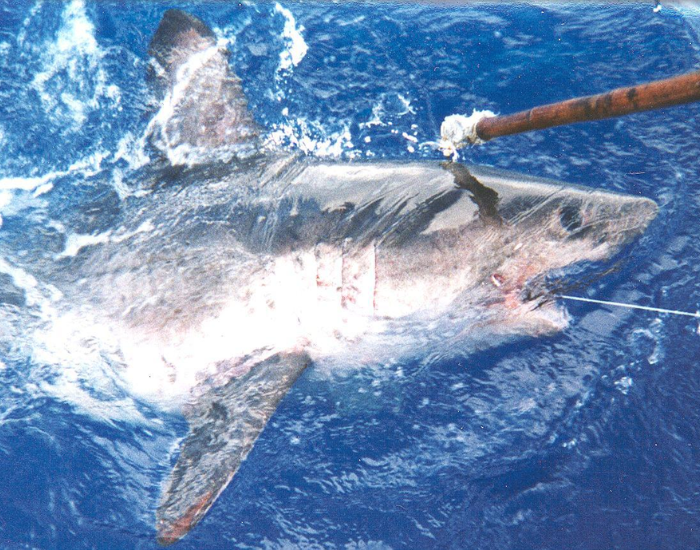
For anyone wondering what does a salmon shark look like, picture a compressed, muscular body with a conical snout. The dorsal surface ranges from dark blue-gray to black. The ventral side is white, marked with dark blotches that distinguish the species from great whites at a glance. The eyes are large, adapted for low-light conditions. The dorsal fin is tall and triangular. The teeth are narrow, designed for gripping slippery fish rather than tearing through marine mammals.
Salmon shark characteristics include long gill slits relative to body size. Long gill slits allow efficient oxygen extraction, critical for a warm-blooded predator with a high metabolic rate. Every physical feature reflects adaptation to high-speed predation in cold water.

10. How Is a Shark Different From a Salmon? More Than You’d Think
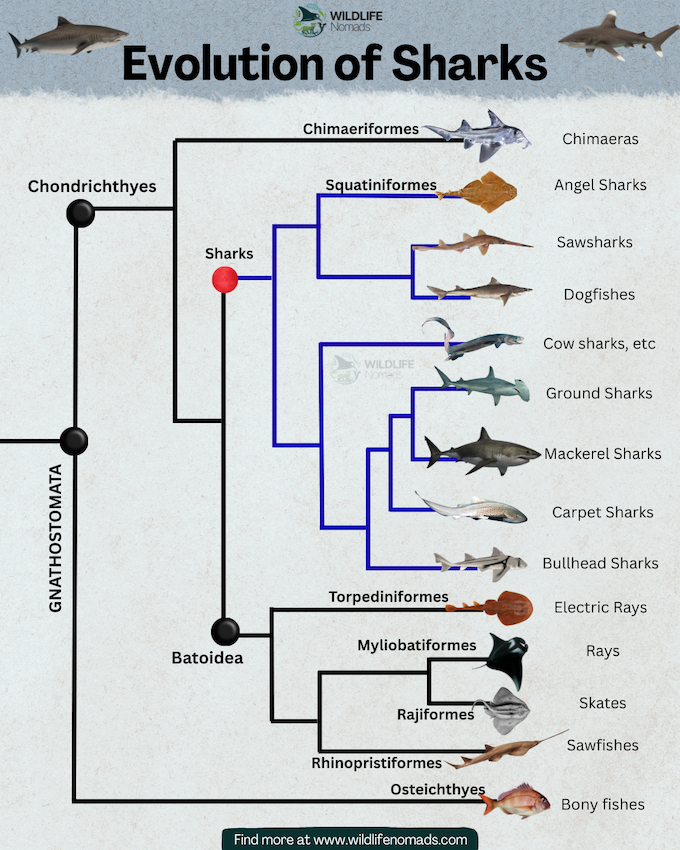
How is a shark different from a salmon? Sharks are cartilaginous fish (class Chondrichthyes) with skeletons made of cartilage. Salmon are bony fish (class Osteichthyes) with true bone skeletons. Sharks have existed for over 400 million years. Salmon evolved much more recently.
They breathe differently, too. Salmon pump water over their gills while stationary. They must keep swimming to force water across their gills, ram ventilation. Salmon lay thousands of eggs externally and die after spawning. Salmon sharks give live birth to a handful of large pups. Predator and prey, connected by ecology, separated by hundreds of millions of years.
11. Climate Change and Fishing Threaten Salmon Shark Populations
Salmon shark populations currently appear stable. The IUCN lists salmon sharks as Least Concern, and no directed commercial fishing operations target them in the northeast Pacific. However, threats are mounting. Commercial salmon gillnet fisheries and trawl operations in both the western North Pacific and eastern Pacific accidentally capture this species. The salmon shark is occasionally caught in fishing gear intended for other species. Fishing gear entanglement and bycatch from fishing vessels remain persistent problems.
Sport fishermen target the species in a small sport fishery in Alaska, but catch numbers stay low. Commercial fisheries in both the western Pacific and eastern Pacific monitor bycatch data, and marine science researchers continue tracking population numbers through satellite tagging programs.
The bigger concern is climate change. Juvenile salmon sharks are especially sensitive to shifting water temperatures in the northern Pacific. Warmer oceans could alter prey distribution, push juvenile salmon runs into new patterns, and shrink the continental offshore waters this species depends on. As someone who studies wildlife across oceanic environments, I see this pattern everywhere, species adapted to narrow thermal windows face disproportionate pressure. Sea urchins, seabirds, emperor penguins, and kelp forests all face similar disruption in these same waters.
FAQs About Salmon Sharks
They are not dangerous to humans. There are zero confirmed attacks on people. Divers have observed them underwater without aggressive behavior. Their habitat in cold, open waters of the North Pacific means encounters with swimmers are extremely rare.
Most reach 200–260 cm (6.6–8.6 ft) and weigh up to 220 kg. The largest recorded individuals measure 3.7 meters (12 ft) and weigh 454 kg. Females grow larger than males. Newborn pups measure 84–96 cm at birth.
Yes. Both belong to the order Lamniformes (mackerel sharks) and share a common ancestor. However, the salmon shark is much smaller and eats fish rather than marine mammals. Its closest relative is the porbeagle shark.

The Predator That Deserves Your Attention
The salmon shark doesn’t carry the cultural mythology of the great white or the speed record of the mako. What this species has is arguably more impressive, a body engineered to dominate where other sharks can’t survive. Its warm-blooded physiology, explosive hunting ability, and command of the North Pacific make them one of the most fascinating predators in the ocean.
If you’ve enjoyed these facts, explore our deep dives on hammerhead sharks and bull sharks for more species that challenge what you think you know. Drop a comment if you’ve ever spotted a salmon shark in the wild — I’d love to hear about it.
References:
Carlisle, A. B., Goldman, K. J., Litvin, S. Y., Madigan, D. J., Finnerty, J. R., Veit-Haibach, P., & Block, B. A. (2011). Seasonal changes in depth distribution of salmon sharks (Lamna ditropis) in Alaskan waters: implications for foraging ecology. Canadian Journal of Fisheries and Aquatic Sciences, 68(11), 1999–2009. https://doi.org/10.1139/f2011-105
Carlisle, A. B., Litvin, S. Y., Hazen, E. L., Madigan, D. J., Goldman, K. J., Lea, R. N., & Block, B. A. (2025). Ontogenetic and sex variation in the foraging ecology of the salmon shark (Lamna ditropis) in the California Current ecosystem. Marine Biology, 172, 48. https://doi.org/10.1007/s00227-025-04602-x
Coffey, D. M., Carlisle, A. B., Hazen, E. L., & Block, B. A. (2017). Oceanographic drivers of the vertical distribution of a highly migratory, endothermic shark. Scientific Reports, 7, 10434. https://doi.org/10.1038/s41598-017-11059-6
Goldman, K. J., Anderson, S. D., Latour, R. J., & Musick, J. A. (2004). Homeothermy in adult salmon sharks, Lamna ditropis. Environmental Biology of Fishes, 71(4), 403–411. https://doi.org/10.1007/s10641-004-6588-9
Hulbert, L. B., Aires-da-Silva, A. M., Gallucci, V. F., & Rice, J. S. (2005). Seasonal foraging movements and migratory patterns of female Lamna ditropis tagged in Prince William Sound, Alaska. Journal of Fish Biology, 67(2), 490–509. https://doi.org/10.1111/j.0022-1112.2005.00757.x
McGrath C. (2023). Inside the Shark Nursery: The Evolution of Live Birth in Cartilaginous Fish. Genome Biology and Evolution, 15(3), evad037. https://doi.org/10.1093/gbe/evad037
Weng, K. C., Castilho, P. C., Morrissette, J. M., Landeira-Fernandez, A. M., Holts, D. B., Schallert, R. J., Goldman, K. J., & Block, B. A. (2005). Satellite tagging and cardiac physiology reveal niche expansion in salmon sharks. Science, 310(5745), 104–106. https://doi.org/10.1126/science.1114616