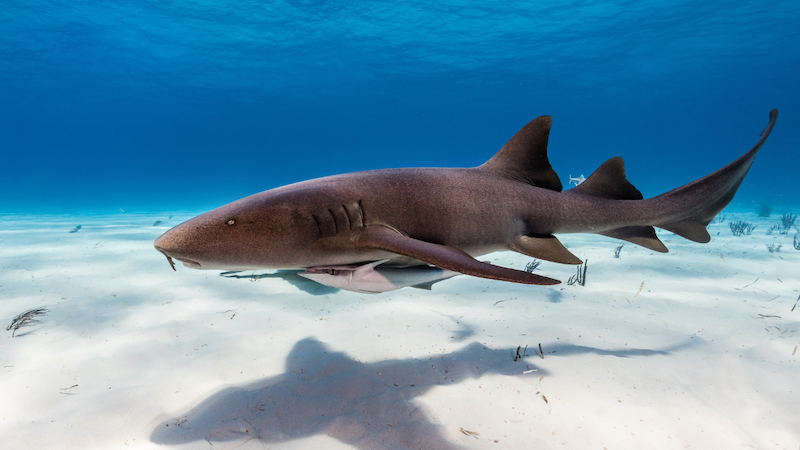
I was 18 years old, hovering about four meters underwater somewhere off the coast of Holbox, Mexico, heart pounding, mask slightly flooded, breathing way too fast through my regulator, when I saw it. Wedged under a coral ledge, completely still, was a nurse shark. A big one. Maybe 2.5 meters of pale yellow-brown muscle, those two rounded dorsal fins resting flat, the long caudal fin trailing behind it like a ribbon in still air.
It didn’t move. It just was. And somehow that stillness hit harder than any dramatic chase scene I’d imagined from nature documentaries. I stayed there watching it for what felt like ten minutes. Around me, coral fish darted through the reef and a sea turtle cruised past overhead, but honestly? The nurse shark had me completely locked in.
Years later, I still think the nurse shark is one of the most underrated sharks on the planet (alongside zebra sharks, which are another beautiful underdog shark). Not because it’s the flashiest, it’s absolutely not, but because once you actually dig into the biology, the behavior, the weird quirks of this animal, you realize it’s far more complex and fascinating than its sleepy reputation suggests.
So here are 12 nurse shark facts that I genuinely find fascinating. Not the watered-down stuff. The real, slightly weird, scientifically grounded deep-dive version.
1. The Scientific Name Means “Hinged Mouth with Curls”
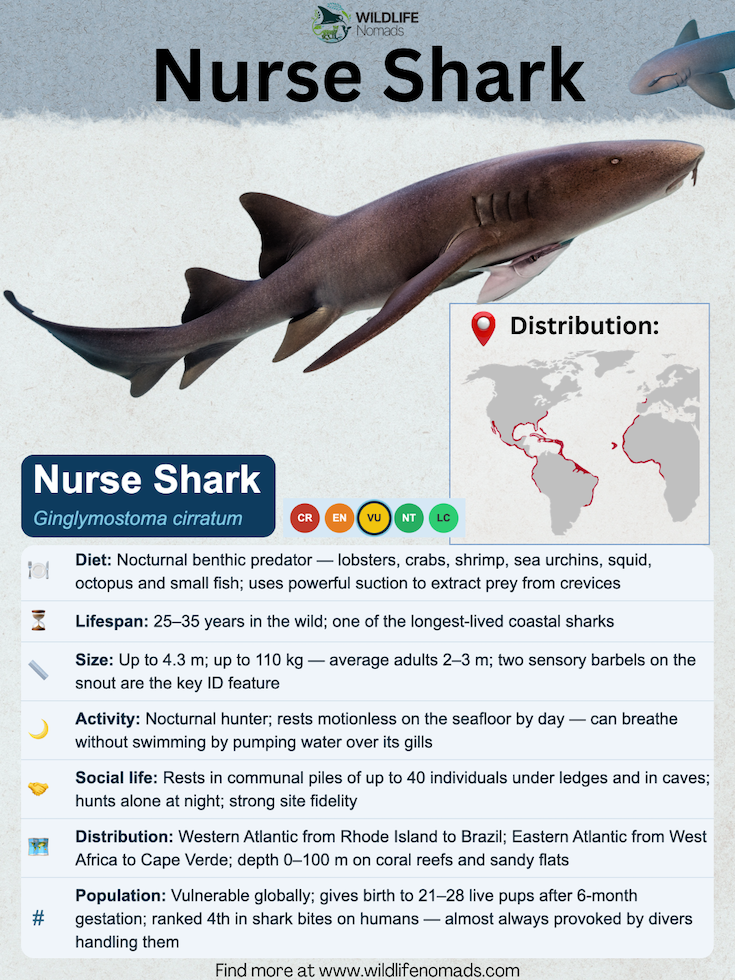
The scientific name Ginglymostoma cirratum is quite the mouthful. Ginglymostoma comes from the Greek ginglymós (hinge) and stóma (mouth). It describes this species’ distinctively hinged jaw. Cirratum is Latin for “having curls” or “fringed.” That’s a nod to the nasal barbels — fleshy, whisker-like projections hanging from the nostrils.
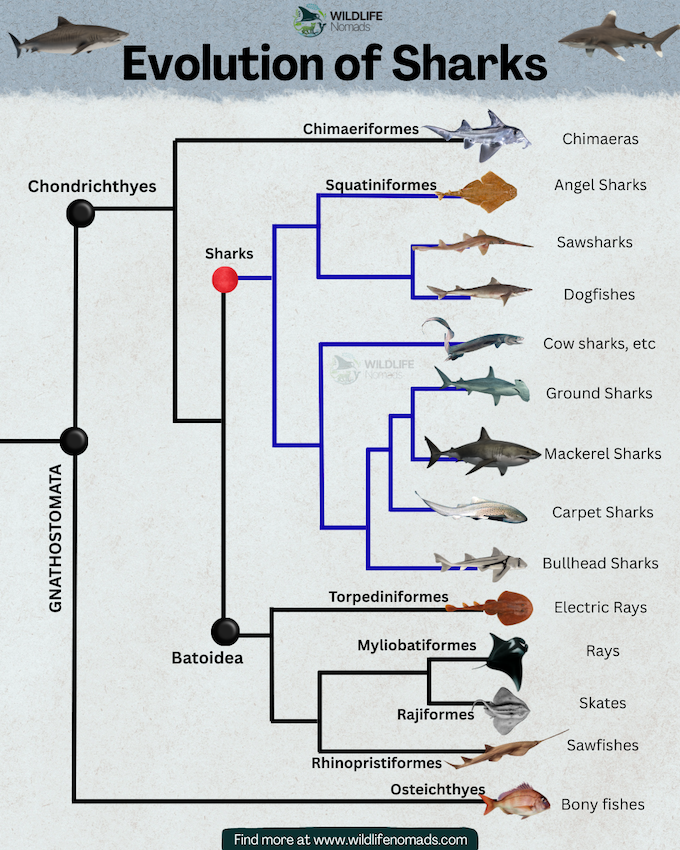
Ginglymostoma cirratum belongs to the family Ginglymostomatidae. This makes it a “carpet shark” — a group defined by bottom dwelling behavior. It’s the only member of its genus in the western Atlantic. However, closely related species exist in the eastern Pacific and Indo-Pacific. When I first encountered this animal in the field, those nasal barbels were the first thing I noticed. Delicate little tendrils that look completely out of place on what most people picture as a sleek predator.
and There are Three Types of Nurse Sharks…
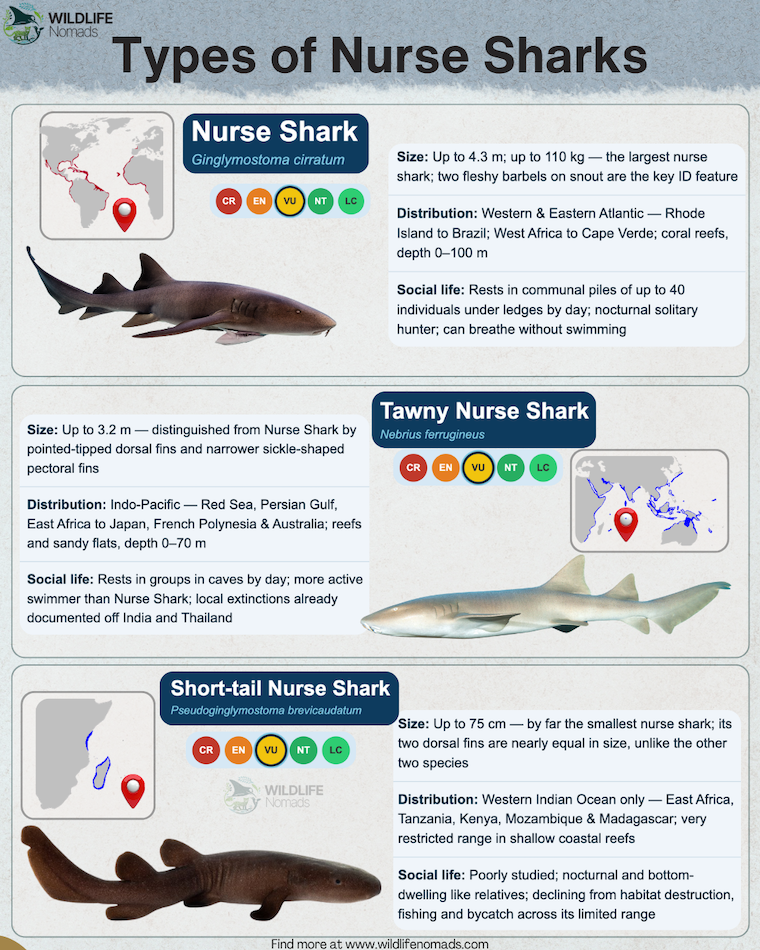
There are actually three species of nurse sharks worldwide, and they occupy different corners of the ocean.
The Atlantic nurse shark (Ginglymostoma cirratum) is the most well-known, the one you’ll encounter in the Caribbean, Gulf of Mexico, and along the U.S. east coast, all the way down to Brazil.
The tawny nurse shark (Nebrius ferrugineus) dominates the Indo-Pacific, from the Red Sea and Persian Gulf across to French Polynesia and Australia, growing up to 3.2 meters.
Then there’s the lesser-known short-tail nurse shark (Pseudoginglymostoma brevicaudatum), by far the smallest of the three at just 75 cm, restricted to shallow coastal reefs along the Western Indian Ocean, from Tanzania to Madagascar.
2. Those “Whiskers” Are Sophisticated Sensory Organs
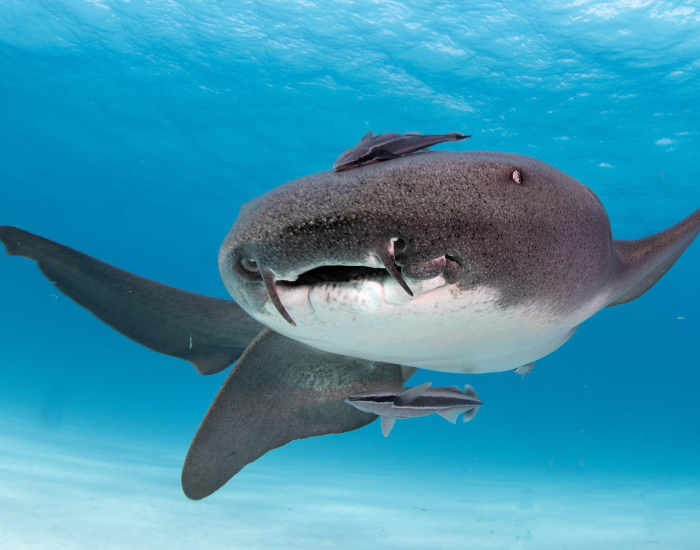
Let’s give the two sensory barbels the credit they deserve. The nurse shark uses its nasal barbels to probe grass flats, rocky areas, and sandy bottoms for hidden prey. Think of them as a combination of taste, touch, and smell packed into two tiny organs.
Most other sharks find prey through electroreception and their lateral line system. This species does all of that too. However, the nasal barbels add an extra sensory layer. I’ve watched these animals methodically work across the ocean floor, dragging those barbels along the sea floor like they’re reading Braille. It’s one of the most deliberate hunting approaches I’ve seen in any species, and it never gets old.
3. They Vacuum Food Off the Ocean Floor
Here’s one that always gets a reaction: the nurse shark doesn’t bite prey so much as inhale it. Their suction feeding mechanism ranks among the most powerful of all shark species. By rapidly expanding the buccal cavity, they create a pressure differential so extreme it pulls prey right out of crevices.
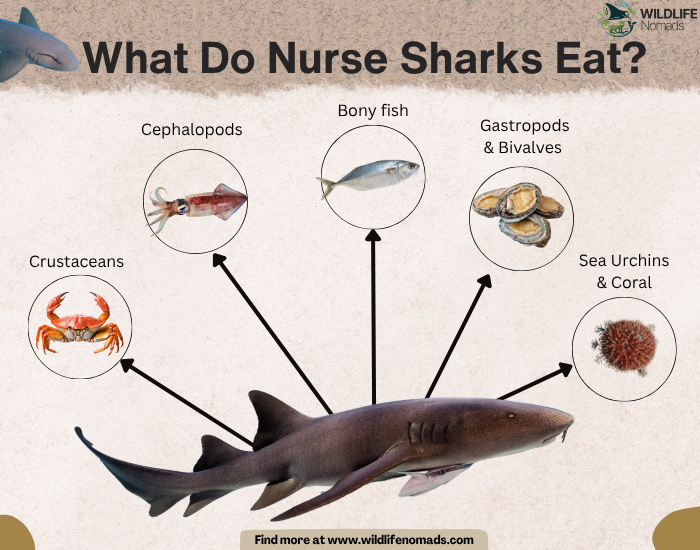
We’re talking about spiny lobsters, sea urchins, crabs, small fish, mollusks, and octopus, animals that actively hide or defend themselves. These bottom dwelling sharks park near an opening, position their mouth over the crevice, and fire. Studies clock the suction event at under a tenth of a second. The prey has no time to react. For an animal that looks perpetually half-asleep, that’s a devastating strategy.
4. They Breathe Without Swimming, Unlike Most Sharks
One of the biggest myths about sharks is that they all need to keep swimming to breathe. That’s true for obligate ram ventilators like great whites. The nurse shark throws that rule out the window.
These are buccal pumpers. They actively pump water over their gills while completely stationary. Therefore, you’ll find them piled up under ledges, nestled in caves within shallow coral reefs, or resting on the ocean floor for hours during the day. That’s not laziness. It’s an adaptation that allows an incredibly energy-efficient lifestyle among bottom-dwelling sharks in warm coastal waters.
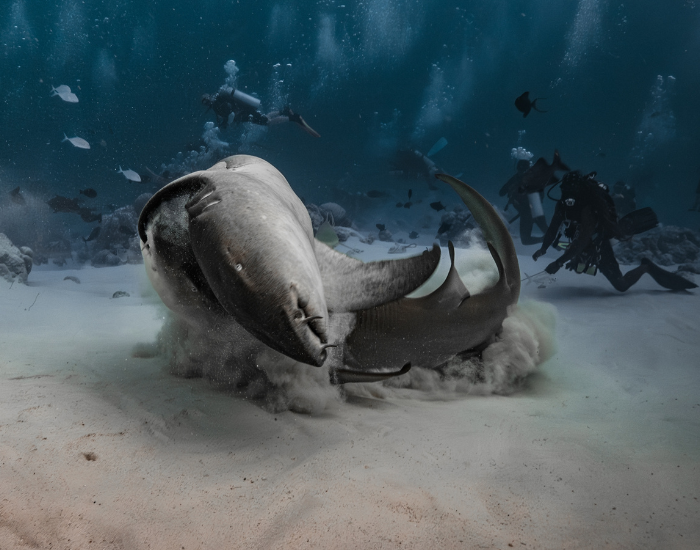
5. They’re Nocturnal, Which Is Why Divers Always Spot Them Resting
Here’s the paradox. The nurse shark is a nocturnal hunter. Yet virtually every diver encounters one lying motionless during daylight. They’re not active during the day, they’re resting, and they rest in the same spots day after day.
Shark research has tracked individuals returning to the exact same crevice over months or even years. That ledge in Holbox where I saw my first one? There’s a real possibility the same animal rests there today.
At night, they shift into active foraging across coral reefs, seagrass flats, and mangrove islands. Depth range shifts too, daytime resting happens in shallower areas. Nocturnal foraging takes them into deeper reefs. In addition, young nurse sharks tend to use shallower microhabitats compared to adult nurse sharks, partitioning the habitat by age.
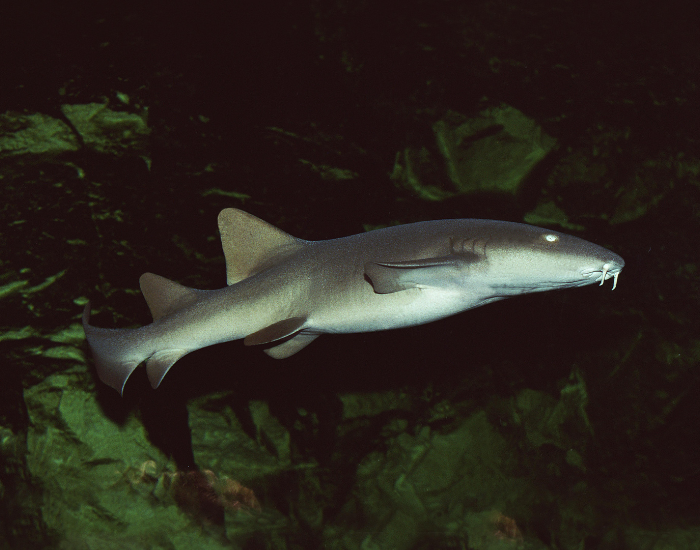
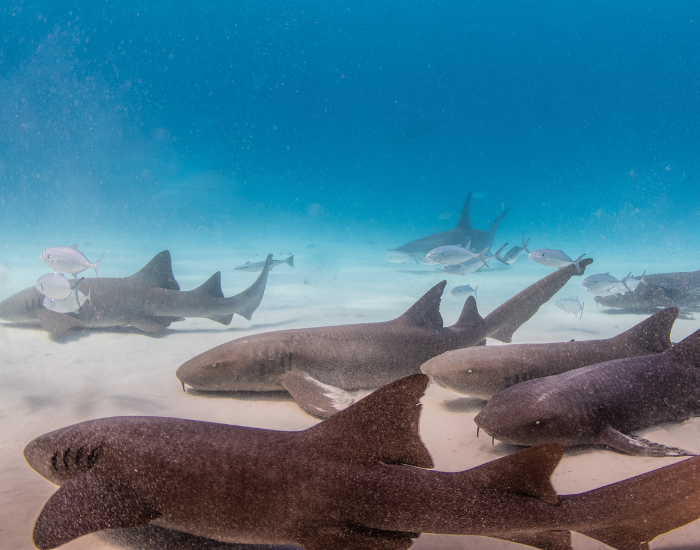
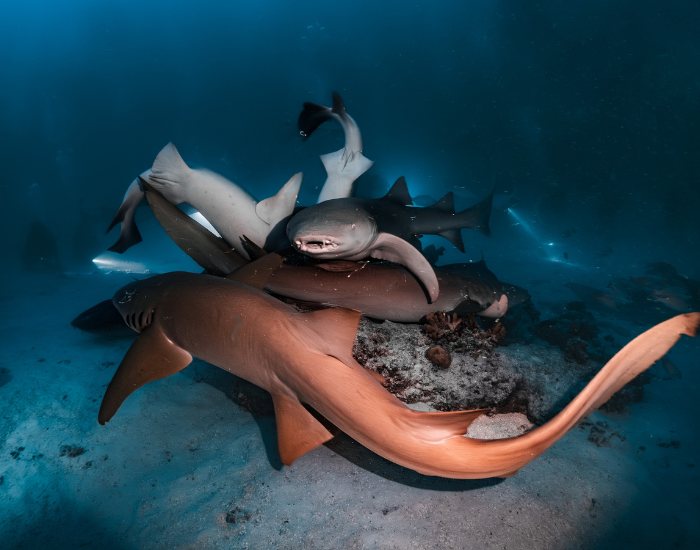
6. They Pile Up Like Sleeping Dogs, And Form Social Groups
Imagine arriving at a dive site and finding a pile of eight nurse sharks stacked on top of each other. This piling behavior is real, regularly documented, and one of the most charming things in the ocean.
This social group behavior among dwelling sharks has been observed repeatedly at specific sites. Some researchers propose thermoregulatory explanations. Others suggest the aggregations form around prime resting microhabitats. There may also be social components. These animals are not as solitary as other species, and such behavior may reflect something more complex than simple habitat preference.
What I find interesting is that these aggregations happen reliably. If you know where they rest, you can return the next week and find them again. That predictability is unusual and makes them ideal subjects for long-term shark research.
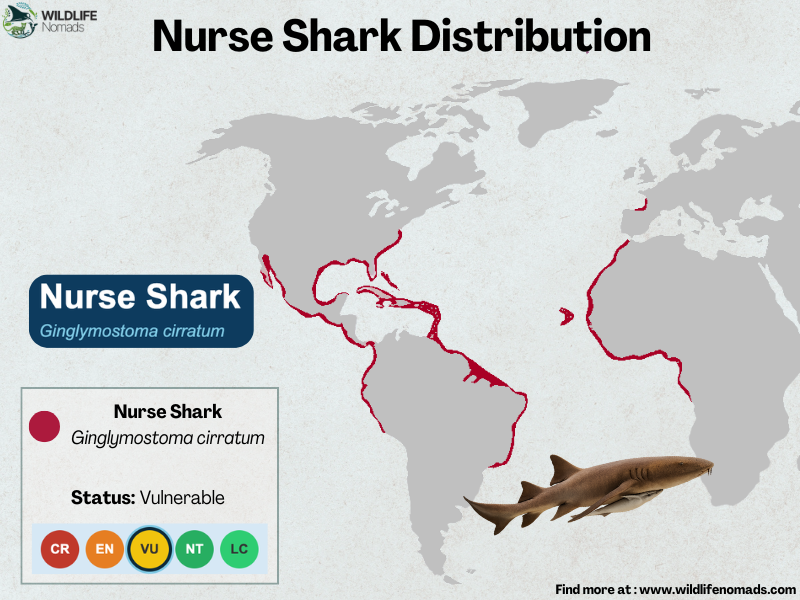
7. Their Range Spans Two Oceans — And Their Status Is “Vulnerable”
The Atlantic nurse shark ranges from Rhode Island down through Florida’s east coast, across the Caribbean, and south to Brazil. They’re also found along the eastern Atlantic coast of West Africa. A related species occurs in the eastern Pacific, and the tawny nurse shark (Nebrius ferrugineus) covers the Indo-Pacific.
The IUCN Red List classifies Ginglymostoma cirratum as Vulnerable meaning this species faces a real risk of extinction if current threats continue. Across parts of Central America, South America, and West Africa, these animals face significant pressure from targeted fisheries and by catch. Their fins, meat, liver oil, and skin (used for leather) remain commercially valuable. They’re also occasionally found in the pet trade.
Western Atlantic populations appear more stable, partly thanks to protections in U.S. waters and ecotourism value in the Bahama Islands and Florida. However, habitat loss — particularly coral reef degradation and destruction of mangrove islands, compounds the problem. The United Nations Food and Agriculture Organization has documented these fisheries concerns in its annotated and illustrated catalogue of global shark species.
8. Mating Looks Brutal… And Females Bear the Scars
Nurse shark mating is hard to watch. The male bites down on one of the female’s pectoral fins and holds on to achieve copulation. Those muscular pectoral fins serve as the mating grip point. Female nurse sharks frequently carry scarring from these male bites.
Males compete intensely. Multiple males sometimes attempt to mate with a single female simultaneously. The female can resist, flee, or position herself in shallow water where mating becomes physically difficult for the male. It’s a negotiation, even if it looks like anything but.
What makes this even more interesting is multiple paternity. DNA analysis confirms that a single litter can have more than one father. So while one male may guard a female aggressively, the reproductive story runs deeper than it appears. Saville et al. (2002) documented multiple paternity in wild populations, publishing their findings in Environmental Biology of Fishes.
9. One Litter Every Two Years, And They Take Decades to Mature
Reproductive biology in this species is slow by almost any standard. Females follow a biennial cycle, giving birth, then resting a full year before becoming reproductively active again. Gestation takes roughly six months.
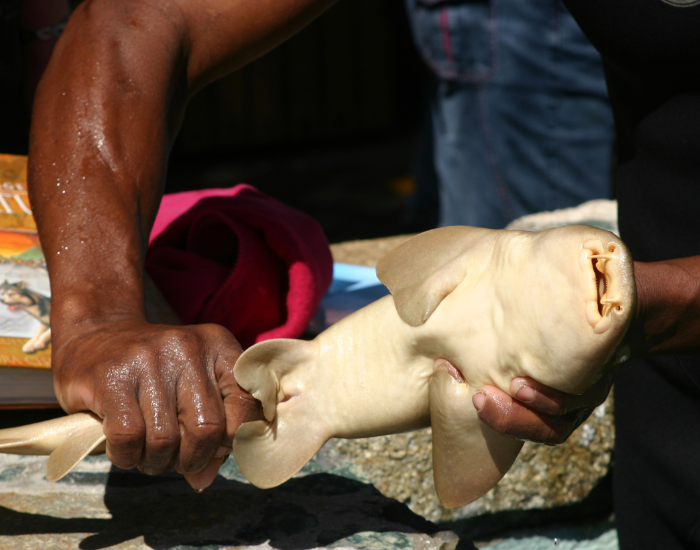
Each litter typically contains 21–30 pups, born fully formed at about 27–30 cm total length. They’re ovoviviparous ,eggs develop and hatch inside the mother, and pups emerge live. They’re immediately independent but tiny and vulnerable.
Here’s the critical part: sexual maturity takes 18–25 years to reach. Males typically mature at around 210–220 cm, while females reach maturity slightly larger at 220–260 cm. Combine that timeline with slow reproduction, site fidelity, and shallow-water habitat near human activity, and you have a species that cannot absorb heavy fishing pressure. This is why conservation matters so much for bottom dwelling sharks with such life histories.
10. Their Teeth Work Like a Conveyor Belt
Tooth replacement in sharks is one of evolution’s more elegant solutions. Rather than a fixed set, they continuously produce new rows that move forward as older teeth shed. The nurse shark follows this same pattern, maintaining a functional set at all times.
The teeth themselves are small and designed for gripping and crushing, not slicing. That makes sense for a diet heavy in hard-shelled prey like spiny lobsters and sea urchins. The combination of tooth replacement, suction feeding, and crush-grip power makes this one of the most effective benthic predators on tropical reefs.

11. Juveniles Look Completely Different: Spotted and Small
If you’ve only seen photos of adults, young nurse sharks will surprise you. Juveniles are covered in small dark spots across a lighter body. This likely provides camouflage in the dappled light of shallow coral reefs and seagrass environments.
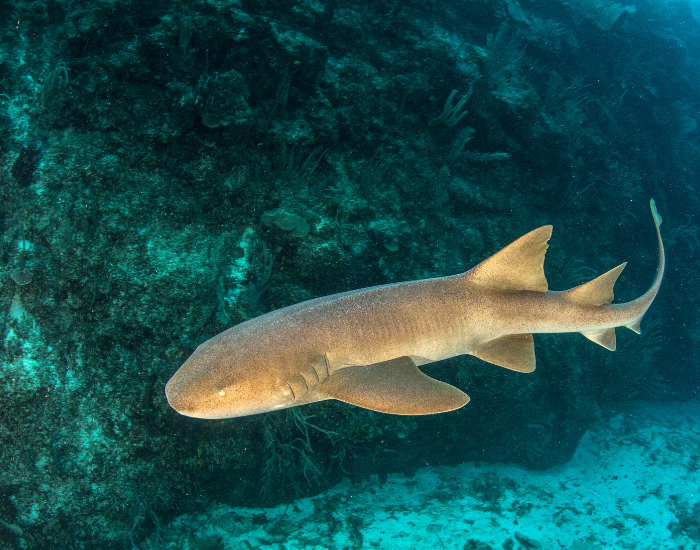
As they grow, the spots fade. Adults display a uniform yellow-brown to dark brown coloration. That yellow-brown blends well with grass flats and the tannin-stained water near mangroves. Combined with their sedentary lifestyle, the coloration is a masterclass in passive concealment.
The distinguishing features of an adult are unmistakable: the first dorsal fin sits well back on the body, nearly equal in size to the second dorsal fin. Both dorsal fins have a rounded profile. The caudal fin features a distinct lower lobe. The anal fins sit close to the tail. Add the two sensory barbels, small eyes, and a subterminal mouth, and in subtropical coastal waters, you won’t confuse this species with a lemon shark, bull shark, blacktip reef shark, or any other shark species on the reef.
12. They’re Docile — But Account for More Bites Than You’d Think
Let me be clear: the nurse shark is not dangerous the way bull sharks or great whites or hammerhead sharks are. They don’t regularly prey on humans. The vast majority of encounters, including thousands of ecotourism dives, end without incident.
That said, this species accounts for a disproportionate number of recorded bites in Florida and the wider western Atlantic. The reason is almost always human behavior. People grab them, try to ride them, or corner them in shallow water. A nurse shark that feels trapped will bite, and those jaws can hold on with serious force.
The lesson isn’t “nurse sharks are dangerous.” It’s “don’t harass wildlife.” I’ll take that lesson every time.
FAQs About Nurse Sharks
No. They’re non-aggressive and pose very little threat when left alone. Most recorded bites involve people who grabbed or cornered the animal. They rank very low for unprovoked attacks.
They’re carnivorous bottom feeders. Primary prey includes spiny lobsters, crabs, sea urchins, small fish, squid, and mollusks. They use powerful suction feeding to extract prey from crevices on the sea floor.
The Atlantic nurse shark inhabits warm, shallow coastal waters of the western Atlantic Ocean — from Florida’s east coast through the Caribbean and down to Brazil. They also occur along the eastern Atlantic in West Africa. They prefer coral reefs, seagrass flats, mangrove islands, and grass flats in subtropical coastal waters. They’re occasionally found in rocky areas and deeper reefs as well.
The IUCN lists Ginglymostoma cirratum as Vulnerable. Regional populations face significant pressure from targeted fisheries, bycatch in fish traps, habitat degradation, and the pet trade. Conservation efforts remain critical, especially for populations outside U.S.-protected waters.
More Than Just a Sleepy Shark
The nurse shark was my first real encounter with a large marine predator underwater. The more I’ve learned about Ginglymostoma cirratum over the years, the more respect I have for this species.
It’s a nocturnal bottom dwelling predator with whisker-like nasal barbels, a social life involving literal piling, a mating system with multiple paternity, and an anatomy perfectly tuned to life on the ocean floor. It’s also a species under real pressure, from fishing, habitat loss, and human harassment. With sexual maturity taking up to 25 years, this animal simply cannot bounce back quickly from population declines.
If you ever find yourself hovering over a coral reef with one resting below you, do what I did at 18: just watch. Give it space. That’s the best thing you can do, and I promise it’ll be one of the best moments of your life.
Where to Dive with Nurse Sharks?
Here is a list of 6 tours where you could swim with nurse sharks. As a biologist, I only recommend tours that follow strict ethical guidelines to ensure we don’t disturb wildlife. These are the three tours/ partners I trust most based on their conservation records:
This blog is reader-supported. When you buy experiences through links listed on this site, we may earn an affiliate commission.
References:
Bettcher, V. B., Franco, A. C. S., & Dos Santos, L. N. (2023). Habitat-use of the vulnerable Atlantic Nurse Shark: a review. PeerJ, 11, e15540. https://doi.org/10.7717/peerj.15540
Castro, J. I. (2000). The biology of the nurse shark, Ginglymostoma cirratum, off the Florida east coast and the Bahama Islands. Environmental Biology of Fishes, 58(1), 1–22. https://doi.org/10.1023/A:1007698017645
Pratt, H. L., Jr., Pratt, T. C., Knotek, R. J., Carrier, J. C., & Whitney, N. M. (2022). Long-term use of a shark breeding ground: Three decades of mating site fidelity in the nurse shark, Ginglymostoma cirratum. PLOS ONE, 17(10), e0275323. https://doi.org/10.1371/journal.pone.0275323
Rosa, R. S., Gadig, O. B. F., Hazin, F., & Neto, D. G. (2024). A review of fisheries and conservation of the Atlantic nurse shark, Ginglymostoma cirratum. Fisheries Management and Ecology, 31(4), e12818. https://doi.org/10.1111/fme.12818
Madrigal-Mora, S., Lowe, C. G., Clark, C., & Espinoza, M. (2025). Aggregation behavior of pacific nurse sharks (Ginglymostoma unami) associated with seasonal water temperature changes in a tropical upwelling bay. Journal of Experimental Marine Biology and Ecology, 593, Article 152138. https://doi.org/10.1016/j.jembe.2025.152138
Motta, P. J., Hueter, R. E., Tricas, T. C., Summers, A. P., Huber, D. R., Lowry, D., Mara, K. R., Matott, M. P., Whitenack, L. B., & Wintzer, A. P. (2008). Functional morphology of the feeding apparatus, feeding constraints, and suction performance in the nurse shark Ginglymostoma cirratum. Journal of morphology, 269(9), 1041–1055. https://doi.org/10.1002/jmor.10626
Saville, K. J., Lindley, A. M., Maries, E. G., Carrier, J. C., & Pratt, H. L., Jr. (2002). Multiple paternity in the nurse shark, Ginglymostoma cirratum. Environmental Biology of Fishes, 63(3), 347–351. https://doi.org/10.1023/A:1014369011709