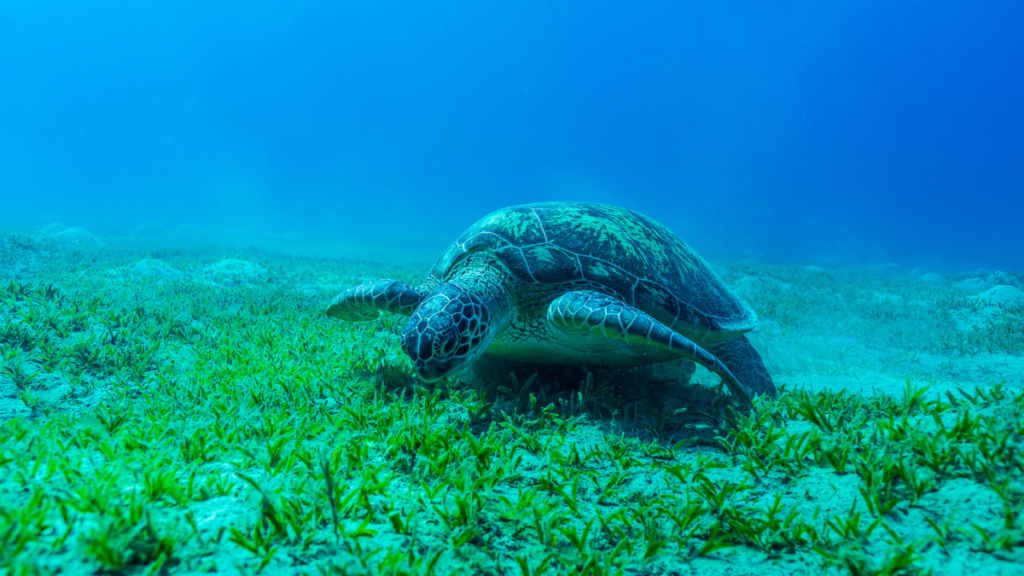
The seagrass bed looked like something out of Avatar. I was snorkelling on Brooms Head while on our lap-trip around Australia, floating over green blades that swayed with every surge. Then I noticed a wobbegong shark resting among them, its patterned skin melting into the ocean floor.
Within minutes, a stingray glided past. Wrasses darted between the leaves, and a puffer fish hovered just below my mask. As a biologist, I have watched this same scene repeat from the Red Sea to Bali.
Seagrasses rarely make the postcards, yet they feed sea turtles, shelter seahorses and raise the fish on your dinner plate. Below, I introduce 15 iconic animals that depend on seagrass meadows. You will also learn what these plants are, why they are vanishing, and how to snorkel them without causing harm.
What Are Seagrasses?
Seagrasses are not seaweeds. They are flowering plants with roots, leaves, flowers and seeds, and they are the only flowering plants that live completely submerged in the sea. Their ancestors were land-based plants that returned to the ocean roughly 100 million years ago. Interestingly, they are more closely related to lilies than to true grasses.
Scientists recognise around 72 seagrass species, widely distributed on every continent except Antarctica. Seagrass growth depends on light, so most meadows grow in shallow water within sheltered areas. In exceptionally clear water, some species survive down to about 60 metres. The World Atlas of Seagrasses documented roughly 177,000 km², and newer mapping suggests the real total is larger.
Florida alone hosts seven seagrass species. Turtle grass (Thalassia testudinum) grows flat leaves up to 35 cm long. Manatee grass (Syringodium filiforme) produces cylindrical leaves up to half a metre long, while shoal grass (Halodule wrightii) colonises the shallowest flats. Widgeon grass (Ruppia maritima) even tolerates both fresh and salt water.
Why Seagrass Meadows Matter
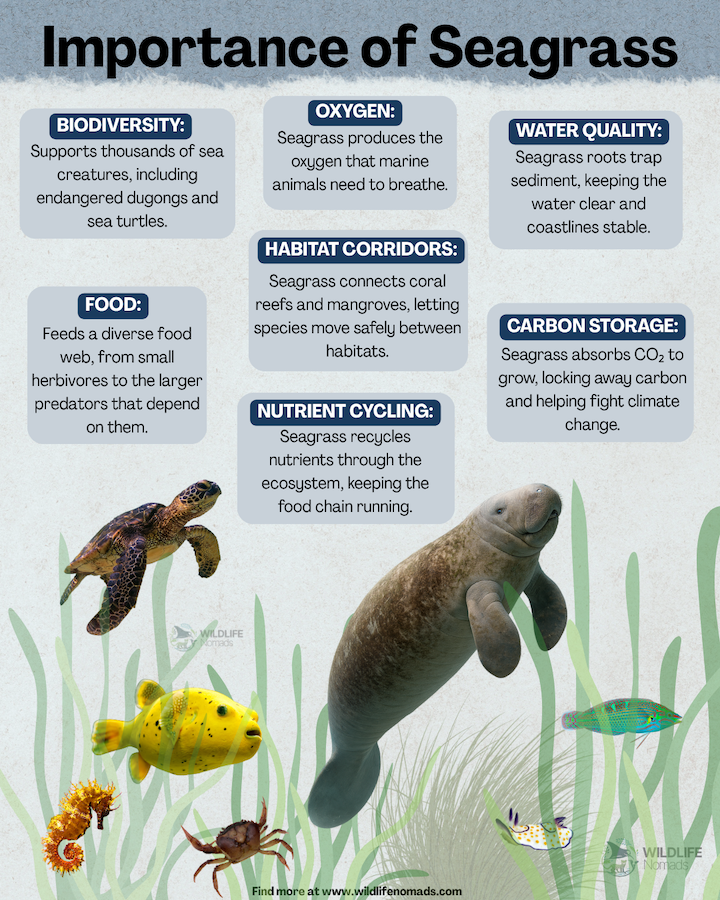
Unlike benthic macroalgae, seagrass plants anchor their roots in soft sediment. Their dense blades slow water currents, trapping fine sediments and improving water clarity. As a result, meadows reduce coastal erosion and filter harmful runoff before it reaches coral reefs.
As primary producers, seagrasses sit at the base of the marine food web. They also release substantial oxygen through photosynthesis. In addition, they store carbon in their sediments as “blue carbon.” Some estimates suggest they bury carbon 30 to 50 times faster than tropical rainforests, per hectare.
Seagrass beds also serve as nursery grounds for countless juvenile fish. Some sources credit them with supporting around half of global fisheries. The best-documented figure is more conservative: a 2019 study linked seagrass to a fifth of the world’s 25 largest fisheries.
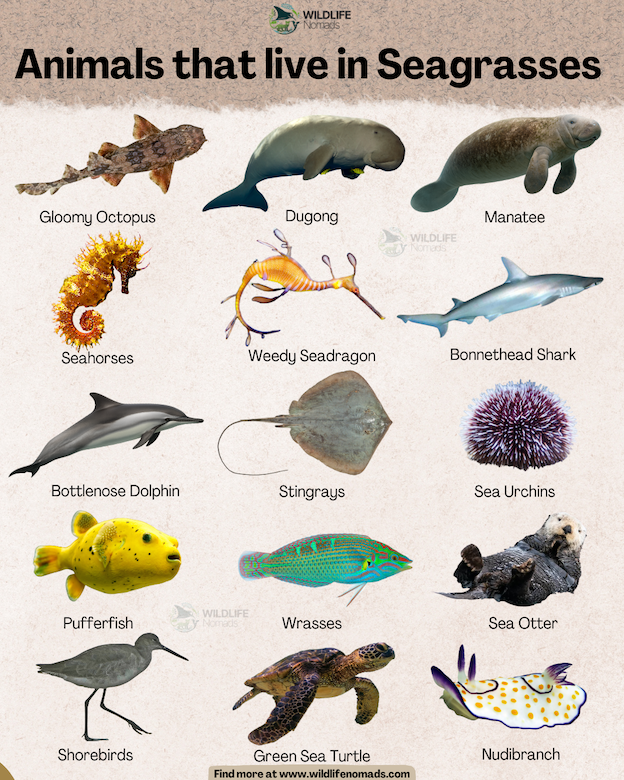
15 Iconic Animals That Live in Seagrass Meadows
1. Green Sea Turtle (Chelonia mydas)
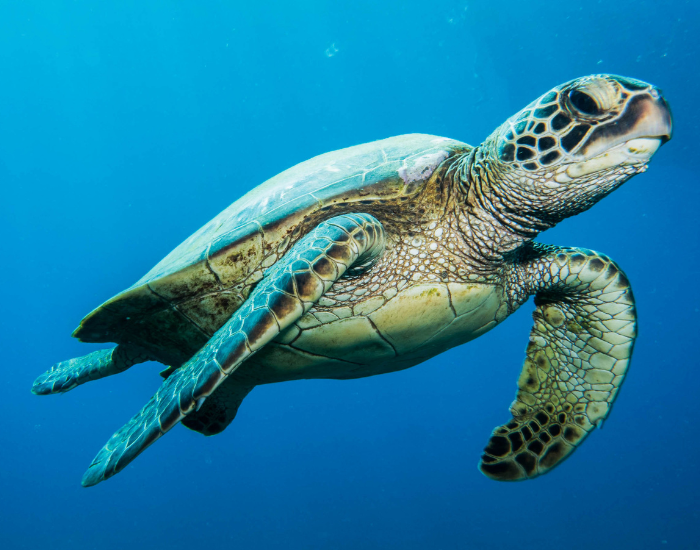
Green sea turtles are the classic seagrass grazers. Adults are the only mainly herbivorous sea turtles, and their name comes from the greenish fat their plant diet produces. They crop turtle grass like lawnmowers, and that trimming triggers fresh, protein-rich regrowth.
I have met sea turtles from Southeast Asia to the Red Sea and Mexico. I also helped release olive ridley hatchlings at Puerto Escondido. Watching those tiny flippers reach the surf reminded me how much each life stage depends on healthy habitat.
2. Dugong (Dugong dugon)
The dugong is the only strictly marine herbivorous mammal. It rips up whole seagrass plants, roots included, leaving winding feeding trails across the sand. A single adult can eat up to 40 kg of seagrass leaves and rhizomes daily.
I snorkelled day after day in Egypt hoping to meet one. Sadly, the Red Sea never delivered, and dugongs remain on my list. Fortunately, Moreton Bay, near my home in southeast Queensland, still supports a resident population.

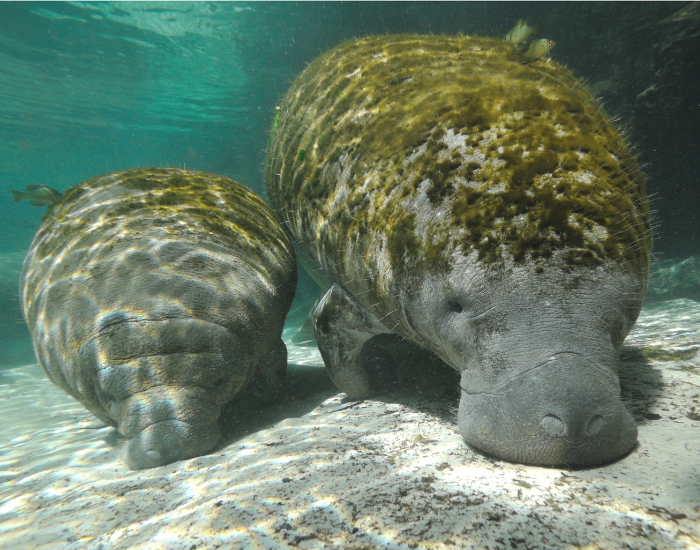
3. West Indian Manatee (Trichechus manatus)
Manatees graze manatee grass, turtle grass and shoal grass across south Florida. They eat around 10% of their body weight every day. That appetite makes them extremely sensitive to seagrass loss.
In 2021, Florida recorded more than 1,100 manatee deaths. Many animals starved after nutrient pollution triggered algal blooms that smothered seagrass in the Indian River Lagoon. The event showed how water quality connects directly to the survival of large marine animals.
4. Seahorses (Hippocampus spp.)
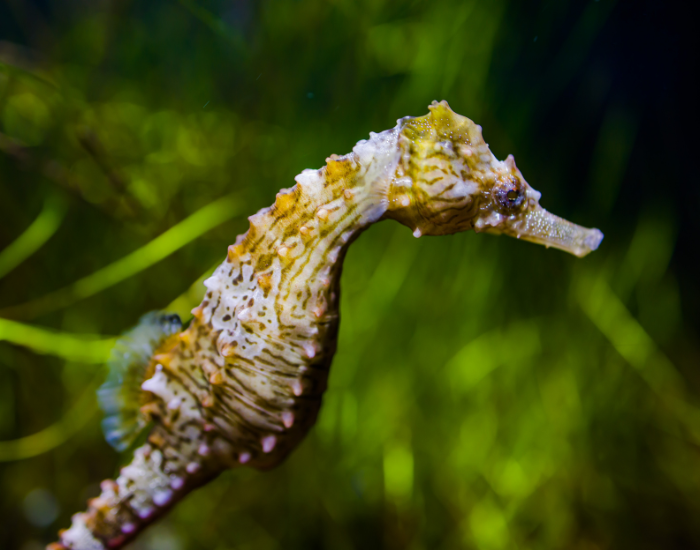
Last year, while doing coral restoration in Pemuteran, Bali, I found a long, slender seahorse clinging to a seagrass blade. Its tail gripped the leaf like a monkey holding a branch. That grip lets seahorses stay put despite constant water movement.
Seahorses are famous because males carry the eggs in a brood pouch. However, many species rely on seagrass beds for shelter and hunting. When a meadow disappears, local seahorse populations usually vanish with it.
5. Weedy Seadragon (Phyllopteryx taeniolatus)
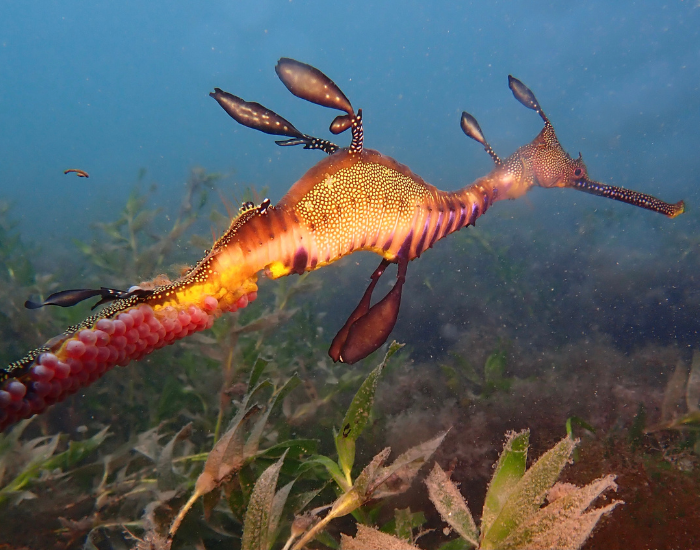
The weedy seadragon lives only in southern Australian coastal waters. It drifts above seagrass meadows and kelp-covered reefs, disguised by leafy appendages. Like its seahorse relatives, the male carries the eggs, attached beneath his tail.
Australia’s seadragons hunt tiny crustaceans called mysids among the blades. Their camouflage works so well that divers often swim straight past them.
6. Wobbegong Sharks (Orectolobus spp.)
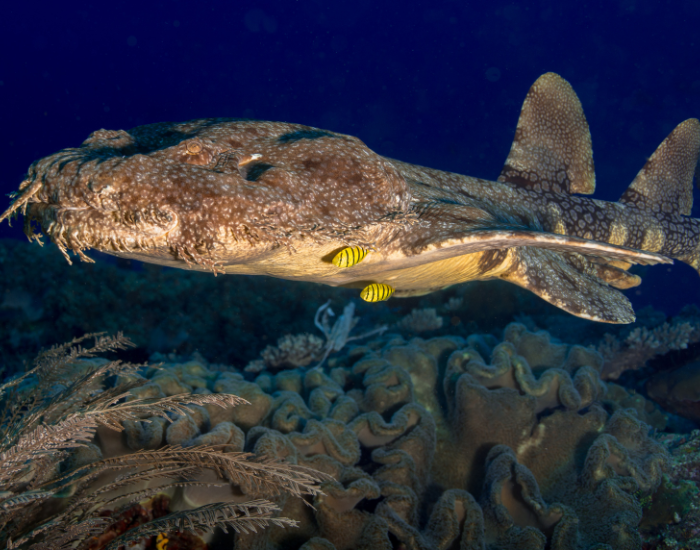
My Avatar-like seagrass bed held a wobbegong, and it barely acknowledged me. These carpet sharks lie motionless on the sea bottom, ambushing fish and crabs that wander too close. Frilly skin flaps around the mouth break up their outline.
I have also dived with wobbegongs, and every encounter felt calm. They reward patience rather than excitement. Seagrass edges suit them perfectly, since prey constantly moves between the meadow and open sand.
7. Stingrays
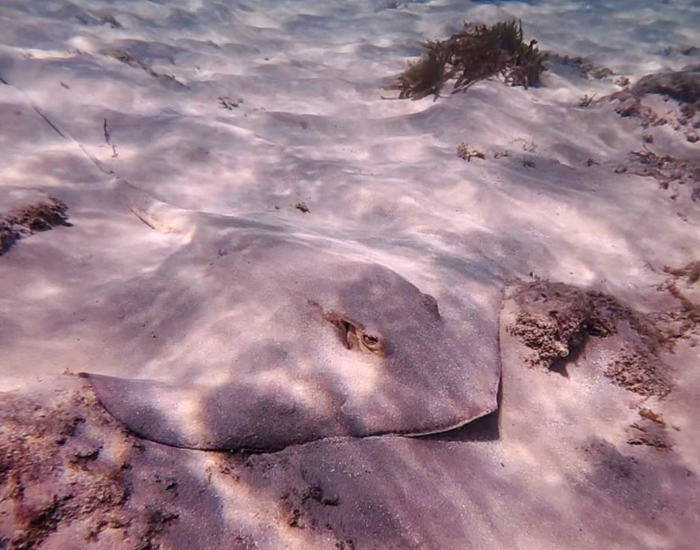
Rays feed by digging into soft sediment for worms, clams and crabs. They leave shallow pits across seagrass beds, a sign of foraging activity. The stingray I saw in that Australian meadow was doing exactly this.
Most stingrays avoid people. Nevertheless, shuffle your feet when wading through seagrass shallows. The vibration warns buried rays, and they simply glide away.
8. Bonnethead Shark (Sphyrna tiburo)
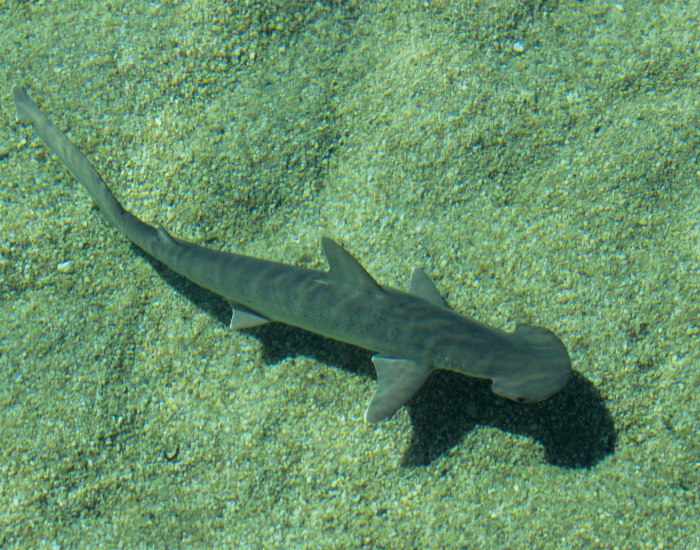
The bonnethead is the smallest member of the hammerhead family. It also overturns everything we assume about sharks. A 2018 study found seagrass made up over half its stomach contents. Remarkably, the sharks digested about half of that plant material.
Bonnetheads patrol seagrass meadows from Florida Bay to the Caribbean, hunting crabs and shrimp. Scientists now describe them as omnivores.
9. Bottlenose Dolphins (Tursiops spp.)
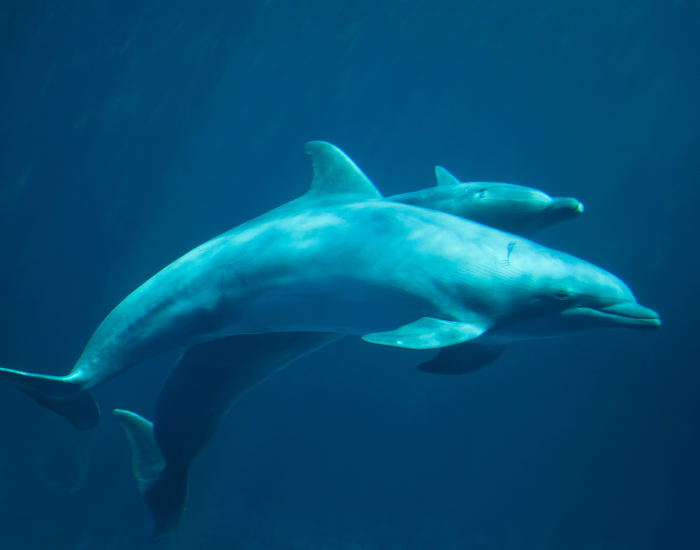
Bottlenose dolphins hunt fish that shelter in seagrass. In Florida Bay, some use “mud-ring feeding.” One dolphin circles a school, stirring up a ring of sediment. The panicked fish then leap straight into waiting mouths.
In Shark Bay, Western Australia, Indo-Pacific bottlenose dolphins (Tursiops aduncus) depend on some of the world’s largest seagrass meadows. A 2011 marine heatwave killed about 36% of that seagrass. Afterward, researchers documented lower dolphin survival and fewer calves.
10. Queen Conch (Lobatus gigas)
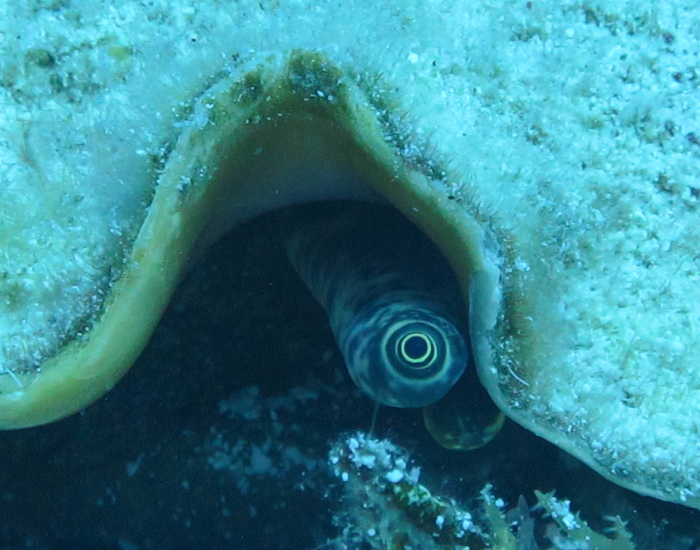
The queen conch is a large sea snail with a glossy pink shell. It grazes algae growing on seagrass blades and nearby sand. Juveniles hide in seagrass beds until their shells thicken.
Overharvesting devastated conch populations across the Caribbean. Florida banned all harvest in 1985, and the United States listed the species as threatened in 2024. The Florida Keys still host small patches of recovering populations.
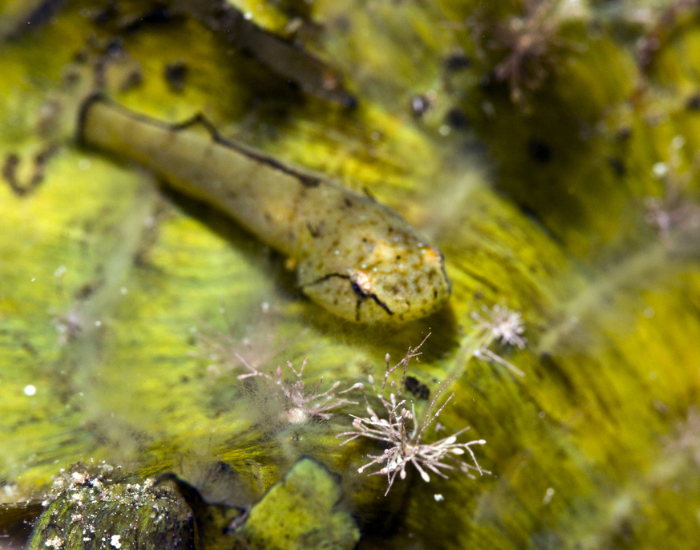
11. Emerald Clingfish (Acyrtops beryllinus)
This bright green fish barely reaches 3 cm. A suction disc on its belly lets it cling to turtle grass blades. It matches the leaves so closely that most snorkellers never spot it.
Emerald clingfish live from south Florida through the Bahamas and Caribbean. They represent the small animals that make up most species in a meadow.
12. Sea Urchins
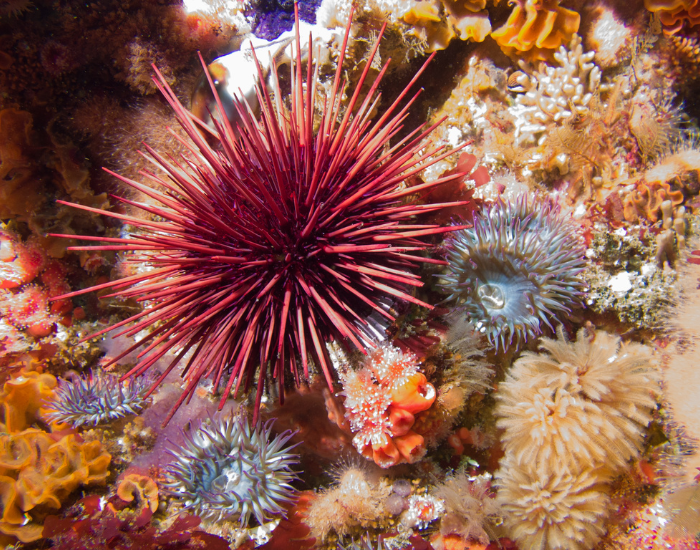
Some sea urchins graze directly on seagrass leaves. The variegated urchin (Lytechinus variegatus) usually lives in balance with its habitat. However, in the late 1990s, dense urchin fronts stripped large areas of turtle grass in outer Florida Bay.
Predators such as fish, crabs and conchs normally keep urchin numbers in check. When those controls weaken, grazers can overwhelm the plants they depend on.
13. Pufferfish
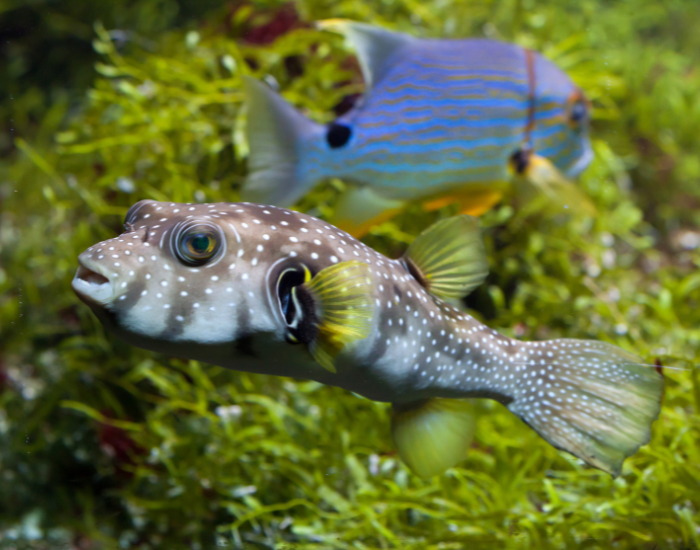
The puffer fish in my Australian meadow hovered like a small balloon. In eastern Australian estuaries, the common toadfish (Tetractenos hamiltoni) patrols seagrass beds constantly. Puffers crush crabs, snails and bivalves with fused, beak-like teeth.
I also watched puffers in the Red Sea seagrass beds. There, they shared space with an astonishing mix of coral reef fish.
14. Wrasses and Juvenile Reef Fish
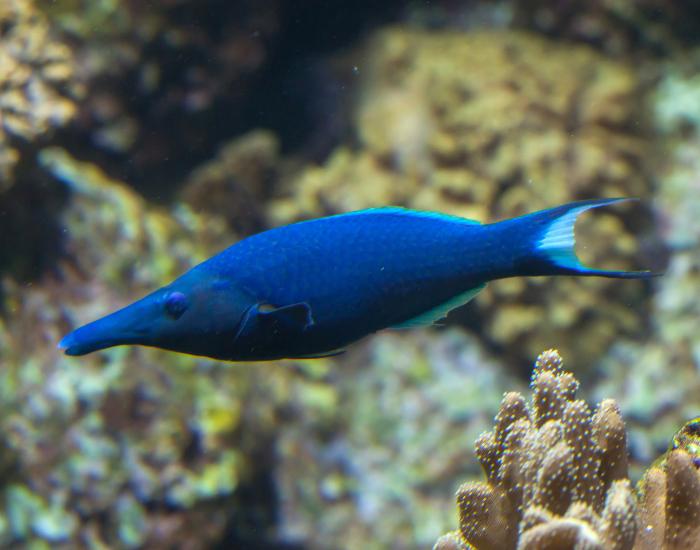
That Red Sea seagrass bed surprised me. It held so many coral reef fish that it felt like a complete ecosystem. Research explains why: many reef species spend their youth in seagrass before moving to coral reefs.
Wrasses forage among the blades for small crustaceans and worms. Juvenile parrotfish use the same cover. Protecting seagrass therefore protects the reef next door.
15. Black Swans and Shorebirds
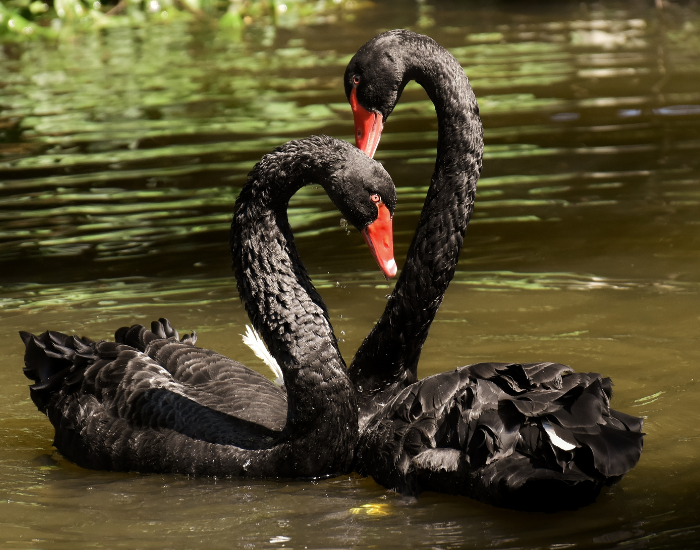
Black swans (Cygnus atratus) graze seagrass and widgeon grass in shallow Australian estuaries. I spent months around Mandurah’s Peel Inlet in 2024, classic black swan country. Elsewhere, brent geese depend on eelgrass (Zostera) during European winters.
Shorebirds benefit too. On North Stradbroke Island at Christmas 2024, I watched 20 to 30 bar-tailed godwits (Limosa lapponica) probing Moreton Bay’s tidal flats. Seagrass sediments there teem with the worms and crustaceans that fuel their migrations.
Can We Bring Seagrass Meadows Back?
Restoration is possible, though slow and difficult. Teams use two main methods: transplanting adult shoots and scattering seeds. Over 90% of seagrass propagules fail to survive, so success demands scale. In 2001, one mechanised method planted 400 m² of seagrass in under two hours.
Virginia’s coastal bays offer real hope. Seed scattering there has regrown thousands of hectares, and fish, invertebrates and carbon storage returned quickly. Seagrass restoration also remains a priority in the Florida Keys National Marine Sanctuary, home to roughly 1.5 million acres of meadows. Marine protected areas give these projects a fighting chance.
FAQ You May Have
Washed-up seagrass makes useful mulch or compost once rinsed of salt. It adds organic matter and holds soil moisture. However, never harvest live seagrass. Many Australian states protect marine plants, sometimes including beach wrack, so check local rules first.
Seagrass has grazers rather than true predators. Green sea turtles, dugongs, manatees, sea urchins, parrotfish and waterfowl all eat it. Even the bonnethead shark digests seagrass. Healthy meadows usually tolerate this grazing and regrow quickly.
Coastal development, pollution and climate change drive most losses. About one-third of the world’s seagrass meadows have disappeared, and losses accelerated to roughly 7% per year. Runoff clouds the water column, and heavy metals and excess nutrients degrade water quality. Boats also scar meadows, with over 300 groundings recorded annually in Florida.
Yes, and snorkelling over a meadow is magical. Float rather than stand, keep fins off the blades, and never anchor on seagrass. Damaged meadows can take decades to recover. Shuffle your feet in the shallows to warn resting stingrays.
Seagrasses need clear water and stable conditions to thrive. They respond quickly to pollution, sediment and rising temperatures. When a meadow thins or retreats into deeper waters, it signals broader problems along the coast.
Protecting the Meadows That Feed the Sea
Seagrasses work quietly, but everything from dugongs to godwits depends on them. Lose a meadow, and you lose the turtles, the nursery fish and the carbon locked beneath it. Like mangroves, seagrass beds are unglamorous habitats that hold whole coastlines together.
Next time you visit the coast, skip the reef for an hour and snorkel the seagrass instead. Move slowly, look closely at the blades, and wait for the camouflage to reveal itself. Need ideas? Browse my guide to the world’s best snorkelling spots.
Have you seen a dugong or seahorse in the wild? Tell me where in the comments. I am still waiting for my dugong.
Seagrass Meadows & Ocean Creatures Quiz
Ten fun True/False and Multiple Choice questions testing your knowledge of seagrass evolution, omnivorous sharks, sea turtle grazing, and blue carbon!
Multiple Choice
References
Fourqurean, J. W., Duarte, C. M., Kennedy, H., Marbà, N., Holmer, M., Mateo, M. A., Apostolaki, E. T., Kendrick, G. A., Krause-Jensen, D., McGlathery, K. J., & Serrano, O. (2012). Seagrass ecosystems as a globally significant carbon stock. Nature Geoscience, 5(7), 505–509. https://doi.org/10.1038/ngeo1477
Leigh, S. C., Papastamatiou, Y. P., & German, D. P. (2018). Seagrass digestion by a notorious ‘carnivore’. Proceedings of the Royal Society B, 285(1886), 20181583. https://doi.org/10.1098/rspb.2018.1583
Orth, R. J., Lefcheck, J. S., McGlathery, K. S., Aoki, L., Luckenbach, M. W., Moore, K. A., Oreska, M. P. J., Snyder, R., Wilcox, D. J., & Lusk, B. (2020). Restoration of seagrass habitat leads to rapid recovery of coastal ecosystem services. Science Advances, 6(41), eabc6434. https://doi.org/10.1126/sciadv.abc6434
Strydom, S., Murray, K., Wilson, S., Huntley, B., Rule, M., Heithaus, M., Bessey, C., Kendrick, G. A., Burkholder, D., Fraser, M. W., & Zdunic, K. (2020). Too hot to handle: Unprecedented seagrass death driven by marine heatwave in a World Heritage Area. Global Change Biology, 26(6), 3525–3538. https://doi.org/10.1111/gcb.15065
Unsworth, R. K. F., Nordlund, L. M., & Cullen-Unsworth, L. C. (2019). Seagrass meadows support global fisheries production. Conservation Letters, 12(1), e12566. https://doi.org/10.1111/conl.12566
Waycott, M., Duarte, C. M., Carruthers, T. J. B., Orth, R. J., Dennison, W. C., Olyarnik, S., Calladine, A., Fourqurean, J. W., Heck, K. L., Hughes, A. R., Kendrick, G. A., Kenworthy, W. J., Short, F. T., & Williams, S. L. (2009). Accelerating loss of seagrasses across the globe threatens coastal ecosystems. Proceedings of the National Academy of Sciences, 106(30), 12377–12381. https://doi.org/10.1073/pnas.0905620106
Wild, S., Krützen, M., Rankin, R. W., Hoppitt, W. J. E., Gerber, L., & Allen, S. J. (2019). Long-term decline in survival and reproduction of dolphins following a marine heatwave. Current Biology, 29(7), R239–R240. https://doi.org/10.1016/j.cub.2019.02.047