
Manatees are the kind of animals that make you pause mid-dive. I remember the first time I saw one while snorkeling off Florida’s Crystal River, it drifted past me like a living zeppelin, calm and unhurried, its paddle tail stirring the water like a whisper.
These serene marine mammals embody peace beneath the surface. Yet behind their slow, endearing nature lies a story of survival, evolution, and vulnerability that deserves our attention.
Let’s explore twelve fascinating things you should know about the manatee, one of the ocean’s most beloved gentle giants.
First, a Brief Intro to Manatees
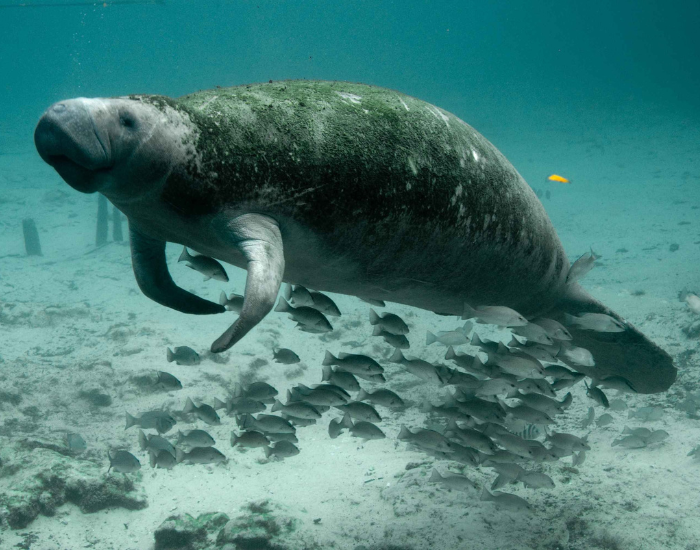
Manatees, affectionately known as sea cows, are among the ocean’s most gentle creatures. These large marine mammals belong to the order Sirenia and are celebrated for their calm demeanor and slow, graceful movements. There are three species of manatees: the West Indian manatee, the African manatee, and the Amazonian manatee. The West Indian manatee is further divided into two subspecies, the Florida manatee and the Caribbean manatee, each adapted to their unique coastal waters.
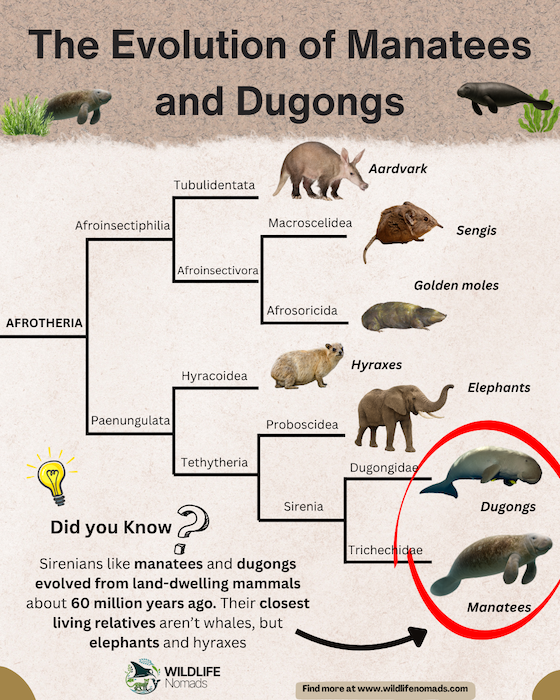
Despite their aquatic lifestyle, manatees are more closely related to elephants than to whales or dolphins. They share fascinating traits with their land-dwelling relatives, such as tough, wrinkled skin and teeth that are continuously replaced throughout their lives. Manatees are most commonly found in shallow, coastal waters of the Caribbean Sea, the Gulf of Mexico, and the southeastern United States, especially in Florida. Their peaceful presence in these regions has made them beloved icons of marine life and vital ambassadors for the conservation of marine mammals worldwide.
1. Manatees Are Marine Mammals, Not Fish or Whales
Despite their aquatic lifestyle, manatees are mammals through and through. They breathe air, give birth to live young, and nurse their calves just like other mammals. This classification is crucial to understanding how different manatees are from other marine animals.
Classified under the order Sirenia, manatees are close relatives of dugongs and even more surprisingly, elephants. Manatees and dugongs share many biological similarities, including their herbivorous diet, slow-moving nature, and aquatic adaptations. This distant relationship reveals millions of years of evolutionary adaptation. Both manatees have developed paddle-like flippers and dense bones to help them navigate and stay submerged in their aquatic habitats.
Manatees have lungs and must surface to breathe every few minutes. A relaxed individual can hold its breath for up to 20 minutes. Their nostrils close tightly underwater, helping them dive gracefully without losing air.
2. Three Species of Manatee Exist Worldwide
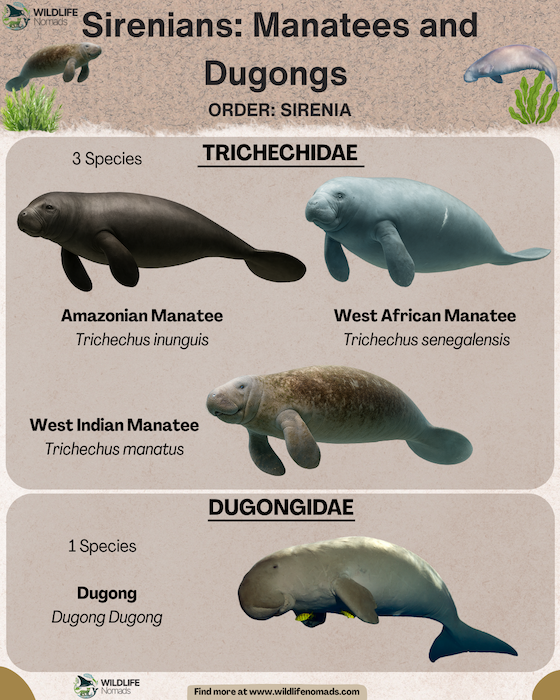
There are currently three distinct manatee species found across different regions. Understanding each species helps us appreciate the diversity within this marine mammal family.
The West Indian Manatee (Trichechus manatus) is found in the Caribbean, the Gulf of Mexico, and Florida. The Amazonian Manatee (Trichechus inunguis) inhabits freshwater systems of the Amazon Basin. African manatees, also known as West African Manatee (Trichechus senegalensis), are distributed along the west coast of Africa, living in both coastal and river habitats. Amazonian manatees are found exclusively in the freshwater ecosystems of the Amazon Basin in South America, and are considered vulnerable due to habitat loss and hunting.
The Florida manatee is actually a subspecies of the West Indian manatee. The antillean manatee is another subspecies of the West Indian manatee, found in the Caribbean, including Mexico, Central America, and the Greater Antilles. Antillean manatees inhabit shallow coastal areas, rivers, and lagoons throughout their range, and are distinguished from other subspecies by their limited population size and threatened conservation status. Both the Florida Manatee Sanctuary Act and the Endangered Species Act protect this population. Each species faces unique conservation challenges in its respective habitat.
3. Manatees Are Herbivores with a Taste for Seagrass
Manatees are known for their herbivorous nature, grazing peacefully on seagrasses and aquatic plants throughout their shallow water habitats. The diet manatees follow is strictly herbivorous, consisting of a wide variety of freshwater and saltwater plants, which they consume in large quantities due to their unique digestive adaptations. Their flexible upper lips act like gentle vacuum cleaners, uprooting vegetation from riverbeds and coastal waters.
An adult manatee can consume around 10% of its body weight in vegetation daily, up to 150 pounds of seagrass and other aquatic plants! This enormous appetite reflects their energy needs in warm water environments.
Their herbivorous diet plays a crucial ecological role. By feeding on aquatic plants, manatees prevent overgrowth and help maintain healthy waterways and seagrass ecosystems. This natural management benefits countless other species.
4. They’re Often Called “Sea Cows” for a Reason
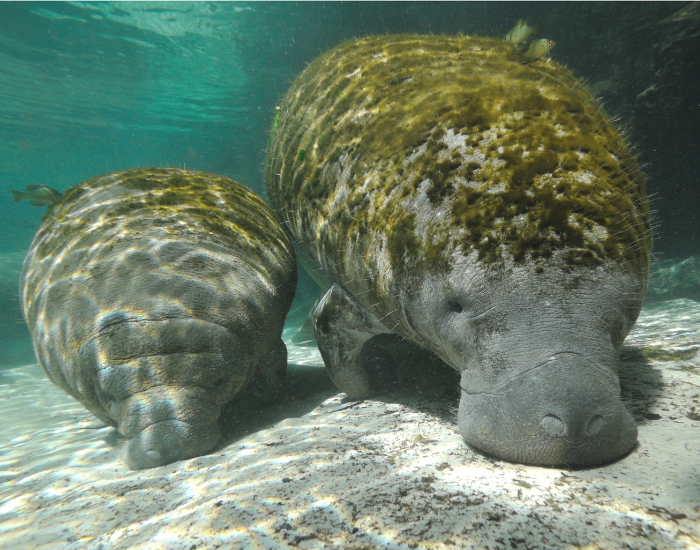
The nickname “sea cow” isn’t just poetic, it’s accurate. Like cows, manatees are large, slow, and gentle grazers. They move at an average speed of 3–5 mph, conserving energy in warm, shallow waters.
Manatees are classic examples of slow moving animals, known for their gentle, unhurried behavior. They spend most of their time resting, feeding, or traveling at a leisurely pace, displaying a calm and placid demeanor within their natural habitats.
However, unlike cows, sea cows are fully aquatic animals. They can live in both freshwater and saltwater environments. From Florida’s coastal springs to the Amazon’s tannin-stained rivers, these marine mammals have adapted beautifully to varied habitats.

5. Manatees Are Descended from Elephants
It might sound strange, but manatees’ closest living relatives are elephants. Both species share a common ancestor that roamed Earth about 60 million years ago. This surprising connection reveals how different life forms evolved from similar ancestors.
Early sirenians evolved from four-legged land mammals and gradually adapted to aquatic life. They traded limbs for flippers and developed a powerful, paddle-shaped tail. This transformation took millions of years of natural selection.
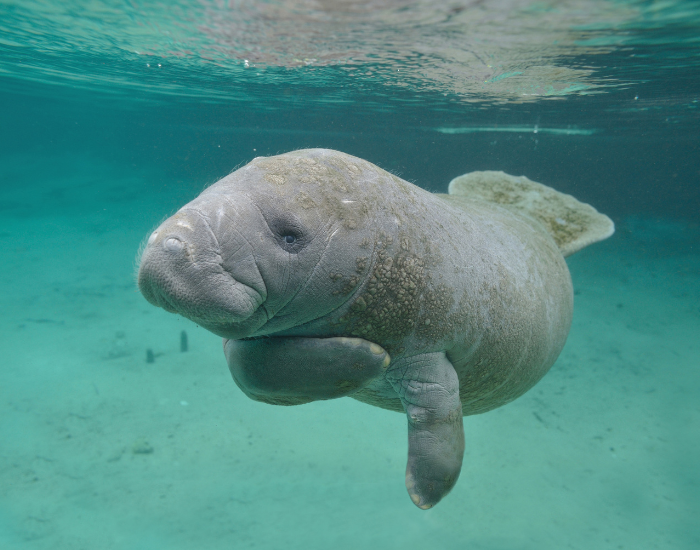
If you look closely at manatee flippers, you’ll notice nails, a subtle evolutionary echo of their terrestrial past. These structures remind us that even fully aquatic mammals carry their land-dwelling heritage.
6. Florida Is a Haven, But Also a Danger Zone for Manatees
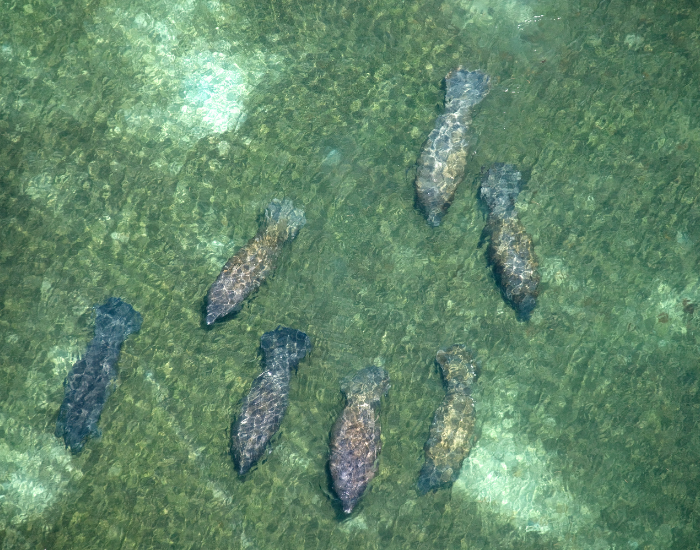
Florida’s warm waters attract thousands of manatees each winter. They gather around natural springs and even power plant outflows that offer consistent warmth. Florida Power companies, such as Florida Power & Light, play a key role by providing warm-water refuges for manatees through their power plant discharges. This concentration creates both opportunities and serious risks for these gentle creatures.
However, Florida’s waterways are also some of the most dangerous for manatees. Several threats threaten their survival in this region. Boat collisions cause severe propeller injuries to manatees. Many manatees bear scars and mutilations from vessel strikes, showing how widespread these injuries are. Entanglement in fishing nets or gear injures or kills many individuals annually.
Cold stress occurs when water temperatures drop below 20°C (68°F). Habitat loss, particularly of seagrass beds, results from pollution and coastal development. These threats often work together, creating compounding dangers for manatee populations. As a result, manatee deaths have increased due to the combined impact of these threats.
To address these issues, the Save the Manatee Club and other conservation organizations advocate for speed limits. They promote sanctuary zones and public education to protect these marine mammals. Enforcement of existing protections remains critical for manatee survival.
7. Manatees Have No Natural Predators—Only Human Ones
Few marine animals live such a peaceful existence. Manatees don’t have natural predators, not sharks, not crocodiles, not orcas. Their biggest danger comes entirely from human activity.
Historically, manatee hunting significantly contributed to population declines, but today it is illegal in many regions, with laws in place to protect these vulnerable animals.
Human interference through boating, pollution, and habitat degradation has drastically reduced manatee populations across their range. In recent years, Florida alone has seen record manatee deaths due to starvation. Disappearing seagrass meadows have eliminated their primary food source.
This tragic trend highlights how fragile their ecosystems truly are. Manatees depend entirely on healthy coastal waters for survival. Without seagrass and clean water, these gentle giants cannot thrive.
8. Manatees Are Surprisingly Social and Curious
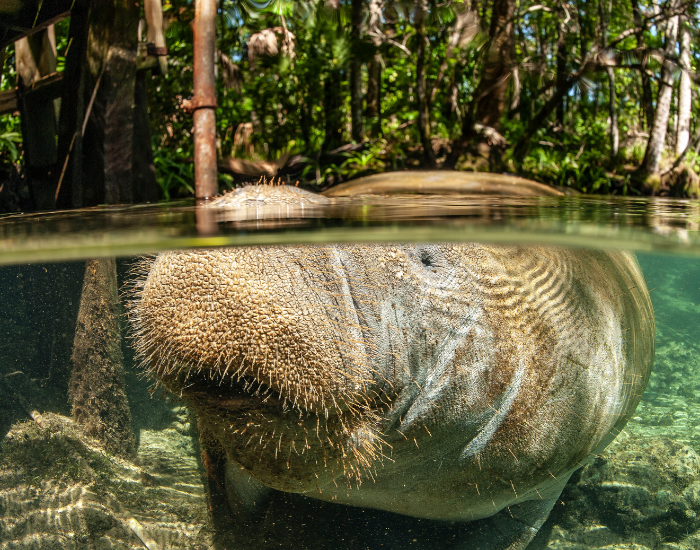
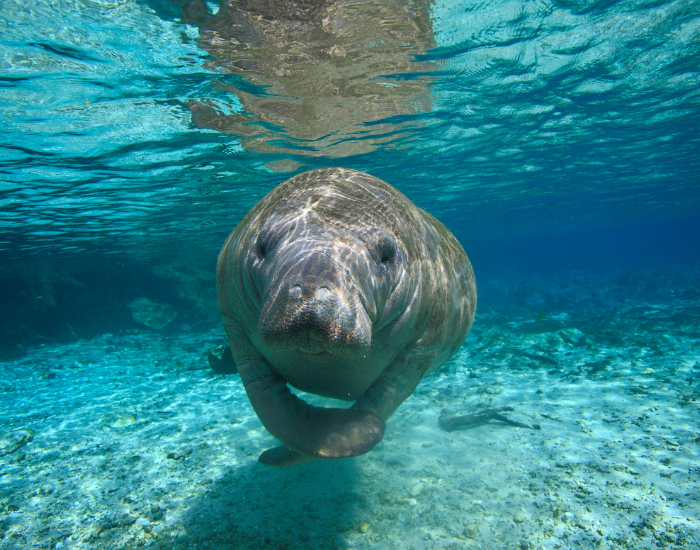
While often solitary, manatees are also known for their gentle curiosity. Divers and snorkelers often describe encounters where manatees approach slowly, investigating with whiskered snouts. These interactions suggest cognitive abilities we’re only beginning to understand.
However, despite their friendliness, it’s illegal to touch or harass manatees in Florida. Even well-intentioned contact can stress them or disrupt their behavior. The best way to appreciate them is to float nearby, stay still, and let them choose the interaction.
Respecting these boundaries protects manatee welfare. It also protects humans from potential injury. Manatees in shallow waters can be unpredictable if startled or threatened.
9. They’re Incredibly Slow but Graceful Swimmers
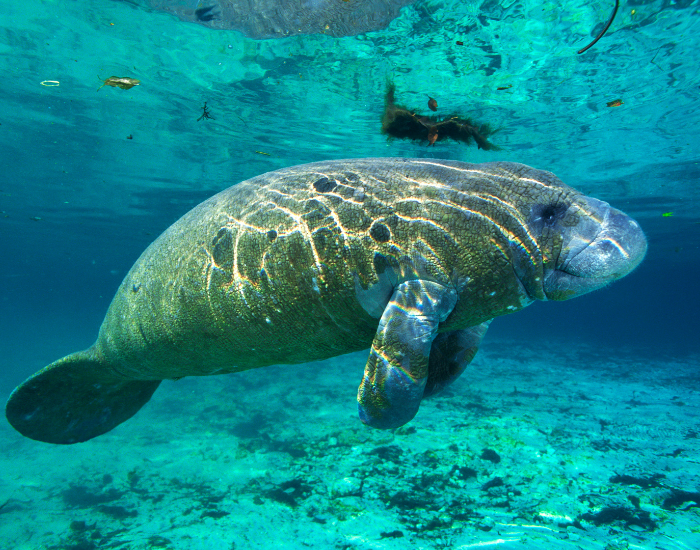
With their massive size, up to 4 meters (13 feet) long and 1,300 kilograms (3,000 pounds). manatees aren’t built for speed. Their bodies seem designed for efficiency rather than velocity. Yet underwater, they move with remarkable grace. Manatees swim at a leisurely pace of about 3 to 5 mph, but can reach speeds up to 20 mph in short bursts when threatened.
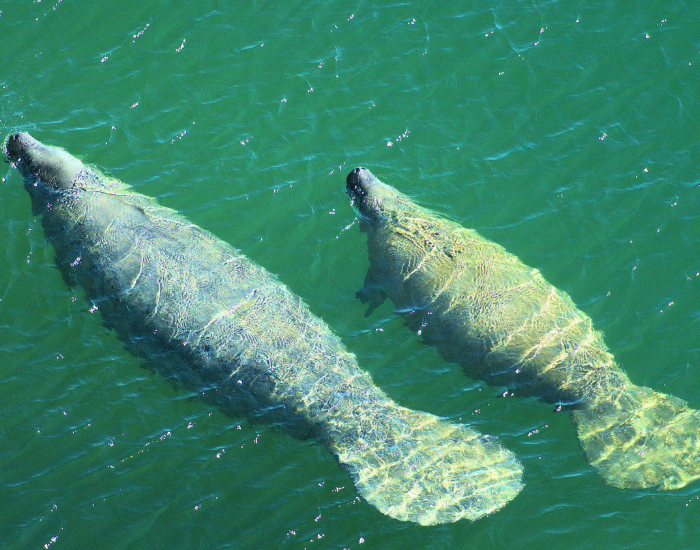
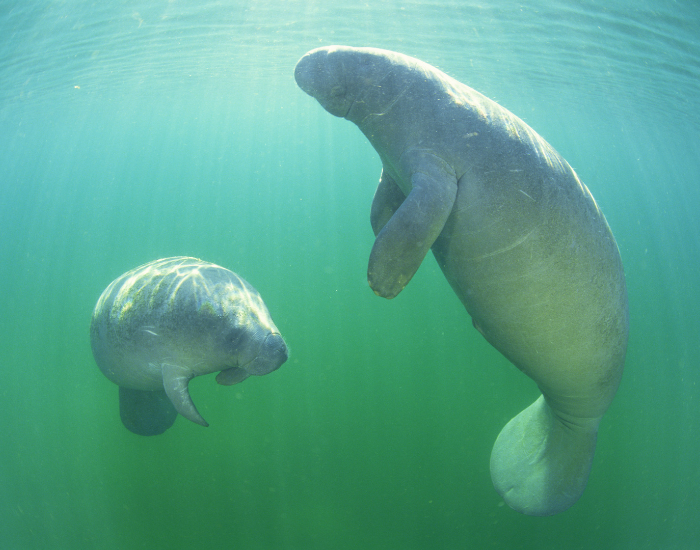
Using their flippers to steer and their broad tails for propulsion, they glide effortlessly through shallow waters. Unlike dugongs, which have fluked tails similar to those of whales, manatees have broad, rounded tails that help distinguish them from their relatives. They surface every few minutes for air with practiced ease. Their calm demeanor is deceptive, though, they can burst into short sprints of up to 20 mph when startled.
This combination of slow movement and burst capability reveals their adaptive nature. It also explains why boat collisions are so dangerous. Manatees simply cannot escape fast-moving vessels.
10. Manatees Need Warm Water Refuges to Survive
Manatees can’t tolerate cold water for long periods. When temperatures dip below critical thresholds, they seek out warm water refuges such as natural springs or power plant discharges. Manatees rely on these warm water sources, including power plant effluents in Florida, for survival during cold periods, especially as natural habitats are lost. This dependency on artificial warm-water sites has created a conservation paradox.
Closing outdated power plants could unintentionally endanger manatees unless new refuges are restored simultaneously. Protecting critical habitat remains vital for survival. Seagrass meadows and warm-water springs must be preserved and restored.
Scientists and conservationists now prioritize creating sustainable alternatives to power plant outflows. This ensures manatees have reliable warm water refuges while phasing out artificial sources. It’s a delicate balance requiring coordination and resources.
11. Conservation Laws Protect Manatees, But Enforcement Remains Challenging
Manatees are protected under multiple laws designed to safeguard their survival. The Marine Mammal Protection Act prohibits harassment, injury, or killing of manatees. The Endangered Species Act provides legal protection at the federal level. Florida’s Manatee Sanctuary Act adds state-level safeguards.
These conservation laws safeguard key habitats and establish penalties for violations. Despite this legal framework, enforcement challenges persist throughout manatee range. Collisions, pollution, and habitat destruction continue in many regions.
Conservation groups push for stricter protections and better water quality management. Restoration of seagrass ecosystems is gaining momentum as a priority. Their message is simple: protecting manatees means protecting entire coastal ecosystems and the biodiversity they support.
12. Manatees Symbolize Coexistence and Ecological Harmony
There’s something profoundly symbolic about manatees. Their calm, slow rhythm contrasts sharply with the human rush. They remind us of what balance looks like in nature and what we might lose.
The future of the manatee depends on us. Our choices, our awareness, and our willingness to coexist peacefully with the life that shares our waters will determine whether these gentle giants thrive or disappear. Future generations deserve the chance to encounter these remarkable creatures.

Manatee Reproduction and Lifespan
Manatees are known for their slow and steady approach to life, and this extends to their reproduction. Female manatees typically give birth to a single manatee calf every two to five years, making each new arrival especially precious. The gestation period lasts about 12 to 14 months, and newborn manatees weigh between 30 and 40 kilograms (66–88 pounds) at birth. These baby manatees, or calves, remain close to their mothers for one to two years, learning vital skills such as finding food and navigating their watery world.
The role of the female manatee is central to the survival of the species, as she provides care and protection to her calf during these formative years. In the wild, manatees can live for 40 to 60 years, with some individuals reaching up to 65 years of age, some of the longest-Living animals in the world.
Manatee Research and Education
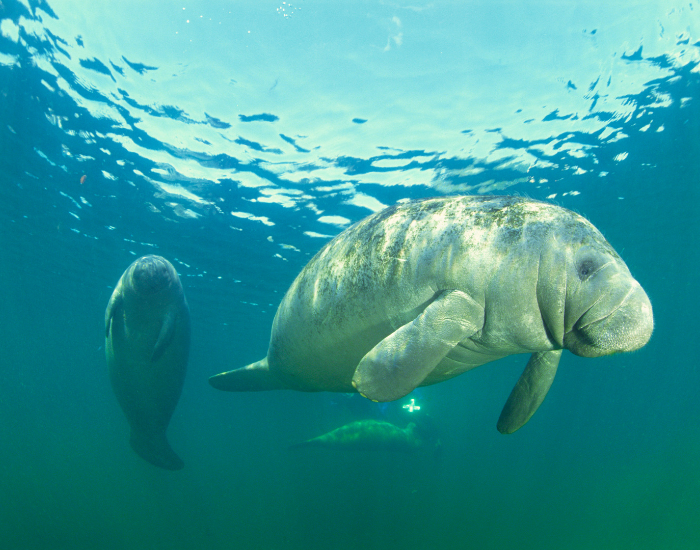
Ongoing research and education are at the heart of efforts to protect manatees and ensure their survival. The Fish and Wildlife Service, along with other wildlife service organizations, conducts vital studies on manatee biology, behavior, and habitat needs. These findings inform conservation strategies and help guide the management of critical habitats for the Florida manatee and other species.
Educational programs, such as those offered by the South Florida Museum, play a key role in raising public awareness about the importance of manatees and the challenges they face. The Manatee Rehabilitation Partnership, a collaboration between the Fish and Wildlife Service and various partners, works tirelessly to rescue, rehabilitate, and release injured or orphaned manatees back into the wild.
FAQ About Manatees
It’s illegal under U.S. law for good reason. Physical contact disrupts their natural behavior and causes stress or harm to these sensitive marine mammals. Always observe from a respectful distance and let them initiate interaction.
They’re naturally curious but not domesticated. Their calm demeanor can seem friendly, but manatees prefer peaceful observation over direct contact. Respecting their space is essential.
The best places include Crystal River, Blue Spring State Park, and Homosassa Springs in Florida, especially during the winter months when manatees congregate in warm waters.
Boat strikes, habitat loss, and seagrass die-offs are the main threats. These dangers are often driven by human activity and pollution. Cold stress during severe winters also causes significant mortality.
Steller’s sea cow was a massive marine mammal discovered in the 18th century in the Bering Sea. Closely related to manatees and dugongs, Steller’s sea cow was hunted to extinction within 27 years of its discovery due to overhunting by humans
Current estimates suggest approximately 6,300 manatees remain in Florida. West Indian manatees are found in Florida and throughout the Caribbean, but their populations are threatened by habitat loss and human activity.

Guardians of the Shallows
Manatees are living testaments to evolution’s creativity and nature’s gentleness. From Amazonian rivers to Florida’s coastal springs, their survival story intertwines with ours. Protecting manatees isn’t just about saving a species, it’s about preserving the delicate balance of coastal life.
Next time you see a shadow glide beneath the water, pause and remember. The ocean’s calmest creatures are also its most vulnerable. Let’s ensure that future generations can still encounter these gentle giants, drifting peacefully through the waters they’ve called home for millions of years.
Further Reading
- 12 Incredible Nudibranch
- 12 Unique Characteristics of the White Sturgeon
- Saving the Vaquita: Urgent Steps for the Most Endangered Marine Mammal
Find Incredible Manatee Experiences!
This blog is reader-supported. When you buy experiences through links listed on this site, we may earn an affiliate commission.