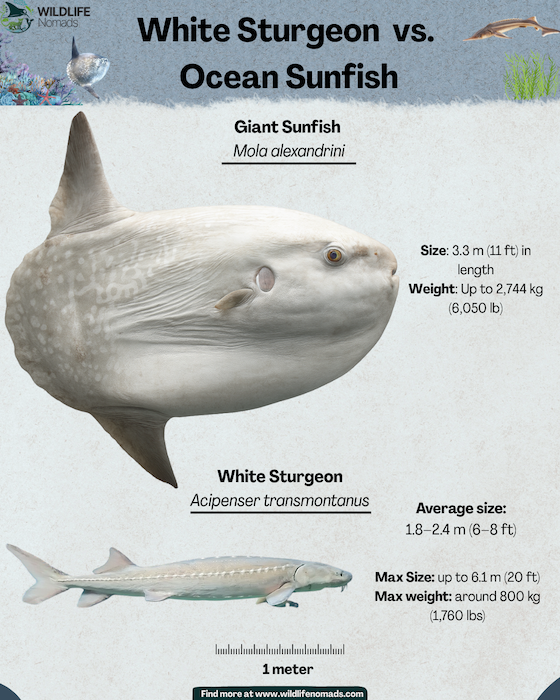
The white sturgeon (Acipenser transmontanus) stands as North America’s largest freshwater fish and one of the most fascinating species in our rivers. This native fish has maintained a historical presence in Pacific Coast ecosystems for millions of years. However, overharvesting and habitat changes now threaten its populations across multiple river systems.
With a lifespan exceeding 100 years, the white sturgeon continues to inspire awe among anglers, scientists, and wildlife enthusiasts. Therefore, understanding this remarkable species becomes essential for effective conservation. Let’s explore 12 characteristics that make the white sturgeon truly extraordinary.
1. The Largest Freshwater Fish
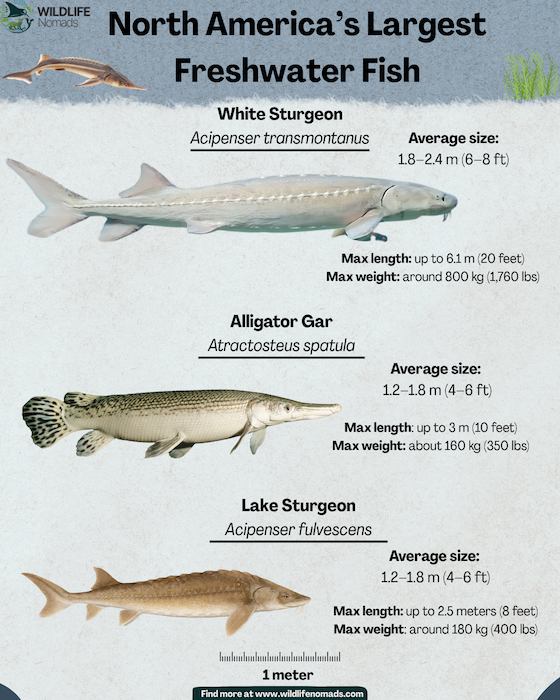
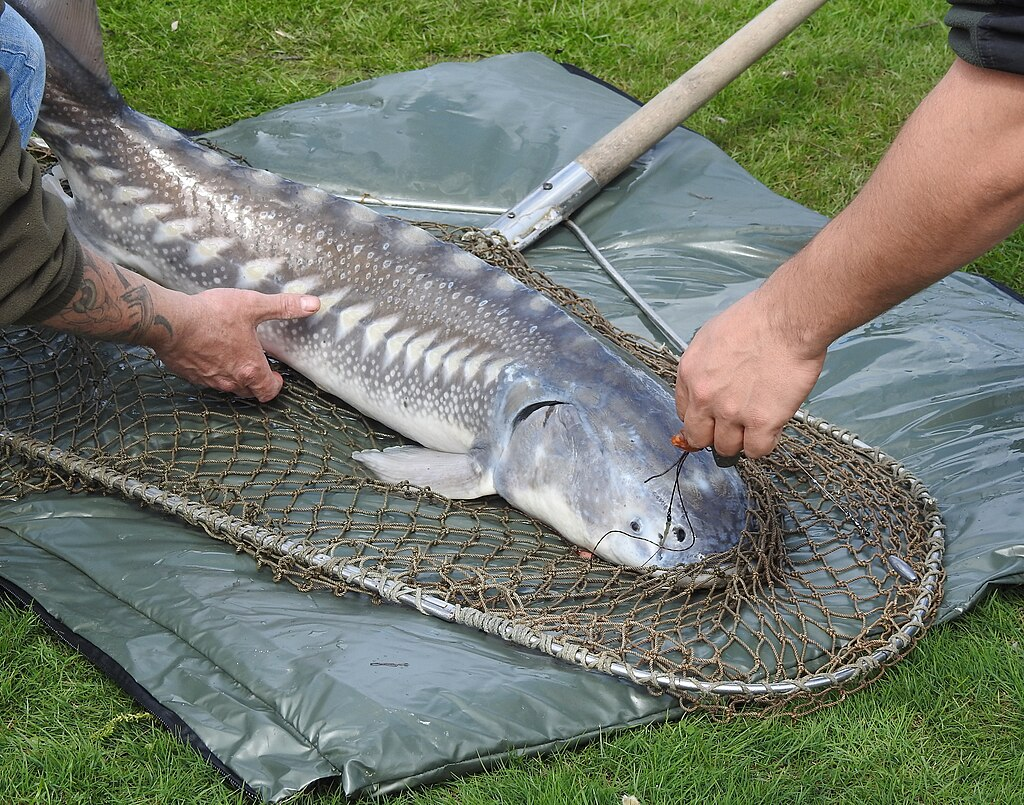
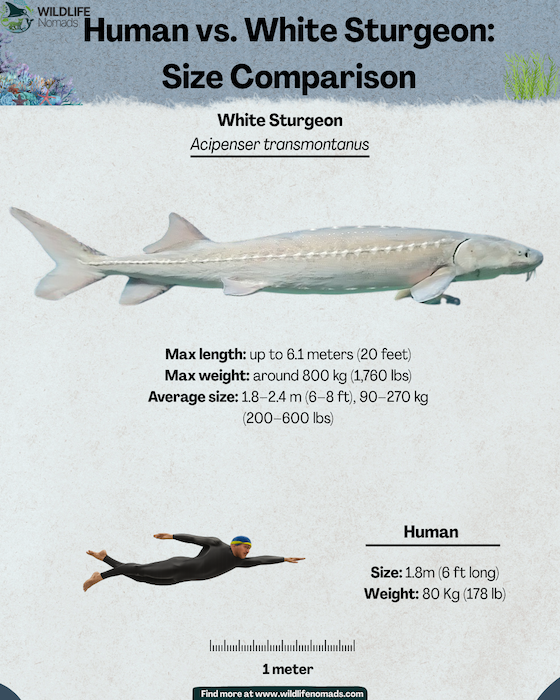
White sturgeon regularly reach lengths of 10–12 feet. Some individuals grow beyond 20 feet, making them true river giants and one of the biggest fish in the world. These massive fish can weigh over 1,500 pounds, establishing them as the largest freshwater species on the continent.
The biggest white sturgeon ever caught reportedly measured longer than a standard car. In addition, it weighed more than a grizzly bear. This impressive sturgeon size makes them a dream catch for sport fishing enthusiasts, though strict regulations now protect the most vulnerable populations.
2. Prehistoric Survivors
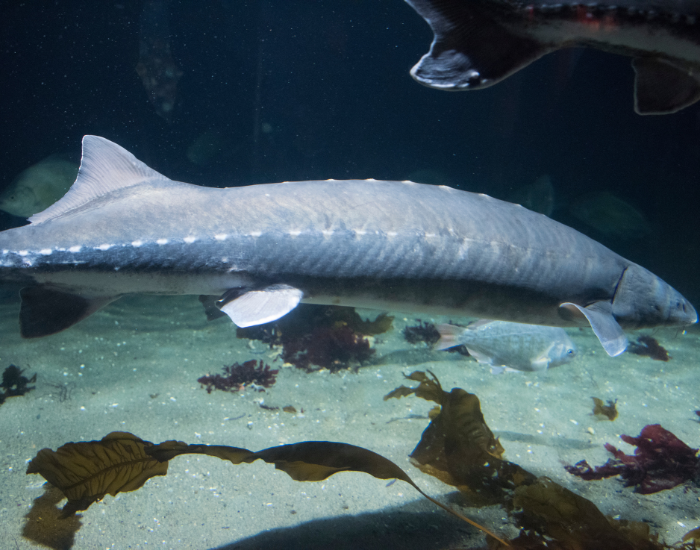
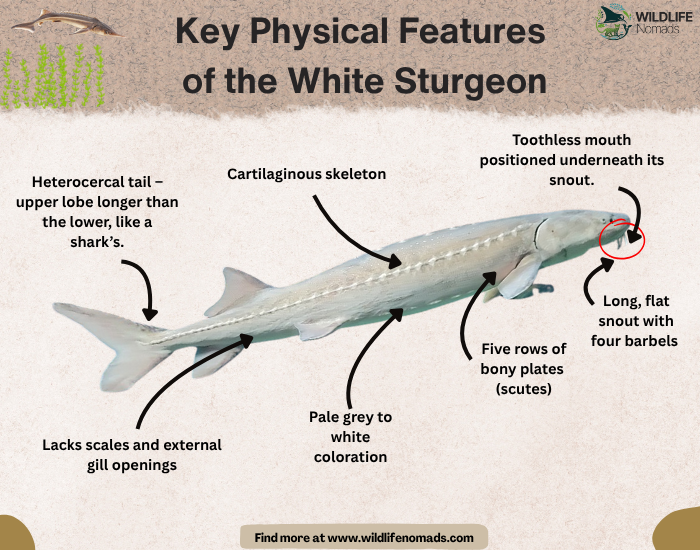
Dating back over 200 million years, white sturgeon are living relics from prehistoric times. Their bony plates, called scutes, provide armor-like protection. Meanwhile, their streamlined bodies reflect ancient evolutionary design.
When you observe a white sturgeon, you’re essentially watching history come alive. This evolutionary endurance explains why many call them “prehistoric fish” or “dinosaur fish.” Their survival through countless environmental changes demonstrates remarkable adaptability.
3. Complex Life History and Extended Lifespan
The life history of white sturgeon encompasses unique developmental stages, complex migration patterns, and distinctive reproductive behavior. These fish can live over 100 years. One of the animals with the longest lifespan. However, females spawn only once every 4–11 consecutive years, which increases their vulnerability to population declines.
Males reach sexual maturity between 10 and 20 years of age. Females, however, may not achieve sexual maturity until 15 to 30 years old, often at a larger size. Understanding these reproductive timelines proves crucial for fisheries management and conservation strategies.
This slow life cycle, combined with their long lifespan, highlights why protecting sturgeon populations remains critical for species survival.
4. Unique Feeding Habits and Specialized Mouth Structure
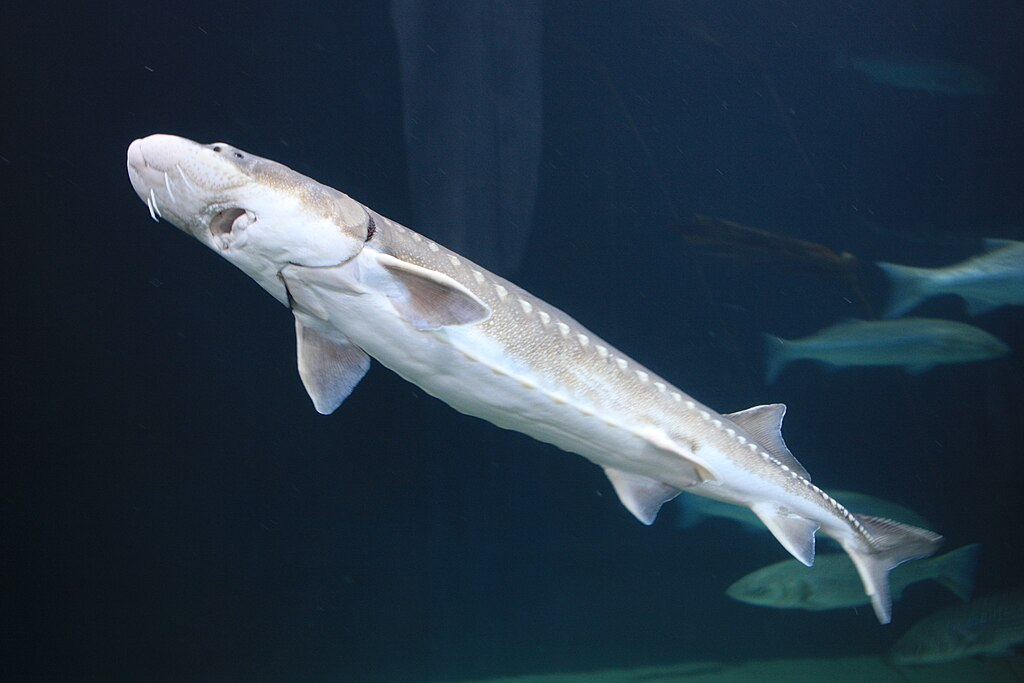
Unlike most fish species, the white sturgeon possesses a toothless mouth positioned underneath its snout. This specialized mouth extends forward like a vacuum, allowing the sturgeon to suck up prey efficiently. Four sensory barbels help them detect food in murky rivers and estuaries.
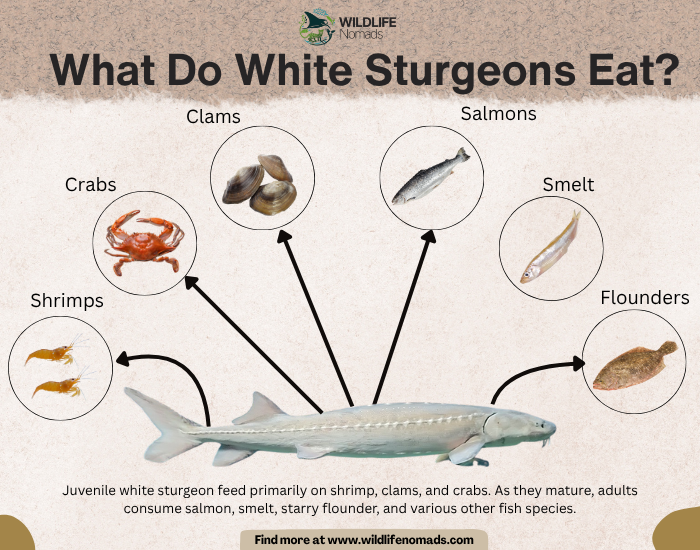
Juvenile white sturgeon feed primarily on shrimp, clams, and crabs. As they mature, adults consume salmon, smelt, starry flounder, and various other fish species. This bottom-dwelling predator plays an essential role in maintaining ecosystem balance throughout river systems.
The sturgeon’s feeding strategy makes it particularly well-adapted to life in turbid waters. Therefore, they thrive in habitats where visual hunters would struggle.
5. Habitat Range Across the Pacific Coast
Where are white sturgeons found? White sturgeon populations extend along the Pacific Coast from Alaska to California. Major populations inhabit the Fraser River in British Columbia, the Sacramento River in California, and the Columbia River Basin.
These fish also thrive in estuaries like San Francisco Bay and various coastal regions. Their preferred habitat includes large rivers with strong currents, estuaries with brackish water, and areas with gravel beds suitable for spawning.
The lower Columbia River supports one of the most robust white sturgeon populations. However, habitat quality varies significantly across different river systems, affecting population health in each region.

6. Anadromous Migration Between Fresh and Salt Water
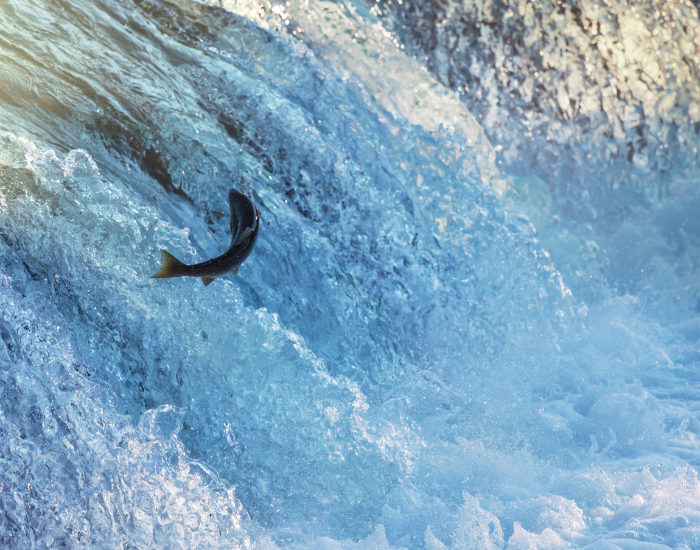
White sturgeon are anadromous fish, meaning they migrate between saltwater and freshwater environments. They typically swim upstream during spring and summer to reach spawning grounds. However, dams like the Bonneville Dam block access to historic spawning areas, dramatically altering natural migration patterns.
Scientists studying sturgeon populations note that these barriers have reshaped reproductive success rates. In addition, blocked migration routes prevent fish from reaching optimal spawning habitat, reducing recruitment of juvenile fish into populations.
The Oregon Department of Fish and Wildlife monitors migration patterns closely. Conservation efforts now focus on improving fish passage at major dams to restore historical migration routes.
7. Impressive Spawning Potential and Reproductive Challenges
A single female white sturgeon can produce up to 3 million eggs per spawning event. The spawning season typically occurs between February and early June. Water temperature and river flow heavily influence spawning timing across different river systems.
These sticky eggs adhere to rocky substrates in fast-flowing water. Later, these eggs become the source of prized sturgeon caviar. However, because females spawn only once every several consecutive years, losing even one spawning cycle can harm entire populations.
Spawning success depends on specific environmental conditions. Therefore, changes in river flow, temperature, or habitat quality directly impact reproduction rates and long-term population viability.
8. Remarkable Size Variations Across Populations
White sturgeon size depends on multiple factors including age, sex, and habitat quality. Many fish caught in sport fishing measure 5 to 8 feet in length. However, large white sturgeon can easily exceed 12 feet.
Occasionally, an albino sturgeon appears with pale, ghostly skin. These rare individuals fascinate both biologists and anglers. Size variations also occur between different river systems, with Columbia River Basin fish often growing larger than those in California rivers.
Fork length measurements help scientists track growth rates in different populations. Juvenile white sturgeon typically reach 30 centimeters in their first year, demonstrating rapid early growth.
9. Threats Facing White Sturgeon Populations
White sturgeon face multiple serious threats across their range. Overfishing and commercial fisheries historically depleted many populations. Pollution in rivers and estuaries continues to degrade critical habitat.
Habitat loss from dam construction remains a major concern. These barriers block access to spawning grounds and fragment populations. Climate change now adds pressure by altering spawning cycles and affecting water temperature in rivers.
In recent years, white sturgeon populations have experienced additional declines despite conservation efforts. The Department of Fish and Wildlife in Oregon, California, and British Columbia has implemented protective measures. These include legal catch limits, slot size restrictions, and mandatory catch-and-release in sensitive areas.
Conservation challenges remain significant. However, coordinated management across state, federal, and tribal agencies offers hope for recovery.
10. Economic and Cultural Significance
For centuries, Indigenous communities along Pacific Northwest rivers relied on white sturgeon for food and cultural practices. These fish held deep spiritual significance and provided essential nutrition. Today, that cultural connection continues through tribal fishing rights and traditional practices.
Sport fishing for white sturgeon now supports local economies throughout the Pacific Coast. Anglers travel from across North America to fish the Columbia River Basin, Fraser River, and other prime locations. However, strict regulations ensure conservation takes priority over exploitation.
The balance between recreation and conservation remains delicate. Therefore, fisheries management must adapt continually to protect wild populations while maintaining sustainable fishing opportunities.
11. Critical Ecological Role in River Systems
White sturgeon habitat supports countless other species throughout river ecosystems. Because these fish occupy both freshwater and brackish zones, they serve as important ecological indicators. The abundance of white sturgeon often reflects overall river health.
A healthy sturgeon population signals clean rivers capable of sustaining salmon, steelhead, and other native fish. Their role as both predator and prey cements their importance in North America’s freshwater ecosystems. In addition, sturgeon help control populations of smaller fish and invertebrates.
Scientists use sturgeon populations to assess habitat quality and environmental changes. Monitoring their abundance helps conservationists understand broader ecosystem trends and identify emerging threats.

12. Conservation Efforts and Future Outlook
The conservation story of white sturgeon (Acipenser transmontanus) continues to evolve. Current efforts include hatchery programs to boost juvenile white sturgeon survival rates. Fish ladders at major dams aim to improve migration access to spawning grounds.
Long-term monitoring of populations and spawning cycles provides essential data for management decisions. These conservation efforts have continued for several decades, adapting to changing environmental conditions and population trends.
Protecting this species requires cooperation across state agencies, federal programs, and tribal governments. Support from anglers who practice catch-and-release fishing also contributes significantly to conservation success.
Looking ahead, climate change presents new challenges for sturgeon populations. However, ongoing research and adaptive management strategies offer hope for this prehistoric fish.
Physical Adaptations: Nature’s Perfect Design
The white sturgeon (Acipenser transmontanus) showcases evolutionary perfection. It thrives in dynamic waters from the Columbia River Basin to the Fraser River in British Columbia and beyond.
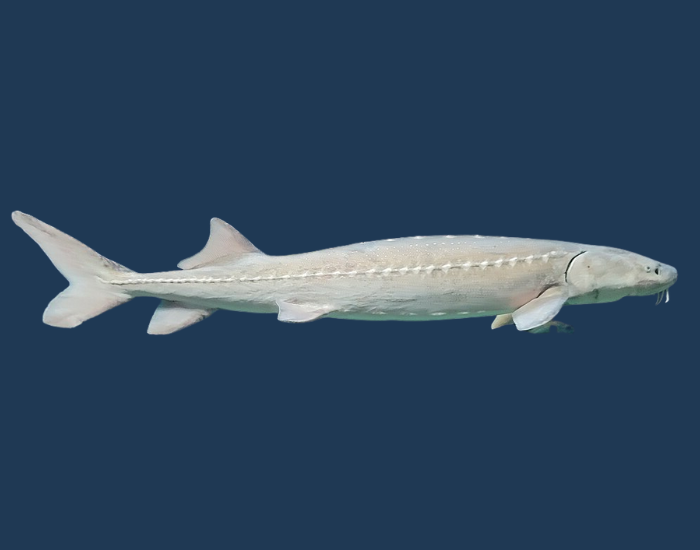
One striking trait involves the armor-like scutes, bony plates running along its back and sides. Unlike most fish, white sturgeon have scaleless skin. These bony plates shield them from predators and rough riverbeds in large rivers.
Another defining feature includes four barbels dangling from the snout. These whisker-like organs detect vibrations and help locate hidden prey. In murky waters of the lower Columbia River and other river systems, these barbels provide crucial survival advantages.
The sturgeon also relies on advanced sensory systems. Specialized taste buds and electroreceptors allow detection of shrimp, clams, crabs, starry flounder, and salmon in low-visibility conditions. Consequently, they thrive as bottom-dwellers in both freshwater and estuaries.
Gray fins and a powerful, shark-like tail provide speed and endurance. These traits enable sturgeon to glide through strong currents and travel long distances during seasonal migrations. Survival during these journeys depends on efficiency and power.
Juveniles grow quickly, reaching 30 centimeters fork length in their first year. During this stage, they develop scutes and barbels gradually. Because they mature late, white sturgeon populations remain sensitive to environmental changes and overfishing pressure.
From Historical Abundance to Modern Conservation
White sturgeon once thrived from Alaska to northern Baja California. Legendary populations occupied the Columbia River Basin, Fraser River, and Sacramento River. Indigenous communities and early commercial fisheries relied heavily on their abundance.
Today, the landscape has changed dramatically. Overfishing, dam construction like the Bonneville Dam, and habitat destruction have significantly reduced populations. In California, the species now holds status as a species of special concern.
Conservation efforts are underway across the Pacific Coast. Fish passage improvements, catch limits, and habitat restoration programs aim to reverse population declines. The Oregon Department of Fish and Wildlife and agencies in British Columbia actively monitor populations.
They also enforce protective regulations through fisheries management programs. These efforts target both wild populations and hatchery supplementation to maintain genetic diversity.
Climate change adds new pressure by altering spawning grounds and migration patterns. The future of these ancient fish depends on continued cooperation. Agencies, Indigenous communities, and recreational anglers who practice catch-and-release all play vital roles.
FAQ About The White Sturgeon
They are relatively rare and declining in many areas, though populations in the Columbia River Basin remain stable with management.
It varies by region, but only mid-range fish within specific slot lengths may be retained.
Reports suggest specimens over 20 feet long and weighing more than 1,500 pounds.
While prized for caviar, regulations limit harvest. Many anglers practice catch-and-release.
Some populations are considered at risk, especially in California’s Sacramento River, where habitat pressures are severe.
Estimates suggest more than 100 years old, making them true river elders.
The Columbia River Basin, Fraser River, and San Francisco Bay offer prime fishing opportunities. However, always check current regulations before fishing. Rules change frequently based on population assessments.
Juveniles primarily consume shrimp, clams, and crabs. As they grow, their diet expands to include larger prey like salmon, smelt, and various other fish species.
A Prehistoric Fish Worth Conserving
The white sturgeon embodies millions of years of evolution and adaptation. Every unique feature reflects survival through countless environmental changes.
Protecting this species means protecting the great rivers of North America. It requires balancing recreational fishing with conservation needs. It demands cooperation across agencies, communities, and nations.
Future generations deserve the opportunity to witness these prehistoric fish in wild river systems. They should experience the awe of watching a 12-foot sturgeon glide through river currents. Therefore, our conservation efforts today determine whether white sturgeon populations thrive or decline.
These giants remind us that ancient life still exists beneath the surface of our rivers. They connect us to prehistoric times while demanding our modern commitment to conservation.
Further Reading