I first learned about lampreys back in my second year of my undergraduate biology degree, during a zoology unit that covered the early evolution of vertebrates. I remember seeing pictures of these eel-like creatures for the first time, their circular mouths lined with teeth, their scaleless bodies, and thinking they looked like something out of an alien movie. They were fascinating and ugly all at once.
But what stuck with me wasn’t just their strange and weird fish appearance; it was the fact that some lamprey species are actually endangered, and that so few people seem to care. Unlike charismatic animals like seals or bears, lampreys don’t get the same conservation spotlight. It made me realize how often our willingness to protect a species depends on how “pretty” we think it is, a bias that says more about us than about the creatures themselves.
Lampreys are living fossils that predate dinosaurs, trees, and even most modern vertebrate groups. Their story stretches back more than 360 million years, long before sharks or bony fishes ruled the seas. In addition, they’re at the heart of one of the most dramatic ecological battles in North America. The fight to control sea lampreys in the Great Lakes continues today.
In this post, we’ll dive deep into the world of lampreys. We’ll explore what makes these jawless fish unique and why they’re both ecologically fascinating and devastatingly invasive. You’ll also learn how scientists are trying to manage their impact on freshwater species.
1. Lampreys Are Among the World’s Oldest Vertebrates
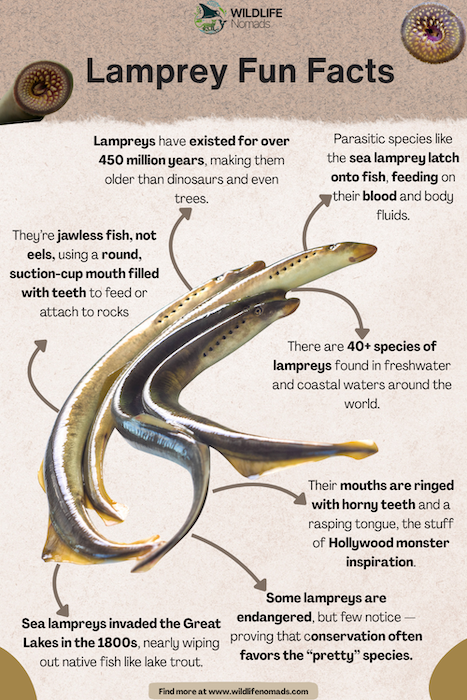
Lampreys belong to the superclass Agnatha, which literally means “without jaws.” Alongside hagfish, they’re part of the last surviving lineage of jawless fish. Lampreys and hagfish are closely related, sharing a common ancestry among jawless vertebrates. These creatures represent the earliest vertebrates on Earth, and they are among the most primitive living vertebrates, which highlights their evolutionary significance as extant examples of ancient vertebrate lineages. Fossil records show that lamprey-like species existed over 450 million years ago, making them older than dinosaurs and even most land plants.
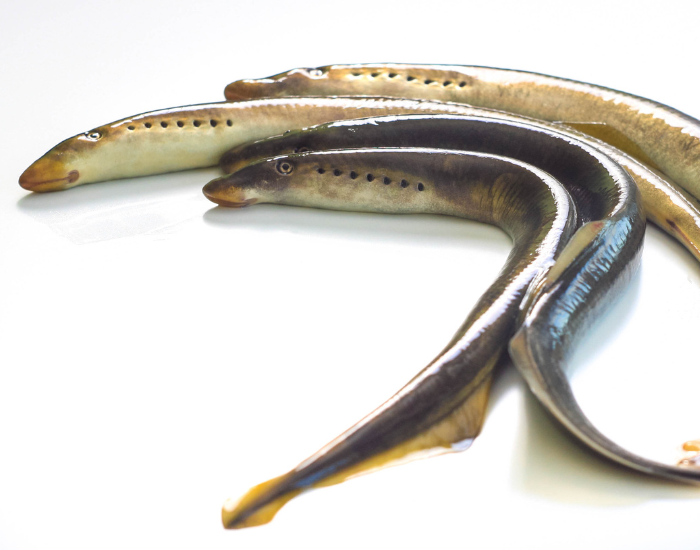
Despite that ancient lineage, lampreys haven’t changed much over time, they have adapted to a niche, and there is not much need of change. Their eel-like bodies, seven gill pores, and toothed, funnel-shaped mouths are almost identical to fossils found in ancient rock formations. Therefore, they represent a perfect example of evolutionary persistence. When a body plan works, nature keeps it for millions of years.
Marine mammals and other predators have evolved alongside these ancient fish. Yet the lamprey species has maintained its primitive characteristics across entire geological periods.
2. Lampreys Are Not Eels, They’re Jawless Fish
It’s easy to mistake a lamprey for an eel when you see one slithering in freshwater rivers or coastal streams. But lamprey eels aren’t actually eels at all (I know they look like, but no). This common misconception confuses many people.
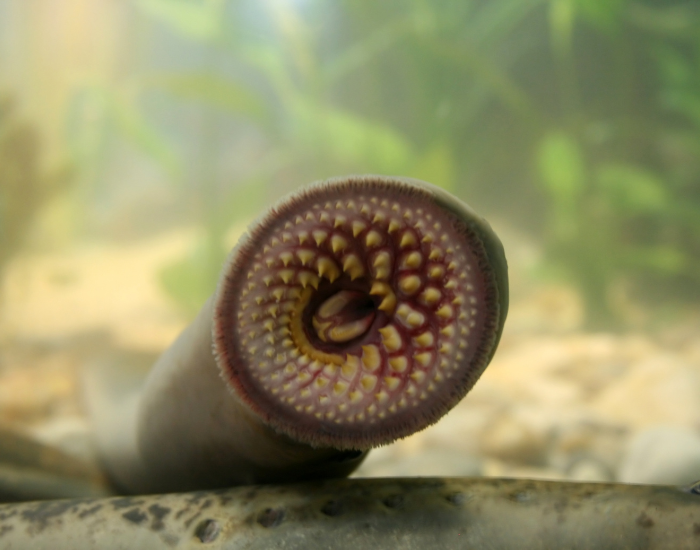
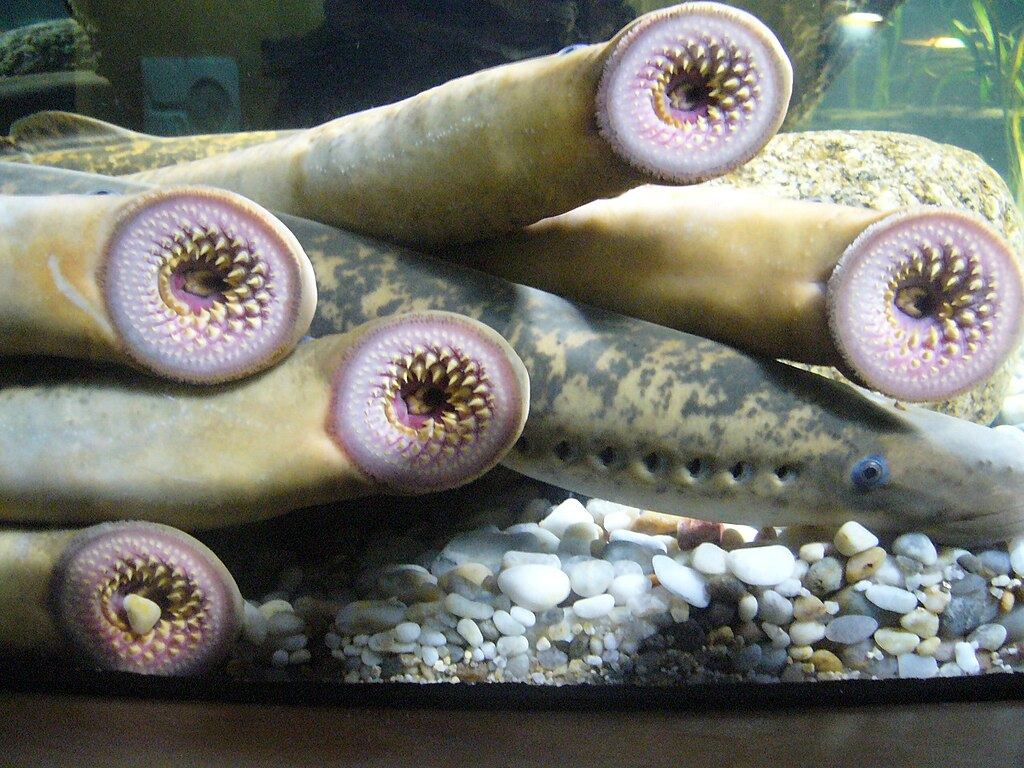
Unlike true eels, lampreys have no paired fins, scales, or jaws. Lampreys possess one or two dorsal fins along their backs. In fact, lampreys typically have two dorsal fins, a key characteristic among jawless fish. Instead, they possess a cartilaginous skeleton and a round, suction cup mouth filled with concentric rows of horny teeth. This unique structure allows them to latch onto moving rocks or, in the case of parasitic fish, other fish species.
Lampreys are part of the Cyclostomata, a group that also includes hagfish. Together, they represent some of the earliest and most primitive forms of vertebrate life. Their classification as jawless fish sets them apart from bony fishes and other species in salt water and fresh water ecosystems.
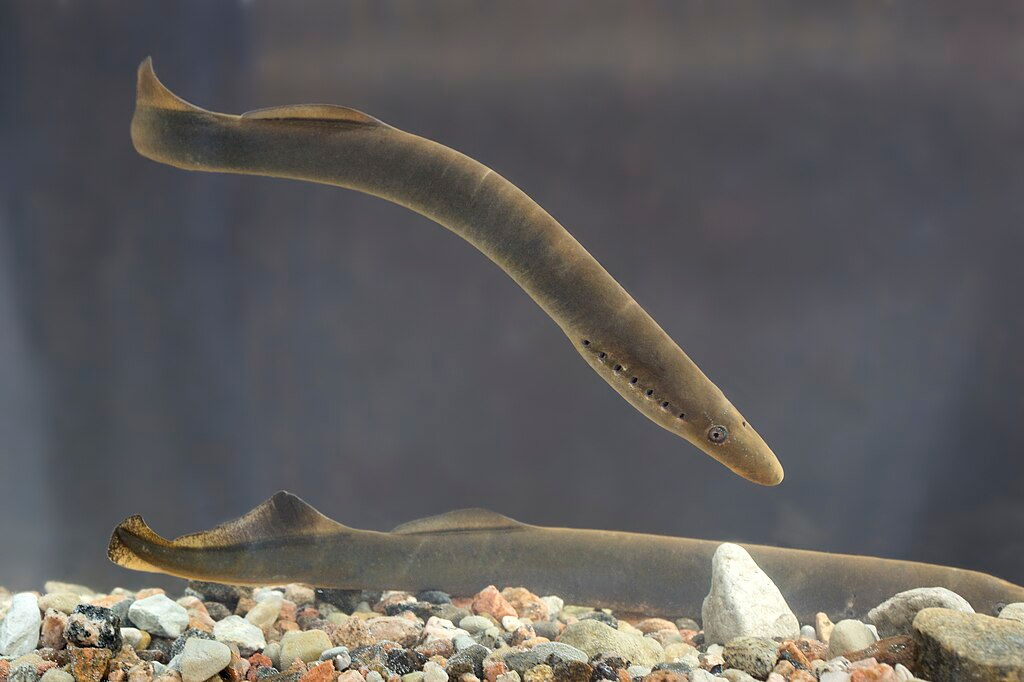
3. The Lamprey Mouth Is a Suction Cup of Teeth
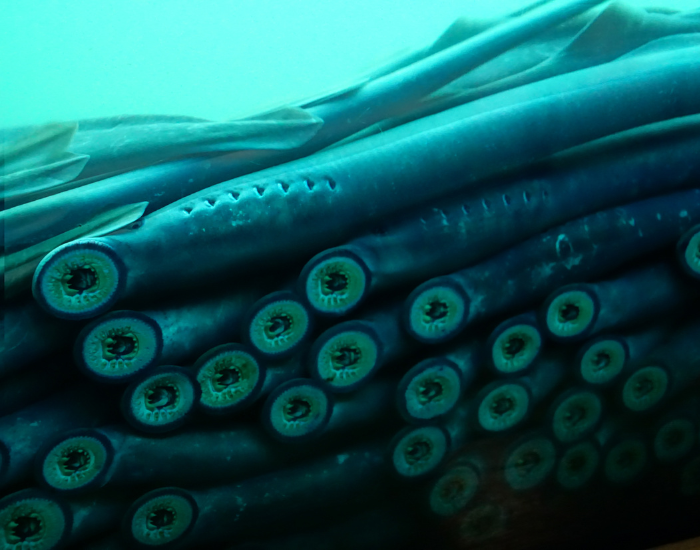
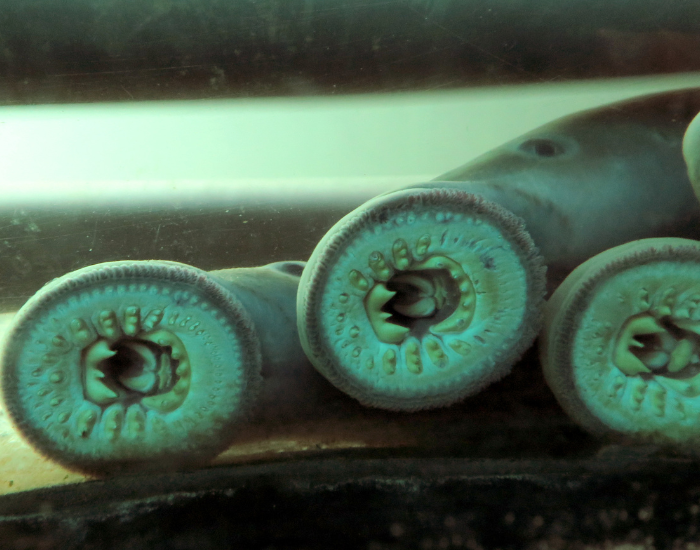
A lamprey mouth is one of nature’s most fascinating and horrifying evolutionary designs. It’s circular, lined with horny teeth, and equipped with a rasping tongue that bores into the flesh of other fish. The kind of creature that inspires Hollywood. This adaptation makes parasitic lampreys incredibly effective predators.
This unique structure allows parasitic species like the sea lamprey (Petromyzon marinus) to attach themselves to host fish. They pierce the fish’s skin and feed on blood and body fluids. Their saliva contains anticoagulants, keeping the wound open while they feed for extended periods.
To a fish, that’s devastating news. A single sea lamprey can kill up to 40 pounds of fish during its adult lifetime. This statistic has made them one of the most infamous invasive species in the world. Lake trout, salmon, and other species have suffered tremendous losses because of lamprey attacks.
The suction cup mouth creates such strong attachment that lampreys can remain connected to host fish even in fast-moving rivers. Their tail fin and body shape help them maintain position while feeding.

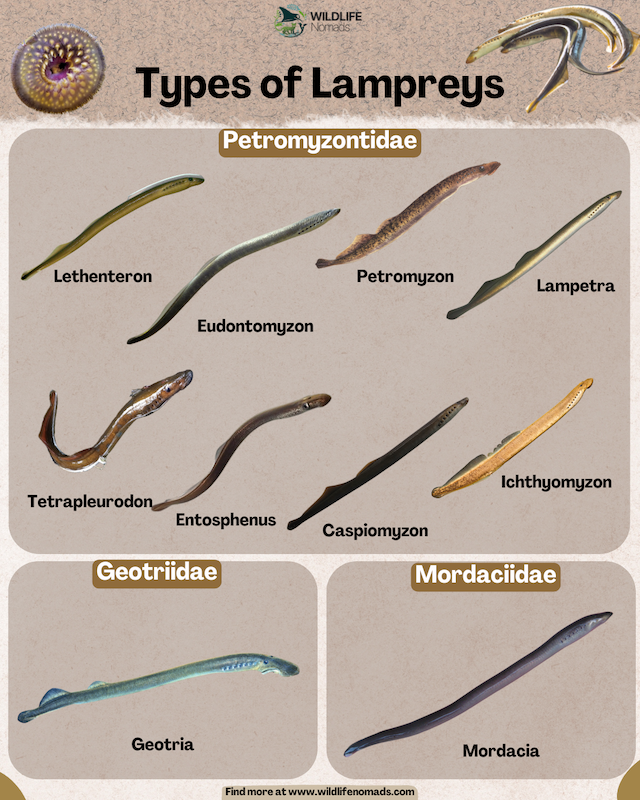
4. There Are Over 40 Species of Lampreys Worldwide
Lampreys are found in both freshwater and coastal marine waters across temperate regions worldwide. From the Pacific Northwest to Europe, Asia, and Australia, these species have adapted to diverse habitats. Scientists have identified about 40 known species of lampreys, divided broadly into parasitic and non-parasitic types.
Parasitic fish species like the sea lamprey and Pacific lamprey feed on other fish. They can live several years as adults, migrating between salt water and freshwater environments. In contrast, non-parasitic species like brook lampreys don’t feed as adults at all. They spawn and die shortly after metamorphosis, completing their entire lifecycle within streams and rivers.
This diversity reflects their wide ecological range throughout northern regions and temperate regions. Many species thrive in coastal and fresh waters, while others have become established in landlocked lakes like Lake Ontario and Lake Erie. Other lampreys have adapted to specific habitats ranging from the Bering Sea to small tributaries.
5. The Lifecycle of a Lamprey Is Surprisingly Complex
Lampreys undergo a fascinating transformation from larva to adult that’s more dramatic than most people expect. Their entire lifecycle demonstrates remarkable biological complexity developed over millions of years.
Their life begins as a blind, filter feeding larva called an ammocoete. This juvenile form burrows into sediment at the bottom of rivers and streams. For up to seven years, it lives quietly, filtering algae and detritus from the water. The larvae act as filter feeders, improving water quality in their habitats.
When it matures, the lamprey undergoes metamorphosis, developing eyes, teeth, and a sucker-like mouth. During this stage, lampreys also develop well-defined gills, with multiple gill pores on each side of the head, which are essential for respiration in aquatic environments. Parasitic fish adults then migrate to the ocean or large lakes to feed. Meanwhile, non-parasitic species remain in fresh water to spawn. After spawning grounds are established, adults build nests called redds in streams.
This complex life cycle is one reason lampreys have adapted so successfully to new environments, including those they’ve invaded. The anadromous lifestyle of many species allows them to access both marine and freshwater resources.
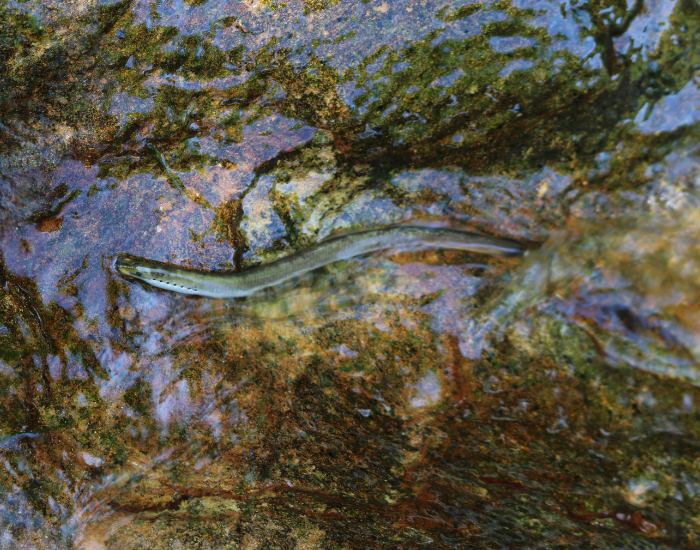
6. The Great Lakes Invasion: A 20th Century Ecological Disaster
The story of the sea lamprey invasion in the Great Lakes is one of the most notorious examples of ecological imbalance. Human engineering accidentally created an entry point for these destructive invaders.
Originally native to the Atlantic Ocean, They were first observed in Lake Ontario in the 1830s, but their spread to the upper Great Lakes via the Welland Canal occurred after 1919 when the canal was deepened. This artificial waterway bypassed natural barriers like Niagara Falls. Niagara Falls served as a natural barrier that originally prevented sea lampreys from spreading to the other Great Lakes, but the construction of the canal allowed them to bypass this obstacle. Once inside, they spread rapidly throughout Lake Ontario, Lake Erie, and other Great Lakes waters. They decimated populations of lake trout, salmon, and whitefish across the region.
By the 1950s, sea lampreys had pushed many native species to the brink of extinction. The fishing industry suffered catastrophic losses. Each lamprey could kill multiple fish in its lifetime, and there were millions of them feeding simultaneously.
The Great Lakes Fishery Commission, along with the U.S. Fish and Wildlife Service, launched extensive control programs. These efforts continue today and represent one of the most ambitious invasive species management programs ever undertaken. In addition, they’ve become a rare success story in freshwater ecology, though challenges remain.
7. Pacific Lampreys Are Ancient Migrants, Not Invaders
Not all lampreys are ecological villains. The Pacific lamprey (Entosphenus tridentatus), native to the west coast of North America, has played an important role in indigenous cultures for centuries. These creatures hold deep cultural and ecological significance throughout the Pacific Northwest.
Unlike the invasive sea lamprey, the Pacific lamprey’s migration from ocean to river is part of a natural anadromous life cycle. This pattern is similar to that of salmon and other anadromous species. They serve as prey for birds and mammals and contribute vital nutrients to rivers after spawning.
Tribes like the Yakama Nation and Nez Perce are leading restoration projects to protect lamprey runs. They work closely with agencies like NOAA and the U.S. Fish and Wildlife Service to rebuild spawning grounds and restore river habitats. These efforts demonstrate the importance of preserving native lamprey species.
8. Lampreys Are Both Parasitic and Beneficial
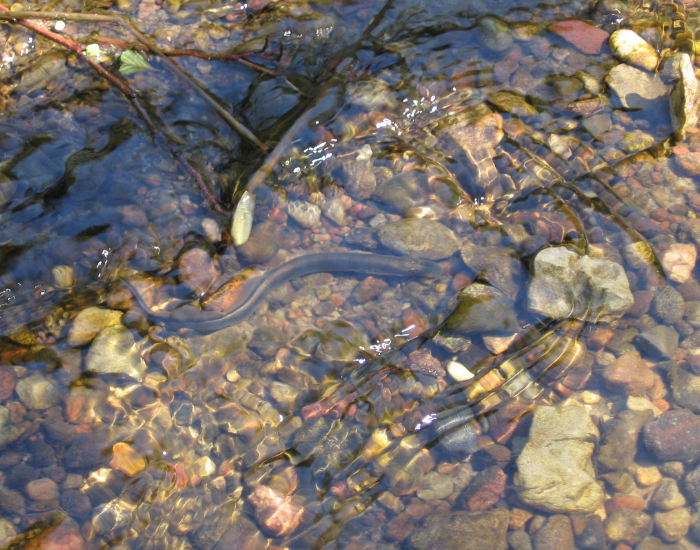
It’s easy to label lampreys as pests, and in some regions, they certainly are problematic. However, ecologically, they also play important roles in their native ranges. Understanding both aspects helps us manage them more effectively.
In their native habitats, lampreys transport marine nutrients upstream during spawning. They aerate streambeds when building nests, improving conditions for other species. Moreover, they serve as food for fish, birds, and mammals throughout the food web. They stabilize ecosystems by linking marine and freshwater systems.
Even their larvae, the ammocoetes, improve water quality through filter feeding. This process is similar to how freshwater mussels clean water. The larvae filter algae and organic matter, reducing turbidity in streams and rivers.
However, it’s only when they invade ecosystems without natural predators that problems arise. In the Great Lakes, sea lampreys prey on fish species that didn’t evolve with them. Without natural barriers or predators, their population becomes ecologically disastrous. This imbalance has required decades of intensive management.
9. Humans Once Ate Lampreys as a Delicacy
Believe it or not, people have been eating lampreys for over a thousand years. In medieval Europe, lamprey pies were considered a luxury food reserved for nobility. Even King Henry I of England famously died after overindulging in them during a feast.
Their rich, oily flesh was prized for its distinctive flavor, especially during religious fasting periods. When red meat was forbidden, fish species like lampreys provided an acceptable alternative. The unique taste made them highly sought after among wealthy Europeans.
Today, lamprey consumption continues in parts of Portugal, Spain, and Finland. Species like the river lamprey (Lampetra fluviatilis) are still harvested seasonally in these regions. Traditional recipes have been passed down through generations of coastal communities.
For those wondering about the taste, lamprey has been described as a mix between smoked eel and liver. The texture is dense and the flavor is strong, which appeals to adventurous eaters. However, modern concerns about parasitic fish and ecology have reduced their popularity in many areas.

10. Lampreys Don’t Attack Humans, But Their Bite Can Hurt
Are lampreys harmful to humans? Generally, no. Lampreys aren’t aggressive toward people and rarely attach to divers or swimmers. These creatures evolved to target fish, not mammals or humans.
However, if a parasitic species does attach to your skin, which has happened in rare cases, the experience can be painful. The rasping teeth and suction cup mouth can cause uncomfortable wounds. Their sharp teeth penetrate skin, and their saliva prevents clotting. Therefore, it’s definitely not something you’d want to experience firsthand.
But rest assured that lampreys don’t drink human blood intentionally. They evolved specifically to target fish species in salt water and fresh water environments. We’re far too large and warm-blooded for them to find us appealing as prey. The few documented cases of lamprey attachment to humans were likely accidental.
Marine mammals occasionally suffer lamprey attacks, but these incidents remain relatively rare. Most encounters between lampreys and large animals result in the lamprey quickly detaching once it realizes the mistake.
11. Controlling Lampreys Requires Science and Strategy
The Great Lakes Fishery Commission continues to lead lamprey control through innovative science and community cooperation. Their approach has achieved remarkable results over decades of dedicated effort.
Their tools include specialized lampricides that target lamprey larvae in streams. These chemicals are carefully formulated to avoid harming most other fish species. In addition, physical barriers and traps block upstream migrations, preventing lampreys from reaching spawning grounds in tributaries.
Scientists have also developed sterile-male release programs as a genetic management strategy. This approach reduces reproduction rates without using chemicals. Furthermore, experimental pheromone lures attract lampreys into traps using chemical cues. These innovative methods represent cutting-edge invasive species management.
These strategies have reduced sea lamprey populations by 90% since the 1960s. This success has allowed native species like lake trout to rebound across the Great Lakes. However, maintaining this achievement is costly and requires continuous effort. It serves as an ongoing example of how complex invasive species management truly is.
12. Lampreys Teach Us About Evolution, and Our Impact
For biologists, lampreys aren’t just ecological villains. They’re scientific treasures that offer unique insights into vertebrate evolution. These ancient creatures help researchers understand fundamental biological processes.
Because they represent one of the earliest vertebrate lineages, lampreys help scientists understand how nervous systems evolved. Their simple yet functional immune systems provide clues about vertebrate genome development. Moreover, their unique DNA rearrangement process has inspired new biomedical studies with potential medical applications.
From an ecological standpoint, lampreys remind us of the consequences of altering waterways without consideration. The Welland Canal, built for commerce, accidentally became a superhighway for invaders. This historical example serves as a cautionary tale about how human progress can open doors to ancient forces.
Today, we understand that managing entire lifecycles and habitats requires comprehensive approaches. The lessons learned from lamprey invasions inform conservation efforts for other species. In addition, they highlight the importance of preserving natural barriers that protect native ecology.
FAQ: Everything You Wanted to Know About Lampreys
No, they don’t pose a danger to people. While parasitic lampreys can attach to fish, human attacks are extremely rare. These jawless fish evolved to feed on other fish species, not mammals.
Yes, their sharp horny teeth and suction cup mouth can leave painful wounds. However, lampreys rarely attach to humans. Fish species bear the brunt of their parasitic behavior.
Lampreys belong to the class Cephalaspidomorphi, sometimes placed in Agnatha. They’re classified under the phylum Chordata as primitive vertebrates.
Lampreys are fish, not eels. They’re jawless vertebrates and primitive relatives of modern bony fishes. The term “lamprey eels” is a misnomer.
No confirmed cases exist. Their feeding mechanism is specifically adapted for fish, not humans. Marine mammals occasionally suffer attacks, but human fatalities have never been documented.
Not toward humans. They attach to hosts only for feeding purposes, not in defense or attack. Their behavior is driven by feeding instincts, not aggression.
Sea lampreys are native to coastal and fresh waters of the Atlantic Ocean. However, they’ve invaded the Great Lakes through the Welland Canal. They also inhabit rivers and streams throughout northern regions.
A Relic of Evolution and a Reminder of Balance
Lampreys are living fossils that survive from a time before jaws, scales, or bones existed. Their story is both awe-inspiring and alarming. They provide proof of nature’s resilience and a lesson in ecological balance that spans millions of years.
These jawless fish have endured ice ages, continental drift, and now the Anthropocene. When I travel or dive now and see one clinging to a rock or fish, I don’t just see a parasitic fish. I see evolution’s fingerprint, a creature that has survived countless extinctions and environmental changes.
Our challenge is to understand them, respect their role where they belong, and manage them responsibly where they don’t. The Great Lakes Fishery Commission’s work demonstrates that effective management is possible with sustained effort. In addition, conservation projects in the Pacific Northwest show us how to protect native lamprey species.
The future of lamprey management depends on continued research, community cooperation, and respect for natural barriers. As we learn more about these remarkable creatures, we gain insights that extend far beyond a single species. We learn about evolution, ecology, and our responsibility as stewards of the natural world.
Further Reading
- 12 Facts About Trigger Fish
- Echinoderms: The Spiny-Skinned Architects of the Ocean
- The Fascinating World of the Seadragon
- Scary but Gentle: 12 Amazing Facts About the Wolf Eel
References:
Chang, M. M., Wu, F., Miao, D., & Zhang, J. (2014). Discovery of fossil lamprey larva from the Lower Cretaceous reveals its three-phased life cycle. Proceedings of the National Academy of Sciences of the United States of America, 111(43), 15486–15490. https://doi.org/10.1073/pnas.1415716111
Clemens, B. J., & Wang, C. J. (2021). Dispelling misperceptions of native lampreys (Entosphenus and Lampetra spp.) in the Pacific Northwest (USA). Conservation Science and Practice, 3, e402. https://doi.org/10.1111/csp2.402
Dissanayake, A. A., Wagner, C. M., & Nair, M. G. (2021). Evaluation of health benefits of sea lamprey (Petromyzon marinus) isolates using in vitro antiinflammatory and antioxidant assays. PloS one, 16(11), e0259587. https://doi.org/10.1371/journal.pone.0259587
Johnson, N. S., Swink, W. D., & Brenden, T. O. (2017). Field study suggests that sex determination in sea lamprey is directly influenced by larval growth rate. Proceedings. Biological sciences, 284(1851), 20170262. https://doi.org/10.1098/rspb.2017.0262
Nislow, K. H., & Kynard, B. (2009). The role of anadromous sea lamprey in nutrient and material transport between marine and freshwater environments. American Fisheries Society Symposium, 69, 485–494.
Xu, Y., Zhu, S. W., & Li, Q. W. (2016). Lamprey: a model for vertebrate evolutionary research. Zoological research, 37(5), 263–269. https://doi.org/10.13918/j.issn.2095-8137.2016.5.263