I have spent the last five years diving into and snorkeling across reefs in Australia and South East Asia. If there is one thing biology teaches you, it is this: nature is far weirder and fascinating than any science fiction film.
On those dives, I watched puffer fish inflate like spiky balloons and parrot fish crunch coral like an afternoon snack. However, those species barely scratch the surface. This guide covers the weirdest fish in the world, bizarre creatures found throughout the world’s oceans, species that defy evolution, challenge physics, and look like they were designed in a fever dream.
Whether you are planning your next dive trip or simply want to explore some truly strange fish, read on. Every entry on this list is a masterclass in survival, showcasing unusual species with an unusual appearance that sets them apart from anything you’ve seen before.
What Makes a Fish ‘Weird’?
In biology, ‘weird’ is often just a synonym for ‘highly specialised.’ Each strange feature you see is an evolutionary solution to a specific survival problem. Deep-sea fish develop transparent heads; tropical reef fish walk on modified fins. Therefore, the weirdest fish species are also, frequently, the most resilient.
This list mixes deep-sea nightmares, reef-dwelling oddities, and freshwater giants. But before we star, remember that the blobfish, frilled shark, goblin shark and oarfish all appear in my interactive dive through the deep sea species.
Let’s dive in.
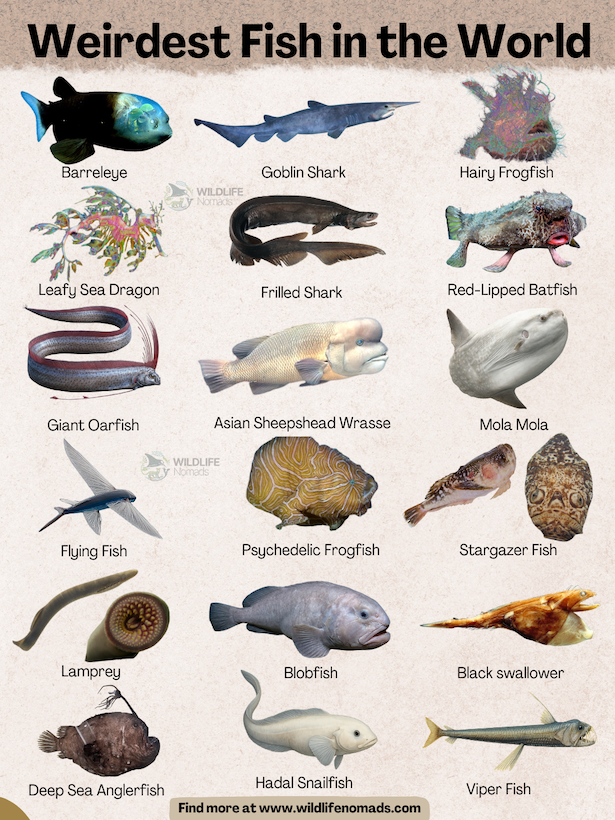
1. Barreleye Fish (Macropinna microstoma)
The barreleye fish is arguably the weirdest looking marine fish in the ocean. It has a completely transparent, fluid-filled dome on its head. The Pacific barreleye fish’s transparent head allows it to see above its body and track prey in low-light conditions. Those two dark spots on its face are olfactory organs—not eyes. Its real eyes are the glowing green tubes pointing upward inside the dome.
Adaptations and Habitat
The barreleye lives in the Twilight Zone at depths of 600–800 metres. Its tubular eyes point straight up to detect the silhouettes of prey overhead. In addition, the transparent dome protects those sensitive eyes from the stinging tentacles of siphonophores, which it regularly steals food from. Barreleyes inhabit depths of 600 to 800 meters, remaining stationary as they scan for bioluminescent animals drifting overhead.
2. Goblin Shark (Mitsukurina owstoni)
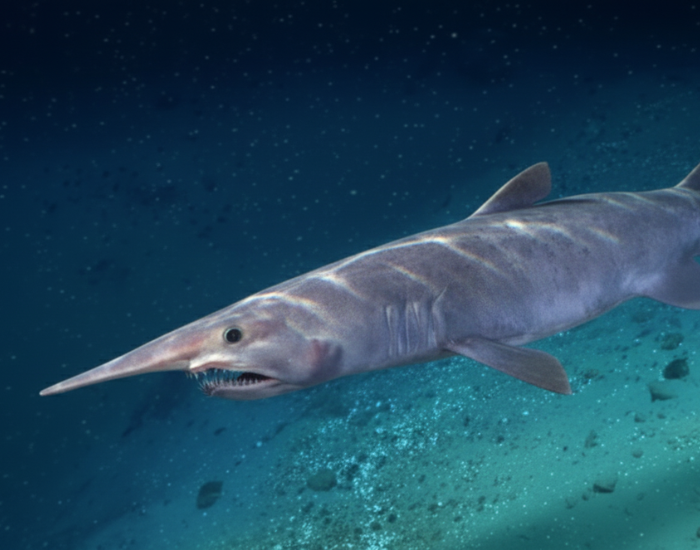
The goblin shark is a living fossil with a lineage stretching back 125 million years. It is the craziest looking fish in the deep Atlantic and Pacific, with a blade-like snout (rostrum) that looks alien. However, its real party trick is its jaw. With an enormous mouth and a long, flattened snout, the goblin shark uses its protrusible jaws to catch prey in deep waters.
The Catapulting Jaw
Unlike most sharks, the goblin shark’s jaws attach to elastic ligaments. When prey is within range, the entire jaw slingshots forward out of its face to snatch the target. This deep-sea shark hunts in total darkness, so a miss is not an option.
The goblin shark is classified as Least Concern by the IUCN, but it faces threats from deep-sea trawling. Its slow reproduction rate makes recovery from population decline very difficult.
3. Hairy Frogfish (Antennarius striatus)
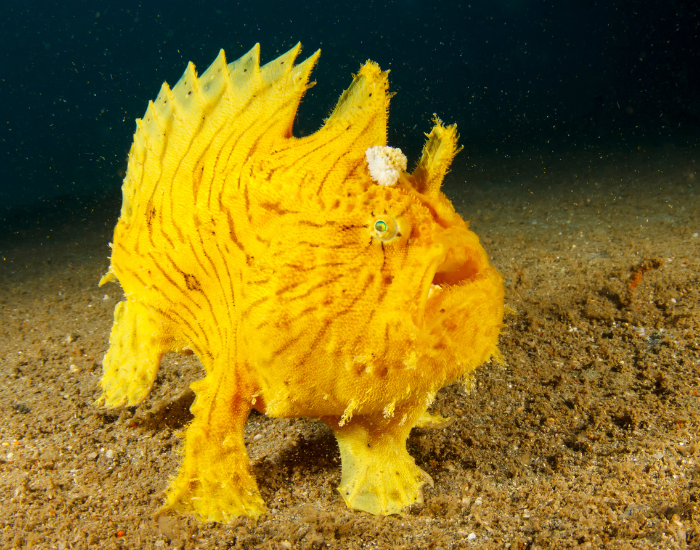
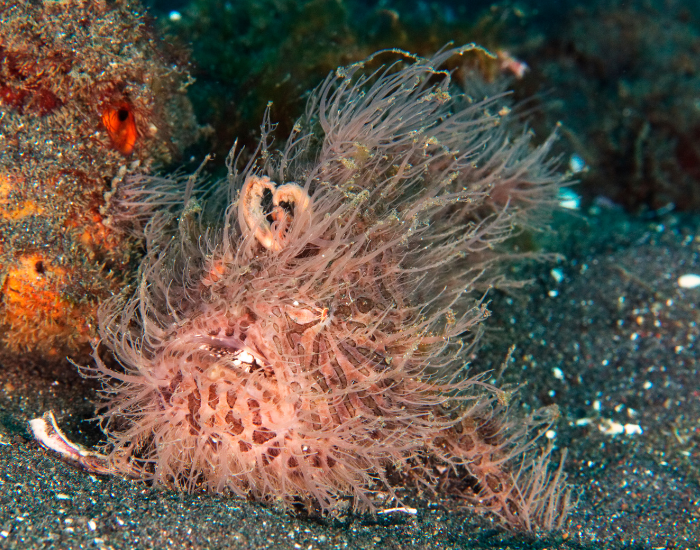
If you have ever done muck diving in the Lembeh Strait of Indonesia, you have almost certainly looked right past a hairy frogfish. Those ‘hairs’ are actually spinules that mimic seaweed perfectly, a textbook case of camouflage. The hairy frogfish feeds on other invertebrates as part of its diverse diet.
Hunting Strategy
The hairy frogfish does not swim in the traditional sense. Instead, it walks along the seafloor using modified pectoral fins. It uses a lure called an esca, which resembles a small worm, to draw prey close. When the target is within range, it opens its large mouth in just 6 milliseconds. That is faster than a camera shutter.
4. Leafy Sea Dragon (Phycodurus eques)
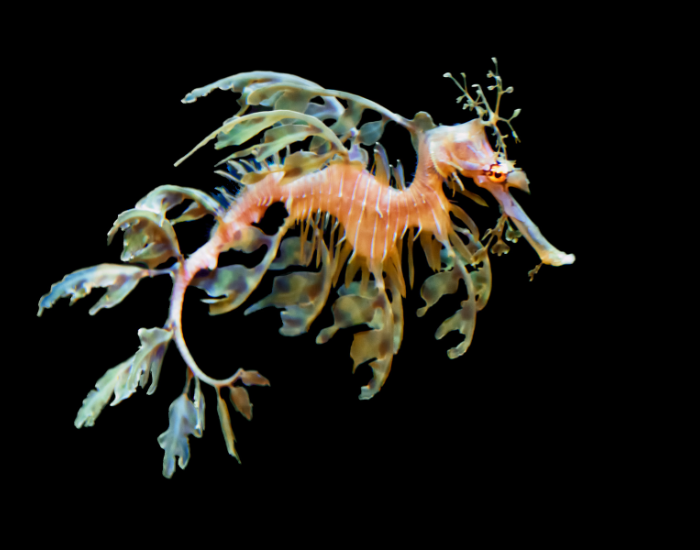
The leafy sea dragon is one of the coolest fish species for underwater photographers. Its body is covered in leaf-like protrusions that provide near-perfect camouflage in Australian kelp forests. It is closely related to seahorses, and like them, the male carries the eggs.
You can find leafy sea dragons diving in the cool shallow waters off South Australia and Western Australia. However, they face increasing threats from habitat destruction. Kelp forest decline, driven by warming ocean temperatures, is reducing their range. They are currently listed as Least Concern but are closely monitored by conservation groups. For more on threatened marine habitats, see our guide on
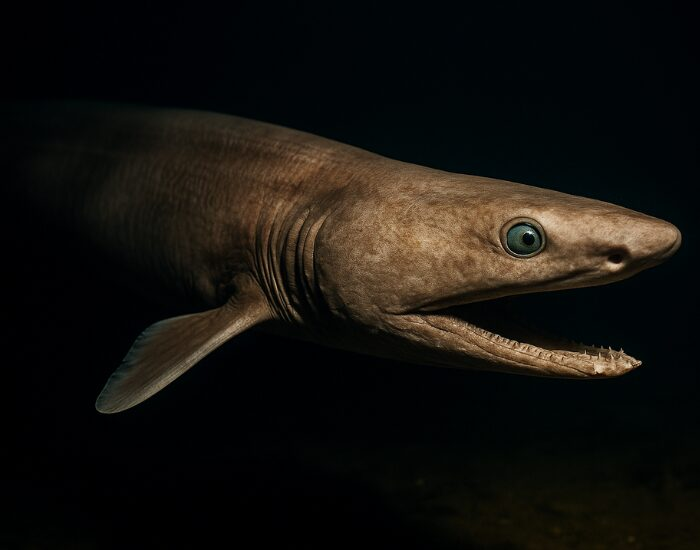
5. Frilled Shark (Chlamydoselachus anguineus)
The frilled shark looks far more like an eel than a shark. Its six pairs of frilly gill slits give it a prehistoric, almost serpentine appearance, likely the origin of many historical sea serpent legends.
Teeth and Diet
Its mouth contains 25 rows of trident-shaped, needle-sharp teeth—300 in total. Every tooth curves backwards, meaning any squid or small fish that enters the mouth cannot back out. The frilled shark is a deep-sea shark found in temperate and tropical waters of the Atlantic and Pacific oceans.
6. Red-Lipped Batfish (Ogcocephalus darwini)
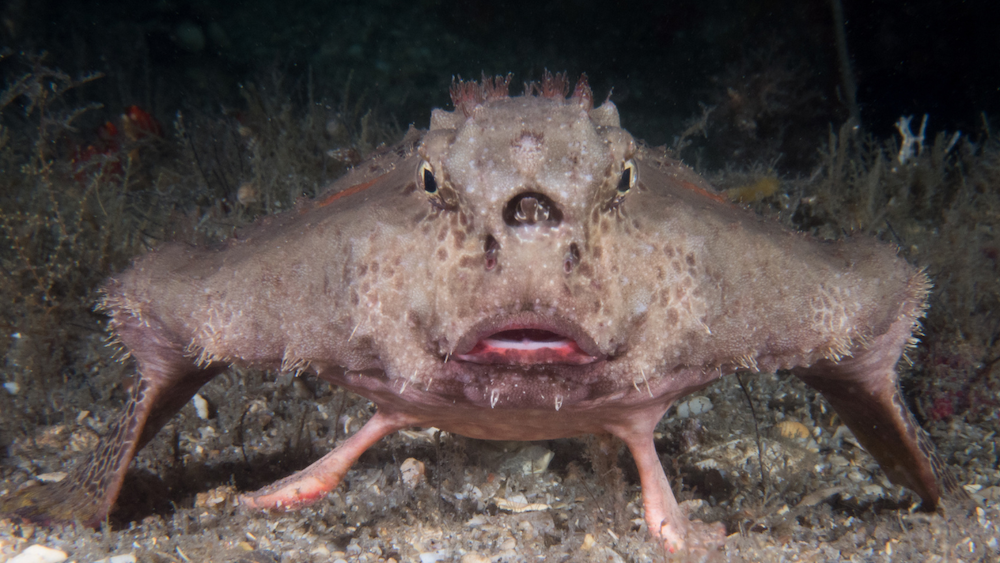
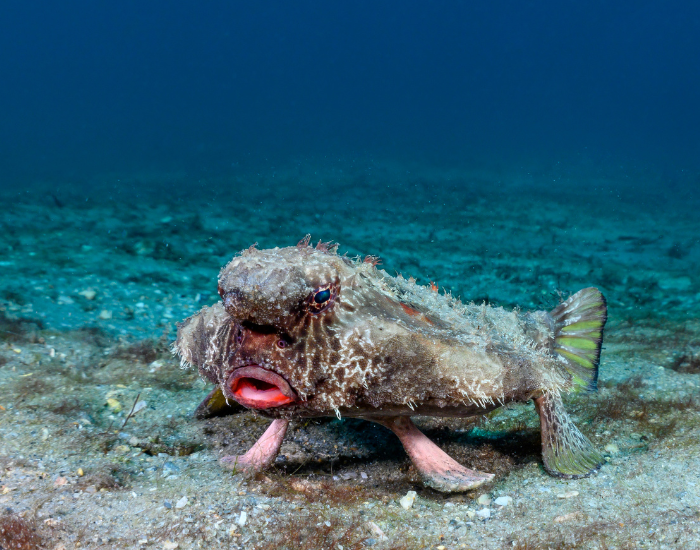
Found around the Galápagos Islands, the red-lipped batfish is a funny looking fish that has become a favourite of wildlife photographers. Its most striking feature is a pair of vivid, permanent red lips, giving it an unusual appearance that makes it especially appealing to those seeking the weirdest fish. Despite being a fish, it is a terrible swimmer.
Modified Fins and Behaviour
Like the hairy frogfish, the red-lipped batfish uses modified fins to walk along sandy bottom habitats. It attracts prey using a small lure called an illicium on its forehead. Therefore, it is less a fish that swims and more a fish that strolls, making it one of the most unusual bottom-dwelling fish on the planet.
7. Giant Oarfish (Regalecus glesne)
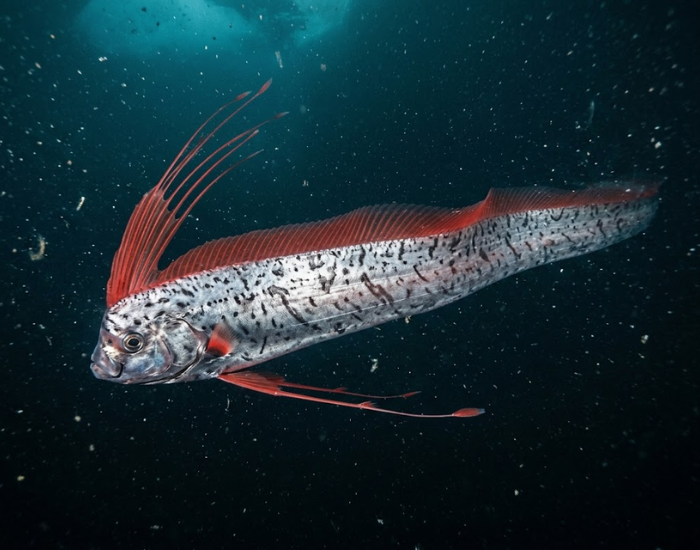
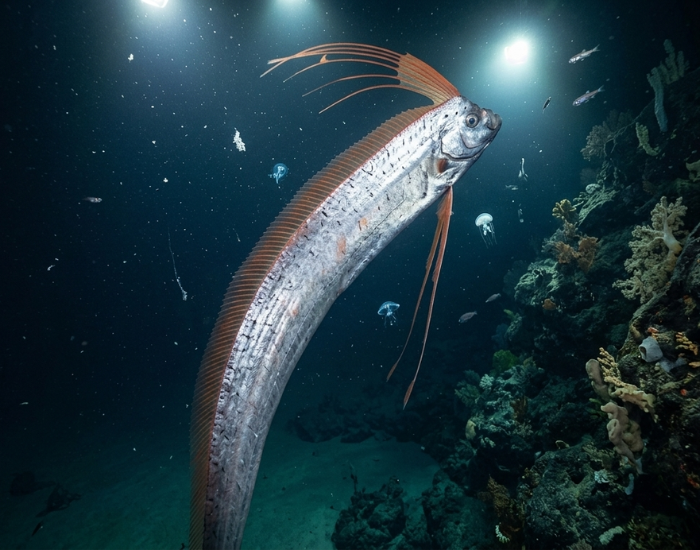
The giant oarfish is the longest bony fish in the world, reaching verified lengths of up to 11 metres (36 feet) (but usually around 8 metres), making it the largest species of bony fish. Its ribbon-like, silver body with a striking red dorsal fin almost certainly inspired sea serpent mythology across multiple cultures.
Giant oarfish live in the mesopelagic zone up to 1,000 metres deep in the Pacific Ocean and beyond. They are rarely seen alive. Most confirmed sightings occur when sick or dying individuals wash ashore or drift to the surface.
The giant oarfish primarily feeds on plankton and small fish in deep ocean waters.
8. Asian Sheepshead Wrasse (Semicossyphus reticulatus)
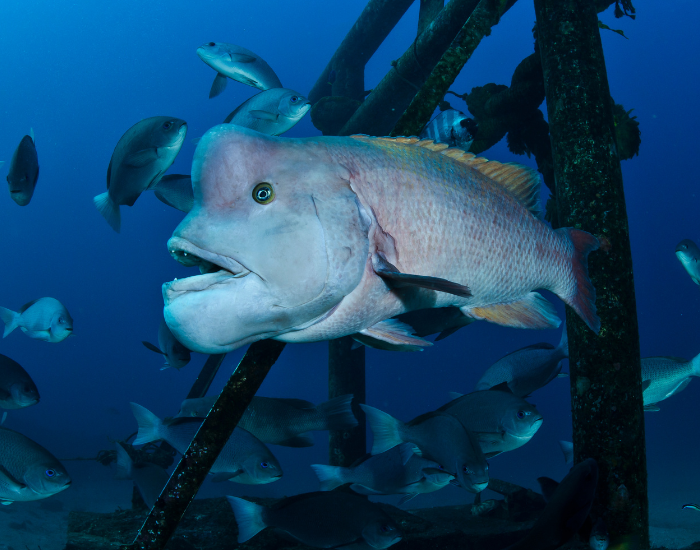
The Asian sheepshead wrasse looks like a fish that has borrowed a cartoonish human face. Large males develop a prominent bulbous forehead and chin, a result of excess calcium deposits. It is found in the western Pacific Ocean, primarily around Japan and Korea.
Sex Change and Conservation
This species is a protogynous hermaphrodite. Large females can transition into dominant males to maintain territory. The IUCN currently lists it as Data Deficient, but it faces threats from habitat degradation in the rocky reef systems it depends on.
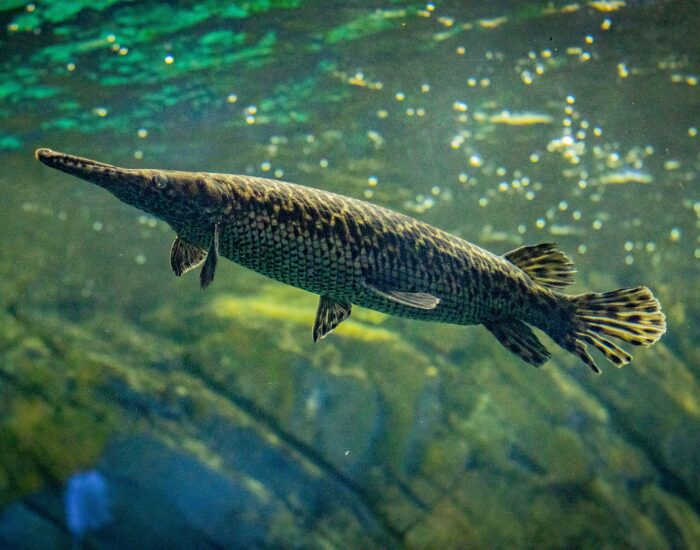
9. Alligator Gar (Atractosteus spatula)
The alligator gar is a freshwater giant native to North America, including Florida. Researchers who study them describe it as a living tank, its elongated body is armoured with ganoid scales that are as hard as bone and resistant to most predators. It is also one of the largest species of freshwater fish.
The alligator gar is a apex predator in its ecosystem, known to eat fish, turtles, and small mammals.
Air Breathing Adaptation
The alligator gar can breathe air using a specialised, vascularised swim bladder. This allows it to survive in oxygen-poor, shallow waters where other fish cannot. It is, however, a patient apex predator. It uses its flattened snout and needle-like teeth to ambush unsuspecting prey near the water’s surface.
10. Flying Fish (Exocoetidae)
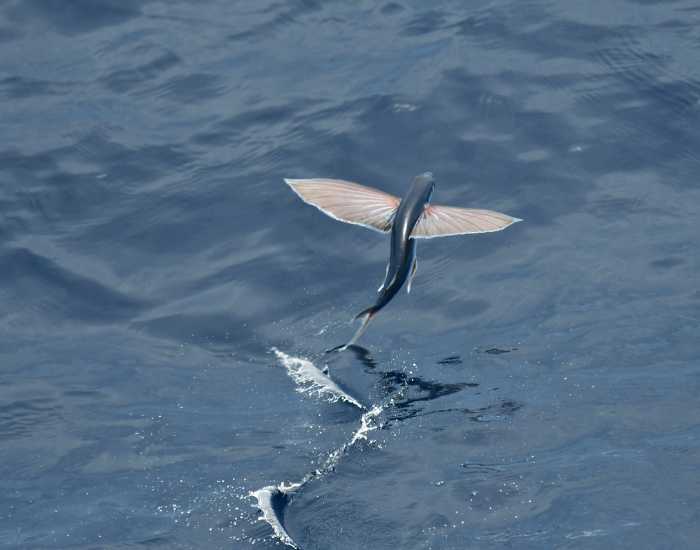
Flying fish do not technically fly… they glide. Their massive pectoral fins act as wings, allowing them to leap from the water and glide up to 200 metres to escape predators such as tuna and dolphins. I first saw them in the Caribbean, initially mistaking them for birds.
These fish of the open ocean are found in tropical and subtropical waters worldwide. Some species can beat their tail up to 70 times per second before breaking the surface, generating enough momentum for extended gliding flight.
11. Psychedelic Frogfish (Histiophryne psychedelica)
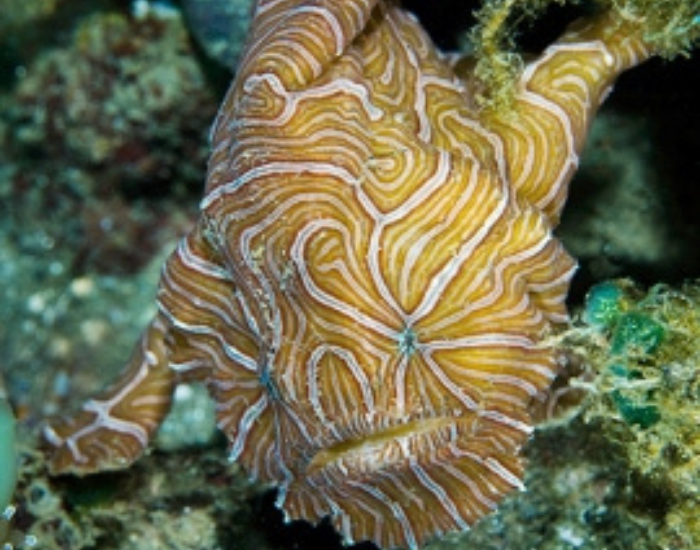
Discovered in 2008 off Ambon Island in Indonesia, the psychedelic frogfish is one of the most recently documented weird fish species. Its skin displays swirling white and orange stripes unique to each individual, like a fingerprint. Its thick, rubbery skin texture is unlike any other known fish.
It does not swim at all. Instead, it uses jets of water expelled through small gill openings to hop along the seabed. This ‘pogo-stick’ movement makes it one of the most unusual fish in tropical waters.
12. Stargazer Fish (Uranoscopidae)
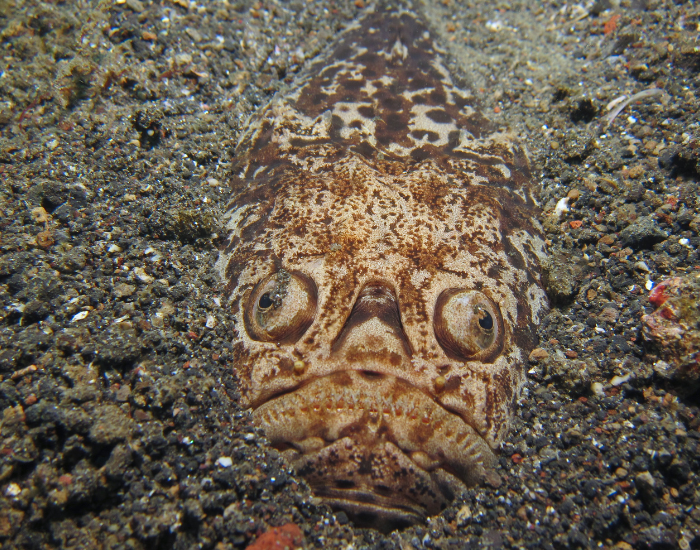
The stargazer fish is arguably the most dangerous weird fish on this list. It delivers a triple threat: venomous spines behind the operculum, an electric organ capable of delivering a 50-volt shock, and near-perfect camouflage as it buries itself in the ocean floor.
Its upward-facing eyes sit flush with the top of its flattened head, ideal for ambushing small fish from below. Found in both the Atlantic and Pacific oceans, the stargazer stun prey and then engulfs them before they recover.
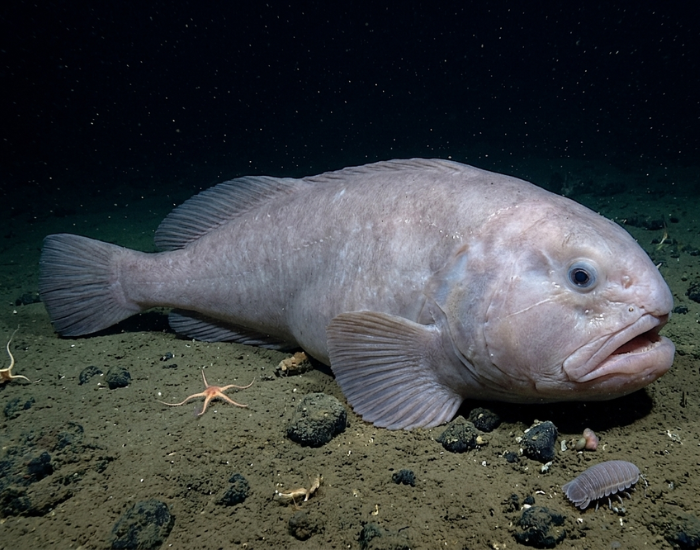
13. Blobfish (Psychrolutes marcidus)
The blobfish won the title of ‘World’s Ugliest Animal’ in 2013, but that reputation is misleading. In its natural habitat at 600–1,200 metres deep, the blobfish looks like a relatively normal, slightly large-headed fish. Its body is a gelatinous mass with a density slightly less than water, which helps it maintain buoyancy without expending energy.
The iconic ‘blob’ appearance only occurs when blobfish are brought to the surface. The rapid pressure change causes the gelatinous flesh to expand and collapse. It is a perfect example of how deep-sea biology is built for pressure, not for us.
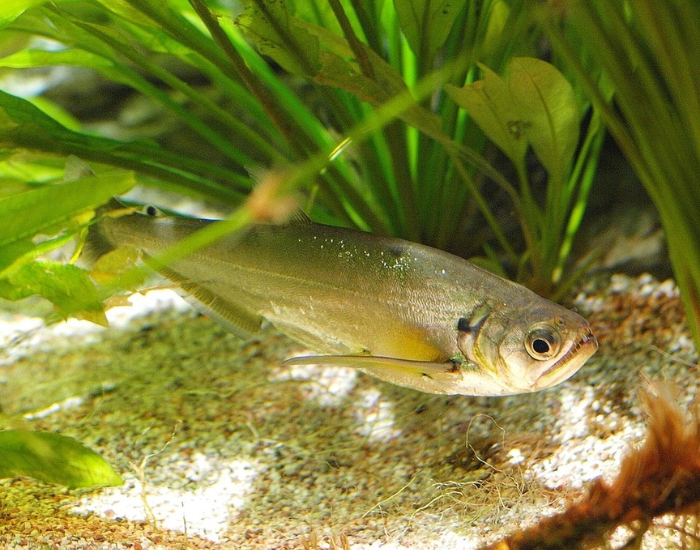
14. Vampire Fish / Payara (Hydrolycus scomberoides)
The payara, also known as the vampire fish, is an Amazonian Rainforest freshwater predator with two massive fangs measuring 4–6 inches long. These fangs protrude from its lower jaw. Remarkably, its skull contains two deep pockets that sheath the fangs to prevent self-impalement.
It is a fast, aggressive hunter that targets other fish in the fast-moving rivers of South America. The vampire fish is a favourite among extreme sport anglers in the Amazon basin, though little formal research exists on its population status.
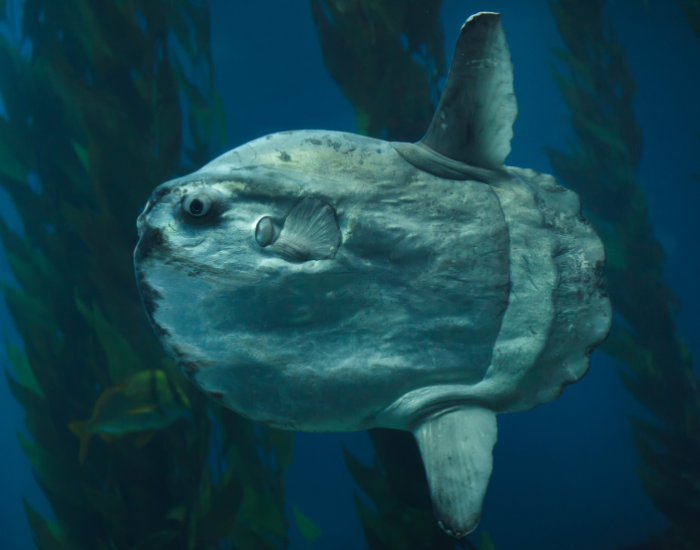
15. Ocean Sunfish (Mola mola)
The ocean sunfish is the heaviest bony fish in the world, reaching weights of over 2,000 kilograms, yet it looks like someone forgot to finish drawing it. Its body is essentially a giant head with fins, truncated abruptly where a tail should be. That flattened, disc-like silhouette makes it one of the most immediately recognisable and bizarre fish in the open ocean.
A Giant That Eats Jellyfish
Despite its extraordinary mass, the ocean sunfish feeds primarily on jellyfish, one of the least nutritious food sources in the sea. To sustain its bulk, it must consume them in staggering quantities, diving repeatedly between warm surface waters and colder depths. It is also famous for basking on its side at the surface, which was long thought to be a thermoregulation strategy after deep dives.
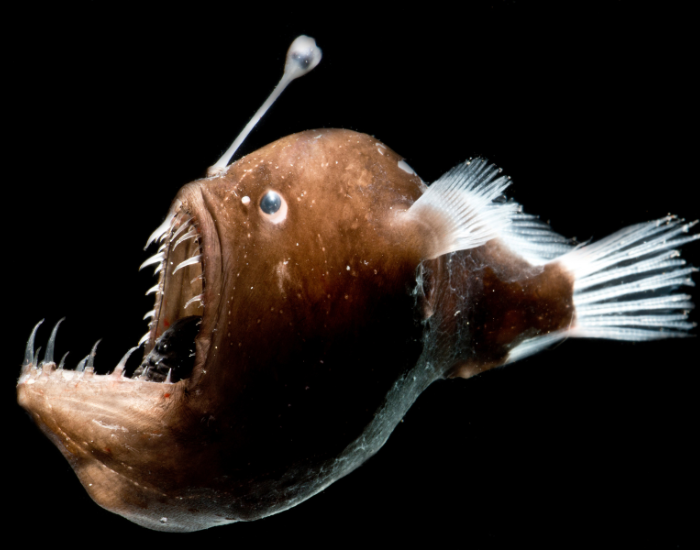
16. Deep-Sea Anglerfish (Lophiiformes)
Few creatures embody deep-sea horror quite like the anglerfish. Its oversized head, fang-like teeth, and a bioluminescent lure dangling from its forehead like a living fishing rod have made it the poster fish for the pitch-black world below 1,000 metres. That glowing lure, called the esca, is powered by bioluminescent bacteria, a beacon in the permanent dark used to draw curious prey directly into its jaws.
The Most Extreme Mating Strategy in Nature
The anglerfish’s reproduction is perhaps its most jaw-dropping adaptation. The tiny male, a fraction of the female’s size, has one biological purpose: to find a female and fuse with her permanently. He bites into her skin, their circulatory systems merge, and he spends the rest of his life as a parasitic appendage supplying sperm on demand.
17. Sea Lamprey (Petromyzon marinus)
The sea lamprey looks like something that crawled out of a nightmare, or at the very least, a very early period of Earth’s history. It is a jawless fish, one of the most ancient vertebrate lineages on the planet, with a fossil record stretching back over 360 million years. Instead of a jaw, it has a circular, tooth-lined suction disc for a mouth, rows of sharp, rasping teeth arranged in concentric rings around a fleshy tongue.
A Parasitic Survivor
The lamprey attaches itself to larger fish using that suction disc, rasping through scales and skin to feed on blood and body fluids. It is an ecological powerhouse, in the Great Lakes of North America, introduced sea lampreys devastated native fish populations after gaining access through shipping canals in the 20th century, becoming one of the most studied examples of invasive species impact.

FAQs: Weirdest Fish in the World
The barreleye fish takes the top spot for most people. Its transparent, fluid-filled head dome and internal glowing eyes make it unlike anything else in the ocean. However, the goblin shark’s catapulting jaw and the red-lipped batfish’s vivid lips are strong contenders.
Yes, several species use modified pectoral fins to walk instead of swim. The red-lipped batfish, hairy frogfish, and psychedelic frogfish all ‘walk’ along the ocean floor. The alligator gar is not a walking fish, but it does breathe air using a specialised swim bladder.
The stargazer fish is a strong contender. It combines camouflage, venomous spines, and an electric shock of up to 50 volts. In freshwater, the vampire fish (payara) is an aggressive apex predator with fearsome four-to-six inch fangs.
The giant oarfish holds the record for the longest bony fish in the world, reaching verified lengths of up to 11 metres. In terms of mass among this list, the alligator gar and goblin shark also reach impressive sizes.
Several species on this list face serious conservation threats. The leafy sea dragon’s kelp forest habitat is declining due to ocean warming. The Asian sheepshead wrasse is Data Deficient per the IUCN, making population assessment difficult. The goblin shark faces threats from deep-sea trawling, and the candiru is vulnerable to Amazon River habitat degradation.
The Deep-Sea Mystery Continues
As a biologist, I find that biological weirdness and evolutionary resilience go hand in hand. The transparent dome of the barreleye, the slingshot jaw of the goblin shark, the electric ambush of the stargazer—each feature is a finely tuned survival tool.
Therefore, next time you are snorkeling or scuba diving, pay close attention to the strange stuff. The weirdest fish species are often the most fascinating, and the most worth protecting. Nature does not make mistakes—it just has a very different definition of design.
References:
Bay, L. K.,et al., (2023). Management approaches to conserve Australia’s marine ecosystem under climate change. Science, 381(6658), 631–636. https://doi.org/10.1126/science.adi3023
Cornish, A. (2004). Semicossyphus reticulatus. The IUCN Red List of Threatened Species 2004: e.T44685A10925239. https://dx.doi.org/10.2305/IUCN.UK.2004.RLTS.T44685A10925239.en.
Froese, R., & Pauly, D. (2024). FishBase (Version 02/2024). https://www.fishbase.org
Pietsch, T. W. (1989). Phylogenetic relationships of trachinoid fishes of the family Uranoscopidae. Copeia, 1989(2), 253–303. https://doi.org/10.2307/1445425
Paxton, C.G.M. (2013), SYSTEMATICS, BIOLOGY, AND DISTRIBUTION OF THE SPECIES OF THE OCEANIC OARFISH GENUS REGALECUS (TELEOSTEI, LAMPRIDIFORMES, REGALECIDAE) By T. R. Roberts. J Fish Biol, 83: 231-232. https://doi.org/10.1111/jfb.12170
Partridge, J. C., Douglas, R. H., Marshall, N. J., Chung, W.-S., Jordan, T. M., & Wagner, H.-J. (2014). Reflecting optics in the diverticular eye of a deep-sea barreleye fish (Rhynchohyalus natalensis). Proceedings of the Royal Society B: Biological Sciences, 281(1782), Article 20133223. https://doi.org/10.1098/rspb.2013.3223
Robison, B.H. and K.R. Reisenbichler (2008). Macropinna microstoma and the paradox of its tubular eyes. Copeia, 2008(4): 780-784. doi.org/10.1643/CG-07-082