
I’ll never forget the summer I moved to a new city to start my Bachelor of Biology. I moved to a new house, and one evening between June and September, I caught a flicker out of the corner of my eye while standing in the kitchen. A flash of light in the backyard. Then another, and another. They were fireflies.
Behind my house was a massive, underdeveloped plot of land, a “little jungle” of overgrown grass and shrubs and some trees. One day I decided to climb onto my roof, and my jaw dropped. Thousands of fireflies were dancing over that land like a living galaxy. For a month, I’d invite friends over just to sit on the roof and watch the show. I spent hours wondering: How on earth do they do that?
Years later, while travelling in the Philippines, I had a “Life of Pi” moment. You know that movie where a boy gets lost in the ocean and end up on a lost island that glow at night? I stayed on a houseboat in one of the most pristine lagoons on the planet, we slipped into the water at night (despite the warnings!). Every movement of my hand triggered a swirling cloud of neon-green sparks. It was bioluminescent plankton, and it felt like moving through liquid stars.
As a biologist, I’ve learned that while it looks like magic, there is a complex, beautiful “why” behind it.

What is Bioluminescent? (Meaning & Definition)
Before we dive into our list, let’s clear up the bioluminescence definition. In short, bioluminescent describes any living organism that produces and emits its own light. Bioluminescence first evolved in animals at least 540 million years ago, emerging in a group of marine invertebrates known as octocorals.
The meaning of bioluminescence comes from the Greek bios (life) and the Latin lumen (light). Unlike a lightbulb that gets hot, this is “cold light.” Less than 20% of the energy is lost as heat.
Bioluminescence vs. Fluorescence: What’s the Difference?
Many people confuse the two, but they are biologically distinct:
- Bioluminescence: The animal creates the light itself via a chemical reaction. It’s like carrying a flashlight.
- Biofluorescence: The animal absorbs high-energy light (like UV or blue light) and re-emits it as a different color (like neon green or red). It doesn’t “glow” in total darkness; it needs an outside light source to “charge” it.
The Science: How Do Bioluminescent Organisms Produce Light?
What makes something bioluminescent? It usually boils down to two key players: luciferin (the pigment) and luciferase (the enzyme).
When bioluminescent organisms produce light, they mix luciferin with oxygen. The luciferase acts as a catalyst to speed up the reaction, releasing light energy. Some bioluminescent creatures, like certain deep-sea squid, have complex light-producing organs called photophores. Others, like the midshipman fish, actually get their glow from bioluminescent bacteria they host in a symbiotic relationship.
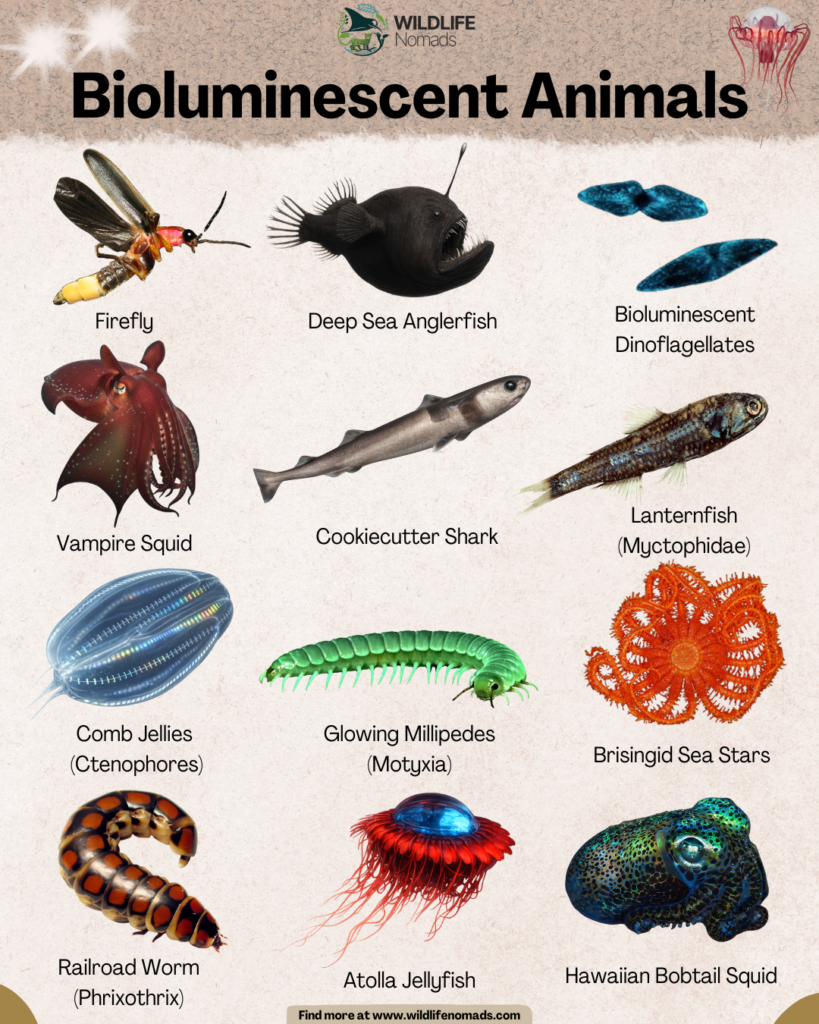
13 Iconic Bioluminescent Animals
1. Fireflies (Lampyridae)
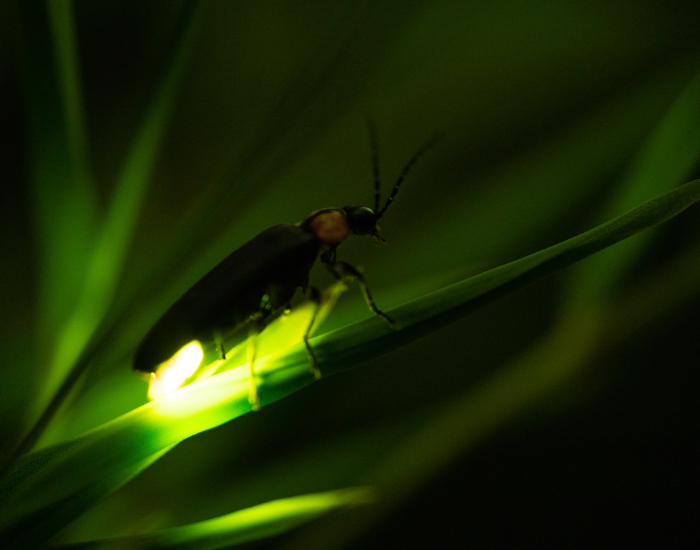
Fireflies represent the most recognized bioluminescent animals on land. However, they’re actually beetles, not flies. These insects use bioluminescence to attract mates through species-specific flashing patterns.
Each firefly species produces a unique rhythm, a luminous “love language” that prevents interbreeding. Male fireflies fly around emitting their pattern while female fireflies perch on vegetation and respond. Interestingly, some female fireflies mimic other species’ flash patterns to lure in unsuspecting males. Then they eat them.
2. Deep Sea Anglerfish
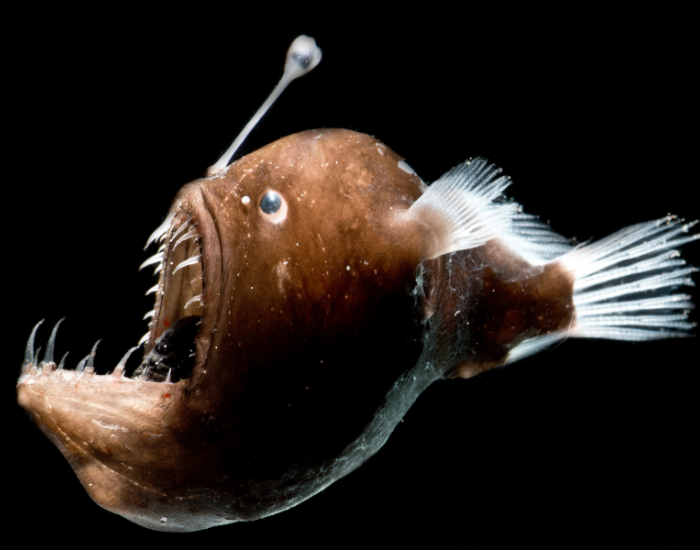
The anglerfish remains one of the ocean’s most famous bioluminescent creatures. Female anglerfish possess a modified dorsal fin spine that dangles over their mouth like a fishing rod. The tip contains bioluminescent bacteria that emit light.
In the pitch-black deep ocean, this glowing lure attracts prey directly to the anglerfish’s enormous jaws. The bacteria and fish maintain a symbiotic relationship. The bacteria receive nutrients and a safe habitat while the fish gains a hunting tool.
Male anglerfish are much smaller and don’t possess the iconic lure. Instead, they attach themselves parasitically to females for reproduction.
3. Bioluminescent Dinoflagellates
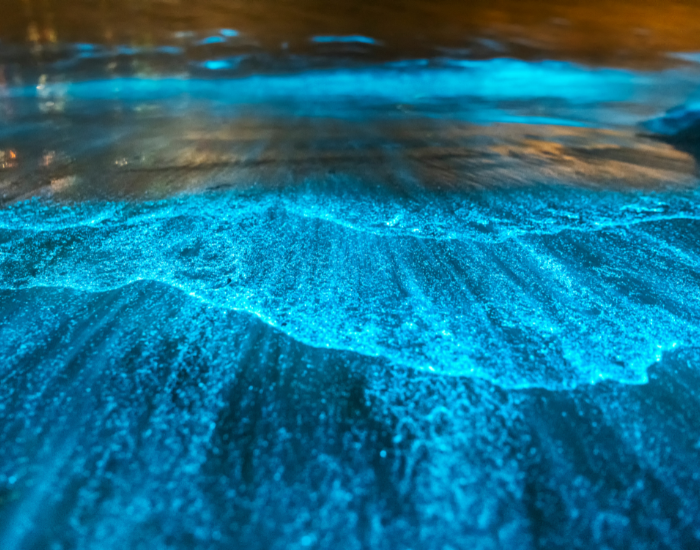
These tiny crustaceans and other organisms create the magical glowing water many travelers seek. When waves or swimmers disturb the water column, dinoflagellates produce bioluminescence as a defense mechanism.
Scientists call this the “burglar alarm” effect. The light startles predators and reveals their position to larger predators nearby. Therefore, the glow serves as both warning and protection.
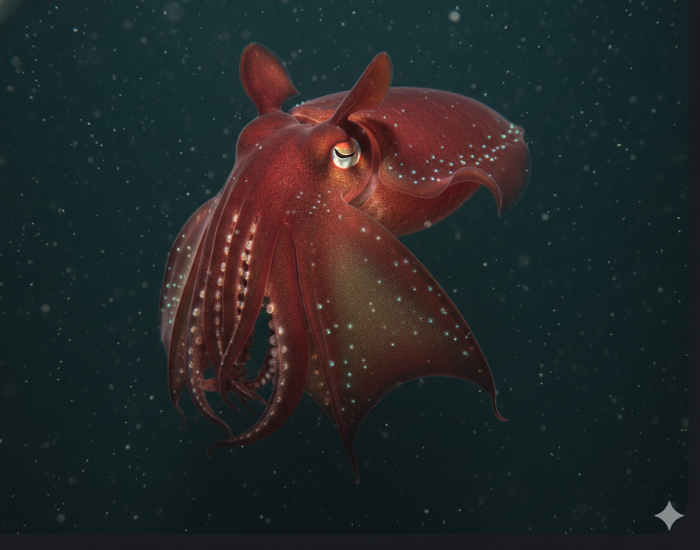
4. Vampire Squid (Vampyroteuthis infernalis)
Despite its ominous name, the vampire squid doesn’t suck blood. This deep sea squid lives in the “Midnight Zone” where visible light never penetrates. The species evolved a unique defense strategy using bioluminescence.
When threatened, vampire squid eject clouds of bioluminescent mucus instead of ink. The glowing particles confuse predators while the squid escapes into the dark water column. The mucus can glow for up to 10 minutes, creating an extended distraction.
These marine animals possess the largest eyes relative to body size of any animal on Earth. This adaptation helps them detect faint bioluminescence from other animals in the deep sea.
5. Cookiecutter Shark
This must be one of the weirdest species of shark in the world. It is a small shark species uses bioluminescence for “counter-illumination” camouflage. The shark’s belly glows to match light from the ocean surface above. When larger predators look up, the shark becomes invisible against the surface light.
However, the cookiecutter shark leaves one small dark patch on its underside. This patch resembles a small fish, enticing other animals to strike. When they do, the shark pivots and uses its specialized teeth to gouge out a cookie-shaped chunk of flesh.
This hunting strategy proves remarkably effective in the open sea. The cookiecutter shark can attack prey much larger than itself, including giant ocean sunfish, whales, dolphins, and even submarines.
6. Lanternfish (Myctophidae)
Lanternfish are among the most abundant ray finned fishes in the ocean. These small fish possess light producing organs along their bellies and sides. Each species displays a unique pattern of photophores for recognition.
Every night, lanternfish perform one of the largest animal migrations on Earth. They swim from the deep ocean to the surface of the ocean to feed on plankton. At dawn, they descend back to deeper waters. Scientists call this behavior Diel Vertical Migration.
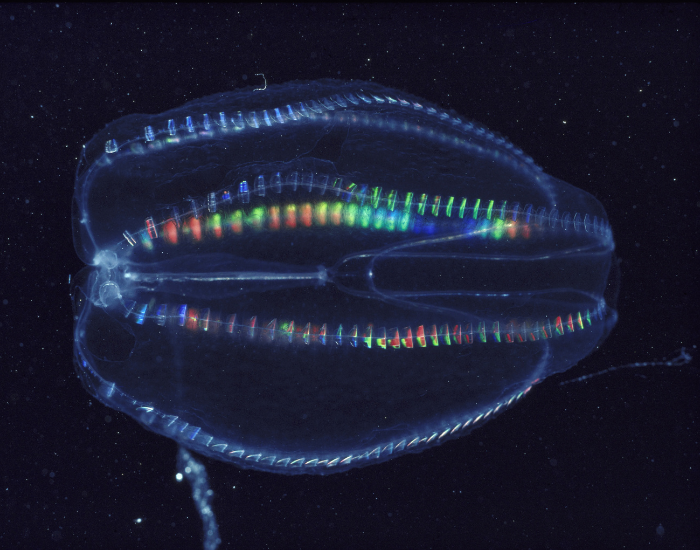
7. Comb Jellies (Ctenophores)
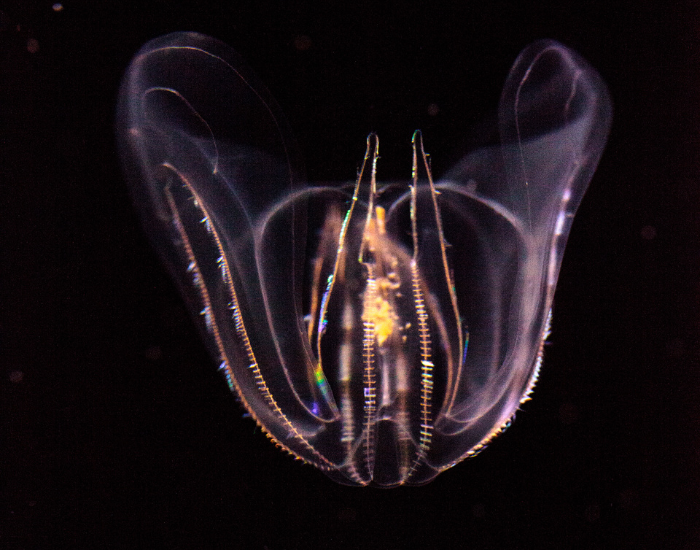
Comb jellies create spectacular light shows in the open sea. These marine organisms aren’t actually jellyfish,they’re more ancient and belong to their own phylum. They possess rows of cilia that refract light like rainbows during the day.
At night, many species also produce bioluminescence when touched. The blue green colors startle predators and create mesmerizing displays. Unlike jellyfish, comb jellies don’t sting, making them safer to observe up close.
Some deep sea species of ctenophores live thousands of feet down. They use bioluminescence to communicate with potential mates across vast ocean distances.
8. Glowing Millipedes (Motyxia)
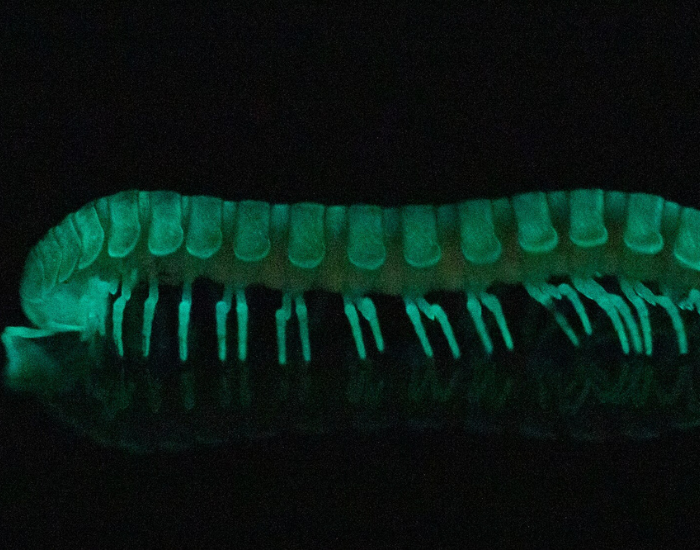
Bioluminescence isn’t exclusive to marine habitats. In California’s Sierra Nevada mountains, Motyxia millipedes glow with ghostly blue green light. Since these millipedes are blind, the light doesn’t help them navigate.
Instead, the glow serves as a warning to predators. The millipedes contain high concentrations of cyanide, making them toxic and unpalatable. The bioluminescence helps predators remember to avoid them after one bad experience.
These are the only known bioluminescent organisms in North America that live on land year-round (fireflies are seasonal). They demonstrate how bioluminescence evolved independently across many species for different purposes.
9. Brisingid Sea Stars
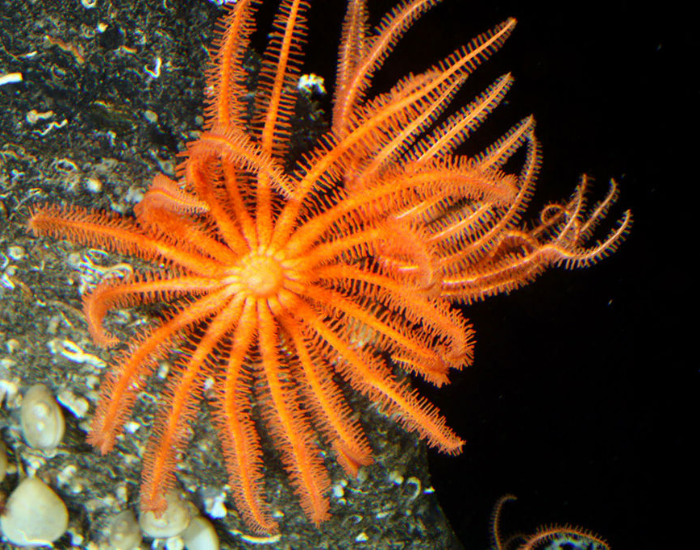
Not all sea stars inhabit shallow tide pools. Brisingid sea stars live in the deep ocean where they use bioluminescence for survival. These echinoderms possess long, glowing arms that attract prey and signal to potential mates.
The deep sea environment presents unique challenges. Bioluminescence becomes the primary form of communication when visible light from the surface cannot penetrate. Therefore, these sea creatures evolved sophisticated light organs.
Some species can have up to 20 arms covered in photophores. The patterns help them identify same species individuals in the vast darkness of marine habitats.
10. Railroad Worm (Phrixothrix)
The railroad worm deserves recognition as one of the most unique bioluminescent creatures. This beetle larva produces two different colors of light, the only known animal to do so naturally. It has yellow-green lights along its body and a bright red light on its head.
The red light functions like a night-vision scope. Most marine animals and insects cannot see red wavelengths. Therefore, the railroad worm can hunt prey without revealing its position to predators or prey.
The dual-color system represents a remarkable evolutionary adaptation. Scientists continue studying these animals to understand how they produce different wavelengths simultaneously.
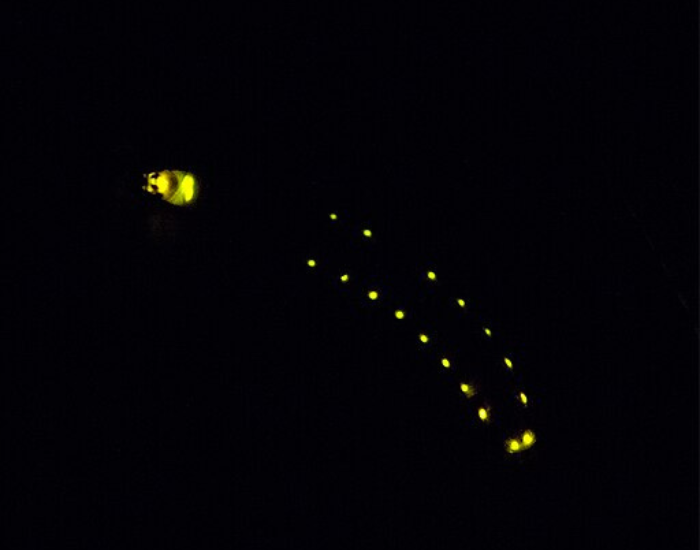
11. Atolla Jellyfish
The Atolla jellyfish employs one of the ocean’s most dramatic bioluminescent displays. When attacked by predators, it produces a spinning ring of blue light around its bell. This “alarm jellyfish” behavior attracts larger predators to the scene.
The strategy works because it creates a “burglar alarm” effect similar to dinoflagellates. The larger predators arriving to investigate often attack the original predator, allowing the jellyfish to escape. This defense mechanism proves remarkably effective in the deep sea.
These bioluminescent animals live in the midnight zone where most marine bioluminescence occurs. Their strategy demonstrates the complex interactions between species in deep ocean ecosystems.
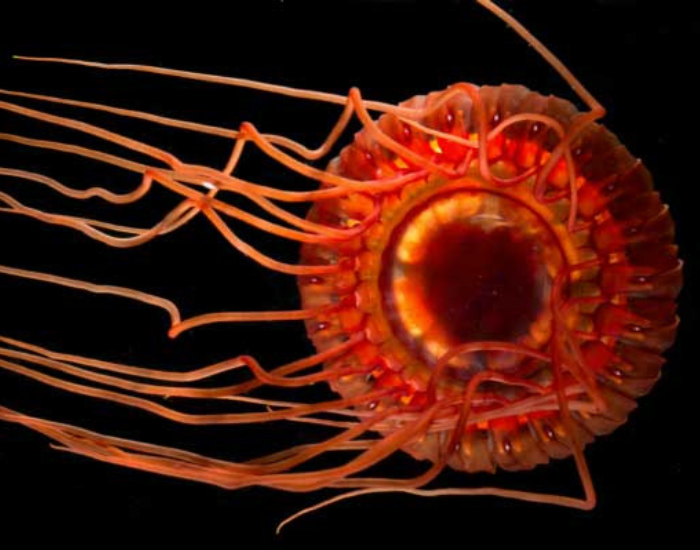
12. Hawaiian Bobtail Squid
The Hawaiian bobtail squid maintains one of nature’s most fascinating symbiotic relationships. This small squid hosts colonies of bioluminescent bacteria called Vibrio fischeri in a special light organ.
The squid uses counter-illumination to avoid predators. By adjusting the bacterial glow to match moonlight from above, it eliminates its shadow on the ocean floor. Predators looking up cannot detect the squid’s silhouette.
Every morning, the squid expels most of the bacteria and then re-cultivates them during the day. This daily cycle ensures the bacterial population stays healthy and responsive to the squid’s needs. A true icon of the Animals of Hawaii.
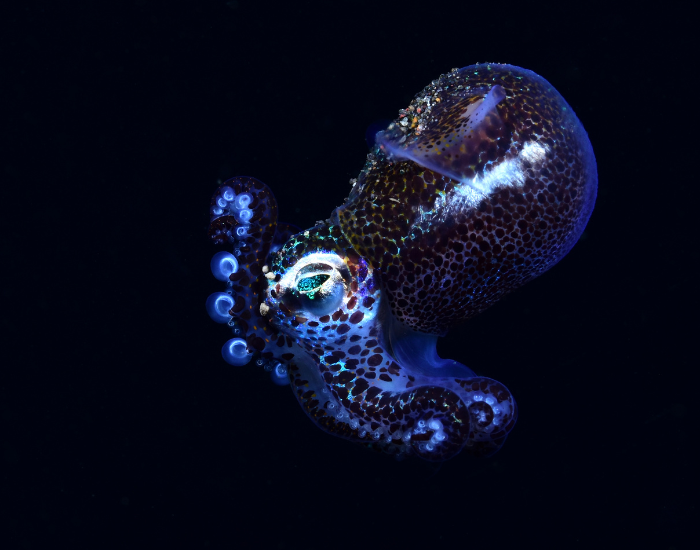
13. Glow Worms (Arachnocampa & Lampyridae)
Not all bioluminescence belongs to the ocean. In caves and forests around the world, glow worms create some of the most quietly spectacular light displays on land. Despite the name, glow worms aren’t worms at all, they’re insect larvae that use light as a hunting tool.
Species like Arachnocampa hang sticky silk threads from cave ceilings and glow to lure flying insects into their traps, turning entire caverns into star-filled night skies. Others, like firefly larvae, glow as a warning signal, advertising their toxicity to predators.
Unlike fireflies, glow worms don’t flash or signal. Their steady glow is patient, predatory, and eerily beautiful, a reminder that bioluminescence doesn’t always need movement to mesmerize.

Why Do Animals Produce Bioluminescence?
Bioluminescent organisms use light for three primary purposes:
Offense: Many animals lure prey using bioluminescence. The deep sea anglerfish demonstrates this perfectly with its glowing fishing rod. Other predators attract prey by mimicking bioluminescent organisms that their target species eat.
Defense: Some species startle predators with sudden flashes of light. Others use counter-illumination to become invisible. The vampire squid’s glowing mucus cloud exemplifies this defensive strategy.
Communication: Many species attract mates or identify same species individuals using specific light patterns. Fireflies provide the most visible example on land, while numerous fish species use photophore patterns underwater.
The evolution of bioluminescence happened independently at least 40 times across different species. This convergent evolution demonstrates how valuable light production becomes in certain environments, particularly the deep ocean.
Light Colors in Marine Bioluminescence
| Color | Purpose | Visibility in Water |
|---|---|---|
| Blue Light | Most common; travels farthest | High |
| Green Light | Common in coastal areas | Medium |
| Red Light | Stealth hunting | Low (invisible to most) |
Blue and green light dominate marine bioluminescence because they penetrate water most effectively. Red light appears in only a few species because most marine organisms cannot see it. This makes red bioluminescence perfect for stealth hunting or communication.
FAQ: Everything You Want to Know About Bioluminescence
Bioluminescent refers to the ability of a living organism to produce its own light through internal chemical reactions.
Generally, yes. The glow itself is just light. However, be aware that the bioluminescent dinoflagellates can sometimes be associated with harmful algal blooms (red tides), so always check local travel advisories before jumping in!
You can find it in warm water lagoons like Mosquito Bay in Puerto Rico (the brightest in the world), or during summer months in San Diego, California, and certain parts of Florida.
On land, yes. But in the deep ocean, it is the primary form of communication. It is estimated that 76% of deep-sea animals are bioluminescent in some way.
Nature’s Original Light Show
Bioluminescence is a reminder of how much of our world remains “in the dark.”
Sadly, as I saw with the land behind my college house, light pollution and habitat loss are making these sights rarer. When we build over marine habitats or over-light our cities, we break the silent, glowing conversations these organisms have been having for millions of years.
Bioluminescence isn’t just a “trippy” visual, it’s a sophisticated biological tool that has evolved independently at least 40 times in evolutionary history. It is the language of the deep.
The next time you encounter bioluminescence, whether fireflies in your backyard or plankton in the ocean, take a moment to appreciate the complexity. You’re witnessing a chemical reaction that evolved independently dozens of times across Earth’s history.
Experience a Glowing Nature Show!
Here is a list of 6 safari tours where you can see African Buffalos int eh wild. As a biologist, I only recommend tours that follow strict ethical guidelines to ensure we don’t disturb wildlife. These are the three tours/ partners I trust most based on their conservation records: