If you follow the blog, you probably know that the Wildlife Nomads team has logged many hours with hammerheads in Galapagos, zebra sharks off Byron Bay, nurse sharks in warm Caribbean shallows, and whale sharks in open water. I studied marine biology on exchange in Sweden, and the deep-sea animals were always the ones that stuck, specially the strangest creatures like the barreleye fish, the blobfish, the vampire squid.
But one shark never stopped surprising me. The cookiecutter shark (Isistius brasiliensis) doesn’t chase you down. This small shark waits in deep waters, glows green, and takes a round bite out of anything, other sharks, large fish, even nuclear submarines. Here are the cookie cutter shark facts that prove it.
4. It Glows in the Dark, And Uses Shadow as a Lure
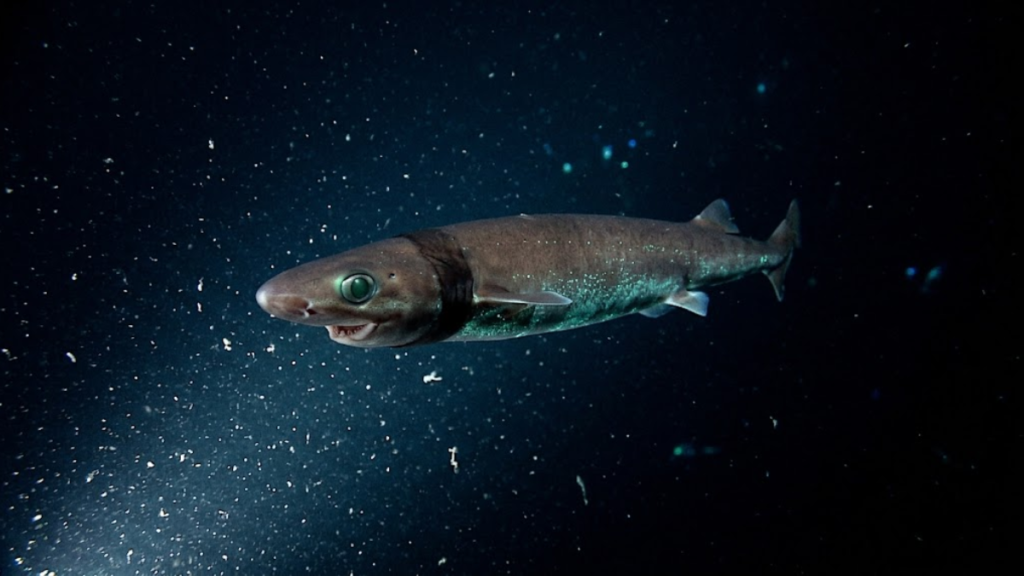
The entire ventral surface of the cookiecutter shark is covered in tiny photophores that emit a vivid green glow. This bioluminescence is the strongest known in any shark. It persists for up to three hours after death. It shares the dark with other light-makers, like the anglerfish and its glowing lure.
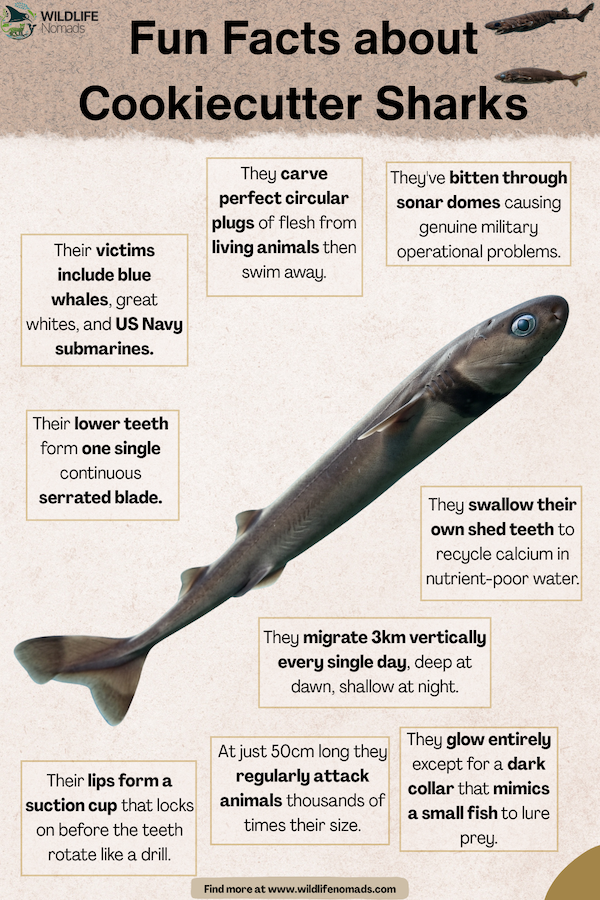
The glow works as counter-illumination. Seen from below, the luminous belly of Isistius brasiliensis matches faint light from the surface, erasing the silhouette. But here’s the twist. A dark collar of non-luminescent skin wraps around the gill region and tapers along the throat. Against the glowing body, this dark band looks exactly like the silhouette of a small fish. Large fish, marine mammals, and other sharks see what they think is easy prey and approach. They’re swimming straight into an ambush. It is thought to be the only known case where the absence of light works as a lure. The dark collar is the cookiecutter shark’s most cunning adaptation.
5. It Has Bitten Nuclear Submarines
In the 1970s, the U.S. Navy had a problem. The rubber sonar domes on nuclear submarines kept coming back damaged. Oil lines leaked. Officials suspected Soviet sabotage. The real culprit was far stranger. The cookiecutter shark had been biting the softer neoprene components, likely mistaking them for the flesh of large sharks or whales.
Around 30 submarines were bitten during this period. The damage blinded sonar systems and forced vessels back to port. The Navy solved the problem by replacing rubber parts with fiberglass coverings. One sharkm a small shark less than half a meter long, had grounded nuclear submarines. That story still makes me laugh every time I read it.
It still happens. In September 2023, cookiecutter sharks bit through the floats of an inflatable catamaran about 800 km off Cairns. The three round-the-world sailors were rescued by a cargo ship
6. They Migrate Vertically Every Night
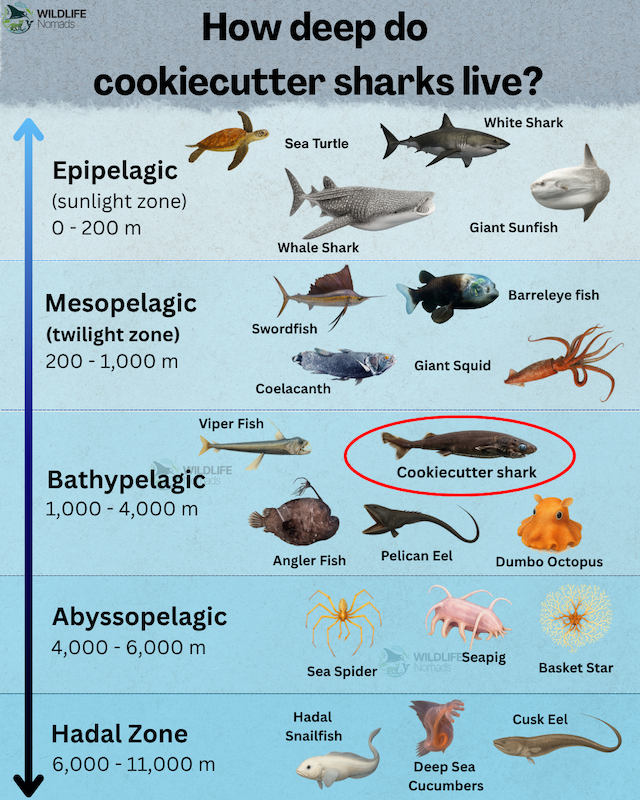
Cookiecutter sharks don’t stay in one place. They migrate vertically through the water column each night, rrising from deep waters, often 1,000 to 3,700 metres down, toward the surface after dark. That can mean a trip of up to 3 km each way. This diel vertical migration tracks the movement of prey into shallow waters at night.
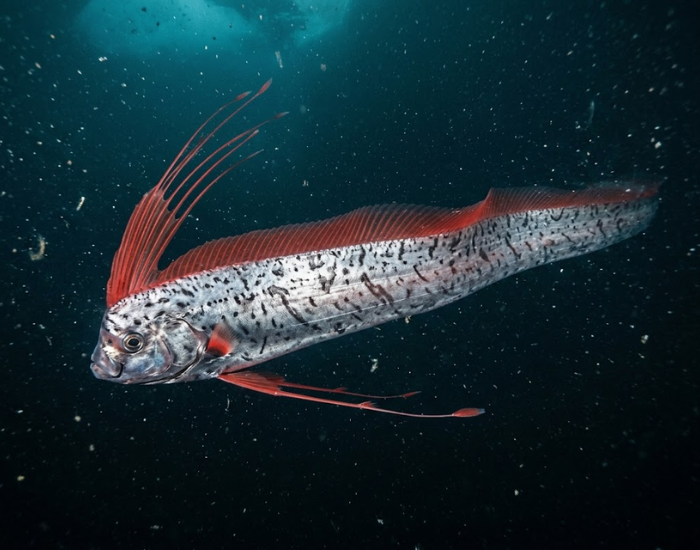
By day, they remain in their deep water habitat far below sunlight., sharing habitat with the barreleye fish, the gulper eel and the giant squid. At night, the cookiecutter shark ascends to hunt. Most specimens are caught at night by deep-set longlines targeting other species. Researchers think Isistius brasiliensis travels thousands of metres up and down each day. It isn’t a strong swimmer, though. An oily liver, up to 35% of its weight, keeps it nearly weightless in the water. It mostly hovers, then makes quick bursts with its tail.
Follow it down to its daytime depths”
DEPTH958
m Interactive · Deep Sea Dive Dive 958 m down to meet the Cookiecutter shark Scroll from the surface to the Mariana Trench and log 61 ocean animals on the way. →
7. Its Body Is Built for Stealth
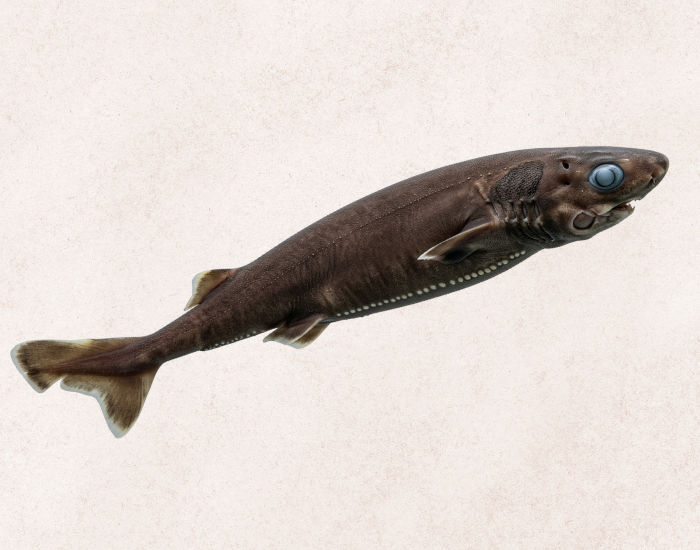
A cigar-shaped body, elongated and cylindrical, paired with a short conical snout and large green eyes adapted for deep, low-light conditions. The skin is grey-brown to dark brown, darker dorsally and lighter ventrally. Some people call it the cigar shark for good reason.
The fins tell an interesting story. Both dorsal fins are small and spineless. The second dorsal fin sits slightly larger than the first, unusual anatomy. The pelvic fins are larger than either dorsal fin. The anal fin is absent entirely. The caudal fin is broad with a long ventral lobe, providing short bursts of thrust during lunges. All fins on this animal are proportionally tiny — even the paired fins barely register. These reduced fins suggest the cookiecutter shark is built for vertical travel, not horizontal speed. Every feature of this shark serves stealth, not chase.
8. They’ve Bitten Humans: More Than Once
For decades, shark researchers assumed this deep-water species posed zero risk to humans. That changed in 2009. A channel swimmer named Mike Spalding was crossing the Alenuihaha Channel near the Hawaiian Islands when something struck his chest in darkness. He’d been bitten by a cookiecutter shark. It was the first confirmed bite on a living human.
Since then, at least seven humans have been bitten. Six occurred near Hawaiian waters, five involving swimmers training at night. In 2017, a boy was bitten off North Queensland, Australia, the crater wound measured 7.3 cm across, nearly reaching bone. A 2024 study found that most cookiecutter shark bites on swimmers correlate with moonless nights when the surface is darkest. Swimmers who’ve been bitten describe a sharp prick, then the realization that a plug of flesh is gone.
9. Its Teeth Are Replaced as a Complete Set
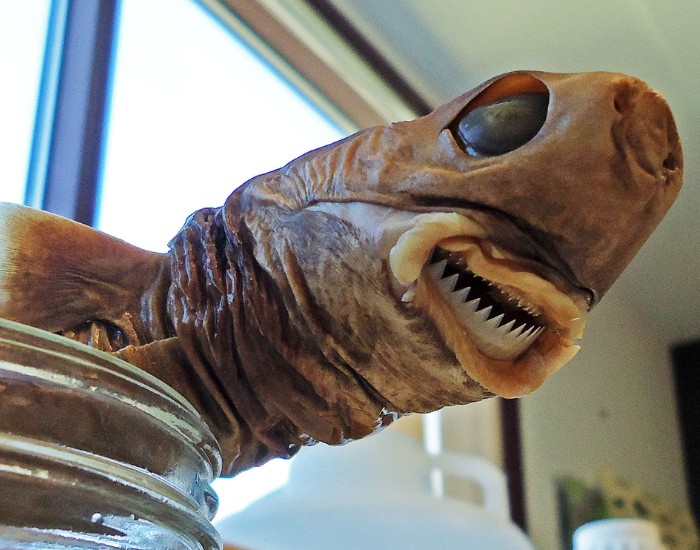
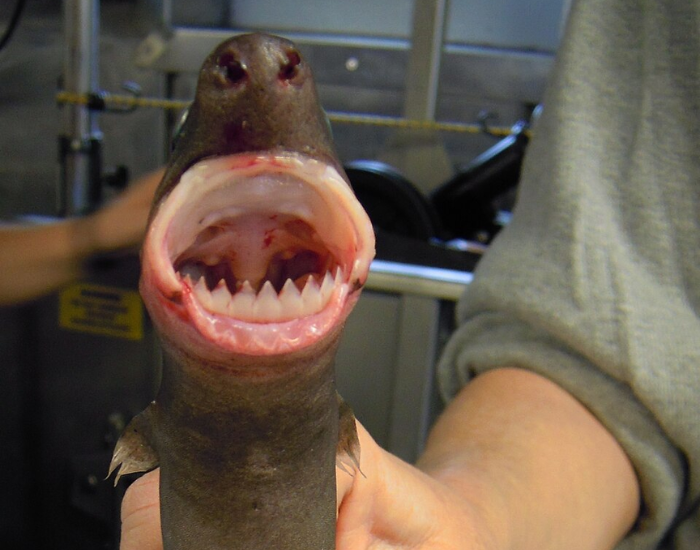
Most sharks shed and replace individual teeth throughout their lives. The cookiecutter shark does something different. It sheds the entire lower row at once, swallowing the old teeth whole. Researchers believe this shark consumes its own teeth to recycle calcium, a clever adaptation for life in the nutrient-poor deep.
The upper teeth are small, thin, and hook-shaped, 30 to 37 in the upper jaw, built for gripping. The lower teeth are much larger, triangular, and interlocking, 25 to 31 in the lower jaw. Together, the upper teeth hold while the lower teeth cut. One shark was calculated to have shed about 15 sets of lower teeth, roughly 450 teeth, as it grew from 14 to 50 cm. The Florida Museum of Natural History maintains detailed specimen records documenting variation across individuals caught from different regions.
10. Pups Arrive Fully Developed Through Live Birth
The cookiecutter shark gives live birth. Females are ovoviviparous, embryos develop inside eggs within the mother’s body and hatch internally. Each litter produces 6 to 12 pups. Newborns measure about 14–15 cm and emerge fully developed, ready to hunt immediately.
Males mature at around 36 cm. Females mature at about 39 cm. Compared to other predators, both males mature and females mature at remarkably small sizes. Gestation lasts 12 to 22 months. Females grow up to 56 cm, while males max out around 42 cm. No targeted fishery exists for this shark. Males and females are caught almost exclusively as bycatch, making the cookiecutter shark’s reproductive biology extremely hard to study.
11. Listed as Least Concern… But We Barely Understand It
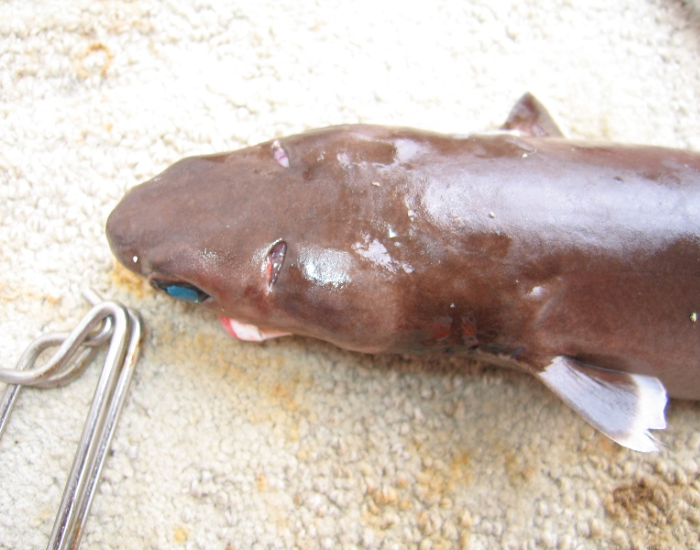
The IUCN classifies the cookiecutter shark as least concern. That sounds reassuring. In practice, it mostly reflects how little we know. No targeted fishery pressures the population. But absence of exploitation doesn’t equal healthy numbers.
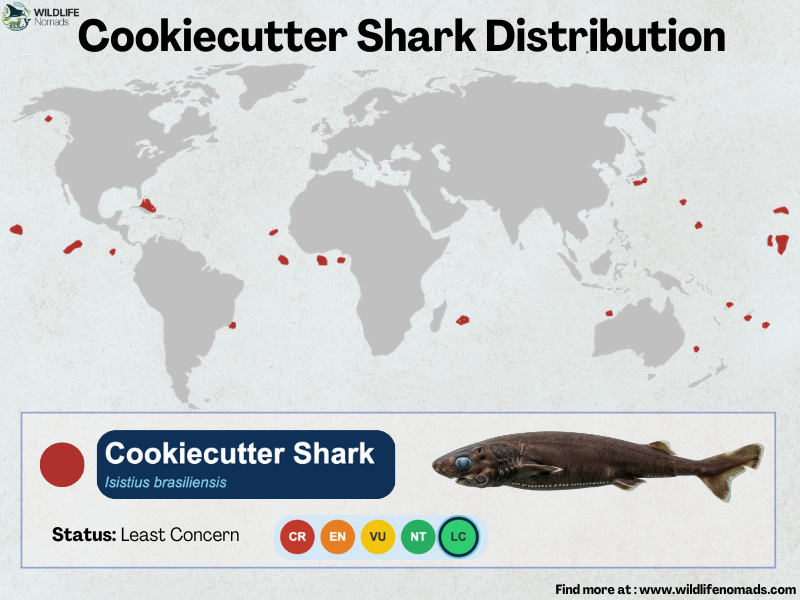
The cookiecutter shark has been documented from oceanic islands in the eastern Pacific to waters near Australia, throughout tropical and subtropical oceans worldwide. It prefers warm deep waters near islands where the seafloor drops steeply. Despite wide distribution, live sightings remain rare. Shark research continues, but the cookiecutter shark remains one of the least understood predators in the sea.
FAQs
The common name comes from the perfectly circular wounds this shark leaves on prey — smooth, round bites that look like something stamped out by a cookie cutter. The genus name Isistius honors Isis, a goddess of light in Egyptian mythology. The species was originally classified as Scymnus brasiliensis before being reclassified.
The cookiecutter shark typically reaches 42–56 cm (17–22 inches). Males are slightly smaller than females. Despite this small size, the cookiecutter shark regularly feeds on prey many times larger, including dolphins, tunas, and whales.
The Predator That Doesn’t Need to Be Big
The cookiecutter shark breaks every rule about what a predator should be. Small, slow, and deep, yet it feeds on prey many times its size and even military hardware. It glows in the dark, uses shadow as a weapon, and swallows its own teeth for calcium. I haven’t met one face-to-face yet. Given that they bite first and ask questions never, I’m in no rush. But this shark has earned a permanent spot in my notebooks.
If the diversity of shark species fascinates you, explore our deep dive on the salmon shark or the unique biology of the lemon shark. And if you’ve ever found one of those signature circular bites on a fish… drop a comment below.
Wildlife Nomads Challenge
The Cookie Bite Challenge
Ten questions on glowing bellies, bitten submarines and the shark that eats its own teeth. Instant feedback after every answer.
References:
Delroisse, J., Duchatelet, L., Flammang, P., & Mallefet, J. (2021). Photophore distribution and enzymatic diversity within the photogenic integument of the cookie-cutter shark. Frontiers in Marine Science, 8, 627045. https://doi.org/10.3389/fmars.2021.627045
de Figueiredo Petean, F., & R de Carvalho, M. (2018). Comparative morphology and systematics of the cookiecutter sharks, genus Isistius Gill (1864) (Chondrichthyes: Squaliformes: Dalatiidae). PloS one, 13(8), e0201913. https://doi.org/10.1371/journal.pone.0201913
Honebrink, R., Buch, R., Galpin, P., & Burgess, G. H. (2011). First documented attack on a live human by a cookiecutter shark. Pacific Science, 65(3), 365–374. https://doi.org/10.2984/65.3.365
Jahn, A. E., & Haedrich, R. L. (1988). Notes on the Pelagic Squaloid Shark Isistius brasiliensis. Biological Oceanography, 5(4), 297–309. https://doi.org/10.1080/01965581.1987.10749519
Kyne, P.M. (2018) Isistius brasiliensis. The IUCN Red List of Threatened Species 2018: e.T41830A2956761. https://dx.doi.org/10.2305/IUCN.UK.2018-2.RLTS.T41830A2956761.en.
Papastamatiou, Y. P., Wetherbee, B. M., O'Sullivan, J., Goodmanlowe, G. D., & Lowe, C. G. (2010). Foraging ecology of cookiecutter sharks on pelagic fishes in Hawaii. Environ. Biol. Fishes, 88(4), 361–368. https://doi.org/10.1007/s10641-010-9649-2
Nakano, H., & Tabuchi, M. (1990). Occurrence of the cookiecutter shark in surface waters of the North Pacific Ocean. Japanese Journal of Ichthyology, 37(1), 60–63.
Minaglia, S., & Liegl, M. (2024). Moonless night sky increases Isistius species (cookiecutter shark) and live human contact. PloS one, 19(2), e0291852. https://doi.org/10.1371/journal.pone.0291852
Widder, E. A. (1998). A predatory use of counterillumination by the squaloid shark, I. brasiliensis. Environ. Biol. Fishes, 53(3), 267–273. https://doi.org/10.1023/A:1007498915860