
The Hawaiian Waters: A Shark Sanctuary
Hawaiian waters support more than 40 species of sharks. This archipelago offers coral reefs, coastal waters, and deep-sea trenches that host both common and extremely rare sharks. From reef sharks to large species like the tiger shark, the variety is stunning.
These apex predators are vital to the health of the ecosystem. They keep reef fishes in balance, clear out injured fish, and even help control populations of marine mammals and dead animals.
Understanding what kinds of sharks are in Hawaii helps reduce fear and encourages conservation. The reality? Shark attacks are extremely rare, and most Hawaiian sharks are not aggressive toward humans.

Common Shark Species in Hawaii
Let’s dive into the most frequently encountered Hawaiian sharks you might come across in these Pacific waters. Each species has adapted perfectly to Hawaii’s unique marine environment, and understanding their characteristics can help you appreciate the incredible diversity of life beneath the waves.
Tiger Sharks: Hawaii’s Most Recognizable Predator
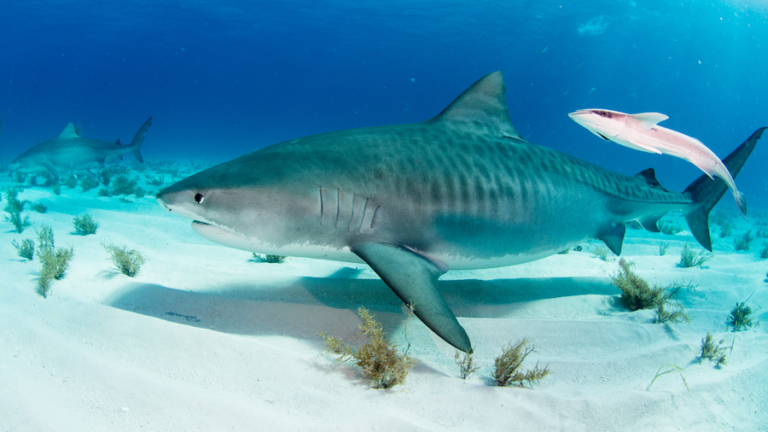
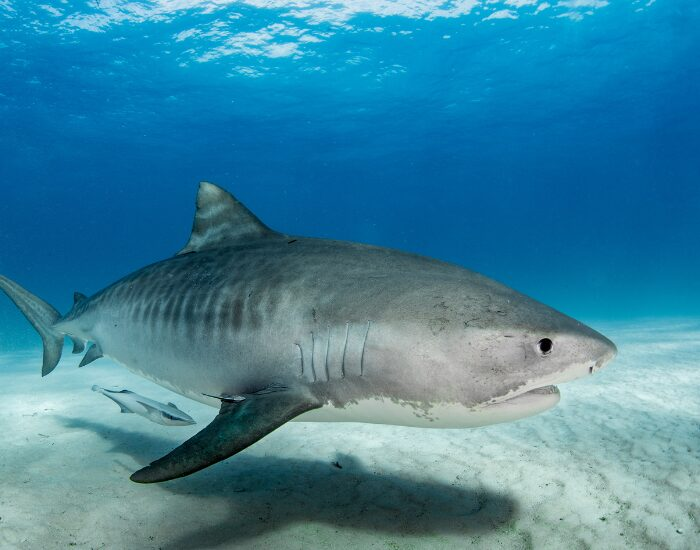
Tiger sharks are arguably the most well-known of all sharks of Hawaii. These impressive predators are easily identified by their distinctive dark stripes (hence the name) and their robust, powerful build. Adult tiger sharks can reach lengths of 10-14 feet, making them one of the larger shark species you’ll find in Hawaiian waters.
What makes tiger sharks particularly interesting is their incredibly diverse diet. These opportunistic feeders will eat almost anything – fish, seals, sea turtles, birds, and even garbage. This adaptability has helped them thrive in Hawaiian waters, where they play a crucial role as apex predators in the marine food chain.
Tiger sharks are most commonly spotted around Maui, Oahu, and the Big Island, particularly in areas where prey is abundant. They prefer coastal waters but can be found at various depths, from shallow bays to deeper offshore areas.
Reef Sharks: The Guardians of Hawaii’s Coral Reefs
When people ask “what kinds of sharks are in Hawaii,” reef sharks are usually high on the list. These smaller, more docile sharks are the most commonly encountered species by snorkelers and divers exploring Hawaii’s coral reefs.
Gray Reef Sharks are abundant throughout Hawaiian waters, easily recognized by their sleek gray coloration and distinctive black-tipped dorsal fin. They typically grow to about 4-6 feet in length and are generally curious but non-aggressive toward humans.
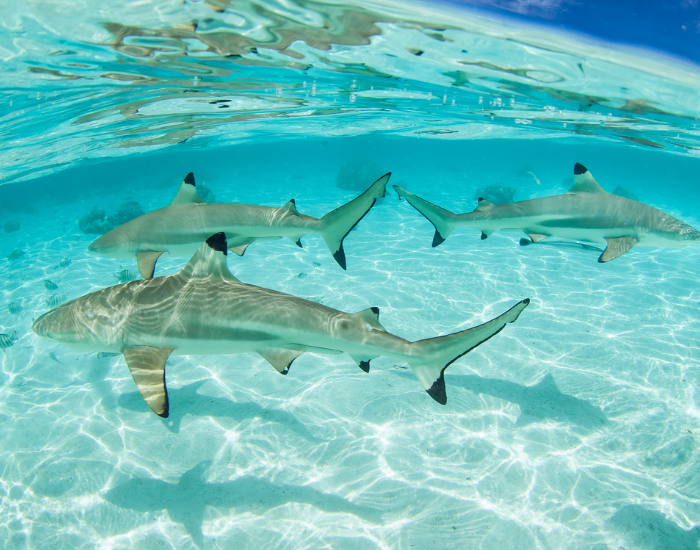
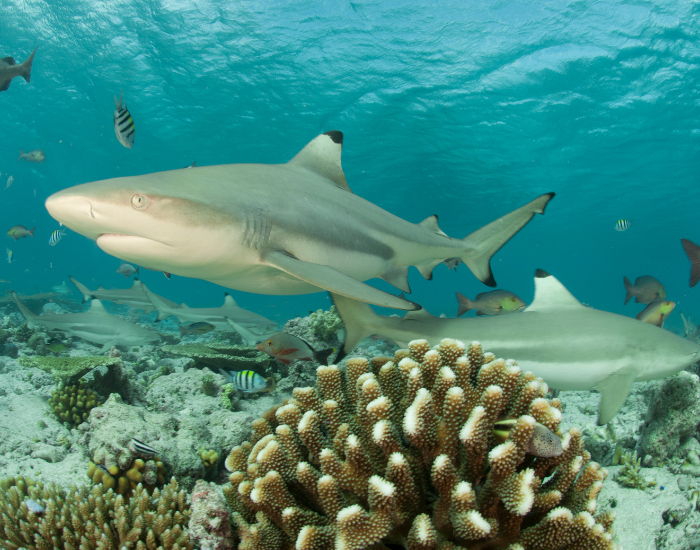
Blacktip Reef Sharks are another common sight, particularly in shallow lagoons and coral reef areas. These sharks rarely exceed 5 feet in length and are characterized by the distinctive black tips on their fins. They’re often seen in very shallow water, sometimes with their dorsal fins breaking the surface.
Both species are crucial for maintaining healthy coral reef ecosystems, controlling fish populations and keeping the reef’s delicate balance intact.
Hammerhead Sharks: Nature’s Unique Design
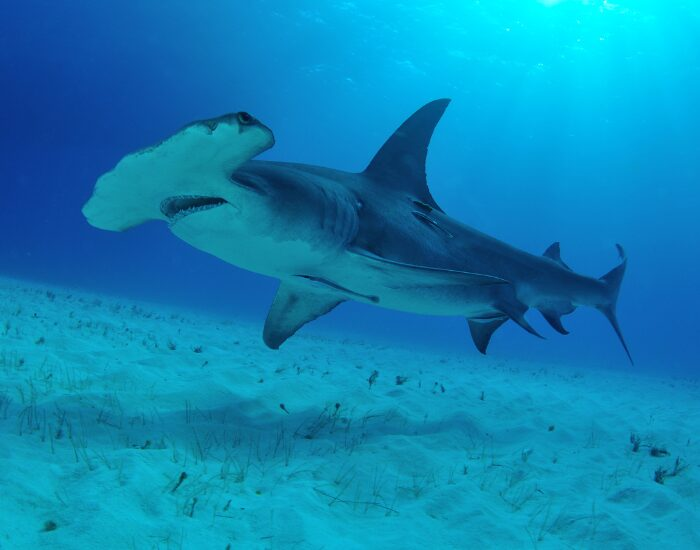
The hammerhead sharks found in Hawaiian waters are among the most fascinating types of sharks in Hawaii. Their distinctive flattened, hammer-shaped head isn’t just for show – it’s an evolutionary masterpiece that enhances their hunting abilities.
Scalloped Hammerhead Sharks are the most common hammerhead species in Hawaii, often found in schools around seamounts and offshore areas. These remarkable creatures can grow up to 12 feet long and use their unique head shape to improve their sensory capabilities and maneuverability.
Smooth Hammerhead Sharks are less common but equally impressive, with a more streamlined head shape compared to their scalloped cousins. Both species are generally harmless to humans and play important roles in Hawaii’s marine ecosystem.
Sandbar and Galapagos Sharks: The Coastal Cruisers
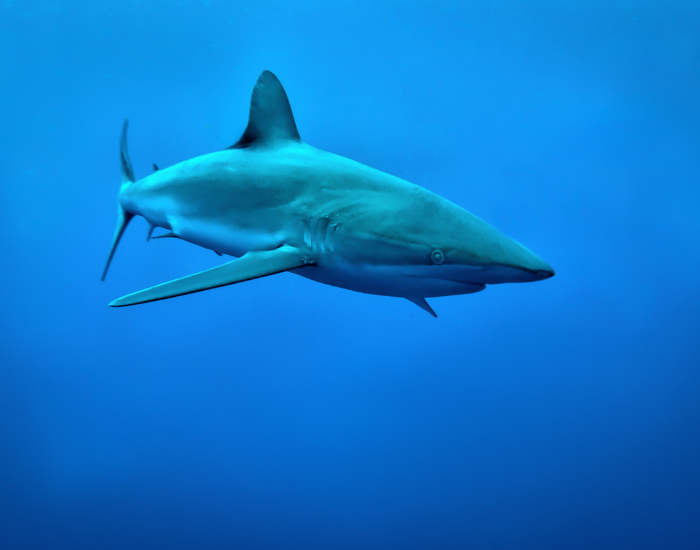
Sandbar Sharks are among the most common Hawaiian sharks found in coastal waters. These sharks are easily recognized by their high, triangular first dorsal fin and their preference for sandy bottom areas – hence their name. They typically grow to about 6-8 feet in length and are generally docile around humans.
Galapagos Sharks are larger coastal species that can reach up to 10 feet in length. They’re often found around the main Hawaiian islands and are known for their curious but generally non-aggressive behavior toward divers and swimmers.
Both species are important components of Hawaii’s marine ecosystem, helping to control fish populations and maintain the health of coastal environments.
Other Notable Shark Species Found in Hawaii
While the species mentioned above are the most commonly encountered, Hawaii’s waters host many other fascinating shark species that contribute to the incredible biodiversity of the region.
The Rare and the Remarkable
The Deep Water Pygmy Shark represents one of the most unusual sharks of Hawaii. This tiny species, measuring only about 8 inches when fully grown, inhabits the deep waters surrounding the islands. Despite their small size, they’re perfectly adapted to life in the deep ocean and play their own unique role in the marine ecosystem.
Whale Sharks, though rarely seen, do occasionally visit Hawaiian waters. These gentle giants are the largest fish in the ocean, capable of reaching lengths of over 40 feet. Despite their intimidating size, they’re filter feeders that pose no threat to humans and are actually quite docile.
Bull Sharks are occasionally reported in Hawaiian waters, though they’re much less common than in other tropical locations. These powerful predators are known for their ability to tolerate brackish water and are considered one of the more potentially dangerous species, though encounters remain extremely rare.
Less Common but Important Species
Several other shark species contribute to Hawaii’s marine diversity:
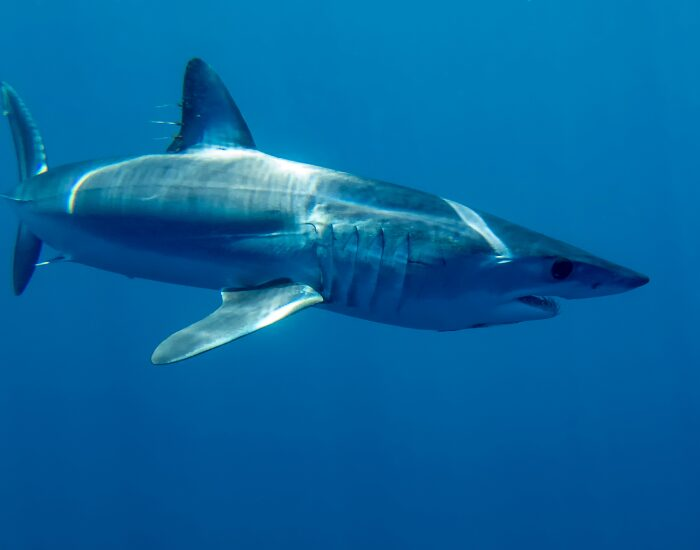
- Mako Sharks are occasionally spotted in deeper offshore waters around Hawaii
- Thresher Sharks with their distinctive long tail fins can sometimes be seen in deeper waters
- Cookie-Cutter Sharks are small but notable for their unique feeding behavior
- Various species of dogfish sharks inhabit different depth zones around the islands
Each of these species has adapted to specific niches within Hawaii’s marine environment, demonstrating the incredible diversity of life that calls these waters home.
Understanding Shark Senses and Behavior
To truly appreciate Hawaiian sharks, it’s essential to understand how these remarkable predators navigate and hunt in their underwater world. Sharks possess some of the most sophisticated sensory systems in the animal kingdom.
Electroreception: Nature’s Built-in Radar
One of the most fascinating aspects of shark biology is their ability to detect electrical signals through specialized organs called ampullae of Lorenzini. This electroreception allows sharks to sense the electrical fields generated by all living creatures, making them incredibly effective hunters even in murky water or complete darkness.
The Power of Smell
Sharks have an incredibly acute sense of smell, often described as being able to detect blood from miles away. While this is somewhat exaggerated, sharks can indeed detect minute concentrations of substances in the water. This ability helps them locate prey, find mates, and navigate their environment.
Vibration Detection
The lateral line system in sharks allows them to detect vibrations and pressure changes in the water. This system is so sensitive that sharks can sense the movements of other animals from significant distances, helping them locate prey or detect potential threats.
Understanding Shark Behavior
Most sharks of Hawaii are not aggressive toward humans. They’re typically curious animals that may investigate unusual objects or movements in their territory, but attacks are extremely rare. Understanding this behavior helps promote safer interactions and reduces unnecessary fear.
Shark Safety and Precautions
While shark attacks in Hawaii are statistically very rare, it’s still important to take sensible precautions when enjoying the ocean. Understanding how to minimize risk while respecting these important marine predators is key to safe ocean recreation.
Smart Swimming Strategies
The best way to stay safe around Hawaiian sharks is to make informed decisions about when and where you enter the water:
- Avoid swimming in murky water where visibility is poor
- Stay away from areas where fishing boats are operating or where people are fishing from shore
- Don’t swim near river mouths, especially after heavy rains
- Avoid swimming at dawn or dusk when many shark species are most active
- Stay out of the water if you have open cuts or wounds
What Not to Wear
Certain items can inadvertently attract sharks:
- Avoid wearing shiny jewelry that might resemble fish scales
- Remove watches or other reflective objects before swimming
- Be aware that contrasting colors might be more noticeable to sharks
If You Encounter a Shark
While encounters with sharks of Hawaii are rare, knowing how to react can help ensure everyone’s safety:
- Remain calm and avoid sudden movements
- Maintain eye contact with the shark
- Back away slowly while facing the shark
- If the shark approaches, use any available object to create distance
- Get out of the water calmly but efficiently
Shark Attack Statistics: Putting Risk in Perspective
Let’s address the elephant in the room: shark attacks. The media often sensationalizes these rare events, creating unnecessary fear about Hawaiian sharks.
The Numbers Don’t Lie
According to the Hawaii Department of Land and Natural Resources, shark incidents in Hawaiian waters average about 3-4 per year statewide. To put this in perspective:
- You’re more likely to be struck by lightning than attacked by a shark in Hawaii
- Millions of people enter Hawaiian waters each year with only a handful of shark encounters
- Most reported incidents are minor and don’t result in serious injury
Understanding Risk Factors
When shark incidents do occur in Hawaii, they often involve:
- Surfers (due to time spent in the water and movements that might attract sharks)
- Swimming in areas known to have higher shark activity
- Being in the water during times when sharks are most active
Recent Trends
While any shark incident is taken seriously, the overall trend in Hawaii shows that fatal shark attacks are extremely rare. The last fatal shark attack in Hawaii occurred in 2019, and such incidents typically happen years apart.
Cultural Significance of Sharks in Hawaiian Culture
Understanding sharks of Hawaii goes beyond biology and safety – these creatures hold deep cultural significance in Native Hawaiian tradition and continue to be revered today.
Aumakua: Ancestral Guardians
In Hawaiian culture, sharks are often considered ‘aumakua – ancestral guardian spirits that protect and guide families. Many Native Hawaiian families have shark ‘aumakua and maintain deep spiritual connections to these ocean predators. This cultural perspective offers a completely different lens through which to view sharks – not as mindless killers, but as sacred protectors of the ocean.
Traditional Hawaiian Knowledge
Native Hawaiians have lived alongside Hawaiian sharks for over a thousand years, developing sophisticated understanding of their behavior, seasonal patterns, and ecological importance. This traditional knowledge, or ‘ike kupuna, continues to inform modern conservation efforts and helps bridge the gap between scientific research and cultural wisdom.
Modern Cultural Integration
Today, this cultural respect for sharks influences everything from conservation policy to eco-tourism practices. Understanding and honoring this cultural perspective adds depth to our appreciation of sharks of Hawaii and helps ensure that conservation efforts are culturally sensitive and community-supported.

Shark Conservation: Protecting Hawaii’s Marine Heritage
The future of Hawaiian sharks depends on effective conservation efforts that address both local and global threats to these important marine predators.
Current Threats
Sharks of Hawaii face several significant challenges:
- Overfishing, both targeted and as bycatch
- Habitat degradation due to coastal development
- Climate change affecting ocean temperature and prey availability
- Marine pollution, including plastic debris
Conservation Success Stories
Hawaii has been a leader in shark conservation:
- In 2010, Hawaii became the first U.S. state to ban shark finning
- The state has established several marine protected areas that benefit shark populations
- Ongoing research programs help monitor shark populations and behavior
- Community education programs promote shark awareness and conservation
The Role of Eco-Tourism
Responsible shark eco-tourism provides economic incentives for conservation while educating the public about these remarkable creatures. Swimming with reef sharks or participating in educational programs helps people appreciate sharks of Hawaii while supporting conservation efforts.
Shark Diving and Eco-Tourism Opportunities
For those wanting to experience Hawaiian sharks firsthand, several responsible eco-tourism options exist throughout the islands.
Cage-Free Shark Encounters
Unlike some destinations that rely on chumming or feeding sharks, Hawaii’s shark encounters focus on observing these animals in their natural behavior patterns. Reputable tour operators offer:
- Snorkeling trips to areas where reef sharks are commonly seen
- Diving expeditions to deeper waters where larger species might be encountered
- Educational boat tours that combine sightseeing with marine biology education
Best Locations for Shark Encounters
Different Hawaiian islands offer unique opportunities to observe types of sharks in Hawaii:
- Molokini Crater (Maui): Excellent for observing reef sharks
- Kealakekua Bay (Big Island): Known for diverse marine life including various shark species
- Shark’s Cove (Oahu): Despite the name, this is actually a great spot for safe snorkeling
- Cathedrals I & II (Lanai): Popular diving spots where sharks are occasionally seen
Debunking Common Shark Myths
Let’s address some persistent myths about sharks of Hawaii that often create unnecessary fear and misunderstanding.
Myth 1: Sharks Are Mindless Killers
Reality: Sharks are highly intelligent predators with complex behaviors and social structures. They’re not indiscriminate killers but rather careful hunters that play crucial roles in maintaining marine ecosystem balance.
Myth 2: All Sharks Are Dangerous to Humans
Reality: Of the 40+ types of sharks in Hawaii, only a few species have ever been involved in human encounters. Most Hawaiian sharks are small reef species that pose no threat to humans.
Myth 3: Sharks Can Smell Blood from Miles Away
Reality: While sharks do have an excellent sense of smell, the “miles away” claim is exaggerated. Sharks can detect blood in very low concentrations, but the actual distance depends on current, water conditions, and other factors.
Myth 4: Shark Attacks Are Increasing
Reality: While media coverage of shark incidents has increased, actual attack rates in Hawaii have remained relatively stable. Improved reporting and media attention create the perception of increasing incidents.
Myth 5: Sharks Don’t Get Cancer
Reality: This myth has been thoroughly debunked. Sharks do get cancer, and this misconception has unfortunately contributed to demand for shark products in some traditional medicines.
The Future of Sharks in Hawaiian Waters
Looking ahead, the future of sharks of Hawaii depends on continued conservation efforts, scientific research, and public education.
Research and Monitoring
Ongoing studies of Hawaiian sharks include:
- Satellite tagging programs that track shark movements
- Population assessments for different species
- Studies of shark behavior and ecology
- Climate change impact assessments
Community Involvement
The future of shark conservation in Hawaii increasingly relies on community participation:
- Citizen science programs that engage the public in data collection
- Educational outreach in schools and communities
- Support for sustainable fishing practices
- Advocacy for marine protected areas
Balancing Human Use and Conservation
As Hawaii’s population grows and tourism increases, finding balance between human ocean use and shark conservation becomes increasingly important. This requires:
- Science-based management decisions
- Community input and cultural sensitivity
- Continued monitoring and adaptive management
- International cooperation on shark conservation
Appreciating Hawaii’s Shark Heritage
The sharks of Hawaii represent one of the most remarkable aspects of the islands’ natural heritage. These sophisticated predators have called Hawaiian waters home for millions of years, long before humans ever set foot on these volcanic islands. Understanding and appreciating them is crucial for maintaining the health of Hawaii’s marine ecosystems and preserving these magnificent creatures for future generations.
From the impressive tiger sharks that patrol coastal waters to the smaller reef sharks that dart between coral formations, each species plays a vital role in the complex web of marine life that makes Hawaii’s oceans so special. The types of sharks in Hawaii demonstrate nature’s incredible ability to adapt and thrive in diverse marine environments.
As we’ve explored throughout this guide, Hawaiian sharks are far from the mindless killers often portrayed in popular media. They’re intelligent, sophisticated predators with complex behaviors, important ecological roles, and deep cultural significance. By learning about them, we can better appreciate their importance while enjoying Hawaii’s waters safely and responsibly.
Next time you’re enjoying Hawaii’s beautiful waters, take a moment to appreciate the fact that you’re sharing the ocean with some of the most remarkable predators on Earth. The sharks of Hawaii are not something to fear, but rather something to respect, understand, and protect. They are, after all, an integral part of what makes Hawaii’s marine environment so extraordinary.