If you’ve been following my work at Wildlife Nomads, you might have caught my recent deep-dive into the world of mackerel. If you did, you know how quickly things can get confusing in the Scombridae family. One minute you’re looking at a King Mackerel, the next you’re lost in a sea of Spanish Mackerel subspecies and tuna.
Here’s the thing though, when most people go snorkeling, they’re chasing the flashy stuff. The black tip reef sharks patrolling the drop-off, the sea turtles gliding past the colourful coral fish, the occasional pufferfish hovering near a sea anemone. Tuna? They’re the silver blur in the distance that nobody photographs. And that’s exactly the problem. Because behind that unremarkable silhouette is one of the most ecologically important, evolutionarily sophisticated, and commercially critical fish groups on the planet.
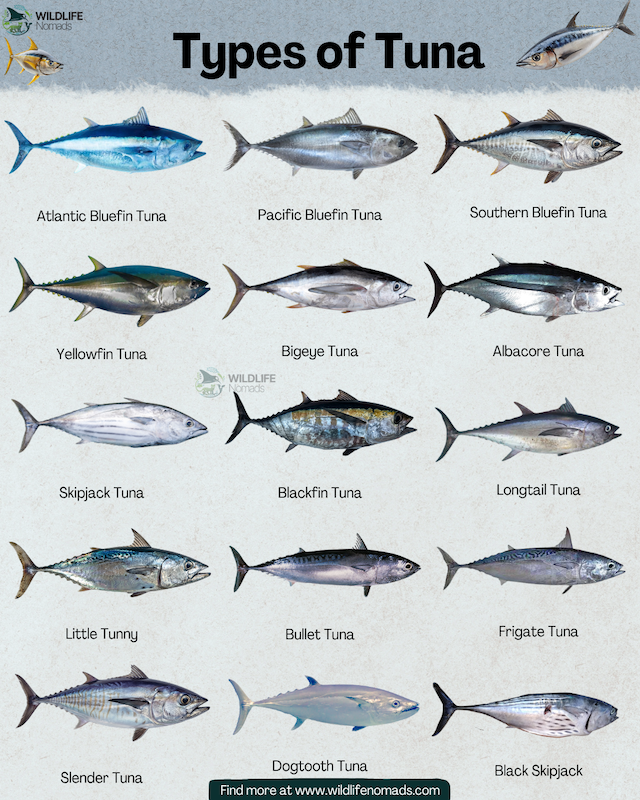
But today, we’re moving up the food chain. They are as vital to our oceans as whales or sharks, yet we often overlook their diversity. From the blue striped to the giant northern bluefin, this guide is meant to help you identify these titans of the sea.

What Exactly Is a Tuna?
Before we jump into the tuna species chart, we need to understand what makes them unique All true tunas belong to the tribe Thunnini. They are characterized by their streamlined, spindle-shaped bodies, two dorsal fins, and a series of small “finlets” running toward the caudal fin (the tail).
One of the most fascinating biological traits I’ve studied is their vascular heat exchange system. Unlike most fish, which are cold-blooded, many tuna types can keep their body temperature higher than the surrounding water. This allows them to inhabit cooler waters and temperate waters where other tropical fish simply couldn’t survive.
1. Atlantic Bluefin (Thunnus thynnus)
The undisputed king. Often referred to as the northern bluefin, this is the largest of all tuna species.
Here is what you need to know, the market value for an Individual fish regularly fetch hundreds of thousands of dollars at Tokyo’s Toyosu Market. In January 2026, a single bluefin sold for a record USD 3.24 million at the ceremonial New Year auction.
- Identification: Look for a dark blue back and a silvery-white underside. Their pectoral fins are remarkably short compared to other species, never reaching the space between the two dorsal fins.
- Size: These are the giant bluefin of legend, capable of reaching over 1,500 pounds.
- Conservation Status: As of September 2021, the Atlantic bluefin was reclassified from Endangered to Least Concern on theI UCN Red List, thanks to enforced fishing quotas. However, the western Atlantic population, which spawns in the Gulf of Mexico, remains significantly depleted and continues to need protection.
2. Pacific Bluefin (Thunnus orientalis)
While closely related to the Atlantic version, the pacific bluefin is a distinct wanderer of the Pacific Ocean. By analyzing their migration patterns, I was always stunned by their journey from spawning grounds near Japan all the way to the coast of California.
- Coloration: They possess a beautiful dark blue metallic hue on top.
- Biology: They thrive in subtropical waters worldwide but are masters of the eastern Pacific Ocean.
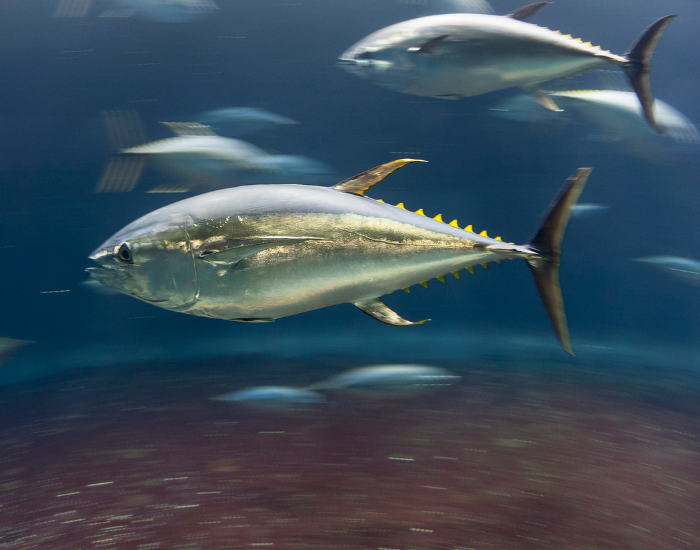
3. Southern Bluefin (Thunnus maccoyii)
As someone currently based in Australia, the southern bluefin is a local icon. These fish are found exclusively in the southern hemisphere, particularly in the temperate waters of the Great Australian Bight.
- Identification: They look almost identical to the Atlantic species, but their anal fin is a distinct dusky yellow rather than silvery.
- Conservation: This species has faced immense pressure, and much of the tuna caught today in Australia is part of highly regulated ranching operations.
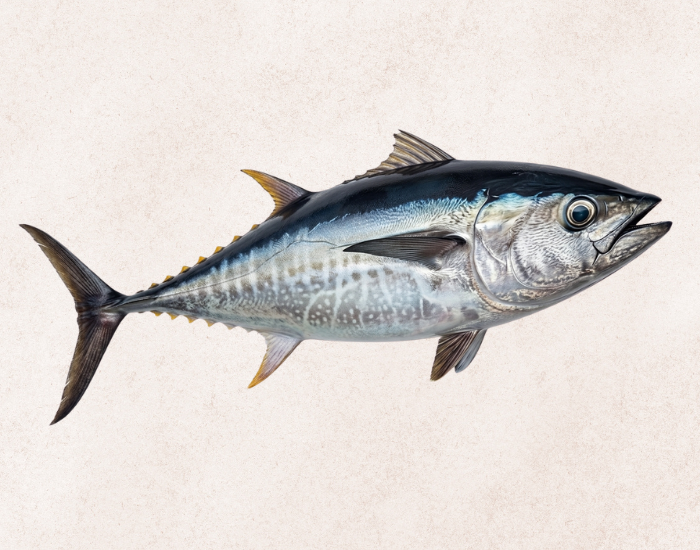
4. Yellowfin Tuna (Thunnus albacares)
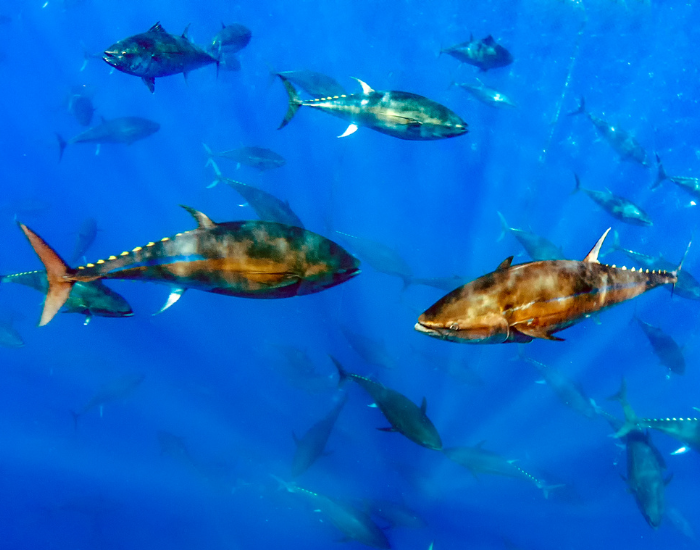
Known as “Ahi” in Hawaii, yellowfin are arguably the most visually striking of all tuna types. If you have visited a sportfishing dock in Cabo San Lucas, you have almost certainly seen a large yellowfin hanging at the weigh station.
- Distinguishing Marks: Look for the incredibly long, bright yellow second dorsal and anal fins.
- Habitat: They prefer tropical and temperate waters and are often found swimming alongside marine mammals like sea lions and dolphins.
- Conservation Status: The IUCN upgraded yellowfin from Near Threatened to Least Concern in 2021. However, the Indian Ocean yellowfin population remains overfished and is considered a significant management concern.
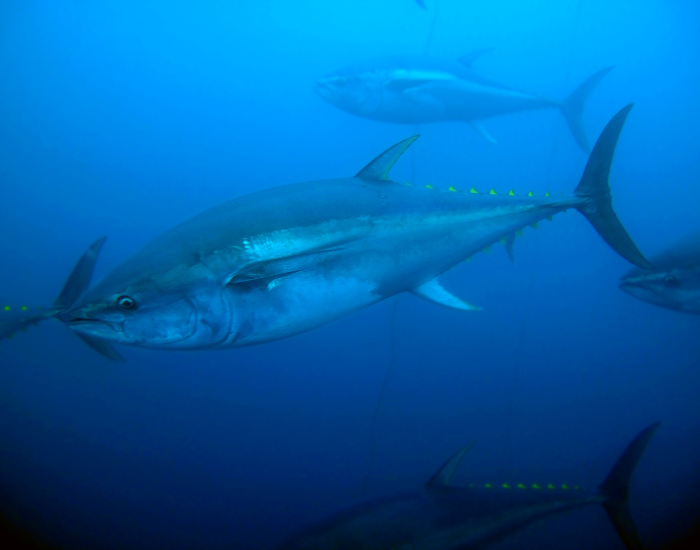
5. Bigeye Tuna (Thunnus obesus)
The bigeye tuna is commonly confused with the yellowfin. However, as a biologist, I look at two clear differences: the eyes and the body shape. Their eyes are physically larger, an adaptation for hunting in the Oxygen Minimum Zone at depth.
- Physical Traits: They have a thicker, sturdier body than the yellowfin. If you look at a identification chart, the bigeye lacks the wavy lines on its silver belly that are common in yellowfin.
- Commercial Importance: Highly valued in the “Sashimi” market for its high fat content.
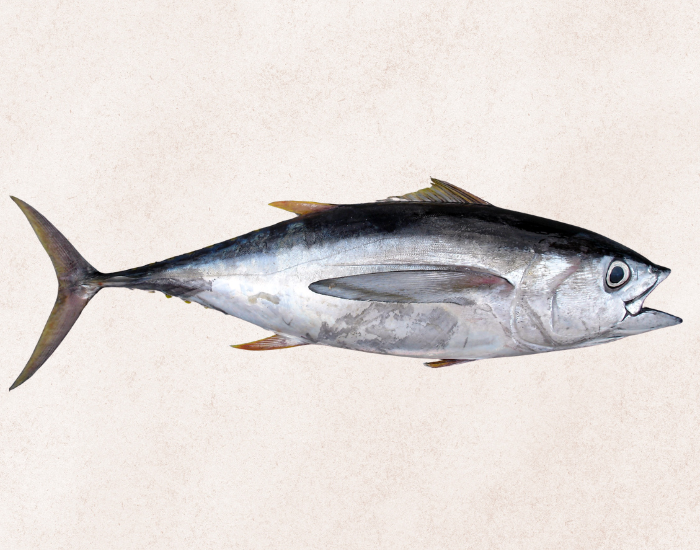
6. Albacore Tuna (Thunnus alalunga)
This species is famously known as the “chicken of the sea.” For instance, if you are eating white tuna from a can, it is almost certainly albacore. Unlike the bluefin, albacore possesses light, mild-flavored meat. Because of this specific quality, it has become the foundation of the global canned tuna industry.
- Identification: The dead giveaway is the pectoral fins. They are incredibly long, reaching well past the second dorsal fin.
- Range: Found in warm temperate waters and subtropical waters worldwide. Unlike the bluefin, they have light meat that is much milder in flavor.
- Conservation Status: The IUCN upgraded albacore from Near Threatened to Least Concern in 2021, a positive sign for this commercially important species.
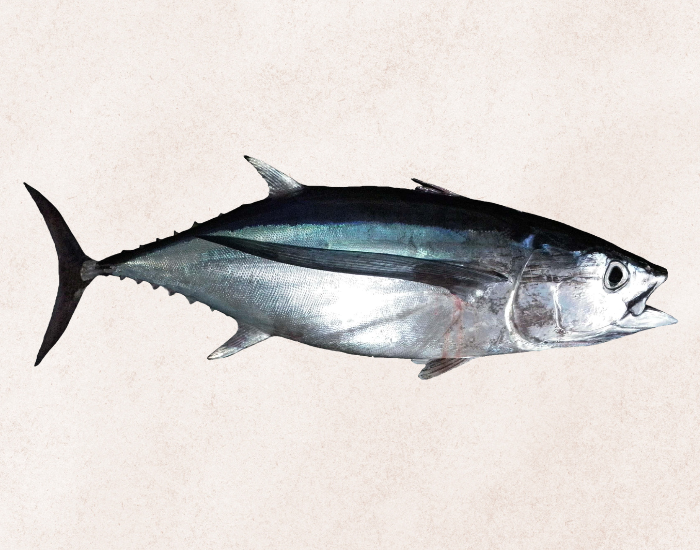
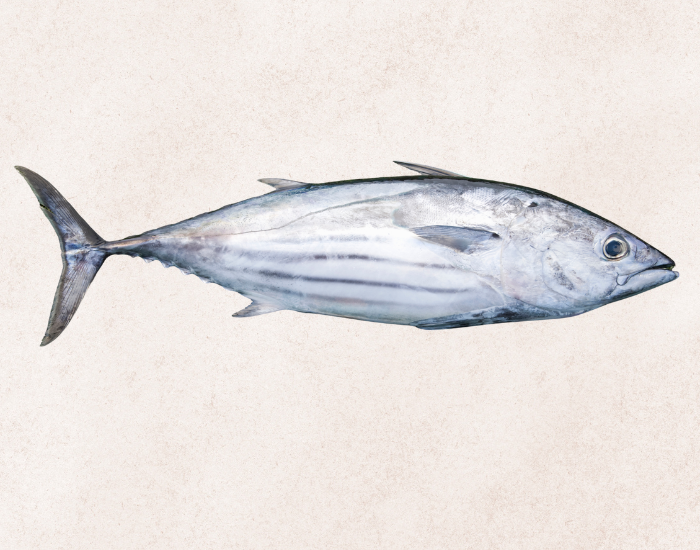
7. Skipjack (Katsuwonus pelamis)
The skipjack is the most commercially harvested tuna in the world and the primary species in most canned products. Technically, it sits outside the genus Thunnus, belonging instead to the closely related genus Katsuwonus, but it remains a true member of the tribe Thunnini and is universally recognised as a tuna.
- Behavior: They are highly energetic, fast-growing, and usually found in massive schools in tropical waters.
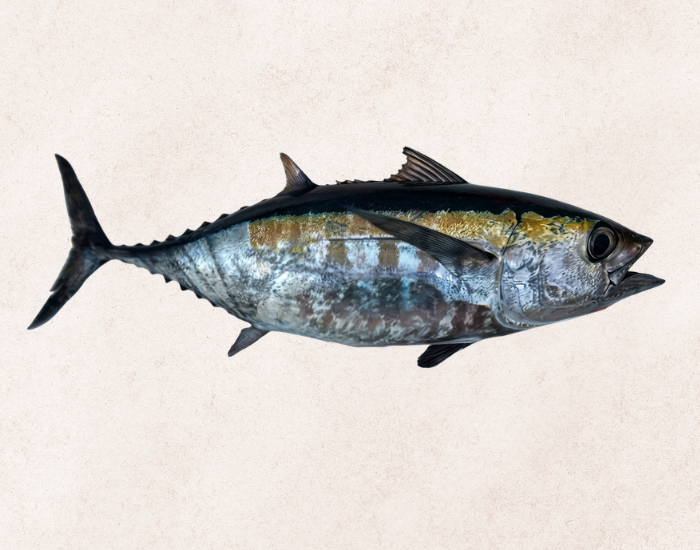
8. Blackfin Tuna (Thunnus atlanticus)
The blackfin is the smallest Atlantic bluefin relative, rarely exceeding 40 pounds. During field trips to the Caribbean, these were a frequent sight around reef edges and offshore structure.
- Appearance: They have a dark blue back and a characteristic black stripe on their dorsal fin.
- Size: Much smaller than the bluefins, usually topping out around 40 pounds.
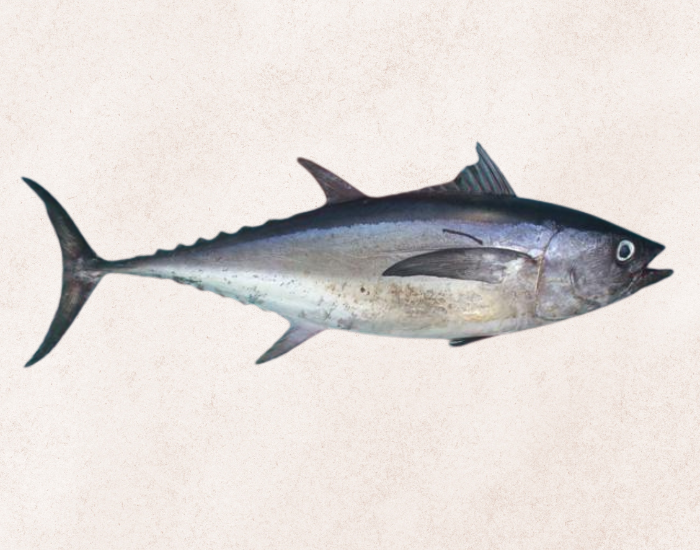
9. Longtail Tuna (Thunnus tonggol)
Also known as tongol, this species is often found in the Indian Ocean and the waters around Papua New Guinea.
- Unique Feature: Like all tunas, the longtail lacks a swim bladder, meaning it must keep swimming continuously just to maintain its depth. What makes this species notable is how visible this adaptation becomes in its behaviour, as longtails are rarely observed resting or slowing near the surface.
- Identification: They have a very slender body and are often called slender tuna in some regional guides.
10. Little Tunny (Euthynnus alletteratus)
Commonly called False Albacore, the Little Tunny is a fully recognised member of the tribe Thunnini, a true tuna in every scientific sense. Despite this, it is rarely eaten commercially due to its dark, strong-tasting meat, and is more commonly used as bait or released by sport fishermen.
- Coloration: They have “worm-like” dark markings on their backs above the lateral line and dark spots between the pelvic and pectoral fins.
- Note: While they are true tunas in the broader sense, they are often considered “bait fish” because of their dark, strong-tasting meat.
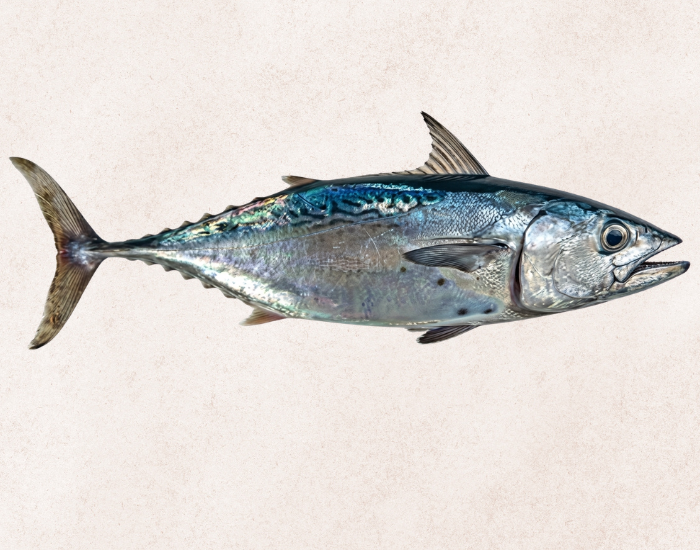
11. Bullet Tuna (Auxis rochei)
The bullet tuna is a tiny, cigar-shaped powerhouse. It rarely exceeds 50 cm in length — making it one of the smallest tuna fish sizes in the world. Despite its modest size, it plays an important ecological role as prey for larger predators.
- Size: They are among the smallest tuna fish sizes, rarely exceeding 20 inches.
- ID: They have a wide gap between their two dorsal fins, a key feature to look for on a identification guide.
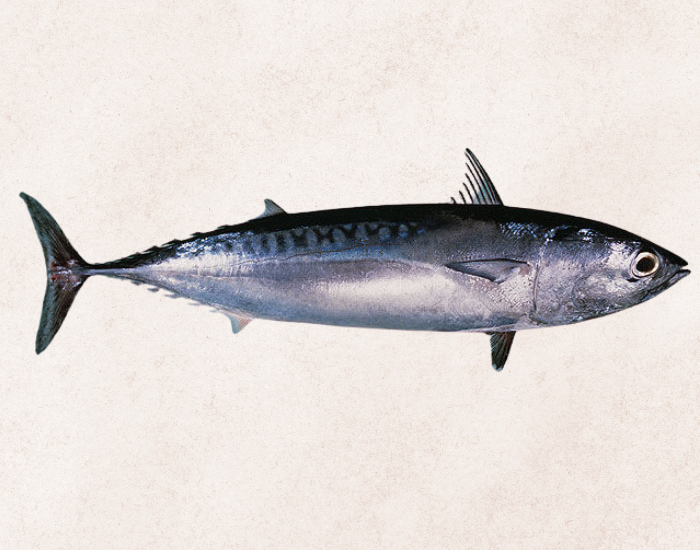
12. Frigate Tuna (Auxis thazard)
Very similar to the bullet tuna, the frigate tuna is a cosmopolitan species found in tropical waters worldwide. The two species are often confused in the field.
- Identification: The main difference is the shape of the “corselet” (the patch of scales behind the head). In the frigate tuna, it is much narrower.
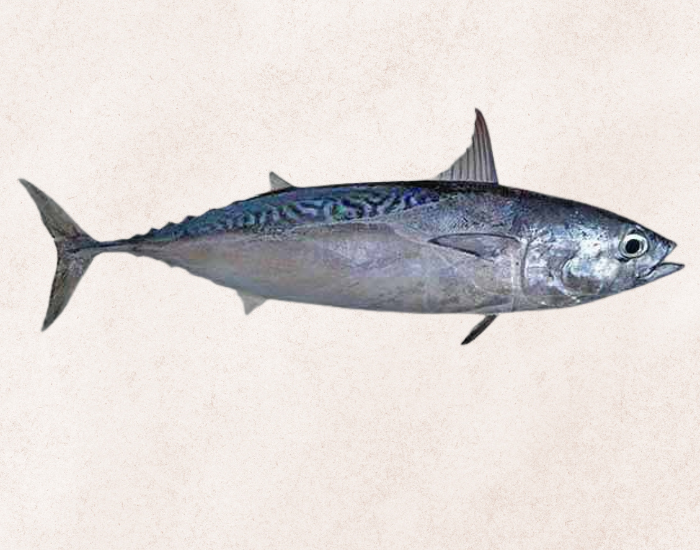
13. Slender Tuna (Allothunnus fallai)
As the name suggests, the slender tuna is built like a torpedo and is among the most streamlined of all tuna types. It inhabits the colder waters of the Southern Ocean, making it one of the few tuna species adapted to sub-Antarctic conditions.
- Scientific Insight: They have a much higher number of gill rakers than other tunas, which suggests they feed more on plankton and small krill.
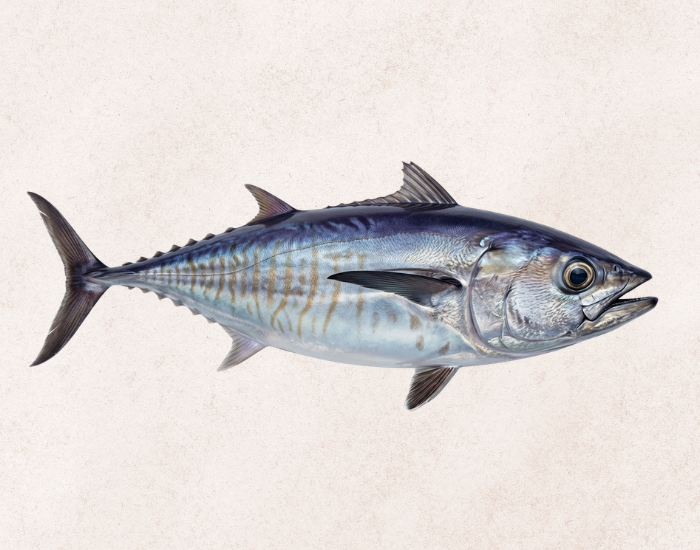
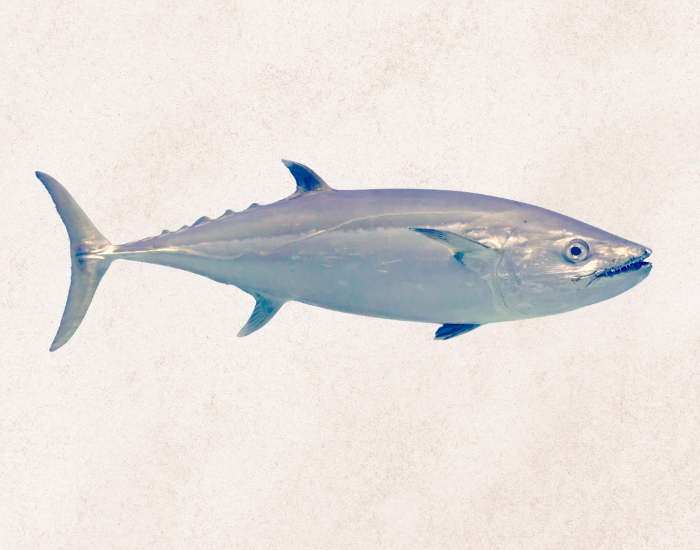
14. Dogtooth Tuna (Gymnosarda unicolor)
While it has “tuna” in the name, the Dogtooth is a true member of the tribe Thunnini — but unlike most of its relatives, it has abandoned the open ocean in favour of coral reef environments.
- Visual ID: They have massive, conical teeth (hence the name) and a wavy lateral line.
- Habitat: Unlike the open-ocean other tuna species, these guys hang out around coral reefs.
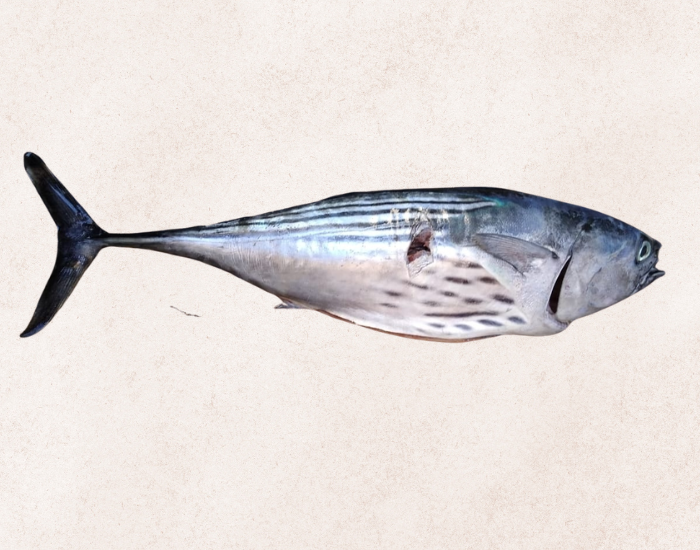
15. Black Skipjack (Euthynnus lineatus)
Found in the eastern Pacific Ocean, the black skipjack is the Pacific counterpart of the little tunny. It inhabits coastal and offshore tropical waters from Mexico to Ecuador.
- Striped Appearance: It’s a blue striped tuna with horizontal dark stripes on the back and several dark spots on the breast.
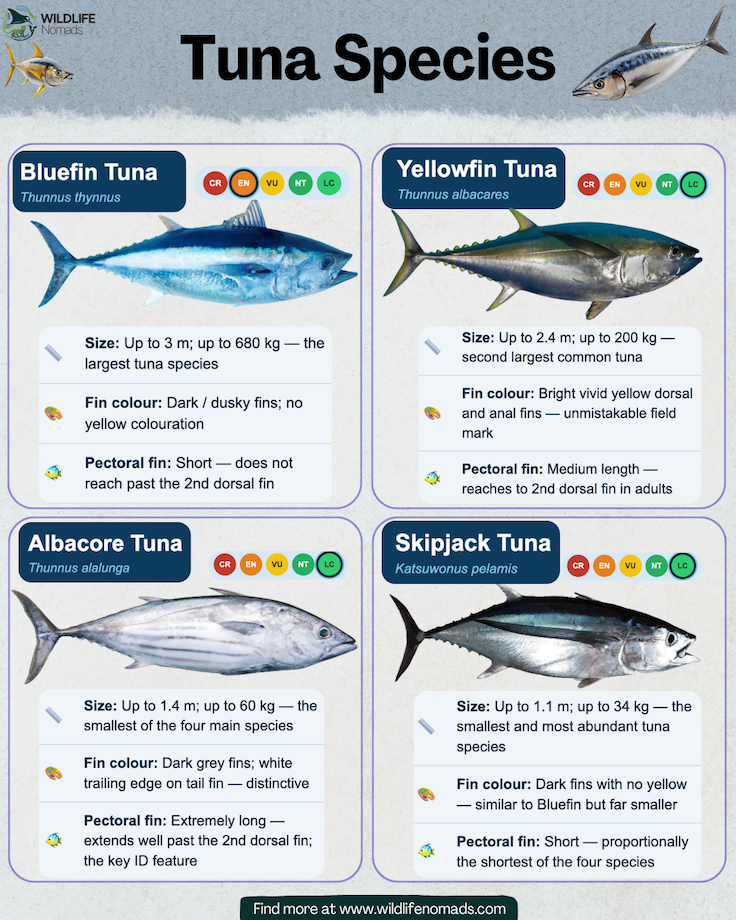
Tuna Species Identification: The Cheat Sheet
To keep it simple for your next fishing trip or grocery run, use this identification chart logic:
| Feature | Bluefin | Yellowfin | Albacore | Skipjack |
| Fin Color | Dark/Dusky | Bright Yellow | Dark/Grey | Dark |
| Pectoral Fin | Short | Medium | Extremely Long | Short |
| Markings | None (Silver) | Wavy Belly Lines | None | Belly Stripes |
| Meat Color | Dark Red | Pink/Red | White | Light Pink/Tan |
Science & Conservation
While fishing vessels and the central pacific fisheries commission work to manage stocks, the reality of tuna caught globally is complex. As a biologist, I’ve seen the impact of overfishing firsthand. The bluefin market is driven by such high demand that individual fish have auctioned for over $3 million USD in Tokyo.
This isn’t just about “food.” Tunas are “biological pumps.” They move nutrients through the water column and serve as a primary food source for larger predators. When we lose them, the entire marine ecosystem in the Atlantic Ocean, Indian Ocean, and Pacific Ocean feels the tremor.
FAQ about Tuna
That would be the Skipjack tuna (Katsuwonus pelamis). It is easily identified by the 4–6 dark, longitudinal blue stripes on its lower sides and belly.
The Atlantic Bluefin Tuna is the largest, reaching lengths of up to 13 feet. If you see a tuna species size chart, the Bluefin towers over the juvenile tuna of other species.
The Atlantic bonito, stripe bellied bonito, and the Spanish mackerel are the most common fish that look like tuna. The key is to look for the finlets and the specific structure of the first dorsal fin.
Final Thoughts from the Field
Tuna are truly the endurance athletes of the sea. Because of this, whether you’re a marine science enthusiast, a fisherman, or someone simply looking for better protein, I hope this guide helps you appreciate the sheer biological wonder of these animals.
Ultimately, they are much more than a label on a tin; instead, they are a testament to what life can achieve in the vast, open blue. Furthermore, they serve as keystone predators that hold entire ocean ecosystems together. In fact, without them, the marine food web would look remarkably different.
References:
Boustany, A. M., Matteson, R., Castleton, M., Farwell, C., & Block, B. A. (2010). Movements of Pacific bluefin tuna (Thunnus orientalis) in the Eastern North Pacific revealed with archival tags. Progress in Oceanography, 86(1–2), 94–104. https://doi.org/10.1016/j.pocean.2010.04.015
Collette, B. B., et al. (2011). High value and long-lived: Double jeopardy for tunas and billfishes. Science, 333(6040), 291–292. https://doi.org/10.1126/science.1208730
Collette, B.B., Boustany, A., Fox, W., Graves, J., Juan Jorda, M. & Restrepo, V. (2021) Thunnus thynnus. The IUCN Red List of Threatened Species 2021: e.T21860A46913402. https://dx.doi.org/10.2305/IUCN.UK.2021-2.RLTS.T21860A46913402.en.
Golet, W. J., Galuardi, B., Cooper, A. B., & Lutcavage, M. E. (2013). Changes in the distribution of atlantic bluefin tuna (Thunnus thynnus) in the Gulf of Maine 1979-2005. PloS one, 8(9), e75480. https://doi.org/10.1371/journal.pone.0075480
Nakamura, I., et al. (2018). Phylotranscriptomic insights into the diversification of endothermic Thunnus tunas. Molecular Biology and Evolution, 36(2), 284–297. https://pmc.ncbi.nlm.nih.gov/articles/PMC6340463/
Dickson, K. A., & Graham, J. B. (2004). Evolution and consequences of endothermy in fishes. Physiological and Biochemical Zoology, 77(6), 998–1018 https://doi.org/10.1086/423743
IUCN. (2021). Tuna species recovering despite growing pressures on marine life — IUCN Red List update. International Union for Conservation of Nature.
Harding, L. B., et al. (2021). Endothermy makes fishes faster but does not expand their thermal niche. Functional Ecology, 35(7), 1378–1387. https://doi.org/10.1111/1365-2435.13869