To the average consumer, “mackerel” is a singular, torpedo-shaped fish on a bed of ice. To a biologist, the term is a taxonomic umbrella covering dozens of species across the family Scombridae, the same lineage as tunas and bonitos. These fish sit at a fascinating intersection of high-speed evolution, global food security, and elite sportfishing.
Here’s the thing though, when most people go snorkeling, they’re chasing the flashy stuff. The pufferfish puffing up in defense, the sea turtle gliding past the reef, the occasional colourful trigger fish swimming around. Mackerel? They’re the silver blur in the background that nobody photographs. And that’s exactly the problem. Because behind that unremarkable grey exterior is one of the most ecologically important, evolutionarily sophisticated, and commercially critical fish groups on the planet.
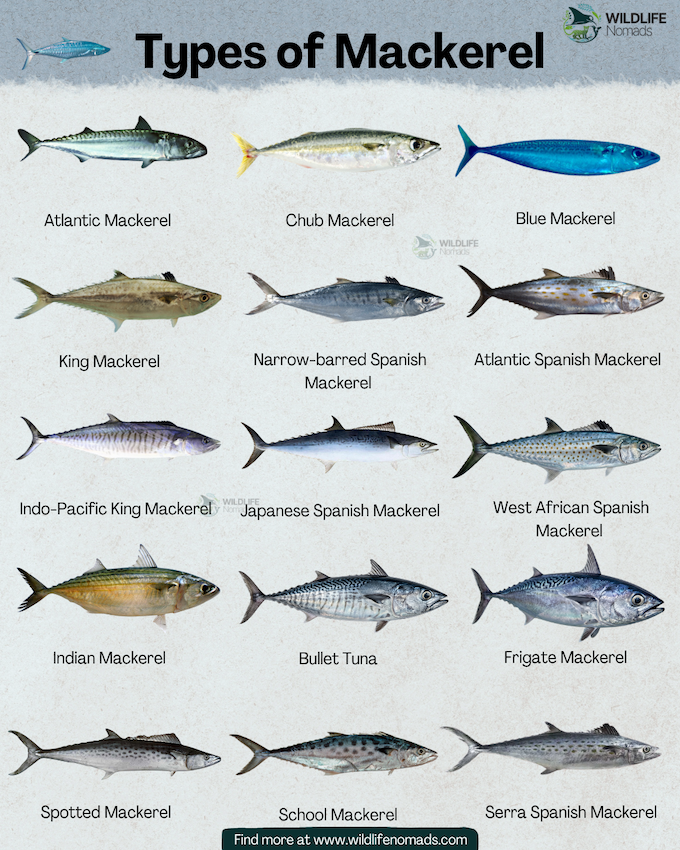
This guide breaks down 14 essential species across four primary genera: the “true” mackerels (Scomber), the predatory Spanish mackerels (Scomberomorus), the Indo-Pacific specialists (Rastrelliger), and the “The Mackerel-Tuna Intermediates” (Auxis).
What Is a Mackerel? Defining the Term
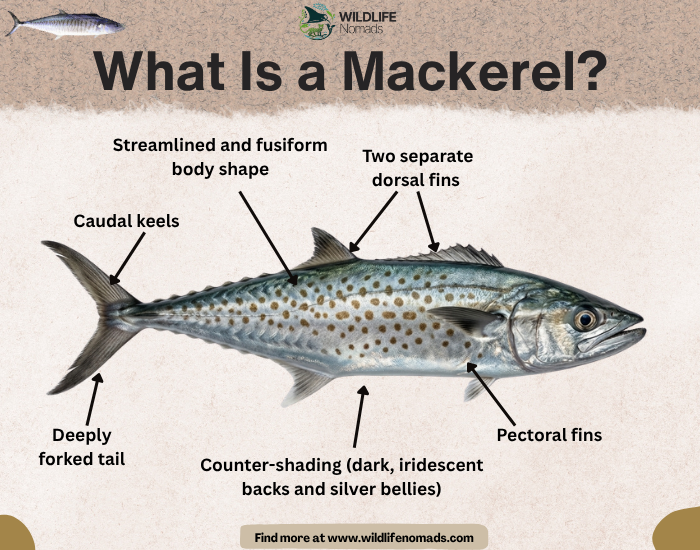
Technically, mackerels are fast-swimming, pelagic schooling fish. While markings vary, they share a distinct “high-performance” morphology:
- Body Shape: Streamlined and fusiform (torpedo-shaped) for reduced drag.
- Finlets: Small, non-retractable fins behind the dorsal and anal fins to reduce turbulence.
- Tail: A deeply forked, high-aspect-ratio caudal fin built for sustained speed.
- Coloration: Counter-shading (dark, iridescent backs and silver bellies) to provide camouflage in the open water column.
True Mackerels (Genus Scomber)
The genus Scomber contains the classic common mackerel species. These smaller, schooling fish form the backbone of global mackerel fisheries. They feature two large dorsal fins, wavy vertical markings on the back, and small scales that give them a polished, metallic appearance.
1. Atlantic Mackerel (Scomber scombrus)
The Atlantic mackerel is arguably the most recognised mackerel species in the world. It features a bright iridescent blue-green back, silver-white belly, and distinctive dark wavy stripes. Most individuals reach 30–45 cm, though some exceed 60 cm (very rarely).
This species ranges throughout the North Atlantic Ocean, from Norway and Iceland south to the Mauritania and the Canary Islands, and the US East Coast. It migrates inshore during summer to feed on small crustaceans and fish larvae. Spawning season runs from spring through early summer, with females releasing millions of eggs into open water.
Atlantic mackerel support some of the largest fisheries in the North Atlantic, managed by ICES through annual catch limits. But the stock is now in serious trouble. Years of catch quotas exceeding scientific advice by an average of 39% have driven the Northeast Atlantic population below its critical sustainability threshold , ICES has recommended cuts of up to 77% to allow recovery, and the species lost its Marine Stewardship Council certification in 2019. It remains one of the most commercially important fish in the ocean, and one of the most at-risk.
2. Chub Mackerel (Scomber japonicus)
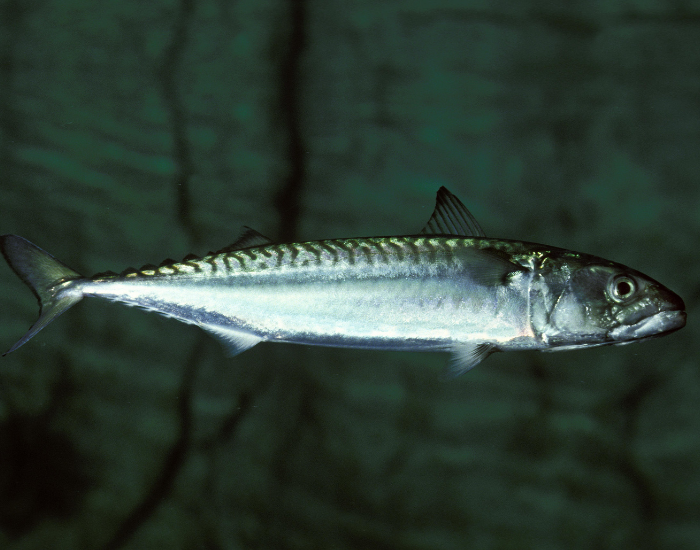
Chub mackerel (Scomber japonicus) holds the title of most globally distributed true mackerel. While Atlantic mackerel stick mostly to the North Atlantic, chub mackerel range across temperate and tropical seas worldwide, the Mediterranean, the Pacific, the Indian Ocean, and the Atlantic. This cosmopolitan range makes it one of the most commercially caught fish species on the planet.
Morphologically, chub mackerel look similar to Atlantic mackerel but tend to have more irregular, less distinct dorsal markings and a slightly different pattern of spots on the lower body. They’re a bit stockier, chub by name, chub by nature. Maximum size is around 50 cm, but most commercially caught individuals are considerably smaller.
3. Blue Mackerel (Scomber australasicus)
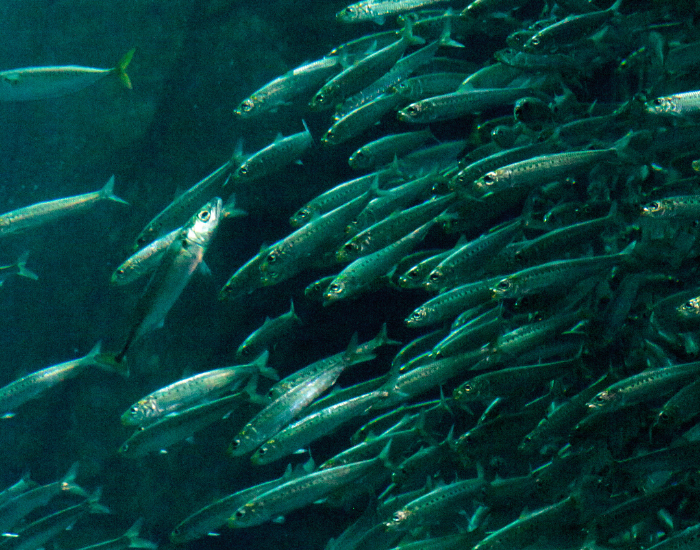
The blue mackerel is the southern counterpart to the Atlantic mackerel and a species of particular biogeographic interest. It’s distributed across the Indo-Pacific, from Australia and New Zealand north through Japan. In Queensland, it’s a common species in both commercial trawls and recreational fishing.
Blue mackerel are distinguished by a more greenish-blue dorsal colouration and finer, more numerous vertical stripes than chub mackerel. They form large schooling aggregations near the continental shelf edge. Their firm, oily flesh delivers a significant omega-3 punch, making them excellent table fish.
In Queensland and along the eastern Australian coast, blue mackerel often turn up in mixed catches with other species. They’re a good eating fish, firm, oily flesh with that characteristic mackerel flavour, and they’re highly nutritious, packing a significant omega-3 punch. Worth knowing if you’re fishing local waters.
4. Indian Mackerel (Rastrelliger kanagurta)
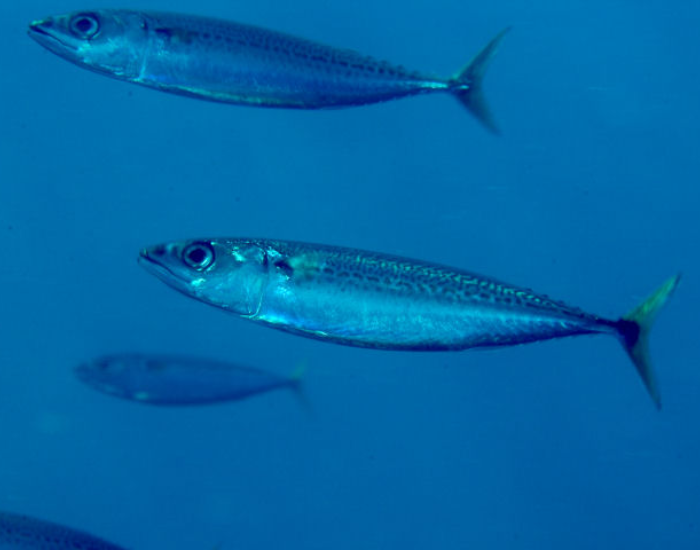
Under Rastrelliger kanagurta, this species is the most commercially important fish in the family across the Indian Ocean and tropical western Pacific. It’s found from the Red Sea and East Africa east through the Bay of Bengal, Southeast Asia, and into the Pacific Islands.
Distinguishing features: a yellow stripe along the lateral line, a fusiform body, large scales compared to true mackerels, and a maximum size around 35 cm. They’re filter feeders at times, consuming phytoplankton and small zooplankton through their gill rakers, an unusual trait for a mackerel family member. They also consume small fish and crustaceans.
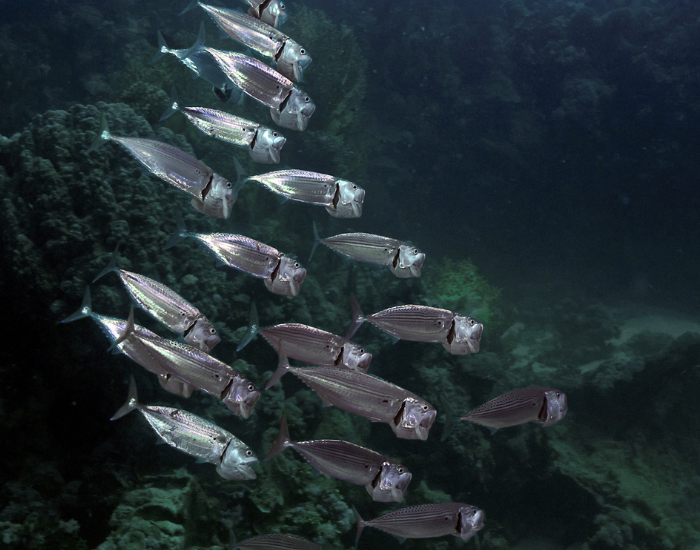
Spanish Mackerels (Genus Scomberomorus)
The genus Scomberomorus represents a substantial evolutionary departure from the smaller true mackerels. Spanish mackerels are larger, faster, more predatory fish, built not just for cruising in schools but for actively chasing down prey
5. King Mackerel (Scomberomorus cavalla)
If Atlantic mackerel is the commercial workhorse, king mackerel is the rockstar of the sportfishing world. These fish reach up to 184 cm and 45 kg, putting them among the largest mackerel species on the planet. They’re a powerful gamefish along the Atlantic coast of the United States, throughout the Gulf of Mexico, and south through the Caribbean.
King mackerel are highly migratory. During summer months, they push north along the South Atlantic and into the Mid-Atlantic Bight, following baitfish. Come autumn, they head south and west into the Gulf, where they overwinter in deeper offshore waters. NOAA Fisheries closely manages king mackerel stocks in both the Gulf of Mexico and Atlantic regions, with separate quotas and management measures for each zone under the National Oceanic and Atmospheric Administration’s frameworks.
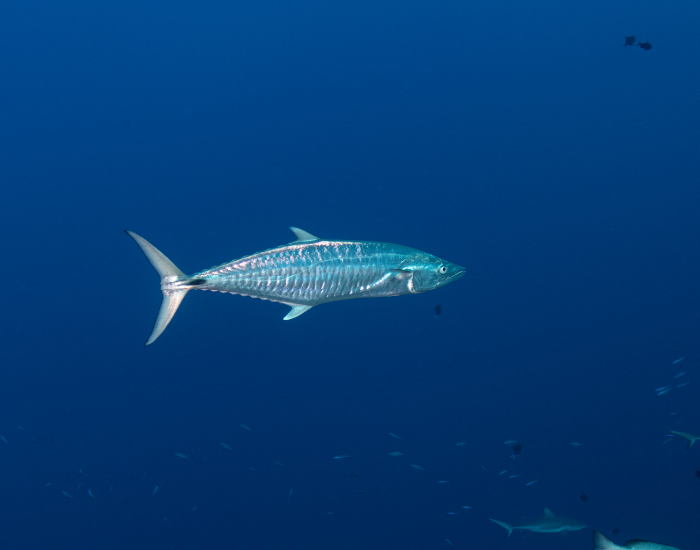
6. Narrow-barred Spanish Mackerel (Scomberomorus commerson)
Known simply as “Spanish mackerel” in Australia (and the cause of much confusion with other Spanish mackerels), Scomberomorus commerson is the largest species in the genus. Individuals can reach an extraordinary 240 cm and up to 70 kg, hat’s 2.4 metres of pure pelagic predator. They’re identified by their narrow, irregular vertical bars on the flanks, a pointed snout, and a body that tapers more gracefully toward the tail than many of its relatives.
Conservation-wise, this species warrants attention. It’s listed as Near Threatened by the IUCN due to fishing pressure across parts of its range, particularly in Southeast Asian waters. The species has great commercial value across its range, and management consistency between nations remains a challenge.
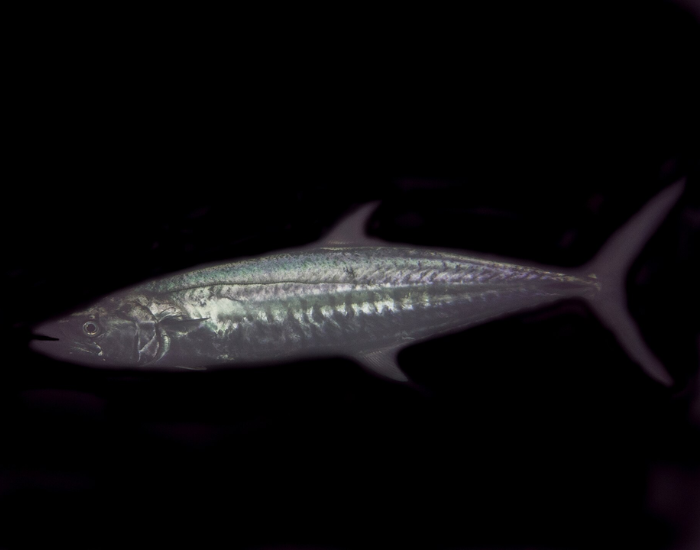
7. Atlantic Spanish Mackerel (Scomberomorus maculatus)
The Atlantic Spanish mackerel (Scomberomorus maculatus) is a medium-sized species reaching around 91 cm, common along the western Atlantic. It’s particularly abundant from the Carolinas down to the Gulf of Mexico, where it represents a significant component of both commercial and recreational fisheries.
Atlantic Spanish mackerel are distinguished from king mackerel, a common source of confusion, by their smaller size, the presence of yellow or yellow markings (orange-yellow spots) on the flanks, and a lateral line that curves more gradually. Juvenile king mackerel can look remarkably similar to adult Spanish mackerel; the lateral line curve and the presence/absence of spots are your best differentiating features. Looking for the first dorsal fin: in king mackerel it’s uniformly dark; in Atlantic Spanish, it has a dark anterior patch but lighter posterior portion.
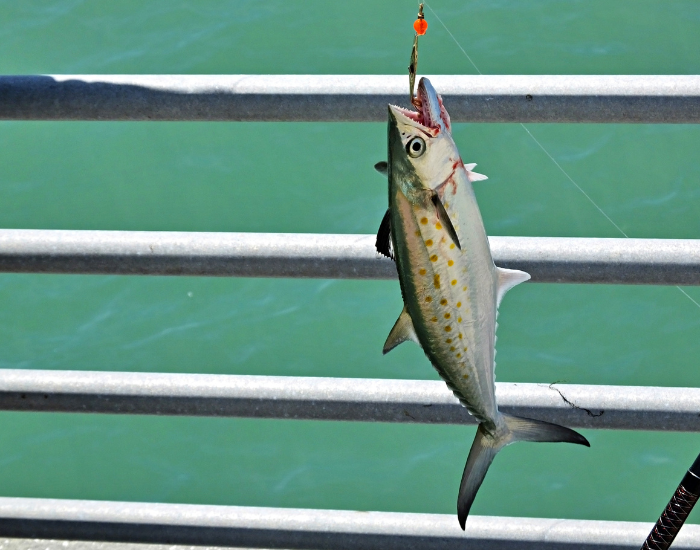
8. Indo-Pacific King Mackerel (Scomberomorus guttatus)
The Indo-Pacific king mackerel (Scomberomorus guttatus) is the Asian counterpart to the king mackerel of the Americas, and it shares that same impressive, predatory build. Found from the Persian Gulf east through India, Sri Lanka, Thailand, and Indonesia, it’s a staple species in the coastal fisheries of South and Southeast Asia.
Identification: spotted pattern on the flanks (rows of rounded spots, not irregular bars), a body that’s more slender than S. commerson, and a maximum size of around 100 cm. They’re coastal pelagic fish, found near the continental shelf in waters up to 200 m deep. The spawning season typically aligns with monsoon periods in South Asian waters.
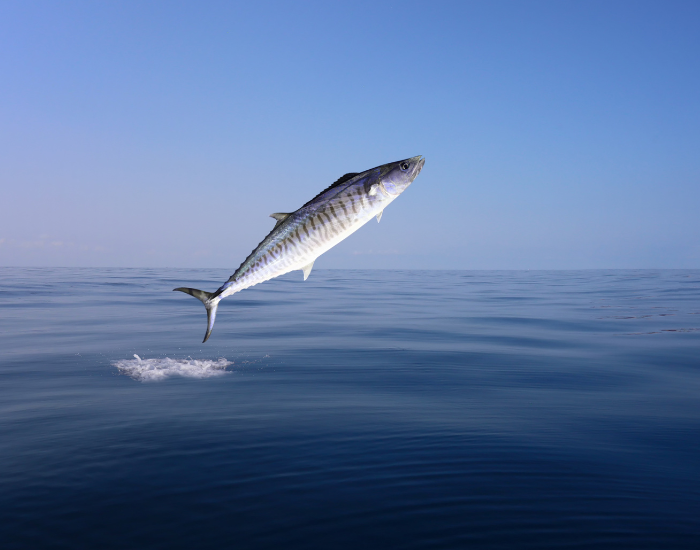
9. Japanese Spanish Mackerel (Scomberomorus niphonius)
Known in Japanese as sawara, (Scomberomorus niphonius) is the dominant Spanish mackerel species in the Northwest Pacific, found from Korea and Japan south to the East China Sea and Taiwan. It’s a culturally significant fish in Japan, historically considered a delicacy and associated with ceremonies and festivals.
Japanese Spanish mackerel can reach about 100 cm and 10 kg. They’re spotted—similar to S. guttatus—with a blueish-grey back and silver flanks. They spawn in spring in inshore and semi-enclosed seas, and the species shows significant seasonal migration, moving north in summer and south in winter. Commercial catches are taken primarily using mid-water trawls and set-nets in Japanese coastal waters.
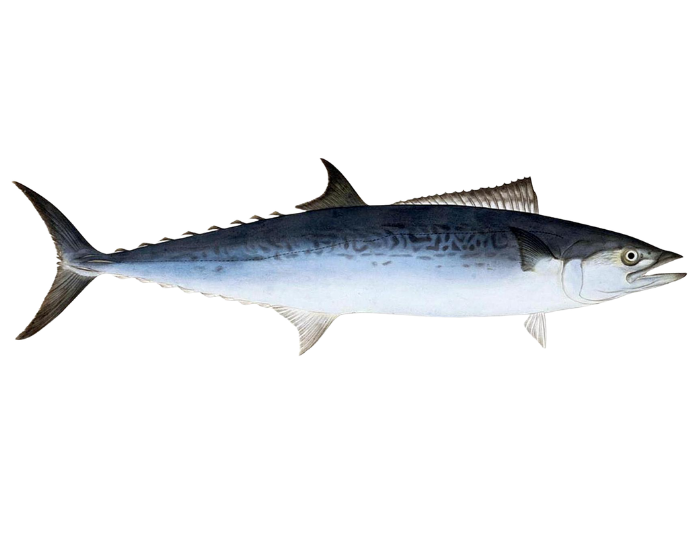
10. West African Spanish Mackerel (Scomberomorus tritor)
The West African Spanish mackerel (Scomberomorus tritor) rounds out our Scomberomorus selection with a species rarely discussed outside specialist fisheries literature, but critically important to the food security of West African coastal communities. It’s found along the eastern Atlantic coast from Mauritania south to Angola, including the Gulf of Guinea.
These are medium-large fish, reaching up to 130 cm. They have a characteristic pattern of yellow or bronze stripes, bronze stripes, along the flanks, distinguishing them from the spotted patterns of some close relatives. They inhabit coastal and offshore waters, often associated with upwelling zones where prey concentrations are high.
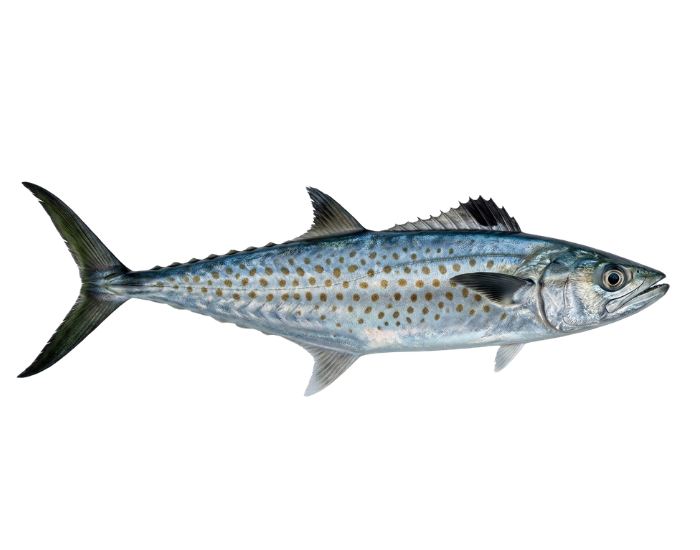
Other Mackerels — Related Genera
Not every fish called a mackerel fits neatly into Scomber or Scomberomorus. Several other genera within the family Scombridae contain species that carry the mackerel name, through ecological similarity, appearance, or regional naming convention. Here’s what you need to know about them.
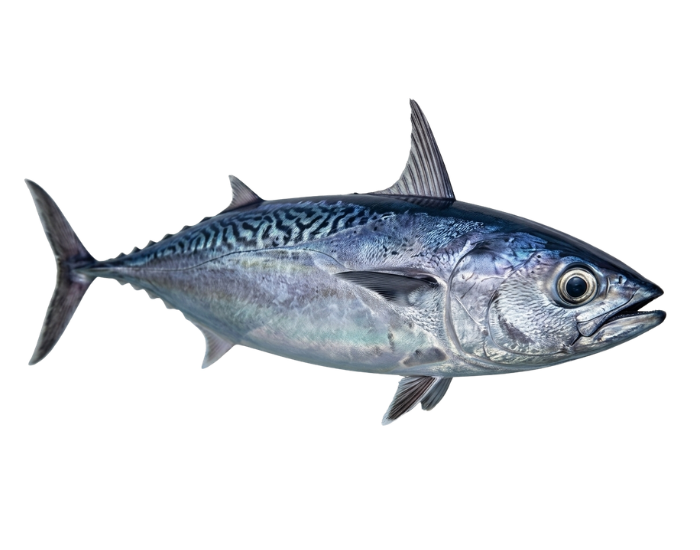
11. Bullet Tuna (Auxis rochei) — The Mackerel-Tuna Hybrid
Here’s where things get genuinely interesting from a taxonomic standpoint. The genus Auxis sits in an awkward middle ground between mackerel and tuna, and many regional fishers simply call these fish “bullet mackerel” or “frigate mackerel.” Auxis rochei, the bullet tuna or bullet mackerel, is a small, fast, globally distributed species found in tropical seas and warm temperate waters worldwide.
These are compact, rounded fish, the “bullet” name describes the shape perfectly. They have two large dorsal fins separated by a distinct gap, small pectoral fins, and a corselet of large scales behind the head (a feature shared with true tunas). Maximum size is around 50 cm. They’re schooling fish found near the surface in open water, feeding on small fish, squid, and crustaceans.
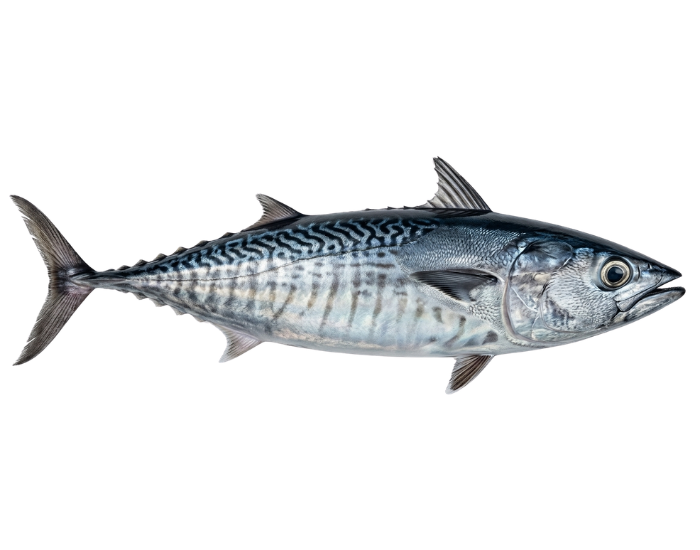
12. Frigate Tuna / Frigate Mackerel (Auxis thazard)
The frigate tuna (Auxis thazard) is the larger cousin of the bullet mackerel and equally cosmopolitan in distribution. Found in tropical and subtropical seas worldwide, it’s slightly more elongate than A. rochei and can reach up to 65 cm. The two Auxis species are sometimes difficult to tell apart; the pattern of the dorsal corselet scales and the arrangement of markings on the back are the primary distinguishing features.
Frigate mackerel are important prey species in open-ocean food webs, they’re consumed by larger tunas, dolphins, billfish, sharks, and seabirds. They’re also caught as bait and used in some artisanal fisheries. In the Indian Ocean, their distribution overlaps significantly with skipjack tuna, and they’re sometimes caught together in purse seine operations targeting tuna.
Mackerels in Australian Waters
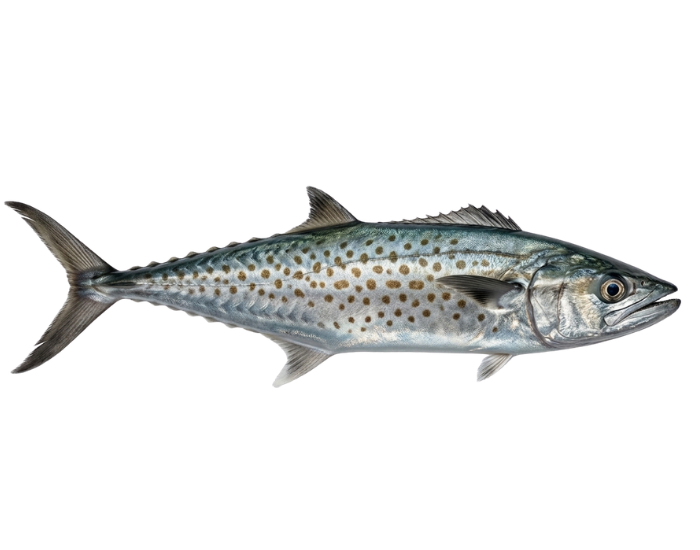
13. Spotted Mackerel (Scomberomorus munroi)
The spotted mackerel (Scomberomorus munroi) is an Australian endemic that many overseas visitors wouldn’t recognise. It’s smaller than the narrow-barred Spanish mackerel (S. commerson) but shares similar habitat: coastal and offshore waters along the east and northeast coast of Australia, from Queensland south to northern NSW.
As the name suggests, spotted mackerel have a pattern of round, dark spots on their flanks, distinct from the bars of narrow-barred Spanish mackerel, which they often inhabit the same waters as. They reach around 100 cm and are a popular recreational fisheries target in Queensland, particularly around Cape York and the Whitsundays. Spotted mackerel are also commercially fished, though they represent a smaller proportion of the total coast mackerel catch than the larger Spanish species.
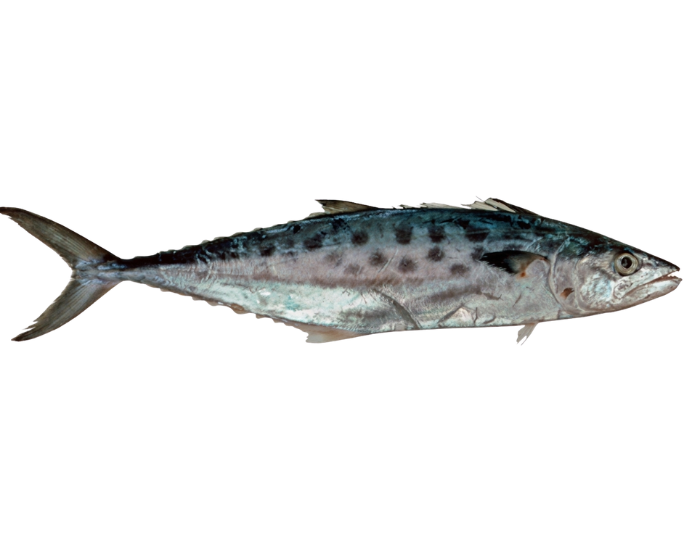
14. School Mackerel (Scomberomorus queenslandicus)
The school mackerel (Scomberomorus queenslandicus) is another Australian endemic. The species name literally references Queensland, reflecting where it was first formally described. School mackerel are smaller than both spotted and narrow-barred Spanish mackerel, reaching around 60 cm, and are common in coastal waters from the Gulf of Carpentaria around to central Queensland.
They tend to form large schools, hence the common name, often aggregating around coastal reefs and headlands. Their coloration is a blueish-grey back with silver sides, and they’re less distinctly spotted than spotted mackerel. They can be confused with smaller specimens of other several species, so paying attention to body proportions and fin placement helps.
Mackerel Are Worth Knowing
“Mackerel” is one of those deceptively simple words that contains multitudes. From the schooling Atlantic mackerel chasing copepods through North Sea waters to the massive narrow-barred Spanish mackerel patrolling Queensland’s offshore reefs, these are fish that have shaped fisheries, fed billions of people, and carved out niches across virtually every ocean on Earth.
I hope this guide has given you a more nuanced picture of what we mean when we say “mackerel.” The more you understand the distinctions between species, the true mackerels, the Spanish mackerels, the Rastrelliger group, and the Auxis species that blur the line with tuna, the more you’ll appreciate both the ecological complexity and the conservation stakes involved.
References:
Asni, A., Hasrun, Ihsan, & Najamuddin. (2024). Biological aspects and population dynamics of Indian mackerel (Rastrelliger kanagurta) in Barru, Makassar Strait, Indonesia. Fisheries and Aquatic Sciences, 27(6), 392–409. https://doi.org/10.47853/FAS.2024.e38
Collette, B.B., Di Natale, A. & Pollard, D.A. (2023) Scomberomorus commerson. The IUCN Red List of Threatened Species 2023: e.T170316A46647677. https://dx.doi.org/10.2305/IUCN.UK.2023-1.RLTS.T170316A46647677.en.
Mendoza-ávila, M., Zavala-Zambrano, G., Galván-Magaña, F., & Loor-Andrade, P. (2017). Feeding habits of wahoo (Acanthocybium solandri) in the eastern Pacific Ocean. Journal of the Marine Biological Association of the United Kingdom, 97(7), 1505–1510. doi:10.1017/S0025315416000850
Zeng, X. S., Sun, C. H., Huang, X. Y., Lao, Y. L., Huang, J. L., Li, S., & Zhang, Q. (2022). DNA barcoding of Scomberomorus (Scombridae, Actinopterygii) reveals cryptic diversity and misidentifications. ZooKeys, 1135, 157–170. https://doi.org/10.3897/zookeys.1135.93631