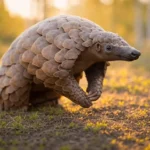

There’s a unique kind of peace you only find when you’re eye-to-eye with a creature that might outlive your great-grandchildren. During my years working in the reptile and amphibian wing of a major zoo, shuffling between the intense gaze of crocodiles and the silent movement of Gila Monsters, my mornings didn’t start with coffee. They started with heavy buckets of leafy greens and some very hungry Galapagos giant tortoises. Which made me wonder about Galapagos Wildlife.
Cleaning a giant tortoise enclosure feels less like zookeeping and more like navigating a slow-motion construction site. These animals are massive, deliberate, and surprisingly personable. I quickly learned that understanding tortoises means abandoning human time and thinking in tortoise decades. But as I watched them, I couldn’t help but feel I was looking at a living puzzle piece. I’d spent years studying their biology in captivity, but I always wondered: How do these prehistoric giants actually function in the wild?
To answer that, the Wildlife Nomads team put together the ultimate guide to the galapagos islands animals that define this “living laboratory.”
The Evolutionary Playground: Why Galapagos Animals are Different
When Jackie first stepped off the boat onto the volcanic shores, she told me the first thing that hit her wasn’t the heat, it was the fearlessness. In most parts of the world, wildlife photography is a game of patience and long lenses. In the Galapagos, you’re more likely to have a sea lion pup try to nap on your camera bag.
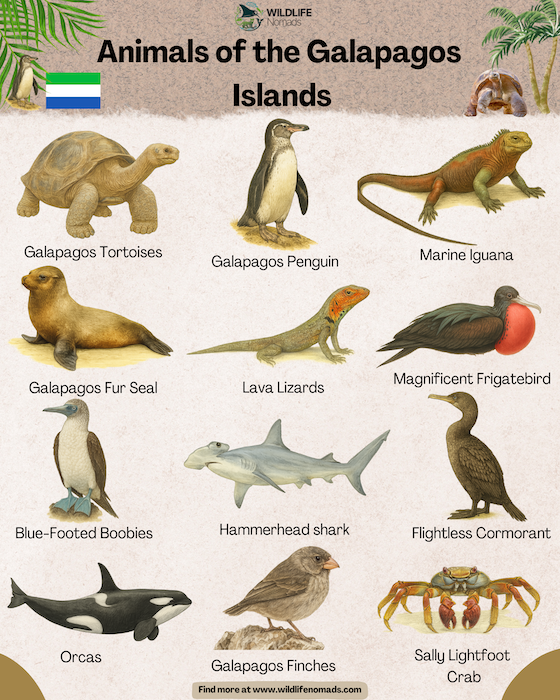
This lack of “instinctive fear” is a biological phenomenon. Because these islands rose from the seabed via volcanic eruptions, every species here is a descendant of a “colonist” that swam, flew, or drifted there. With no natural predators like large cats or wolves, the animals never developed the flight response we see elsewhere.
The Big 15: What Makes Galapagos Wildlife Unique?
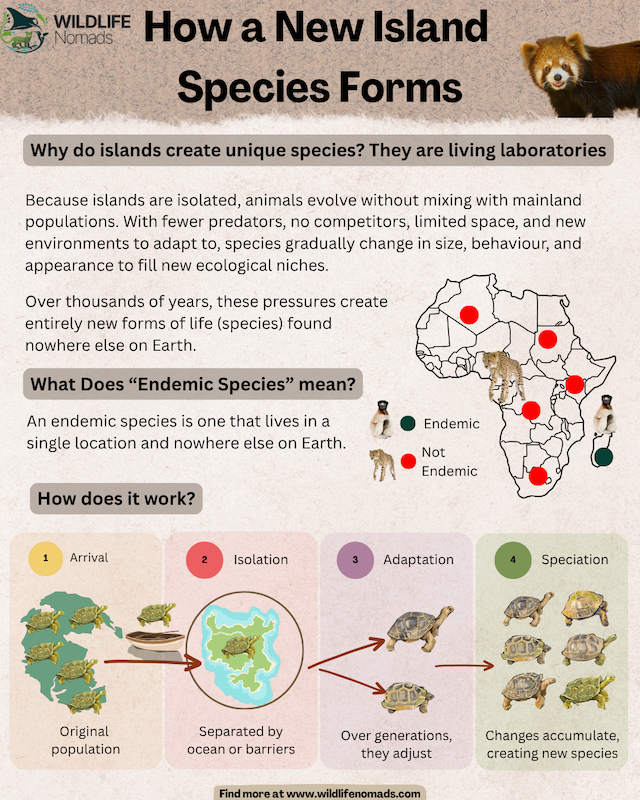
The “Big 15” is a term coined to highlight the must-see species in the Galapagos Islands, including some of the most iconic and unique animals found on the islands. These species thrive in an environment shaped by isolation, minimal predators, and volcanic landscapes. The Galapagos Islands’ isolation and lack of natural predators have allowed wildlife to thrive in ways seen nowhere else.
The fearless behavior of its animals provides an unparalleled opportunity for close encounters, offering insights into ecosystems that remain largely untouched by human influence. Unlike many other wildlife destinations, animals in the Galapagos have no natural fear of humans, making it easier to observe and photograph them up close.
1. Blue-Footed Boobies
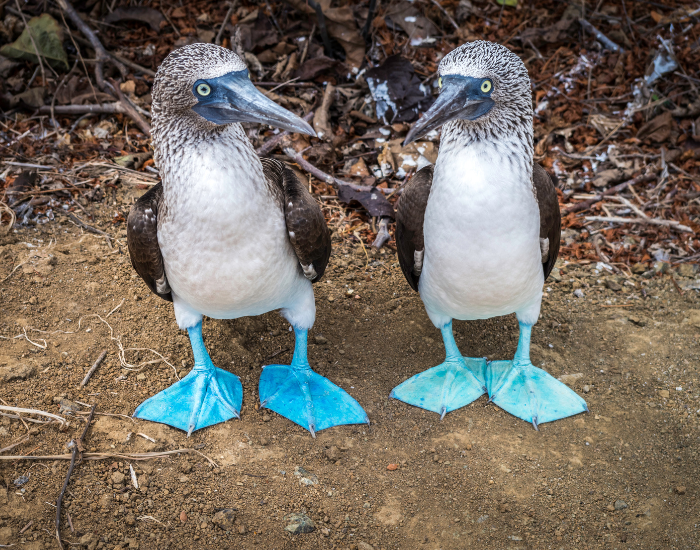
The unmistakable blue feet of the blue-footed booby are more than just a visual peculiarity; they’re also a sign of health and genetic fitness for this species, the equivalent of big muscles in men or big hips on women, indicators of fitness and fertility. Found on islands like Española and North Seymour, these birds perform an elaborate mating dance, complete with exaggerated steps to show off their vibrant feet.
Both males and females share parenting duties, taking turns incubating their eggs with their warm, webbed feet. Their nesting grounds are often bustling with activity, offering incredible photo opportunities of these playful and social birds.
Best Place to See Them: North Seymour Island, Isla Lobos Dive Site and Pitt Point / Pitt Islet, but you can aldo find them in other islands.
Best Time to Visit: June to August during the breeding season, when their dances are most vibrant.
2. Galapagos Tortoises
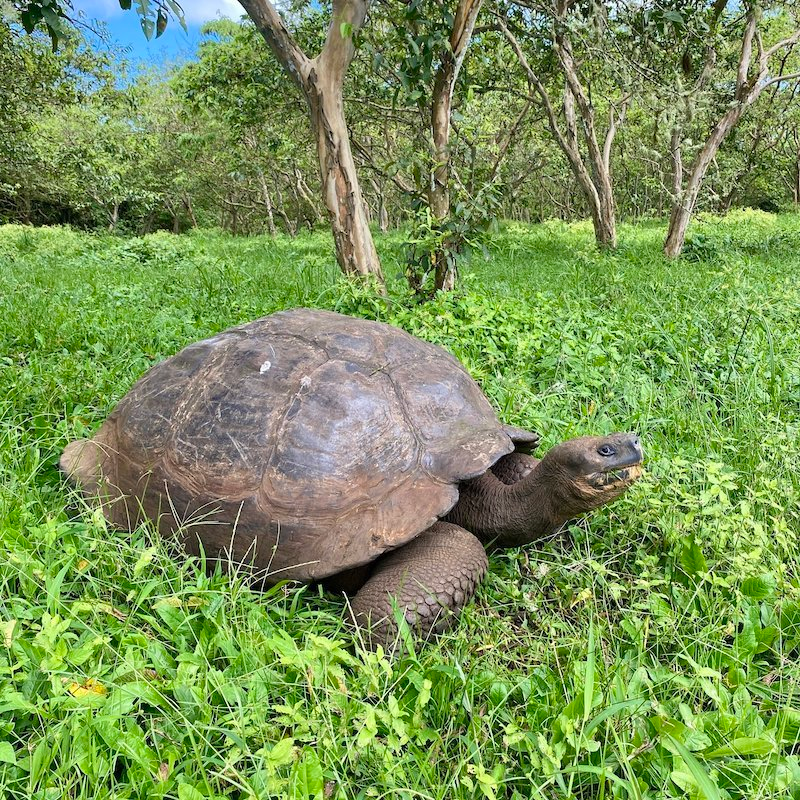
The Galapagos giant tortoises are ancient giants known for their unique adaptations and conservation status. If you walk through Santa Cruz Island you will probably see them. They are the largest living tortoise species and can weigh over 500 pounds and live for more than a century.
These gentle giants roam freely in the highlands of islands like Santa Cruz and Isabela, where the lush vegetation sustains their massive appetites. Remarkably, their shell shapes vary depending on the environment; saddleback shells are designed for reaching high vegetation, while dome-shaped shells are suited to ground-level browsing. Their slow, deliberate movements and sheer size make them a truly mesmerizing sight. Have a look at our article facts about tortoises to learn more about these amazing creatures.
Best Place to See Them: El Chato Tortoise Reserve, Santa Cruz
Best Time to Visit: December to May, when the highlands are lush and food is abundant.
3. Galapagos Penguins
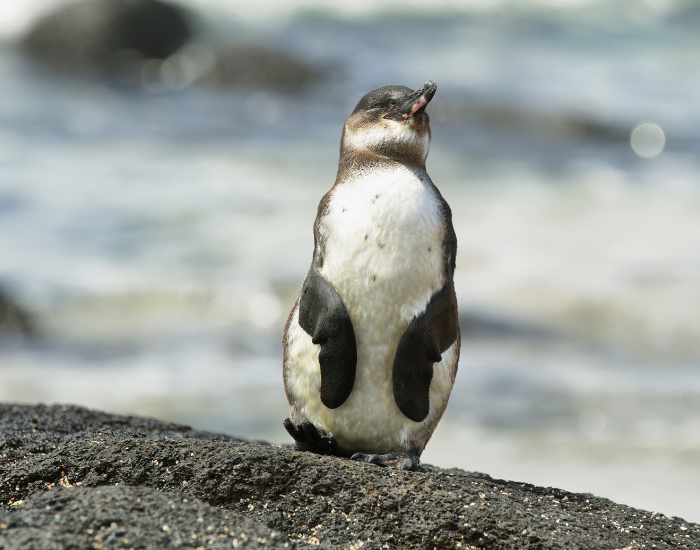
As the only penguin species found north of the equator, Galapagos penguins have adapted to the islands’ unique climate. Thanks to the cold Humboldt and Cromwell currents, these cute small penguins thrive on the western islands, darting through waters rich in fish. They’re excellent swimmers and often seen bobbing near rocky shores or lounging in shaded crevices to escape the heat. Their playful antics make them a favorite among snorkelers and divers.
Best Place to See Them: Isabela and Fernandina Islands
Best Time to Visit: June to September, when cooler currents bring abundant food supplies.
4. Marine Iguanas
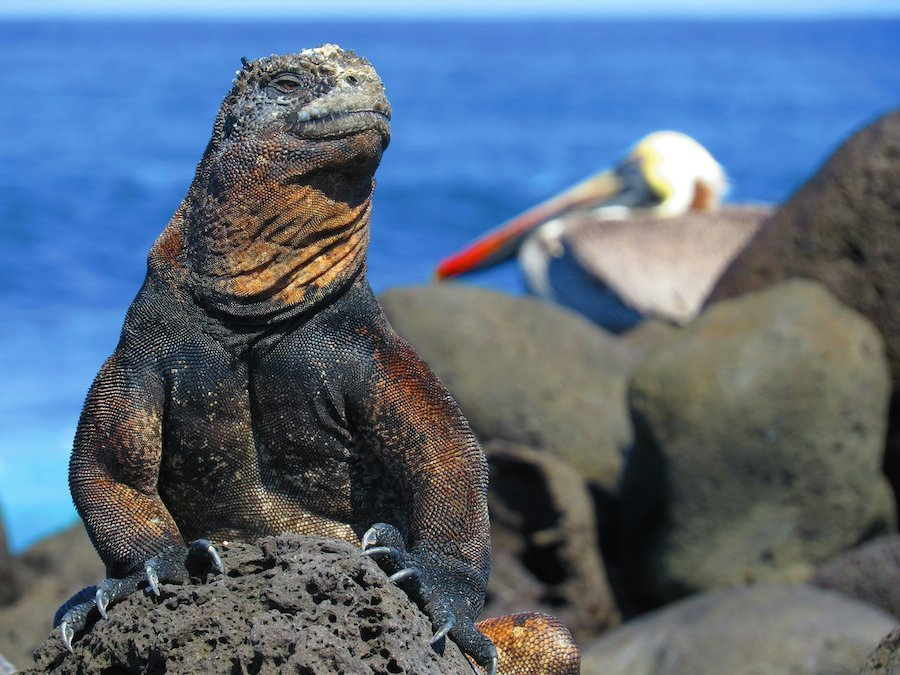
Galapagos marine iguanas are the only lizards in the world that feed in the ocean, grazing on underwater algae. Their unique adaptations to both land and sea environments include basking on lava rocks and expelling excess salt through sneezes, a behavior that leaves white salt crystals on their faces. Their black coloration absorbs heat quickly, helping them warm up after diving into the chilly waters. These unique reptiles showcase how species in the Galapagos have uniquely adapted to their environment.
Best Place to See Them: Española and Fernandina Islands
Best Time to Visit: December to April, when their mating season colors them with green and red hues.
5. Galapagos Sea Lions
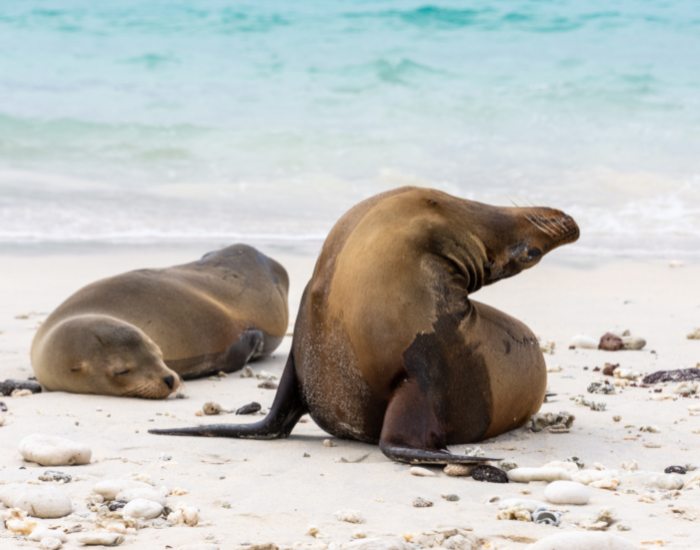
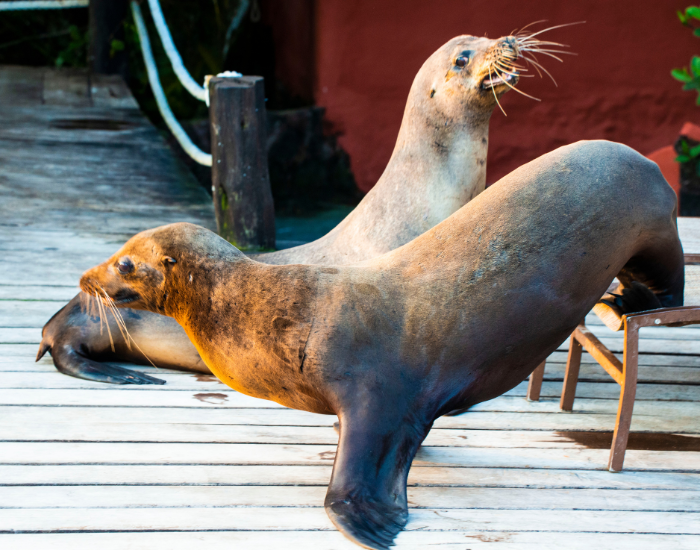
Galapagos sea lions are social and playful animals often seen lounging on beaches or gracefully swimming in coastal waters. Mothers teach their pups to swim in shallow bays, and their interactions provide endless entertainment for visitors.
Their barking calls and curious nature make them one of the most approachable animals in the archipelago. It’s not uncommon to find one napping on a bench or posing on a dock!
Dive deeper into the world of Sea Lions here!
Best Place to See Them: San Cristóbal and Española Islands
Best Time to Visit: June to November during the cooler season, when pups are born.
6. Waved Albatross
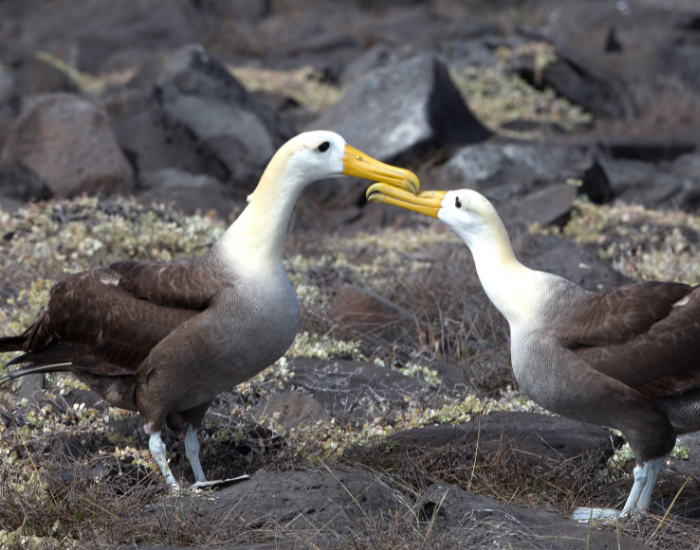
The waved albatross are one of best ocean navigators, an iconic type of seabird. With a wingspan of up to 8 feet, these birds are known for its extraordinary courtship displays. These birds mate for life, performing intricate dances that include bill circling and tapping. Most of the world’s population breeds on Española Island, making it a crucial conservation area. They spend months soaring over the open ocean but always return to the same nesting grounds.
Best Place to See Them: Española Island
Best Time to Visit: April to December, their breeding season.
7. Green Sea Turtles
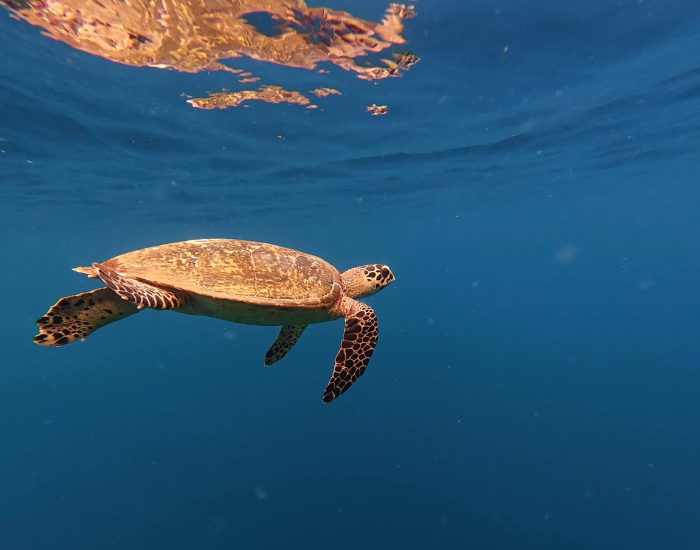
Green sea turtles are a snorkeling highlight in the Galapagos, where they glide effortlessly through crystal-clear waters. Females are known to return to the same beaches where they were born to lay their eggs, often under the cover of night. Hatchlings face daunting odds as they make their way to the ocean, dodging predators along the way. You can find more about “types of sea turtles” in our article.
Best Place to See Them: Tortuga Bay, Santa Cruz
Best Time to Visit: January to March for nesting season.
8. Flightless Cormorants
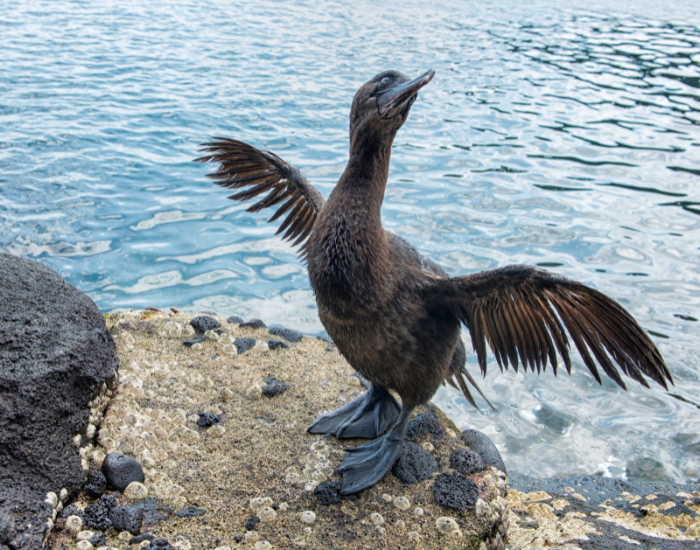
Flightless cormorants are a textbook example of evolution at work. These birds lost the ability to fly but developed strong legs and webbed feet for swimming. Their feathers are dense and water-resistant, allowing them to dive deep for fish and crustaceans. They are often seen drying their wings on rocky shores after a hunt.
If you are interested to know more about seabirds, do not miss our article about seabirds you must know.
Best Place to See Them: Fernandina and Isabela Islands
Best Time to Visit: May to October, during the cooler season when food is plentiful.
9. Great Frigatebirds
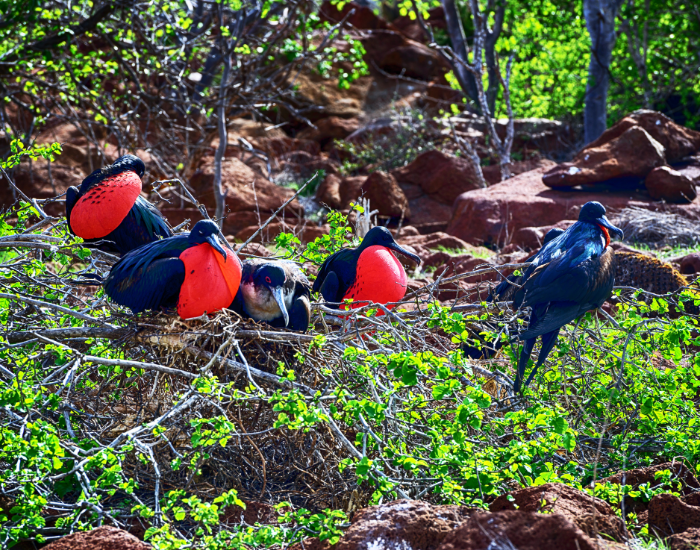
Known for their striking red throat pouches, which males inflate like balloons to attract females, great frigatebirds are a visual spectacle. These birds are masterful flyers, capable of gliding for days without landing. Their ability to steal food from other birds mid-flight adds to their intrigue and highlights their resourcefulness.
Best Place to See Them: North Seymour Island
Best Time to Visit: March to June during the breeding season.
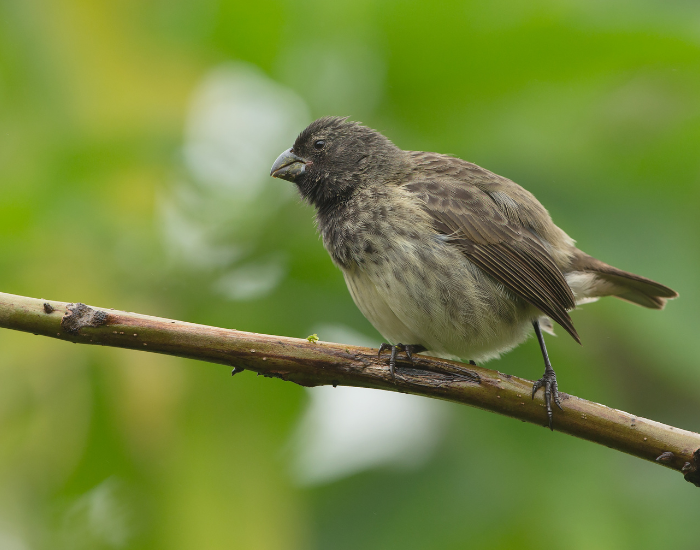
10. Darwin’s Finches
If you are a biologist, these finches will excite you. The species of Darwin’s finches are not just another type of bird, they’re a symbol of evolutionary discovery! With 13 distinct species spread across the islands, these finches have adapted unique beak shapes and sizes to exploit different food sources, illustrating the concept of adaptive radiation. From cracking seeds to probing for insects, their specialized diets reflect the adaptive diversity of the Galapagos.
Best Place to See Them: Across all major islands
Best Time to Visit: Year-round, as they are resident species.
11. Red-Footed Boobies
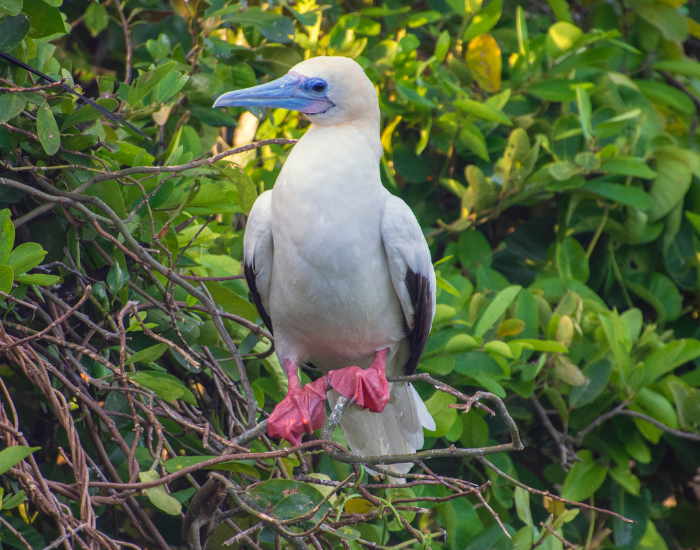
While their blue-footed cousins get most of the fame, Red-Footed Boobies are the most colorful and the smallest of the three booby species. Unlike the others, they nest in trees and shrubs rather than on the ground. They are mostly found on the outer islands, making them a “trophy” sighting for many travelers.
- Best Place to See Them: Genovesa Island (Darwin Bay) and San Cristóbal.
- Best Time to Visit: Year-round, but nesting peaks between February and September.
12. Galapagos Land Iguanas
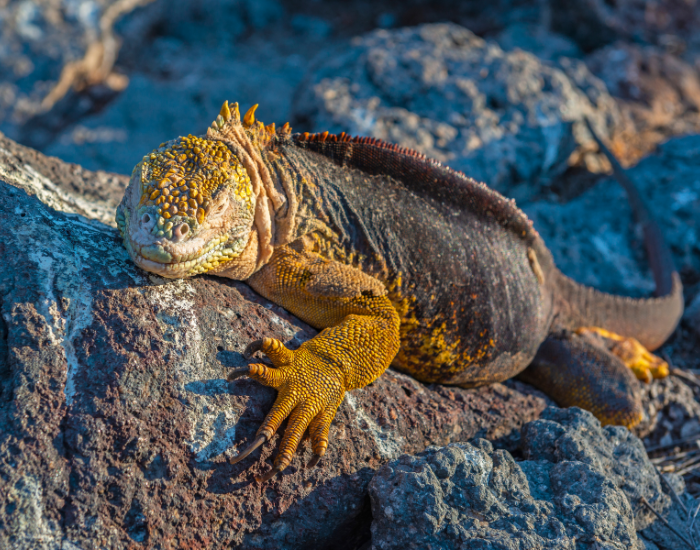
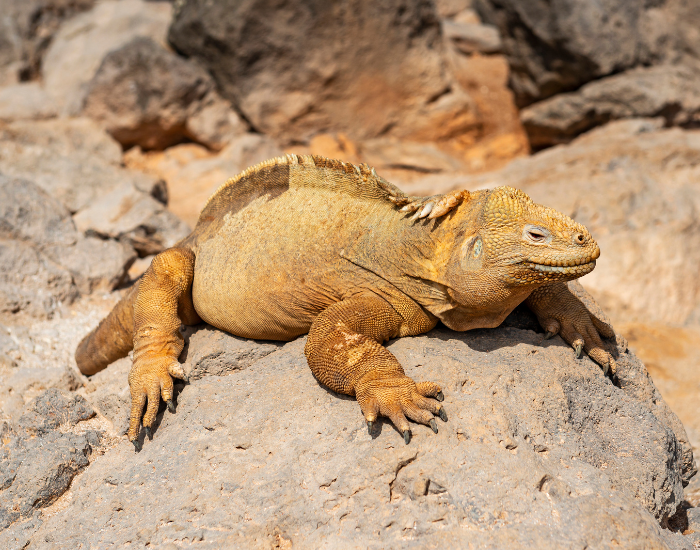
These “land dragons” are heavy-bodied reptiles with a distinct yellowish-orange hue. Unlike marine iguanas, they live in the arid lowlands and feed primarily on prickly pear cactus (including the spines!). They play a vital role in the ecosystem by dispersing seeds across the islands.
- Best Place to See Them: South Plaza Island and Santa Cruz (Dragon Hill).
- Best Time to Visit: Year-round, though they are most active during the sunny season (December to May).
13. Nazca Boobies
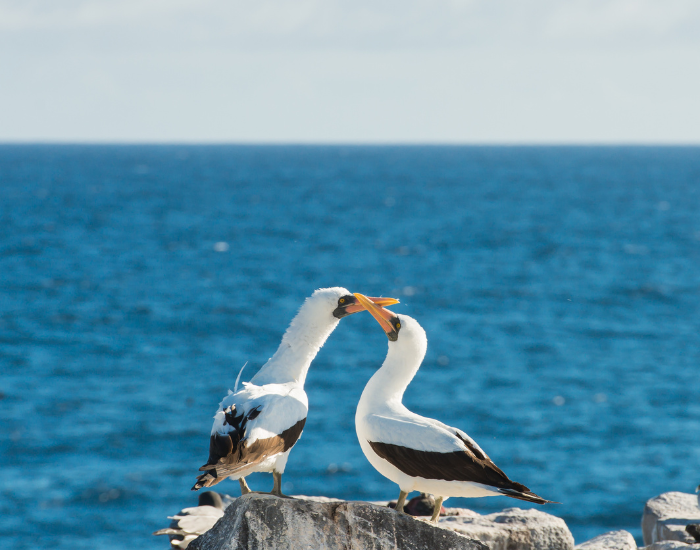
The largest of the Galapagos boobies, the Nazca booby is known for its brilliant white plumage and black-tipped wings. They are famous for “siblicide”, where the stronger chick pushes the weaker one out of the nest. These seabirds are ground-nesters and can often be seen right on the hiking trails of the outer islands.
- Best Place to See Them: Española and Genovesa Islands.
- Best Time to Visit: August to November for nesting and chick-rearing.
14. Santa Fe Land Iguanas
This is a species distinct from the common land iguana. Endemic only to the island of Santa Fe, these lizards have a paler, more chocolate-brown color and smaller dorsal spines. Seeing them is a true testament to how isolation on a single island can create a completely unique species.
- Best Place to See Them: Santa Fe Island exclusively.
- Best Time to Visit: Year-round.
15. Galapagos Fur Seals
Often confused with sea lions, fur seals are actually smaller, have much larger eyes (for night hunting), and possess a thick, double-layered coat of fur. They prefer the shaded, rocky ledges of the western islands to stay cool. They are much shyer than sea lions, making a sighting feel more exclusive. If you want to dive deeper into types of seals, look at our blog!
- Best Place to See Them: Santiago Island (James Bay) and Genovesa.
- Best Time to Visit: August to October when pups are most common.
The Galapagos Islands are home to a diverse range of reptiles and amphibians, including land iguanas, lava lizards, and marine iguanas. These species have adapted to the islands’ unique environments in fascinating ways, showcasing the incredible diversity of life in this isolated archipelago.
Should You Visit Galapagos?
Yes! Overall, the Galapagos Islands are a unique and fascinating place, with a rich array of wildlife and ecosystems. Through conservation efforts and sustainable tourism practices, we can work to protect this incredible archipelago for future generations.
This blog is reader-supported. When you buy through links listed on this site, we may earn an affiliate commission.
Where to See Animals in the Galapagos Islands?
References:
Torres, R., & Velando, A. (2005). Male preference for female foot colour in the socially monogamous blue-footed booby, Sula nebouxii. Animal Behaviour, 69(1), 59–65. https://doi.org/10.1016/j.anbehav.2004.03.008
Rattenborg, N. C., Voirin, B., Cruz, S. M., Mullers, R. H., Wikelski, M., & Vyssotski, A. L. (2016). Evidence that birds sleep in mid-flight. Nature Communications, 7, Article 12468. https://doi.org/10.1038/ncomms12468
Richardson, P. L., Wakefield, E. D., & Phillips, R. A. (2018). Flight speed and performance of the wandering albatross with respect to wind. Movement Ecology, 6(1), 3. https://doi.org/10.1186/s40462-018-0121-9