The first time I really asked myself what’s the difference between an alligator and a crocodile was in Tabasco, Mexico, standing by a wide river that seemed alive with crocodiles. Dozens of them floated just beneath the surface, their eyes and ridged backs breaking the water like ancient armor. At a glance, they looked like prehistoric twins, massive bodies, powerful tails, and that eerie stillness that makes your skin prickle.
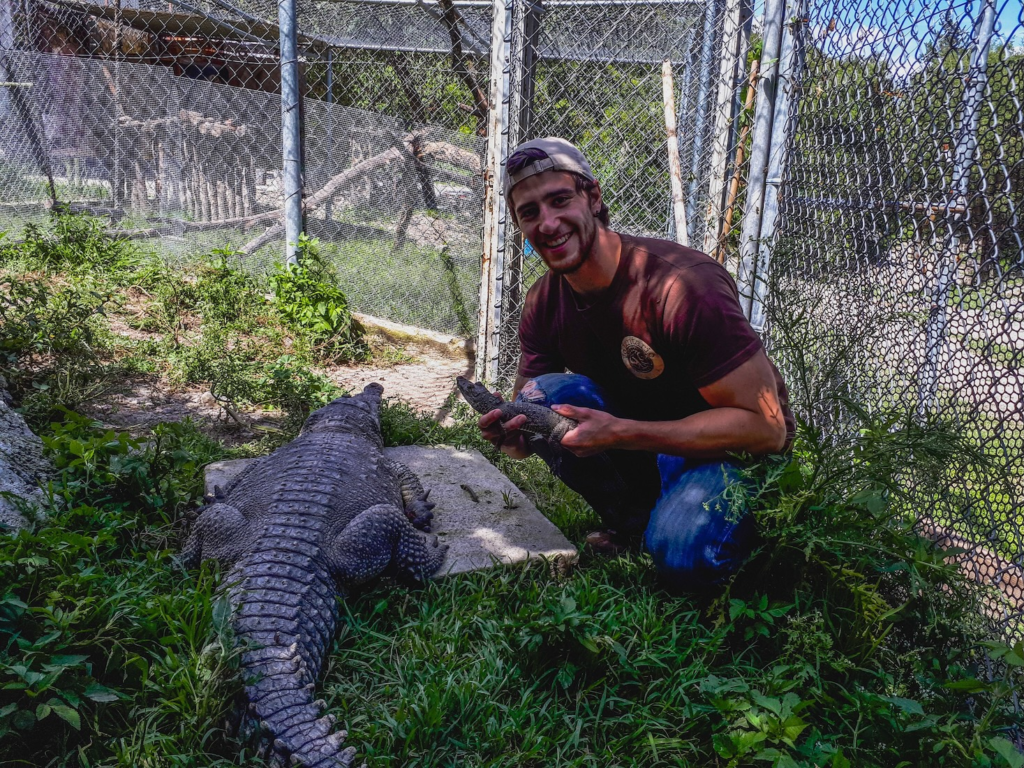
My curiosity only grew when I later worked in the reptile area of a zoo in Mexico. Part of my job was feeding the crocodiles, and I’ll admit, I was terrified at first. But there was one individual who completely changed my perception. He’d been rescued and kept separate from the others, and unlike the menacing image I carried in my head, he behaved more like a loyal dog. You could scratch his head, and he leaned into it as if he enjoyed the contact. That moment shifted something in me. These weren’t just “scary predators”, they were complex animals with personalities, survivors of millions of years of evolution.
This guide breaks down the differences between crocodiles and alligators, explores snout shape variations, habitat preferences, and conservation challenges. Along the way, I’ll share field stories, from saltwater crocodiles in Australia to American alligators in the Everglades, that bring the science to life.
But before we dive in, lets’s see if you can spot the difference in this incredible video of a crocodile and an alligator having an encounter:
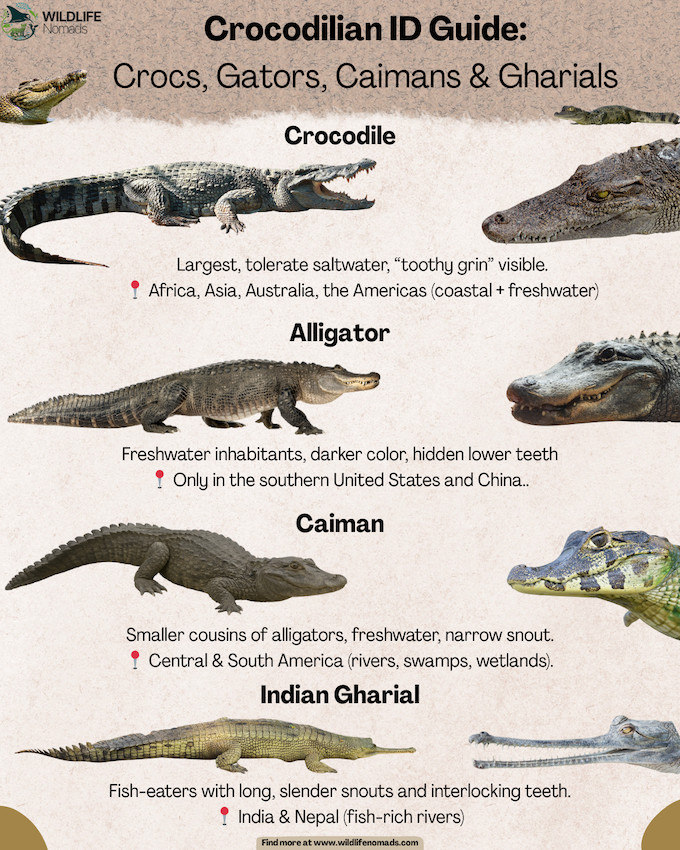
Crocodilian Family: Alligators, Caimans, Crocodiles, and Gharials
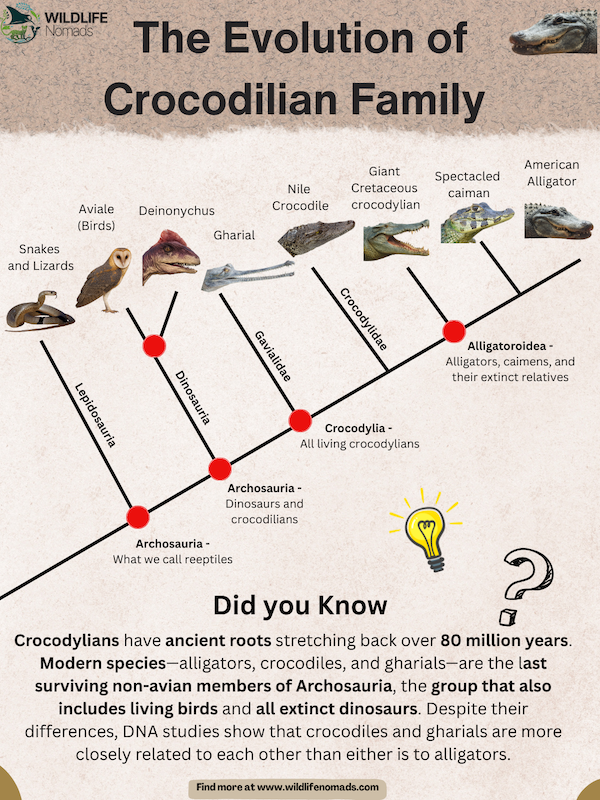
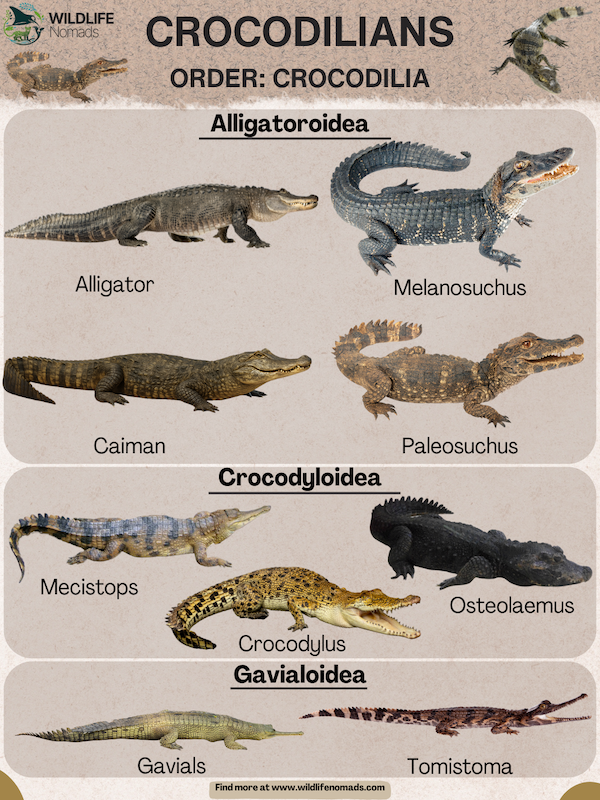
Crocodiles and alligators belong to the order Crocodylia, which includes three families:
- Alligators and Caimans (Alligatoridae):
The caimans, found mainly in South America, are close relatives of alligators. They include several species such as the spectacled caiman (Caiman crocodilus), the yacare caiman (Caiman yacare), the broad snouted caiman (Caiman latirostris), and the *cuvier’s dwarf caiman (Paleosuchus palpebrosus). Caimans tend to live in rivers, swamps, and wetlands, and while smaller than the massive crocodiles of Africa and Australia, they are still formidable predators in their ecosystems.
There are two true alligator species, the American alligator (Alligator mississippiensis) and the Chinese alligator (Alligator sinensis). American alligators thrive in freshwater habitats across the southern United States, while the Chinese alligator survives only in small protected reserves.
- Crocodiles (Crocodylidae):
At least 14 recognized species, from the Nile crocodile (Crocodylus niloticus) in sub-Saharan Africa to the saltwater crocodile (Crocodylus porosus) in Southeast Asia and northern Australia. Australian saltwater crocodiles, often called ‘salties,’ are found primarily in northern Australia and are considered among the most dangerous crocodile species due to their size, range, and temperament. American crocodiles (Crocodylus acutus) inhabit South Florida and Central America.
- Gharials (Gavialidae):
Rare, fish-eating crocodilians with long, slender snouts. The Indian gharial and the false gharial in Southeast Asia are fascinating outliers.
When I first saw a gharial basking on a riverbank in Nepal, I was stunned by its delicate, narrow snout, such a contrast to the broad-headed alligators I knew from the southern United States.
Evolution and Natural History
Crocodiles and alligators are ancient survivors, dating back over 240 million years. They’ve lived through mass extinctions and still dominate rivers, lakes, and coastal waters today.
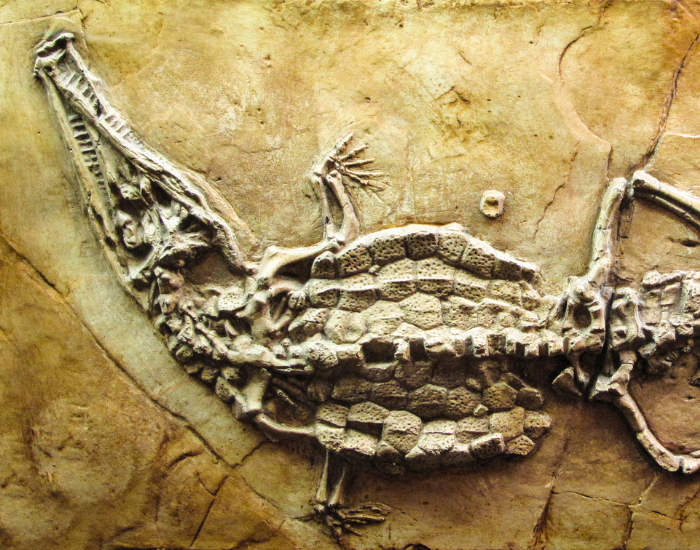
- Alligators: Fossil records show their ancestors spread across North America and Asia. The Chinese alligator, now critically endangered, once thrived across much of eastern China.
- Caimans: Close relatives of alligators, caimans evolved in South America and diversified into several species, including the yacare caiman, broad snouted caiman, and cuvier’s dwarf caiman. Though generally smaller than Nile or saltwater crocodiles, caimans are well-adapted to their wetland habitats. Many species face pressures from habitat loss and conflict with humans, yet they remain key predators in their ecosystems. You can read more about caimans in the article “10 facts about caimans“
- Crocodiles: Species like the Nile crocodile and saltwater crocodile evolved remarkable tolerance for brackish water and coastal waters. Crocodiles can tolerate saltwater due to specialized lingual salt glands, which allow them to expel excess salt from their bodies and survive in saline environments.
- Gharials: Specialized fish-eaters, their lineage diverged early, and their slender snouts reflect that evolutionary niche.
Physical Differences: Snout Shape, Jaws, and Teeth
This is where the difference between an alligator and a crocodile becomes easiest to spot:
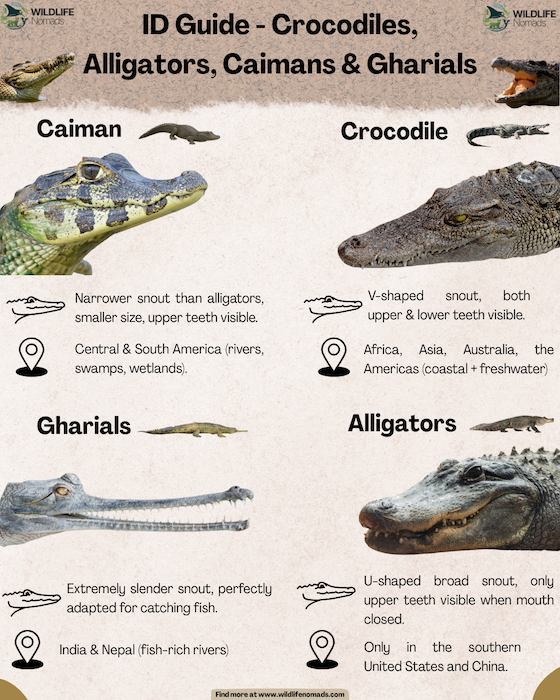
Snout Shape
- Alligators → Characterized by a U-shaped snout, broad and rounded, perfectly designed for crushing turtles and other hard-shelled prey. The rounded snout gives them a powerful bite but makes them less specialized for fish.
- Crocodiles → Known for their V-shaped snout, narrower and sharper, an adaptation that helps them capture prey like fish more efficiently. This feature also contributes to their signature toothy grin, since both upper and lower jaws align.
- Caimans → As members of the alligator family, most caimans share a similar U-shaped snout, though species vary. The broad snouted caiman (Caiman latirostris) lives up to its name, while the spectacled caiman (Caiman crocodilus) has a slightly narrower profile. Even the small but tough cuvier’s dwarf caiman has a short, rounded snout built for versatility in South American wetlands.
- Gharials → Stand apart with their extremely slender snout, lined with interlocking teeth adapted for catching fish. The slender snouted crocodile (Mecistops cataphractus) of Africa shows a similar adaptation, though it’s a true crocodile, not a gharial.
Jaw Structure
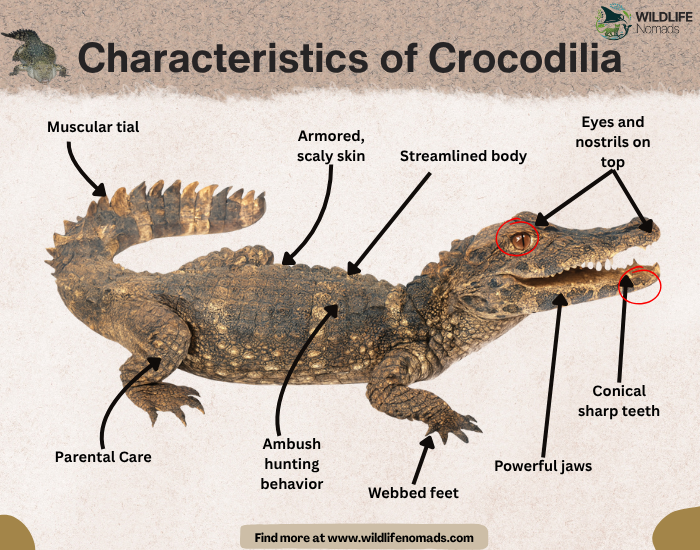
- Alligators → The upper jaw is broader than the lower jaw, so when their mouths are closed, only the upper teeth are visible. This gives them a cleaner profile and makes them less “toothy” than crocodiles. During the breeding season, both male alligators and female alligators may use jaw-clapping as part of their courtship displays.
- Caimans → As part of the alligator family, most caimans share the same trait: the upper jaw hides most of the lower teeth when closed. However, some species, like the spectacled caiman, have slightly narrower jaws, creating a look that falls somewhere between an alligator’s subtle smile and a crocodile’s toothy grin.
- Crocodiles → The upper and lower jaws are nearly the same width, so both rows of teeth remain visible even when the mouth is closed. This creates the classic toothy grin, often paired with a sharp, V-shaped snout. It’s one of the easiest visual cues to tell a crocodile apart in the wild.
- Gharials → Their extremely narrow snout and long jawline set them apart entirely. With dozens of interlocking teeth exposed, gharials almost always appear to be grinning, though their specialized jaws are designed purely for catching fish.
Color Patterns
- Gharials → Generally gray-green with a smoother texture compared to their cousins, giving them a sleeker appearance in their river habitats.
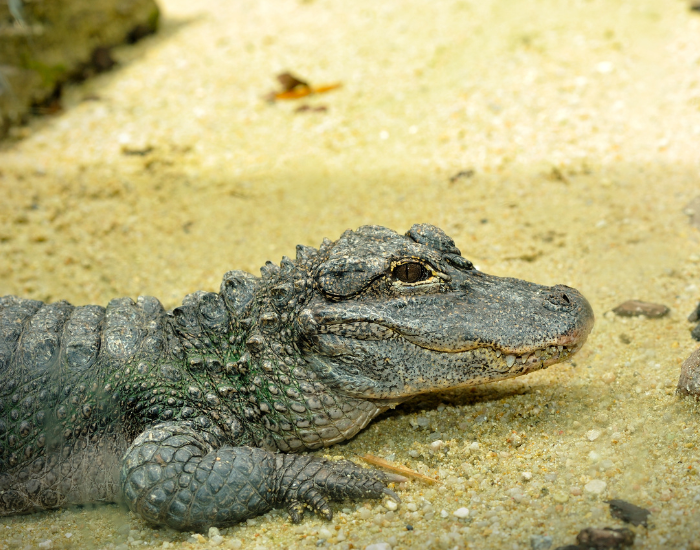
- Alligators → Usually darker, often appearing nearly dark green or black in swampy waters. This coloration helps them blend into shadowed wetlands.
- Caimans → Slightly lighter than American alligators, most caimans carry earthy browns or olive tones that suit freshwater swamps and rivers of South America. Species like the broad snouted caiman often have a mottled pattern for camouflage.
- Crocodiles → Tend to be lighter overall, with olive brown skin marked by irregular, mottled patterns. This camouflage works well in coastal waters and open river systems.
Habitat and Distribution
American Alligators
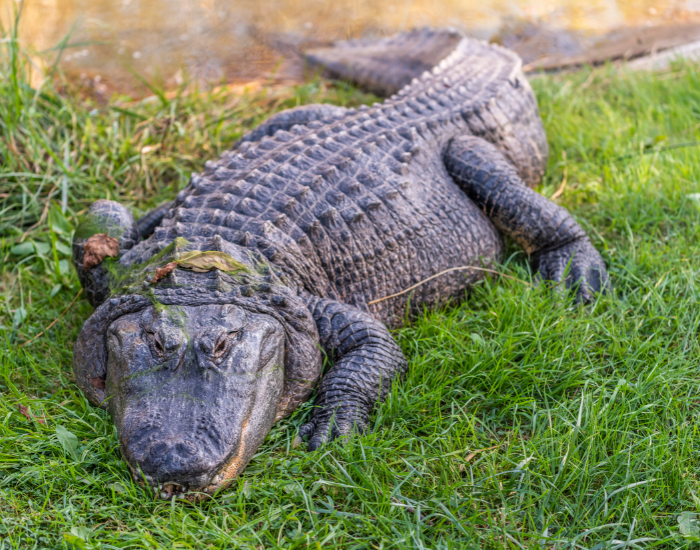
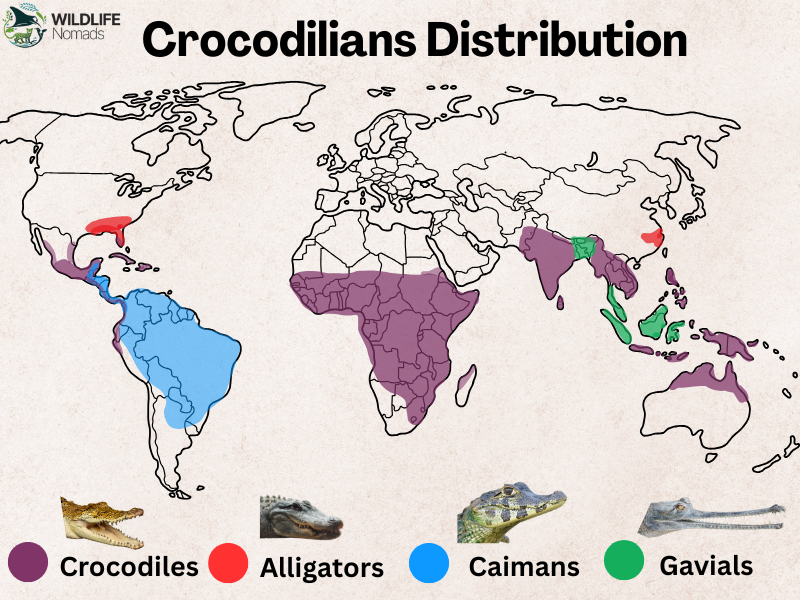
Alligators live primarily in freshwater habitats like swamps, rivers, and lakes. The southern United States (especially Florida and Louisiana) hosts millions of American alligators. These massive creatures prefer freshwater swamps and are commonly found throughout the Florida Everglades.
Caimans
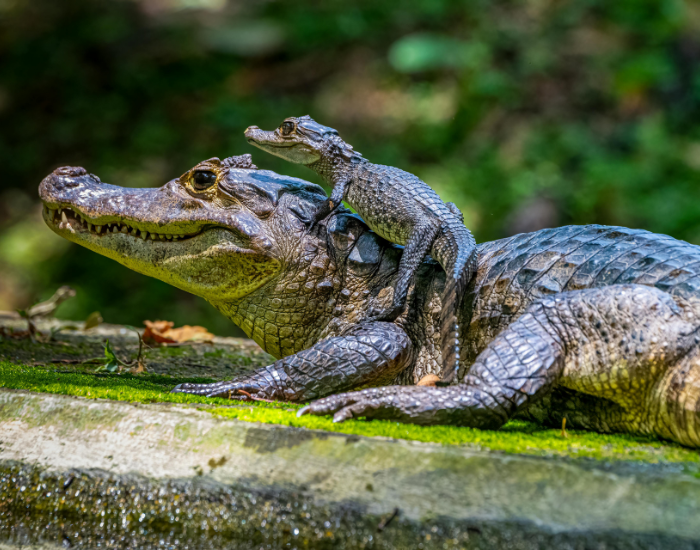
Native to South America, caimans occupy rivers, wetlands, and freshwater areas throughout the Amazon Basin and beyond. Species like the yacare caiman dominate the Pantanal, the broad snouted caiman prefers marshes and swamps, and the spectacled caiman is one of the most widespread crocodilians on the continent. While smaller than Nile or saltwater crocodiles, caimans are still important predators, feeding on fish and other animals in their ecosystems.
Crocodiles Live in Diverse Environments
Crocodiles are more adaptable to saltwater environments and brackish water. They’re found across sub-Saharan Africa, Southeast Asia, Australia, and parts of South America. Species like Crocodylus niloticus dominate Africa, while American crocodiles inhabit South Florida and Central America.
Gharials
Confined to rivers in India and Nepal, where they rely on fish-rich waters.
The Florida Everglades is the only place on Earth where both crocodiles and alligators live together naturally.

Saltwater Crocodile: The Ultimate Apex Predator
The saltwater crocodile (Crocodylus porosus) deserves special mention as one of nature’s most formidable predators:
- Largest reptile on Earth, adults can exceed 20 feet and weigh more than 1,000 pounds
- Found in Southeast Asia, northern Australia, and saltwater environments around the Indo-Pacific
- Known for the strongest bite force ever measured in the animal kingdom
- Notorious for being one of the few crocodilian species that actively attack humans in rivers and coastal villages

Coexistence in the Wild: Where Alligators and Crocodiles Meet
Habitat Overlap and Territorial Dynamics
In the wild, the meeting of alligators and crocodiles creates a rare and fascinating event, one that reveals just how adaptable these ancient reptiles can be. Nowhere does this show more evidence than in the Florida Everglades, the only place on Earth where American alligators (Alligator mississippiensis) and American crocodiles (Crocodylus acutus) share the same ecosystem. Here, the intricate network of freshwater habitats, brackish water, and coastal mangroves creates a unique environment where both species can thrive, each carving out its own ecological niche.
Alligators tend to stick to freshwater areas, swamps, slow-moving rivers, and marshes, while American crocodiles make themselves more at home in brackish water and saltwater environments. This subtle separation helps reduce direct competition, but in places where their territories overlap, you might spot both massive creatures basking on the same muddy banks. Despite their proximity, alligators and crocodiles generally avoid direct confrontations, with each species favoring different prey and microhabitats.
This phenomenon doesn’t limit itself to Florida. Across sub-Saharan Africa, Nile crocodiles (Crocodylus niloticus) dominate rivers and lakes, but they often share these waters with other crocodilian species like the West African crocodile and the dwarf crocodile. In India and Southeast Asia, the mugger crocodile masters adaptation, thriving in both freshwater and brackish water environments, sometimes alongside the slender snouted crocodile or even the critically endangered Siamese crocodile.
Global Examples and Conservation Challenges
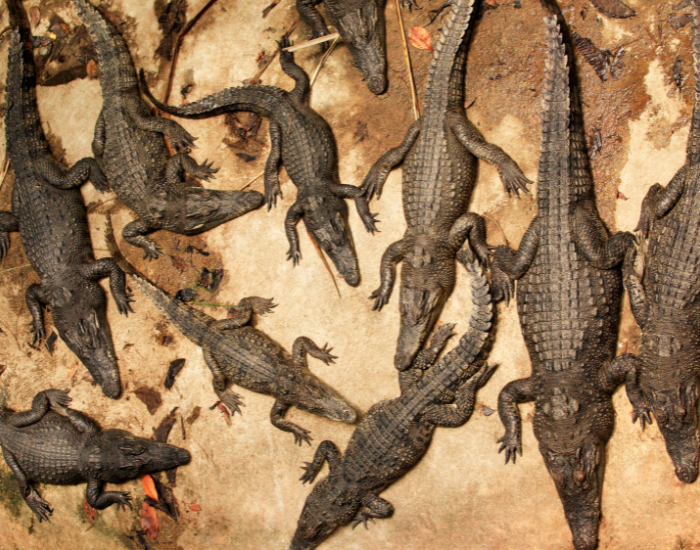
South America offers its own examples of coexistence, with the spectacled caiman, broad snouted caiman, and yacare caiman all inhabiting overlapping ranges in rivers and wetlands. The Cuban crocodile, found only in Cuba, shares its habitat with the American crocodile, while the New Guinea crocodile and Philippine crocodile face similar challenges in their respective island homes.
Wherever alligators and crocodiles, or their close relatives, meet, a delicate balance unfolds. Larger, more aggressive species like the saltwater crocodile (the infamous saltwater crocs of Australia and Southeast Asia) tend to dominate prime hunting grounds, while smaller or less aggressive species adapt by shifting their diets or habitats. This dynamic testifies to the resilience and versatility of crocodilian species.
Yet, this coexistence faces increasing threats from habitat loss, pollution, and human encroachment. Species like the Chinese alligator (Alligator sinensis), Siamese crocodile, Orinoco crocodile, and Philippine crocodile now stand critically endangered, their survival hinging on the preservation of the freshwater habitats and brackish waters they call home.
Studying the coexistence of alligators and crocodiles not only deepens our understanding of these remarkable reptiles but also underscores the importance of conserving the diverse ecosystems they inhabit. Whether it’s the American alligator’s comeback in the southeastern United States or the ongoing struggles of the Cuban crocodile and New Guinea crocodile, each story reminds us that the fate of these ancient predators ties closely to the health of our planet’s wetlands, rivers, and coastal regions.
Behavior and Diet
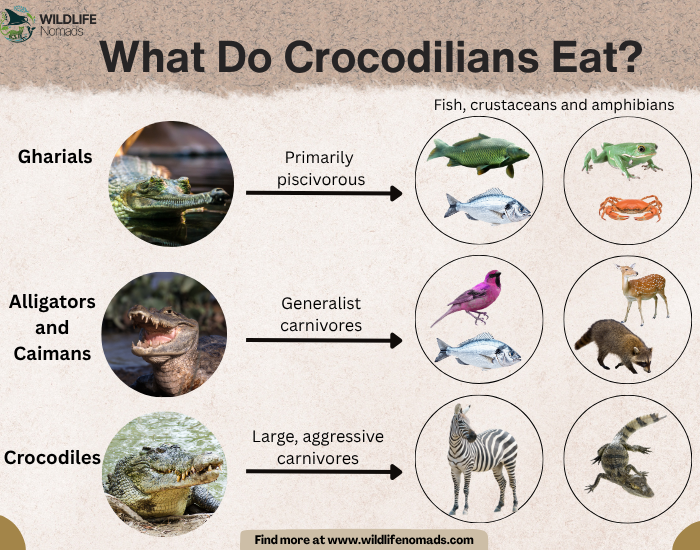
Alligators, crocodiles, and gharials are ambush predators that capture prey with subtle differences in their hunting strategies:
Alligators: Opportunistic feeders, eating fish, turtles, and small mammals. Adult alligators rarely attack humans unless provoked or protecting their territory.
Crocodiles: Broader diet, often targeting larger animals like antelope, water buffalo, or even sharks. Crocodiles and alligators also interact with other animals in their environment, sometimes preying on them or competing for resources. Many crocodile species are more aggressive and will attack humans more readily than alligators.
Gharials: Fish specialists, their long jaws snapping through schools with precision.
Both crocodiles and alligators rely on powerful tails and stealth to capture prey. Their vertical pupils give them excellent night vision for hunting during their active periods.
Reproduction and Breeding Season
Female alligators and crocodiles share similar reproductive behaviors:
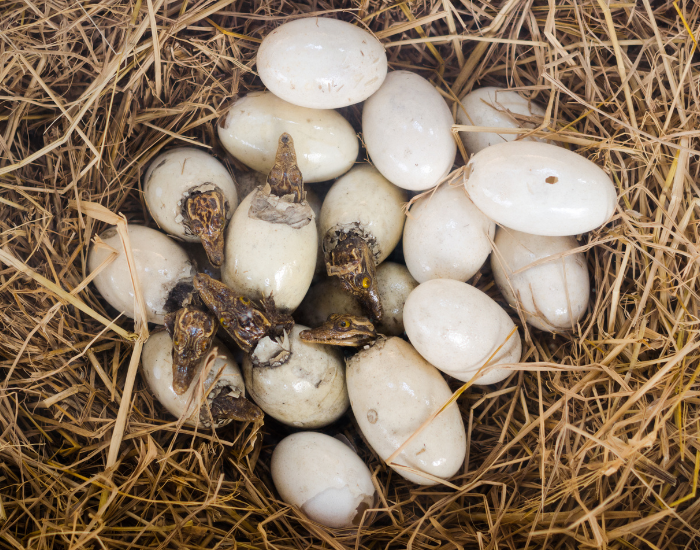
- Females build nests from vegetation and soil during breeding season
- The breeding season varies by species but usually aligns with warmer months
- Sex of hatchlings depends on nest temperature, warmer nests produce males, cooler nests produce females. This is similar to other reptiles like sea turtles.
- Adult females are surprisingly attentive, often carrying hatchlings in their mouths to water for protection
During the breeding season, male alligators become highly territorial, competing aggressively for mates and establishing dominance within their habitat.
Conservation and Threats
Not all crocodiles and alligators are thriving in the modern world:
- Habitat loss from agriculture and development reduces nesting sites
- Poaching and Illegal trade for skins and meat continues in many regions
- Climate change disrupts water cycles and nest temperatures, skewing sex ratios
- Pollution in freshwater areas and coastal waters affects food sources
The American alligator once faced extinction but rebounded under protection. The Chinese alligator, however, remains critically endangered. Gharials are also highly threatened, with fewer than a thousand left in the wild.
Regional Snapshots
Sub-Saharan Africa: Nile crocodiles dominate rivers as keystone predators in their ecosystems.
Southern United States: American alligators are common throughout freshwater swamps, while American crocodiles are restricted to South Florida’s brackish water environments.
Southeast Asia: Saltwater crocodiles and false gharials roam rivers and mangroves, adapting to both saltwater environments and freshwater areas.
South America: Species like the yacare caiman and broad snouted caiman highlight the region’s crocodilian diversity, with various caiman species filling different ecological niches.
Science Spotlight: Bite Force and Survival
A 2012 study led by Gregory Erickson measured crocodilian bite force across multiple species. The saltwater crocodile came out on top, its bite force exceeding 3,600 pounds per square inch. That’s stronger than a great white shark or even a T. rex reconstruction.
Research like this underscores why both crocodiles and alligators have survived for millions of years, they are perfectly engineered predators with powerful tails, incredible bite force, and adaptable hunting strategies.
Frequently Asked Questions
Snout shape (U-shaped snout vs V-shaped snout), jaw structure (toothy grin vs hidden teeth), and habitat preference (freshwater vs saltwater tolerance) are the three main differences.
The saltwater crocodile is larger and stronger than any alligator species, with the most powerful bite force in the animal kingdom.
Yes—in the Florida Everglades only, where American alligators and American crocodiles share overlapping territories.
Crocodiles evolved in more competitive, open habitats, making them bolder and more likely to attack humans. Most crocodile species are naturally more aggressive than alligators.
No, despite being related crocodilian species, they belong to different families and their genetics are incompatible.
No, despite being related crocodilian species, they belong to different families and their genetics are incompatible.
Yes, the American crocodile is found in South Florida’s brackish water areas, alongside the more numerous American alligators in freshwater habitats.
Alligators have a rounded snout (U-shaped), while crocodiles have a V-shaped snout that appears more pointed and narrow.
Now You Know the Difference
So, what’s the difference between an alligator and a crocodile? From U-shaped snouts to toothy grins, from freshwater swamps to saltwater environments, the differences reveal fascinating stories of adaptation. Add in the gharial with its slender snout, and you’ve got a snapshot of one of Earth’s most successful reptilian lineages.
Whether it’s American alligators basking in Louisiana swamps, saltwater crocodiles patrolling Australian coastal waters, or the rare Chinese alligator clinging to survival, each species represents millions of years of evolutionary refinement. These massive creatures continue to capture prey with incredible bite force, navigate both freshwater areas and brackish water with their powerful tails, and remind us of our planet’s incredible biodiversity.
For me, every encounter, whether with a basking alligator in Louisiana or a lurking saltie in Australia, has been a reminder of just how much we still have to learn from these living dinosaurs. Protecting both crocodiles and alligators isn’t just conservation—it’s preserving a direct link to Earth’s evolutionary past and ensuring that future generations can witness these apex predators in their natural habitats.