A Mistaken Identity in Australia
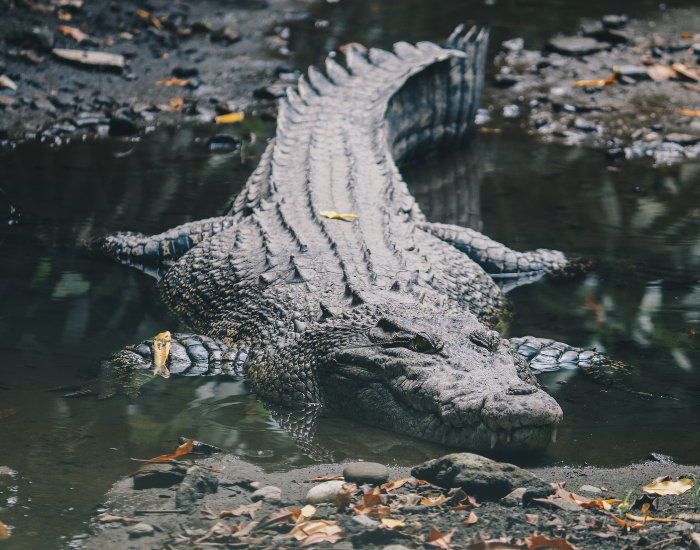
The first time I thought I’d encountered a gharial reptile wasn’t in India or Nepal where they actually live, it was in Australia (spoiler alert: it wasn’t a Gharial). At the time, I was working with Dendra Systems, analyzing drone imagery for ecological restoration. One afternoon, our team spotted what looked like an alligator-shaped reptile near a waterway, only its mouth was strangely elongated.
Someone half-jokingly suggested it was a gharial. The name stuck with me because the snout certainly resembled the famous “crocodile with the long snout.” But after a bit of research, we realized our mistake, gharial species don’t exist in Australia. Tapping into our fauna knowledge of Australian animals, we tossed around possibilities: maybe it was one of the native crocodiles of Australia, or even something that reminded us of the caiman species I’d studied elsewhere. In the end, it had to be a local reptile. Still, that moment sparked my curiosity about these rare and unusual crocodilians, leading me to write this article.

What Is a Gharial?
The gharial (Gavialis gangeticus), sometimes called the gavial crocodile or Indian crocodile gharial, is critically endangered crocodilian species in the family Gavialidae. Native to the northern Indian subcontinent, it once thrived across major river systems from Pakistan to Myanmar.
Gharials are best known for their narrow snout called a ghara, lined with more than 100 sharp interlocking teeth, perfectly adapted for catching fish. As one of the most distinctive living crocodilians, the gharial stands out for its unique adaptations and evolutionary lineage. Unlike true crocodiles or Indian alligators (mugger crocodiles), gharials are highly aquatic and almost entirely harmless to humans.
Physical Characteristics: Built for Fishing
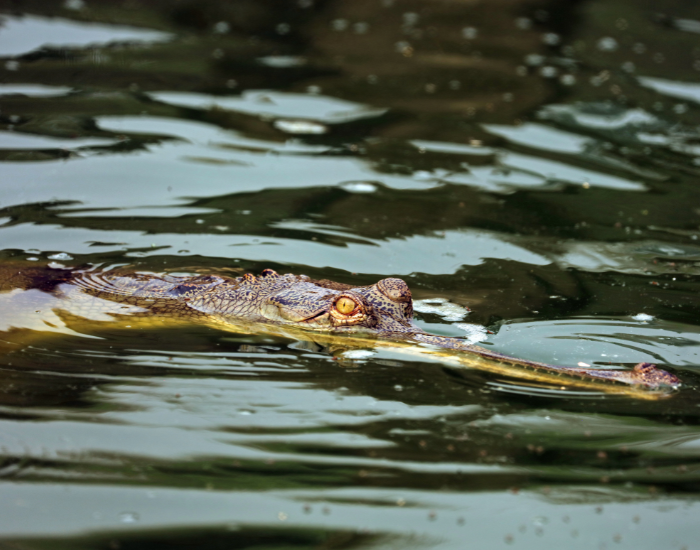
If you’ve ever seen a gharial, you’ll know it doesn’t look like any other crocodilian. Its body tells a story of specialization:
- Slender Snout: The ultimate adaptation for catching fish.
- Bulbous Growth (“ghara”): Found in adult males, this round knob on the snout helps amplify hissing sounds, attract females, and signal dominance.
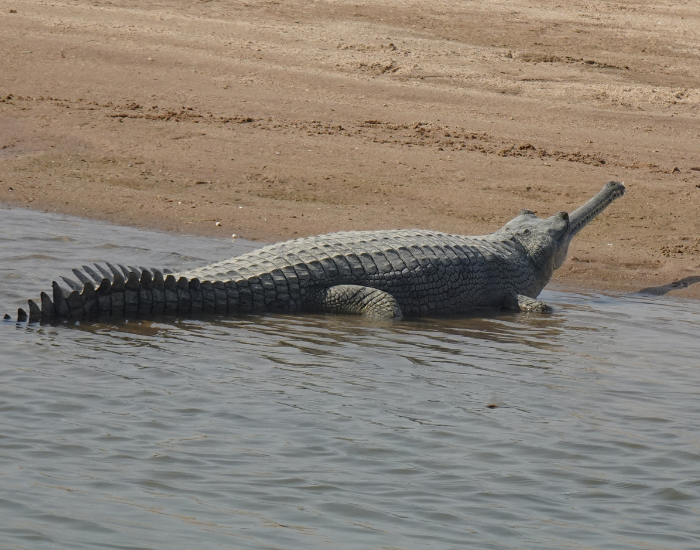
- Dark Brown Scales: Smooth, camouflaging them against sandy banks and murky water.
- Webbed Feet: An aquatic lifestyle requires strong swimming ability.
- Weight and Size: Adult gharials can reach up to 6.5 meters in length and a range of 160 kg to 250 kg (350 to 550 lbs) for large males.

Like other reptiles, gharials are ectothermic or cold blooded, meaning their body temperature depends on the surrounding environment and fluctuates with external conditions.
Interestingly, gharials lay the largest eggs of any crocodilian, with females digging deep sandy banks to protect their clutches.

Where Do Gharials Live? – Habitat and Distribution
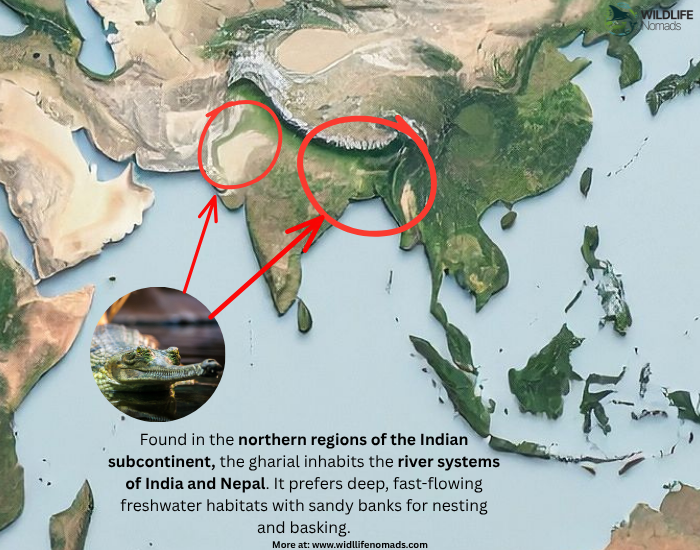
The historical range of gharials included almost every major river system in the northern Indian subcontinent, from the Indus to the Irrawaddy. The gharial inhabits rivers, showing a strong preference for riverine environments with high sand banks and deep pools. Today, their range has shrunk to less than 2% of what it once was.
Current Strongholds:
- India: National Chambal Sanctuary, Katarniaghat Wildlife Sanctuary, Girwa River, Son River.
- Nepal: Narayani River and Babai River.
They thrive in deep pools, sandy banks, and calm river bends, habitats increasingly under threat from sand mining, dam construction, and irrigation.
The Evolution of Gharials
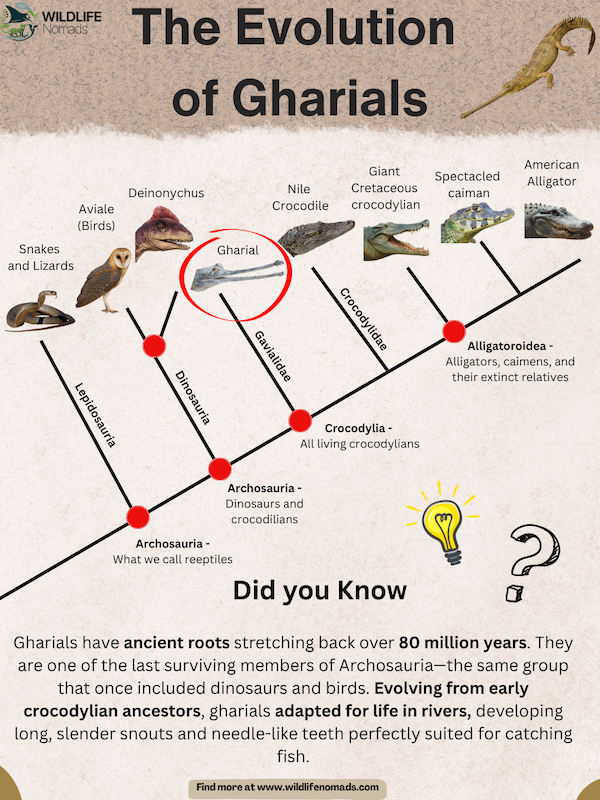
Gharials belong to one of the oldest surviving reptile lineages on Earth. They evolved from ancient crocodylian ancestors that first appeared over 80 million years ago. While crocodiles and alligators adapted to diverse habitats, gharials specialized for river life, developing long, slender snouts and needle-like teeth for catching fish. Today, they represent one of the most distinct branches of the crocodylian family tree.
Behavior and Ecology
Gharials are fascinating in their behavior and ecology:
- Highly Aquatic: They rarely leave the water except for basking or nesting.
- Social Groups: Dozens gather on sand banks, with male gharials defending territories and often seen basking with several females, buzzing through their ghara.
- Diet: Gharials are specialized for eating fish, with their long, narrow snouts and sharp teeth perfectly adapted for piscivory. Almost exclusively fish, though juveniles may also eat frogs, insects, and crustaceans.
- Gentle Giants: Despite their size, they’re harmless to humans, their snouts are too delicate for large prey.
Diet and Foraging: Masters of the River Hunt
The gharial is a true specialist among crocodilian species, perfectly adapted for life in the rivers of the Indian subcontinent. Its long, slender snout and interlocking teeth line are not just for show, they are precision tools for catching fish, the gharial’s primary food source. Unlike other crocodiles that might ambush a variety of prey, the gharial’s streamlined jaws allow it to slice through water with minimal resistance, snapping up slippery fish with remarkable speed and accuracy.
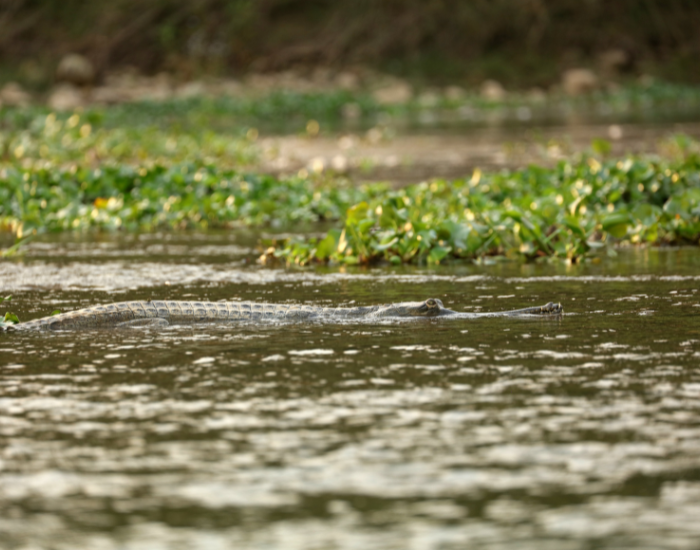
In the deep pools and gentle currents where this species thrives, a typical gharial can be seen gliding just beneath the surface, eyes and nostrils barely breaking the water. With a sudden sideways flick of its head, it can catch fish in a flash, rarely missing its mark. While fish make up the bulk of its diet, the gharial will occasionally consume crustaceans or frogs, especially when young. This specialized feeding behavior not only sets the gharial apart from other crocodilians but also helps regulate fish populations, maintaining the delicate balance of the river ecosystems it inhabits.

Reproduction and Development
- Mating Season: Typically during the dry season, when water levels recede.
- Courtship: Male gharials use buzzing calls, head tossing, and hissing sounds to impress the female gharial, who plays a key role in mate selection. During this period, various sexual behaviours are observed, including bubbling underwater, head tossing, and nest guarding.
- Nesting: Females dig nests into sandy banks, laying 30–60 gharial eggs, which are crucial for conservation efforts and breeding programs.
- Temperature-Dependent Sex Determination: Warm nests produce males, cooler nests produce females.
- Parental Care: Unlike mugger crocodiles, gharials cannot carry hatchlings in their mouths but still guard nests from predators such as monitor lizards.
Juvenile gharials grow slowly, often taking 15 years to reach sexual maturity.
Conservation Status: Critically Endangered
The IUCN Red List classifies gharials as critically endangered, with fewer than 1,200 mature individuals remaining in the wild.
Key Threats:
- Habitat Loss: Dams, canals, and sand mining destroy river habitats.
- Fishing Practices: Many gharials drown in gill nets.
- Hunting & Traditional Medicine: Once targeted for skins and supposed healing powers.
- Pollution: Industrial waste and agricultural runoff reduce fish populations.
Conservation groups and government agencies have recognized the urgent need for a comprehensive conservation action plan, focusing on habitat restoration and community awareness.

Conservation Efforts
- Protected Areas: National Chambal Sanctuary is the most critical refuge.
- Conservation Groups: NGOs in India and Nepal actively work with local communities to protect nesting grounds.
- Gharial Multi-Task Force: Coordinates research, protection, and education.
- Community Engagement: Local people are encouraged to become guardians of river habitats.
Many of these conservation strategies are supported by research published in academic press and peer-reviewed journals.
Still, despite decades of effort, gharial populations remain fragile.
Community Engagement and Education: People Protecting Gharials
The survival of the critically endangered gharial depends not only on scientific research and protected areas but also on the active participation of local communities. Conservation groups have learned that lasting success comes from working hand-in-hand with the people who share their rivers with these remarkable reptiles. By raising awareness about the gharial’s plight and its vital role in river health, education programs help foster a sense of stewardship among local residents.
Community engagement initiatives encourage people to monitor gharial populations, report sightings, and even assist in protecting nesting sites from threats. Involving local communities in conservation efforts has led to creative solutions, such as community-led patrols and habitat restoration projects, that directly benefit both gharials and people. These efforts not only help safeguard the species but also provide economic opportunities and promote coexistence, turning former challenges into shared victories. As more people become invested in the fate of the gharial, the chances for the recovery of this critically endangered species grow stronger.
10 Fascinating Facts About Gharials
- Specialist Snout: Their slender snout is so unique it inspired their nickname “crocodile with the long snout.”
- The Ghara: Only adult males develop the bulbous growth, used to attract females and scare rivals.
- Largest Eggs: Gharials lay the biggest eggs of any crocodilian.
- Sexual Maturity: Males mature around 15 years, much later than many reptiles.
- Social Gatherings: Gharials bask together in large groups, unlike many solitary crocodilians.
- Harmless to Humans: No verified records of gharials attacking people.
- Juvenile Diet: Young gharials eat insects and small prey before switching to fish.
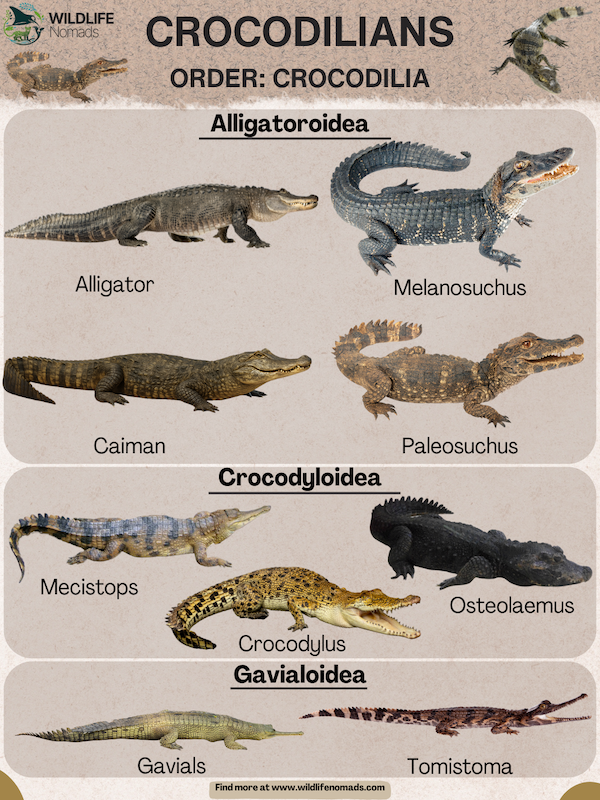
- Family Ties: They belong to the rare family Gavialidae, separate from true crocodiles and alligators.
- Ancient Lineage: Fossils suggest their ancestors date back tens of millions of years.
- Cultural Significance: In parts of India, gharials were once linked to mystical and healing powers in traditional medicine and local folklore, and associated with river deities.
- False Gharial Cousin: The so-called false gharial (Tomistoma schlegelii) lives in Southeast Asia and looks similar, but it’s a different species entirely—proving how unique and specialized the true gharial really is.

Recent Research & Developments in Gharial Conservation
In the last decade, studies across India and Nepal have begun to fill critical gaps in our understanding of gharial reptile biology, population trends, and conservation outcomes. For example, a 2024 study using newly developed microsatellite markers provided a more precise look at genetic diversity in the largest self-sustaining wild population of gharials along India’s Chambal River. The research revealed evidence of a genetic bottleneck consistent with historic declines but also signs of recent recovery, offering hope for management interventions.
Meanwhile, in Nepal’s Chitwan National Park, a longitudinal study published in Reptiles & Amphibians (2024) tracked gharial population changes between 2017 and 2022. The authors found that while numbers had increased in some reaches, the distribution remains uneven, with some river stretches underutilized despite appearing suitable on paper. The same study underscored that head-start release programs (raising hatchlings and releasing them) have contributed to numbers, yet such programs alone cannot compensate for threats like habitat degradation, river fragmentation, and mortality during dispersal
Ecosystem Role
As apex predators in rivers, gharials play vital roles:
- Controlling fish populations.
- Cycling nutrients across ecosystems.
- Maintaining balance in aquatic communities.
Their decline signals wider environmental collapse in South Asia’s rivers.

FAQs about Gharials You May Have
They’re crocodilians but belong to their own family, Gavialidae.
No. The false gharial (Tomistoma schlegelii) is a different species, listed as Vulnerable (concern NT).
No. They are considered harmless to humans. Gharials do not eat humans, and fears of them attacking or eating people are unfounded.
In rivers of India and Nepal, especially the Chambal, Narayani, and Babai Rivers.
Extremely. Fewer than 1,200 adults remain.
That’s the scientific name for the Indian gharial.
Future Outlook and Recommendations
Looking ahead, the future of the gharial remains uncertain, but there is hope if conservation efforts are strengthened and expanded. Protecting the deep pools and sandy banks that are essential for gharial breeding and nesting must be a top priority. Reducing the use of harmful fishing practices, such as gill nets that can entangle and drown gharials, is equally important.
Collaboration between conservation groups, governments, and local communities is key to developing effective strategies that address both the needs of people and the species. This includes expanding protected areas, restoring degraded habitats, and supporting research to better understand gharial populations and their requirements.Education and outreach programs empower local communities to participate actively in conservation and ensure everyone shares the benefits of healthy rivers.
Gharials are Strange, and we Shoutl Conserve Them!
The gharial reptile is more than just a crocodile with a long snout, it’s a symbol of fragile rivers, ancient evolution, and the interconnectedness of ecosystems. From juvenile gharials darting through river bends to adult males buzzing through their ghara, they are reminders of what biodiversity looks like when evolution takes a creative turn.
Their survival depends on us, supporting conservation groups, protecting protected areas, and empowering local communities to become river stewards.
When I think back to that moment in Australia, mistaking a reptile for a gharial, I realize how little I knew then. Today, the gharial represents to me not just a curiosity, but a conservation priority.