
Wildlife Nomads · Play · Natural Selection Lab
Natural Selection: Play the Game That Shapes Every Species
Natural selection is the process where living things with helpful inherited traits survive and reproduce more. Hunt beetles as a hungry bird, drag peppered moths through 220 years, breed Darwin’s finches through a drought and race superbugs across a giant dish.
By Cesar Medina, conservation biologist and former field ecologist · 8 interactive stops
What is natural selection?
Natural selection is the process where individuals with helpful heritable traits survive and reproduce more than others. Over many generations, those traits become more common in the population.
So what does natural selection mean in everyday words? Nature does not choose anything. Some individuals simply fit their environment a little better. They leave more offspring, and their offspring inherit those useful traits.
Charles Darwin gave the idea its name in 1859. He wrote: “This preservation of favourable variations and the rejection of injurious variations, I call Natural Selection.” More than 160 years later, it remains the foundation of evolutionary biology.
I remember having to study these concepts, and it was not fun. A dry definition hid a simple, beautiful idea. So I built the lab above, where you can be the predator and watch a population evolve.
How natural selection works: the four conditions
Natural selection occurs whenever four basic conditions are true. Biologists sometimes summarise them as variation, inheritance, overproduction and differential survival.
1. Genetic variation
No two individuals are identical. Some beetles are greener, some finches have deeper beaks, and some bacteria resist a drug slightly better. This genetic variation is the raw material of natural selection. Without it, selection has nothing to choose between. When a gene has alternative variants, selection can favour one over the others.
Populations with more genetic diversity give selection more raw material. High genetic diversity can also help species survival when environmental conditions shift.
New variation appears when mutations occur in DNA sequences. Mutations can create new traits, such as the dark wings of peppered moths. Most new mutations are neutral or harmful. Occasionally, a beneficial mutation gives its carrier an edge in a given environment. Sexual reproduction also shuffles existing genes into new combinations every generation.
2. Heritable traits
Natural selection only works on heritable traits, which pass from parent to offspring through genes. Biologists also call them heritable characteristics. Each new generation inherits them, and so do subsequent generations. Acquired traits do not count. Parents do not pass a gym muscle, a scar or a trimmed tail to the next generation.
3. More offspring than can survive
Most species produce far more young than their habitat can feed. A cod can release millions of eggs, yet only a tiny fraction reach reproductive age. Food, water, mates and shelter are limited resources, so individuals compete. Darwin called this the “struggle for existence”.
Darwin drew this idea partly from economist Thomas Malthus. He read Malthus on population growth in September 1838. Malthus argued that populations grow faster than their food supply. Darwin realised the same pressure applies to all living organisms.
4. Differential survival and reproduction
Individuals with advantageous traits are more likely to survive to reproductive age and breed. Biologists call this differential survival and differential reproduction. Over successive generations, the helpful trait spreads. A large fraction of the population eventually carries it.
Biologists measure this with relative fitness. It compares how many offspring one type leaves against the best type in the population. A trait with higher relative fitness becomes more common. That shift in the gene pool is adaptive evolution.
Darwin, Wallace and the origin of species
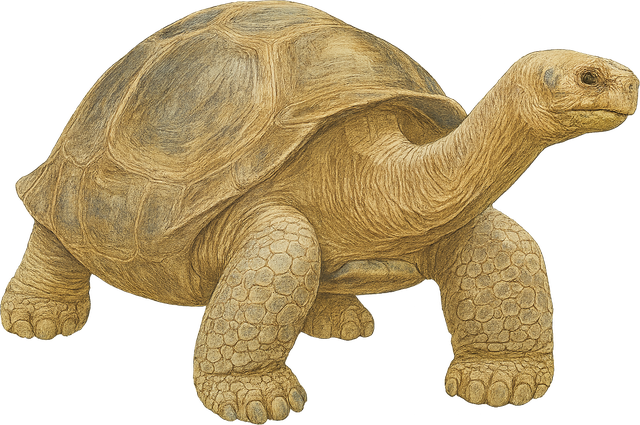
Darwin sailed around the world on HMS Beagle from 1831 to 1836. He spent years in South America and visited the Galápagos Islands in 1835. He studied fossils in South America and wildlife on the Galápagos, including finches and giant tortoises.
I have a small personal link to that story. In a zoo reptile house, I helped care for Galápagos giant tortoises. I fed them large salads.
Charles Darwin’s theory of evolution by natural selection took about 20 years to develop. Then, in 1858, a letter arrived from Alfred Russel Wallace. Wallace had independently conceived natural selection while working in the Malay Archipelago. The Linnean Society of London heard their joint papers on 1 July 1858.
Darwin published On the Origin of Species on 24 November 1859. Its full title was On the Origin of Species by Means of Natural Selection, or the Preservation of Favoured Races in the Struggle for Life. “Favoured races” meant varieties of plants and animals, not human groups.
Darwin used the old term “organic being” for any living organism. His core argument was simple. Every organic being varies, overproduces and competes, so favourable variations accumulate over long periods.
Who came before Darwin?
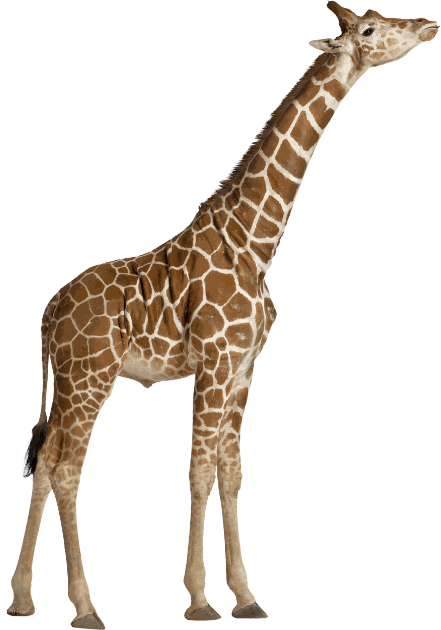
Jean-Baptiste Lamarck popularised the inheritance of acquired characteristics in 1809. He did not invent the idea, which was centuries older. His famous example was the giraffe stretching its neck. Darwin himself partly accepted the inheritance of acquired traits.
Edward Blyth wrote about selection between 1835 and 1837. He saw it as a force that kept species unchanged, by weeding out unusual individuals. He did not see it as a way to create new species. That creative role was Darwin and Wallace’s key insight.
What “survival of the fittest” really means
Philosopher Herbert Spencer coined the phrase “survival of the fittest” in 1864. Wallace urged Darwin to adopt it. Darwin added it to the fifth edition of the Origin in 1869.
The phrase is often misunderstood as physical strength. In biology, “fittest” means best fitted to the environment. Biologists measure fitness as reproductive success, the number of surviving offspring. A tiny, well-camouflaged moth can be fitter than a strong, conspicuous one.
Common misconception: natural selection does not involve conscious choice or purpose. Animals do not evolve because they need to. Random mutations produce variation, and the environment filters it. These two processes, random variation and non-random selection, drive adaptation.
Misconceptions about natural selection are common, even among teachers. In an open access article, Yates and Marek (2014) surveyed high school biology teachers. The teachers held several evolution misconceptions on average, and some passed them to their students.
Natural selection is also a process, not a single event. It works continuously across many generations. Many factors can shift the direction of selection, including climate, a new food source or other species arriving.
Types of natural selection
Selection can shape a trait in three main ways. You can test all three in the bell-curve lab above.
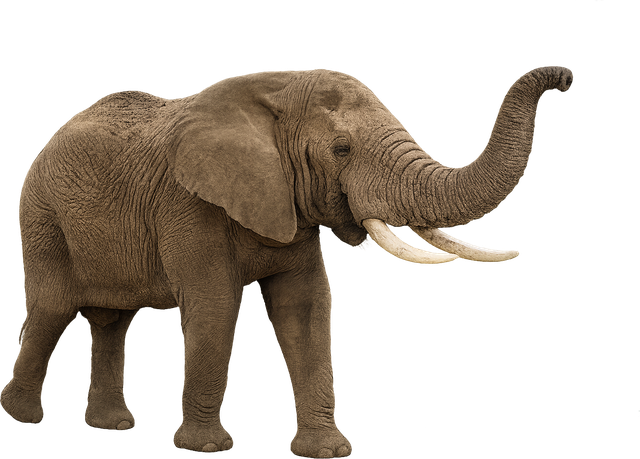
Selection favours one extreme, so the average shifts. During Mozambique’s civil war, ivory poaching drove tuskless female elephants from 18.5% to 50.9% of survivors.
Selection favours the average, and both extremes lose. Babies of average birth weight once had the lowest death rates (Karn and Penrose, 1951).
Both extremes beat the average. In black-bellied seedcrackers, large bills crack hard seeds and small bills handle soft ones (Smith, 1993).
Sexual selection
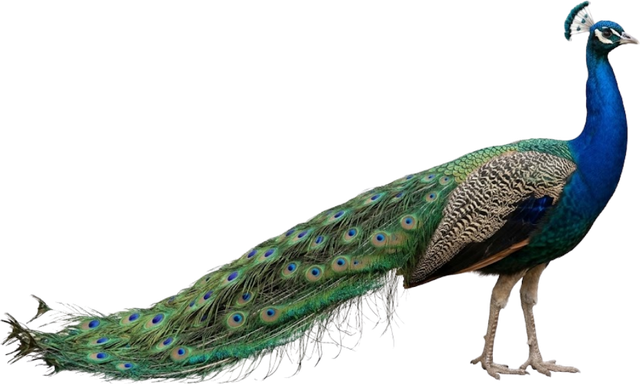
Some traits help an animal win mates rather than survive. Darwin called this sexual selection. Bright plumage, antlers and elaborate songs often evolve this way. In one experiment, chicks of peacocks with more elaborate trains grew and survived better (Petrie, 1994). Later studies of peahen choice gave mixed results, so scientists still debate the details.
Kin selection
Many social animals help their relatives raise young. W. D. Hamilton explained why in 1964. Relatives share many genes, so helping kin can spread your genes too. Ants, bees and some other animals live in colonies where most members never breed. Hamilton’s rule says helping pays when relatedness × benefit is greater than the cost (rB > C).
Artificial selection
Artificial selection happens when people decide which animals or plants breed. Dog breeds, crops and fancy pigeons are all products of it. Darwin bred pigeons himself and used them to explain natural selection.
I have watched artificial selection up close. As a child in Mexico, an uncle gave me two canaries, one blue and one yellow-green. Wondering why they were so colourful led me to canary breeds. Years later, I joined a friend at his ball python breeding facility. I watched the full breeding process there. Breeders pair snakes deliberately to produce new colour and pattern morphs.
Natural selection vs genetic drift and gene flow
Natural selection is not the same as evolution. It is one of several evolutionary processes. Evolution is any change in a population’s inherited traits over generations.
| Process | What it does | Does it produce adaptations? |
|---|---|---|
| Natural selection | Favours individuals whose heritable traits suit their environment | Yes, consistently |
| Genetic drift | Changes gene frequencies by chance, strongest in small populations | No, it is random |
| Gene flow | Moves genes between populations when individuals migrate | Not by itself |
| Mutation | Creates new variation in DNA sequences | Not by itself |
Modern evolutionary theory combines Darwinian evolution with genetics. Scientists now study selection at the molecular level, tracking exact DNA changes. In 2016, researchers traced the dark peppered moth to a jumping gene inside the cortex gene. Molecular biology confirmed the old field story.
Richard Dawkins popularised a gene’s-eye view in The Selfish Gene (1976). In that view, many genes compete to copy themselves into the next generation. Dawkins called bodies “survival machines” for genes. The selfish genes are not truly selfish, of course. Dawkins used the phrase as a metaphor.
Examples of natural selection
Darwin thought evolution was usually too slow to watch. In fact, natural selection can result in rapid evolutionary changes. Scientists measured these real examples in the field and the lab.
| Example | Selective pressure | What changed |
|---|---|---|
| Peppered moth, Britain | Birds hunting on sooty bark | Dark moths rose to about 98% in industrial areas by 1895, then declined after clean-air laws. |
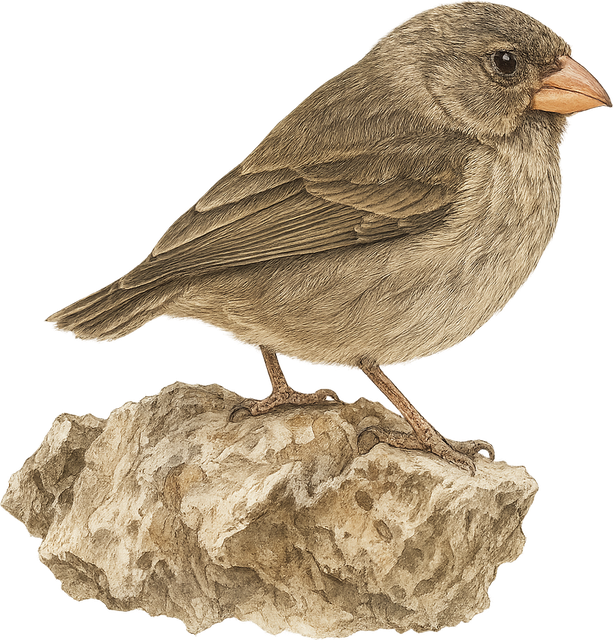
| Medium ground finch, Galápagos | 1977 drought left mostly hard seeds | More than 80% died. Survivors had beaks roughly 0.5 to 0.7 mm deeper on average. |
| African elephant, Mozambique | Ivory poaching, 1977–1992 | Tuskless females rose from 18.5% to 50.9% among survivors. |
| E. coli, laboratory | Rising antibiotic doses | Bacteria evolved to survive 1,000 times the killing dose in about 10 to 12 days. |
| Staphylococcus aureus | Penicillin and methicillin | Doctors recognised penicillin resistance by 1942. They reported MRSA in 1961. |
Antibiotic resistance is natural selection in action. The drug kills susceptible bacteria. Any mutant that survives multiplies freely, and soon resistant bacteria are the vast majority.
Adaptations: good enough, not perfect
Natural selection explains the origin of adaptations, the adaptive traits that help organisms survive and reproduce. Yet adaptations are rarely perfect. Selection can only work with the variation available, so many traits remain sub optimal.
Some adaptations change jobs over time. Feathers may first have evolved for insulation or display. Later, birds co-opted them for flight. Scientists still debate which came first.
The giraffe’s neck is another open question. Reaching high leaves is one explanation. Males also fight by swinging their necks, so sexual selection may play a part. A 2022 fossil relative, Discokeryx, supports this “necks for sex” idea.
Adaptations can also become outdated when environmental conditions change. Dark peppered moths thrived on sooty trees, then lost out when the air cleaned up. Such a trait can flip from helpful to harmful within a few decades.
Predators shape behaviour too, not only body traits. At university in Sweden, I ran a short experiment with friends. We measured how a predator on an open plain affected birds’ foraging time. Over many generations, pressures like that become selective forces.
From natural selection to new species
Over long periods, natural selection can help split one species into two. When groups adapt to different conditions, they build up genetic differences. Eventually, they may no longer interbreed. Biologists call this speciation, and you can split a squirrel population yourself in our Speciation Lab.
Natural selection gives us a framework for understanding biodiversity. Every species, from bacteria to blue whales, carries the record of its ancestors’ struggle for existence.
Frequently asked questions
What is the best definition of natural selection?
Natural selection is the process where individuals with helpful inherited traits survive and reproduce more than others. Over generations, those traits become more common. It needs variation, inheritance and differential reproduction. Darwin called it “the preservation of favourable variations and the rejection of injurious variations.”
How do you explain natural selection to a child?
Imagine green and brown beetles living on brown soil. Birds spot the green beetles more easily and eat them. More brown beetles survive and have babies, and the babies are brown too. After many generations, almost every beetle is brown. Try it yourself in the “Be the bird” game above.
What are three examples of natural selection?
Dark peppered moths spread in sooty industrial Britain, then declined as the air cleaned. Darwin’s finches evolved deeper beaks after the 1977 Galápagos drought. Bacteria evolve antibiotic resistance when drugs kill their susceptible neighbours.
Is natural selection the same as evolution?
No. Evolution is change in a population’s inherited traits over generations. Natural selection is one mechanism that causes it. Mutation, gene flow and genetic drift also drive evolution. Natural selection is the only one that consistently produces adaptations.
What is the difference between natural selection and artificial selection?
In natural selection, the environment decides which individuals reproduce. In artificial selection, people choose which plants or animals breed. Dog breeds, crops and fancy pigeons come from artificial selection. Darwin used pigeon breeding to help explain natural selection.
References
Baym, M., Lieberman, T. D., Kelsic, E. D., Chait, R., Gross, R., Yelin, I., & Kishony, R. (2016). Spatiotemporal microbial evolution on antibiotic landscapes. Science, 353(6304), 1147–1151. https://doi.org/10.1126/science.aag0822
Boag, P. T., & Grant, P. R. (1981). Intense natural selection in a population of Darwin’s finches (Geospizinae) in the Galápagos. Science, 214(4516), 82–85. https://doi.org/10.1126/science.214.4516.82
Campbell-Staton, S. C., Arnold, B. J., Gonçalves, D., Granli, P., Poole, J., Long, R. A., & Pringle, R. M. (2021). Ivory poaching and the rapid evolution of tusklessness in African elephants. Science, 374(6566), 483–487. https://doi.org/10.1126/science.abe7389
Cook, L. M., Grant, B. S., Saccheri, I. J., & Mallet, J. (2012). Selective bird predation on the peppered moth: The last experiment of Michael Majerus. Biology Letters, 8(4), 609–612. https://doi.org/10.1098/rsbl.2011.1136
Darwin, C. (1859). On the origin of species by means of natural selection, or the preservation of favoured races in the struggle for life. John Murray. https://darwin-online.org.uk/
Darwin, C., & Wallace, A. R. (1858). On the tendency of species to form varieties; and on the perpetuation of varieties and species by natural means of selection. Journal of the Proceedings of the Linnean Society of London, Zoology, 3, 45–62.
Dawkins, R. (1976). The selfish gene. Oxford University Press.
Grant, B. S., & Wiseman, L. L. (2002). Recent history of melanism in American peppered moths. Journal of Heredity, 93(2), 86–90. https://doi.org/10.1093/jhered/93.2.86
Grant, P. R., & Grant, B. R. (2006). Evolution of character displacement in Darwin’s finches. Science, 313(5784), 224–226. https://doi.org/10.1126/science.1128374
Hamilton, W. D. (1964). The genetical evolution of social behaviour. I and II. Journal of Theoretical Biology, 7(1), 1–52. https://doi.org/10.1016/0022-5193(64)90038-4
Karn, M. N., & Penrose, L. S. (1951). Birth weight and gestation time in relation to maternal age, parity and infant survival. Annals of Eugenics, 16(1), 147–164.
Lowy, F. D. (2003). Antimicrobial resistance: The example of Staphylococcus aureus. Journal of Clinical Investigation, 111(9), 1265–1273. https://doi.org/10.1172/JCI18535
Petrie, M. (1994). Improved growth and survival of offspring of peacocks with more elaborate trains. Nature, 371, 598–599. https://doi.org/10.1038/371598a0
Smith, T. B. (1993). Disruptive selection and the genetic basis of bill size polymorphism in the African finch Pyrenestes. Nature, 363, 618–620. https://doi.org/10.1038/363618a0
University of California Museum of Paleontology. (n.d.). Understanding evolution: Mechanisms of evolution. https://evolution.berkeley.edu/
van’t Hof, A. E., Campagne, P., Rigden, D. J., Yung, C. J., Lingley, J., Quail, M. A., Hall, N., Darby, A. C., & Saccheri, I. J. (2016). The industrial melanism mutation in British peppered moths is a transposable element. Nature, 534, 102–105. https://doi.org/10.1038/nature17951
Wang, S.-Q., Ye, J., Meng, J., Li, C., Costeur, L., Mennecart, B., et al. (2022). Sexual selection promotes giraffoid head-neck evolution and ecological adaptation. Science, 376(6597), eabl8316. https://doi.org/10.1126/science.abl8316
Yates, T. B., & Marek, E. A. (2014). Teachers teaching misconceptions: A study of factors contributing to high school biology students’ acquisition of biological evolution-related misconceptions. Evolution: Education and Outreach, 7, 7. https://doi.org/10.1186/s12052-014-0007-2



