
Wildlife Nomads · Play · Speciation Lab
Speciation: Definition, Types and Examples
Speciation is the evolutionary process by which one species splits into two or more distinct species. Test which animals count as one species, split a squirrel population with a canyon and explore 12 places where new species are forming.
By Cesar Medina, conservation biologist and former field ecologist · 8 interactive stops · 12 real case studies
What is speciation? A clear definition
Speciation is the evolutionary process by which populations evolve to become distinct species. It happens when gene flow between groups stops, and they become reproductively isolated.
Every species alive today began as part of an existing species. At some point, two populations of that parent species stopped exchanging genes. Over many generations, they built up genetic differences. Eventually, they could no longer interbreed, and two species existed where there had been one.
Speciation is how life generates biodiversity. It creates new species, while extinction removes them. I built the lab above so you can watch the process, from the first barrier to the final split.
Speciation vs evolution
Evolution is any change in a population’s genes over generations. Speciation is one result of evolution: a lineage splitting into separate species. Natural selection, genetic drift, mutation and gene flow all shape that split. You can watch selection at work in our Natural Selection Lab.
The biological species concept
To study speciation, biologists need a species definition. Most use the biological species concept, proposed by Ernst Mayr in 1942. A species is a group of populations that can interbreed in nature and produce fertile offspring. Members of the same species share one gene pool.
Horses and donkeys show how it works. They can mate, but their hybrid offspring, mules, are almost always sterile. So horses and donkeys are two species, even though they are closely related species.
Where the concept breaks down: asexual organisms, like most bacteria, do not interbreed at all. They also share genes by horizontal gene transfer. Fossils cannot be tested either. For these, scientists use other species concepts based on body shape, DNA or ecological niche.
Some distinct species still produce fertile hybrid offspring. Polar bears and grizzly bears are one example. Wild hybrids have been found in the Canadian Arctic. Yet the two bears look, live and behave so differently that biologists keep them as separate species. Learn more in our polar bear facts and grizzly bear facts.
How does speciation occur?
Speciation occurs in two broad phases. First, populations separate and diverge. Then, reproductive isolation becomes complete. Four steps usually lead from one species to two.
Genetic drift matters most in small isolated populations. After population bottlenecks, chance alone can change gene frequencies quickly. Natural selection matters most when the two populations live in different environments. When selection between different habitats drives the split, biologists call it ecological speciation.
The four types of speciation
Biologists sort speciation mechanisms by geography. The key questions are where the two populations live and how much genetic exchange continues between them.
| Type | Where the populations live | Gene flow | Example |
|---|---|---|---|
| Allopatric | Geographically separated by a barrier, such as a mountain range or sea | None | Snapping shrimp on either side of the Isthmus of Panama |
| Peripatric | A small group isolated at the edge of the range | None | Hawaiian fruit flies founding new islands |
| Parapatric | Next to each other along a continuous range | Low, through a hybrid zone | Sweet vernal grass on mine waste in Wales |
| Sympatric | In the same geographical area | High at first | Apple maggot flies and Midas cichlids |
Allopatric speciation
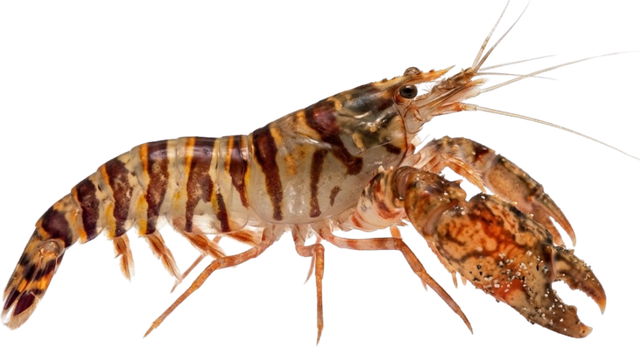
Allopatric speciation begins with geographic isolation. Geographical barriers, like rivers, mountain ranges or rising land, split one population into two populations. When the Isthmus of Panama closed about 3 million years ago, it divided many marine species. Snapping shrimp from opposite oceans now rarely mate. Most biologists think this is the most common way new animal species arise.
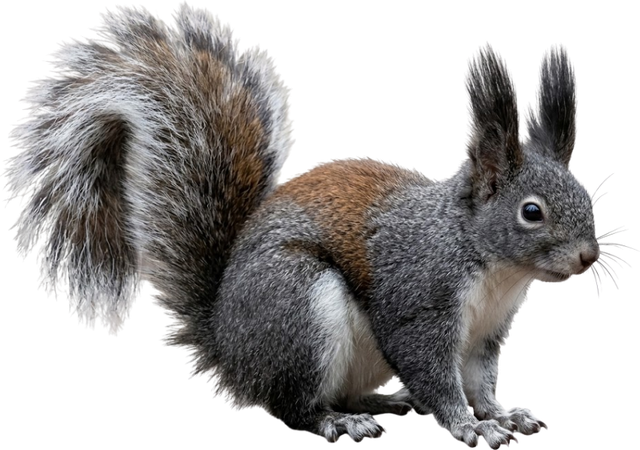
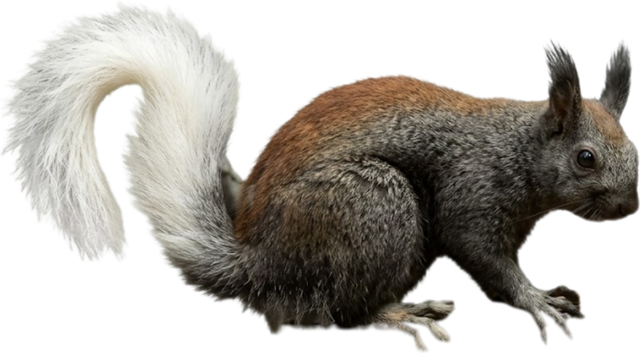
The Grand Canyon shows the early stages. Kaibab squirrels on the North Rim now look different from Abert’s squirrels on the South Rim. Most biologists still class them as one species, so speciation may be under way. See more wildlife of the region in our guide to animals in Arizona.
Peripatric speciation
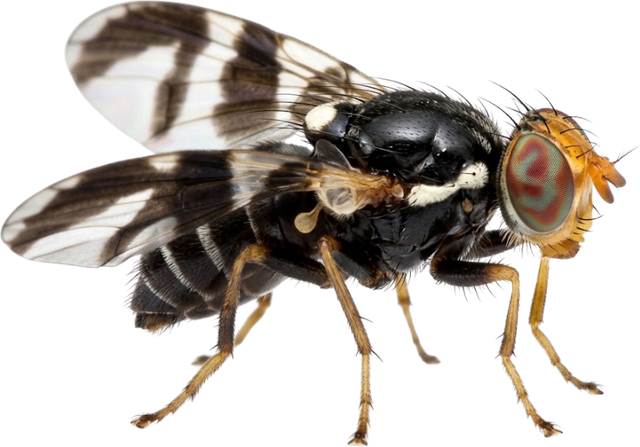
Peripatric speciation is a special case of allopatric speciation. A few individuals colonise a new place, like an island. With so few founders, genetic drift is strong and the new group changes fast. Hawaii holds roughly 1,000 species of fruit flies, many probably born this way.
Parapatric speciation
In parapatric speciation, neighbouring populations adapt to different conditions along one range. Gene flow continues, but strong selection overcomes it. Sweet vernal grass growing on old mine waste in Wales evolved metal tolerance. It also began flowering at a slightly different time from plants a few metres away.
Sympatric speciation
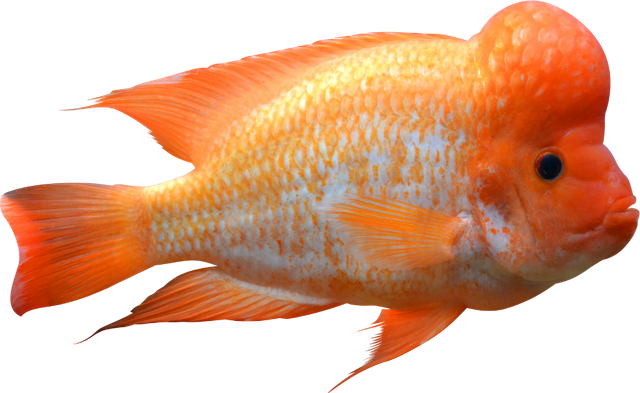
Sympatric speciation happens in the same geographical area, with no barrier at all. Groups split by using different food, habitats or mating times. Apple maggot flies are splitting into races that live on apples and on hawthorns. In Nicaragua’s Lake Apoyo, a slender open-water cichlid evolved from Midas cichlids in under 10,000 years.
Hybrid speciation and polyploidy
New species can also form when two species mix. In polyploid speciation, a hybrid plant doubles its chromosomes. It can breed with similar plants, but not with its parent species. Polyploidy is involved in about 15% of speciation events in flowering plants and 31% in ferns.
Two goatsbeard wildflowers, Tragopogon mirus and T. miscellus, formed this way in Washington and Idaho during the first half of the 1900s. Animals can be polyploid too. The gray treefrog has four chromosome sets, while its look-alike relative has two. These two frog species are told apart by their calls. Read more about the eastern gray treefrog.
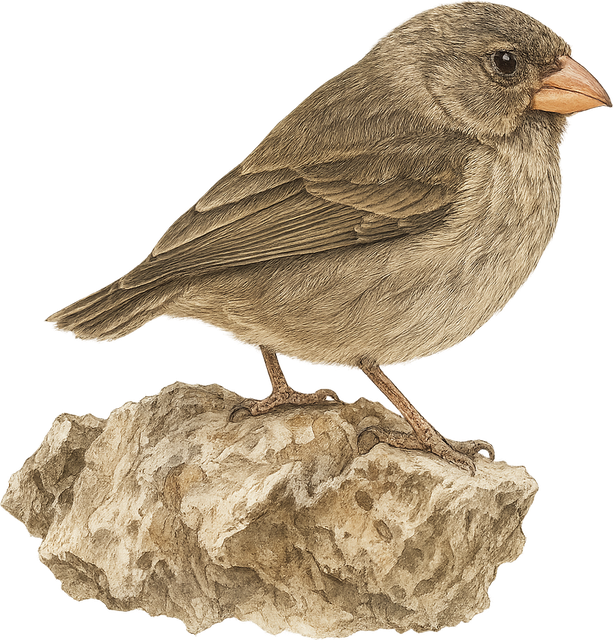
Homoploid hybrid speciation happens without chromosome doubling. In 1981, a large cactus finch reached Daphne Major in the Galápagos. He bred with a local medium ground finch. Within a few generations, his descendants bred only among themselves. Scientists call this lineage “Big Bird”.
Researchers have even started the process in the lab, sometimes called artificial speciation. In 1989, Diane Dodd raised fruit flies on two different foods for many generations. Afterwards, flies preferred mates raised on their own food.
Reproductive isolation: the barriers between species
Reproductive isolation keeps two species from merging back together. Biologists sort reproductive barriers into two groups. Prezygotic barriers act before fertilisation. Postzygotic barriers act after, on the hybrid offspring.
Apple and hawthorn maggot flies mate on different host trees, so they rarely meet.
Eastern spotted skunks mate in late winter. Western spotted skunks mate in late summer.
Female gray treefrogs answer only the trill of their own species.
Land snails whose shells coil in opposite directions cannot line up to mate.
Sea urchin sperm only binds to eggs of its own species.
Mules and male ligers are sterile, so their genes go nowhere.
Some genes cause these barriers directly. Biologists call them speciation genes. In house mice, a gene called Prdm9 makes some hybrid males sterile. Studying such genes is a growing part of genome evolution research.
Examples of speciation in the real world
About 18 species evolved from a single ancestral species on the Galápagos. Compare their beaks in our guide to types of finches.
More than 500 species, many formed in roughly the last 15,000 years. Females often choose mates by colour.
A ring of forms around California’s Central Valley. The two ends meet in the south but rarely hybridise.
More than 50 species from one rosefinch-like ancestor. Many are now extinct. Explore more animals from Hawaii.
In Japan, one gene flips the shell coil. Left-coiled snails can quickly become reproductively isolated.
Two new plant species born in the 1900s in the United States. Neither exists in Europe, where their parents came from.
How long does speciation take?
Speciation is usually slow. A 2015 study covered more than 50,000 species. On average, a new species took about 2 million years to form. That figure hides huge variation. Polyploid plants can form a new species in one generation. Darwin’s “Big Bird” finches became isolated within a few generations.
Rapid evolution often follows the arrival in an empty place, like a new island or lake. One ancestor can then split into many descendant species, each in its own ecological niche. This is called adaptive radiation. You can see how all these branches connect in our interactive Tree of Life.
Why speciation matters
Scientists have described about 2.2 million species. A 2011 study estimated that Earth holds about 8.7 million species of complex life. Every one of them is the product of speciation events stretching back billions of years. Understanding speciation helps us understand genetic diversity, and why it matters to protect isolated populations. For the bigger picture, read our guide to what evolutionary biology is.
Frequently asked questions
What is speciation in simple terms?
Speciation is how one species splits into two or more. A population divides, the groups evolve differently, and eventually they can no longer interbreed. Each group is then its own species.
What is a good example of speciation?
Midas cichlids in Nicaragua’s Lake Apoyo are a strong example. In under 10,000 years, a new open-water species evolved inside one small crater lake. Darwin’s finches, the Grand Canyon squirrels and apple maggot flies are other well-studied examples.
What are the four main types of speciation?
Allopatric speciation happens when a geographic barrier splits a population. Peripatric speciation happens when a small group colonises a new area. Parapatric speciation happens between neighbouring populations along a range. Sympatric speciation happens in the same geographical area, with no barrier.
What is the most common cause of speciation?
Geographic isolation is the most common cause. When a river, mountain range or sea separates two populations, gene flow stops. Natural selection and genetic drift then build up genetic differences until the groups are reproductively isolated.
What are the two phases of speciation?
First, populations separate and diverge as gene flow is restricted. Second, reproductive isolation becomes complete. If the groups meet again before that, hybrids that do poorly can strengthen the barriers, a process called reinforcement.
What is the difference between speciation and evolution?
Evolution is any change in a population’s genes over generations. Speciation is one outcome of evolution, when a lineage splits into separate species. A population can evolve for a long time without ever splitting.
References
Barluenga, M., Stölting, K. N., Salzburger, W., Muschick, M., & Meyer, A. (2006). Sympatric speciation in Nicaraguan crater lake cichlid fish. Nature, 439(7077), 719–723. https://doi.org/10.1038/nature04325
Feder, J. L., Opp, S. B., Wlazlo, B., Reynolds, K., Go, W., & Spisak, S. (1994). Host fidelity is an effective premating barrier between sympatric races of the apple maggot fly. Proceedings of the National Academy of Sciences, 91(17), 7990–7994. https://doi.org/10.1073/pnas.91.17.7990
Hedges, S. B., Marin, J., Suleski, M., Paymer, M., & Kumar, S. (2015). Tree of life reveals clock-like speciation and diversification. Molecular Biology and Evolution, 32(4), 835–845. https://doi.org/10.1093/molbev/msv037
Knowlton, N., Weigt, L. A., Solórzano, L. A., Mills, D. K., & Bermingham, E. (1993). Divergence in proteins, mitochondrial DNA, and reproductive compatibility across the Isthmus of Panama. Science, 260(5114), 1629–1632. https://doi.org/10.1126/science.8503007
Lamichhaney, S., Han, F., Webster, M. T., Andersson, L., Grant, B. R., & Grant, P. R. (2018). Rapid hybrid speciation in Darwin’s finches. Science, 359(6372), 224–228. https://doi.org/10.1126/science.aao4593
Wood, T. E., Takebayashi, N., Barker, M. S., Mayrose, I., Greenspoon, P. B., & Rieseberg, L. H. (2009). The frequency of polyploid speciation in vascular plants. Proceedings of the National Academy of Sciences, 106(33), 13875–13879. https://doi.org/10.1073/pnas.0811575106



