Ever heard what sounds like a slow trill echoing through the woods on a warm summer evening? That’s probably an eastern gray tree frog announcing its presence. These amphibians are hiding in plain sight throughout the eastern United States, from northern Florida all the way up to southeastern Canada.
Most frogs spend their days near water. However, gray tree frogs are different. They’re arboreal experts who prefer life in the trees, only visiting breeding ponds when it’s time to mate. They also possess survival abilities that seem almost sound supernatural.
Let’s explore ten incredible facts about Hyla versicolor that’ll change how you see (or hear) these camouflage experts.
1. They’re Actually Two Different Species That Look Identical
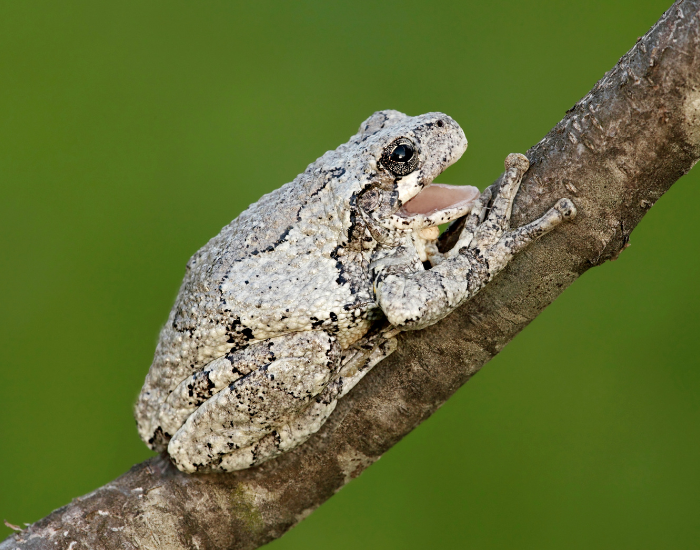
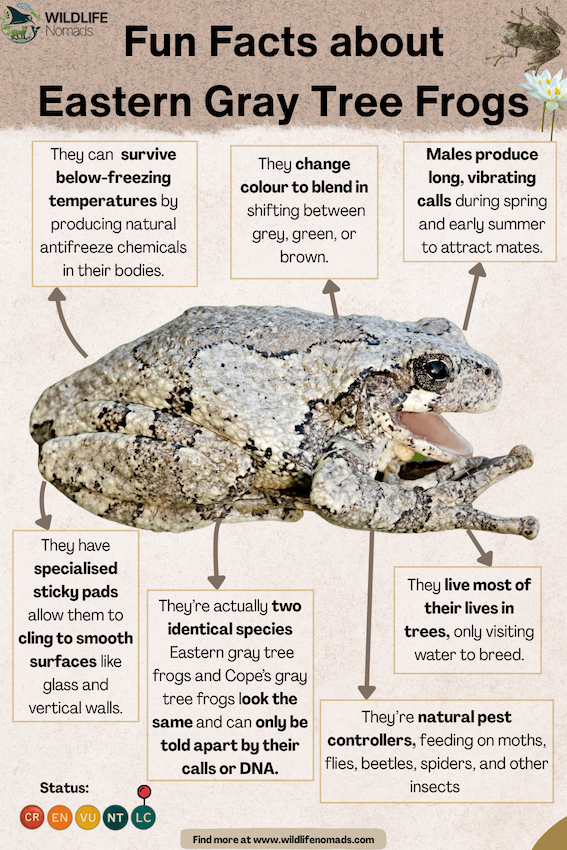
Here’s where things get confusing. What we call “gray tree frogs” actually includes two distinct species: the eastern gray tree frog (Hyla versicolor) and Cope’s gray treefrog
(Hyla chrysoscelis). Therefore, scientists struggled for years to tell them apart.
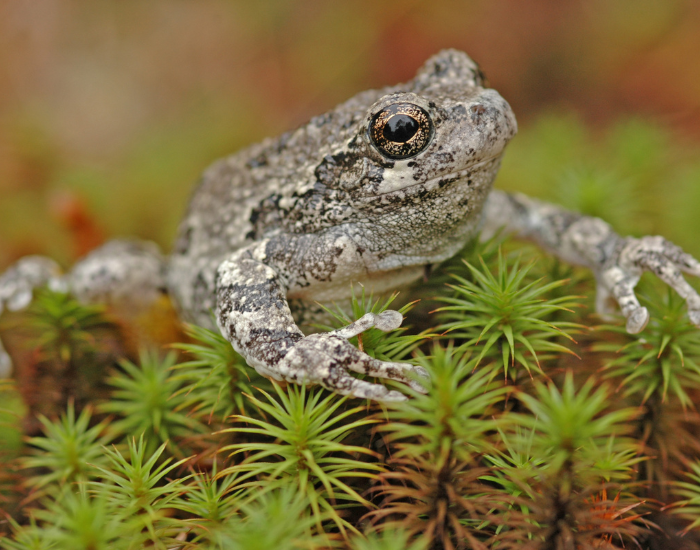
The catch? You can’t distinguish them by looking. Both have the same warty skin texture, dark blotches on their backs, and bright yellow patches on their hind legs. The only reliable way to tell them apart is by their breeding calls or a chromosome count in a lab.
The eastern gray treefrog is tetraploid, meaning it has 48 chromosomes, exactly double that of Cope’s gray treefrog. This genetic quirk makes the eastern variety scientifically fascinating. In fact, many researchers believe Hyla versicolor evolved through polyploidization events, where an ancestor’s chromosome count spontaneously doubled, effectively creating a new species in a single generation.
For example, while the Eastern Gray Treefrog and Cope’s variety are common, they share the North Carolina landscape with the Pine Barrens Treefrog, a distinct species that is considered a species of special concern due to its specific habitat needs.

2. Their Color-Changing Ability Rivals a Chameleon’s
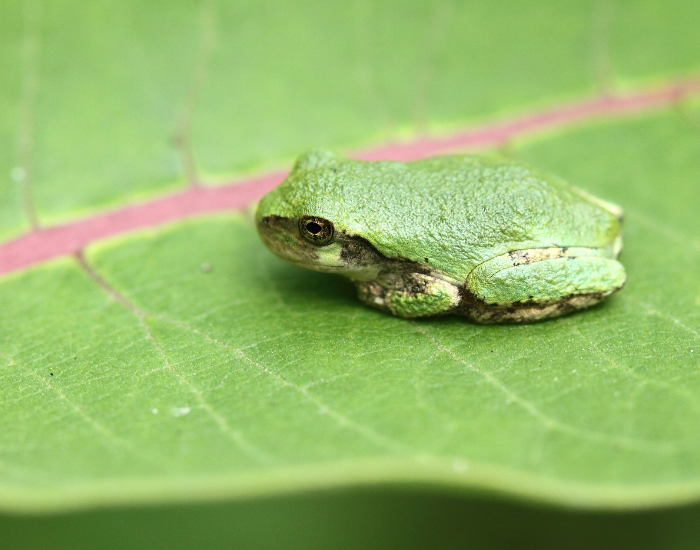
The name “versicolor” literally means “variable color,” and these frogs live up to it, just like chameleons. A gray treefrog can shift from light green to gray to brown in minutes. This isn’t just showing off, it’s survival.
When a gray tree frog sits motionless on tree branches covered in lichen, it becomes nearly invisible. The excellent camouflage protects them from predators like birds and snakes. Moreover, the color change responds to temperature, humidity, and background.
On a warm day near woodland ponds, you might spot one displaying light green tones. However, come evening, that same frog could turn gray to blend with tree bark. This adaptation makes them masters of disguise on the forest floor and in tree cavities alike.
In contrast, the green tree frog (Hyla cinerea) stays bright green year-round and lacks the warty texture. Therefore, once you know what to look for, telling a green treefrog from a gray tree frog becomes easier.
3. They Freeze Solid and Come Back to Life
Perhaps the most astonishing gray treefrog fact is their winter survival strategy. When freezing temperatures arrive, their body freezes completely. Their heart stops beating, they stop breathing, and ice crystals form throughout their tissues.
How do they survive? These frogs flood their systems with high concentrations of glucose and glycerol. These compounds act as biological antifreeze, lowering the freezing point of their vital organs and preventing lethal ice crystals from forming inside their cells.”They remain temporarily suspended under leaf litter, inside hollow trees, or beneath rotten logs until early summer warmth returns.
Research published in various scientific journals shows this cryoprotection works so well that up to 65% of a gray tree frog’s body water can freeze without causing harm. When spring arrives, they thaw out and resume normal activity within hours. It’s nature’s own cryogenics lab.
4. Males Sing to Win Over Female Gray Treefrogs
The breeding season brings out the performer in male frogs. Starting in early May through early July, calling males gather near breeding ponds and vernal pools. Each male inflates his throat sac and produces a resonating trill that can last two to three seconds.
Interestingly, the eastern gray treefrog has a slower trill compared to Cope’s rapid-fire call. This difference in male’s advertisement calls is the easiest way to identify which species you’re hearing. Female gray treefrogs use these breeding calls to make their mate choice, selecting partners based on trill quality and duration.
When a rival male gets too close, the calling male switches to aggressive calls to defend his territory. Once a female selects her mate, they enter amplexus, the mating position where the male clasps the female from behind. The eggs are externally fertilized as she lays them in small clusters attached to vegetation in standing water.
The eggs hatch in three to seven days, depending on water temperature. Then, tadpoles hatch and begin their race against time, growing rapidly to avoid salamander larvae and other predators lurking in woodland ponds.
5. They’re Surprisingly Common, You Just Can’t See Them
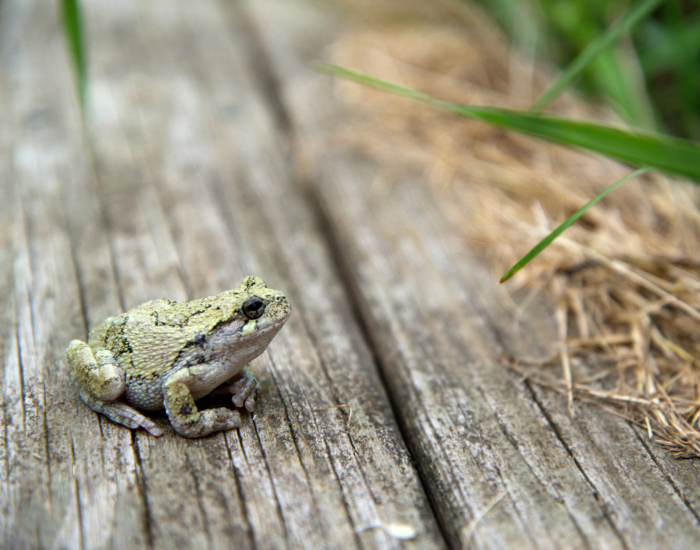
Gray treefrogs aren’t rare. In fact, they’re listed as “Least Concern” by conservation organizations. However, their excellent camouflage means most people never spot them, even when the frogs are sitting right in front of them.
During the day, gray treefrogs hide in tree holes, under loose bark, or among leaf litter. They become active at night, climbing tree branches to hunt for food near porch lights. Many homeowners discover them clinging to windows, where moths and other insects gather around outdoor lighting.
The gray treefrog habitat spans from central Texas eastward and from northern Florida up through Ontario and Quebec in southeastern Canada. Wooded areas with permanent waters or temporary breeding ponds provide ideal conditions. Therefore, if you have trees on your property, chances are good you have gray treefrogs as neighbors.
6. Their Toe Pads Are Biological Engineering
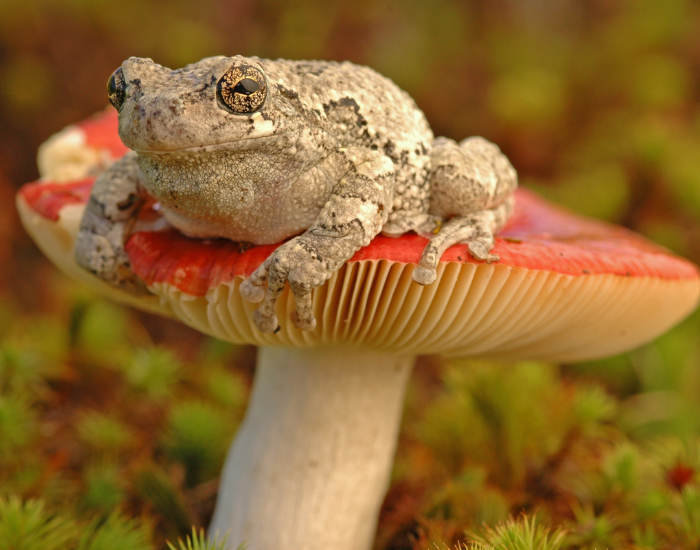
Watch a gray treefrog climb, and you’ll witness biomechanics at its finest. Their specialized toe pads function like tiny suction cups, allowing them to scale smooth vertical surfaces with ease. Each toe pad contains microscopic channels that create adhesion through surface tension.
These toe pads work so well that gray treefrogs can cling to glass, climb tree branches at any angle, and even hang upside down. In addition, they can release and reattach instantly, giving them incredible agility when hunting insects.
Scientists have studied these toe pads extensively, hoping to develop synthetic adhesives that mimic their properties. The ability to stick and unstick rapidly without leaving residue has applications in medical devices and robotics.
Young frogs develop functional toe pads shortly after metamorphosis, allowing them to leave the water and climb into the canopy by mid-summer.
7. They’re Voracious Pest Controllers
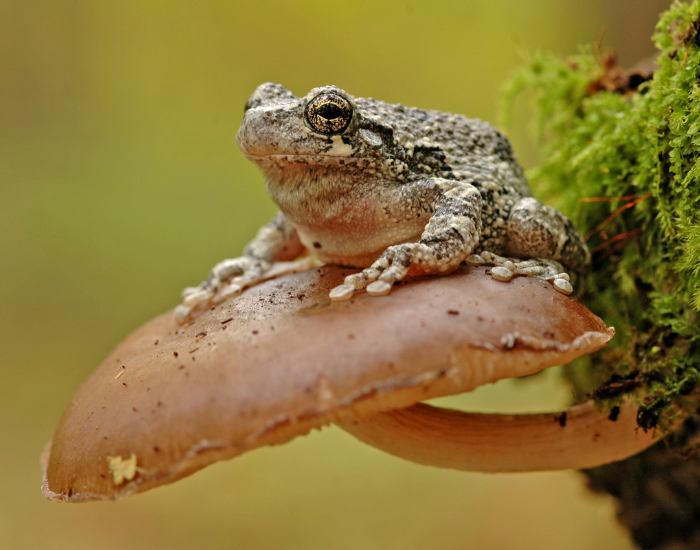
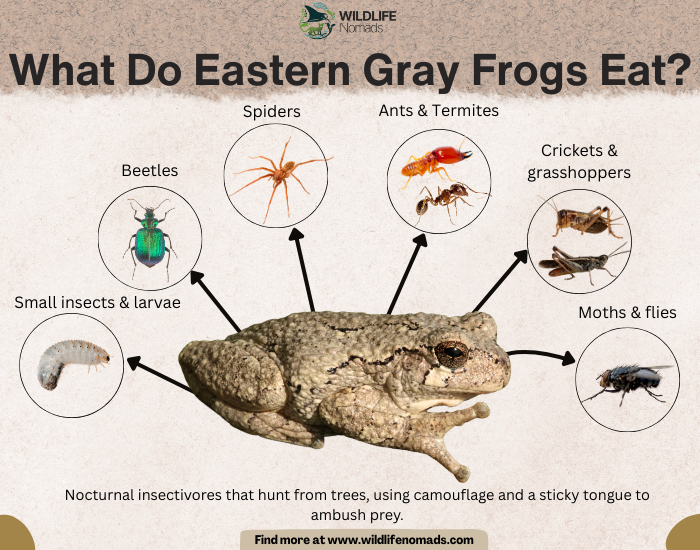
What do gray treefrogs eat? Almost anything they can fit in their mouths. Their diet includes moths, crickets, beetles, plant lice, mites, and spiders. They use their sticky tongue to snatch prey with lightning speed.
Gray treefrogs play a vital role in controlling insect populations. One frog can consume hundreds of insects during the breeding season alone. This natural pest control benefits forests and gardens, reducing populations of agricultural pests without chemicals.
Interestingly, larger adults will occasionally eat smaller frogs if the opportunity arises. This cannibalistic behavior isn’t common, but it demonstrates their opportunistic feeding strategy. They’re sit-and-wait predators who strike when prey comes within range.
Most frogs stick close to water for hunting. However, gray treefrogs venture high into the canopy, expanding their ecological niche. They hunt on tree branches, near tree roots, and anywhere insects congregate.
8. Habitat Loss Threatens Their Breeding Sites
While gray treefrogs remain common, they face growing pressure from habitat loss and pollution. Vernal pools and woodland ponds—essential for breeding—are disappearing as development expands. These temporary waters provide ideal breeding habitat because they lack fish that would eat tadpoles.
In addition, chemical pesticides pose serious risks. Frogs breathe through their skin, making them extremely sensitive to environmental toxins. Runoff from lawns and farms can contaminate breeding ponds, killing eggs and tadpoles.
Climate change also impacts breeding patterns. The breeding season depends on water temperature and rainfall. Warmer winters may cause frogs to emerge too early, while droughts can dry up breeding ponds before young frogs complete metamorphosis.
Conservation efforts focus on protecting wooded habitats, preserving vernal pools, and reducing pesticide use. Landowners can help by maintaining standing water, avoiding chemicals, and leaving dead trees (with tree cavities) on their property.
Invasive Species Add Extra Pressure
In some regions, invasive species add another layer of pressure. InFlorida, introduced species and predators like the Cuban treefrog prey on native frogs and compete for food and breeding space, contributing to local declines of smaller treefrog species. Non-native fish released into ponds can also devastate tadpole populations, while large invasive predators like snakes such as Burmese pythons indirectly alter ecosystems by reshaping food webs. These invasive species don’t act alone, but combined with habitat loss and pollution, they make survival even harder for native amphibians.

9. They’re Not Recommended as Pets (But People Still Try)
Can you keep an eastern gray treefrog as a pet? Legally, it varies by state. Ethically, most experts discourage it. Wild-caught amphibians often carry parasites and struggle with captivity stress. Moreover, removing frogs from the wild disrupts local ecosystems.
If you’re interested in pet frogs, look for captive-bred frog species from reputable breeders. These animals adapt better to captivity and don’t impact wild populations.
For those who insist on keeping gray treefrogs, the setup requires significant investment. They need a tall vertical tank with plenty of branches, high humidity (around 50-70%), tree holes for hiding, and a varied diet of calcium-dusted crickets and other insects. Water temperature must stay consistent, and the tank needs careful cleaning to prevent bacterial growth.
While they are not venomous, their skin secretes a triterpenoid mucus to deter predators. This substance is a potent irritant to mucous membranes; if it touches your eyes or mouth, it can cause intense stinging and discomfort. Always wash your hands immediately after contact
10. Telling Them Apart from Other Tree Frogs Is Easier Than You Think
Several treefrogs share territory with gray treefrogs, causing identification confusion. The green treefrog is the most commonly confused species among other green frogs. However, key differences make them easy to distinguish once you know what to look for.
Gray treefrogs have warty, lichen-like skin texture, while green treefrogs have smooth skin. In addition, green tree-frogs display a distinctive white lateral stripe along their sides and maintain their bright green color year-round. Gray treefrogs may turn green temporarily but always revert to gray or brown.
Another telltale sign: look at the inner thighs and hind legs. Gray treefrogs feature bright yellow or golden-yellow patches hidden on their inner thighs. This “legs feature” appears most visible when the frog jumps. Green treefrogs lack these yellow patches.
Other frog species in the same habitat include spring peepers and chorus frogs, but these are much smaller and have different markings. Once you’ve seen a gray treefrog up close, its bumpy texture and stocky build become unmistakable.

Protecting These Amphibians
The eastern gray treefrog represents nature’s ingenuity. From their tetraploid genetics to their ability to freeze solid and survive, these common gray treefrog specimens deserve our attention and protection.
To help these camouflage treefrogs thrive, consider these simple actions:
First, preserve old trees and hollow trees on your property. These provide essential shelter for gray treefrogs during the day and through winter. Second, avoid heavy pesticide use. Chemicals harm frogs directly and eliminate their insect prey. Third, maintain water features like small ponds to provide breeding habitat. Even a modest woodland pond can support multiple breeding pairs.
Furthermore, educate others about the importance of vernal pools. These seasonal wetlands might look like temporary puddles, but they’re critical breeding grounds for many amphibian species, including both eastern gray treefrogs and Cope’s gray treefrogs.
Listen for the Slow Trill
Next time you’re outside on a summer evening near wooded areas, stop and listen. That melodic trill echoing through the trees isn’t just noise, it’s a male eastern gray treefrog searching for a mate, continuing a cycle that has persisted for millennia.
These frogs might be small, but their impact on forest ecosystems is enormous. By controlling insect populations, serving as prey for other species, and contributing to the soundscape of summer nights, gray treefrogs earn their place as ecological cornerstones.
Want to spot one? Check near porch lights after dark, especially following rain. Look carefully at tree branches and window frames. With patience, you might finally see the creature behind that familiar trill, camouflaged perfectly against the bark, toe pads gripping tight, ready to snap up the next passing moth.
The slow trill of the eastern gray treefrog is the sound of healthy forests. Let’s make sure it continues for generations to come.
Frequently Asked Questions
Gray tree frogs are not venomous and won’t bite. However, their skin produces mild toxins to discourage predators. This secretion can irritate your eyes or mouth, so wash your hands after touching them.
They inhabit wooded habitats from central Texas to northern Florida and north through southeastern Canada. They prefer areas with trees, breeding ponds, and plenty of insects.
The only reliable way is by listening to their calls. Eastern gray treefrogs have a slower trill (about 1-2 seconds per trill), while Cope’s gray treefrogs produce faster calls. Visually, they’re identical.
No, they don’t migrate long distances. However, they move between breeding ponds and surrounding wooded areas seasonally. During breeding season, they congregate near water, then disperse into trees for the rest of the year.
In the wild, gray treefrogs typically live 7-9 years. In captivity with proper care, some have reached over 10 years.