Discover the Fascinating World of Wobbegong Sharks
I’ve been living in the Gold Coast and Northern Rivers region (in Australia) for a while now, and sharks often came up in conversations. But there is one strange looking shark that can be spotted near the shore: the wobbegong. Friends would mention spotting them while snorkeling, and even my partner once saw one gliding along the creek. I would be lying if I say I was not jelaous, I wanted to see one, so I booked a dive at Hook Island in front of Tweed heads, and that’s where I had my first real encounter.
To my surprise, there it was, just as strange and wonderful as the photos I’d studied: a wobbegong shark, with its beard-like frills and carpet-like patterns, looking part ancient, part alien, and entirely captivating. We were lucky enough to spot not just one, but two that day, proof that sometimes the ocean rewards patience with double the magic.
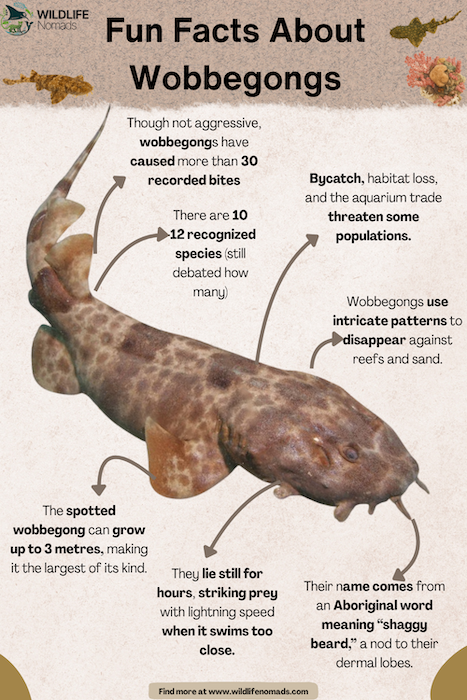
Known as carpet sharks, wobbegongs are bottom-dwelling sharks found in the western Pacific Ocean and eastern Indian Ocean. Other members of the carpet shark family include bamboo sharks and nurse sharks, which, like wobbegongs, display a wide range of evolutionary adaptations, habitats, and behaviors that highlight the diversity of this group. Their name comes from an Aboriginal word meaning “shaggy beard.” This references the distinctive dermal lobes around their mouths.
These sharks are rare, fascinating, and packed with evolutionary adaptations. In addition, they play crucial roles in marine ecosystems. In this article, we’ll explore 10 fascinating wobbegong facts. We’ll cover everything from their remarkable camouflage to their unique hunting strategy.
1. Wobbegongs Are Known as Carpet Sharks
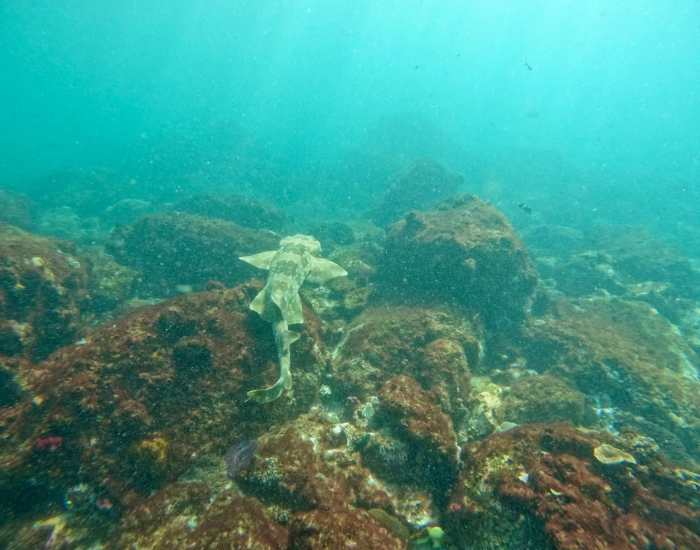
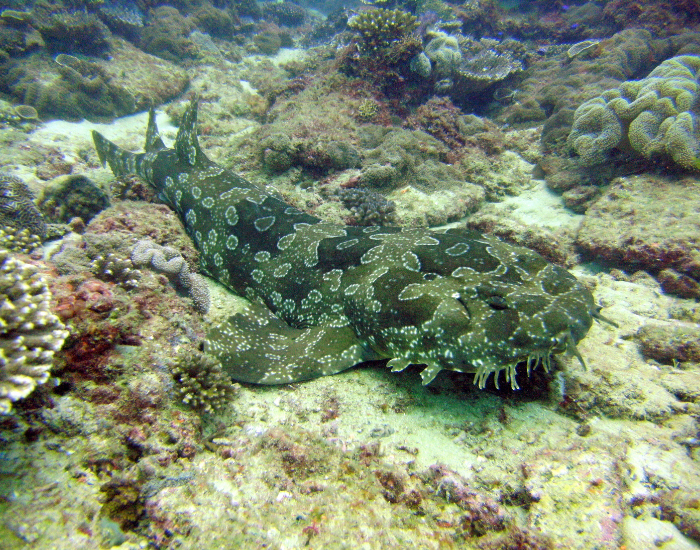
As already mentioned, wobbegongs belong to the family Orectolobidae, which contains around 12 recognized species of wobbegong. They are nicknamed carpet sharks because of their beautifully patterned skin. This skin resembles an intricately woven rug on the ocean floor.
This camouflage isn’t just for show, it’s survival. Their flat bodies and mottled designs help them blend seamlessly into coral reefs and rocky reefs. Consequently, they become nearly invisible to prey. Divers often describe spotting a wobbegong as finding a hidden masterpiece in plain sight.
Most species inhabit shallow temperate and tropical waters. For example, the spotted wobbegong is commonly found along Australia’s coastline. These bottom-dwelling sharks have perfected the art of remaining motionless while waiting for prey.
2. Physical Characteristics: Camouflage Masters
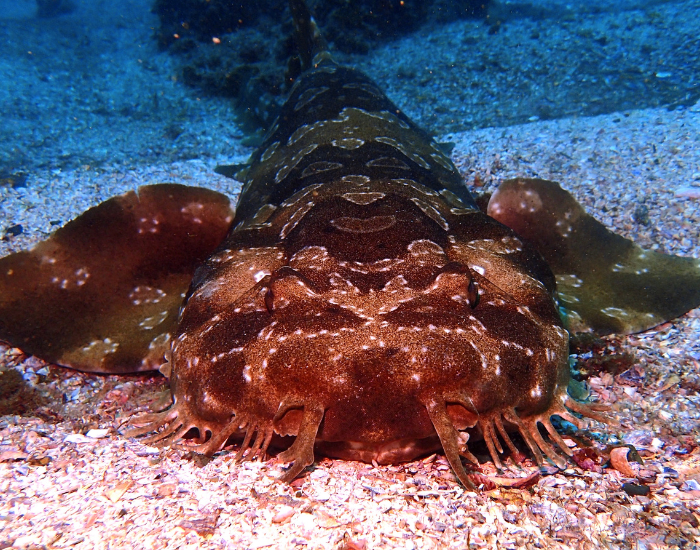
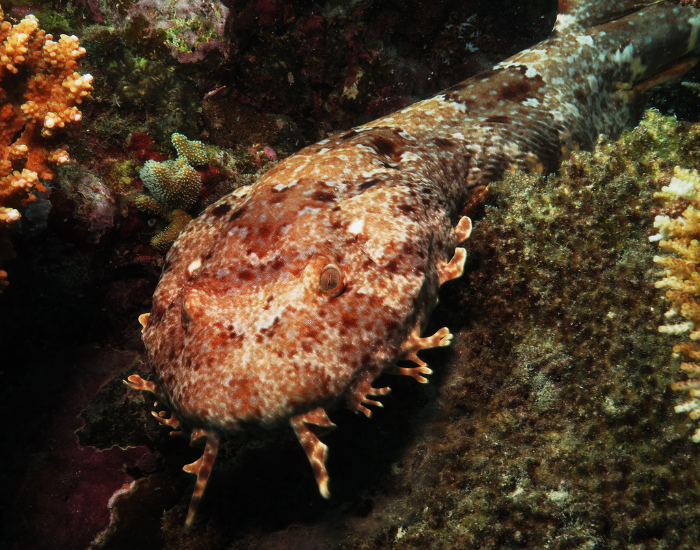
Wobbegongs are instantly recognizable by their flattened bodies and dermal lobes. These lobes are the beard-like frills around their mouths. They break up the shark’s outline, making detection nearly impossible.
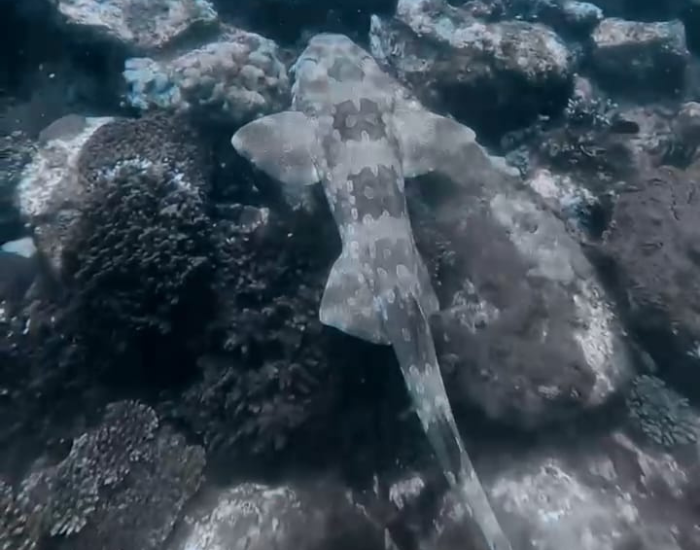
Another distinctive anatomical feature is their broad pectoral and pelvic fins, which help with movement and provide excellent camouflage against the ocean floor.
Wobbegongs are also known for their feeding strategy, where they open their mouth wide with impressive speed to create suction and capture prey during ambush.
The dorsal fin begins over the pelvic base, and the placement of the pelvic fins is a notable trait that contributes to their unique body shape.
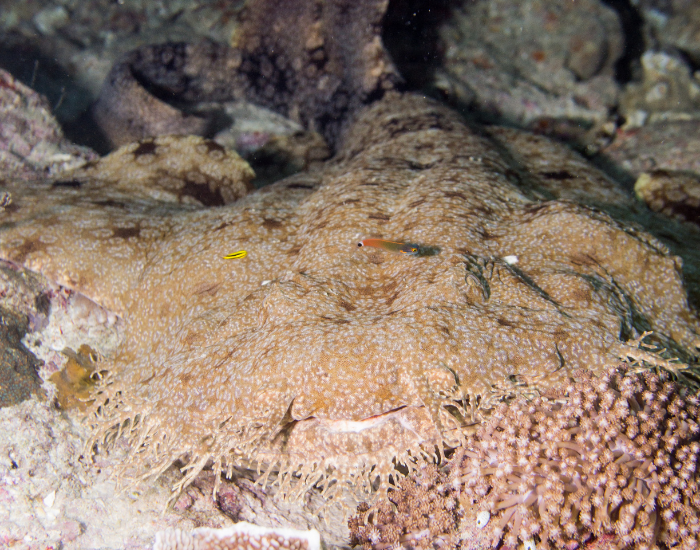
Key Physical Features
The sharp teeth of wobbegongs are designed for gripping rather than slicing. Their mouth is wide enough to swallow surprisingly large prey in one gulp. In addition, their skin flaps act as both camouflage and sensory organs.
Despite having relatively poor eyesight, these sharks compensate effectively. They rely more on touch and vibration to hunt. Their needle-like teeth create a powerful grip that few prey can escape.
When I first saw a spotted wobbegong shark lunge at a passing fish, it was remarkable. What looks like a lazy rug on the sea floor is actually an ambush predator. Therefore, appearances in nature can be quite deceptive.
The dark saddles and intricate patterns on their bodies vary by species. Some have bold bands, while others display lace-like markings. This diversity reflects the different species of wobbegong found across their range.
3. Types of Wobbegong Sharks
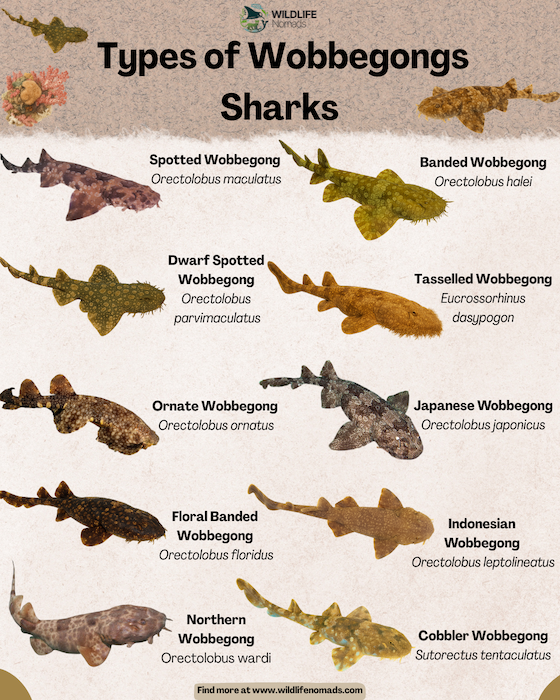
There are multiple species of wobbegongs, each with distinct patterns and habitat preferences. Understanding these different species helps us appreciate their evolutionary diversity.
The spotted wobbegong (Orectolobus maculatus) is one of the largest. It can grow up to 3 meters in maximum length. This species is commonly found in Australian waters, particularly along the eastern coast.
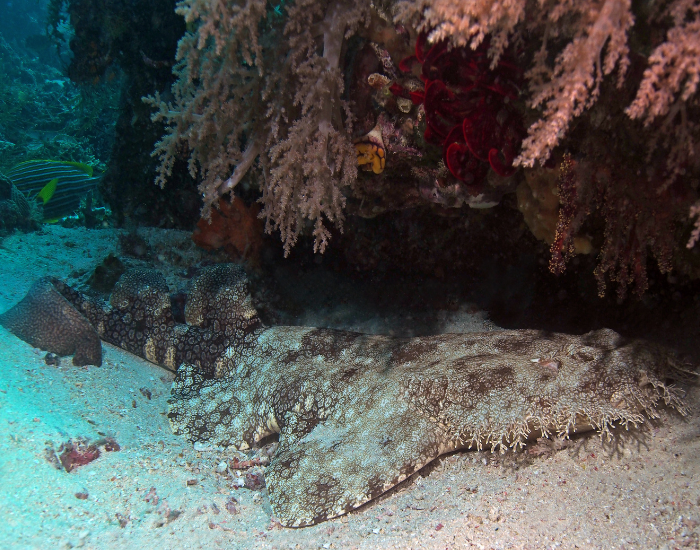
The banded wobbegong shark stands out with its bold dark bands across its body. Meanwhile, the tasselled wobbegong is famous for its ornate fringe of lobes. This species inhabits waters near Papua New Guinea and northern Australia.
The ornate wobbegong is known for its intricate, lace-like markings. In contrast, the Japanese wobbegong is a smaller species. One species, the Japanese wobbegong, is notable for its limited distribution in the South China Sea and waters near Japan.
The dwarf spotted wobbegong represents one of the rarer, smaller species. It typically inhabits shallow reefs and sandy bottoms. Each species demonstrates extraordinary evolutionary creativity within the Orectolobus species group.
4. Habitat and Distribution
Wobbegong sharks prefer shallow temperate and tropical waters throughout their range. They are typically found resting on coral reefs, rocky reefs, and sandy bottoms. Their habitat selection reflects their need for effective camouflage.
Geographic Range
The western Pacific Ocean and eastern Indian Ocean host the majority of wobbegong populations. High concentrations exist in Australia, Indonesia, and the South China Sea. Western Australia also supports healthy populations of several species.
The spotted wobbegong is especially common along Australia’s east coast. Divers frequently encounter them on reefs in these areas. Despite their sedentary lifestyle, they play important roles in reef ecosystems. Therefore, they help keep smaller fish populations in check.
These sharks occasionally venture into water barely deep enough to cover them. However, they typically prefer areas with good cover. Warm waters provide ideal conditions for their metabolism and hunting success.
Marine life in these regions benefits from the presence of these ambush predators. As a result, ecological balance is maintained in coral reef communities.
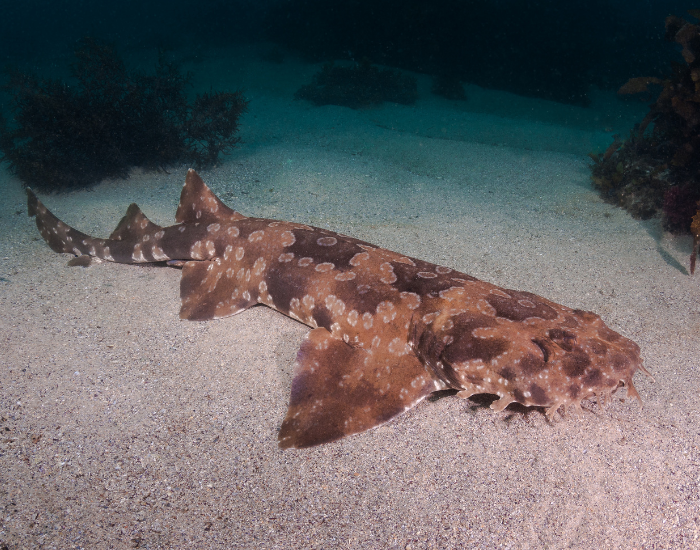
5. Ambush Predators With a Unique Hunting Strategy
Unlike active hunters like reef sharks, wobbegongs conserve energy by lying in wait. Their ambush hunting strategy is remarkably efficient and perfectly suited to their physiology, allowing them to remain motionless and blend into their surroundings until potential prey approaches within striking distance.
How They Hunt
The shark remains motionless on the sea floor, blending into its environment. Unsuspecting prey such as smaller fish or crustaceans swim close. With a lightning-fast snap, the wobbegong engulfs its prey. Their needle-like teeth and powerful jaws ensure nothing escapes.
Their excellent camouflage makes this strategy incredibly effective. In fact, divers sometimes accidentally place their hands or knees too close. This can lead to surprise bites and potentially serious injuries.
The shaggy beard of dermal lobes may also attract prey. Small fish might mistake these lobes for potential food. Consequently, they swim directly toward the predator’s mouth.
These sharks can remain motionless for extended periods while time resting. They actively pump water over their gills, allowing them to stay still. This adaptation is crucial for successful ambush hunting.
While they’re not considered highly dangerous to humans, their grip is powerful. Therefore, maintaining a respectful distance is always wise when diving near these sharks.
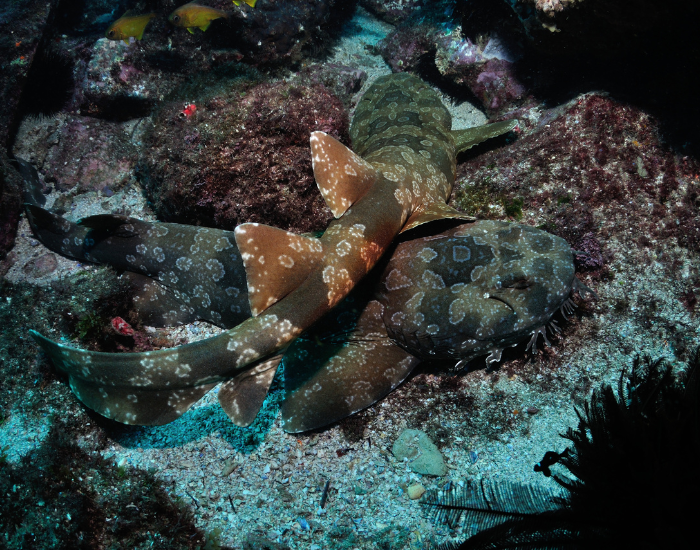
6. Size and Lifespan
When people ask, “How big is a wobbegong shark?” the answer varies by species. Size differences among wobbegong species reflect their diverse evolutionary paths.
Smaller species like the dwarf spotted wobbegong may reach just over 1 meter. However, the spotted wobbegong can grow up to 3 meters in maximum length. This makes it the largest of the group.
On average, most species fall between 1.25 and 2.5 meters in length. Their flat bodies make them appear smaller than other shark species. Nevertheless, their size is impressive when encountered underwater.
Wobbegongs can live for 20 to 30 years, both in the wild and in captivity. Their slow-moving, energy-conserving lifestyle likely contributes to this longevity. In addition, their effective camouflage helps them avoid potential predators throughout their lives.
7. Reproduction and Life Cycle
Wobbegongs are ovoviviparous, meaning they give birth to live young. The eggs inside hatch inside the mother’s body before birth occurs. This reproductive strategy offers advantages in predator-rich environments.
Gestation and Birth
The gestation period lasts approximately 10 to 11 months. Litters can contain up to 20 pups, depending on the species. Once born, the pups are fully independent and must avoid potential predators immediately.
Young wobbegongs face threats from larger sharks and other marine mammals. However, their camouflage skills develop quickly. Therefore, they can hide effectively even at small sizes.
This reproductive strategy helps maintain populations in challenging reef environments. Nevertheless, wobbegongs still face pressure from human activity. Commercial fisheries and habitat destruction pose ongoing threats.
8. Conservation Status
Most wobbegong species are listed as least concern by the IUCN Red List. However, some populations face significant threats that require attention and action. Marine and freshwater research has contributed valuable insights into wobbegong populations, their habitats, and conservation needs.
Current Threats
Bycatch in commercial fisheries represents a major concern. Wobbegongs often get caught in nets intended for other species. In addition, their skin is sometimes used for leather products.
The aquarium trade sometimes targets smaller species of wobbegong. Unfortunately, these sharks often outgrow tanks and consume other fish. This creates problems for aquarium owners and the sharks themselves.
Habitat destruction from coastal development continues to impact populations. Coral reef decline reduces available hunting grounds for these bottom-dwelling sharks. Therefore, conservation efforts must address multiple challenges simultaneously.
Conservation Efforts
Marine protected areas help preserve critical wobbegong habitats. Research initiatives improve our understanding of their ecology and behavior. Awareness campaigns by organizations like the Australian Museum and WWF highlight their importance.
These efforts aim to ensure that future generations can encounter wobbegongs. For example, protected zones in Australian waters have shown positive results. Nevertheless, ongoing monitoring remains essential for long-term success.
9. Interaction With Humans
One of the most common questions is, “Are wobbegong sharks dangerous?” The answer requires careful consideration of their behavior and circumstances.
Unprovoked Attacks
There have been around 30 unprovoked attacks recorded over the years. These usually occur when divers or swimmers accidentally disturb a resting shark. The shark’s sharp teeth allow it to hold on tightly. Consequently, bites become difficult to disengage without causing further injury.
Attacks are rarely fatal, but they can cause serious injuries. The shark’s powerful grip and needle-like teeth create significant wounds. However, these incidents are preventable with proper awareness and respect.
Safety Guidelines
Personally, as a scuba diver and snorkeler, I’ve always maintained a respectful distance when diving near any ocean creature, and specially near wobbegongs. Like many sharks, they are best admired without interference. Avoid placing hands or feet near areas where they might be found resting.
If you spot a wobbegong, observe from a safe distance. Don’t attempt to touch or provoke the shark. Remember that these are wild animals with natural defensive behaviors. Therefore, respect ensures both your safety and the shark’s wellbeing.
10. Unique Adaptations and Characteristics
To complete our exploration, here are some of the most unique wobbegong features. These adaptations make them truly remarkable among shark species.
Their excellent camouflage results from skin flaps and patterned bodies. These features evolved over millions of years. As a result, they can disappear against almost any seafloor background.
The ability to actively pump water over their gills is crucial. This allows them to stay motionless while hunting. Most sharks must swim continuously to breathe, but wobbegongs solved this problem differently.
Their “shaggy beard” appearance comes from distinctive dermal lobes. These structures serve multiple functions, from camouflage to prey attraction. In addition, they may help with sensory detection.
Despite their sedentary lifestyle, they remain effective ambush predators. Their lightning-fast strikes catch prey completely by surprise. Therefore, they demonstrate that patience can be as effective as speed.
Wobbegongs represent one of the few sharks where appearance and behavior align perfectly. They truly are living carpets on the ocean floor.
Latest Research on Wobbegong Sharks
While wobbegongs have long been familiar to divers along Australia’s reefs, scientific research on these sharks is surprisingly limited. In recent years, however, a handful of new studies have shed light on their ecology, and unique sensory biology. For example
Wobbegongs are known for their ability to lie motionless and strike with lightning speed, but how do they detect prey with such precision? A study of their lateral line sensory system showed that specialized canals above the mouth act almost like touch sensors, detecting tiny water movements near their jaws. This adaptation allows them to compensate for poor eyesight and strike prey that comes within centimeters of their head.
FAQs About Wobbegongs
Not entirely, while generally calm, they will bite if provoked or stepped on. Their powerful jaws can cause serious injuries, though attacks are rarely fatal.
The name comes from an Aboriginal word meaning “shaggy beard.” This refers to the distinctive dermal lobes around their mouths.
They can reach up to 3 meters long in maximum length. This makes them the largest wobbegong shark species.
Yes—they have rows of sharp, needle-like teeth perfect for gripping prey. These teeth are designed to hold rather than slice.
Yes, they belong to the carpet shark family known as Orectolobidae. They’re called carpet sharks due to their patterned, rug-like appearances.
They inhabit shallow temperate and tropical waters across the western Pacific Ocean and eastern Indian Ocean. Australia, Indonesia, and the South China Sea host major populations.
Their prey includes smaller fish, crustaceans, and occasionally other bottom-dwelling creatures. They use their ambush hunting strategy to catch unsuspecting prey.
A Shark Like No Other
The wobbegong shark represents one of the ocean’s most unusual predators. With its carpet-like patterns and stealthy ambush hunting, it challenges our image of sharks. Their quiet presence on the sea floor reveals nature’s endless creativity.
For me, encountering one was like stumbling upon a hidden story in the reef. It reminded me of the ocean’s endless capacity for surprise. Whether you’re a diver, a marine biologist, or simply fascinated by marine life, wobbegongs deserve attention.
Next time you dive in Australia, Indonesia, or the South China Sea, keep your eyes open. You might just spot a living carpet waiting patiently for its next meal. These remarkable sharks continue to fascinate researchers and divers alike.
Learning about wobbegongs is the first step toward ensuring their survival for future generations.
Further Reading
Find an Opportunity to Spot a Wobbegong in Australia
This blog is reader-supported. When you buy experiences through links listed on this site, we may earn an affiliate commission.