
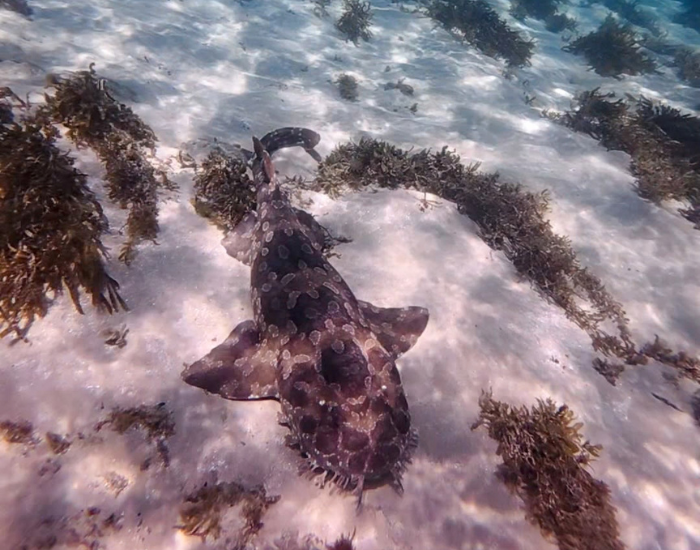
Three teenagers girl were floating face-down in the shallows, and none of them had noticed the shark. A spotted wobbegong, at least 1.5 metres long, lay calmly beneath their fins. Jackie and I hung in the cold water and watched it breathe. We almost skipped that snorkel, and it became the highlight of our week at Illaroo campground.
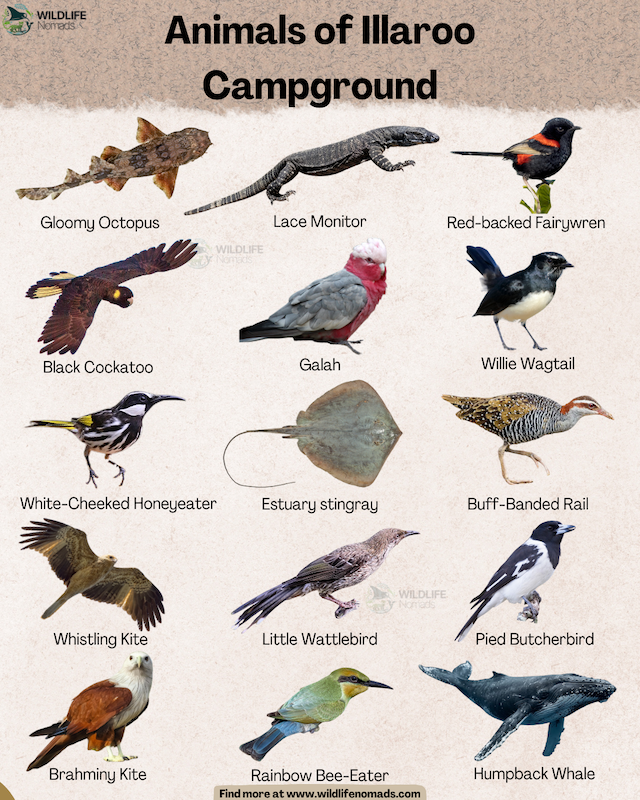
Illaroo was the sixth stop on my lap around Australia looking for wildlife. We spent seven nights in Yuraygir National Park, on the north coast of New South Wales. I logged 28 animals without leaving the park. The regulars were all there: brush turkeys, masked lapwings and noisy miners.
This list skips those familiar faces. It starts with four species that were new to my lap list, then covers the other 21. You’ll also find practical answers on water, fires, reception and access.
Illaroo Campground, Yuraygir National Park: The Essentials
Getting There
From the Pacific Highway at Glenugie, just south of Grafton, turn onto Eight Mile Lane. It runs east to Minnie Water Road, the main road to the coast. Near Minnie Water, turn left onto Sandon Road. The final stretch is gravel road, and our car handled it easily. Wooli is 15 minutes away and Grafton about an hour, so supplies stay easily accessible despite the remote area feel.
Sites, Facilities and Fees
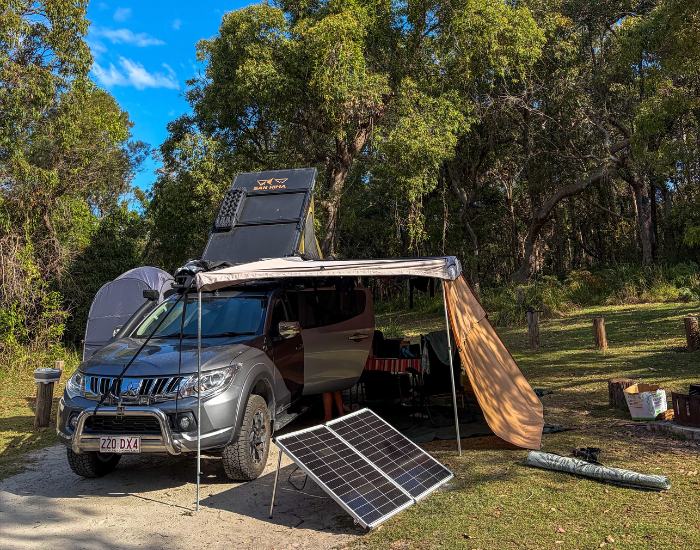
The spacious Illaroo campground offers campsites across two camping areas, north and south. A small depression separates them, and it becomes a creek after heavy rain. NSW National Parks lists 70 marked, unpowered sites for tents, camper trailers, caravans and camping beside your vehicle. Most sit on open grassy areas, just a hop from the beach.
The campground offers simple facilities and more than enough to be comfortable: toilets, drinking water taps, picnic tables, sheltered barbecues and bins. There are no hot showers and no electricity, so bring your own gas barbecue or stove. Disabled access is available, and pets are not permitted in the national park.
Online booking is mandatory as usual, and sites fill fast at peak times. Camping fees don’t include park entry, which costs $8 per vehicle per day without an annual pass (which I recommend). Groups can book the Illaroo group camping area for a more exclusive camping experience. For an affordable coastal holiday, it is hard to beat.
One tip: fire wood is sold on site for cash only. Red Cliff took card, so we got caught out. The shops in Minnie Water also sell it. We were lucky enough to get a pile of wood from the camapground next doo which were leaving.
So, here we go for the animals:
1. Spotted Wobbegong (Orectolobus maculatus)
Moving day found us this shark. Campsites work like hotels, with fixed check-out and check-in times. That leaves a gap in the middle of the day. We used it to visit the town of Minnie Water and found a stunning beach made for snorkelling.
It was a work day, and Jackie hesitated. “Should we? We’re not ready.” I reminded her we live out of this car, so everything we own is right here. She needs little convincing anyway. As a freediver, she always carries her fins, and the water is where she seems most herself.
The water temperature bit hard. Soon, three teenage girls snorkelled past, and the wobbegong lay beneath them in very shallow water. It rested there calmly, perfectly camouflaged. We took a photo with our DJI camera, and then we simply watched. It was my second wobbegong in Australia.
Wobbegongs are carpet sharks, and the fringe of skin lobes around the mouth hides their outline. They ambush their prey from the bottom. Huveneers and colleagues found that NSW wobbegongs eat mostly bony fish, plus octopus and squid. They bite people only when stepped on or harassed. .
2. Lace Monitor (Varanus varius)
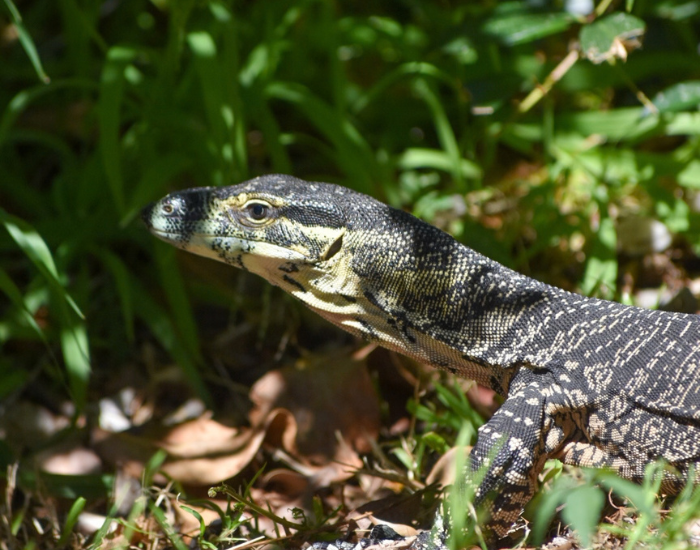
Our first site, number 5, sat next to the camp managers. They were lovely people, although you always feel slightly watched there. The real bonus was the bush patch behind us. A lace monitor walked straight out of it and into our camp.
Hours later, a bigger one arrived from the front, almost looking like a juvenile Komodo Dragon, crossing over from another site. It stopped right beside a woman holding her baby, and she got a real fright. The goanna calmly carried on.
The lace monitor is Australia’s second-largest goanna after the perentie, and it can approach two metres. Guarino found its diet is broad and opportunistic, from insects to carrion and nestling birds. His tracking work showed that males range much further in the spring–summer breeding season. That fits our September visitors.
I worked with monitor lizards in a zoo reptile house, and the lesson carries over. Size deserves respect, not panic. Never feed them, and let them pass.
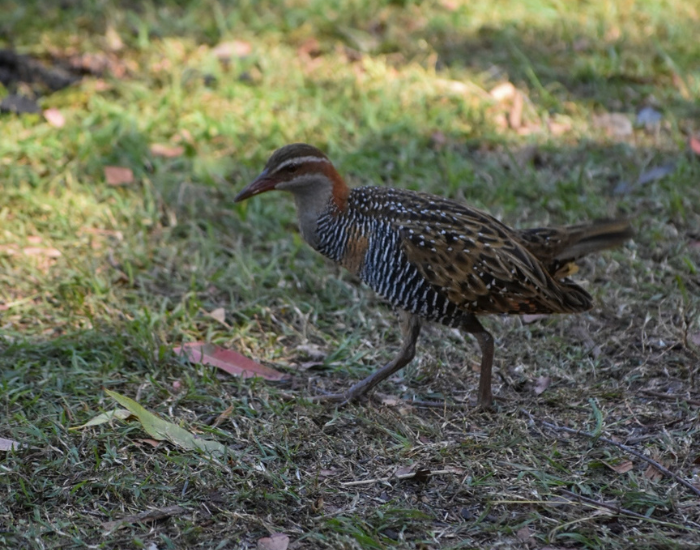
3. Buff-Banded Rail (Hypotaenidia philippensis)
That same bush patch held my first buff-banded rail, in Australia or anywhere. It clearly lived there, stepping out to pick at scraps left behind by campers. I never saw one at our earlier campgrounds.
It also behaved like it owned the place. The rail chased doves and magpie-larks away. However, it never challenged the brush turkeys or anything bigger than itself.
Look for the chestnut nape, white eyebrow and a buff band across a finely barred chest. The species ranges from the Philippines to New Zealand and the Pacific. Rails are famous island colonisers, and many island species have evolved to be flightless. This one still flies, but prefers to run.
4. Pied Butcherbird (Cracticus nigrogularis)
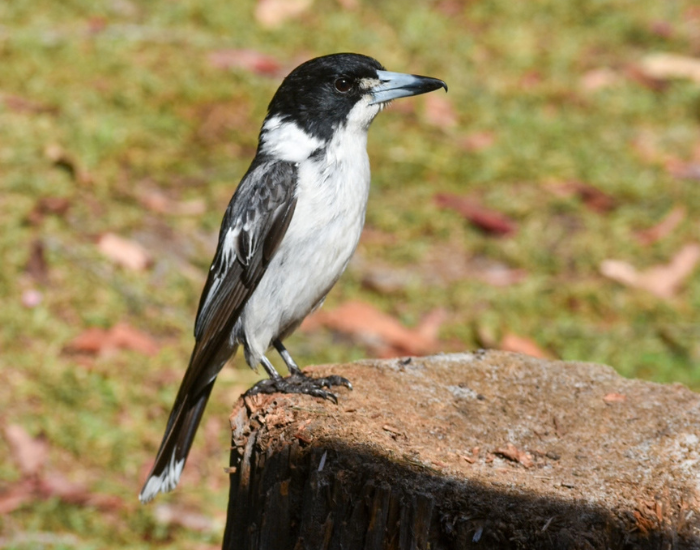
I first met this bird while housesitting at Burleigh Heads. For years I assumed it was a young kookaburra. It is smaller, though, and completely fearless.
For our last two nights we moved to site 44, which was quieter and more spacious. Every evening a butcherbird came out of the bush and stole our scraps, sometimes almost at our feet.
Check for a black hood and throat, a white collar and a hooked grey-and-black bill. The name comes from its habit of wedging prey into branch forks, like meat on a butcher’s hook. Its fluted song ranks among Australia’s finest.
5. Yellow-Faced Whip Snake (Demansia psammophis)
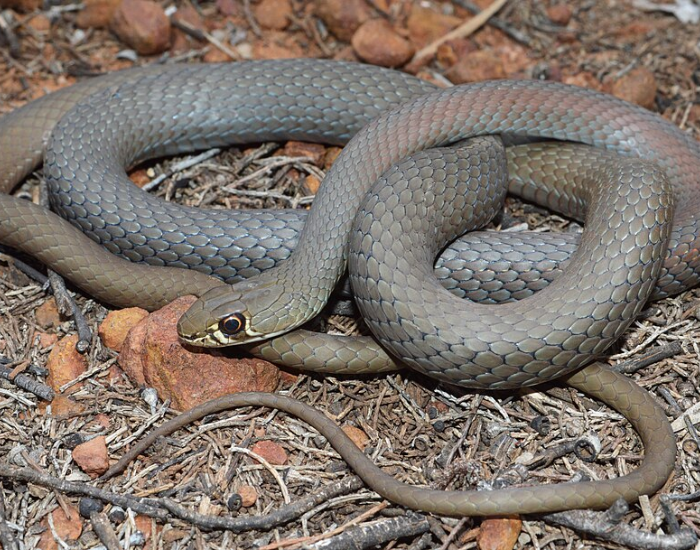
On the hiking trail to Minnie Water, I sat down on a log to rest. A thin tail slid out underneath me, and I was certain it belonged to a lizard. It turned out to be a snake. From the markings, I believe it was a yellow-faced whip snake, though I’m still confirming the ID.
These are slender, fast elapids that hunt skinks by sight during the day. A pale rim around the eye and a dark comma below it give the face its name. They are venomous, but bites in adults are generally considered not dangerous. I have handled red-bellied black snakes in the field. Even so, a snake under your seat still gets your attention.
6. Yellow-Tailed Black Cockatoo (Zanda funerea)
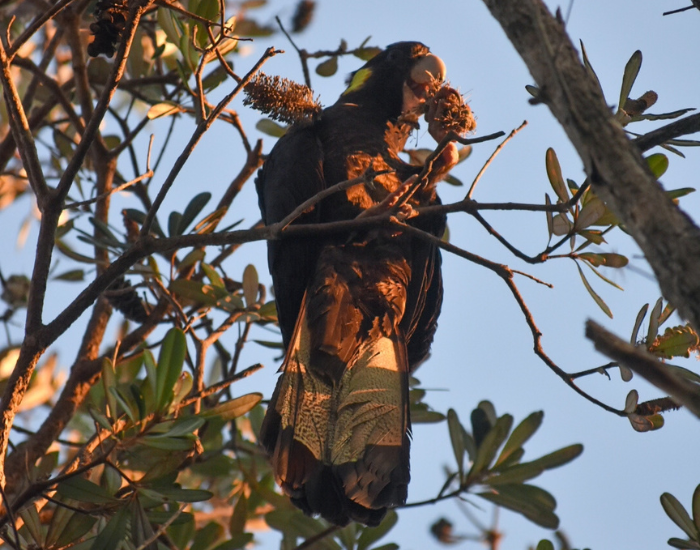
Two days after arriving, we went for a walk and spotted one black cockatoo high in a treetop. Then it flew, we followed, and we watched it feeding in a casuarina. A few minutes later it called, and at least four more arrived to feed in the same tree.
At Red Cliff and Lake Arragan we saw only two. Here, the next afternoon brought another group flying over us, calling. From then on we saw them every afternoon.
These large cockatoos wear yellow cheek patches and yellow tail panels. They feed on seeds from banksia, hakea, casuarina and pine, and chisel grubs out of wood.
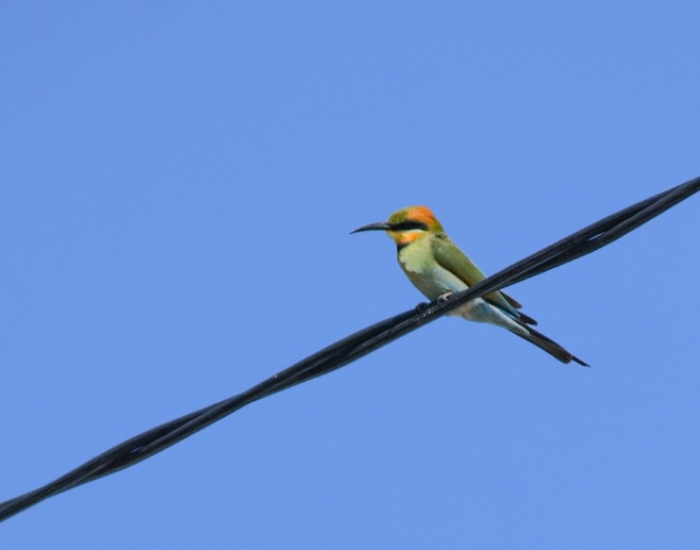
7. Rainbow Bee-Eater (Merops ornatus)
Walking back from the wobbegong, I heard a rolling trill and looked up. Seven or eight rainbow bee-eaters were perched beside a house, where the hiking trail starts.
Many southern bee-eaters migrate north for winter and return in spring to breed in tunnels dug into sandy banks. They catch bees in flight, then beat the stinger off against a perch. I also watched them at Evans Head.
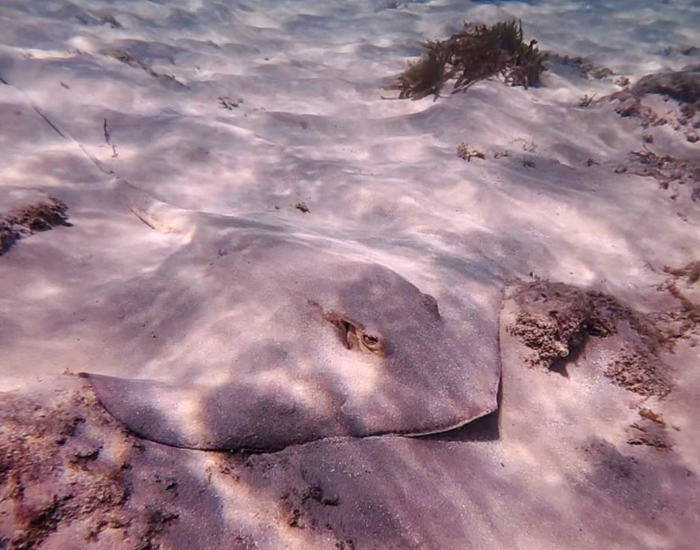
8. Estuary Stingray (Hemitrygon fluviorum)
The wobbegong snorkel also gave us two estuary stingrays. Both were superbly camouflaged against the sand, with a very long barb.
This ray lives in estuaries and sheltered bays along eastern Australia, digging out crabs, worms and shellfish. The serrated barb is purely defensive, and most injuries happen when someone steps on a resting ray. Shuffle your feet in the shallows. More in my stingray guide.
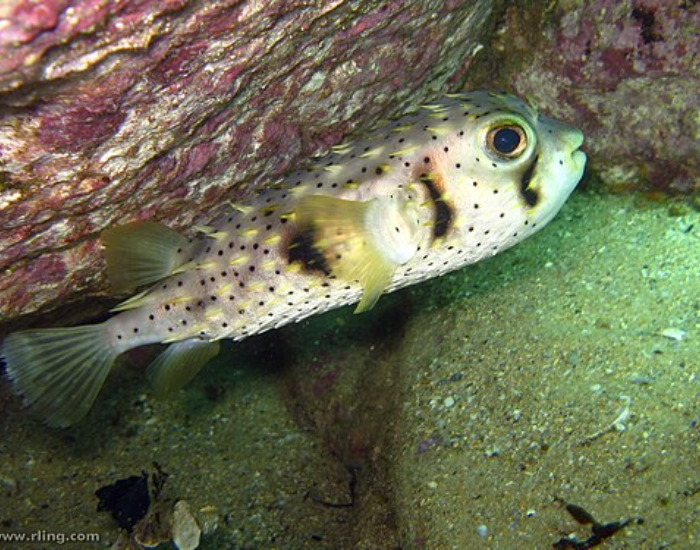
9. Threebar Porcupinefish (Dicotylichthys punctulatus)
I counted three on the same snorkel. They barely reacted to us, unlike most fish that dart away as you swim close. Their big eyes and slow fin strokes give them a curious look.
Porcupinefish can gulp water and inflate into a spiny ball when threatened. Like their pufferfish relatives, they can carry potent toxins, so admire them without touching.
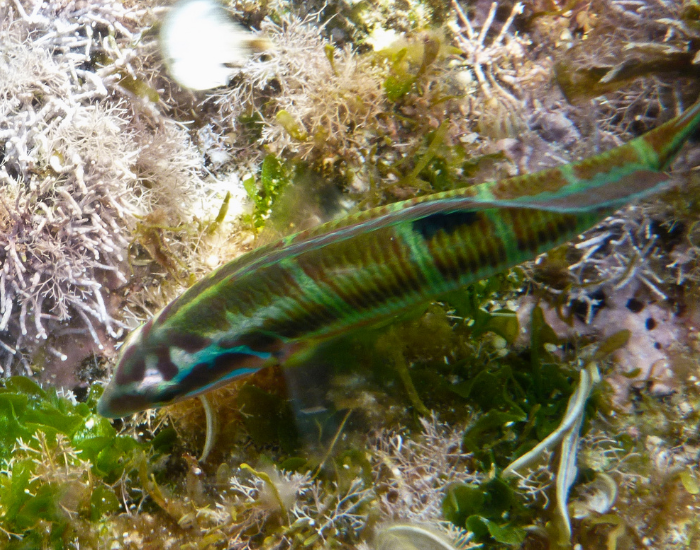
10. Wrasse (family Labridae)
Four wrasses worked the rocks on the same snorkelling day. Wrasse fish are one of the largest and most varied families of reef fish. Many change sex during their lives, starting as females and later becoming males.
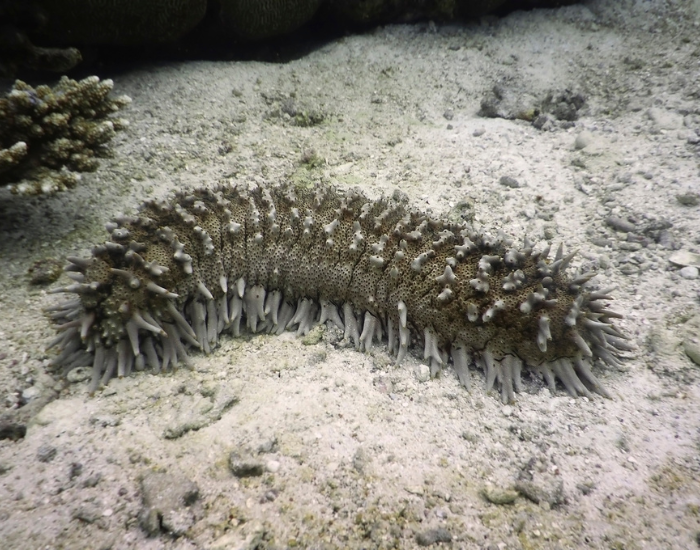
11. Sea Cucumber (class Holothuroidea)
Two sea cucumbers simply lay on the sand, doing what looked like nothing. In fact, they were working. Purcell and colleagues describe sea cucumbers as vital recyclers that process sediment and return nutrients to the ecosystem. That quiet work helps keep sandy seafloors healthy.
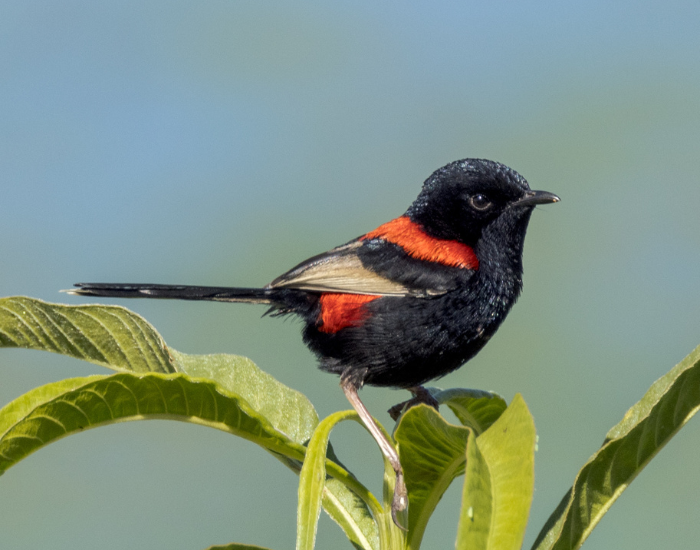
12. Red-Backed Fairywren (Malurus melanocephalus)
One flitted across the hiking trail and vanished into the grass. Breeding males are jet black with a scarlet back.
Webster and colleagues found that some males breed while still in dull, female-like plumage. Bright males, however, sire more young outside their own nests. Listen for the reeling song before you look.
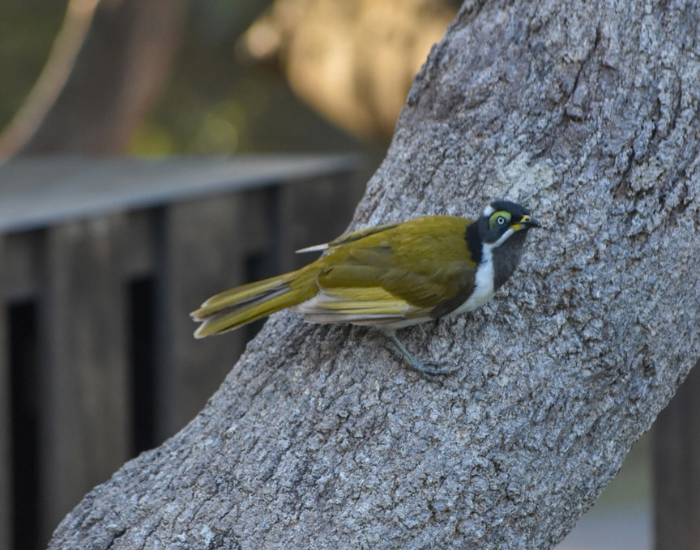
13. Blue-Faced Honeyeater (Entomyzon cyanotis)
These honeyeaters gathered in the trees near the toilet block. Some were juveniles, and I learned something new. Young birds have green facial skin, which turns blue as they mature. They have followed me all along this coast, and the full story is in my blue-faced honeyeater article.
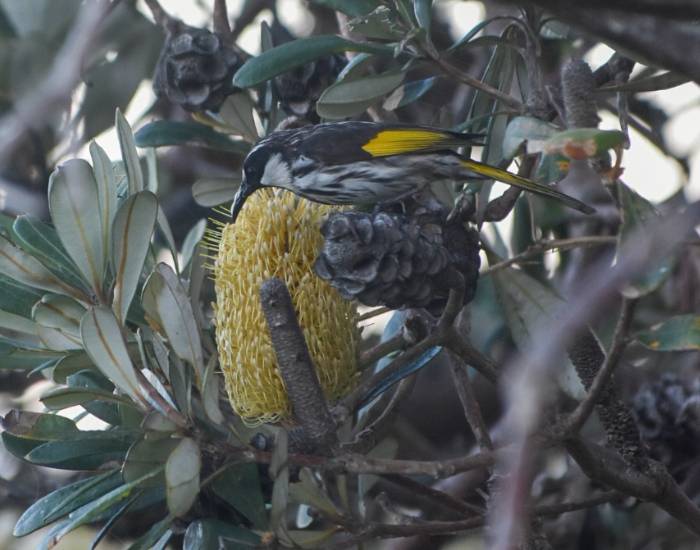
14. White-Cheeked Honeyeater (Phylidonyris niger)
I only saw this species on the hiking trail, never in the campground. The birds flew constantly from tree to tree, feeding. Unlike the similar New Holland honeyeater, which has a white eye, it has a dark eye and a big white cheek patch.
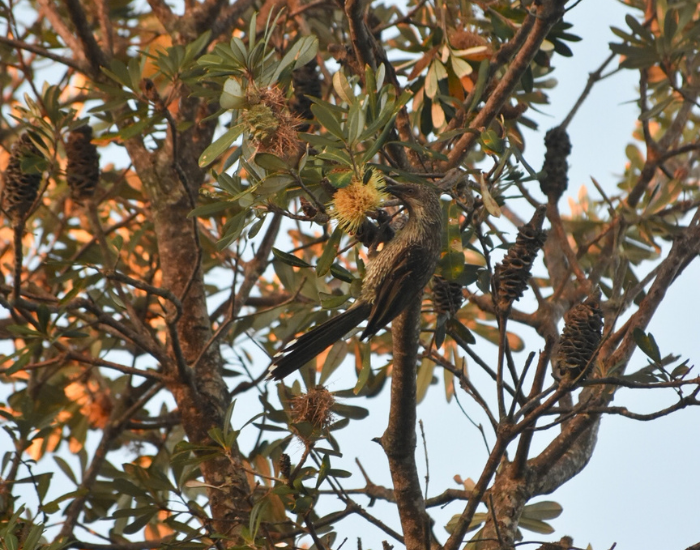
15. Little Wattlebird (Anthochaera chrysoptera)
Little wattlebirds were common in camp and along the trails, hopping between banksias. Despite the name, they show no visible wattles. They defend rich flowers loudly against smaller birds. Both this bird and the white-cheeked honeyeater belong among the honeyeaters of Australia.
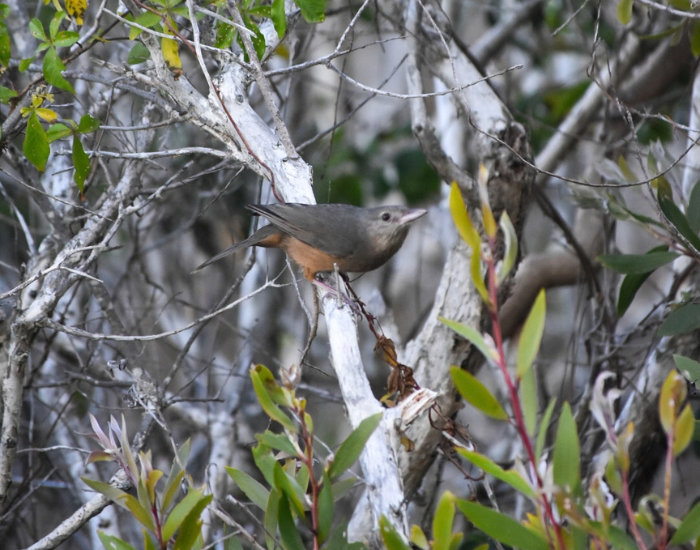
16. Rufous Shrikethrush (Colluricincla rufogaster)
Two sang along the coastal trail. Until recently, scientists grouped this bird with the little shrikethrush. It forages quietly through the mid-storey for insects and spiders. Its rich, whistled song carries far further than its plain colours suggest.
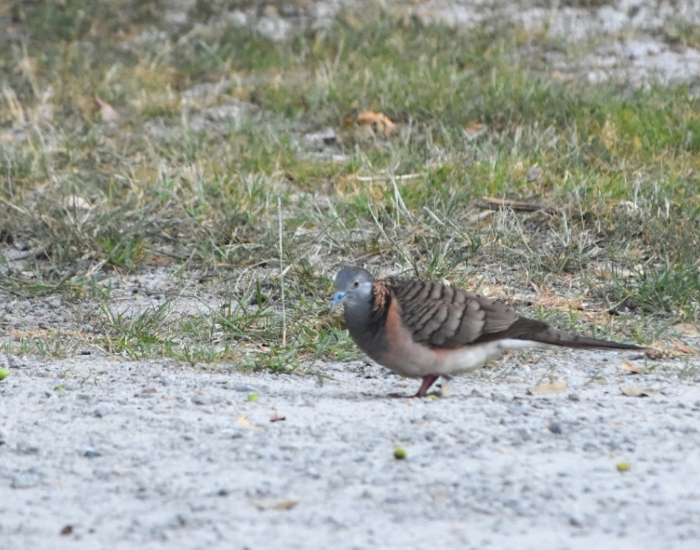
17. Bar-Shouldered Dove (Geopelia humeralis)
Four doves fed on the campground, always on empty sites and always skittish. More than once, the buff-banded rail sent them running. Look for the coppery nape and listen for a soft, repeated coo.
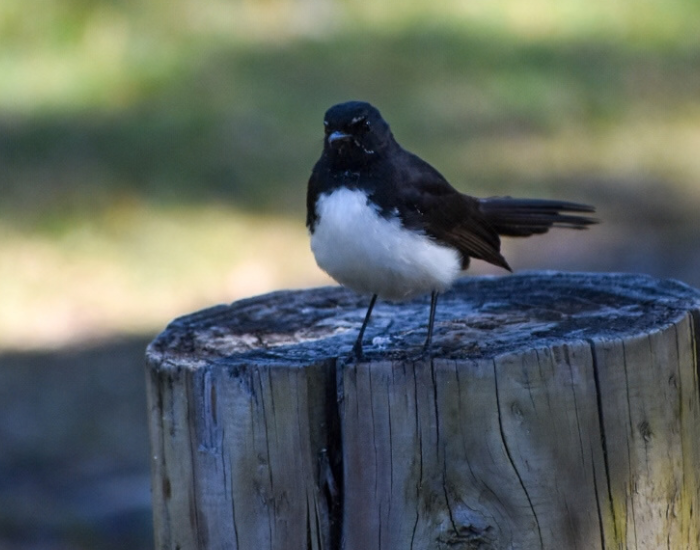
18. Willie Wagtail (Rhipidura leucophrys)
Two stayed close to the campground and bullied much bigger birds. One day I watched a willie wagtail pester a kookaburra until it gave up and left. This fantail defends its territory fearlessly, fanning its tail and diving at intruders many times its size.
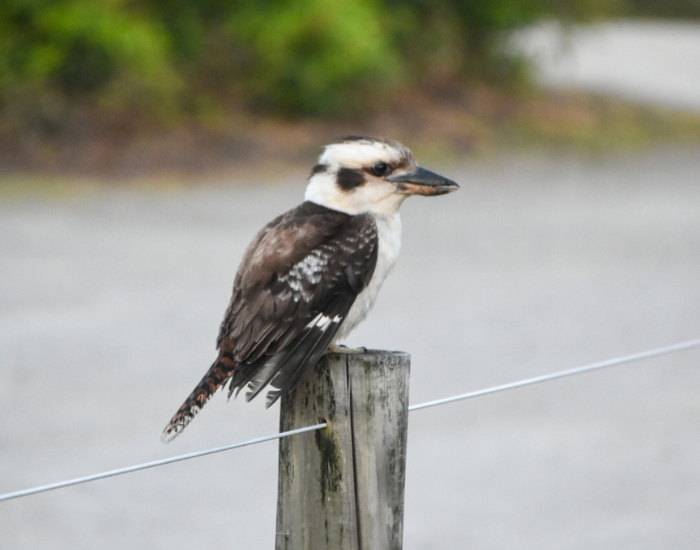
19. Laughing Kookaburra (Dacelo novaeguineae)
Kookaburras were fewer than at our other campgrounds but always around. They had a rough week, though. Besides the wagtail, a magpie also chased one off. Despite their size and laugh, kookaburras are kingfishers that mostly hunt on land.
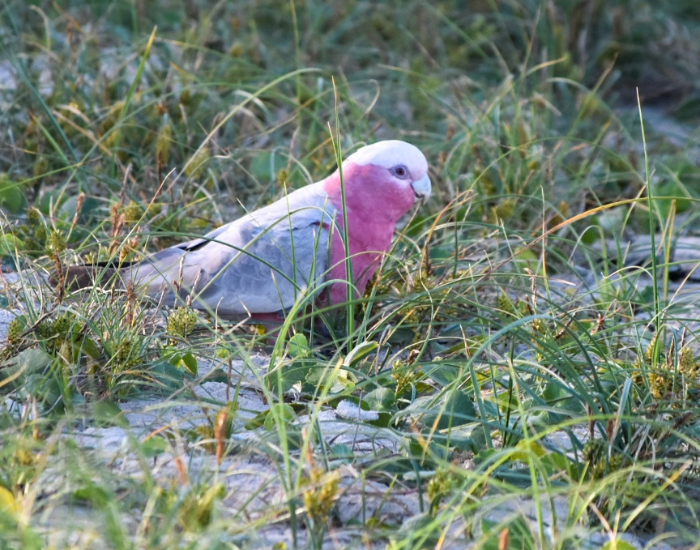
20. Galah (Eolophus roseicapilla)
On our first walk to the beach, the first animals we met were three galahs. Their shiny pink plumage glowed as they drank, then they lifted off together. I counted seven over the week. Seed-eaters like galahs need to drink every day.
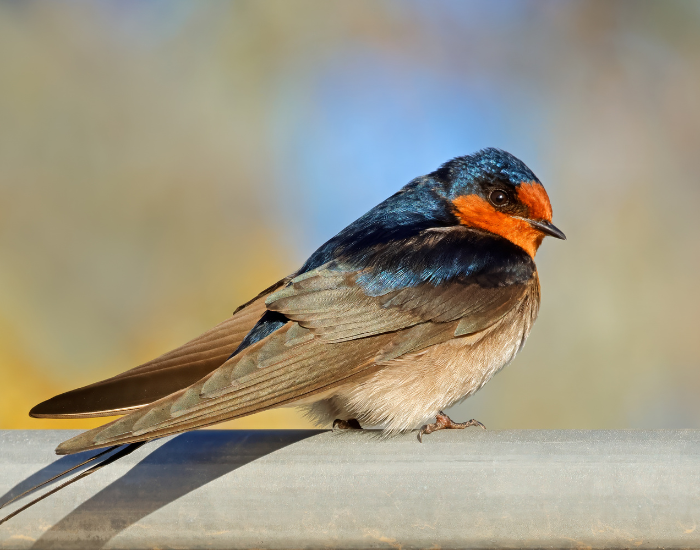
21. Welcome Swallow (Hirundo neoxena)
Welcome swallows were fewer than at our two previous sites, but they were common near the town of Minnie Water. They build mud-cup nests under eaves and bridges, so towns suit them well.
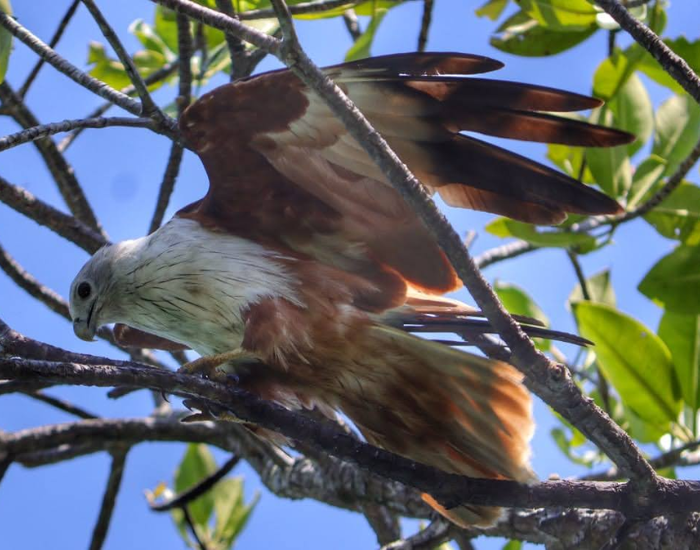
22. Brahminy Kite (Haliastur indus)
One day I walked onto the beach just as a Brahminy kite crossed its whole length. The chestnut body and white head glowed in the sun. This coast sits near the southern edge of its Australian range, so it felt like a gift.
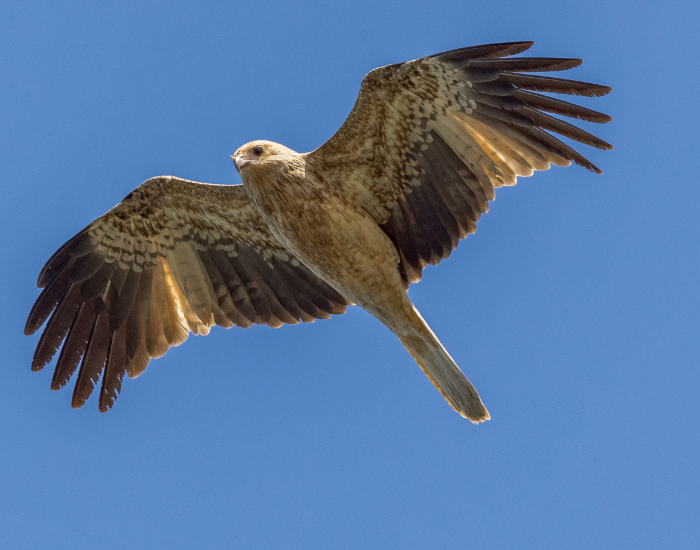
23. Whistling Kite (Haliastur sphenurus)
On the wobbegong day, I watched a whistling kite from the cliff top, looking down on it for once. Bonta and colleagues documented whistling kites in northern Australia carrying burning sticks to spread fire and flush prey. Aboriginal knowledge described that behaviour long before science did.
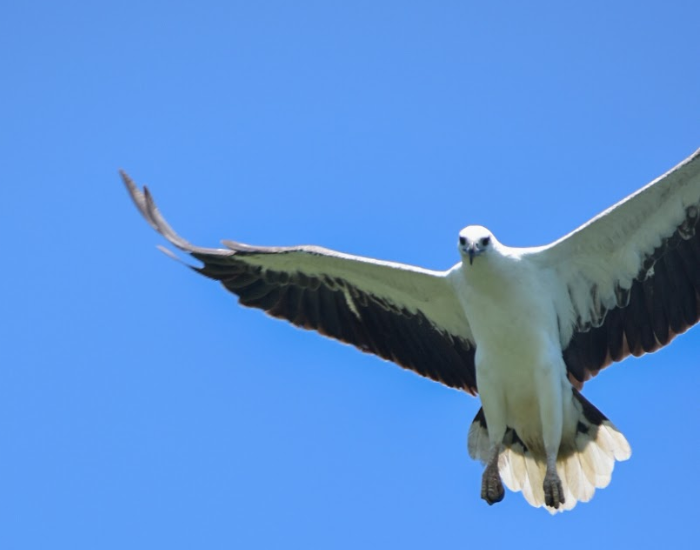
24. White-Bellied Sea-Eagle (Icthyophaga leucogaster)
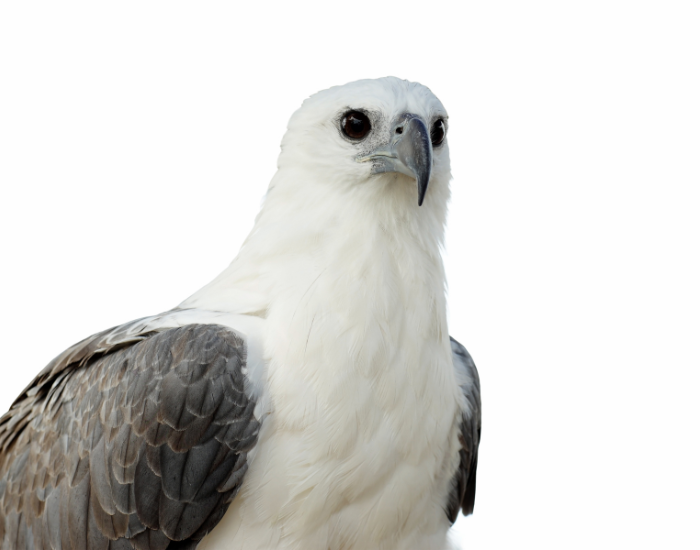
We saw one on the way into Minnie Water, as majestic as ever. Taxonomists recently moved this species from Haliaeetus to Icthyophaga. It is Australia’s second-largest raptor after the wedge-tailed eagle. See more in my guide to types of eagles.
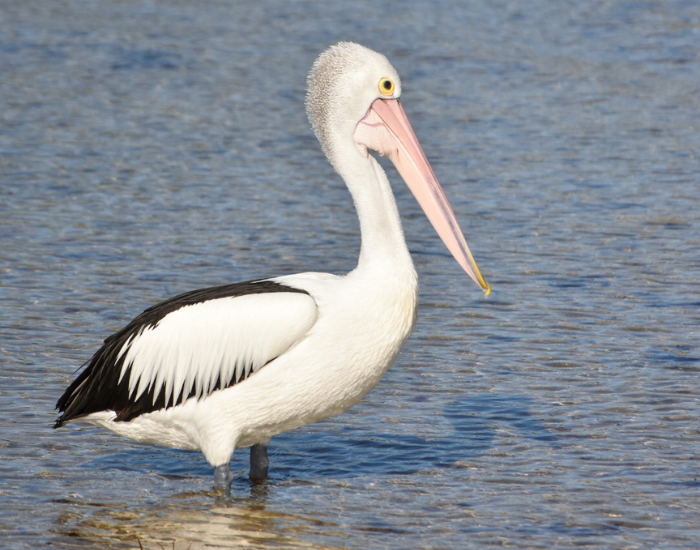
25. Australian Pelican (Pelecanus conspicillatus)
Pelicans cruised the coast most days. This species carries the longest bill of any living bird. Groups often fish cooperatively, herding fish into shallow water before scooping them up.
Walks, Water and Fishing Near Illaroo
The Angophora Grove walk leaves right from the campground, through bush dotted with old angophoras. You can link it to the Rocky Point walking track, which gives coastal views and good whale watching in season.
The beach also offers many options for swimming, snorkelling and fishing (but if you can head to Minnie Waters for a day out of the campground you will find the beautiful spot where we found the Wobbegong. Pack your fishing rod; the waters here are known for jewfish and groper. Fishing boats launch from Minnie Water, and the stunning Wooli River is a short drive away for canoeing.
Most people pack boogie boards, but Illaroo-Sandon Beach is unpatrolled and has strong rip currents. The closest patrolled beach is Minnie Water Beach, a favourite spot for families.
Frequently Asked Questions
Yes. Drinking water taps are available at the campground. There are no hot showers, so plan for cold rinses or bring a solar shower.
Yes, we had phone reception during our stay. We still carry Starlink as a backup, because coverage varies between carriers and campsites.
Yes, unless a fire ban is in place. Fire wood is sold at the campground for cash only, or you can bring your own. Shops in Minnie Water also sell it.
The unpowered sites suit tents, camper trailers, caravans and camping beside your vehicle. Groups can book the Illaroo group camping area.
No. Pets are not permitted anywhere in Yuraygir National Park. That rule helps ground birds like the buff-banded rail stay visible around camp.
Why Illaroo Campground Belongs on Your Lap
Illaroo campground packs bush, heath, cliffs and reef into a single week’s wandering. Rails and goannas share the bush patches, cockatoos feed in the casuarinas, and wobbegongs rest in the shallows. Our best sighting came from a detour we nearly skipped. That has become the lesson of this whole lap: say yes to the water.
Planning the north coast? Pair this campground with Woody Head and Lake Arragan and Red Cliff, or browse the best NSW national parks.
Did you spot something at Illaroo I missed? Tell me in the comments, and follow the next stop on the Australia lap.
References:
Bonta, M., Gosford, R., Eussen, D., Ferguson, N., Loveless, E., & Witwer, M. (2017). Intentional fire-spreading by “firehawk” raptors in Northern Australia. Journal of Ethnobiology, 37(4), 700–718. https://doi.org/10.2993/0278-0771-37.4.700
Brighton, B., Sherker, S., Brander, R., Thompson, M., & Bradstreet, A. (2013). Rip current related drowning deaths and rescues in Australia 2004–2011. Natural Hazards and Earth System Sciences, 13(4), 1069–1075. https://doi.org/10.5194/nhess-13-1069-2013
Guarino, F. (2001). Diet of a large carnivorous lizard, Varanus varius. Wildlife Research, 28(6), 627–630. https://doi.org/10.1071/WR00041
Guarino, F. (2002). Spatial ecology of a large carnivorous lizard, Varanus varius (Squamata: Varanidae). Journal of Zoology, 258(4), 449–457. https://doi.org/10.1017/S0952836902001607
Huveneers, C., Otway, N. M., Gibbs, S. E., & Harcourt, R. G. (2007). Quantitative diet assessment of wobbegong sharks (genus Orectolobus) in New South Wales, Australia. ICES Journal of Marine Science, 64(6), 1272–1281. https://doi.org/10.1093/icesjms/fsm111
Purcell, S. W., Conand, C., Uthicke, S., & Byrne, M. (2016). Ecological roles of exploited sea cucumbers. Oceanography and Marine Biology: An Annual Review, 54, 367–386. https://doi.org/10.1201/9781315368597-8