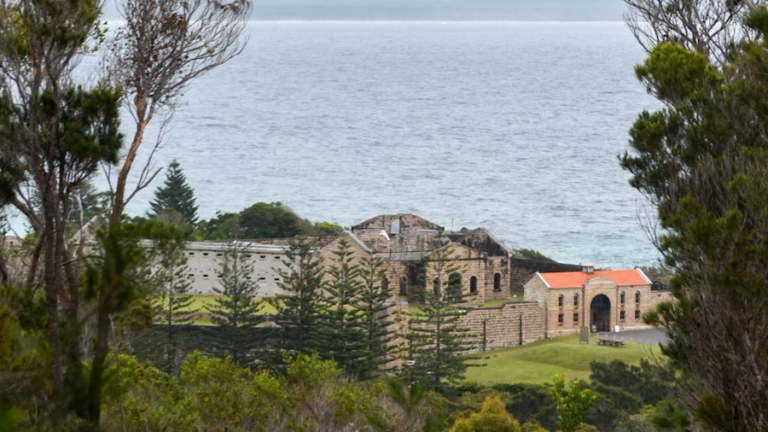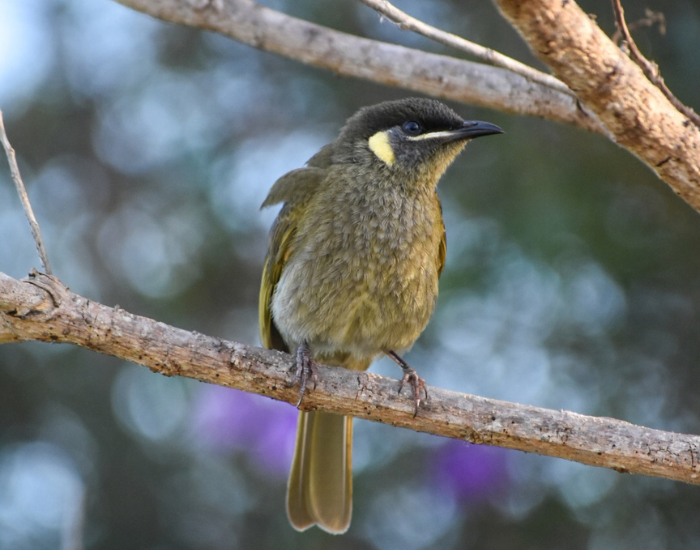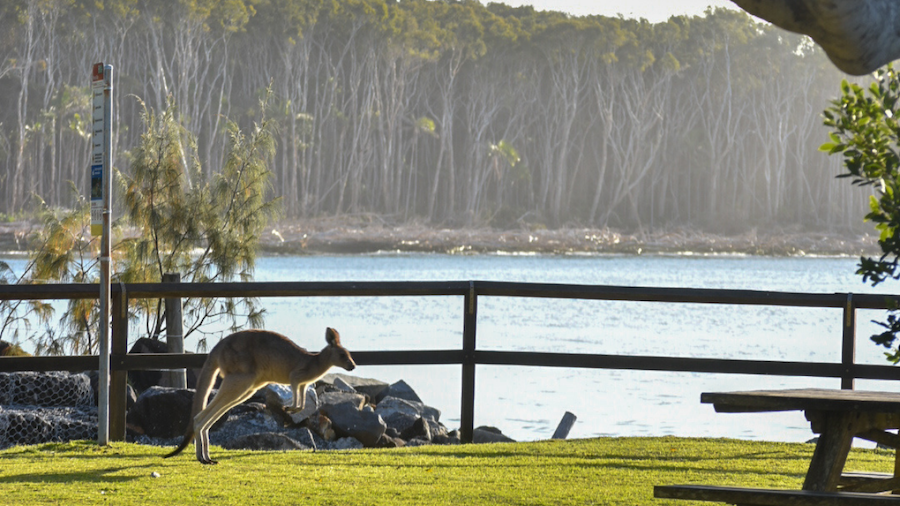
We’ve just parked our car on the campground when a kangaroo came to greet us (probably looking for some food). We were setting up our camp when a honey eater perched on one of our plastic poles. Next morning, I unzipped the roof tent at first light and a male brushturkey was already standing on our table. Four days later, Woody Head campground taught me that the wildlife here is not shy. It is confident, close, and busy from dawn until well after dark. This is one of the best places to see wildlife in Australia if this is what you are looking for.
We drove down from the Gold coast, roughly an two hours and a half south. From there you turn off the Pacific Highway at Iluka.
My partner and I camped on site B10 in late August 2026. We arrived on a Tuesday and left the Friday just before a public holiday in the Gold Coast.
In four days I logged 17 species without walking more than a kilometre from the tent. This post is my field list from that trip. For each animal: the biology, the behaviour I watched, and the best time of day to look.
I have also answered the practical booking questions, because the rules here shape what you see. Bring a torch for the night list. The best sighting of the trip happened after nine o’clock.
Why Woody Head Campground Delivers So Much Wildlife
Getting There and Setting Up
Woody Head sits at the southern tip of Bundjalung National Park, on the NSW north coast. From the Pacific Highway you take the Iluka turnoff, then run about 13 km along Iluka Road. The address is 92 Woody Head Road, and the access is fully sealed the whole way.
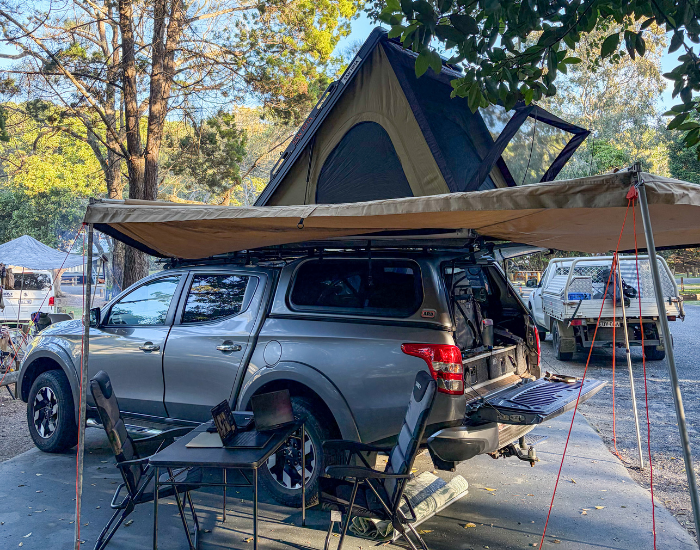
That matters for what you can bring. A caravan or camper trailer gets in as easily as a small 2WD. The camp fills with a real mix of setups, and the sites keep a rustic charm that suits the place.
Just over 90 unpowered camp sites sit under the trees. Drinking water comes from town water taps. The amenities run to flush toilets, hot showers, picnic tables and a public phone.
Every site has a fire pit, and the kiosk sells firewood and basics. A boat ramp handles fishing and paddling. An exclusive group campsite next door takes tent-only bookings.
Camping fees are modest by north coast standards, and a separate $8 daily vehicle pass applies. We got our annual National Park Pass Online, and we booked our site online at NSW National Parks official website. Iluka sits just south at the mouth of the Clarence River, which is where you go for fuel and supplies.
The Habitats That Do the Work
The campground sits on a hinge between three habitats. Littoral rainforest, coastal heath, and a spectacular rock platform running into the sea. Animals from all three cross the same clearing.
Then add the protected sandy beach, the rock pools, and the shallow reefs offshore. That gives you several feeding zones inside a ten-minute walk.
Few popular north coast campgrounds stack this much habitat into one location. The animals notice long before the campers do.
The Rule That Makes It Visible
Pets are not allowed anywhere in this national park. That single rule does more for your sighting list than any camera. Ground-nesting native birds and small marsupials behave differently without dogs around.
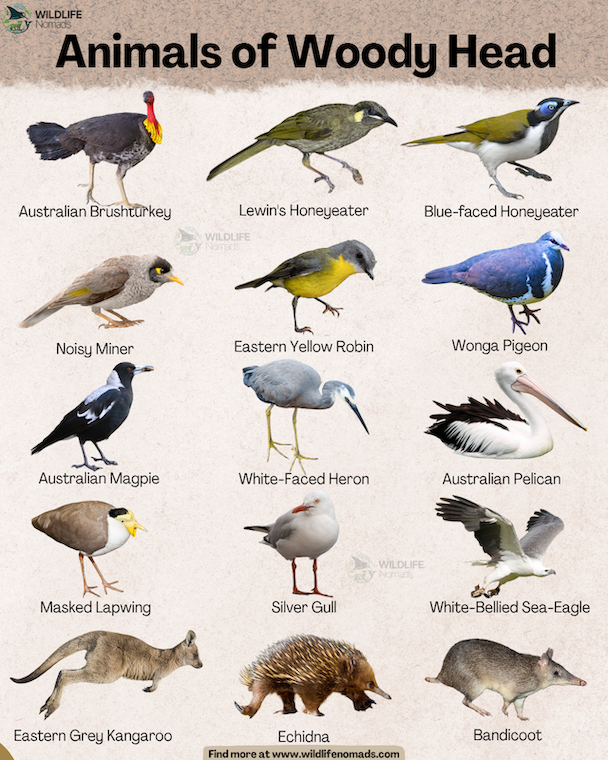
1. Australian Brushturkey (Alectura lathami)
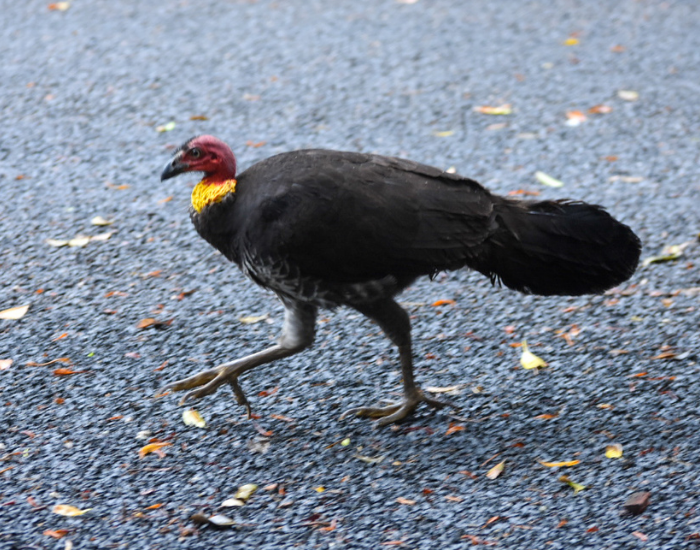
They are everywhere. On our first full day I counted six around the site, roughly two males and four females. These brush turkeys treated the campground as a corridor.
Males build enormous mounds of leaf litter and manage the heat inside by adding or raking away material. Göth and Booth showed that mound temperature shapes the sex ratio of the chicks that hatch. Cooler mounds produce more males, warmer mounds more females.
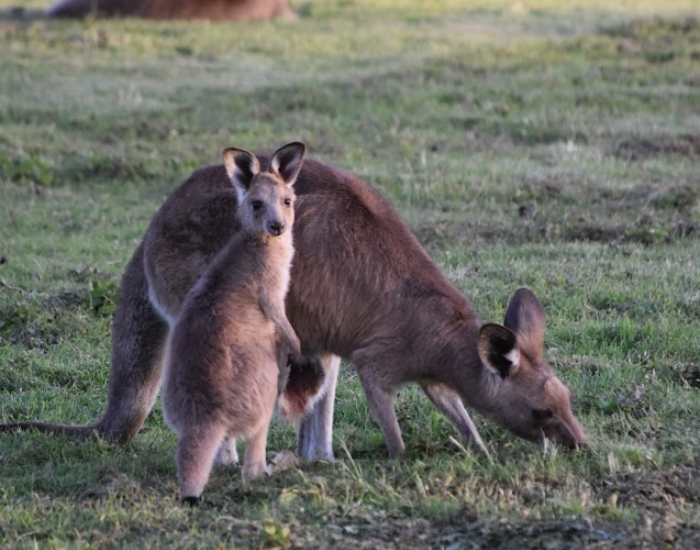
2. Eastern Grey Kangaroo (Macropus giganteus)
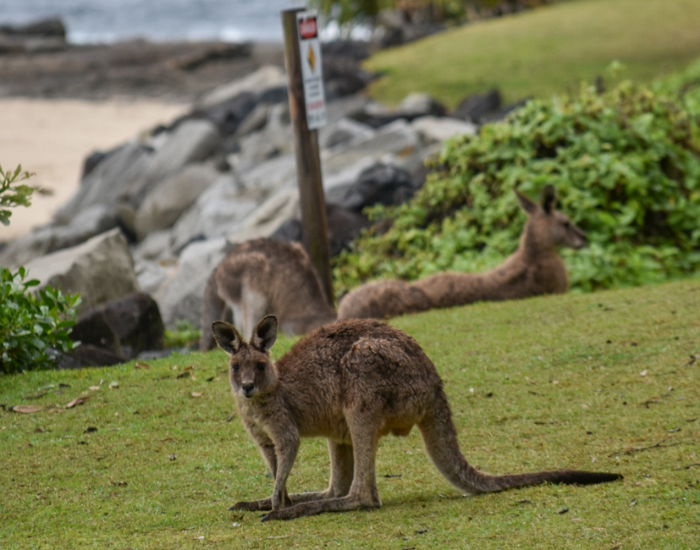
The mob here is large and remarkably relaxed. Twenty or more grazed each morning, mothers with joeys among them. They held their ground far closer than mobs I have worked with inland.
I found them most often on the mown ground beside the amenities block and the other facilities. Taps run, doors bang, and the kangaroos keep chewing.
Studies have found that eastern greys judge how humans behave, not merely how close they come. Approach directly and they leave. Move on a tangent and they keep feeding.
Note: I only saw kangaroos, but many people report spotting wallabies.
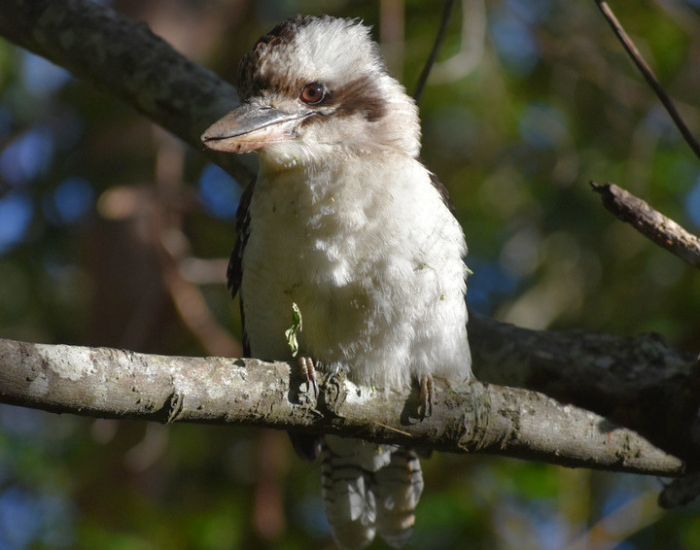
3. Laughing Kookaburra (Dacelo novaeguineae)
Six or more birds called from the trees every afternoon around five. That timing is not random. Kookaburras use dawn and dusk chorus to advertise territory boundaries to neighbouring family groups.
They live in cooperative units, with older siblings helping raise the next brood. Despite the size and the laugh, the kookaburra is a terrestrial kingfisher that rarely fishes.
Watch one hunt and the family resemblance appears immediately. It sits still, tilts its head, then drops onto a skink in the leaf litter. The river-hunting kingfishers of Australia drop onto fish the same way.
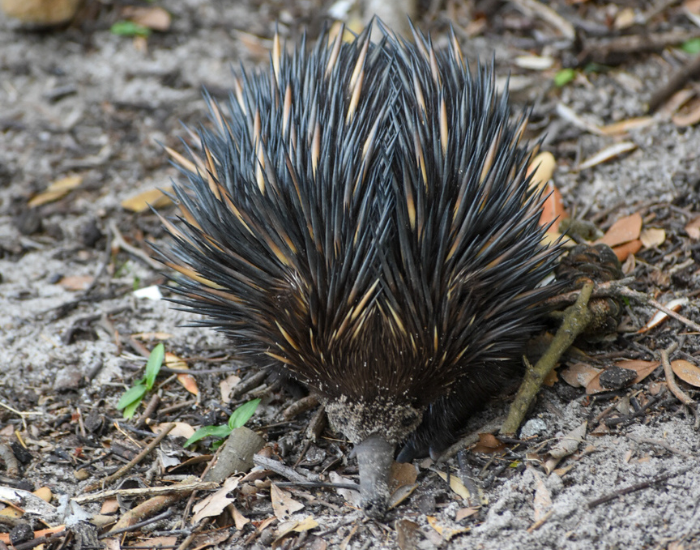
4. Short-Beaked Echidna (Tachyglossus aculeatus)
Our best daylight sighting came at 2:30 pm beside the entrance road. Children and adults alike gathered in a loose ring around it, phones out. The echidna simply kept feeding, and one boy got within a metre without it balling up.
Echidnas are ecosystem engineers before they are curiosities. Dundas and colleagues measured how much soil a single echidna shifts while foraging, and the figure is substantial. Those snout pits trap seed, water, and leaf litter.
Late winter is breeding season. That explains why an echidna which normally avoids midday heat was out in the open. Give it space and it will keep feeding.
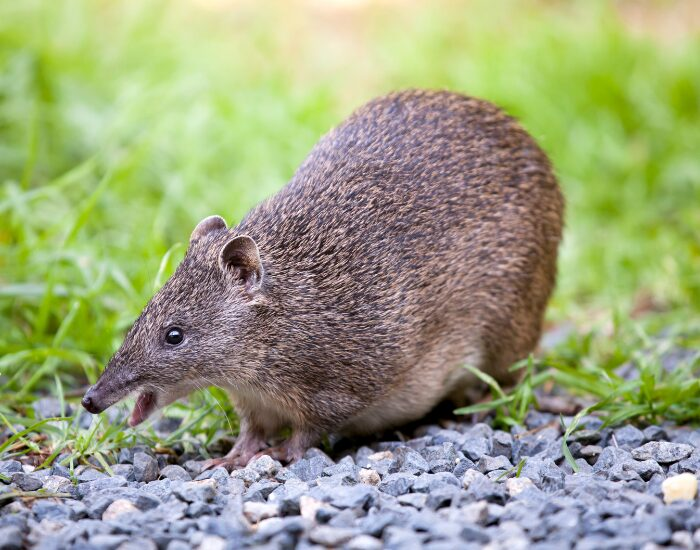
5. Northern Long-Nosed Bandicoot (Perameles nasuta)
Two appeared after nine at night, skittish, working the edge of the bush behind the amenities block. They came close to the camp kitchen, then vanished the moment a torch beam settled.
Bandicoots dig conical foraging pits while hunting invertebrates. Valentine and colleagues showed those pits improve soil properties enough to help seedlings establish. One animal can turn over several tonnes of soil a year.
Nationally this species is secure, though the Sydney population at North Head is listed as endangered. That contrast is worth holding onto, because many threatened animals in Australia are common somewhere and vanishing somewhere else.
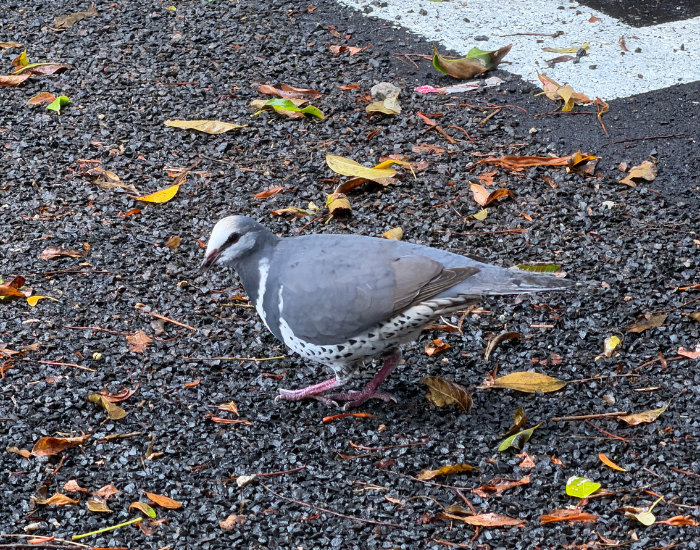
6. Wonga Pigeon (Leucosarcia melanoleuca)
Mine walked out of the rainforest edge at eight in the morning and fed on soaked ground. Same time, same place, three days running. That was my first wonga pigeon, ever.
It is a heavy, ground-dwelling bird with a scaled chest and a slow, deliberate walk. The call is a monotonous, carrying “coo” that campers often mistake for something mechanical.
If you love exploring the rainforest edge after rain, this is your bird. Among the pigeons of Australia, the wonga rewards patience rather than searching.
7. Eastern Yellow Robin (Eopsaltria australis)
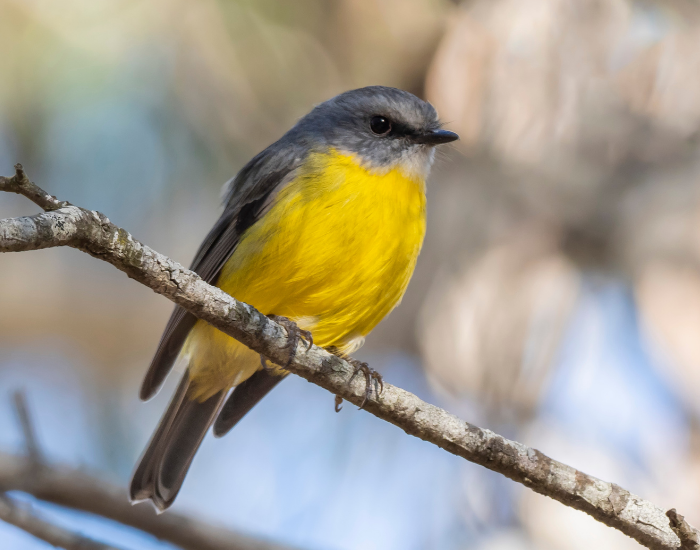
A small yellow bird held the forest edge and would not come closer, which fits this species exactly. Eastern yellow robins cling sideways to trunks and drop onto prey below.
Potvin and her co-authors found these robins alter their vocal behaviour where ecotourists are frequent. Birds in visited sites shifted call structure compared with quieter sites.
That is a useful lens for any campground. The animals at your feet are not simply tolerant. Some are adjusting how they communicate around us.
I also have a huide about the robins of Australia that you may find useful.
8. Blue-Faced and Lewin’s Honeyeaters (Entomyzon cyanotis, Meliphaga lewinii)
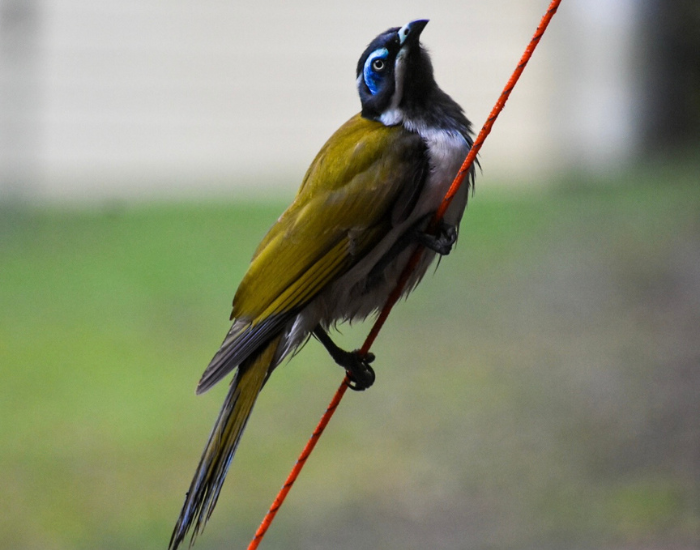
Three blue-faced honeyeaters worked our car every afternoon and perched on an orange traffic cone beside it. A Lewin’s honeyeater went further, hopping to our boot to drink milk residue we had spilled.
Blue-faced honeyeaters are large, loud, and unmistakable with that electric blue skin patch. Lewin’s is smaller and darker, identified by a pale crescent behind the eye and a machine-gun rattle of a call.
Please do not feed them. Sugar and dairy skew the diet of honeyeaters away from the nectar and insects that keep them healthy.
9. Noisy Miner (Manorina melanocephala)
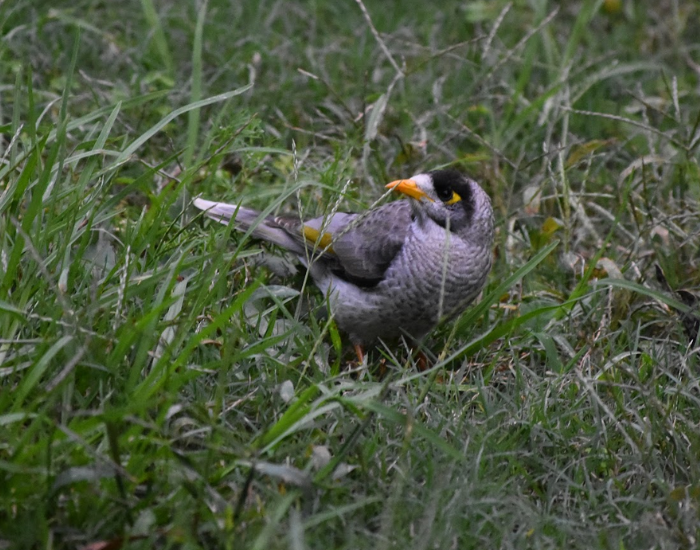
Four birds, occasional visitors, mostly on the ground between eight and nine in the morning. Fewer than I expected, and that low number is good news.
Noisy miners are native honeyeaters, not the introduced common myna, and people confuse the two constantly. Davitt and colleagues documented what happens where miners dominate: small woodland birds disappear, because miners drive them out collectively.
Woody Head keeps its structural complexity, with dense mid-storey and rainforest edge. Miners prefer open, cleared ground, so intact vegetation caps their numbers and keeps room for the robins and honeyeaters.
10. Australian Magpie (Gymnorhina tibicen)
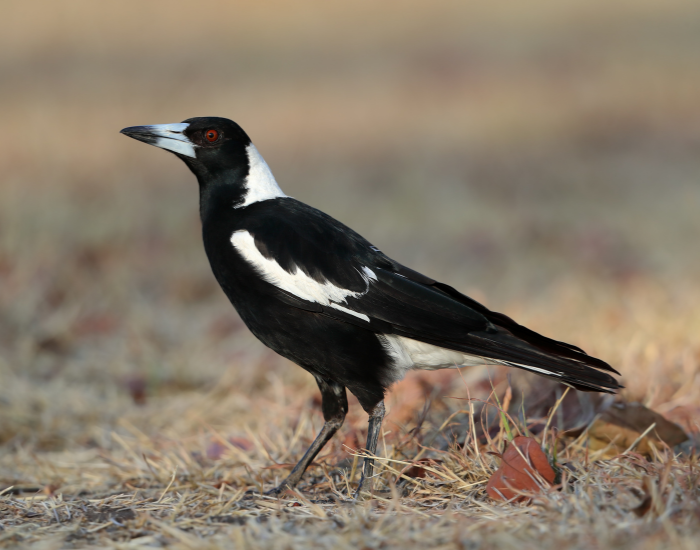
This is not a surprise for anyone. I found exactly one magpie, in a tree, at eleven in the morning on our last day. In most Australian towns you cannot avoid magpies, so a single bird surprised me.
Competition is the likely explanation. This clearing already holds kookaburras, brushturkeys and a miner colony, all working similar ground.
Magpies also favour open grassland with scattered trees. Woody Head offers a narrow band of it before the rainforest closes in.
11. Masked Lapwing (Vanellus miles)
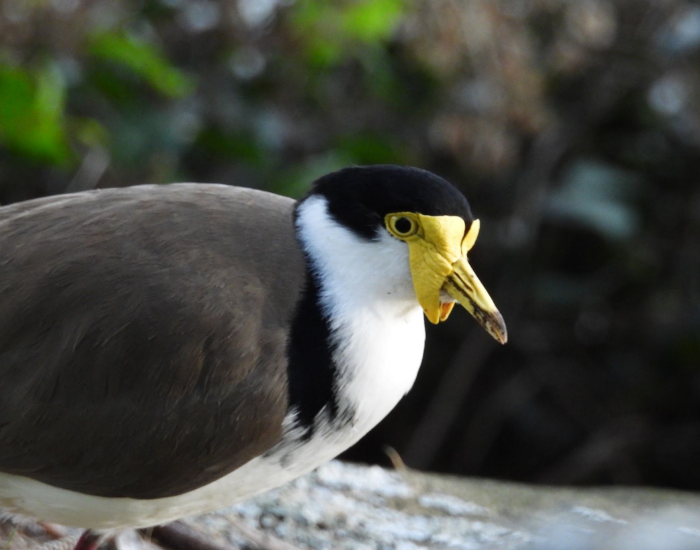
Two of these masked plovers patrolled the road between the camp sites at four in the afternoon, feeding, and never swooped once. That deserves a second look, because late August sits inside their breeding season.
Lapwings swoop to defend eggs and chicks on the ground, not to defend territory in general. No nest nearby means no swooping, however close you walk.
Those yellow facial wattles are not decoration either. They cover a small spur on the wing that the bird uses in disputes with rivals.
12. White-Faced Heron (Egretta novaehollandiae)
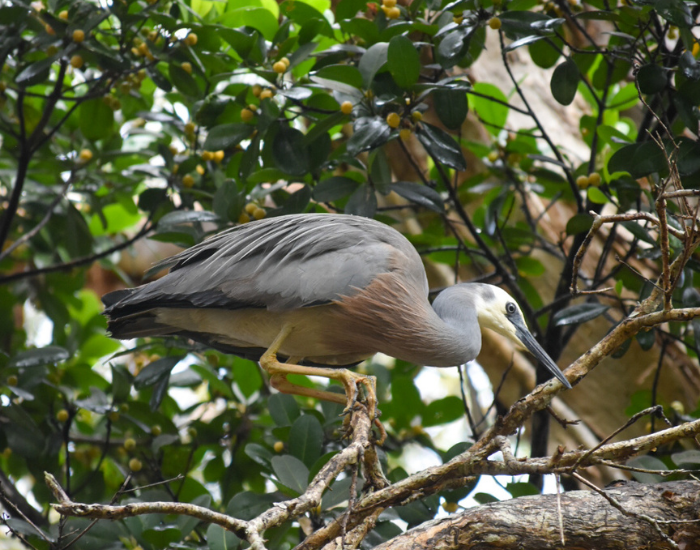
One bird spent a morning in a tree above our site, carrying sticks and building a nest. That was the only nest-building I recorded all trip.
White-faced herons are Australia’s most widespread type of heron and remarkably flexible. They hunt tidal flats, dams, roadside ditches and wet lawns with the same slow stalk. The nest is an untidy stick platform, often reused each season, so look up rather than down.
13. Australian Pelican (Pelecanus conspicillatus)
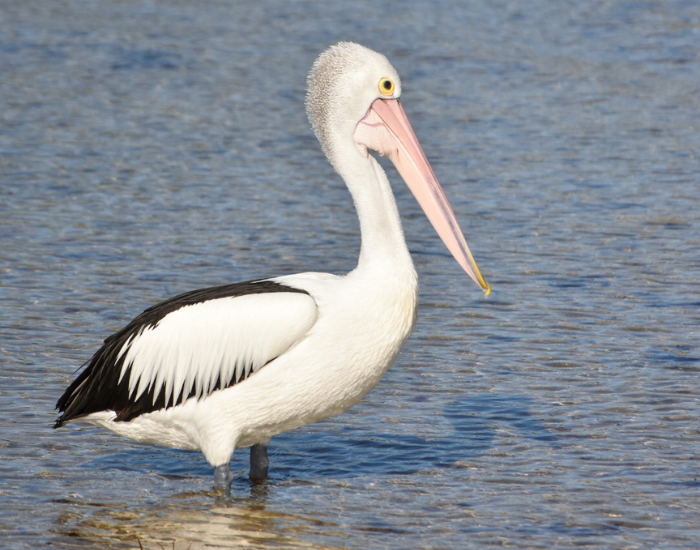
Two rested on shallow water near the boat ramp at four in the afternoon. They sat low and settled, riding the surface rather than fishing. This species carries the longest bill of any living bird.
The ramp is the reliable spot. Campers who have brought their boat launch there, and someone is usually working a fishing rod off the rocks. The pelicans have learned that rhythm.
Australian pelicans feed cooperatively, herding fish into the shallows in a coordinated line. That contrasts sharply with the brown pelican of the Americas, which plunge-dives from height onto individual fish.
Same family, two entirely different hunting solutions. The Australian bird trades the spectacular dive for teamwork in shallow, unpredictable water.
14. Silver Gull (Chroicocephalus novaehollandiae)
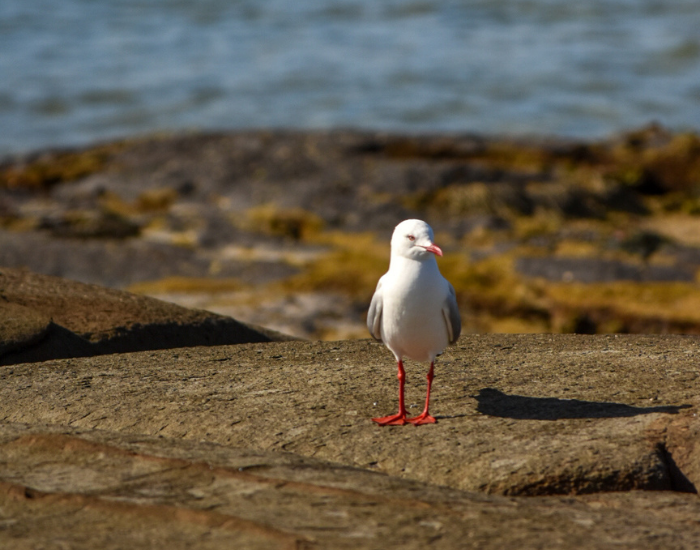
About ten worked the beach late each afternoon, and to their credit they never once raided our table. I watched several circling the fishing boat ramp, waiting on scraps that mostly never came.
The better sighting came on the coastal track. Gulls dropped into the rock pools between waves and picked over the micro-ecosystems there.
Each pool is its own small world of snails, crabs and trapped fish. The gulls read them far better than I did. That is the whole argument for packing food away. A well-behaved seagull is simply one that has never been rewarded.
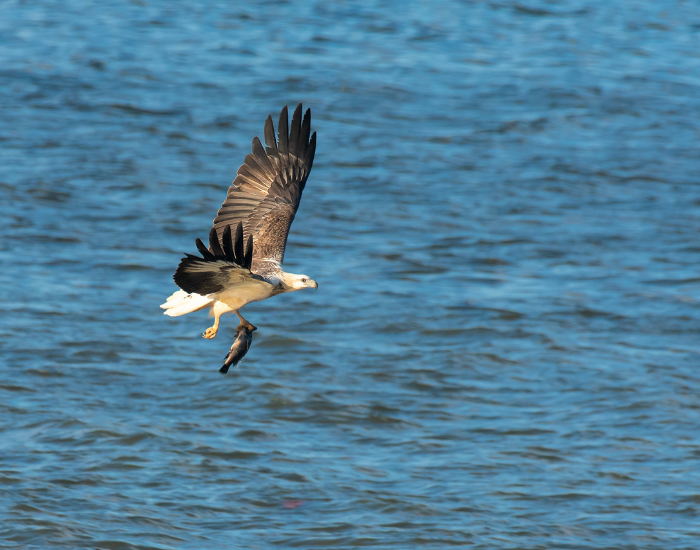
15. White-Bellied Sea-Eagle (Haliaeetus leucogaster)
At least three circled high over the coastal walk on our third afternoon, dropping occasionally toward the water. Adults are unmistakable: white head and underparts, grey wings, wedge-shaped tail.
These eagles hunted over the shallow reefs beyond the rock platform, where fish sit close to the surface. Sea snakes and seabirds also feature, snatched from the surface rather than chased underwater.
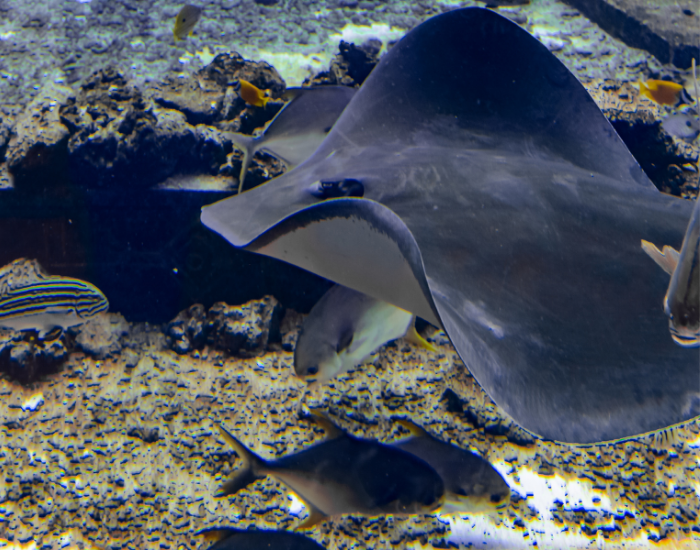
16. Smooth Stingray (Bathytoshia brevicaudata)
Jackie snorkelled off the protected sandy beach and surfaced grinning. Big rays in cold, clear water, cruising the sand with a few fish for company.
That beach is the one everyone uses for swimming, which tells you something. Rays and swimmers share it without incident, day after day.
Pini-Fitzsimmons and colleagues found that where people feed them, their diet shifts measurably away from natural prey. Watching wild stingrays forage on their own terms is the better experience anyway. Shuffle your feet in the shallows and they will move off long before you reach them.
Where to Look Around the Camp
The Boat Ramp and the Rock Platform
Go at high tide in the late afternoon. Pelicans settle on the water beside the ramp, gulls patrol it, and the sea-eagles work the air above the platform. Bring a jacket, because the wind comes straight off the water.
The Coastal Track and the Rock Pools
This walk gave me the eagles, the gulls in the rock pools, and the best views of the shallow reefs. Allow an hour and stop often. The pools themselves are worth twenty minutes on their own.
The Rainforest Edge and the Amenities Block
Dawn belongs to the rainforest edge: wonga pigeon, yellow robin, brushturkey. After dark, the mown strip behind the amenities block is where the bandicoots come out. Walk slowly and keep the torch beam low.
Frequently Asked Questions
Yes, at campgrounds that permit camping beside your vehicle, and Woody Head campground is one of them. We slept in a roof tent on our car, with an awning off the side. The site had ample room. Sleeping in a vehicle at a roadside or rest area is different. Local council rules govern that, not the national park.
No. There are no pets allowed at Woody Head, or anywhere else in Bundjalung National Park. That includes dogs left in vehicles. The restriction protects ground-nesting birds and small native mammals such as bandicoots. It is a direct reason the wildlife here stays visible and calm.
There are just over 90 unpowered sites, flush toilets, hot showers and drinking water from the town water supply. You also get barbecues, picnic tables, a kiosk, a public phone and a boat ramp. That covers all the amenities most families need for a week.
Reception is intermittent, and I found no meaningful difference between Telstra coverage and Optus coverage on our site. Tall trees on the shaded sites also block satellite internet, which is worth knowing if you work on the road. Ask at the kiosk about which loops are more open before you settle in.
The Real Lesson From Four Days
Sixteen species in four days is not luck. It is what happens when a campground sits on the seam between rainforest, heath and ocean. Add a no-pets rule that has run long enough for animals to stop running.
The rhythm was consistent. Brushturkeys and kangaroos at dawn, honeyeaters mid-afternoon, kookaburras at five, bandicoots after nine.
Woody Head campground earns its place among the great places to see wildlife in Australia. It also costs less than a motel.
Take the coastal walk, sit still for twenty minutes, and count what comes to you.
Tell me in the comments what you found there, especially anything I missed on the night list. To go deeper, start with the birds of Australia or the marsupials that dig up the campground each night. The wider guide to the animals of Australia covers the rest.
Can You Name That Australian Robin? 🐦
A 15-photo identification challenge — the wrong answers are deliberately tricky look-alikes from a similar group. Go back and change any answer before you score.
Which robin is this?
References:
Austin, C. M., & Ramp, D. (2019). Flight responses of eastern gray kangaroos to benign or harmful human behavior. Ecology and Evolution, 9(24), 13824–13834. https://doi.org/10.1002/ece3.5818
Dundas, S. J., Osborne, L., Hopkins, A. J. M., Ruthrof, K. X., & Fleming, P. A. (2022). Bioturbation by echidna (Tachyglossus aculeatus) in a forest habitat, south-western Australia. Australian Journal of Zoology, 69(5), 197–204. https://doi.org/10.1071/ZO22019
Pini-Fitzsimmons, J., Raoult, V., Gaston, T., Knott, N. A., & Brown, C. (2023). Diving into the diet of provisioned smooth stingrays using stable isotope analysis. Journal of Fish Biology, 102(5), 1206–1218. https://doi.org/10.1111/jfb.15370
Potvin, D. A., Anderson, M. K., & Levengood, A. L. (2021). Effects of ecotourism on eastern yellow robin (Eopsaltria australis) vocal behaviour. Australian Journal of Zoology, 68(1), 1–8. https://doi.org/10.1071/ZO20102
Valentine, L. E., Ruthrof, K. X., Fisher, R., Hardy, G. E. St. J., Hobbs, R. J., & Fleming, P. A. (2018). Bioturbation by bandicoots facilitates seedling growth by altering soil properties. Functional Ecology, 32(9), 2138–2148. https://doi.org/10.1111/1365-2435.13179